
Last Updated on July 28, 2026 by Daniel Globe
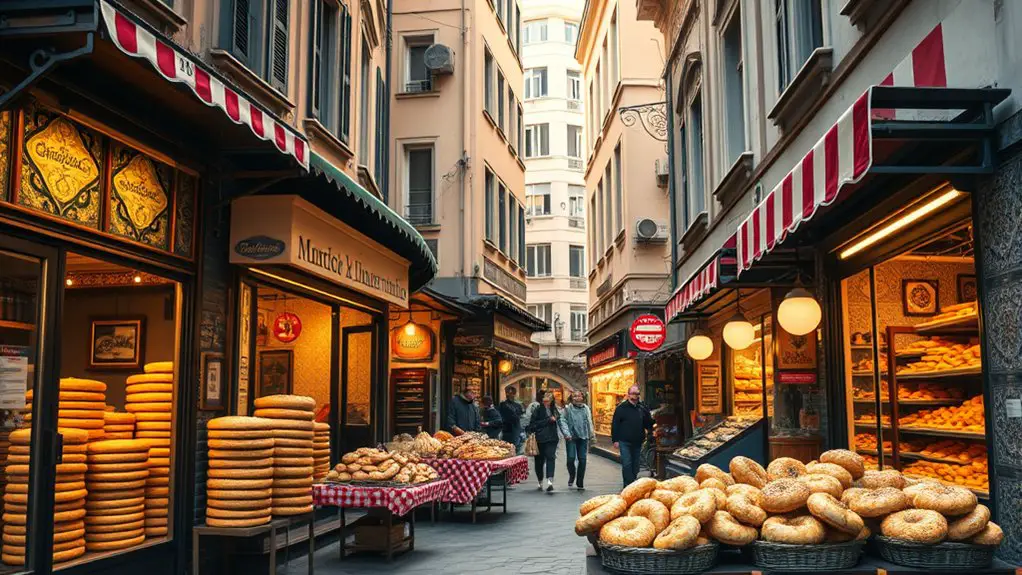
In Beyoğlu, the aroma of fresh hand-rolled phyllo, toasted pistachios, and simmering sugar syrup drifts out of doorway counters on almost every block. As the historic cultural and entertainment heart of Istanbul, Beyoğlu houses a dense network of century-old pastry houses, Ottoman-era confectioners, and neighborhood bakery shops. From forty-layer pistachio baklava to molten, cheese-filled künefe and savory, layered su böreği, exploring these bakeries offers an essential taste of Turkish pastry craftsmanship.
Quick Answer
For traditional master-crafted baklava, visit Karaköy Güllüoğlu (est. 1949) or Hafiz Mustafa 1864, one of Istanbul’s oldest operating confectioners. For European-style patisserie combined with Turkish milk puddings, visit Pelit Pastanesi. To experience authentic savory pastries, börek, and simit, explore Namlı Gurme and the vibrant neighborhood counters surrounding Çiçek Pasajı along İstiklal Avenue.
Key Takeaways
- Karaköy Güllüoğlu is Istanbul’s premier baklava institution, famous for 40-layer pistachio baklava made with clarified sheep’s butter and Antep pistachios.
- Hafiz Mustafa 1864 offers legendary Ottoman-era sweets, warm künefe, trileçe, and delicate Turkish delight (lokum).
- Pelit Pastanesi seamlessly bridges Ottoman dessert culture with European patisserie, renowned for kazandibi pudding and layered cakes.
- Namlı Gurme provides an ideal balance of savory Turkish breakfast items, artisanal cheeses, su böreği, and sesame simit.
- Local Tasting Tip: Turn baklava upside down before taking a bite so the syrup-soaked bottom layers hit your palate first for optimal flavor impact.
At a Glance
| Best For | Classic baklava, warm künefe, su böreği, Turkish delight, and tea culture |
| Typical Hours | 7:00 AM – 10:00 PM daily (select flagship shops stay open past midnight) |
| Price Range | Sold by weight or per portion; highly accessible to mid-range pricing |
| Payment | Major credit cards accepted widely; cash recommended for small street counters |
Disclosure: As an Amazon Associate I earn from qualifying purchases. Some links on this page are affiliate links, at no extra cost to you.
Karaköy Güllüoğlu
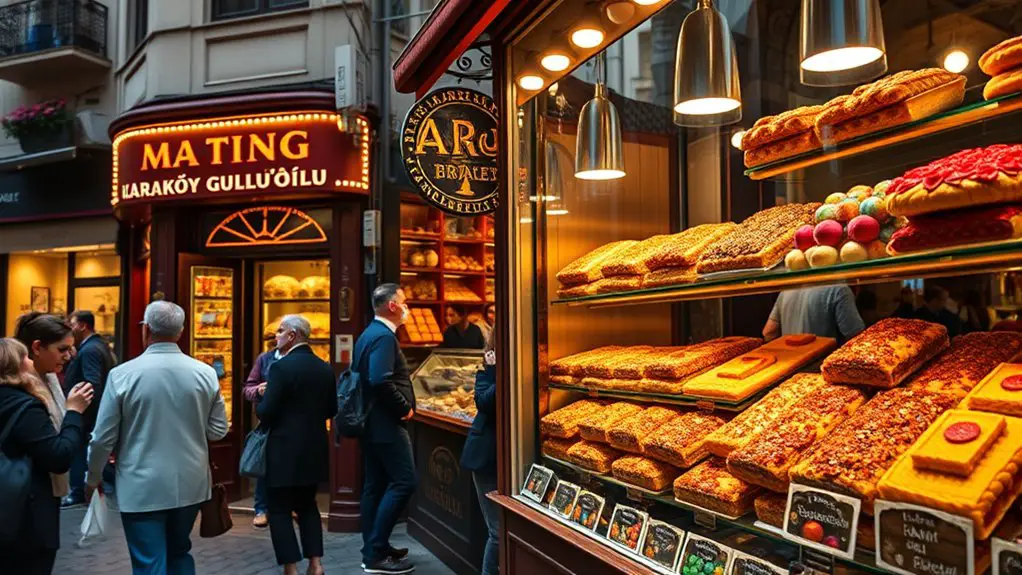
Step into Karaköy Güllüoğlu and you are immediately met with the buttery, sweet aroma of freshly baked baklava. The Güllü family’s pastry lineage dates back to Gaziantep in the early 1800s. In 1949, Mustafa Güllü opened Istanbul’s first dedicated baklava shop in Karaköy, establishing what has become the city’s most famous baklava destination.
Decades of hand-rolled phyllo and uncompromised ingredients turned a single Karaköy shop into an international symbol of Turkish pastry excellence.
Every tray of baklava here features forty micro-thin sheets of phyllo dough rolled by master artisans. The bakery uses clarified sheep’s butter (*sade yağ*) sourced from Şanlıurfa and vibrant emerald pistachios harvested from Antep. Beyond classic pistachio baklava, they serve *fıstıklı dürüm* (pure pistachio rolls wrapped in thin phyllo), walnut baklava, and warm *künefe* made to order.
Pro Tip: To experience baklava like a true Istanbul local, flip the piece upside down so the buttered, syrup-soaked base contacts your tongue first. Press it lightly against the roof of your mouth to hear the crisp crunch (*hışır*) of forty delicate pastry layers.
İkbal Pide & Baklava
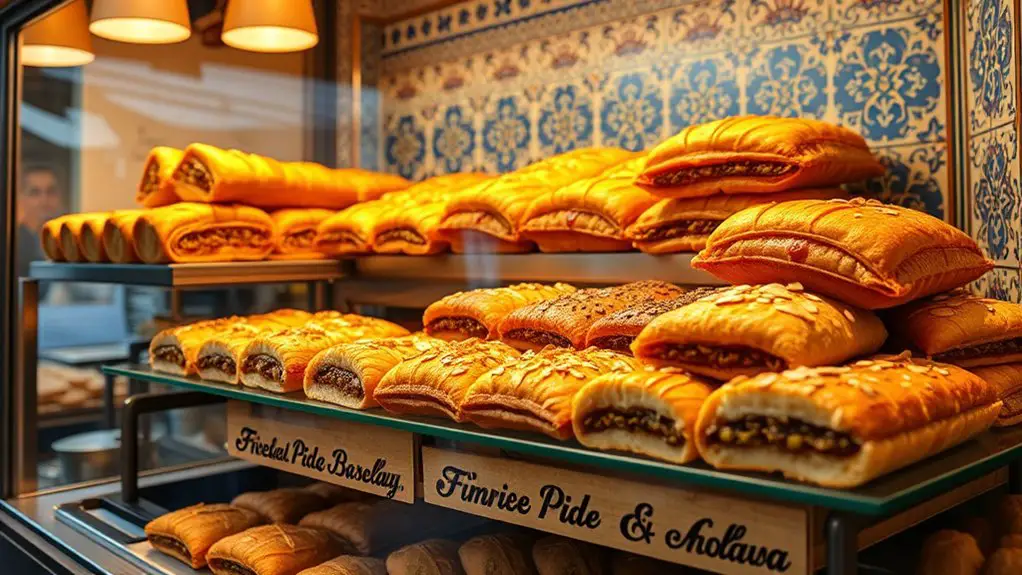
This neighborhood establishment pairs freshly baked savory *pide* (Turkish flatbread) with a well-stocked traditional baklava counter. It provides an inviting, casual environment where diners can enjoy a hearty savory meal followed immediately by authentic hot desserts.
Baklava Options & Specialties
The dessert selection at İkbal focuses on time-honored recipes made daily. Rather than experimental fusion pastries, you will find classic pistachio, walnut, and cheese-based desserts crafted using traditional boiling syrup methods.
| Baklava Style | Key Ingredients | Flavor Profile & Dining Tip |
|---|---|---|
| Pistachio Baklava | Antep pistachios, clarified butter, sugar syrup | Rich, nutty, and crisp; the quintessential choice paired with black tea. |
| Walnut Baklava | Fresh crushed walnuts, spiced sugar syrup | Earthy and slightly less sweet than pistachio variants; deep fragrant aroma. |
| Hot Künefe | Shredded kadayıf dough, unsalted cheese, syrup | Served straight from the oven; stretches golden cheese under crunchy pastry threads. |
A Casual, Sit-Down Experience
Unlike crowded takeaway counters, İkbal offers ample sit-down tables. Visitors can order a wood-fired *pide* topped with minced meat or cheese, followed by hot *künefe* served alongside freshly brewed Turkish tea (*çay*).
Pelit Pastanesi
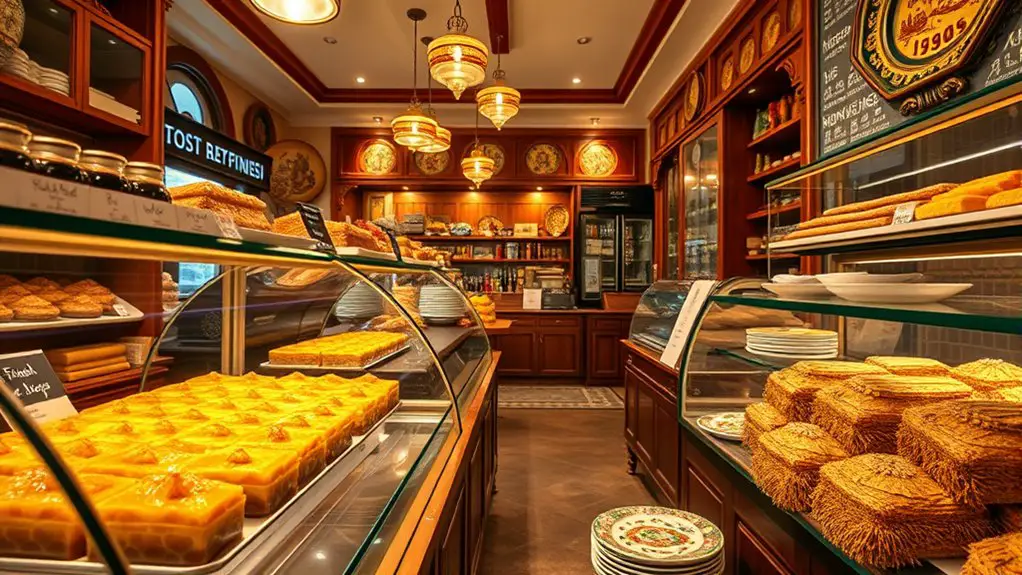
Operating since 1957, Pelit Pastanesi began as a boutique shop in Tepebaşı before evolving into one of Istanbul’s premier patisserie brands. Pelit successfully fuses classic Ottoman confectionery with refined European baking traditions.
In addition to traditional pistachio baklava, Pelit is renowned across Beyoğlu for its traditional milk puddings and European-style cakes. Must-try specialties include *kazandibi* (a velvety, caramelized milk pudding with a dark golden crust), light mille-feuille layers, and handcrafted chocolate truffles. The spacious tea-room atmosphere offers a comfortable, elegant refuge from the bustling streets outside.
Mendel’s Bakery
Located near the border of Beyoğlu and Besiktas, Mendel’s takes a modern artisan approach to pastry design. The bakery blends traditional Turkish ingredients—such as pistachios, tahini, and mastic—with contemporary Western dessert formats.
Instead of standard tray baklava, Mendel’s specializes in artisan chocolate creations, baklava-inspired tartlets, fresh choux pastry, and gourmet dessert jars. It is a favorite stop for younger food enthusiasts seeking inventive flavor combinations, premium espresso drinks, and fresh daily bakery goods.
Hafiz Mustafa 1864
Founded in 1864 by Hadji İsmail Hakkı Bey during the reign of Sultan Abdulaziz, Hafiz Mustafa 1864 stands as one of Istanbul’s most historic confectioners. His son, Hafız Mustafa, gained fame for inventing savory *poğaça* pastries, expanding the shop’s repertoire beyond traditional hard candies and syrups.
Today, Hafiz Mustafa’s Beyoğlu locations feature opulent Ottoman-inspired interiors complete with hand-painted İznik tiles and ornate brass work. Signature offerings include ultra-thin pistachio and walnut baklava, warm *künefe*, *trileçe* (a rich milk-soaked cake), and dozens of varieties of aromatic *lokum* (Turkish delight) infused with pomegranate, rose, and hazelnut.
Note: Hafiz Mustafa’s flagship locations near İstiklal Avenue remain open late into the evening, making them ideal stops for late-night dessert and Turkish coffee after dinner.
Namlı Gurme
Situated in Karaköy near the waterfront, Namlı Gurme is celebrated primarily as an upscale delicatessen and breakfast house rather than a standalone sweet shop. However, its baked goods and savory pastry counter are among the finest in the Beyoğlu district.
Here, guests can sample savory *su böreği*—a delicate, boiled-sheet pastry layered with white cheese and parsley—alongside crisp, sesame-crusted *simit* baked fresh every morning. Pairing these savory pastries with cold-pressed olive oil, aged cheeses, and pastırma provides an authentic Turkish breakfast experience before exploring neighboring dessert houses.
Çiçek Pasajı and Nearby Pastry Counters
Çiçek Pasajı (the historic 19th-century Cité de Péra arcade) is famous for its lively taverns and seafood restaurants. However, the cobblestone side streets radiating from the passage house several charming, independent neighborhood bakeries.
Wandering down these side streets reveals small bakery windows displaying fresh *kuru baklava* (drier baklava with lower syrup content designed for longer shelf life), hot *katmer* (flaky pastry filled with pistachios and clotted cream), and cheese-stuffed *börek*. Visiting these unpretentious counters offers an authentic glimpse into neighborhood baking customs away from major tourist routes.
Frequently Asked Questions
What are the typical opening hours for bakeries in Beyoğlu?
Most bakeries in Beyoğlu open early between 7:00 AM and 8:00 AM to serve morning pastries and simit. Historic confectioners like Hafiz Mustafa and Karaköy Güllüoğlu remain open until 10:00 PM or midnight to cater to evening dessert crowds.
Do any historic Beyoğlu bakeries offer gluten-free baklava?
Yes. Karaköy Güllüoğlu produces dedicated gluten-free baklava crafted in a separate production area using gluten-free starch to prevent cross-contamination. Always confirm with staff on-site regarding current daily availability.
Can I order baklava online for international shipping or delivery?
Major brands including Karaköy Güllüoğlu, Hafiz Mustafa 1864, and Pelit Pastanesi provide international express delivery and local hotel delivery through their official web portals, sealing baklava in vacuum packs to preserve freshness.
Are there vegan pastry options available at these shops?
Plain sesame simit and select fruit-based Turkish delights are naturally vegan. Traditional baklava uses clarified butter (sade yağ), but select shops like Karaköy Güllüoğlu offer specially formulated vegan baklava made with vegetable oil.
What payment methods are accepted at these bakeries?
Major credit cards and contactless mobile payments are accepted at almost all established bakeries and chain locations. However, keeping small cash amounts in Turkish Lira is recommended when purchasing from small street simit carts or quiet neighborhood pastry counters.
Conclusion
Exploring Beyoğlu rewards food lovers with an unforgettable pastry journey through centuries of culinary tradition. Whether sampling forty-layer pistachio baklava at Karaköy Güllüoğlu, enjoying Ottoman-era confectionary at Hafiz Mustafa 1864, or resting over kazandibi pudding at Pelit Pastanesi, Beyoğlu delivers an authentic taste of Istanbul’s unrivaled baking heritage.
Sources
- Hafiz Mustafa 1864 — Wikipedia — Confirms 1864 founding history and heritage details
- Pelit Pastanesi Official Site — Verifies founding date (1957) and classic recipe archive
- Nadir Güllü Official Heritage — Documents Karaköy Güllüoğlu’s 1949 Istanbul opening and Gaziantep roots
- UNESCO Intangible Cultural Heritage — Background on traditional Turkish dough rolling and pastry heritage
