
Last Updated on July 25, 2026 by Daniel Globe
If you’re looking for the best baklava in Istanbul, start with dedicated baklava specialists rather than choosing a random dessert counter. Karaköy has two of the city’s best-known options, while Kadıköy and other Asian-side neighborhoods offer excellent alternatives. The best choice ultimately depends on whether you prefer pistachio-heavy classics, a drier style, or newer variations.
Quick Answer
For a first baklava stop in Istanbul, Karaköy is the easiest place to start: try Karaköy Güllüoğlu or nearby Köşkeroğlu. On the Asian side, Bilgeoğlu and Emiroğlu are strong alternatives. Order classic pistachio baklava first, then compare it with kuru baklava or a modern cold version.
Key Takeaways
- Karaköy is the most convenient neighborhood for comparing established baklava specialists within a short walk.
- Traditional Gaziantep-style baklava is built around very thin pastry, clarified butter, nuts such as Antep pistachios, and syrup rather than honey as the default sweetener.
- Start with classic pistachio baklava before trying kuru baklava, walnut versions, cold baklava, chocolate varieties, or other modern interpretations.
- For gifts or travel, ask the shop which varieties tolerate transportation best; dry baklava is often a better choice than creamier styles.
- Prices and product selections change, so check the shop’s current menu before making a special trip.
Disclosure: As an Amazon Associate I earn from qualifying purchases. Some links on this page are affiliate links, at no extra cost to you.
Traditional Baklava Shops
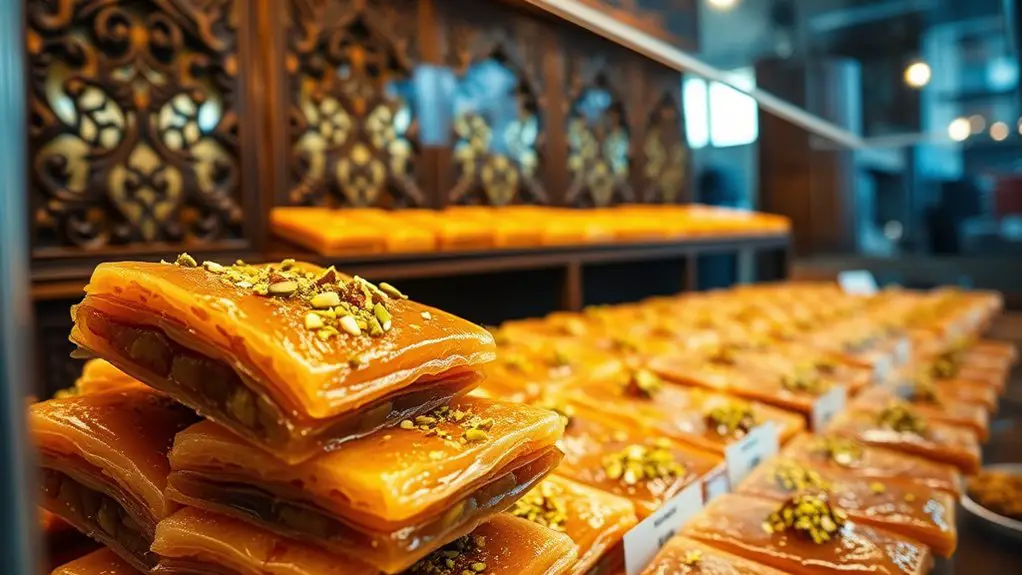
Istanbul’s strongest traditional baklava shops generally focus on thin pastry, good butter, fresh nuts, balanced syrup, and fast turnover. Those details matter more than elaborate presentation.
For Gaziantep-style baklava, honey should not be treated as the defining sweetener. Türkiye’s official Culture Portal describes Antep Baklavası as thin layers of dough with pistachio and, in the fresh style, semolina cream, finished with syrup. The registered version also uses clarified butter.
The name Antep Baklavası/Gaziantep Baklavası has been registered as a Protected Geographical Indication in the European Union since 2013. That protection applies to the specified Gaziantep product, but it provides a useful reference point for understanding the style that many Istanbul baklava specialists follow.
The best baklava is not simply the sweetest. Look for distinct pastry layers, fresh-tasting nuts, a clean butter aroma, and enough syrup to flavor the pastry without leaving it swimming on the plate.
Best Places to Buy Baklava in Istanbul
“Best” is subjective, but these established shops give visitors a useful cross-section of Istanbul’s baklava scene. Rather than ranking them by a single score, choose according to your neighborhood and the style you want to try.
| Shop | Area | Best For | Good First Order |
|---|---|---|---|
| Karaköy Güllüoğlu | Karaköy, Beyoğlu | A broad selection and a classic first-time Istanbul baklava experience | Classic pistachio baklava, followed by kuru baklava |
| Köşkeroğlu | Tophane/Karaköy, Beyoğlu | Comparing another Gaziantep-style specialist while already in Karaköy | Pistachio or square baklava |
| Bilgeoğlu Baklava | Kadıköy | A smaller neighborhood-style stop on the Asian side | Classic pistachio baklava |
| Emiroğlu Baklava | Kadıköy and other Asian-side branches | Visitors staying on Istanbul’s Asian side | Pistachio or dry baklava |
| Hafız Mustafa 1864 | Sirkeci and several central locations | A sit-down dessert stop with a wide selection in tourist-friendly locations | A small assorted plate before buying a larger box |
Pro Tip: If you have limited time, make Karaköy your baklava tasting area. You can compare two established specialists without planning a separate cross-city journey, then save Kadıköy for another day if it already fits your itinerary.
How to Recognize Good Baklava
You do not need to be a pastry expert to notice a few quality signals. Fresh baklava should have visible, separate pastry layers rather than a dense, soggy top. The nuts should taste fresh rather than stale or bitter, and the butter aroma should be pleasant rather than greasy.
- Look at the layers: The top should appear thin, crisp, and clearly laminated.
- Listen to the first bite: Fresh upper layers usually give a light crackle rather than collapsing into a sticky mass.
- Check the nuts: Pistachios should taste nutty and aromatic, not merely provide green color.
- Watch the syrup: Baklava is a syrup dessert, but excessive liquid pooling underneath can overwhelm the pastry.
- Buy from busy specialists: High turnover can improve your chances of receiving a recently made tray.
Do not assume that the least-sweet version is automatically the most authentic. Different baklava styles use different syrup levels, fillings, and textures.
Modern Twists on a Classic Pastry
Istanbul’s pastry scene goes beyond classic pistachio and walnut baklava. Established shops now sell contemporary versions alongside traditional trays.
Istanbul’s pastry scene extends beyond traditional shops with modern bakeries offering fresh twists.
Current examples include:
- Cold baklava: A chilled, milkier interpretation that has become widely available.
- Chocolate baklava: Some shops combine thin pastry with cocoa, chocolate, or hazelnut-based fillings.
- Vegan baklava: Available from selected specialist shops for customers avoiding dairy ingredients.
- Gluten-free baklava: Offered by some established producers, although people with celiac disease or serious wheat allergies should still ask about preparation and cross-contact.
Karaköy Güllüoğlu’s current catalog, for example, includes classic pistachio and walnut baklava as well as cold, chocolate, vegan, and gluten-free varieties. Trying a modern version can be fun, but taste a classic pistachio piece first so you have a baseline for comparison.
Which Baklava Should You Order?
A large display case can be confusing on your first visit. These are useful starting points:
- Classic pistachio baklava: The easiest benchmark for comparing shops.
- Walnut baklava: A good choice if you prefer the deeper, slightly earthier flavor of walnuts.
- Kuru baklava: A drier style designed without the semolina cream used in fresh Antep-style baklava. It is often practical for travel.
- Square or carrot-slice styles: Larger pieces that usually emphasize the filling and make a good shared tasting portion.
- Cold baklava: A modern option for readers who want something milkier and different from the classic syrup-forward style.
Note: Names such as square baklava, dry baklava, cold baklava, şöbiyet, and other filled pastries can represent noticeably different recipes. Ask what is inside rather than assuming every item in the display case is simply another shape of the same dessert.
Local Favorites and Hidden Gems
Venturing beyond Istanbul’s most famous names can be rewarding, but “hidden gem” does not automatically mean better. A neighborhood baklavacı with steady local turnover is usually a stronger bet than an anonymous stall selling pastries that may have been sitting out for an unknown amount of time.
Venture beyond popular shops to discover local favorites and hidden pastry gems.
For a more local-feeling experience, focus on established pastry counters in residential neighborhoods such as Kadıköy rather than searching specifically for street vendors. Bilgeoğlu provides a compact Kadıköy option, while Emiroğlu has several Asian-side branches.
This also makes your route more efficient. If you are already exploring Kadıköy or Moda, there is little reason to cross the Bosphorus solely for dessert before trying a respected nearby specialist.
Timeless Recipes and Family Secrets
Baklava does have a long culinary history, but it is better understood through documented technique than vague claims about secret recipes. Türkiye’s Ministry of Culture and Tourism describes baklava as part of Ottoman culinary life and records its role in palace and Ramadan traditions.
The pastry also became closely associated with Gaziantep, where baklava-making developed into a specialized craft. The official Turkish geographical-indication description emphasizes thin dough, clarified butter, Antep pistachios, syrup, and skilled preparation.
Karaköy Güllüoğlu states that its family baklava tradition reaches back to the 1800s in Gaziantep and that Mustafa Güllü opened the family’s Istanbul operation in Karaköy in 1949. Köşkeroğlu and Emiroğlu likewise market themselves as specialist producers rather than general-purpose cafés.
Those histories are useful context, but your own tasting still matters. Freshness on the day you visit, your preference for syrup, and whether you favor pistachios or walnuts can easily determine which shop you enjoy most.
Buying Baklava as a Souvenir
Baklava can make an excellent food souvenir, but choose the variety with the journey in mind. Ask the shop to recommend a product for the number of hours or days you will be traveling.
- Choose a sturdy box: Keep it flat so syrup and fillings do not shift toward one side.
- Consider kuru baklava: Karaköy Güllüoğlu specifically recommends its dry pistachio baklava for longer journeys.
- Be careful with creamier varieties: The same producer advises refrigerating baklava containing semolina cream and consuming it within a few days.
- Avoid heat and direct sun: Warm conditions can soften the pastry and affect butter-based fillings.
- Ask before packing it in checked luggage: A rigid carry-on position is usually kinder to delicate pastry than a suitcase being turned and compressed.
Warning: Storage requirements are not identical for every type of baklava. Products containing milk, cream, or semolina-based cream may need different handling from classic or dry baklava. Follow the instructions provided by the shop for the exact product you buy.
Frequently Asked Questions
Can I Make Baklava at Home?
Yes. Homemade baklava usually involves layering very thin phyllo or yufka with butter and nuts, baking it until crisp, and adding syrup. Pistachios and walnuts are common fillings. Honey can appear in some recipes, but sugar syrup is standard in the Gaziantep-style baklava commonly associated with Turkish specialist shops.
Is Baklava Gluten Free?
Traditional baklava normally is not gluten-free because its pastry is made with wheat flour. Some Istanbul specialists sell dedicated gluten-free versions. If you have celiac disease or a serious wheat allergy, ask the shop about ingredients, production methods, and possible cross-contact before ordering.
Can Baklava Be Frozen?
Some baklava can be frozen, but the best method depends on the product. Hafız Mustafa, for example, publishes instructions for certain boxed baklavas tested at -18°C and recommends thawing them in a refrigerator at about 4°C for two hours, followed by roughly 30 minutes at room temperature. Follow the producer’s instructions whenever available because improper thawing can soften the pastry.
How Long Does Baklava Last?
There is no single shelf life for all baklava. It depends on the filling, syrup level, packaging, temperature, and whether the pastry contains dairy or semolina cream. Some boxed products are intended for consumption within only a few days, while dry styles can travel better. Use the storage and use-by guidance supplied with the specific product.
Is Baklava Very Expensive?
Baklava prices vary widely by shop, nut content, portion size, and style. Pistachio-heavy varieties generally command a premium, and central tourist districts can cost more than neighborhood shops. Because prices change, check the current menu and compare the per-piece or per-weight price before ordering a large gift box.
Conclusion
For most first-time visitors, Karaköy is the easiest place to begin a search for Istanbul’s best baklava. Taste a classic pistachio piece at Karaköy Güllüoğlu or Köşkeroğlu, then compare it with kuru baklava or another style. If you are staying on the Asian side, Bilgeoğlu and Emiroğlu let you explore excellent baklava without crossing the city.
The most useful rule is simple: prioritize freshness, thin crisp layers, good nuts, clean butter flavor, and a syrup level you actually enjoy. Istanbul offers both traditional recipes and modern variations, so the “best” shop is ultimately the one whose balance suits your taste.
Sources
- Türkiye Culture Portal — Antep Baklavası — official geographical-indication description, ingredients, and traditional production characteristics.
- EUR-Lex — Commission Implementing Regulation (EU) No 1399/2013 — EU registration of Antep Baklavası/Gaziantep Baklavası as a Protected Geographical Indication.
- Republic of Türkiye Ministry of Culture and Tourism — The Ottoman Cuisine — historical context for baklava, pastry, butter, nuts, sweeteners, and Ottoman food culture.
- Karaköy Güllüoğlu — About Us — company history and the development of its Karaköy operation.
- Karaköy Güllüoğlu — Current Baklava Range — examples of classic, dry, cold, gluten-free, vegan, and other current styles.
- Hafız Mustafa 1864 — Baklava Storage and Defrosting Guidance — product-specific freezing and thawing recommendations.
