
Last Updated on September 11, 2026 by Daniel Globe
.40 caliber frangible ammunition can be useful for approved range training and reduced-ricochet applications, but it does not have one universal effective range. The exact result depends on the load, bullet design, barrel length, target material, and shooting conditions. Frangible ammunition is still lethal, can penetrate soft materials, and always requires a safe backstop.
Quick Answer
There is no verified 25-, 75-, or 100-yard effective-range rule for .40 cal frangible ammo. Treat it as load-specific ammunition. Use the manufacturer’s data for velocity and intended use, confirm accuracy in your firearm, and remember that a missed bullet can remain dangerous far beyond normal handgun distances.
Key Takeaways
- Frangible describes how a projectile is designed to react to certain impact surfaces, not a fixed maximum range.
- Many frangible bullets break into small particles on approved hardened steel, but they may remain intact or penetrate soft targets and building materials.
- Ballistics, recoil, accuracy, and terminal performance vary by product, firearm, and barrel length.
- Reduced ricochet does not mean ricochet-free, wall-safe, or nonlethal.
- Follow the ammunition maker’s instructions and the range’s target, distance, and backstop rules.
Warning: Frangible ammunition can cause death or serious injury. Never rely on the bullet to break apart, stop in a wall, or make an unsafe target safe. Be certain of your target, the target material, and what is beyond it.
What Is .40 Cal Frangible Ammo?
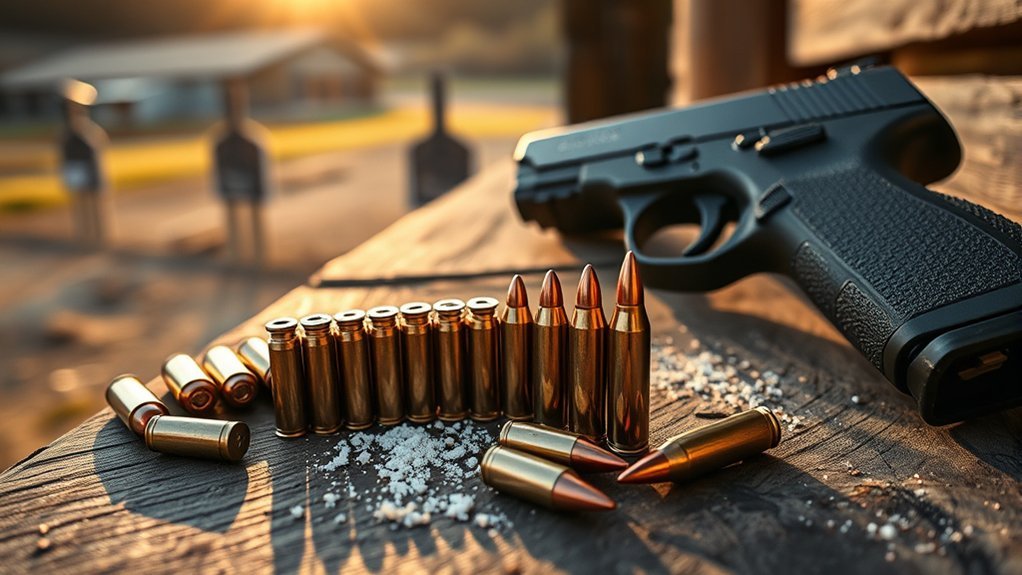
.40 cal frangible ammo is .40 S&W ammunition loaded with a projectile made to break into small particles under specified impact conditions. Construction varies. Some bullets use compressed powdered metal, while others use a copper-polymer material. You should not assume that every frangible bullet uses the same metal blend or behaves the same way.
The key distinction is the impact surface. Some manufacturers define their projectiles as frangible on hardened steel while describing different behavior in soft tissue, gelatin, bone, drywall, or glass. For example, Inceptor’s technical FAQ says its projectiles can fragment on hardened steel and certain dense barriers but can also penetrate softer materials. That is why “frangible” should never be treated as a promise that a bullet cannot pass through a wall or person.
Frangible ammunition is commonly chosen for close-range training on approved targets, indoor-range programs, and locations that restrict conventional lead projectiles. Some companies also sell defensive designs, but training and defensive frangible loads are not interchangeable. Check the product label and manufacturer documentation for the intended use.
How Far Does .40 Cal Frangible Ammo Travel?
A .40 cal frangible bullet can travel much farther than the distance at which you can place an accurate or defensible shot. There is no reliable universal number for its maximum travel distance or effective range. The bullet does not disintegrate merely because it has traveled 25, 75, or 100 yards.
The Sporting Arms and Ammunition Manufacturers’ Institute advises shooters to obtain exterior-ballistics information from the manufacturer of the specific load. That matters because projectile weight, shape, muzzle velocity, barrel length, sight height, and atmospheric conditions all change the trajectory and retained velocity.
| Range Question | Reliable Answer | What You Should Do |
|---|---|---|
| How far can it fly? | Far beyond normal handgun practice distances, with no safe universal cutoff. | Use a proper backstop and account for every missed shot. |
| How far is it accurate? | Accuracy depends on the load, firearm, sights, shooter, and conditions. | Test the exact load at an approved range. |
| How far is it effective? | Only product-specific testing can support a terminal-performance claim. | Use the maker’s tested data, not a caliber-wide yardage claim. |
Note: “Maximum travel,” “practical accuracy,” and “terminal effectiveness” are different measurements. A bullet can remain hazardous after it is no longer accurate enough for responsible use.
What Affects .40 Cal Frangible Range?
Several factors determine the downrange behavior of a specific .40 S&W frangible load:
- Projectile weight and shape: Light-for-caliber bullets may start faster, but a lower ballistic coefficient can make them shed velocity sooner.
- Barrel length: A different barrel can produce a different muzzle velocity than the test barrel used for advertised data.
- Firearm and sights: Sight height, sight regulation, mechanical accuracy, and the shooter’s technique affect where the bullet lands.
- Wind and atmosphere: Wind becomes more important as time of flight increases. Temperature and air density can also change trajectory, although their practical effect at common handgun distances is usually smaller than load and shooter differences.
- Impact material: Hardened steel, soft tissue, drywall, glass, and wood can produce very different bullet behavior.
- Product purpose: A range-training projectile may be designed differently from a defensive fragmenting load.
Frangibility itself does not make a bullet lose energy in flight. The faster velocity loss seen with some loads usually comes from their lighter mass and projectile shape, not from a mechanism that makes the bullet “self-destruct” in the air.
How Does .40 Cal Frangible Perform Up Close?
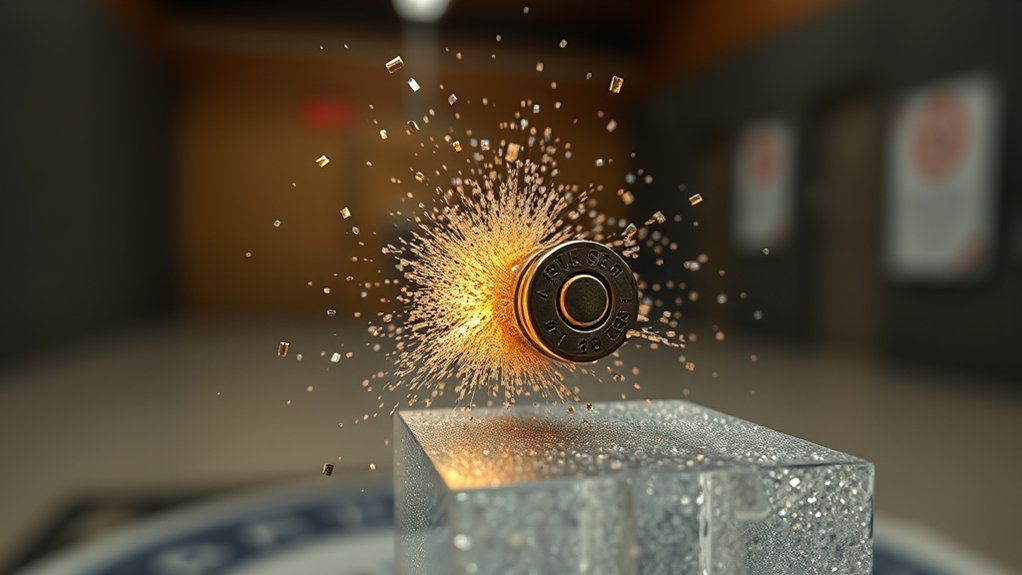
At close range, a .40 cal frangible load may offer lower ricochet risk on an approved hardened target because the projectile is designed to break into small particles on impact. This can support realistic training distances when the ammunition maker, target maker, and range all approve the setup.
That benefit has limits. A frangible bullet may not break apart when it strikes paper, cardboard, soft tissue, drywall, clothing, or other relatively soft material. Some defensive designs are intentionally made to penetrate before fragmenting. Muzzle velocity also varies by product and barrel, so claims such as “always above 1,000 fps at 25 yards” need data for the exact load.
Some light-for-caliber loads produce less recoil than conventional .40 S&W ammunition, but recoil is not guaranteed to be low. Point of impact and cycling reliability may also differ. Test the load in a controlled range environment before relying on it for any lawful purpose.
How Does .40 Cal Frangible Compare to JHP?
Frangible and jacketed hollow-point ammunition are design categories, not single performance levels. A training frangible bullet is usually optimized for reduced ricochet on approved hard targets. A JHP is generally designed to expand in soft tissue and reach a controlled penetration depth. Defensive frangible products may use a different design from range-only frangible ammunition.
| Feature | Frangible Training Load | Jacketed Hollow Point |
|---|---|---|
| Primary design goal | Break up on specified hard targets and reduce ricochet hazard | Expand in soft tissue while maintaining useful penetration |
| Behavior in soft material | Varies widely; may stay intact or penetrate | Designed to expand, but expansion still depends on velocity and barriers |
| Ricochet on approved steel | Often lower when all target rules are followed | Usually not intended for close steel-target training |
| Recoil | Can be lower with a light projectile, but varies by load | Varies by bullet weight, velocity, and firearm |
| Best use | Approved training or a product-specific specialized role | Common defensive use when the exact load performs reliably |
Do not compare ammunition by marketing labels alone. Compare the exact product’s function, accuracy, muzzle velocity, penetration, expansion or fragmentation, barrier performance, and manufacturer instructions.
Is .40 Cal Frangible Good for Self-Defense?
A defensive frangible load can be a lawful option in some places, but the category is too broad for a blanket recommendation. Range-only frangible ammunition may not provide the same penetration or terminal behavior as a purpose-built defensive load. Likewise, a defensive product’s reduced-ricochet claim does not mean it cannot pass through drywall, doors, glass, or a person.
Before considering any defensive ammunition, confirm that it is intended for that use, functions reliably in your pistol, hits close to your sights, and has credible product-specific test data. Many shooters choose a reputable JHP because its intended soft-tissue performance is easier to evaluate across established test methods. Local laws and agency rules may also affect what you may carry or use.
Pro Tip: Do not test reliability with only one magazine. At an approved range, verify feeding, ignition, extraction, accuracy, and point of impact with the exact ammunition and magazines you plan to use.
What Are the Best Uses for .40 Cal Frangible Ammo?
The clearest use for .40 cal frangible ammunition is controlled training where the range and target system approve it. Lead-free projectile options may also help reduce one source of lead contamination. However, ammunition is only one part of range safety. Ventilation, cleaning, hearing protection, and hygiene remain important.
Training and Practice Use
Frangible ammunition can support close-target drills on approved hardened steel and can reduce large ricochet fragments compared with conventional projectiles. The benefit depends on undamaged targets, correct target angles, an approved backstop, and the minimum distance required by the ammunition maker, target maker, and range.
| Potential Benefit | Important Limit |
|---|---|
| Reduced ricochet on approved hardened steel | Not ricochet-free and not suitable for damaged or unapproved targets |
| Lead-free projectile choices | The primer may still contain lead, and ventilation and cleaning still matter |
| Light projectile may reduce recoil | Point of impact and firearm function can differ from duty or defensive ammunition |
The NIOSH guidance for indoor firing ranges explains that shooters may be exposed to hazardous lead and noise. Lead-free bullets can reduce exposure, but they do not replace proper range ventilation, cleaning, hygiene, and hearing protection.
Reduced-Ricochet Applications and Limits
Some manufacturers offer frangible or fragmenting ammunition for specialized defensive use where hard-surface ricochet is a concern. You should evaluate only the exact product, not the whole category. A training load that turns to particles on steel can still penetrate soft building materials, while a defensive load may be designed to penetrate tissue before breaking apart.
Never describe frangible ammunition as “safe for apartments,” “bystander-safe,” or guaranteed to prevent over-penetration. No handgun bullet removes the need to identify the target and what is beyond it.
Why Does Frangible Ammo Lose Power Fast?
Some frangible loads lose velocity faster than heavier conventional bullets, but the reason is exterior ballistics, not the fact that they fragment on impact. Many frangible projectiles are light for caliber and have a lower ballistic coefficient. That combination can increase drag and reduce retained momentum as distance grows.
- Lower projectile mass can reduce retained momentum at the same velocity.
- A lower ballistic coefficient can increase velocity loss and wind drift.
- Shorter barrels may produce less muzzle velocity than the manufacturer’s test barrel.
- Longer flight time gives wind and shooter error more opportunity to affect impact.
- Only product-specific data or controlled chronograph testing can show actual velocity loss.
There is no dependable rule that all .40 cal frangible ammunition falls below 900 fps beyond 100 yards. That number must come from a tested load, barrel, and set of atmospheric conditions.
How Accurate Is .40 Cal Frangible Beyond 25 Yards?
Accuracy does not suddenly disappear after 25 yards. A well-made frangible load can remain mechanically accurate beyond that distance, but the practical result depends on the firearm, sights, shooter, velocity, and wind. Light projectiles may also print at a different point of impact from heavier practice or defensive ammunition.
Do not use accuracy alone to infer terminal effectiveness. A bullet can strike a target accurately while reaching it at a velocity that produces different penetration or fragmentation than the manufacturer intended. For any serious use, rely on test data for the exact load and impact velocity.
Note: A 25-yard group tells you where the ammunition lands from your firearm. It does not prove how the bullet will behave in tissue, walls, glass, or steel.
How Do You Shoot .40 Cal Frangible Safely?
Use frangible ammunition only in a firearm chambered for the exact cartridge and only on a range that permits the load and target type. Read the firearm manual, ammunition label, target instructions, and posted range rules before shooting.
- Treat every firearm as loaded and keep the muzzle pointed in a safe direction.
- Keep your finger outside the trigger guard until the sights are on an approved target and you intend to fire.
- Wear properly rated eye protection and hearing protection.
- Be certain of the target, backstop, and everything beyond them.
- Use only approved, undamaged targets at the required angle and minimum distance.
- Do not shoot rocks, scrap metal, concrete, or improvised hard targets.
- Stop if a cartridge sounds weak, the firearm cycles abnormally, or you suspect a bore obstruction.
- Wash your hands after shooting and avoid eating, drinking, or smoking in the range area.
The National Shooting Sports Foundation’s safety rules stress that you must know your target and what lies beyond it because bullets can travel great distances. Frangible construction does not change that rule.
Frequently Asked Questions
What is the maximum effective range of a .40 caliber pistol?
There is no universal maximum effective range. Accuracy and terminal performance depend on the firearm, load, sights, shooter, and conditions. Do not treat 100 yards as a standard defensive or safety limit. Use the exact ammunition maker’s ballistic data and a safe backstop.
What is the most sold gun in the United States?
No authoritative nationwide database publishes complete retail sales by firearm model, so a single “most sold gun” claim cannot be verified reliably. The Glock 19 often appears on retailer popularity lists, but those lists do not establish a national sales record.
What is the 26 pistol rule?
There is no recognized “10 rounds in the gun plus 16 spare” rule. The number 26 appears in federal firearm law mainly as a 26-inch overall-length threshold in certain National Firearms Act classifications. Configuration details and state laws matter, so use current ATF guidance or qualified legal advice for a specific firearm.
Can a .40 caliber pistol stop a grizzly bear?
Do not rely on a .40 caliber pistol as your primary grizzly defense. The National Park Service recommends bear spray and says firearms are not recommended for stopping an attack. Learn bear-avoidance practices, carry accessible EPA-approved bear spray where permitted, and check local rules.
Can .40 cal frangible ammo penetrate drywall?
Yes. A frangible bullet may penetrate drywall and other soft building materials before it breaks apart, and some designs may stay largely intact. Never assume frangible ammunition is wall-safe or that it will protect people in adjacent rooms.
Is frangible ammunition safer than FMJ ammunition?
It can reduce ricochet and large fragments on approved hard targets when used correctly, which is valuable for some training. It is not generally “safe” in every setting. It remains lethal, can penetrate soft materials, and still requires correct ammunition, target distance, target condition, and backstop.
Sources
- Inceptor Ammunition FAQ: explains product-specific frangibility, soft-target penetration, barriers, and load variation.
- SAAMI FAQs: advises using the specific manufacturer’s information for exterior ballistics.
- NIOSH: Reducing Exposure to Lead and Noise at Indoor Firing Ranges: supports range-health and lead-exposure guidance.
- NSSF Firearm Safety Rules: supports target, backstop, ammunition, and safe-handling guidance.
- ATF Questions and Answers: clarifies federal 16-inch barrel and 26-inch overall-length concepts.
- National Park Service: Bear Spray and Firearms: supports the bear-defense answer.
Conclusion
.40 cal frangible ammo does not have a universal 25-, 75-, or 100-yard effective range. Its accuracy, velocity, recoil, penetration, and fragmentation depend on the exact product and firearm. Its strongest advantage is reduced ricochet on approved hard targets under controlled conditions. It is still lethal, may penetrate walls and soft materials, and always requires safe handling, a proper backstop, and product-specific guidance.
