
Last Updated on July 27, 2026 by Daniel Globe
Hiking sticks, usually called trekking poles when they are used as a pair, can be genuinely useful on steep, rocky, slippery, or uneven trails. They give you extra points of contact with the ground, can improve balance, and can shift some of the work from your legs to your upper body. The benefits are most noticeable on descents, while carrying a pack, or when footing becomes uncertain.
Quick Answer
Yes, hiking sticks can help. Research shows trekking poles can reduce some lower-extremity loading, improve stability, and provide useful support on descents and rough terrain. They also engage the upper body and may increase energy use. Their benefit depends on correct sizing, technique, terrain, and whether you use one pole or a pair.
Key Takeaways
- Trekking poles can improve stability and reduce some of the forces placed on the knees and other lower-extremity joints, especially during downhill walking.
- Using poles also involves the arms and upper body, which can increase heart rate, oxygen use, and overall energy expenditure at a given walking pace.
- On level ground, a roughly 90-degree elbow bend is a useful starting point for pole height.
- Shorten adjustable poles slightly for sustained climbs and lengthen them slightly for long descents.
- Aluminum is generally durable and economical; carbon/composite poles are often lighter and better at damping vibration but can be more vulnerable to splintering or breakage under severe stress.
- Poles improve support but do not prevent every fall and are not substitutes for prescribed medical mobility aids.
At a Glance
| Time Required | About 5–10 minutes to size the poles and practice the basic walking rhythm |
| Difficulty | Easy to learn; terrain-specific technique takes practice |
| Tools Needed | One hiking staff or, preferably for varied terrain, a pair of trekking poles; optional rubber tips and terrain-specific baskets |
| Cost | Varies by pole material and design; no additional setup cost if you already own suitable poles |
Disclosure: As an Amazon Associate I earn from qualifying purchases. Some links on this page are affiliate links, at no extra cost to you.
Do Hiking Sticks Actually Help?
For many hikers, yes. The strongest evidence is not that trekking poles make you immune to falls or injuries, but that they can change how forces are distributed while you walk. A controlled study of downhill walking found reductions of about 12–25% in several measured ground-reaction and knee-loading variables when hiking poles were used.
In a small controlled downhill-walking study, researchers measured roughly 12–25% reductions in several knee-loading variables when participants used hiking poles.
The study was small—it involved eight men walking down a 25-degree ramp—so its exact percentages should not be treated as a guarantee for every hiker or every trail. Still, its findings support the broader conclusion of a 2020 review of trekking-pole research: poles generally reduce some lower-extremity loading while increasing upper-body involvement and cardiovascular demand.
Benefits of Hiking Sticks
- Extra stability: Two poles provide extra contact points on loose rocks, mud, snow, uneven ground, and steep slopes.
- Less lower-body loading: Pole forces can reduce some loads and joint moments in the legs, especially during descents.
- Better load management: Poles can be useful when carrying a backpack because the arms share part of the work.
- Upper-body involvement: Using poles recruits the arms and shoulders instead of making hiking almost entirely a lower-body activity.
- Obstacle assistance: Well-placed poles can provide useful balance when stepping over logs, crossing shallow water, or negotiating large rocks.
Tradeoffs to Consider
- You must carry and manage the poles when you are not using them.
- Your hands are less available for a phone, camera, map, snacks, or scrambling.
- Pole tips can catch between rocks, roots, or vegetation.
- Poorly adjusted poles can cause wrist, shoulder, neck, or back discomfort.
- Using poles can increase oxygen consumption and energy expenditure at the same walking speed.
A 2008 field study found greater physiological responses when hikers used trekking poles. That does not mean poles automatically improve cardiovascular fitness. It means your body may work somewhat harder because more muscle mass is involved.
Note: Research supports lower-extremity unloading and improved stability in certain conditions, but poles are not a guarantee against falls, knee pain, or hiking injuries.
How to Choose the Right Hiking Sticks for You
Selecting hiking sticks starts with deciding whether you want a single hiking staff or a pair of trekking poles. A staff can provide a convenient extra contact point on relatively easy terrain. A pair of poles offers support on both sides and is generally more useful on steep, uneven trails and when carrying a backpack.
Aluminum vs. Carbon Fiber
Modern trekking poles are commonly made from aluminum, carbon composite, or a combination of the two.
- Aluminum: Usually the more economical and impact-tolerant option. Under severe stress it may bend rather than suddenly splinter.
- Carbon/composite: Usually lighter and good at reducing vibration, making it attractive for long-distance or fast hiking. Severe side loads or impacts can make carbon more vulnerable to cracking or splintering.
Neither material is automatically best. Frequent hikers may value lower weight, while hikers who regularly travel through rocky, remote terrain may place a higher priority on impact tolerance and easy field inspection.
Adjustable, Fixed-Length, or Folding Poles
Adjustable poles are versatile because you can change their length for climbs, descents, and traverses. Fixed-length poles can be lighter and simpler, while folding poles pack down compactly for travel or trail running.
Whichever design you choose, inspect the locking system. Lever, twist, push-button, and combination systems all need to hold securely under normal use. Locks can loosen with wear, dirt, or repeated adjustment.
Choose the Right Grip
Cork, foam, and rubber grips feel different in the hand. Cork handles moisture well and gradually conforms to the hand. Foam is soft and absorbs moisture. Rubber provides useful insulation in cold conditions but may feel hotter or cause more friction during warm-weather hiking.
Check the Tips and Baskets
Steel or carbide tips provide traction on many natural surfaces. Rubber tip protectors are useful on pavement, can protect stored gear, and can reduce surface impact in sensitive locations. Baskets help stop poles from sinking deeply into mud or snow, with larger baskets generally used for softer conditions.
Pro Tip: Before buying poles, hold the grips with your normal hiking gloves and operate the locks yourself. A light pole is not useful if the grip is uncomfortable or the locking system is difficult for you to adjust.
How to Adjust Hiking Stick Height
A good starting point on level ground is to stand upright with the pole tip near your foot and adjust the pole until your elbow forms roughly a 90-degree angle. Both LEKI and other major trekking-pole manufacturers use this general guideline.
This is a starting position rather than an exact medical measurement. Your arm length, footwear, pack, technique, trail grade, and personal comfort can justify small adjustments.
- Level terrain: Start near a 90-degree elbow bend.
- Long climbs: Shorten adjustable poles slightly so you can plant them without lifting your shoulders.
- Long descents: Lengthen the poles slightly so they contact the lower ground sooner and help you stay upright.
- Sidehill traverses: Shorten the uphill pole and lengthen the downhill pole when helpful.
Proper Technique for Using Hiking Sticks
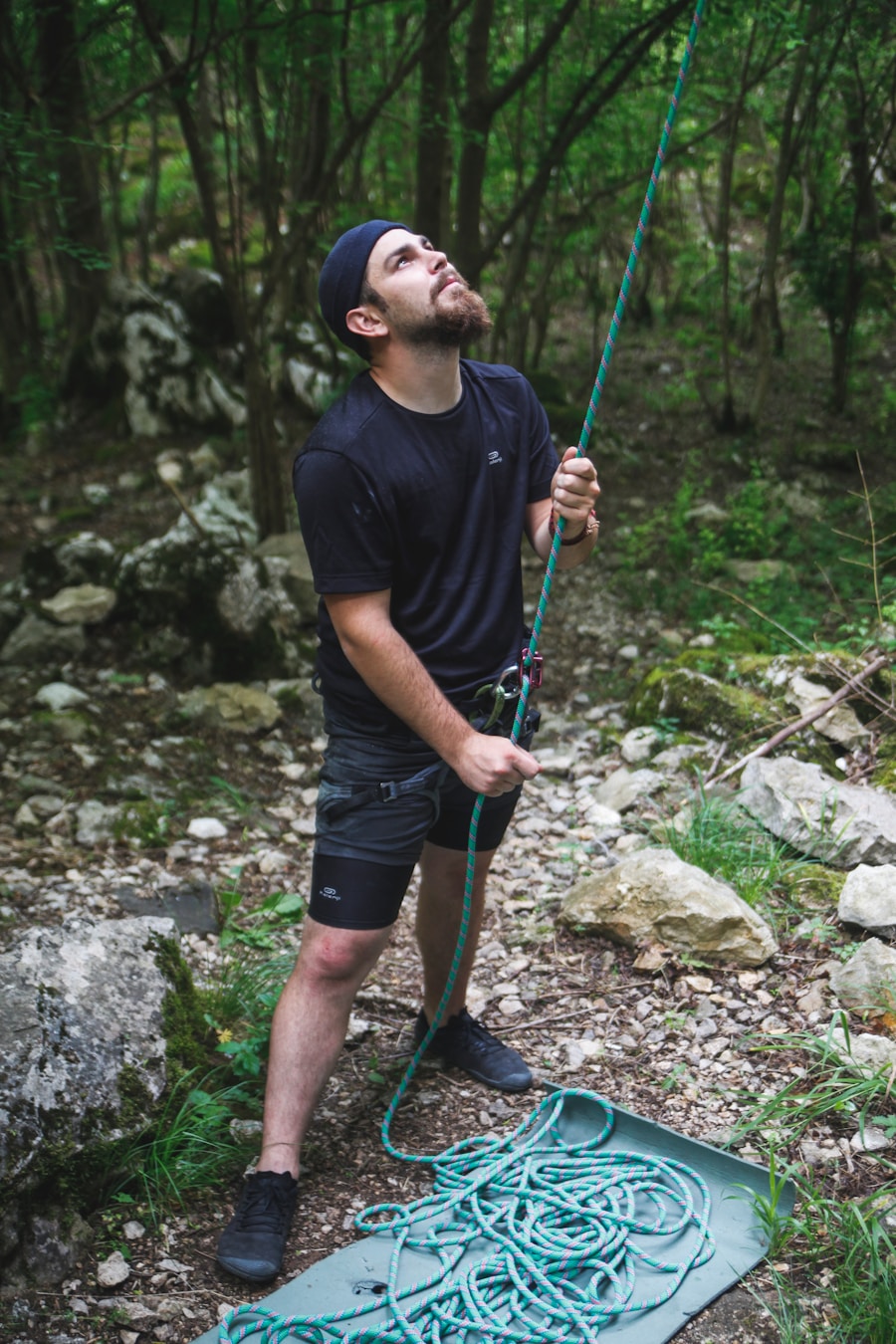
On normal terrain, let your arms swing naturally. As your right foot moves forward, the left pole normally moves with it; when your left foot moves forward, the right pole advances. This opposing rhythm is similar to a natural walking arm swing.
Avoid reaching far ahead with every pole plant. For ordinary forward walking, plant the pole where it can make firm contact without forcing your shoulder forward or making you lean heavily onto the grip.
How to Use the Wrist Straps
For conventional trekking-pole straps, place your hand up through the bottom of the strap and then bring it down onto the grip. Adjust the strap so the heel of your hand can receive support without forcing you to squeeze the handle tightly.
Some poles use manufacturer-specific gloves, release systems, or left/right straps, so follow the instructions supplied with your model.
Using Poles Uphill
On sustained climbs, shorten adjustable poles slightly. Plant them securely and use them to help push your body forward and upward without shrugging your shoulders. On very steep sections, planting both poles together may sometimes provide more stability than maintaining an alternating rhythm.
Using Poles Downhill
For long descents, lengthen the poles slightly and plant them ahead of your feet where the tips can make secure contact. Keep your movement controlled and your body reasonably upright rather than deliberately leaning backward.
Make sure the pole is planted securely before transferring meaningful pressure to it. A tip placed on a loose rock can move just as easily as a poorly placed foot.
Crossing Streams and Other Obstacles
Poles can help during shallow stream crossings by giving you extra contact with the bottom. Test each pole placement before stepping. On rocks, logs, or large steps, place the poles where they improve balance without trapping the shaft between objects.
Warning: A trekking pole is not an anchor. Do not commit your full weight to a pole until you know its tip and locking sections are secure. Recreational trekking poles also are not substitutes for prescribed medical canes, walkers, braces, or forearm crutches.
Hiking Stick Maintenance and Care
| Aspect | Recommendation |
| Cleaning | Wipe away mud and grit after use. Follow the manufacturer’s instructions before applying soap, lubricants, or other cleaners. |
| Storage | Allow wet shafts and straps to dry before long-term storage. Store poles in a clean, dry location. |
| Inspecting | Check carbon sections for cracks or splintering, aluminum sections for serious bends, and all poles for damaged grips, straps, tips, or baskets. |
| Material-Specific Care | Do not routinely varnish or seal aluminum or carbon trekking poles. A wooden staff may need a finish if its maker recommends one. |
| Replacement | Replace or professionally repair damaged structural sections, worn tips, faulty locks, or other parts that cannot safely perform their job. |
After a muddy or wet hike, clean dirt from the shafts, tips, baskets, and locking areas. Dry the poles and straps before long-term storage so moisture and trapped grit do not remain in moving parts.
Inspect the shafts regularly. Carbon-fiber damage can appear as cracking, deep scratches, crushing, or splintering. Aluminum shafts may become bent after a hard impact. A badly damaged shaft should not be trusted simply because it can still be extended.
Locking mechanisms deserve special attention. Extend the pole, secure each lock, and apply moderate pressure before hiking. If a section slips, clean and adjust the locking system according to the manufacturer’s instructions rather than relying on it during a steep descent.
Hiking Stick Alternatives
A single walking staff is the closest alternative to a pair of trekking poles. It leaves one hand free and can provide useful support on relatively easy terrain, although it does not give you the same two-sided support as a pair of poles.
A properly fitted backpack with an effective frame and hip belt can also improve load distribution. However, a supportive backpack is not a direct substitute for poles because it does not provide additional points of ground contact.
Some hikers have traditionally used branches as makeshift walking sticks. For planned hikes, bringing your own staff is the better approach. Do not break branches or remove natural objects from protected areas merely to make a walking stick. Follow local regulations and Leave No Trace practices.
One Hiking Stick or Two Trekking Poles?
One pole can be enough for casual walking, relatively flat trails, or hikers who want one hand free. A pair is generally more useful when you want symmetrical support, are carrying a pack, or expect long climbs, descents, stream crossings, or uneven footing.
Much of the research on lower-extremity loading has studied trekking poles used as a pair, so the benefits measured in those studies should not automatically be assumed to be identical when only one staff is used.
Common Misconceptions About Hiking Sticks
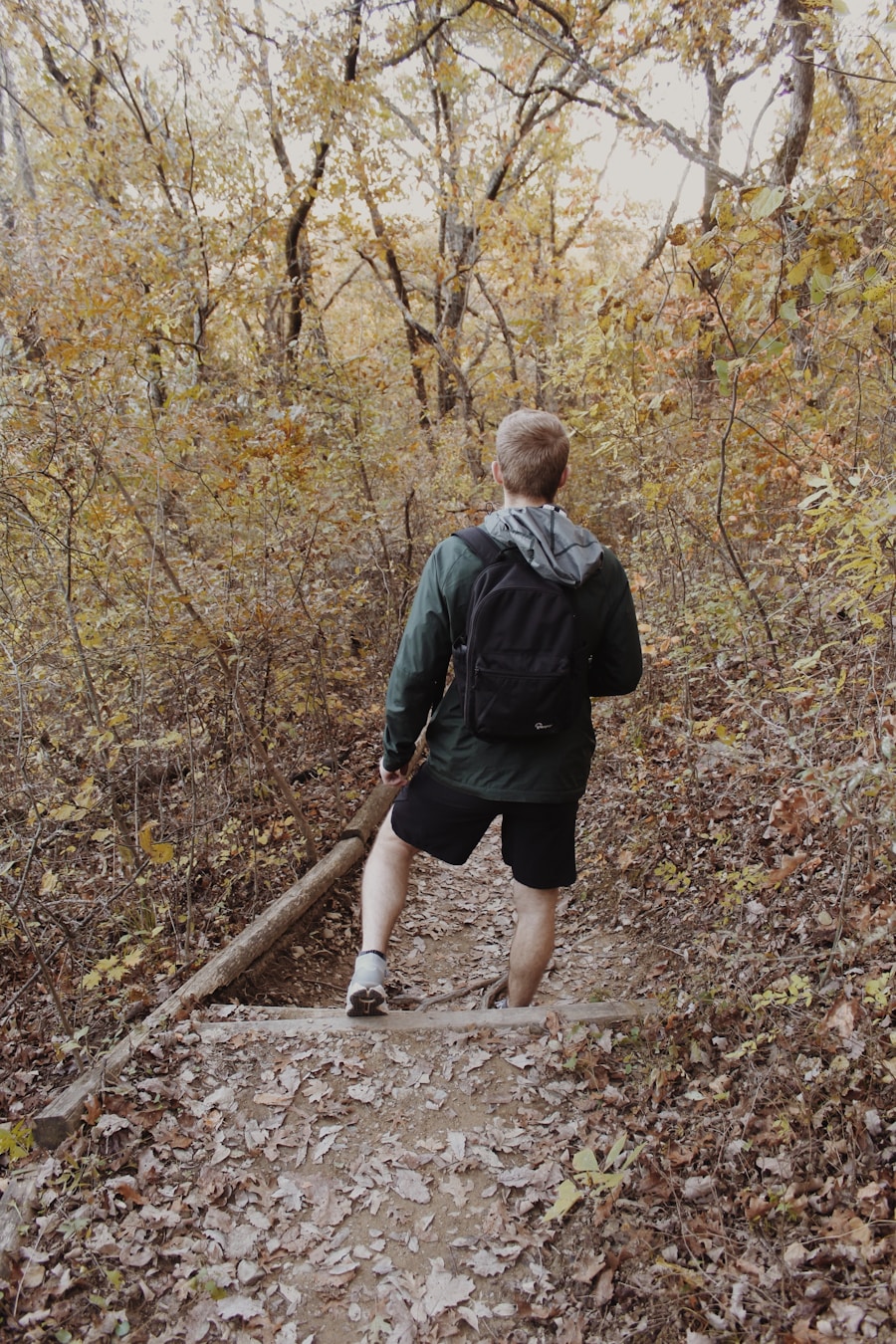
“Trekking Poles Are Only for Older Hikers”
They are not. Backpackers, trail runners, mountaineers, beginners, experienced hikers, and people carrying heavy packs all use trekking poles. Their usefulness depends more on terrain, load, goals, and personal comfort than on age.
“Poles Always Make Hiking Easier”
Not necessarily. Poles can reduce some lower-body loading while increasing upper-body activity and cardiovascular demand. They can also be inconvenient when you need your hands for scrambling, photography, or other tasks.
“Poles Make Everyone Faster”
There is no good reason to promise a speed increase. Experienced users may move more confidently on difficult terrain, but poles also take coordination and require energy. Speed depends on the trail, hiking experience, fitness, load, and technique.
“The More Weight I Put on the Poles, the Better”
Trekking poles are designed to assist your movement, not replace your legs or serve as full-weight medical supports. Excessive loading can cause discomfort, increase upper-body fatigue, and place greater stress on the pole.
Hiking Stick Safety Tips
Adjust your poles before entering difficult terrain and make sure every locking section is secure. On steep descents or rocky ground, establish a firm pole plant before placing significant pressure on the grip.
- Watch where the tips land instead of planting them blindly.
- Avoid wedging a pole between rocks, roots, or bridge boards.
- Keep pole tips under control when other hikers are close behind you.
- Use terrain-appropriate baskets where needed.
- Do not assume a carbide tip makes ice automatically safe.
- Inspect damaged shafts or slipping locks before continuing onto technical terrain.
Poles are only one part of safe hiking. Appropriate footwear, traction when conditions require it, route selection, weather awareness, and sound judgment remain essential.
Warning: If you depend on a cane, walker, brace, crutch, or other mobility device for everyday stability, do not assume ordinary trekking poles provide equivalent support. A clinician or physical therapist can help determine which type of aid is appropriate for you.
Environmental Impact of Hiking Sticks
Like most outdoor equipment, hiking poles have environmental costs associated with raw materials, manufacturing, transport, and eventual replacement. Aluminum and carbon composite use different manufacturing processes, so there is no simple rule that one pole material is automatically the environmentally superior choice in every case.
A practical way to reduce gear waste is to buy durable poles that suit your needs, maintain them correctly, replace individual tips or other serviceable parts when possible, and keep the same pair in use rather than frequently replacing functioning equipment.
Trail behavior matters too. The National Park Service’s Leave No Trace guidance recommends traveling on durable surfaces and staying on established trails rather than widening trails to avoid mud or other obstacles. Pole tips should also be kept on durable surfaces where practical.
Rubber tip protectors can be useful on hard surfaces and in sensitive areas where bare metal tips could create unnecessary marks. Do not break live vegetation or collect natural objects simply to make a walking stick.
Overall, hiking sticks can be valuable tools for hikers of many skill levels. Their strongest advantages are extra stability and the ability to share some hiking loads with the upper body, particularly on uneven ground, descents, and trips with a backpack. Their downsides include extra weight, greater cardiovascular demand, occupied hands, and the possibility of poor pole placement or incorrect adjustment.
A review published in Wilderness & Environmental Medicine found that trekking poles generally decrease lower-extremity loading while increasing cardiovascular demand, with additional benefits for balance and stability in some loaded-walking situations. The best results come from choosing suitable poles, fitting them correctly, practicing a natural technique, and treating them as helpful equipment rather than a guarantee against falls or injuries.
Frequently Asked Questions
What are hiking sticks?
Hiking sticks are poles used to provide support and stability while walking. A single pole is often called a hiking or walking staff, while trekking poles are normally used as a pair. They may be adjustable, fixed-length, telescoping, or folding.
Do hiking sticks help with hiking?
Yes. They can improve stability, provide extra contact with the ground, and reduce some lower-extremity loading. They are especially useful on descents, uneven terrain, and hikes with a loaded backpack.
How do hiking sticks provide support?
When the pole tip is securely planted, your arms can apply force through the pole to the ground. This creates additional support and can shift part of the mechanical work away from the legs while giving you extra points of contact for balance.
Do trekking poles help your knees?
They can reduce several measures of knee and lower-extremity loading, particularly while walking downhill. That does not guarantee that trekking poles will prevent or eliminate knee pain for every hiker.
Are there disadvantages to using hiking sticks?
Yes. They add gear weight, occupy your hands, require coordination, and can catch between rocks or roots. Incorrect sizing may cause discomfort, and using poles can increase overall energy expenditure by involving more upper-body muscle.
Who can benefit from using hiking sticks?
Many hikers can benefit, including backpackers, beginners, experienced hikers, and people traveling on steep or uneven terrain. Anyone who relies on a medical mobility aid should make sure recreational trekking poles provide an appropriate level of support before replacing that aid.
How should hiking sticks be used?
On level ground, begin with a pole height that gives roughly a 90-degree elbow bend. Walk with a natural arm swing, usually moving the pole opposite the forward foot. Shorten adjustable poles slightly for sustained climbs and lengthen them slightly for long descents.
Is one hiking stick enough, or should I use two?
One staff may be enough on easy terrain or when you want one hand free. Two trekking poles generally provide more balanced support for backpacking, descents, steep slopes, stream crossings, and uneven terrain.
Do trekking poles burn more calories?
Research indicates that using trekking poles can increase oxygen consumption, heart rate, and energy expenditure at a given walking pace because the upper body becomes more involved. The exact difference varies with technique, terrain, speed, and the hiker.
Sources
- Hawke & Jensen, Wilderness & Environmental Medicine — trekking-pole evidence review — supports the balance of lower-extremity unloading, stability benefits, and increased cardiovascular demand.
- Schwameder et al., Journal of Sports Sciences — knee joint forces during downhill walking — supports the measured reductions in several downhill knee-loading variables.
- Bohne & Abendroth-Smith, Medicine & Science in Sports & Exercise — examines downhill trekking-pole use while carrying external loads.
- Saunders et al., Journal of Strength and Conditioning Research — supports increased physiological demand when hiking with trekking poles.
- LEKI Trekking Pole Guidance — supports the 90-degree sizing guideline and uphill/downhill adjustment principles.
- National Park Service — Leave No Trace: Travel and Camp on Durable Surfaces — supports responsible trail and environmental practices.

