

Last Updated on July 25, 2026 by Daniel Globe
WestJet began flying in 1996 as a low-cost alternative in Canada and has since developed into a much larger value-focused airline with domestic, transborder, and long-haul service. Its operations now include WestJet mainline aircraft and regional flights operated by WestJet Encore. For travelers, the important question is not whether an airline makes broad safety promises, but whether its record, oversight, training, maintenance, and response to incidents support those promises.
Quick Answer
Yes. Based on its operating history, Canadian regulatory oversight, IOSA status, and publicly available investigation records, WestJet is generally considered a safe airline. It has no recorded fatal accident in WestJet or WestJet Encore service, although non-fatal incidents have occurred. No airline can guarantee a completely risk-free flight.
Key Takeaways
- Public safety records do not show a fatal accident involving an aircraft operating for WestJet or WestJet Encore.
- A fatality-free history does not mean incident-free operations. WestJet aircraft have been involved in non-fatal occurrences and investigations.
- WestJet is regulated by Transport Canada and must comply with Canadian requirements for training, maintenance, emergency procedures, and safety management.
- WestJet is an IATA member, which means it must maintain registration under the IATA Operational Safety Audit program.
- Available evidence supports viewing WestJet as a safe airline, but commercial rankings and past performance cannot guarantee the outcome of a future flight.
Disclosure: As an Amazon Associate I earn from qualifying purchases. Some links on this page are affiliate links, at no extra cost to you.
WestJet at a Glance: Current Operations and Fleet
WestJet is headquartered in Calgary, Alberta. According to the airline’s official history, it began operating in 1996 with three aircraft. It now connects Canadian cities with destinations in the United States, the Caribbean, Central America, Europe, Asia, and other international markets.
The airline has low-cost roots, but “value airline” or “hybrid airline” is now a more complete description. WestJet sells different fare and cabin options, operates regional and long-haul services, and uses both narrow-body and wide-body aircraft.
WestJet’s current fleet information identifies these main aircraft families:
- Boeing 737-700 and 737-800: Narrow-body aircraft used on many domestic, U.S., and international routes.
- Boeing 737-8 MAX: A newer narrow-body aircraft that forms an important part of WestJet’s fleet.
- Boeing 787-9 Dreamliner: WestJet’s wide-body aircraft for long-haul and high-demand routes.
- De Havilland Dash 8-400: A regional turboprop operated by WestJet Encore.
Note: The Dash 8-400 is also widely known as the Q400. Older articles and investigation reports may call it a Bombardier Q400 because Bombardier was the type-certificate holder at the time. The current type-certificate holder is De Havilland Aircraft of Canada.
WestJet Safety Record: What the Evidence Shows
Publicly available airline-safety databases and current rating information do not show a fatal accident involving an aircraft while it was operating for WestJet or WestJet Encore. That is a meaningful positive part of the airline’s record, especially because WestJet has operated scheduled passenger flights since 1996.
WestJet is also a current International Air Transport Association member. IATA states that its member airlines must remain registered under the IATA Operational Safety Audit, commonly called IOSA. The audit examines areas such as flight operations, operational control, aircraft engineering and maintenance, cabin operations, ground handling, cargo, and security management.
A fatality-free record is not the same as an incident-free record. A trustworthy safety review should acknowledge both the airline’s positive history and the occurrences from which safety lessons were learned.
Like other large airlines, WestJet has experienced diversions, rejected takeoffs, mechanical events, hard landings, aircraft damage, and other reportable occurrences. These events do not automatically mean that an airline is broadly unsafe. Their seriousness, causes, crew response, investigation findings, and corrective actions all matter.
A documented WestJet Encore occurrence
On April 13, 2024, a WestJet Encore Dash 8-400 experienced an aft-fuselage strike and hard landing at Calgary International Airport. The aircraft was carrying 78 passengers and four crew members. The Transportation Safety Board of Canada reported substantial damage to the lower aft fuselage, but there were no injuries and passengers deplaned normally.
The TSB investigation report said the pilots held the appropriate licences and found no indication that an aircraft component or system malfunction contributed to the occurrence. Afterward, WestJet Encore provided the pilots with additional simulator training, revised training material, increased emphasis on pitch awareness and landing technique, and communicated the lessons to its flight crews.
This example shows why the existence of an incident should not be hidden or described as proof of an unsafe airline. Investigation, maintenance inspection, corrective training, and procedural improvement are central parts of a functioning aviation-safety system.
Safety Measures and Protocols at WestJet
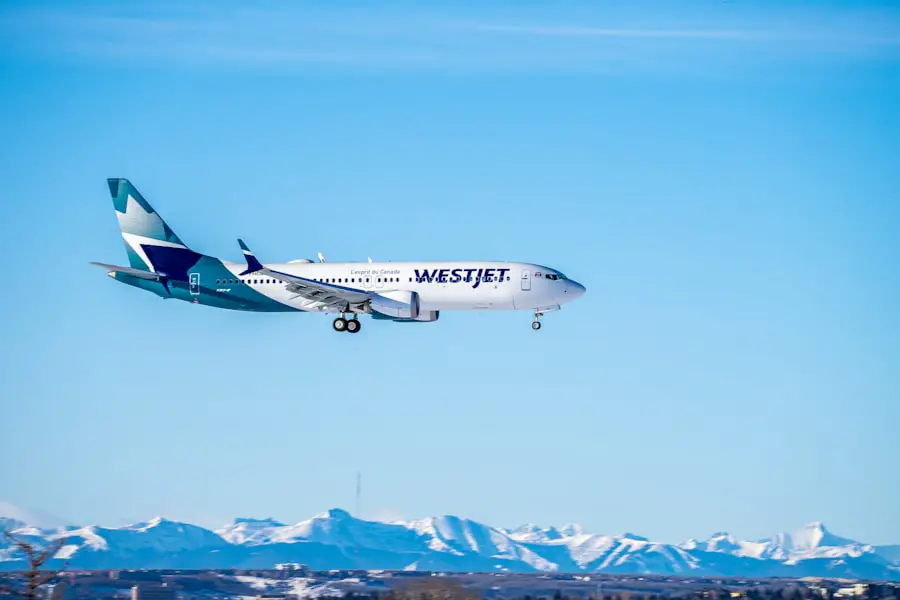
WestJet operates within Canada’s regulatory framework for commercial airlines. Large Canadian air operators must maintain a Safety Management System, or SMS. Transport Canada defines an SMS as a documented process that combines operational, technical, human, and management resources to identify hazards and control aviation risks.
Under the Transport Canada SMS framework, a compliant system includes:
- A formal safety policy and defined responsibilities
- Processes for identifying hazards and evaluating risk
- Internal reporting and analysis of incidents and hazards
- Corrective action intended to prevent recurrence
- Training that prepares personnel to perform assigned duties
- Measurable safety goals and performance monitoring
- Periodic reviews and audits
WestJet’s complete internal manuals, risk registers, audit findings, and emergency plans are not public. Therefore, outside articles should not invent specific internal procedures. What can be verified is that WestJet operates as a Canadian airline under regulations requiring approved operational systems, training programs, maintenance control, safety management, and regulatory oversight.
Training and Qualifications of WestJet Pilots and Crew
| Role | Qualification and Training | Ongoing Requirements |
|---|---|---|
| Captains | Must hold the licence, medical certification, instrument privileges, aircraft qualification, experience, and company authorization required for the operation and command position. | Recurrent ground and simulator training, pilot proficiency checks, operating procedures, emergency scenarios, and applicable recency requirements. |
| First Officers | Must hold an appropriate Canadian pilot licence, medical certificate, instrument rating, aircraft qualification, and company training for the assigned seat. | Recurrent training and proficiency checking covering normal, abnormal, and emergency operations. |
| Flight Attendants | Complete a Transport Canada-approved airline training program. Canada does not rely on a general stand-alone “crew member certificate” for airline flight attendants. | Initial, annual, aircraft-type, emergency, first-aid, requalification, and practical-drill requirements as applicable. |
The applicable Commercial Air Service Standard 725 contains detailed requirements for airline operations and pilot training. It includes pilot proficiency checks that assess aircraft knowledge, procedures, aircraft control, instrument operations, and responses to normal, abnormal, and emergency situations.
Simulator training allows pilots to practise events that would be unsafe or impractical to reproduce in an operating aircraft, including engine failures, rejected takeoffs, system malfunctions, low-visibility procedures, and emergency approaches. Training alone cannot prevent every error, but recurrent checking helps confirm that crews remain qualified and can apply approved procedures.
Flight attendants are also safety professionals, not simply customer-service staff. Transport Canada’s Flight Attendant Training Standard, with its third edition effective December 1, 2025, covers the development of approved operator training programs. Required subjects can include evacuation, firefighting, decompression, emergency equipment, first aid, passenger management, aircraft-specific procedures, and annual practical drills.
Maintenance and Inspection Procedures at WestJet
Airline maintenance is not based on a single simple schedule such as “an inspection every few months.” Different aircraft structures, engines, systems, components, and operating conditions have separate inspection, servicing, replacement, and life-limit requirements.
Under Canada’s air-operator maintenance rules and Standard 726, an operator must maintain a documented maintenance-control system. This system governs how maintenance is scheduled, recorded, deferred when legally permitted, completed, inspected, and certified before an aircraft returns to service.
Important parts of airline maintenance control include:
- Approved maintenance schedules and aircraft-specific instructions
- Preflight, transit, service, and scheduled inspection tasks as applicable
- Recording and assessment of defects reported by pilots or maintenance personnel
- Airworthiness-directive and mandatory-instruction compliance
- Control of replacement parts, technical records, and component life limits
- Maintenance performed or certified by appropriately authorized personnel
- A quality-assurance program that checks the maintenance system itself
- Special inspections after events such as hard landings, lightning strikes, bird strikes, or abnormal system indications
A separate TSB investigation report identifies WestJet as an airline operator certified under Canadian Aviation Regulations Subpart 705 and as an approved maintenance organization under Subpart 573. That status does not mean mechanical problems can never occur. It means the airline must operate within an approved system for detecting, documenting, correcting, and certifying maintenance work.
Pro Tip: A maintenance delay, aircraft substitution, return to the gate, or cancelled flight can be frustrating, but it is not automatically evidence of an unsafe airline. It can indicate that a defect or uncertainty was identified and the aircraft was withheld until the required checks were completed.
Incident Response and Communication at WestJet

WestJet’s complete emergency-response and crisis-management manuals are not publicly available. However, Canadian airline operations require procedures for emergencies, crew coordination, passenger briefings, communication, aircraft evacuation, occurrence reporting, and coordination with air traffic control, airports, emergency services, maintenance teams, and regulators.
The response to an occurrence depends on its nature. It may involve:
- Declaring an emergency or requesting priority handling
- Diverting, rejecting a takeoff, returning to the departure airport, or landing at the nearest suitable airport
- Having airport rescue and firefighting services stand by
- Inspecting the aircraft before another flight
- Preserving flight-recorder and maintenance information
- Reporting the occurrence to the appropriate authorities
- Providing additional crew training or changing procedures when evidence supports it
The TSB is independent from WestJet and Transport Canada. Its role is to investigate selected occurrences to advance transportation safety, not to assign civil or criminal liability. The 2024 WestJet Encore hard-landing report provides a useful example: the aircraft was inspected, the involved pilots completed additional simulator training, and the airline amended parts of its training curriculum and guidance.
How WestJet Compares With Other Airlines
It is not responsible to claim that WestJet has “one of the lowest accident rates” without publishing the flight exposure, time period, fleet scope, incident definitions, and comparison method. Larger airlines normally accumulate more reported events simply because they operate more flights.
A more useful comparison considers several independent signals:
| Safety Signal | Evidence for WestJet | Important Limitation |
|---|---|---|
| Fatal-accident history | No recorded fatal accident in WestJet or WestJet Encore service. | Past performance cannot guarantee a future result. |
| Government oversight | WestJet operates under Canadian airline, training, maintenance, and SMS requirements overseen by Transport Canada. | Certification confirms regulatory compliance; it does not mean an operator will never experience an incident. |
| IOSA status | WestJet is an IATA member and must maintain IOSA registration. | IOSA is an important operational audit, but it is not a promise of zero accidents. |
| Investigation transparency | Canadian TSB reports provide public findings for selected WestJet occurrences. | Not every reported occurrence receives a full public investigation. |
| Commercial ratings | WestJet has received high scores from commercial airline-rating organizations. | Ratings use proprietary criteria and should supplement, not replace, regulatory and investigation evidence. |
Using these signals together, WestJet compares favorably with established Canadian and international airlines. The evidence does not support portraying it as risk-free, but it also does not reveal a reason for an ordinary traveler to avoid the airline on safety grounds.
Customer Satisfaction and Safety Are Not the Same Thing
Passengers may judge an airline negatively because of cancellations, cramped seating, baggage problems, refund disputes, communication failures, or poor customer service. These experiences matter, but they are not direct measurements of aircraft airworthiness, pilot competence, or operational safety.
The reverse is also true. Friendly service and positive reviews do not prove that an airline is safe. Passenger surveys mainly measure the customer experience, while safety assessments rely on operational evidence such as certification, audits, maintenance control, training, accident history, incident findings, and regulatory compliance.
Safety-related delays can create especially confusing situations. An aircraft may be removed from service because of a warning light, inspection requirement, weather limitation, crew-duty restriction, or maintenance concern. A passenger may experience the decision as poor service, even though delaying or cancelling the flight may be the safer operational choice.
Regulatory Compliance and Oversight of WestJet
Several organizations have different roles in WestJet’s safety framework:
- Transport Canada: Certifies and oversees Canadian air operators, establishes aviation regulations and standards, and monitors compliance.
- Transportation Safety Board of Canada: Independently investigates selected accidents and incidents and issues findings or safety recommendations.
- IATA: Operates IOSA and other industry safety programs. It is an industry association, not Canada’s aviation regulator.
- Aircraft manufacturers and aviation authorities: Publish operating instructions, service information, and mandatory airworthiness requirements that apply to aircraft and components.
- WestJet: Must maintain its approved operating, training, maintenance, emergency, and safety-management systems and correct identified deficiencies.
Transport Canada issues air operator certificates to commercial services that demonstrate compliance with applicable aviation regulations. Continued operation also involves inspections, surveillance, document reviews, approvals, mandatory reporting, and enforcement when required.
International flights can involve additional requirements from foreign aviation and airport authorities. However, the primary oversight of WestJet as a Canadian airline remains with Transport Canada.
Recent Safety Improvements and Future Priorities
The original article claimed that WestJet planned to add specific data-analytics and simulation technologies, but no supporting announcement was provided. A more reliable way to discuss improvement is to focus on documented action.
Following the April 2024 WestJet Encore hard landing, the airline:
- Required additional simulator training for the involved pilots before they returned to flying duties
- Communicated information about pitch awareness, tail strikes, and hard landings to flight crews
- Added emphasis on landing technique, power management, pilot-monitoring callouts, and pitch awareness
- Adjusted parts of initial and recurrent simulator training
WestJet must also keep its programs aligned with changing regulations and standards. One recent example is Transport Canada’s third-edition Flight Attendant Training Standard, which became effective on December 1, 2025.
Future safety performance will depend on the same factors that affect every airline: disciplined daily operations, effective reporting, maintenance quality, training, regulatory oversight, management decisions, response to new hazards, and the willingness to act on investigation findings.
Is the WestJet Boeing 737 MAX safe?
WestJet operates the Boeing 737-8 MAX. Canada grounded the MAX in March 2019 after two fatal crashes involving other airlines. Transport Canada later completed an independent review and required design modifications, maintenance actions, revised procedures, and additional pilot training.
Transport Canada issued an airworthiness directive on January 18, 2021, and permitted commercial MAX operations to resume in Canadian airspace on January 20, 2021. Its return-to-service information states that Canadian operators were required to implement the mandated changes and training before operating the aircraft again.
The MAX’s past design and certification failures are important and should not be minimized. At the same time, the aircraft currently operating in WestJet’s fleet is subject to the post-grounding requirements, continuing-airworthiness directives, airline maintenance, and regulatory oversight applicable in Canada.
Is WestJet a Safe Airline?
Based on the evidence available, WestJet is generally a safe airline. It has a long operating history without a recorded fatal accident in WestJet or WestJet Encore service, operates under Canadian airline regulations, maintains IOSA status through its IATA membership, and uses approved systems for crew training, maintenance, safety management, and incident response.
That conclusion should remain balanced. WestJet has experienced non-fatal incidents, including occurrences that caused substantial aircraft damage. Those events matter, but they should be evaluated through investigation findings and corrective actions rather than ignored or used alone to label the entire airline unsafe.
If you are considering flying with WestJet, check whether the flight is operated by WestJet mainline, WestJet Encore, or a partner airline. You can also review the aircraft type, Transport Canada information, IATA membership, and relevant TSB investigation records. These sources provide more useful safety evidence than anonymous reviews or unsupported “safest airline” claims.
Warning: No airline, aircraft type, or safety rating can guarantee that an incident will never occur. During any flight, follow crew instructions, pay attention to the safety briefing, keep your seat belt fastened whenever you are seated, and do not interfere with emergency equipment or procedures.
Frequently Asked Questions
Is WestJet a safe airline?
Yes. WestJet is generally considered safe based on its fatal-accident history, Transport Canada oversight, IOSA status, approved crew-training and maintenance systems, and publicly available investigation evidence. This does not mean that the airline is incident-free or that any future flight is guaranteed to be risk-free.
Has WestJet ever had a fatal crash?
Public safety records do not show a fatal accident involving an aircraft while it was operating for WestJet or WestJet Encore. The airline has experienced non-fatal incidents and aircraft damage, so its record should be described as fatality-free rather than incident-free.
What safety measures does WestJet have in place?
WestJet must maintain systems covering hazard reporting, risk management, crew training, operating procedures, aircraft maintenance, quality assurance, emergency response, occurrence reporting, and corrective action. These systems operate within the Canadian Aviation Regulations and Transport Canada oversight.
Is WestJet Encore as safe as WestJet?
WestJet Encore is a separate regional operator within the WestJet Group and uses De Havilland Dash 8-400 aircraft. It is subject to applicable Canadian certification, crew-training, maintenance, operating, and safety requirements. Its incidents should be reviewed under the correct operator name rather than automatically combined with WestJet mainline records without explanation.
Is WestJet’s Boeing 737 MAX safe to fly?
WestJet’s Boeing 737-8 MAX aircraft operate under the modifications, maintenance requirements, procedures, and pilot-training conditions established when Transport Canada approved the type’s return to service in January 2021. The aircraft remains subject to continuing regulatory and airworthiness oversight.
Does an emergency landing mean WestJet is unsafe?
No. An emergency or precautionary landing can result from a mechanical indication, medical problem, weather issue, bird strike, unusual smell, or another situation requiring extra caution. The cause, crew response, damage, injuries, investigation findings, and corrective actions are more informative than the word “emergency” alone.
What does IOSA registration tell passengers?
IOSA is an internationally recognized audit program covering major areas of airline operations. WestJet must maintain IOSA registration as an IATA member. It is a useful positive safety signal, but it does not replace government certification or guarantee that an airline will never have an accident or incident.
Where can I check WestJet’s safety record?
Use the Transportation Safety Board of Canada investigation database, Transport Canada regulations and safety information, the IATA member and IOSA pages, WestJet’s official fleet information, and reputable aviation-safety databases. Avoid relying only on customer reviews or unsourced airline-ranking articles.
Sources
- WestJet history and WestJet fleet — company history, current aircraft types, and the distinction between mainline and Encore aircraft.
- Transport Canada: Safety Management Systems — required SMS elements, including hazard identification, risk management, internal reporting, training, corrective action, and audits.
- Transport Canada Standard 725 — airline operating, pilot-training, proficiency-check, cabin-safety, and emergency requirements.
- Transport Canada Flight Attendant Training Standard — initial, annual, emergency, practical, aircraft-type, and requalification training requirements.
- Transport Canada Standard 726 — maintenance-control systems, maintenance manuals, technical records, and quality assurance.
- Transportation Safety Board report A24W0038 — the April 2024 WestJet Encore hard landing, aircraft damage, investigation findings, and safety action taken.
