

Last Updated on July 25, 2026 by Daniel Globe
United Airlines can reasonably be considered safe by modern U.S. commercial-airline standards. It operates under Federal Aviation Administration oversight, maintains an FAA-approved Safety Management System, and must follow federal rules for pilot training, aircraft maintenance, and cabin safety. However, no airline can promise zero risk, and United has experienced accidents and investigated incidents during its history.
A fair assessment should consider the type and date of each event, current regulatory findings, the airline’s maintenance and training systems, and whether a claim comes from an official investigation or an informal rating website.
Quick Answer
Yes. United Airlines is generally considered safe to fly. Its most recent enhanced FAA review, completed in October 2024, identified no significant safety issues. United has had nonfatal incidents and remains subject to regulatory scrutiny, but the available evidence does not show that passengers should avoid the airline for safety reasons.
Key Takeaways
- United’s last fatal mainline crash not caused by a criminal attack occurred in 1991, but a 1997 turbulence accident also caused one passenger death.
- United Flights 175 and 93 were destroyed in the September 11, 2001 terrorist attacks, which should be separated from normal operational accident statistics.
- The FAA completed an enhanced review of United in October 2024 and reported that it found no significant safety issues.
- A 2026 DOT Inspector General audit identified weaknesses in the FAA resources used to oversee United’s maintenance, not a blanket finding that United aircraft were unsafe.
- Pilot training and aircraft maintenance are governed by FAA-approved programs rather than simple airline promises or customer reviews.
- Aircraft age alone does not determine whether an airplane is safe or airworthy.
Warning: No airline can guarantee a risk-free flight. Safety should be evaluated through current regulatory findings, official accident investigations, training requirements, and maintenance compliance rather than a single viral video or isolated headline.
How Safe Is United Airlines?
United is a large U.S. air carrier operating under Title 14 Code of Federal Regulations Part 121. Like other major U.S. airlines, it must use FAA-approved operating, training, maintenance, and safety-management programs. The FAA maintains offices with responsibility for overseeing United’s worldwide flight operations, aircrew training, and maintenance program.
The strongest recent evidence is the FAA’s 2024 Certificate Holder Evaluation Program review. The agency began enhanced oversight after several widely reported incidents and completed the review on October 2, 2024. According to the FAA’s official statement, the review did not identify significant safety issues, and the enhanced approval process for adding aircraft and services ended.
That finding does not mean United has never had an accident, that every event is minor, or that oversight concerns should be ignored. It means the FAA’s focused 2024 evaluation did not uncover evidence supporting the conclusion that United had a significant systemic safety problem.
United Airlines Safety Record and Accident History
What the Historical Record Actually Shows
Accident-history claims can become misleading when they combine crashes, turbulence injuries, hijackings, hull losses, and minor incidents into one number. United’s history is better explained through specific, documented events:
- United Flight 585, March 3, 1991: A Boeing 737 crashed near Colorado Springs, killing all 25 people aboard. The NTSB investigation remains the clearest reference point for United’s last fatal mainline crash that was not caused by a criminal attack.
- United Flight 826, December 28, 1997: A Boeing 747 encountered severe turbulence over the Pacific. One passenger died and many occupants were injured. The aircraft did not crash, but the NTSB classified the occurrence as an accident with one fatality. The case is documented in the NTSB docket.
- United Flights 175 and 93, September 11, 2001: Both passenger aircraft were hijacked and destroyed in coordinated terrorist attacks. The events are documented by the National Commission on Terrorist Attacks Upon the United States. They should not be described as routine airline operational accidents.
Note: “Fatal crash,” “fatal accident,” “hull loss,” “incident,” and “terrorist attack” do not mean the same thing. A precise safety article should state which category it is discussing and the date range used.
Recent Incidents and Investigations
United has experienced nonfatal accidents and incidents since 2001. These include runway excursions, component problems, turbulence injuries, diversions, and other events reviewed by the FAA or NTSB. Their existence means the original claim of “no major incidents in the last two decades” was not accurate.
For example, on February 6, 2024, the rudder pedals on a United Boeing 737-8 reportedly became restricted during the landing rollout at Newark. The aircraft taxied to the gate, and no injuries were reported. The NTSB investigation later led to urgent recommendations concerning a rudder-control component installed on some Boeing 737 aircraft.
This distinction matters: an investigated incident can uncover a real hazard and lead to corrective action without proving that the airline as a whole is unsafe. Reporting, investigation, corrective action, and regulatory follow-up are core parts of the aviation safety system.
Federal Oversight Developments in 2026
In February 2026, the U.S. Department of Transportation Office of Inspector General reported that the FAA’s oversight of United’s maintenance practices was hindered by inspector shortages, ineffective workforce planning, incomplete inspections, and difficulty accessing airline Safety Management System data.
The DOT OIG audit made six recommendations to improve the FAA’s oversight process. Its findings are important and should not be minimized. However, the report primarily criticized the FAA’s staffing, planning, inspection, and data-access systems. It did not issue a general finding that United’s fleet was unairworthy or unsafe for passengers.
On July 16, 2026, the FAA also proposed a $255,000 civil penalty over alleged drug-and-alcohol testing violations involving a flight attendant. The proposal is an allegation that United may answer through the enforcement process. It is a regulatory-compliance matter, but it is not an aircraft-defect finding or an accident determination.
United Airlines Safety Measures
Safety Management System
United maintains a formal Safety Management System, or SMS, aligned with FAA and International Civil Aviation Organization standards. Part 121 airlines are required to use an SMS under 14 CFR Part 5.
United describes its SMS as a structured process for identifying hazards, assessing risk, tracking corrective actions, monitoring performance, and promoting a safety-focused culture. Its four main components are safety policy, safety-risk management, safety assurance, and safety promotion.
According to United’s official Safety Management System disclosure, the airline uses voluntary, nonpunitive employee-reporting programs covering flight, dispatch, ground, inflight, and technical-operations safety. These reports can help identify trends that might not be visible from a single event.
Data-Driven Risk Mitigation
Data analysis does not replace inspections, professional judgment, or regulatory oversight. It helps safety teams compare reports, flight information, equipment data, and recurring patterns so that hazards can be investigated before they contribute to a more serious event.
United states that its operational, digital-technology, and safety teams use data science and trend analysis to identify emerging risks. Effective use of that information depends on accurate reporting, access to relevant records, qualified analysts, and follow-through when a potential hazard is identified.
United Airlines Pilot Training and Experience
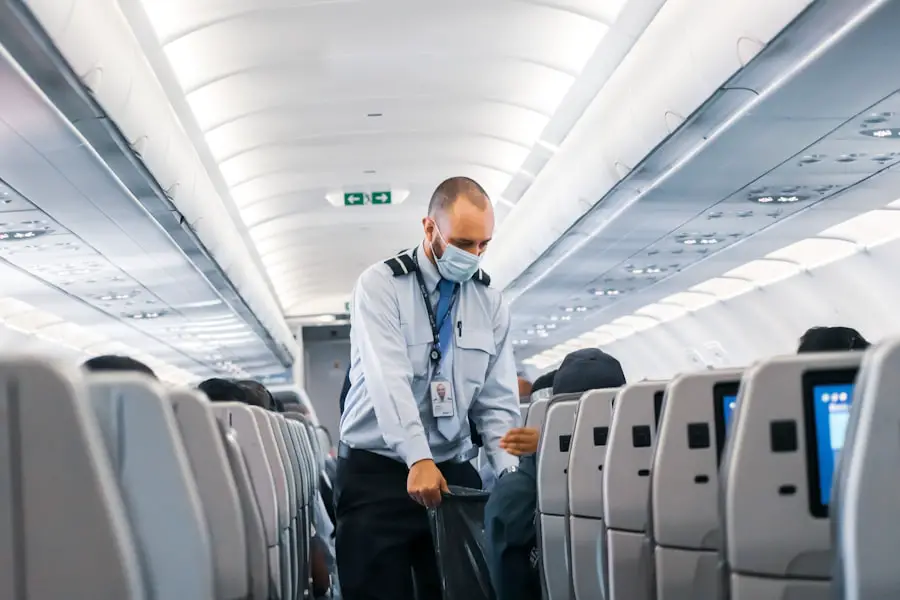
United pilots must hold the certificates, ratings, medical qualifications, and experience required for their assigned positions. United’s current pilot-career information states that applicants seeking a direct first-officer position must hold an unrestricted Airline Transport Pilot certificate and meet the airline’s hiring requirements.
United operates a major flight-training facility in Denver and uses classroom instruction, full-flight simulators, procedural training, evaluations, and aircraft-specific qualification programs. More information about United’s pilot pathways and requirements is available on its official pilot careers page.
Training does not stop after initial qualification. Under 14 CFR §121.427, recurrent training must keep crewmembers adequately trained and currently proficient for their aircraft type and position. Pilot recurrent training includes ground instruction, crew-resource management, extended-envelope training, simulator maneuvers, windshear procedures, and proficiency checks or approved substitutes.
Experience is valuable, but raw flight-hour totals do not prove that every pilot will respond perfectly in every situation. A stronger safety indicator is whether pilots meet qualification standards, complete approved recurrent training, pass required checks, follow procedures, and participate in a system that reports and corrects hazards.
United Airlines Maintenance and Inspection Procedures
| Maintenance Activity | When It Occurs | What It May Cover |
|---|---|---|
| Routine and transit checks | Before, after, or between flights as required by the approved program | Visible condition, fluids, tires, brakes, lights, recorded defects, and operational items |
| Scheduled system and structural tasks | At specified calendar, flight-hour, or flight-cycle limits | Avionics, flight controls, structures, doors, emergency equipment, and other aircraft systems |
| Engine, landing-gear, and component work | According to approved limits, condition monitoring, manufacturer instructions, and removal criteria | Inspection, testing, repair, replacement, overhaul, and return-to-service documentation |
| Airworthiness-directive compliance | By the deadline and repeat interval specified in the directive | Mandatory inspections, modifications, operating limits, or component replacements addressing an unsafe condition |
There is no credible basis for claiming that every United engine is inspected once every six months, every avionics system once every three months, every landing gear assembly annually, or every structure once every two years. Actual maintenance timing varies by aircraft model, component, usage, condition, manufacturer instructions, approved maintenance-review data, and regulatory requirements.
The FAA’s active Air Carrier Maintenance Programs guidance explains that a carrier’s maintenance program covers inspection, overhaul, repair, preservation, parts replacement, recordkeeping, continuing analysis, surveillance, and other elements needed to keep its aircraft airworthy.
United employs maintenance and engineering personnel and may also use approved outside maintenance providers. Regardless of who performs the work, the air carrier remains responsible for ensuring that its aircraft are maintained according to its approved program and applicable regulations.
Condition-monitoring and predictive tools can help maintenance teams identify abnormal trends in engines, avionics, and other systems. These tools support rather than replace physical inspections, approved procedures, properly calibrated equipment, maintenance records, and qualified sign-off.
United Airlines Emergency Response Protocols
United’s emergency planning covers situations such as aircraft accidents, medical events, severe weather, security threats, cyber incidents, natural disasters, and major operational disruptions. The airline states that its Emergency Operations Center can coordinate teams across the company during a critical event.
United also reports conducting regular exercises and formal post-event reviews. Exercises allow teams to test communication, command responsibilities, family assistance, operational recovery, coordination with public agencies, and the process for correcting weaknesses found during a drill.
Flight attendants receive initial and recurrent safety training covering emergency equipment, passenger briefings, evacuation duties, firefighting, first aid, crew coordination, and other aircraft-specific procedures. Federal recurrent-training requirements apply to flight attendants as well as pilots and dispatchers.
Pro Tip: The most useful safety action available to a passenger is simple: listen to the briefing, locate the nearest exits, read the aircraft-specific safety card, and keep the seat belt fastened whenever seated. The FAA notes that unexpected turbulence can injure unrestrained passengers even when the aircraft remains under control.
United Airlines Fleet Age and Maintenance History
Cabin equipment and entertainment systems are among the many installed systems managed across an airline fleet.
As of December 31, 2025, United reported 1,066 mainline aircraft with an average age of 15.3 years.
The figures come from United Airlines Holdings’ 2025 Form 10-K filed with the SEC. The fleet included newer Airbus A321neo and Boeing 737 MAX aircraft as well as older Boeing 757, 767, 777, Airbus A319, Airbus A320, and earlier-generation 737 aircraft.
Advanced Safety Features
Newer aircraft may include updated flight-deck displays, more efficient engines, newer cabin systems, improved health-monitoring functions, and design changes introduced after earlier safety lessons. That does not mean an older aircraft is automatically unsafe.
An aircraft may remain in passenger service only while it meets airworthiness requirements and the carrier’s approved maintenance program. Older aircraft can require additional inspections, modifications, component replacements, corrosion-prevention work, and structural programs based on age and accumulated cycles.
Data-Driven Decision Making
Maintenance records document inspections, deferred items, repairs, component changes, airworthiness-directive compliance, modifications, and other work throughout an aircraft’s service life. Engineering and maintenance teams can use these records with flight-hour, cycle, and condition data to identify recurring problems and plan corrective work.
Reliable decision-making depends on complete records, trained personnel, access to relevant data, effective internal auditing, and meaningful FAA oversight. The 2026 DOT OIG report is relevant because it found that the FAA office overseeing United needed better staffing, planning, inspection resources, and access to SMS data.
Optimizing Fleet Management
United can retire, sell, store, modify, or replace aircraft based on reliability, maintenance cost, fuel use, parts availability, customer needs, and fleet strategy. Fleet renewal can add newer technology, but buying new aircraft is not a substitute for maintaining older aircraft correctly during the years they remain in service.
United Airlines Safety Ratings and Industry Comparisons
Private airline-rating websites may provide a convenient summary, but their scores should be treated as secondary information. Different sites use different formulas, update schedules, accident definitions, and weighting systems. A high score is not a regulatory certification, while a lower score does not automatically prove an airline is unsafe.
For a stronger comparison, check:
- FAA certification and current oversight statements.
- NTSB accident and incident records.
- The date and scope of any government audit.
- Whether an event involved United mainline or a regional United Express operator.
- Whether the event was an accident, incident, maintenance finding, passenger disturbance, weather diversion, or manufacturer-wide issue.
- Whether corrective action was required and completed.
Note: A precautionary landing or diversion often shows that a crew followed safety procedures after detecting weather, a warning indication, an unusual odor, a medical problem, or another concern. The word “emergency” in a headline does not by itself reveal the cause or severity.
United Mainline Versus United Express
A ticket carrying the United name is not always operated by United Airlines mainline. United Express flights may be operated by contracted regional airlines using smaller regional aircraft.
The operating carrier is normally shown during booking, on the itinerary, and in the flight details. This matters when researching a specific event because the pilot employer, aircraft operator, maintenance arrangements, and regulatory records may belong to the regional carrier rather than United mainline.
Regional operators must still comply with applicable FAA requirements. However, a careful safety comparison should identify the company that actually operated the flight instead of assigning every United Express event directly to United Airlines.
Products Worth Considering

[REAL-TIME POSITIONING] WANWAY TECH is the earliest high-tech company engaged in GPS positioning industry, specializing in satellite positioning IoT location service industry. We use 4G LTE+ technology and cooperate with vodafone, which is satellite positioning and transmit signals faster. The positioning information is updated once in 10 seconds, real real-time positioning.

United Airlines Customer Safety Feedback
Customer reviews can provide useful information about whether passengers found the crew calm, professional, communicative, and prepared. They may also reveal how effectively staff handled turbulence, a diversion, a medical event, or a delay.
Reviews cannot establish an airline’s accident rate, maintenance compliance, pilot proficiency, or overall airworthiness. Passengers do not normally have access to maintenance records, internal safety reports, inspection findings, or flight-data analysis. Customer feedback should therefore be treated as evidence of perceived confidence and service quality rather than proof of operational safety.
Positive comments about a professional crew can still be meaningful. Clear announcements, firm enforcement of seat-belt instructions, orderly cabin preparation, and calm handling of an abnormal event can improve passenger safety as well as confidence.
What Passengers Can Do Before and During a United Flight
- Confirm the operating carrier. Check whether the flight is operated by United Airlines or a United Express regional partner.
- Use official sources. Look for an FAA statement or NTSB investigation before accepting a social-media claim about an incident.
- Read the safety card. Exit locations and equipment differ among aircraft types and cabin configurations.
- Keep your seat belt fastened while seated. Unexpected turbulence can occur when the seat-belt sign is off.
- Follow crew instructions promptly. Cabin crews may need passengers seated before turbulence becomes visible or severe.
- Secure carry-on items. Loose or overloaded baggage can cause injuries and obstruct an evacuation.
- Report a genuine concern. The FAA explains where passengers can report aviation-safety issues, while security-screening concerns generally belong to the TSA.
For additional official passenger guidance, review the FAA’s Passenger Safety Tips and its information on staying safe during turbulence.
Separate packing resource: For oral-care preparation rather than airline-safety information, see this guide to the best travel toothbrushes.
Products Worth Considering

FAA APPROVED FOR AIR TRAVEL The CARES Safety Restraint System is the only FAA-approved child aviation restraint designed specifically for airplane travel, helping provide added safety for children during flights.

Easy to install and use.You just need take about 1minut to install it. Eliminates the hassle of lugging bulky car seats through the airport,and does not take up much space and can easily be stored in your diaper bag, handbag or stroller.

Universal Design: Designed to fit all airplane seat belt extenders, our adjustable extender is suitable for all airlines, including Southwest Airlines' 737-800/737MAX8. Never worry about compatibility again.
Frequently Asked Questions
Is United Airlines a safe airline to fly with?
Yes. United can reasonably be considered safe under current U.S. commercial-airline standards. It operates under FAA oversight and uses approved training, maintenance, and Safety Management System programs. The FAA’s enhanced 2024 review found no significant safety issues, although United has experienced nonfatal incidents and remains subject to ongoing oversight.
When was United Airlines’ last fatal accident?
The answer depends on the event category. United Flight 585 crashed in 1991, killing all 25 people aboard. United Flight 826 experienced a fatal turbulence accident in 1997 without crashing. United Flights 175 and 93 were destroyed in the September 11, 2001 terrorist attacks, which were deliberate criminal acts rather than conventional operational accidents.
What did the FAA’s review of United Airlines find?
The FAA completed an enhanced Certificate Holder Evaluation Program review in October 2024 and stated that it did not identify significant safety issues. A separate 2026 DOT OIG report later found weaknesses in the FAA resources and processes used to oversee United’s maintenance.
How are United Airlines pilots trained?
United pilots complete aircraft-specific ground, simulator, procedural, and checking programs. Federal rules also require recurrent training to maintain proficiency. Subjects include aircraft systems, emergency procedures, crew-resource management, windshear, unusual-attitude recovery, and required proficiency checks.
How often are United Airlines aircraft inspected?
There is no single inspection interval for an entire aircraft. Tasks occur according to an FAA-approved maintenance program using flight hours, flight cycles, calendar limits, condition data, manufacturer instructions, and airworthiness directives. Some checks occur before or between flights, while major component or structural tasks occur at longer approved intervals.
Are United’s older airplanes less safe?
Not automatically. Aircraft age can increase maintenance needs, but an older airplane may continue operating when it remains airworthy and complies with its approved inspection, modification, repair, and component-replacement requirements. Maintenance quality and regulatory compliance matter more than age by itself.
Are all United Express flights operated by United Airlines?
No. Many United Express flights are operated by contracted regional airlines. The operating carrier appears in the booking details and itinerary. When researching a safety event, check the actual operator because its crews, aircraft, maintenance arrangements, and regulatory records may differ from United mainline.
Sources
- National Transportation Safety Board: United Flight 585 and United Flight 826 docket — historical fatal-accident chronology.
- Federal Aviation Administration general statements — result of the October 2024 United Airlines review.
- U.S. Department of Transportation Office of Inspector General — February 2026 audit of FAA oversight of United maintenance.
- 14 CFR §121.427 — federal recurrent-training requirements for air-carrier crewmembers.
- FAA Advisory Circular 120-16G — scope and elements of air-carrier maintenance programs.
- United Airlines Safety Management System and United’s 2025 Form 10-K — company safety-system description and official fleet data.
