
Last Updated on July 25, 2026 by Daniel Globe
The American Airlines Center, often shortened to AAC, is a multipurpose sports and entertainment arena at 2500 Victory Avenue in Dallas, Texas. It is the current home of the NBA’s Dallas Mavericks and the NHL’s Dallas Stars and also hosts concerts, family shows, college basketball, wrestling, and other live events. Its capacity depends on how the building is configured.
Quick Answer
American Airlines Center holds about 20,000 people for basketball and 18,532 for hockey. Concert capacity is not one fixed number because stage size, floor seating, production equipment, standing areas, and blocked sightlines change the number of tickets that can be sold. Check the seating chart for your specific event.
Key Takeaways
- The venue publishes a basketball capacity of 20,000 and a hockey capacity of 18,532.
- Concert attendance varies because each production uses a different stage, floor, and sightline layout.
- American Airlines Center opened in 2001 after a publicly cited total project cost of approximately $420 million.
- Victory Station provides DART Green and Orange Line access next to the arena.
- The Mavericks and Stars remain at AAC, although both announced potential future-arena projects in June 2026.
Disclosure: As an Amazon Associate I earn from qualifying purchases. Some links on this page are affiliate links, at no extra cost to you.
How Many People Can the American Airlines Center Hold?
The clearest published capacities come from the American Airlines Center’s official venue information. The arena is designed to convert between basketball and hockey, while concert promoters create event-specific seating plans.
| Event configuration | Published or typical capacity | What changes the total |
|---|---|---|
| Dallas Mavericks basketball | 20,000 | Temporary production areas, premium inventory, standing-room releases, and operational holds can affect the number of tickets sold. |
| Dallas Stars hockey | 18,532 | The ice rink, boards, benches, penalty boxes, and hockey sightlines require a different seating setup. |
| Concerts | Varies by event | End-stage, center-stage, floor-seated, general-admission, video-screen, lighting, and equipment layouts can add or remove large seating areas. |
| Family shows and special events | Varies by production | Performance space, curtains, equipment, restricted views, and safety zones determine the sellable inventory. |
A venue’s physical maximum is not necessarily the number of tickets offered for an event. Promoters may block seats for production equipment, poor sightlines, team operations, media, or safety needs.
History and Construction of the American Airlines Center
Plans for a new Dallas arena developed during the 1990s as Reunion Arena became too small and lacked many of the amenities expected at modern NBA, NHL, and concert venues. A public-private effort led to the construction of American Airlines Center in the Victory development, north of downtown Dallas.
The Dallas Municipal Archives cites a total project cost of approximately $420 million. Lower figures sometimes appear in architecture portfolios because those figures may cover only the building or a narrower part of the project rather than the full public-private development cost.
David M. Schwarz Architects led the principal design work, with Dallas-based HKS serving as architect of record. The exterior uses brick, granite, limestone, glass, and steel, while the interior was designed around broad concourses and distinct lobby spaces rather than one continuous, difficult-to-navigate corridor.
The arena was officially christened on July 27, 2001. Its first ticketed event was an Eagles concert on Saturday, July 28, 2001, not July 27. Contemporary reporting described the sold-out concert as the building’s opening-night event.
Events and Performances Held at the American Airlines Center

American Airlines Center hosts the Mavericks’ NBA home games and the Stars’ NHL home games, including regular-season and playoff contests. Retractable seating and a convertible event floor allow the building to change between basketball, hockey, concerts, family productions, professional wrestling, and other live events.
The official venue history lists performers such as the Eagles, Fleetwood Mac, Garth Brooks, Beyoncé, Elton John, Billy Joel, Madonna, P!nk, Bruno Mars, and Justin Timberlake. The building’s concert layout changes for each tour, so two shows held in the same arena may have noticeably different seating charts and capacities.
The arena has also hosted major college-basketball events. It was the site of the 2017 NCAA Women’s Final Four and hosted the event again in 2023. The 2023 program included the Division I semifinals and championship as well as the Division II and Division III women’s championship games.
Amenities and Facilities at the American Airlines Center
| Category | Verified details |
|---|---|
| Basketball capacity | 20,000 |
| Hockey capacity | 18,532 |
| Parking | More than 5,000 spaces are available within two blocks, with more than 3,000 additional spaces south and east of the arena. |
| Public transportation | DART Green and Orange Line trains serve Victory Station. TRE and DART bus service may also be available depending on the day and event. |
| Accessibility | Accessible and companion seating is available on all levels, along with assisted-listening devices, wheelchair assistance, accessible restrooms, and designated parking. |
| Payments and tickets | The arena uses mobile ticketing and is generally cashless inside, with reverse ATMs available for guests who need to convert cash to a payment card. |
Food and beverage choices are distributed throughout the concourses, although the available stands and menus can change by event or season. Guests can also choose premium seating products such as suites, theater boxes, club areas, and hospitality spaces, depending on availability.
Premium seating may provide access to private or semi-private lounges, dedicated attendants, upgraded food and beverage choices, and separate restrooms. Features differ by package, so buyers should review the exact benefits listed with the ticket or suite offer.
The venue’s accessibility guide describes integrated accessible seating on all levels, wheelchair and companion seating, assisted-listening devices, sign-language interpretation by advance request, wheelchair escorts, accessible counters, and service-animal accommodations.
Seating and Capacity at the American Airlines Center
The best seat depends on the event, budget, and type of view you prefer. A seat that works well for basketball may feel different when the arena is converted for hockey or when a concert stage blocks one end of the building.
Lower-Level Seating
Lower-level seats place guests closer to the court, ice, or stage. They are useful for seeing player movement, facial expressions, and production details, but the viewing angle can become shallow in the first few rows. Behind-the-basket basketball seats and end-zone hockey seats may also include partial obstructions from equipment, glass, or other spectators.
Upper-Level Seating
Upper-level seats are farther from the action but often provide a complete view of plays developing across the court or ice. Center-court or center-ice sections in the upper level can offer better overall sightlines than similarly priced seats near an end of the lower bowl.
Concert Floor Seating
Floor seating can put a guest close to the performer, but it is not automatically the best view. A flat floor means taller spectators may block the stage, and speakers, mixing equipment, camera platforms, or stage extensions may affect individual sections. Review the event-specific map rather than relying on a generic arena chart.
Accessible Seating
Accessible seating and companion seats are offered throughout the building. The official policy generally allows a guest to purchase one accessible seat and up to three adjacent companion seats, subject to availability. Guests with specific sightline, electrical-outlet, wheelchair-storage, or mobility concerns should contact the arena box office or Guest Services before the event.
Pro Tip: For basketball or hockey, compare center-line upper-level seats with lower-level end seats before buying. The elevated center view may provide a clearer picture of the entire game at a similar price.
Transportation and Parking Options for the American Airlines Center
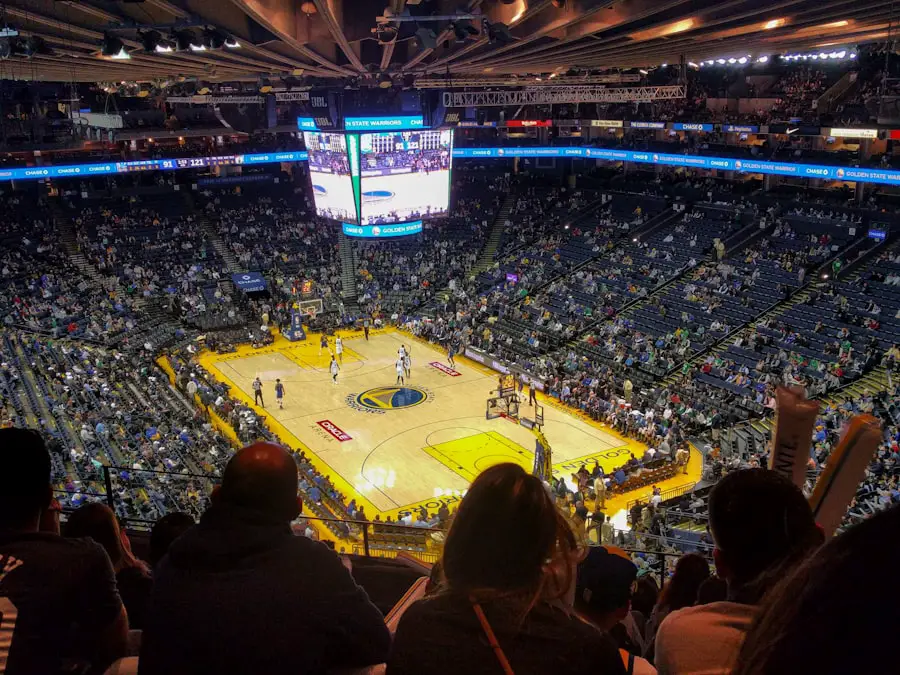
American Airlines Center is located at 2500 Victory Avenue in Victory Park, just north of downtown Dallas. Drivers can reach the district from Interstate 35E, Interstate 30, the Dallas North Tollway, Woodall Rodgers Freeway, and nearby downtown streets. Traffic patterns and temporary road closures can change, so event attendees should check live directions before leaving.
Parking
According to the official arena parking guide, more than 5,000 parking spaces are available within two blocks of the venue. More than 3,000 additional spaces are located south and east of the building within walking distance.
Parking lots and garages have different opening times. The Lexus Garage generally opens at noon on event days, while many other arena-managed facilities open about two hours before the event. Overnight parking and in-and-out privileges are not permitted. Availability and rates vary, so reserving event parking in advance can reduce uncertainty.
DART and Victory Station
DART’s Green and Orange lines provide regular service to Victory Station next to the arena. Riders using the Red or Blue lines can normally transfer at West End Station. Some event trains may operate directly to Victory Station, but riders should verify the current schedule before traveling.
Trinity Railway Express
TRE trains also serve Victory Station on their route between Dallas and Fort Worth. Regular TRE service normally operates six days a week and does not run on Sundays unless special event service is announced. Late-evening schedules vary, so concertgoers should confirm that a return train will still be available after the show.
Rideshare and Drop-Off
Rideshare pickup and drop-off instructions can change with crowd-control needs. The venue commonly directs rideshare traffic to the north or west side of the property, while PNC Plaza may be used for general vehicle drop-off and pickup. Follow the event-day signs and app instructions instead of selecting an arbitrary street corner.
Note: A parking pass reserves access to a designated facility, not necessarily the fastest exit after an event. Guests who want to avoid post-event garage traffic may prefer DART service to Victory Station.
Entry, Bag, Ticket, and Payment Policies
Event policies can change, and tours may impose stricter rules than the arena’s standard policy. The official arena FAQ should be checked on the day of the event.
- Door times: Mavericks and Stars doors commonly open about 90 minutes before the game. Concert doors usually open approximately one to one and a half hours before showtime unless the event page states otherwise.
- Small bags: Wristlets, wallets, and clutches up to 4.5 by 6.5 inches are accepted at all entrances under the standard policy.
- Larger permitted purses: Purses up to approximately 14 by 6 by 14 inches must enter through designated X-ray inspection points. Backpacks and oversized totes are prohibited.
- Tickets: Mobile tickets should be loaded in the authorized Ticketmaster, team, or mobile-wallet account before reaching the entrance.
- Payments: The building is generally cashless, although reverse ATMs are available.
- Re-entry: Standard event policy does not allow re-entry after a guest leaves, except for limited situations approved by Guest Services.
Warning: Do not arrive with luggage, an oversized bag, or a backpack. The arena does not provide general storage for prohibited bags, and you may have to return the item to your vehicle before entering.
Future Developments and Expansion Plans for the American Airlines Center
American Airlines Center has continued to receive facility upgrades. A Texas Department of Licensing and Regulation project filing registered approximately $30 million in modernization work involving elevators, escalators, and patron circulation, with work scheduled from November 2024 through August 2025. A registration record describes the planned scope but does not by itself confirm that every element was completed exactly as scheduled.
The larger long-term question is whether the Mavericks and Stars will remain at the arena after their current commitments. As of July 2026, both teams still play at American Airlines Center, but each organization has announced a separate potential future-arena project.
On June 1, 2026, the Dallas Mavericks announced option agreements for the potential purchase of approximately 104 acres at the former Valley View Mall site in North Dallas. The organization described a possible mixed-use district anchored by a new arena, restaurants, entertainment, public green space, and family-oriented attractions.
On June 2, 2026, the Dallas Stars announced a non-binding letter of intent for a potential arena and entertainment district at The Shops at Willow Bend in Plano. Plano City Council subsequently approved actions allowing the proposal to advance through further planning and public processes.
These announcements are significant, but neither one means that a new arena is already built or that an immediate move has occurred. Site acquisition, financing, design, government approvals, infrastructure planning, and construction must still progress before either project can replace American Airlines Center.
Impact of the American Airlines Center on the Local Community
American Airlines Center helped anchor the redevelopment of Victory Park from a former rail-yard area into a mixed-use district with housing, hotels, restaurants, offices, transit access, public gathering areas, and entertainment businesses. Mavericks games, Stars games, and concerts bring event-day customers to businesses around Victory Park and nearby downtown neighborhoods.
The arena and its teams also support community programs, charitable events, youth activities, and public celebrations. PNC Plaza outside the building is used for watch parties, fan zones, ceremonies, sponsor activations, and community gatherings, extending activity beyond the ticketed event inside the arena.
The venue’s long-term effect will depend partly on the outcome of the proposed future-arena projects. If one or both teams eventually leave, Dallas and arena stakeholders will need to determine how American Airlines Center and Victory Park can continue attracting major events and supporting nearby businesses.
If you are planning a trip to Dallas and want to attend an event at American Airlines Center, do not choose tickets using one generic capacity number. Start with the event-specific seating chart, confirm whether the production blocks any sections, compare the viewing angle with the ticket price, and review transportation and entry policies before leaving.
Frequently Asked Questions
What is the seating capacity of the American Airlines Center?
The venue publishes a capacity of 20,000 for Dallas Mavericks basketball and 18,532 for Dallas Stars hockey. The number of tickets offered may be lower because of operational holds, media areas, premium inventory, or restricted views.
How many people can the American Airlines Center hold for concerts?
There is no single official concert capacity for every show. The sellable capacity changes with the stage location, floor-seat plan, standing areas, video screens, lighting equipment, mixing platforms, and seats blocked by restricted sightlines.
Is the seating capacity the same for every event?
No. Basketball, hockey, concerts, family shows, and special events use different floor and seating layouts. Even two concerts may have different capacities because their stages and production equipment are not identical.
Can the published capacity change?
Yes. Renovations, event production, safety requirements, premium-seat changes, accessible-seat needs, standing-room releases, and operational holds can change the number of available tickets. The specific event map is the best source for current inventory.
What is the easiest public transportation to the arena?
DART Green and Orange Line trains stop at Victory Station next to the arena. Red and Blue Line riders can usually transfer at West End Station. TRE also serves Victory Station, but regular TRE service normally does not operate on Sundays.
What bags are allowed inside American Airlines Center?
Under the standard arena policy, small wristlets, wallets, and clutches up to 4.5 by 6.5 inches are allowed at all entrances. Larger permitted purses must meet the published size limit and enter through designated X-ray points. Backpacks, oversized totes, and luggage are prohibited.
How early should I arrive?
Arriving 60 to 90 minutes before the scheduled start is reasonable for most events, especially when parking, collecting tickets, passing security, buying food, or finding an unfamiliar section. Check the event page because exact door times vary.
Does the arena provide accessible seating?
Yes. Accessible seating and companion seating are integrated across all levels. The venue also offers accessible parking, wheelchair assistance, assisted-listening devices, accessible restrooms, and other accommodations subject to availability and advance-request requirements.
Are the Mavericks and Stars leaving American Airlines Center?
Both teams still play at American Airlines Center. In June 2026, the Mavericks announced option agreements for a potential North Dallas arena site, and the Stars announced a non-binding proposal for a possible Plano arena. Those projects remain future developments rather than completed moves.
Sources
- American Airlines Center — About AACenter — official basketball and hockey capacities, design, teams, and venue background.
- Dallas Municipal Archives — Reunion Arena background, 2001 opening, and publicly cited $420 million project cost.
- NCAA — 2023 Women’s Final Four in Dallas — championship event history at American Airlines Center.
- American Airlines Center — Parking — parking inventory, lot operations, rideshare guidance, and public-transportation information.
- Dallas Mavericks — Valley View Site Option Agreements — June 2026 statement concerning a potential future arena and entertainment district.
- Dallas Stars — Proposed Plano Arena Letter of Intent — June 2026 announcement concerning a potential future arena district.
