
Last Updated on July 31, 2026 by Daniel Globe
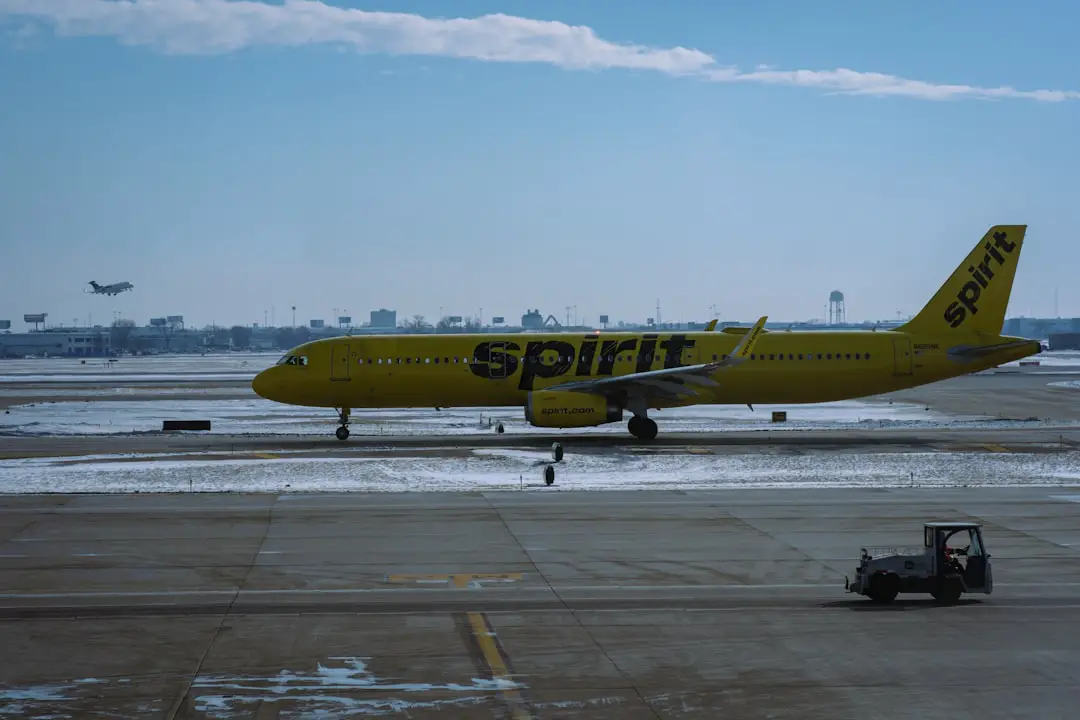
Spirit Airlines was not a Black-owned airline. Before it stopped flying, the carrier was controlled through a corporate parent and a changing shareholder-and-creditor structure—not by a Black individual or Black-controlled group. That structure changed during two Chapter 11 cases, and Spirit canceled all flights and began an orderly wind-down on May 2, 2026.
Quick Answer
No. Spirit Airlines was not recognized as Black-owned, which generally means that Black owners hold and control at least 51% of a business. Before its shutdown, Spirit Airlines was owned through Spirit Aviation Holdings. The carrier entered bankruptcy twice and stopped operating flights on May 2, 2026.
Key Takeaways
- Spirit Airlines was not a Black-owned or Black-controlled business.
- Spirit’s verified corporate history began in 1964; it adopted the Spirit Airlines name in 1992.
- The airline’s pre-bankruptcy shares were canceled in March 2025, and new equity was issued to creditors through a new parent company.
- Spirit filed for Chapter 11 a second time in August 2025 and began winding down all operations on May 2, 2026.
- Corporate ownership, workforce diversity, executive representation, and supplier diversity are separate questions.
Current status: Spirit Airlines no longer operates passenger flights. Its official restructuring site states that all flights were canceled and that customer-service operations ended when the wind-down began on May 2, 2026.
Is Spirit Airlines Black-Owned?
No. Public corporate and bankruptcy records do not identify Spirit Airlines as a Black-owned company. Under the business-ownership classification used by the U.S. Census Bureau, a business is generally considered owned by a particular group when members of that group own at least 51% of its stock or equity.
There is no evidence that Black owners held and controlled at least 51% of Spirit. Before the shutdown, the airline operated as a subsidiary of Spirit Aviation Holdings, Inc. Its equity was distributed among investors and creditors rather than held by a Black founder, family, or controlling ownership group.
Note: A company does not become Black-owned simply because it employs Black team members, has Black executives, appoints Black directors, or runs diversity programs. Ownership is based on equity and control.
Who Owned Spirit Airlines?
Spirit’s ownership changed several times because of its bankruptcy restructurings. Saying that one private-equity company or investment firm “owned Spirit” oversimplifies the record.
| Date | Ownership or Corporate Event | What It Meant |
|---|---|---|
| Before November 2024 | Spirit Airlines, Inc. was a publicly held company. | Its shares were spread among institutional and individual investors. It was not controlled as a Black-owned business. |
| November 18, 2024 | Spirit entered its first Chapter 11 case. | The airline continued operating while restructuring its debt under court supervision. |
| March 12, 2025 | Spirit emerged from bankruptcy under a new parent, Spirit Aviation Holdings, Inc. | Old equity was canceled. New shares and warrants were issued mainly to creditors under the reorganization plan. |
| August 29, 2025 | Spirit and related entities filed for Chapter 11 again. | The airline sought deeper reductions in debt, leases, fleet size, and operating costs. |
| March 2026 | A restructuring-support agreement proposed canceling existing common stock and other equity interests. | Existing shareholders were not positioned to retain normal ownership under the proposed restructuring. |
| May 2, 2026 | Spirit began an immediate wind-down and canceled all flights. | The remaining company assets and claims became part of a bankruptcy liquidation and wind-down process. |
Spirit therefore should not be described today as a normally operating public airline with a stable group of shareholders. Its remaining legal and financial interests are being handled through the bankruptcy process.
The claim that Indigo Partners was Spirit’s current owner is also inaccurate. Indigo Partners invested in Spirit during an earlier period of the airline’s development, but it was not the controlling owner described by the article’s October 2023 public-company information.
A Brief History of Spirit Airlines
Spirit’s official corporate history began earlier than the frequently repeated 1980 founding date. SEC records describe the following sequence:
- 1964: The business was founded as Clippert Trucking Company in Michigan.
- 1974: It changed its name to Ground Air Transfer, Inc.
- 1983: It began doing business as Charter One, selling charter travel packages.
- 1990: It received an FAA air-carrier certificate and began air-charter operations.
- 1992: It adopted the Spirit Airlines name and expanded scheduled passenger service.
- 2011: Spirit completed its initial public offering.
- 2022: A proposed combination with Frontier Airlines was terminated.
- 2024: A court blocked JetBlue’s proposed acquisition, and the agreement was abandoned.
- 2024–2026: Spirit went through two Chapter 11 cases before ending flight operations.
Spirit became widely known for its ultra-low-cost model. It offered a low base fare and charged separately for optional services such as carry-on bags, checked baggage, seat assignments, food, and other extras. That model influenced pricing across the U.S. airline industry, but it also drew criticism from passengers who did not understand the full cost before booking.
The Importance of Black-Owned Businesses
Black-owned businesses contribute to employment, local spending, innovation, and wealth creation. The U.S. Census Bureau reported that Black or African American owners controlled approximately 201,000 employer businesses in 2023. Those firms represented 3.4% of U.S. employer businesses and generated about $249 billion in receipts.
These figures cover employer businesses throughout the economy, not airlines alone. They show why precise definitions and current data matter when discussing business ownership. Publicly held companies and firms whose ownership cannot be classified by race are reported separately from businesses with identifiable majority ownership.

Black ownership can also provide representation at the decision-making level. Owners may influence hiring, purchasing, community investment, service design, and long-term strategy. Those possible benefits should not be treated as automatic, however; each company must be evaluated by its actual conduct and results.
The Lack of Black Ownership in the Airline Industry
Starting and maintaining a scheduled airline requires substantial capital, aircraft access, insurance, skilled employees, airport facilities, regulatory approval, maintenance systems, and enough cash to withstand fuel-price and demand changes. These barriers affect all new airlines and can be harder to overcome for founders with limited access to financing and industry networks.
There is no comprehensive, authoritative public dataset that supports the original article’s claim that the United States had exactly zero Black-owned airlines in 2000, one in 2010, and zero in 2020. Those figures should not be used.
| Item | Verified Finding | Why It Matters |
|---|---|---|
| Spirit Airlines | Spirit was not a Black-owned airline. | Institutional investment or workforce diversity does not establish majority Black ownership and control. |
| U.S. Air Atlanta | The Black-owned U.S. carrier Air Atlanta was launched in the 1980s by entrepreneurs including Michael Hollis and Daniel Kolber. | It is a documented historical example of Black airline ownership. |
| Air Atlanta Icelandic | This is a separate Iceland-based aviation company and should not be confused with the former U.S. Air Atlanta. | Similar names can lead to false founder and ownership claims. |
| Current national count | No reliable public source provides a complete current count of Black-owned scheduled airlines. | Articles should disclose this limitation rather than publish unsupported totals. |
The Impact of Black Ownership in the Airline Industry
Greater Black ownership could broaden the range of people making strategic decisions in aviation. A Black-owned airline or aviation company might create new opportunities for employees, suppliers, contractors, flight schools, maintenance providers, and communities that have historically received less investment.
Ownership could also affect which routes, partnerships, and customer needs receive attention. However, ownership alone does not guarantee affordable fares, strong service, fair employment practices, or financial success. Airlines must still meet the same safety, licensing, financing, and operational requirements as other carriers.
Representation in ownership matters because owners influence capital, strategy, leadership, purchasing, and the long-term direction of a business.
The Role of Diversity and Inclusion in the Airline Industry
Diversity and inclusion can improve an airline’s access to different experiences, language skills, cultural knowledge, and customer perspectives. Airlines serve travelers and employ workers from many backgrounds, so respectful policies and fair access to opportunity are important throughout the organization.
Spirit historically published statements about inclusion and belonging in its workplace. Those statements should not be confused with Black ownership, and they do not prove that any specific racial group controlled the company.
When evaluating an airline’s diversity record, readers can look separately at its workforce data, executive team, board composition, supplier programs, employment policies, community partnerships, and measurable outcomes. Each category answers a different question.
The Challenges Faced by Black-Owned Businesses in the Airline Industry
Airlines are among the most capital-intensive businesses to start. A new operator may need funding for aircraft leases or purchases, maintenance, spare parts, fuel, airport fees, reservation systems, insurance, training, and payroll before carrying enough passengers to cover its costs.
Certification is another major hurdle. Operators must establish that their aircraft, manuals, maintenance systems, training, management structure, and day-to-day procedures comply with aviation requirements. Approval does not guarantee commercial success; an airline must also attract passengers, secure useful airport access, and survive changes in fuel prices and demand.
Black founders may face additional barriers in obtaining capital, gaining access to established networks, or winning supplier and airport contracts. The U.S. Department of Transportation’s Disadvantaged Business Enterprise program is intended to expand fair contracting opportunities for eligible small businesses on federally assisted transportation projects. Airport-concession programs provide a related path for qualifying businesses at airports.
The Success Stories of Black-Owned Airlines
A documented U.S. example is Air Atlanta, a largely Black-owned carrier launched in 1984. Atlanta attorney and entrepreneur Michael Hollis was one of the central figures behind the airline. Air Atlanta operated Boeing 727 service from Atlanta to several major cities before closing in 1987.
The name must not be confused with Air Atlanta Icelandic. Air Atlanta Icelandic is a separate company based in Iceland that specializes in aircraft leasing, charter, and aircraft-management services. The original article’s claim that it was founded by an African American entrepreneur named John W. Smith is unsupported.
The Flycana example was also incorrect. Flycana developed from Dominican Wings and was associated with Dominican entrepreneur Victor Pacheco. It was not founded in 2019 by a Haitian-American entrepreneur named Samir Ghosn. The project later developed into Arajet.
Pro Tip: When two airlines have similar names, verify the country, legal company name, founders, and operating dates before drawing conclusions about ownership.
The Future of Black Ownership in the Airline Industry
Future growth in Black aviation ownership may appear in more than scheduled passenger airlines. Opportunities also exist in charter operations, cargo, aircraft maintenance, airport concessions, ground handling, flight training, technology, consulting, catering, and other aviation services.
These businesses may require less capital than a nationwide passenger airline, although they still face licensing, financing, insurance, and market-access challenges. Programs that improve access to contracts, technical assistance, experienced mentors, and responsible financing can help qualified founders build a record before attempting larger operations.
Claims about a coming “new generation” of Black-owned airlines should still be treated cautiously. A proposed airline is not an operating airline until it has the required approvals, aircraft, financing, staff, and active service.
Supporting Black-Owned Businesses in the Airline Industry
Consumers and corporations can support Black-owned aviation businesses by checking ownership carefully and purchasing services from verified companies. Support may include using Black-owned charter operators, flight schools, airport retailers, travel agencies, transportation providers, maintenance companies, and professional services.
Airports, airlines, and large contractors can also improve access by publishing supplier opportunities, dividing suitable contracts into attainable packages, paying smaller vendors promptly, offering technical assistance, and using transparent selection standards.
For businesses seeking transportation contracts, the DOT DBE program and airport-concession DBE programs may provide certification and contracting opportunities. Eligibility generally requires qualifying owners to hold at least 51% of the company and control its management and daily operations.
How to Verify Whether an Airline Is Black-Owned
- Find the legal company name. A brand name may belong to a parent company, subsidiary, franchise, or licensing arrangement.
- Check official filings. Public companies disclose major shareholders, corporate structure, directors, and material ownership changes through securities filings.
- Look for majority ownership and control. A small investment by a Black individual or fund does not make a company Black-owned.
- Confirm the company is operating. Proposed airlines, inactive brands, and companies in liquidation should not be presented as active carriers.
- Use recognized certifications carefully. DBE, airport-concession DBE, minority-business, or other certifications can provide evidence, but each program has its own rules and scope.
- Cross-check similar names. Confirm the country, founders, dates, and corporate registration so that unrelated airlines are not confused.
The Significance of Black Ownership in the Airline Industry
Black ownership is significant because it places decision-making authority, equity, and long-term control in the hands of people who have historically been underrepresented in aviation ownership. It can influence investment, hiring, procurement, training, community relationships, and which business opportunities receive attention.
Spirit Airlines does not provide an example of Black airline ownership. It was a shareholder- and creditor-owned corporate airline that later entered bankruptcy and stopped flying. Its history should be discussed separately from the documented history of Black-owned aviation businesses.
Reliable coverage of this subject must avoid guessing about a person’s race, treating workforce diversity as ownership, or publishing unsupported airline counts. Clear definitions and primary records provide a more accurate picture of both Spirit and Black entrepreneurship in aviation.
Related travel resource: Ownership research is separate from trip preparation. Readers planning future travel with other carriers can also review this guide to waterproof sneakers for travel.
Frequently Asked Questions
What was Spirit Airlines?
Spirit Airlines was a U.S. ultra-low-cost carrier that served destinations in the United States, Caribbean, Mexico, and Latin America. It canceled all flights and began winding down its operations on May 2, 2026.
Is Spirit Airlines a Black-owned company?
No. Spirit was not identified as a company in which Black owners held and controlled at least 51% of the equity. Before its shutdown, it operated through a corporate parent with investor- and creditor-held equity.
Who owned Spirit Airlines before it stopped flying?
Spirit Airlines operated as a subsidiary of Spirit Aviation Holdings, Inc. After the first Chapter 11 restructuring, old shares were canceled and new shares and warrants were issued to creditors. A later restructuring proposal called for the newer equity to be canceled as well.
Is Spirit Airlines still operating?
No. Spirit began an orderly wind-down on May 2, 2026. All Spirit flights were canceled, passengers were told not to go to the airport, and the airline stated that its customer-service operation was no longer available.
Was Spirit Airlines owned by Indigo Partners?
Indigo Partners was involved in an earlier period of Spirit’s development, but it was not Spirit’s current controlling owner during the public-company and bankruptcy periods discussed here. The later ownership structure involved public shareholders, a new parent company, and creditors receiving post-bankruptcy equity.
Did Spirit Airlines have Black executives or board members?
The available corporate filings list executives and directors but do not provide a dependable race-by-race classification. It is therefore not responsible to make a categorical claim about each person’s racial identity without reliable self-identification or company reporting.
Was Spirit committed to diversity and inclusion?
Spirit historically published workplace statements about inclusion and belonging. Those statements described company culture and employment goals; they did not make Spirit a Black-owned company or establish the racial composition of its ownership.
How can I confirm that an airline is Black-owned?
Identify the airline’s legal company and parent, review official ownership filings, confirm that Black owners hold and control at least 51%, check recognized business certifications where available, and verify that the airline is actively authorized and operating.
Sources
- Spirit Airlines restructuring website — confirms the May 2, 2026 wind-down, cancellation of all flights, and end of customer-service operations.
- Spirit Airlines 2011 SEC prospectus — documents the company’s origin, Charter One history, scheduled-service launch, and public offering.
- Spirit Aviation Holdings June 2025 Form 10-Q — explains the cancellation of old equity and issuance of new shares and warrants to creditors.
- Spirit Aviation Holdings March 2026 Form 8-K — describes the proposed treatment and cancellation of existing equity interests.
- U.S. Census Bureau business-owner data — provides current figures for Black-owned employer and nonemployer businesses.
- Atlanta History Center: Air Atlanta — documents the history of the Black-owned U.S. airline and entrepreneur Michael Hollis.
