

Last Updated on July 25, 2026 by Daniel Globe
Allegiant Air attracts travelers with low base fares and nonstop flights between smaller cities and popular vacation destinations. That business model can look different from a traditional hub airline, but low fares alone do not mean lower safety standards. A fair assessment must separate Allegiant’s documented maintenance problems from the period involving its retired MD-80 fleet and examine how the airline operates today.
Quick Answer
Yes. Allegiant is generally considered safe for commercial travel. It operates as a U.S. Part 121 carrier under FAA oversight, and its current fleet uses Airbus A319/A320 and Boeing 737-8200 aircraft. The airline had serious maintenance scrutiny during its retired MD-80 era, so a balanced answer should acknowledge that history rather than dismiss it.
Key Takeaways
- Allegiant is a federally regulated U.S. airline and must comply with FAA rules for aircraft, maintenance, flight crews, and commercial operations.
- The airline’s most serious documented maintenance criticism involved its MD-80 fleet, which was fully retired in November 2018.
- Allegiant’s current operating fleet includes Airbus A319s, Airbus A320s, and Boeing 737-8200s.
- A diversion, rejected takeoff, or precautionary landing is a safety event that deserves investigation, but it is not automatically evidence that an airline is broadly unsafe.
- Schedule reliability, customer service, fees, and rebooking options can affect your trip even though they are different from aircraft safety.
Disclosure: As an Amazon Associate I earn from qualifying purchases. Some links on this page are affiliate links, at no extra cost to you.
Is Allegiant Air Safe Today?
Based on the available regulatory, fleet, and operating information, Allegiant is a reasonable airline to consider for domestic travel. It operates under the FAA framework that applies to scheduled U.S. air carriers. This includes approved maintenance programs, pilot qualification rules, aircraft inspections, operating procedures, recordkeeping, and continuing regulatory surveillance.
That does not mean Allegiant, or any other airline, is risk-free. Mechanical defects, turbulence injuries, runway events, medical emergencies, and precautionary diversions can occur at every carrier. Safety should therefore be assessed through several types of evidence instead of a single news story or customer review.
Allegiant’s historical maintenance problems should not be ignored, but they should not be presented as though the airline still operates the same MD-80 fleet today.
The most useful factors are the airline’s current regulatory status, accident and incident investigations, fleet changes, maintenance findings, pilot requirements, and evidence of corrective action. Consumer complaints about delays or baggage may help you judge the travel experience, but they do not measure accident risk directly.
Allegiant’s Safety Record and Past Incidents
The MD-80 Maintenance Period
Allegiant faced justified scrutiny during the period when it operated a large McDonnell Douglas MD-80 fleet. A December 2019 U.S. Department of Transportation Office of Inspector General audit examined the FAA’s handling of maintenance issues at Allegiant.
The audit found that, beginning in 2011, FAA inspectors did not consistently document risks connected with 36 in-flight engine shutdowns involving Allegiant’s MD-80 fleet. It also found weaknesses in how inspectors identified root causes and tracked corrective action. These were meaningful findings, and an accurate safety review should not reduce them to vague references about media criticism.
The report was also an audit of FAA oversight. It did not conclude that every Allegiant flight was unsafe or that the airline was prohibited from operating. Instead, it found that regulators had missed opportunities to address and document maintenance risks more effectively.
Why the Fleet Change Matters
Allegiant accelerated the retirement of its MD-80 aircraft and flew its final scheduled MD-80 service in November 2018. The airline reported that the transition required extensive retraining for pilots, maintenance technicians, flight attendants, and other operating staff. Its 2018 fleet update showed no MD-80 aircraft planned in the year-end operating fleet.
This change does not erase the historical record. It does mean that an evaluation of Allegiant today should not treat MD-80 engine events as though they involve the aircraft currently carrying passengers.
Incidents, Diversions, and Emergency Landings
Allegiant has experienced nonfatal incidents and precautionary landings. One documented example occurred on June 8, 2015, when smoke entered the cabin of an Allegiant MD-83 at St. Petersburg-Clearwater International Airport. Passengers evacuated on a taxiway, and the NTSB docket records one serious injury and several minor injuries.
Other frequently cited events involved rejected takeoffs, compressor stalls, engine shutdowns, smoke indications, or diversions. Each event should be evaluated using the final investigative information available. Terms such as “engine problem,” “compressor stall,” “engine shutdown,” and “engine failure” are not interchangeable.
Note: A diversion or rejected takeoff often shows that crews detected a problem and used a safety procedure. It should still be documented and investigated, but the event alone does not prove that the entire airline is unsafe.
Maintenance and Current Fleet Information
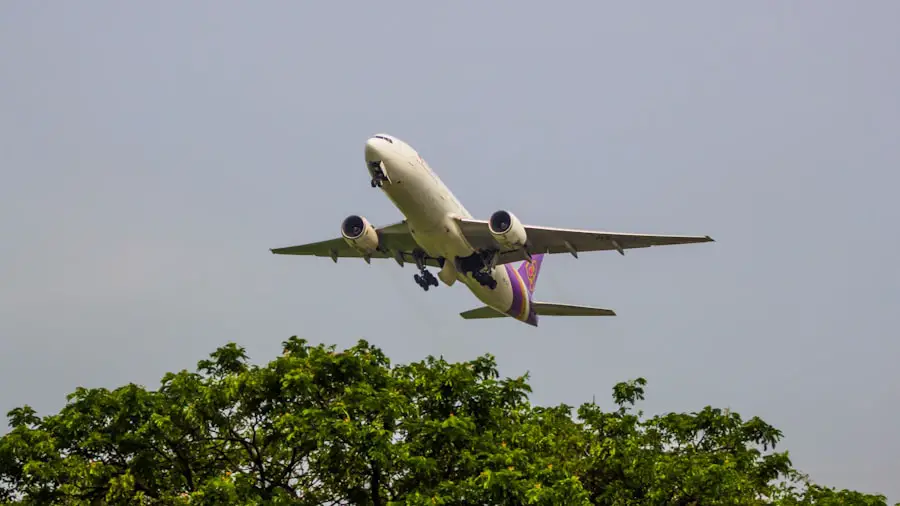
Allegiant’s official aircraft information currently lists three operating aircraft groups:
- Airbus A319: configured with 156 seats.
- Airbus A320: configured with 177 or 180 seats.
- Boeing 737: Allegiant operates the 737-8200 configuration with 190 seats.
In its first-quarter 2026 fleet plan, Allegiant reported 123 in-service aircraft as of March 31, 2026: 17 Boeing 737-8200s, 78 Airbus A320s across two seating configurations, and 28 Airbus A319s. The company expected additional 737-8200 deliveries and gradual retirements of some older Airbus aircraft during 2026, although fleet plans can change.
Current-company note: Allegiant Travel Company completed its acquisition of Sun Country Airlines on May 13, 2026. The companies said Allegiant and Sun Country would continue operating as separate carriers in the near term, so Sun Country aircraft should not automatically be counted as Allegiant Air’s operating fleet until their operating systems and certificates are integrated.
Does Aircraft Age Determine Whether a Flight Is Safe?
Aircraft age by itself does not determine whether an airplane is airworthy. Commercial aircraft can remain in service for many years when inspections, repairs, component replacements, structural programs, engine work, and mandatory airworthiness directives are completed correctly.
Newer aircraft may offer fuel, parts-availability, reliability, or diagnostic advantages, but a new airplane can also experience defects. The more meaningful questions are whether the aircraft is maintained under an approved program, whether known defects are corrected or properly deferred under applicable rules, and whether the airline and regulator identify recurring problems.
How Airline Maintenance Is Controlled
A U.S. scheduled carrier cannot simply choose whether to maintain an aircraft. Its maintenance program must operate within FAA requirements and approved procedures. These normally cover:
- Scheduled inspections and heavy-maintenance intervals.
- Engine, airframe, landing-gear, and component work.
- Compliance with FAA airworthiness directives.
- Maintenance records and return-to-service authorization.
- Procedures for addressing defects found between scheduled inspections.
- Training and authorization of maintenance personnel.
- FAA surveillance, investigations, and corrective actions.
Some work may be performed by outside maintenance organizations, but the airline remains responsible for ensuring that work on its aircraft meets the applicable requirements. The 2019 DOT OIG report demonstrates why effective airline controls and effective regulatory oversight both matter.
Pilot Training and Experience
Allegiant pilots are subject to the certification, qualification, medical, checking, and training rules that apply to U.S. Part 121 airline operations. Public information does not support assigning one fixed number of simulator or training hours to every Allegiant pilot because training varies by position, aircraft, previous experience, qualification pathway, and training curriculum.
| Pilot requirement | What it means |
|---|---|
| ATP or restricted ATP | Part 121 pilots must hold the appropriate Airline Transport Pilot qualification. The standard ATP pathway generally requires 1,500 flight hours, while defined restricted-ATP pathways allow lower totals for certain military pilots and approved aviation-program graduates. |
| Aircraft qualification | Pilots must complete training and checking for their assigned aircraft and operating position before serving as qualified crewmembers. |
| Ground and simulator training | Training covers aircraft systems, normal procedures, abnormal situations, emergencies, crew coordination, adverse weather, stall prevention, upset recovery, and other required tasks. |
| Recurrent training | Qualification is not permanent. Airline pilots undergo recurrent instruction, proficiency checks, line checks, or other evaluations required by their position and training program. |
| Medical and recent-experience rules | Pilots must maintain the appropriate medical certification and satisfy applicable recent-experience and operating requirements. |
The FAA’s ATP guidance explains the standard and restricted ATP pathways. Its air-carrier training guidance also covers enhanced Part 121 training, including stall prevention, upset recovery, and simulator standards.
Individual Allegiant pilots may have military, regional-airline, corporate, instructional, or other professional backgrounds, but no unsupported assumption about those backgrounds should be used as evidence for or against the airline’s safety.
FAA Oversight, Safety Rules, and Compliance
Allegiant operates under FAA certification and oversight. The FAA can review airline manuals and procedures, inspect records and facilities, observe operations, investigate reports, require corrective action, impose civil penalties, restrict activities, or take certificate action when warranted.
Regulatory oversight is important, but the 2019 Allegiant audit also shows that oversight is not infallible. Inspectors can fail to document risk properly, identify a root cause, or confirm that corrective action is effective. A balanced conclusion is therefore not that “FAA oversight guarantees safety,” but that Allegiant must operate within a mature regulatory system that includes inspection, reporting, enforcement, and independent accident investigation.
Passengers should also distinguish between a regulatory allegation, a completed enforcement action, a voluntary corrective measure, and an accident finding. They are not equivalent, and each should be described with its date and source.
Safety Is Not the Same as Reliability or Customer Service
Allegiant receives complaints about delays, cancellations, fees, baggage, communication, and customer service, as other airlines do. These issues can make a trip expensive or stressful, but they do not automatically indicate that the aircraft or flight crew was unsafe.
| Type of evidence | What it helps measure |
|---|---|
| NTSB accident or incident record | What happened in a specific safety event and, when a final report exists, its probable cause and contributing factors. |
| FAA or DOT OIG finding | Regulatory compliance, maintenance controls, corrective action, or the quality of government oversight. |
| Cancellation or on-time data | The likelihood that your itinerary operates as scheduled, not the likelihood of an accident. |
| Customer reviews | Personal experiences with staff, fees, seats, communication, baggage, and disruptions. Reviews are not controlled safety studies. |
Why Allegiant’s Route Model Matters During Disruptions
Allegiant often serves routes only a few times per week and generally does not operate a large hub-and-connection network. That can be convenient when the nonstop flight operates normally, but it may leave fewer same-day replacement options after a cancellation.
The U.S. Department of Transportation customer-service dashboard shows that Allegiant commits to rebooking passengers on its own flights after qualifying controllable disruptions. It does not make a general commitment to rebook travelers on another airline at no additional cost.
Pro Tip: When an event, cruise, wedding, medical appointment, or international connection cannot be missed, compare the number of weekly flights and backup options before choosing the lowest fare. This is a reliability precaution, not a judgment about aircraft safety.
How Allegiant Compares With Other Airlines
Allegiant operates under the same broad federal safety framework as other U.S. scheduled passenger carriers. That does not mean every airline has the same maintenance history, fleet, incident rate, route frequency, training program, or operational performance.
Allegiant differs from many network airlines in several practical ways:
- Route structure: It concentrates on nonstop leisure routes, including service from smaller and secondary airports.
- Frequency: Some routes operate less often than routes on major hub carriers.
- Fleet: The current Allegiant operating fleet includes Airbus A319/A320 and Boeing 737-8200 aircraft.
- Fare structure: The advertised base fare may not include seat selection, larger carry-on baggage, checked baggage, or other optional services.
- Rebooking network: Fewer daily flights and no broad commitment to place customers on competing airlines can make recovery slower after a cancellation.
- Historical maintenance record: Allegiant experienced notable MD-80 maintenance issues and government scrutiny, but those aircraft are no longer in service.
It is therefore more accurate to say that Allegiant is a regulated U.S. airline with a distinct operating model and a documented historical maintenance controversy. It is not accurate to claim, without a controlled comparison, that it is either exactly as safe as every major airline or categorically unsafe.
What Passengers Can Do to Fly More Safely
Passengers cannot inspect an airline’s engines or audit its maintenance program, but they can reduce common injury risks and prepare for disruptions.
- Listen to the safety briefing, even if you fly frequently.
- Locate the nearest usable exits in front of and behind your seat.
- Keep your seat belt fastened low and tight whenever you are seated.
- Follow crew instructions during turbulence, diversions, and evacuations.
- Do not retrieve baggage during an emergency evacuation.
- Carry spare lithium batteries and power banks in the cabin rather than checked baggage, following current FAA limits.
- Tell a flight attendant immediately if a battery becomes hot, swollen, damaged, smoky, or difficult to handle.
- Review your flight frequency and backup options when arriving on a specific day is essential.
- Keep medication, identification, valuables, and essential items in your personal item.
Warning: Unexpected turbulence can occur in clear air. The FAA recommends keeping your seat belt fastened whenever you are seated, not only when the seat-belt sign is illuminated.
The FAA’s passenger safety guidance emphasizes listening to the cabin crew, reviewing the safety card, locating exits, and remaining buckled while seated.
Conclusion and Recommendations
Allegiant Air is generally a reasonable safety choice for commercial travel. It operates under FAA oversight, uses aircraft types common in modern airline service, and no longer flies the MD-80 fleet connected with its most prominent historical maintenance controversy.
However, the past concerns were real. The DOT Inspector General found significant weaknesses in how the FAA documented and addressed risks involving Allegiant’s MD-80 engine events. A trustworthy safety assessment should acknowledge that record while also recognizing the fleet replacement and the passage of time.
For most travelers, the more immediate trade-offs involve schedule frequency, recovery after cancellations, optional fees, seat comfort, and customer service. Compare the full trip cost and backup-flight options, especially when your travel date is inflexible.
If cabin noise or flight anxiety affects your comfort, you may also find the existing guide to noise-cancelling earbuds for your next flight useful. Earbuds can make a flight more comfortable, but they do not change an airline’s maintenance standards or safety record.
Frequently Asked Questions
Is Allegiant Air a safe airline?
Allegiant is generally considered a reasonable airline to fly. It is a U.S. scheduled carrier operating under FAA requirements. Its historical MD-80 maintenance problems deserve acknowledgment, but that aircraft type was fully retired in November 2018. Its current fleet includes Airbus A319/A320 and Boeing 737-8200 aircraft.
Has Allegiant had maintenance problems?
Yes. A 2019 DOT Inspector General audit found weaknesses in FAA oversight of maintenance issues involving Allegiant’s MD-80 fleet, including the handling of risks associated with 36 in-flight engine shutdowns since 2011. Those findings were serious, but the MD-80 fleet was retired in 2018.
What aircraft does Allegiant use now?
Allegiant currently operates Airbus A319, Airbus A320, and Boeing 737-8200 aircraft. Its first-quarter 2026 fleet plan reported 123 in-service aircraft as of March 31, 2026, although the total and aircraft mix can change as deliveries and retirements occur.
Are Allegiant pilots trained to FAA standards?
Allegiant pilots are required to meet the certification, aircraft qualification, medical, checking, and recurrent-training rules that apply to Part 121 airline pilots. Public evidence does not justify claiming that every part of Allegiant’s program exceeds FAA requirements, but compliance with the applicable requirements is mandatory.
Does an emergency landing mean an airline is unsafe?
Not by itself. Pilots may divert, reject a takeoff, or make a precautionary landing when a warning, mechanical indication, medical event, weather problem, or other risk appears. The important questions are what caused the event, how the crew responded, whether anyone was injured, and whether investigators or regulators identified a broader problem.
Are Allegiant delays and complaints evidence of poor safety?
Not necessarily. Delays, cancellations, baggage issues, fees, and communication complaints measure the customer experience and operational reliability. They should not be treated as direct evidence of accident risk, although a low-frequency schedule can make disruptions more difficult to recover from.
Sources
- U.S. Department of Transportation Office of Inspector General: FAA Oversight of Allegiant Air — historical maintenance events, oversight findings, and corrective-action concerns.
- Allegiant: Airline, Aircraft and Airports — current operating aircraft types and seating configurations.
- Allegiant Travel Company First-Quarter 2026 Results — dated fleet count and 2026 fleet plan.
- Allegiant 2018 Fleet Transition Update — final MD-80 retirement and retraining information.
- Federal Aviation Administration: Enhanced Air-Carrier Pilot Training — Part 121 training and simulator requirements.
- U.S. Department of Transportation Airline Customer Service Dashboard — Allegiant’s disruption and rebooking commitments.
