
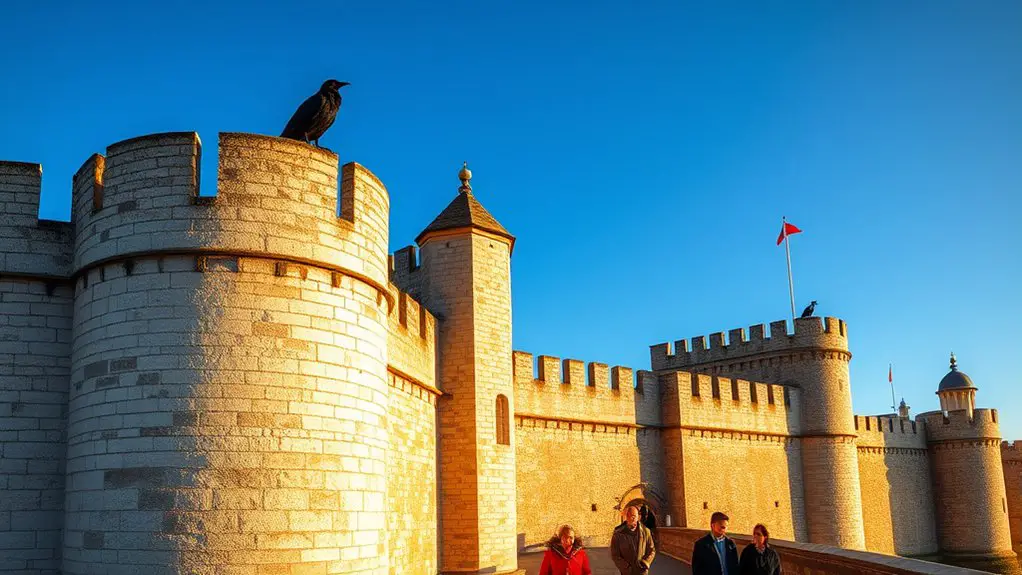
Last Updated on July 25, 2026 by Daniel Globe
Planning to visit the Tower of London requires strategic timing and advance ticket booking to navigate one of the United Kingdom’s most visited historic fortresses. Located on the north bank of the River Thames, this UNESCO World Heritage Site spans nearly 1,000 years of royal history, functioning over centuries as a royal palace, political prison, place of execution, and secure vault for the British Monarchy’s Crown Jewels. To maximize your experience, arrive at opening, understand mandatory security policies, and plan for a 2.5 to 3.5-hour walkthrough.
Quick Answer
To visit the Tower of London efficiently, purchase timed-entry tickets online in advance through Historic Royal Palaces. Arrive right at opening (9:00 AM Tuesday–Saturday, 10:00 AM Sunday–Monday) to view the Crown Jewels before peak queues form. Allow 2.5 to 3.5 hours to complete the White Tower, join a free Yeoman Warder tour, and explore the medieval wall walks.
Key Takeaways
- Book Timed Tickets Early: Online advance booking guarantees entry and avoids long on-site ticket office queues.
- See Crown Jewels First: Head straight to the Jewel House upon arrival or past 3:00 PM to avoid long wait times on the moving walkway.
- Free Beefeater Tours Included: 45-minute guided tours led by Yeoman Warders depart every 30 minutes near the main entrance at no extra cost.
- Strict Photography Rules: Photography and video recording are strictly prohibited inside the Jewel House exhibit.
- No Luggage Storage: Large bags exceeding 55cm x 45cm x 25cm are prohibited, and there are no cloakrooms on site.
At a Glance
| Recommended Duration | 2.5 to 3.5 hours |
| Best Time to Visit | Weekday mornings at opening or late afternoon (off-peak season: Nov–Feb) |
| Nearest Transport Hubs | Tower Hill Underground (District & Circle), Tower Gateway DLR, Tower Pier (River Bus) |
| Must-See Exhibits | Crown Jewels, White Tower, Yeoman Warder Tour, Tower Ravens, Medieval Palace |
Disclosure: As an Amazon Associate I earn from qualifying purchases. Some links on this page are affiliate links, at no extra cost to you.
Planning Your Visit: Best Times and Tickets
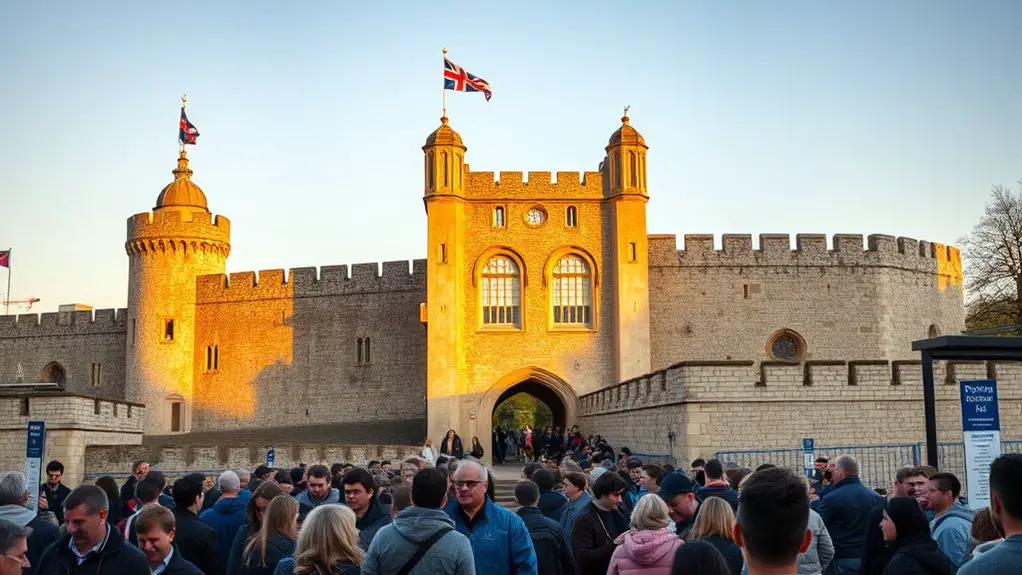
To make the most of your visit to the Tower of London, it’s crucial to reserve timed-entry admission tickets in advance online. Standard admission operates on scheduled entry slots to control crowd density across the historic grounds.
The optimal visiting times are early mornings right at opening or late afternoons after 2:30 PM, when tour bus groups begin to taper off. Visiting during off-peak months (mid-November through February, excluding holidays) offers significantly shorter lines and a quieter experience across the outdoor battlements.
Booking online through the official site guarantees entry and saves on gate pricing. Avoid weekend afternoons and UK school holidays whenever possible, as wait times for popular exhibits like the Jewel House can exceed 60 minutes during peak hours.
Pro Tip: If you plan to visit multiple royal sites—such as Hampton Court Palace and Kensington Palace—consider an annual Historic Royal Palaces membership, which provides free unlimited entry and priority access.
Getting to the Tower of London: Location and Transportation Options
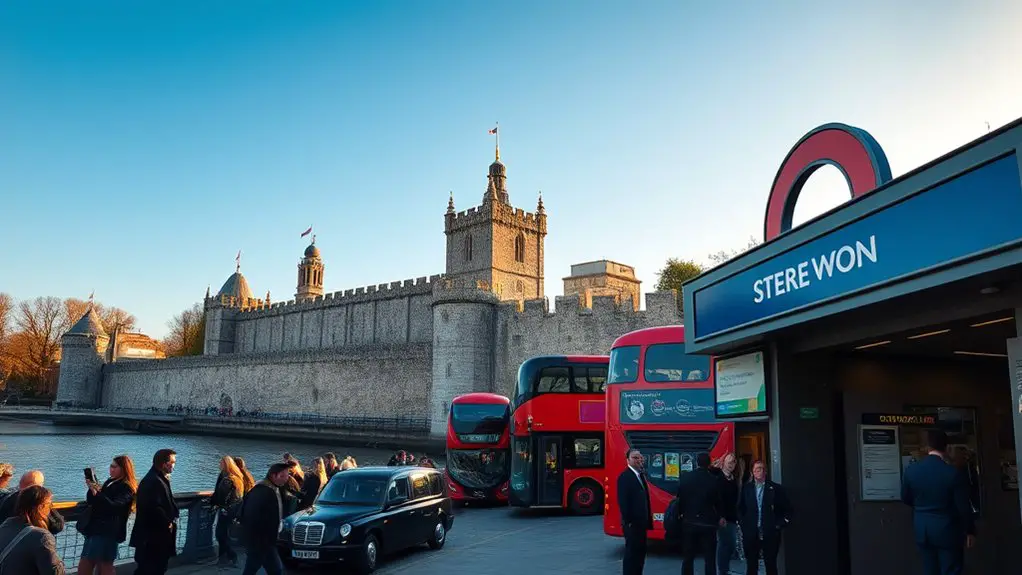
The Tower of London is centrally located on the north bank of the River Thames in central London (Zone 1), making it easily accessible via public transit networks managed by Transport for London (TfL).
- Underground (The Tube): Tower Hill Underground Station (servicing the District and Circle lines) is a 5-minute paved walk from the main entrance.
- Docklands Light Railway (DLR): Tower Gateway DLR Station is located roughly 7 minutes away on foot, connecting directly to East London and Canary Wharf.
- Train: Fenchurch Street Station (5-minute walk) and London Bridge Station (15-minute scenic walk across London Bridge or Tower Bridge) offer national rail service.
- River Bus: Uber Boat by Thames Clippers stops at Tower Pier, situated right outside the fortress entrance, offering scenic water transit from Westminster or Greenwich.
- Bus Routes: Routes 15, 42, 78, 100, and 343 stop within short walking distance of the main gates.
Choosing the Right Ticket: Guided Tours, Audio Guides, and Passes
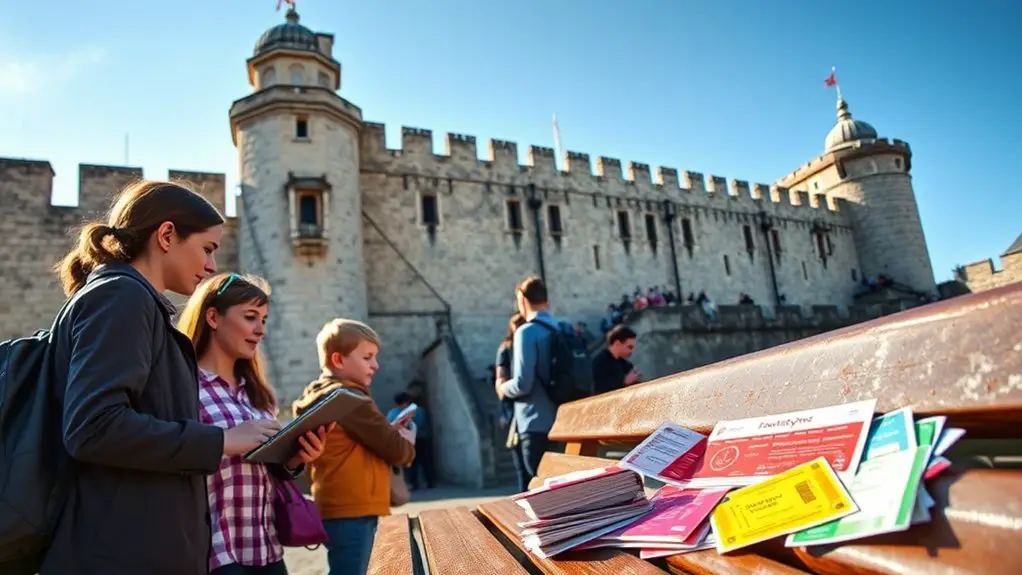
Selecting the right touring method helps tailor your visit to your specific pace and historical interests. Visitors can choose between iconic Yeoman Warder guided walks, self-paced audio guides, or multi-attraction sightseeing passes like the London Pass.
Guided Tour Benefits
World-famous Yeoman Warder tours (commonly known as Beefeater tours) are included free with standard entry tickets. These 45-minute guided walks depart every 30 minutes from the main entrance area near the moat.
- Expert Storytelling: Serving Yeoman Warders share captivating, authentic histories of executions, royal prisoners, and fortress defenses.
- Curated Routing: Tours navigate key outdoor landmarks, including Traitors’ Gate, the Execution Site on Tower Green, and the Chapel Royal of St. Peter ad Vincula.
- Unmatched Atmosphere: Guides bring centuries of British history to life with traditional wit, humor, and deep historical expertise.
Audio Guide Options
For visitors preferring a self-paced route, handheld audio guides are available for rental at the entrance kiosk. Features include tailored itinerary tracks (e.g., family tours or deep-dive historical architecture), detailed commentary, and multi-language support (English, French, German, Spanish, Italian, Japanese, and Mandarin).
An audio guide allows you to skip group walking schedules and pause freely inside dense exhibits like the White Tower or Medieval Palace.
Exploring the Historic Highlights: Top Attractions Within the Tower
Stepping inside the stone perimeter of the Tower reveals multiple distinct historic structures built across different centuries:
- The White Tower: The central Norman keep constructed by William the Conqueror in the 1070s. It houses the Line of Kings armor collection, historical weaponry, and the 11th-century St. John’s Chapel.
- The Crown Jewels: Housed inside the Jewel House, displaying ceremonial regalia, sovereign sceptres, and royal crowns still used in national state ceremonies today.
- The Tower Ravens: Seven resident ravens cared for by the official Ravenmaster. Legend states that if the ravens ever leave, the fortress and the kingdom will fall.
- The Bloody Tower & Medieval Palace: Explore Sir Walter Ralegh’s prison quarters and reconstructed medieval rooms used by King Henry III and Edward I.
- Traitors’ Gate: The infamous water gate through which Tudor political prisoners, including Anne Boleyn and Sir Thomas More, entered the fortress by barge.
Viewing the Crown Jewels: Tips for a Smooth Experience
The Jewel House displays the premier collection of working ceremonial regalia in the world, including the Imperial State Crown and the Sovereign’s Sceptre with Cross (housing the Cullinan I diamond). Because this is the site’s most visited attraction, long queues form by mid-morning.
Warning: Photography, video recording, and commercial filming are strictly prohibited inside the Jewel House to safeguard security and manage visitor flow. Security officers strictly enforce this rule.
To view the collection comfortably, head directly to the Jewel House immediately after passing security at opening time. A moving walkway carries visitors past the primary crown displays to prevent bottlenecks, but you can step onto adjacent viewing platforms to admire secondary exhibits at your leisure.
Discovering the Tower’s Rich History: Must-See Exhibits and Stories
Beyond royal crowns, the fortress preserves harrowing tales of imprisonment, execution, and royal conflict.
“The Tower of London stands as an enduring stone chronicle of England’s royal ambition, political drama, and national heritage.”
Visitors can pay respects at Tower Green, where high-status prisoners including Anne Boleyn, Catherine Howard, and Lady Jane Grey were privately executed away from public crowds. Inside the Beauchamp Tower, examine hand-carved graffiti left on stone walls by religious and political prisoners held captive during the 16th and 17th centuries.
Practical Tips for Visiting: What to Wear, Bring, and Expect
Proper preparation ensures a smooth, comfortable walk through this massive open-air complex:
Note: Bags are subject to security searches upon entrance. Large luggage pieces, travel suitcases, and large backpacks exceeding 55cm x 45cm x 25cm are strictly prohibited inside the fortress, and no left-luggage lockers exist on site. Store oversized luggage at nearby transport hubs like London Bridge or Fenchurch Street prior to arrival.
- Footwear: Wear comfortable, flat walking shoes. The grounds feature uneven cobblestones, steep spiral staircases, and flagstone pathways.
- Clothing: Dress in weather-appropriate layers. Much of the visit involves walking outdoors between towers, along elevated wall walks, and through outdoor courtyards exposed to wind and rain.
- Hydration & Snacks: Bring a reusable water bottle (refill stations are available across the grounds). Small personal snacks are permitted in outdoor areas.
Making the Most of Your Visit: Nearby Attractions and Additional Activities
Its central position along the River Thames makes the Tower an ideal starting point for a full day of sightseeing in historic London.
Nearby Historic Landmarks
Within a short walking distance, you can visit Tower Bridge and walk across its high-level glass floor walkways, explore the historic HMS Belfast naval museum ship moored on the Thames, or visit All Hallows by the Tower—the oldest church in the City of London, founded in 675 AD.
Thames River Cruises
Directly outside the fortress gates, Tower Pier serves as a primary hub for sightseeing cruises heading west toward the Houses of Parliament and the London Eye, or east toward maritime Greenwich.
West End Theatres
Conclude your day by taking a short 15-minute Tube ride on the District line directly from Tower Hill to London’s West End theatre district for evening dining and world-class theatrical performances.
Frequently Asked Questions
Are there any age restrictions for visiting the Tower of London?
There are no age restrictions for visiting the Tower of London. Visitors of all ages are welcome, and children under 5 enter free of charge. Reduced concession rates are available for youth aged 5–15, and interactive family activity trails are offered year-round.
Can I bring food and drinks into the Tower premises?
Yes, you may bring your own personal snacks and non-alcoholic drinks to consume in designated outdoor picnic areas, such as the moat and courtyard benches. However, eating and drinking are strictly prohibited inside historic towers, museum galleries, and the Jewel House.
Is there wheelchair access throughout the Tower of London?
The Tower of London is a medieval fortress with cobbles, steep steps, and narrow pathways. Ground-level pathways, the Jewel House, and portions of the Medieval Palace offer ramp or lift access. However, upper levels in historic towers (including parts of the White Tower) are stair-access only. Complimentary carer entry and wheelchair loans are available at the main entrance.
Are photography and filming allowed inside the Crown Jewels exhibit?
No, photography, video recording, and filming are strictly prohibited inside the Jewel House to maintain high security and smooth visitor flow. Non-commercial photography without tripods or flash is permitted throughout outdoor fortress spaces and standard galleries.
How long should I plan to spend exploring the entire Tower?
Most visitors spend between 2.5 and 3.5 hours exploring the complex. This provides sufficient time to attend a 45-minute Yeoman Warder tour, view the Crown Jewels, explore the White Tower keep, see the ravens, and walk along the medieval battlements.
Conclusion
Visiting the Tower of London provides an unparalleled journey into the heart of British history. By reserving timed tickets online, arriving early to view the Crown Jewels, participating in a world-famous Yeoman Warder tour, and wearing comfortable shoes for the cobblestone paths, you will enjoy a seamless and memorable visit. Combine your morning at the fortress with nearby attractions like Tower Bridge or a scenic river cruise to complete an unforgettable day in central London.
Sources
- Historic Royal Palaces — Official visitor rules, ticketing information, opening schedules, and photography policies
- Transport for London (TfL) — Official public transportation routes, tube connections, and station accessibility maps
