

Last Updated on September 11, 2026 by Logan Reeves
You want consistent carp bites and fewer wasted sessions, and the right fundamentals make that possible. This guide combines a simple beginner setup with practical rigging, bait, fish-finding and handling advice, then looks at six useful tackle and bait options. The goal is to help you spend more time fishing confidently and less time guessing.
Quick Answer
For beginner carp fishing, start with one suitable rod and spinning or baitfeeder reel, dependable line, a simple hair rig, familiar bait such as sweetcorn or boilies, a rod support, a large landing net and an unhooking mat. Spend more effort finding feeding fish and presenting bait cleanly than buying complicated tackle.
Key Takeaways
- A simple hair rig with corn, pellets or boilies is enough to begin learning carp presentation.
- Choose reel size and line strength for the fish, weed, snags and distance at your venue rather than buying by brand name alone.
- Finding active carp is usually more important than adding more bait to an inactive swim.
- Carry a suitable landing net and padded unhooking mat, and handle fish carefully on the bank.
- Check local rules before fishing because licensing, baiting, chumming, possession, transport and release requirements vary by jurisdiction.
Affiliate disclosure: This article contains Amazon affiliate links. If you buy through a qualifying link, we may earn a referral commission at no extra cost to you.
At a Glance
| Time Required | About 15–30 minutes to prepare a basic setup; allow several hours for a first fishing session. |
| Difficulty | Beginner |
| Tools Needed | Rod, spinning or baitfeeder reel, suitable line, hair rig or terminal tackle, bait, rod support, landing net, unhooking mat and forceps or hook-removal tool. |
| Cost | Variable. You can start with one suitable rod-and-reel setup and basic terminal tackle rather than buying a full specialist kit at once. |
Top Picks
|
Category |
Product |
Editorial Score |
|---|---|---|
|
🏆 Best Light-Duty Baitfeeder Reel |
92/100 |
|
|
🎯 Best Pre-Tied Rigs |
84/100 |
|
|
🔰 Best Bank Rod Holders |
88/100 |
|
|
🍬 Best Sweet Corn Boilies |
83/100 |
|
|
🎨 Best Mulberry Fly |
78/100 |
|
|
⭐ Best Cicada Dry Fly |
76/100 |
How the scores work: These are editorial fit scores for this beginner-focused guide, not Amazon star ratings or laboratory test results. They emphasize ease of use, relevance to common carp tactics, useful features and versatility. Current marketplace ratings are shown separately and date-stamped because they can change.
Selection Criteria
You need tackle that matches the way you actually fish, so the products here were judged primarily on beginner usefulness, simplicity, verified feature fit and versatility. A pre-tied rig earns value by reducing setup time, while a baitfeeder reel is useful because its secondary drag can let a fish move with the bait before the main fighting drag is engaged.
Product fit matters just as much as features. For example, a small reel can be smooth and well designed yet still be the wrong choice for very large carp, heavy weed, strong current or snaggy water. Likewise, a ground-spike rod holder is useful on a soft bank but is not the same thing as a clamp or surface-mount holder for a hard platform.
Beginner Carp Setup: What You Actually Need
You do not need a complicated specialist setup for your first sessions. A basic combination should let you cast safely, detect a take, control the fish and land it without unnecessary stress.
- Rod: Choose a rod with enough backbone for the size of fish and the water you are fishing. A heavier spinning rod, light surf-style rod or purpose-built carp rod can all work when properly matched to the venue.
- Reel: A conventional spinning reel works, while a baitfeeder/baitrunner-style reel adds a secondary drag system that is convenient for static bait fishing.
- Main line: Match line strength to fish size, casting distance, weed, rocks and snags. The Connecticut DEEP carp primer gives 15–20 lb monofilament as one practical starting range for its beginner setup, but your local conditions may call for something different.
- Terminal tackle: A hair rig, swivel, suitable lead and sharp hook cover many bottom-bait situations.
- Bait: Sweetcorn, boilies and pellets are straightforward starting choices where their use is permitted.
- Rod support: A bank stick or appropriate rod holder keeps the setup stable while you wait for a take.
- Landing and handling gear: Carry a suitably sized landing net, a padded unhooking mat and a hook-removal tool.
Warning: Fishing laws are local. Check the current license requirements and rules covering bait, chumming or prebaiting, hooks, possession limits, transport and release before you fish. A method allowed at one lake or in one state may be restricted elsewhere.
How to Rig a Simple Hair Rig
A hair rig separates the hook from the bait. The bait sits on a short extension of line or braid behind the hook, helping leave the hook point exposed when a carp takes the bait.
- Choose the hook and hooklink for the venue. Match them to the bait, expected fish size and snag level rather than using one size everywhere.
- Create or use a short hair behind the hook. The hair needs enough room to hold your corn, pellet or boilie without crowding the hook bend.
- Attach the bait with a baiting needle when appropriate. Pull the bait onto the hair and secure it with a bait stop.
- Connect the hooklink to a swivel or suitable terminal system. Keep the connection tidy and check that the hooklink cannot easily wrap around the main line.
- Add the lead appropriate for your water and casting range. Avoid using more weight than you need.
- Test the rig before casting. Check the hook point, knots and bait security every time, especially after a fish, snag or hard cast.
The Connecticut DEEP carp primer illustrates a conventional hair-rig setup and discusses corn and boilies as common carp baits. Treat its dimensions as an example rather than a universal prescription because tackle needs change with the venue.
Pro Tip: Before changing bait repeatedly, make sure carp are actually present. Bubbling, rolling fish, mud clouds, cruising fish and repeated movement along a margin can tell you more than an extra handful of bait.
Where to Find Carp and Present Bait
Look for areas where carp can feed with some security. Useful starting points include quiet margins, sheltered coves, backwaters, eddies, transitions between firm and silty bottom, weed edges and shallow areas that warm during suitable conditions. Surface activity, tailing fish and repeated cruising routes can reveal feeding zones.
Place the bait with as little disturbance as practical. A few free offerings around the hookbait may help fish gain confidence, but more bait is not automatically better. When chumming or prebaiting is legal, increase the amount only when fish activity and conditions justify it.
Season also changes presentation. Mulberry-style flies make most sense beneath fruiting trees when carp are visibly feeding on fallen fruit. Cicada or large-terrestrial patterns are similarly situational: use them when fish are actually reacting to insects at the surface rather than treating them as everyday carp flies.
Playing, Landing and Handling Carp
Once a fish is hooked, keep steady pressure and let the reel’s main drag work. Avoid locking the drag completely when a fish is making powerful runs. Steer the fish away from obvious snags when you can, but do not force light tackle beyond its limits.
When the carp is ready, guide it into a suitably sized landing net. On the bank, place it on a padded unhooking mat or another fish-safe surface, keep handling time short and support the body if you lift it. Do not lift a carp by its gills. Have your hook-removal tool ready before taking the fish from the water.
The correct next step after unhooking depends partly on local regulations and fish-management rules, so check the requirements for your specific water before the session.
Okuma Avenger

The Okuma Avenger ABF-1000 gives you a genuine secondary baitfeeder drag system in a compact spinning reel. With the baitfeeder engaged, a fish can take line against the secondary drag; turning the handle automatically returns control to the main drag for fighting the fish.
Okuma’s current specifications list the ABF-1000 at a 5.0:1 gear ratio, about 7.1 ounces, 24 inches of line recovery per turn and a 6-lb maximum drag. That makes this particular size better suited to lighter-duty carp fishing and open water than to situations involving especially large fish, heavy weed, strong current or serious snags.
If you like the Avenger system but fish demanding carp venues, compare the larger ABF sizes rather than assuming the 1000-size model is the best fit.
What People Say
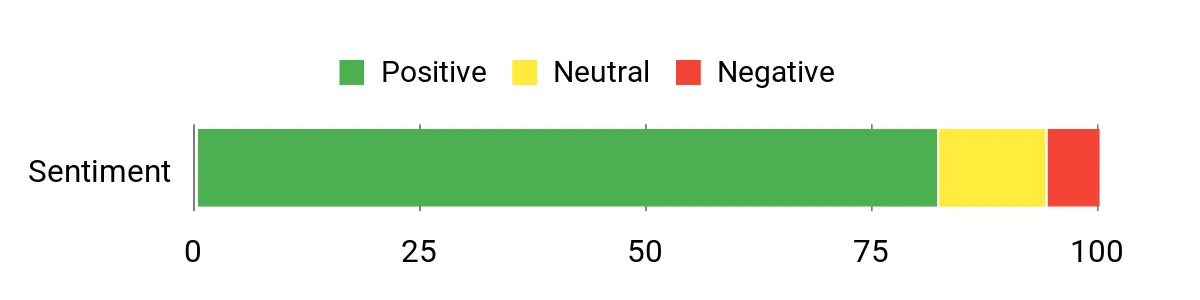
Marketplace snapshot: The linked ABF-1000 listing showed approximately 4.7/5 from 162 reviews when checked on August 26, 2026. Amazon ratings and review counts change over time, so check the live listing for the current figure.
Sentiment-chart note: The chart below is retained from the original article. Its underlying review sample, collection date and sentiment methodology were not supplied, so it should be treated as a legacy snapshot rather than a current independent review analysis.
Versatility
The ABF-1000 can handle light bank fishing and general freshwater spinning duties, and its baitfeeder system is useful whenever you want a secondary drag for static bait. Its compact size is also the main limitation: choose a larger reel where line capacity or drag strength becomes more important.
Durability
Okuma specifies a corrosion-resistant graphite frame, sideplate and rotor, along with a stainless-steel bearing system. Those are useful design features for keeping weight down, but normal reel care still matters: avoid impacts, rinse appropriately after exposure to corrosive environments and check the line roller and drag periodically.
Key Benefits
- Secondary baitfeeder drag for controlled takes
- Micro-adjustable rear baitfeeder drag
- Compact, lightweight ABF-1000 body
- Handle rotation automatically disengages the baitfeeder system
- Useful light-duty option when matched to suitable carp water
Marketplace rating checked August 26, 2026: 4.7/5 (162 reviews)
Vipfish Rigs

These pre-tied hair rigs reduce preparation when you are learning how different hookbaits behave. The current linked listing is presented as a 24-piece pack with hooks, swivels and braided line, giving you ready-made rigs for boilies, pellets or corn.
Pre-tied does not mean “use without checking.” Run your fingers over the hooklink, inspect the hook point, and pull-test the knot and swivel connection before every cast. Replace a rig after significant abrasion, a damaged hook point or a hard snag.
If you are still learning knot work or want prepared spares for a session, these can save time while keeping the presentation consistent.
What People Say
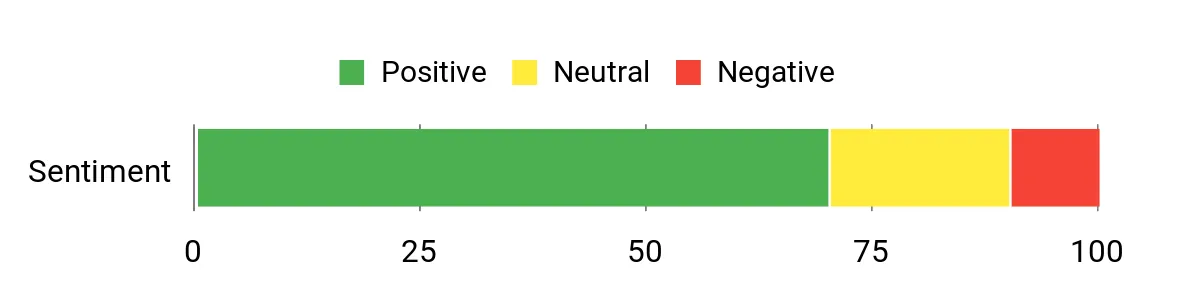
Marketplace snapshot: The linked listing showed approximately 4.0/5 from 169 reviews when checked on August 26, 2026. Treat the live listing as the source for the latest rating.
Sentiment-chart note: The original chart is preserved below, but the source article did not disclose its review sample or analysis method.
Versatility
You can keep these as your main beginner rigs or carry them as spares while learning to tie your own. They suit common hair-rig hookbaits such as boilies, pellets and sweetcorn when those baits are allowed at your venue.
Durability
Rig life depends on abrasion, fish size, hook condition and the bottom you are fishing over. Check the hooklink and every connection after a fish or snag rather than relying on a fixed number of uses.
Key Benefits
- Pre-tied construction reduces setup time
- 24-piece current listing gives you multiple replacement rigs
- Hair-rig format suits several common carp hookbaits
- Useful as beginner rigs or emergency spares
Marketplace rating checked August 26, 2026: 4.0/5 (169 reviews)
PLUSINNO Holders

These are ground-spike rod holders designed for bank fishing. They are not the surface-mount holders described in the original copy. According to PLUSINNO’s product information, the design uses reinforced nylon, a chrome-coated ground drill/spike and adjustable positioning.
The holder can rotate through 360° horizontally and about 130° vertically, letting you alter the rod angle for the swim and line position. The linked package is a two-holder set, which is handy if you fish two rods where local regulations permit it.
Because this version relies on a ground spike, it is best for soil, sand and similar surfaces that accept the spike. It is not a substitute for a clamp or bolted mount on a hard deck, boat seat or concrete platform.
What People Say
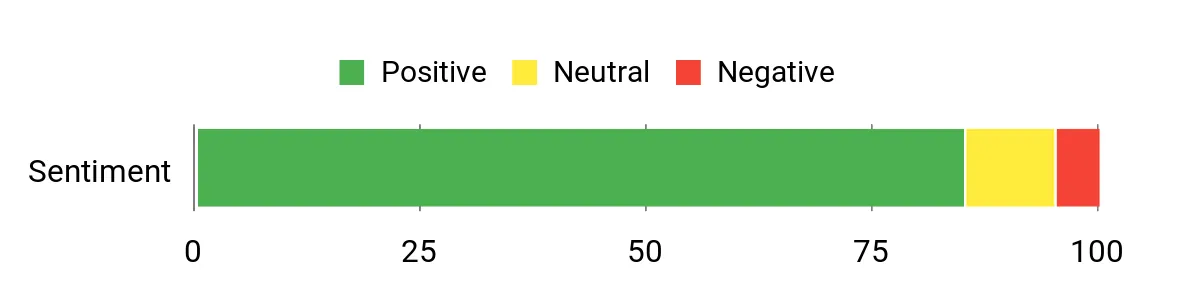
Marketplace snapshot: The linked listing showed approximately 4.6/5 from 707 reviews when checked on August 26, 2026.
Sentiment-chart note: The chart below is retained from the original article, but its review sample, date and methodology were not supplied.
Versatility
They are useful for ordinary bank fishing, sandy shoreline sessions and other ground where the spike can be seated securely. Adjustable angles also make it easier to position the rod tip for different line paths and wind conditions.
Durability
PLUSINNO lists reinforced nylon and a chrome-coated metal ground component. As with any portable holder, inspect moving joints and the spike for damage, and do not force it into surfaces for which it was not designed.
Key Benefits
- 360° horizontal adjustment
- About 130° vertical adjustment
- Ground-spike design for bank and shoreline use
- Reinforced nylon construction
- Two holders in the linked pack
Marketplace rating checked August 26, 2026: 4.6/5 (707 reviews)
WCB Boilies
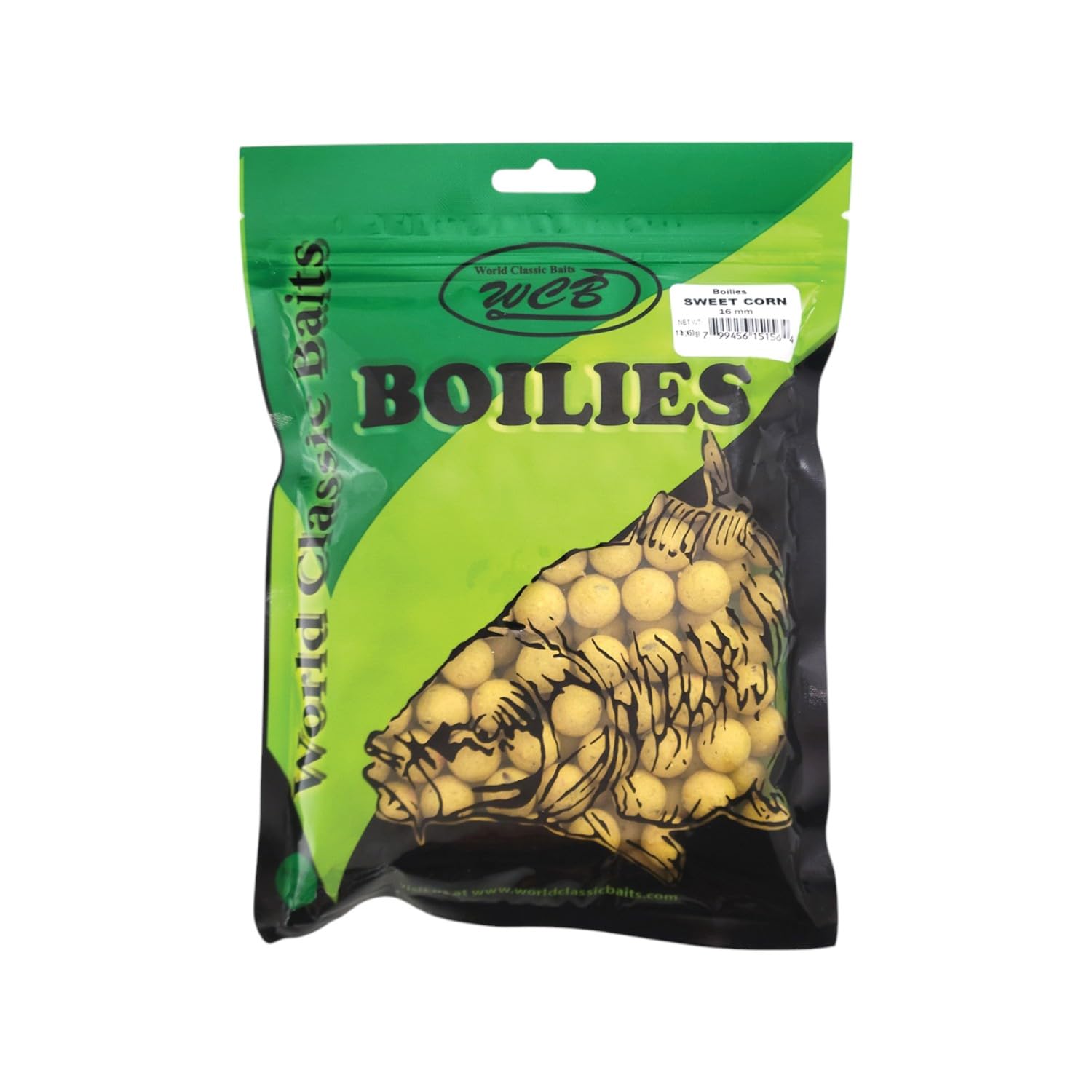
The linked WCB product is a 1 lb bag of 16 mm sweet-corn-flavored boilies. That size is straightforward to thread onto a hair, and the listing presents the bait for both hookbait and feeding applications.
You can fish a boilie on its own, combine a small number of matching free offerings around the rig, or use boilies as part of a legal prebaiting approach. Avoid assuming one flavor will always produce: carp preference changes with the venue, season, feeding pressure and what other anglers regularly introduce.
For a beginner who wants a ready-made alternative to corn or pellets, the uniform 16 mm format is simple to handle and repeat.
What People Say
Marketplace snapshot: The linked listing showed approximately 4.3/5 from 30 reviews when checked on August 26, 2026.
Sentiment-chart note: The following chart remains from the original article, but its underlying review dataset and analysis procedure were not supplied.
Versatility
Use the boilies as hair-rig hookbaits or, where regulations allow, as part of a small feeding approach. They can also be combined with other legal particles or pellets according to the conditions and your baiting strategy.
Durability
Boilie firmness changes with soak time, water temperature and handling. Check that the bait remains secure on the hair after casting or retrieving rather than assuming it will stay intact indefinitely.
Key Benefits
- Uniform 16 mm size
- 1 lb package
- Sweet-corn flavor
- Easy to mount on a conventional hair rig
- Can be used as hookbait or in a legal feeding strategy
Marketplace rating checked August 26, 2026: 4.3/5 (30 reviews)
Mulberry Flies
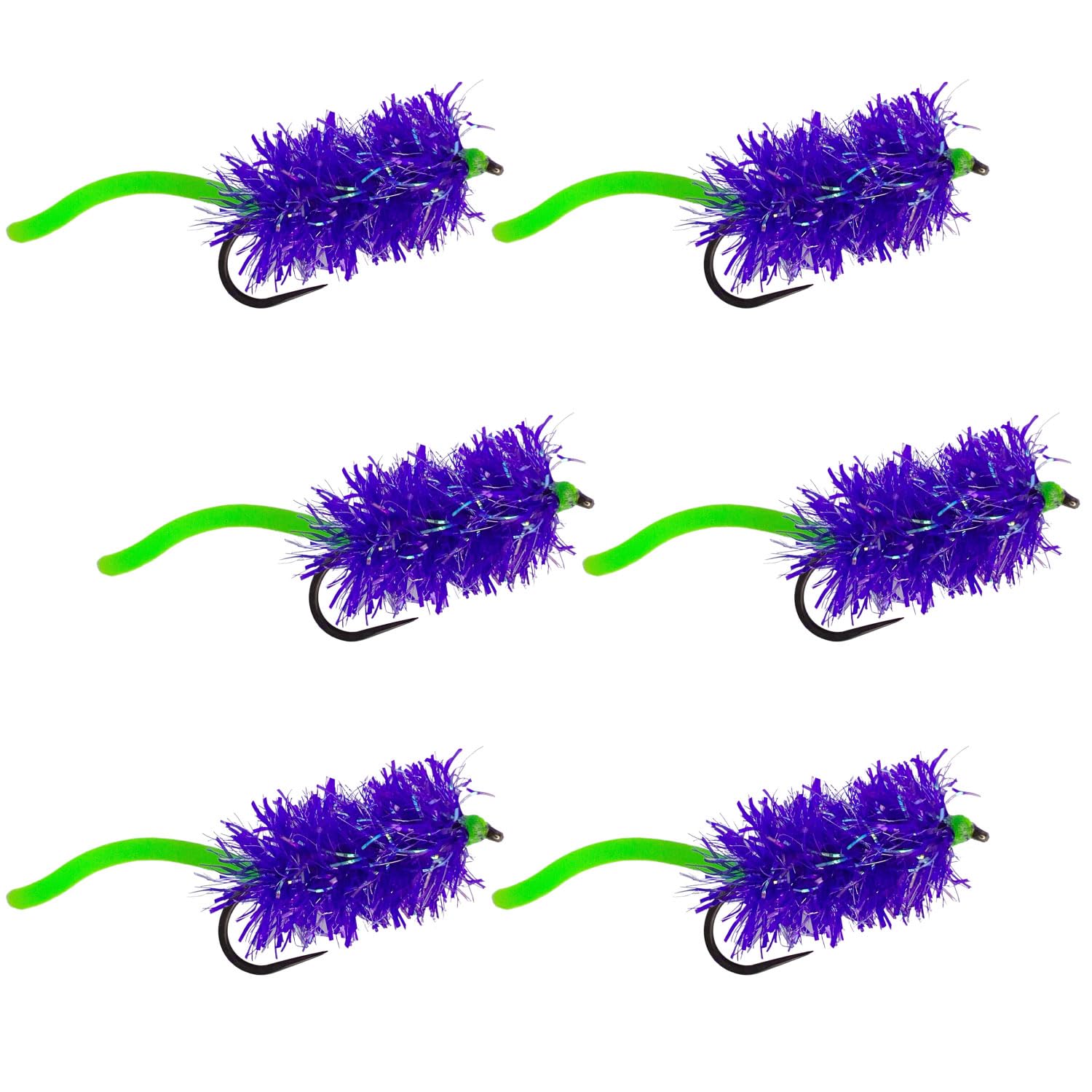
These mulberry-pattern flies are specialized rather than general-purpose carp flies. The linked set is marketed as a 12-piece pack in hook sizes #10 and #14 for species including carp and panfish.
The tactic makes the most sense around fruiting mulberry trees where ripe berries are dropping into the water and carp are visibly feeding beneath them. Cast beyond or beside the fish when possible and let the fly settle naturally rather than repeatedly landing it directly on top of a cruising carp.
Outside that feeding event, a mulberry imitation loses much of its advantage. Keep it as a seasonal pattern rather than making it the foundation of your carp tackle.
What People Say
A dependable current marketplace star rating for the exact linked product could not be verified during this audit. Check the live Amazon listing before relying on any rating or review count.
Sentiment-chart note: The original sentiment chart is preserved below. Because its underlying review sample and methodology were not provided, it should not be treated as a current independent measure of buyer sentiment.
Versatility
Best used for sight or surface fishing below fruit-bearing vegetation when carp, bluegill or other fish are actively taking fallen fruit. The two hook sizes give you some flexibility in matching local conditions.
Durability
Synthetic fly materials can tolerate repeated casting, but hook points and bodies still need inspection after fish, snags or contact with branches and bankside cover.
Key Benefits
- Imitates fallen mulberry fruit
- 12-piece linked set
- Hook sizes #10 and #14
- Useful for highly visual seasonal carp fishing
- Compact pattern that is easy to keep as a specialty option
Marketplace rating: Not reliably verified for the exact listing during the August 26, 2026 audit.
Bullethead Cicada
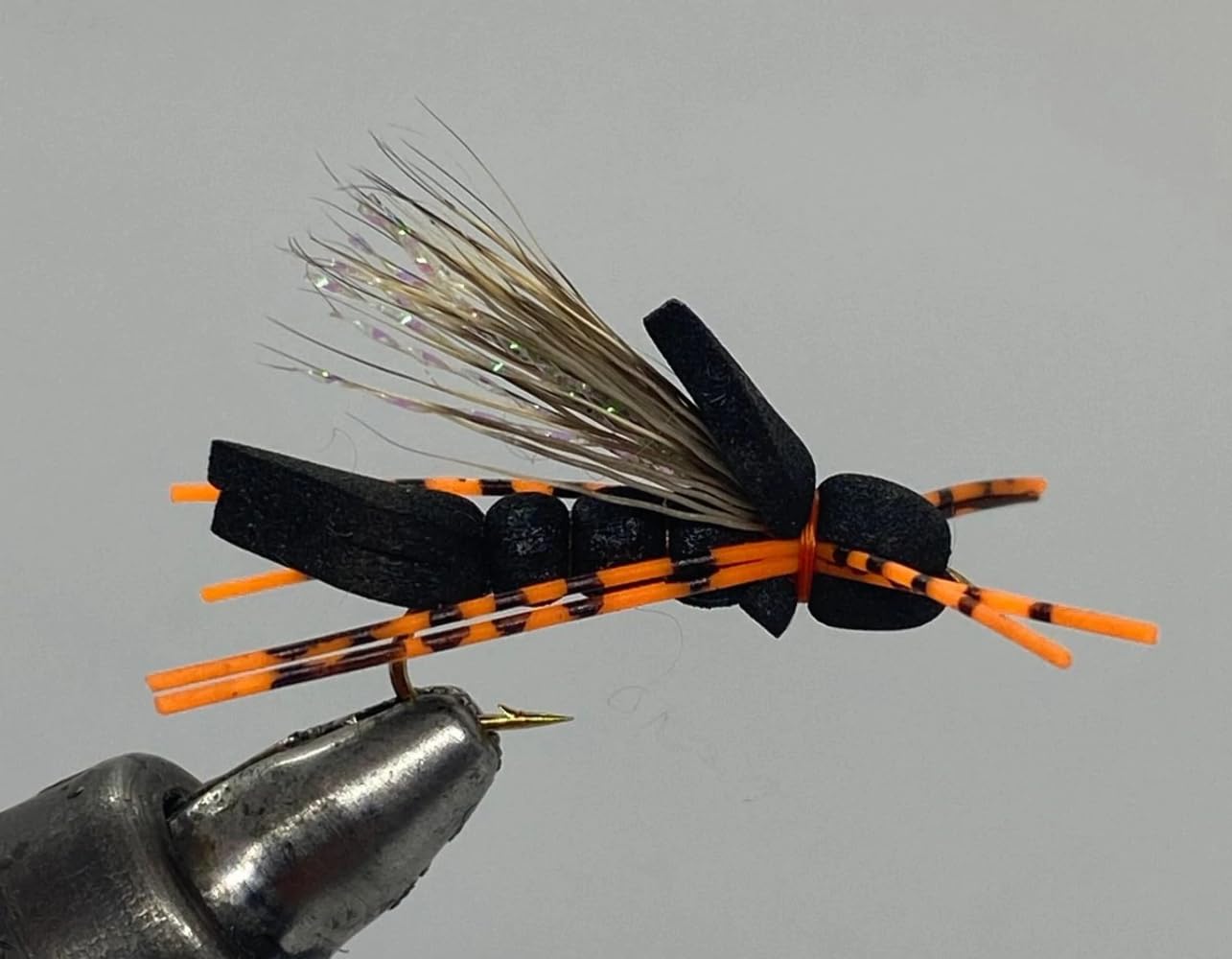
This foam cicada is a large terrestrial dry-fly pattern designed to stay visible on the surface. Cicada patterns are commonly associated with trout and other opportunistic surface feeders, but carp may also take large terrestrials when the insects are naturally available and the fish are looking upward.
For carp, treat it as a condition-specific option. Look for cicada activity, surface-feeding fish and suitable overhanging cover before tying one on. If carp remain focused on the bottom, switch to a presentation that matches what they are actually eating.
What People Say
A reliable current Amazon rating and review count for the exact linked listing could not be verified during the audit. Check the live marketplace page for current availability and feedback.
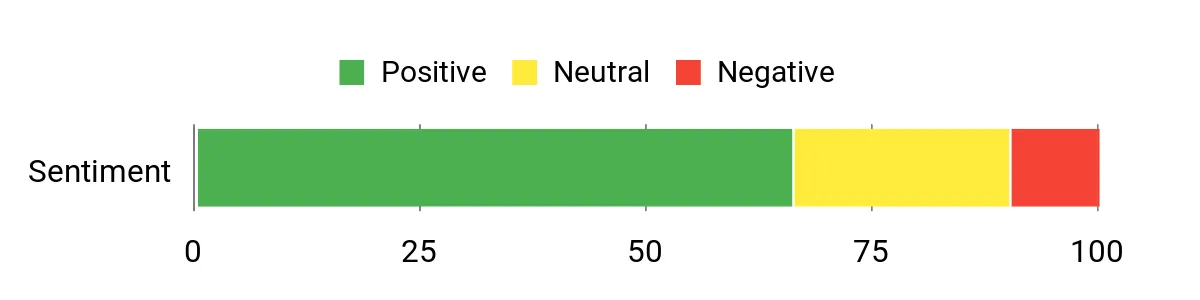
Sentiment-chart note: This chart is retained from the original article. The original source did not provide the review corpus, collection date or methodology behind it.
Versatility
The pattern is most relevant during warm-weather terrestrial activity and can be used for trout, panfish and other surface-feeding species as well as opportunistic carp. Match it to visible insect activity rather than using it simply because carp are present.
Durability
A foam body is naturally buoyant, but repeated fish, snags and abrasion can damage the body or hook. Check hook sharpness and body integrity before recasting a heavily used fly.
Key Benefits
- Buoyant foam terrestrial profile
- Visible surface presentation
- Useful when cicadas or similar large insects are active
- One-dozen linked set provides replacement flies
- Works for several opportunistic surface-feeding species
Marketplace rating: Not reliably verified for the exact listing during the August 26, 2026 audit.
Carp Fishing Troubleshooting
I Have Had No Signs of Carp
Do not keep adding bait to the same place automatically. Watch for rolling fish, bubbles, muddy water, tailing, movement along margins or repeated cruising routes. If the swim stays lifeless, moving to active fish can be more productive than waiting over extra bait.
The Bait Keeps Coming Back Untouched
Check that the bait is still secure, the hook point is exposed and the rig is not tangled. Then reconsider location, depth and bait quantity. A perfectly tied rig cannot catch fish that are not feeding nearby.
I Keep Getting Takes but Missing Fish
Inspect the hook point first. Then check hair length, bait position, hooklink condition and drag setting. Make changes one at a time so you can identify what actually improves the hookup rate.
Fish Keep Reaching Weed or Snags
Your setup may be too light for the water. Use tackle appropriate for the venue, fish at a manageable distance and position yourself so you can control the first run safely. A small reel such as the ABF-1000 is not the ideal choice for every snaggy big-carp situation.
Frequently Asked Questions
What basic gear should I start with?
Start with one suitable rod, a spinning or baitfeeder reel, line matched to your water, a basic hair-rig setup, a few proven hookbaits, a rod support, a large landing net, an unhooking mat and a hook-removal tool. Learning one simple setup well is more useful than buying many specialized rigs immediately.
How do I rig for carp?
A simple hair rig is a good starting point. Keep the hook point exposed, place the bait on the hair behind the hook, connect the hooklink securely to your terminal system and inspect every knot and hook point before casting. Match hook, hooklink and lead size to the venue and expected fish rather than using one fixed specification everywhere.
How do I find carp and present bait?
Watch quiet margins, coves, backwaters, weed edges and other feeding areas for rolling fish, bubbles, mud clouds or cruising carp. Cast with as little disturbance as practical and begin with modest free offerings. If chumming or prebaiting is legal at your water, adjust the amount according to actual fish activity rather than feeding heavily by default.
Is the Okuma Avenger ABF-1000 big enough for carp?
It can suit lighter carp fishing in relatively open water, but it is a compact reel with a 6-lb maximum drag according to Okuma’s current specifications. For large fish, long casts, heavy weed, current or serious snags, compare larger Avenger ABF sizes or another reel with the capacity and drag appropriate for the venue.
Can I chum or prebait for carp?
Only where local rules allow it. Regulations can differ between states, provinces, fisheries and individual waters. Check the current rules before introducing free bait, and use only as much as the situation requires.
How should I handle a carp on the bank?
Use a suitably sized landing net and place the fish on a padded unhooking mat or another fish-safe surface. Keep handling time short, support the body if lifting is permitted and appropriate, and never lift a carp by its gills. Have your hook-removal tool ready before the fish leaves the water.
When should I use mulberry or cicada flies for carp?
Use mulberry flies when fruit is naturally dropping into the water and carp are feeding underneath the trees. Cicada patterns are similarly situational and make the most sense when cicadas or other large terrestrials are active and carp are visibly taking food from the surface.
What Anglers Prefer
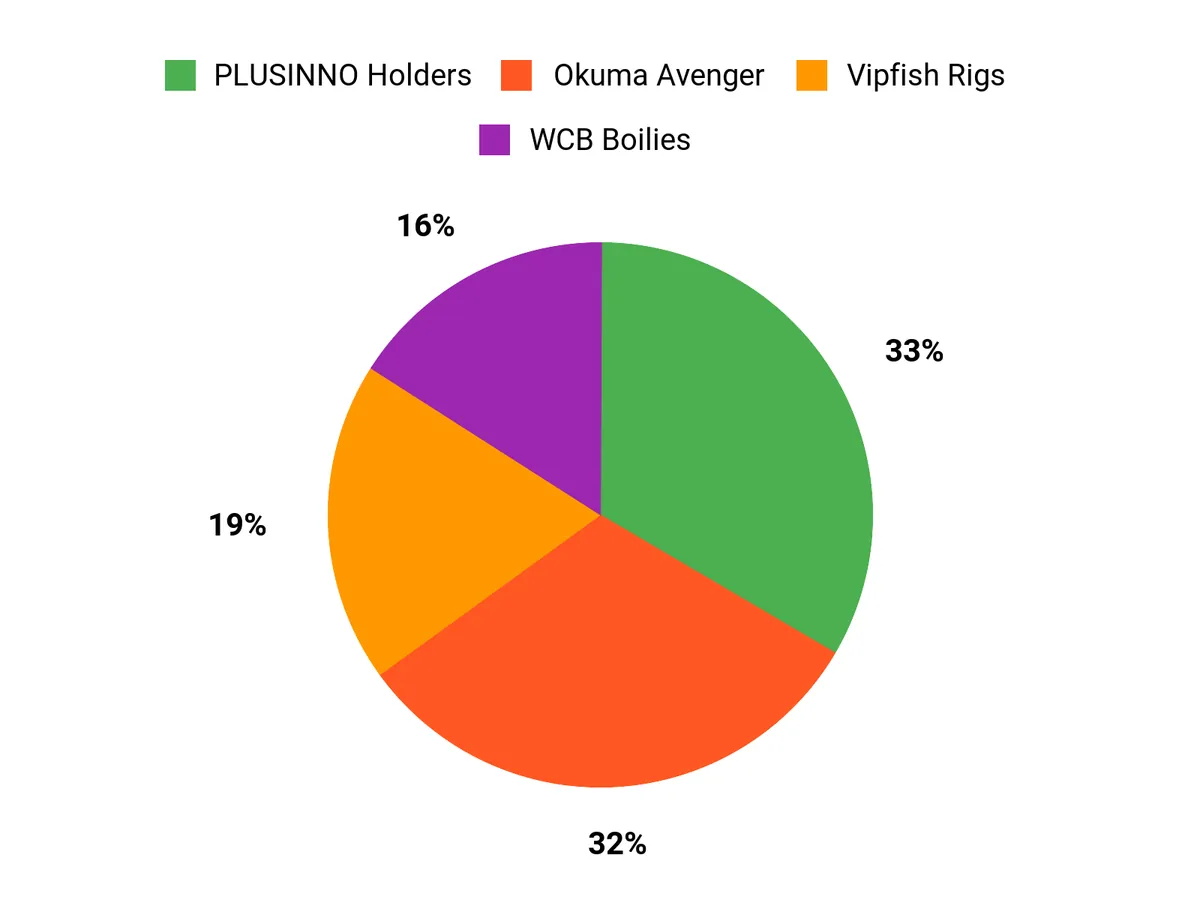
For a simple beginner setup, the most useful features are the ones that solve a clear fishing problem: a secondary baitfeeder drag for controlled takes, pre-tied hair rigs for quick setup, and adjustable bank holders that keep rods positioned securely. Bait choice then depends on what the fish are actually eating, with conventional corn or boilie presentations generally more broadly useful than specialty mulberry or cicada patterns.
Chart note: The original chart is retained below as required, but its source dataset and calculation method were not supplied. Treat it as a legacy illustration rather than current independently verified preference data.
Sources
- Okuma Fishing USA — Avenger ABF Reels — official baitfeeder features, model sizes, drag, line capacity, weight and retrieve specifications.
- PLUSINNO — Fishing Rod Holders for Bank, Ground and Beach — official ground-spike construction and adjustment information.
- Connecticut Department of Energy & Environmental Protection — Carp Fishing Primer — beginner tackle, hair rigs, bait, fish location, landing and handling guidance.
- U.S. Geological Survey — Common Carp Species Profile — species background and U.S. distribution information.
- Connecticut DEEP — Freshwater Species Regulations — an example of jurisdiction-specific fishing rules and possession requirements.
Wrapping Up
If you are starting out, focus on a few high-impact items: one rod and reel matched to your water, a dependable hair rig, an uncomplicated bait such as corn or boilies, a stable rod support, and proper landing and unhooking equipment. The Okuma Avenger ABF-1000 offers a useful baitfeeder system for lighter-duty situations, the Vipfish rigs reduce setup time, and the PLUSINNO holders provide adjustable support on suitable banks.
Then put location ahead of tackle. Find feeding fish, present the bait cleanly, keep your hook sharp and make small changes instead of rebuilding your whole setup after every quiet hour. Seasonal flies such as mulberry and cicada patterns can be effective when natural feeding conditions support them, but they are specialty options rather than everyday necessities.
Finally, check the rules for the water you are fishing and carry the equipment needed to land and handle carp responsibly. Those habits will improve your first sessions more than chasing complicated gear.
| Product Name | Image | Rating | Material | Weight | Best Sellers Rank |
|---|---|---|---|---|---|
| Okuma Avenger ABF Graphite Baitfeeder Saltwater Spinning Reel ABF-1000 |
|
4.7/5 (162 reviews, checked Aug. 26, 2026) | Composite | 7.04 ounces | #37,038 in Sports & Outdoors when checked Aug. 26, 2026 |
| 24 Pack Pre-Tied Carp Rigs with Sharp Hooks, Swivel & PE Line |
|
4.0/5 (169 reviews, checked Aug. 26, 2026) | Braided line, hooks and swivels | N/A | #45,294 in Sports & Outdoors when checked Aug. 26, 2026 |
| PLUSINNO Fishing Rod Holders – Upgraded 360 Degree Adjustable Fishing Pole Stand |
|
4.6/5 (707 reviews, checked Aug. 26, 2026) | Reinforced nylon with chrome-coated ground component | N/A | #15,854 in Sports & Outdoors when checked Aug. 26, 2026 |
| WCB Carp Baits High Protein Boilies 16 mm 1 lb Bag – Carp Bait – Flavor: Sweet Corn |
|
4.3/5 (30 reviews, checked Aug. 26, 2026) | Carp bait boilies | 16 ounces | #33,528 in Sports & Outdoors when checked Aug. 26, 2026 |
This Roundup is reader-supported. When you click through links we may earn a referral commission on qualifying purchases.
