
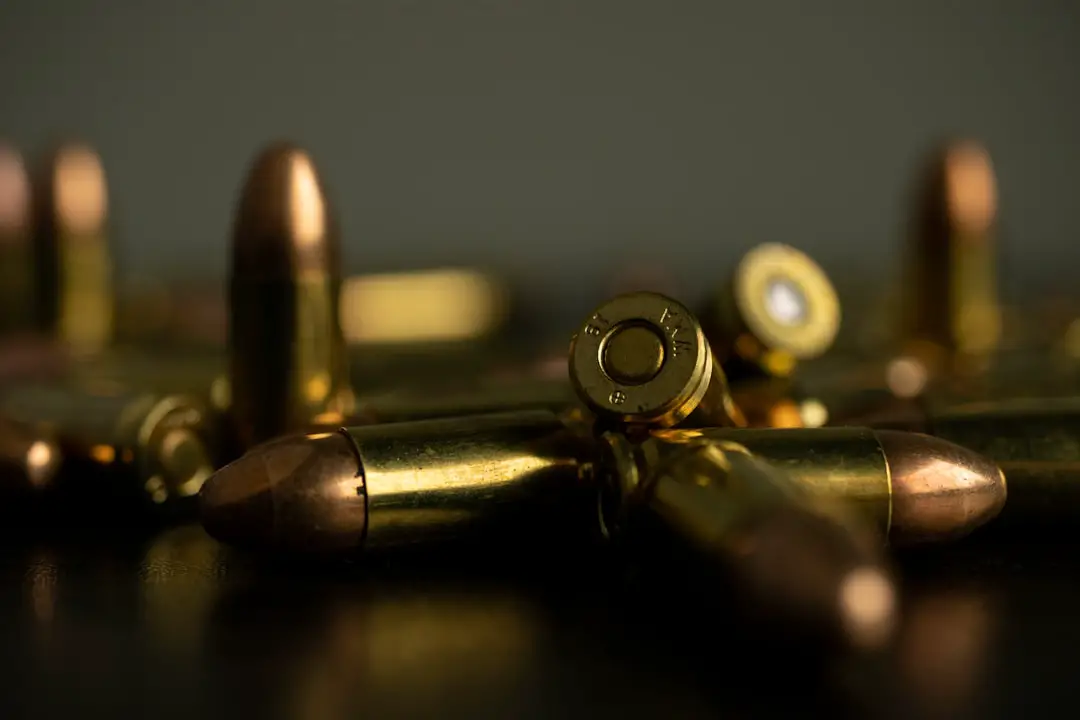
Last Updated on August 26, 2026 by Daniel Globe
Developed in 1898 by Smith & Wesson to improve upon the performance of the .38 Long Colt during military trials, the .38 Smith & Wesson Special (commonly known as the .38 Special) has remained one of the most enduring and widely used handgun cartridges in modern history. Featuring a nominal bullet diameter of .357 inches and a case length of 1.155 inches, this versatile cartridge is widely utilized in compact concealed-carry snub-nose revolvers, full-sized service handguns, and precision target revolvers. Understanding the ballistic limits of the .38 Special—both its maximum potential travel distance and its realistic effective range—is essential for marksmanship accuracy, ammunition selection, and range safety.
Quick Answer
Fired at an optimal aerodynamic angle of 30 to 35 degrees, a standard .38 Special bullet can travel a maximum distance of 1.25 to 1.5 miles (2,200 to 2,640 yards). However, its maximum effective range for practical defensive shooting is 7 to 15 yards, extending to 25 to 50 yards in target shooting scenarios with a standard 4-inch service barrel.
Key Takeaways
- Maximum Flight Range: A .38 Special bullet remains lethal and dangerous up to ~1.5 miles (approx. 7,900 feet) under unobstructed flight paths.
- Practical Effective Range: Typical self-defense engagements occur within 3 to 7 yards; competitive and target shooters achieve accurate groups out to 25–50 yards.
- Barrel Length Influence: Muzzle velocity drops by approximately 30–50 feet per second (fps) per inch of barrel lost, making snub-nose revolvers shoot slower than 4-inch or 6-inch models.
- Pressure Classifications: Standard .38 Special loads operate at a SAAMI maximum pressure of 17,000 PSI, while overpressure (+P) loads operate up to 18,500 PSI for flatter trajectories.
- Atmospheric Mechanics: High altitude and warm temperatures reduce air density, enabling the projectile to travel further due to decreased aerodynamic drag.
Factors Affecting the Distance a .38 Special Bullet Can Travel
The total distance a .38 Special projectile travels is governed by exterior ballistics, which begins the instant the bullet exits the muzzle. Multiple internal, external, and design variables determine how far the projectile will travel before gravity and atmospheric drag pull it to the ground.
- Muzzle Velocity ($V_0$): Initial projectile speed is the primary driver of both maximum distance and kinetic energy retention. Standard pressure commercial .38 Special ammunition delivers muzzle velocities between 750 and 950 feet per second (fps), while specialized high-pressure (+P) ammunition can exceed 1,000 fps.
- Bullet Weight and Profile: Common projectile weights range from 110-grain high-velocity jacketed hollow points (JHP) to 158-grain lead round nose (LRN) or semi-wadcutter (SWC) rounds. Heavier projectiles carry more momentum ($p = m \cdot v$) through downrange air resistance, while aerodynamic round-nose bullets travel farther than flat-faced wadcutters.
- Ballistic Coefficient (BC): A projectile’s BC reflects its ability to overcome air resistance in flight. Typical handgun bullets have low BC ratings (generally 0.100 to 0.160) compared to rifle bullets, causing rapid deceleration as distance increases.
- Firing Angle and Elevation: According to external ballistic calculations, shooting at an upward angle between 30° and 35° yields the maximum possible flight distance before ground impact.
Pro Tip: For target practice, 148-grain Lead Wadcutters (LWC) provide exceptional precision at 25 yards because they cut clean holes in paper targets, but their flat face creates high aerodynamic drag that limits extreme-range flight.
Products Worth Considering
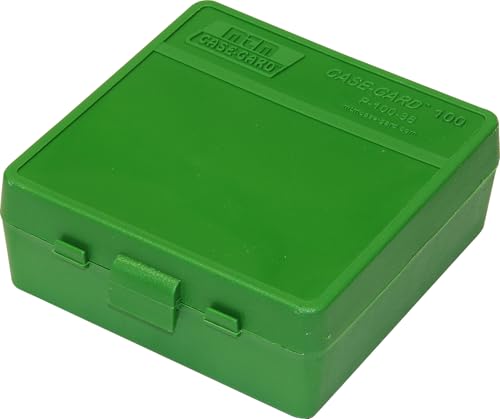
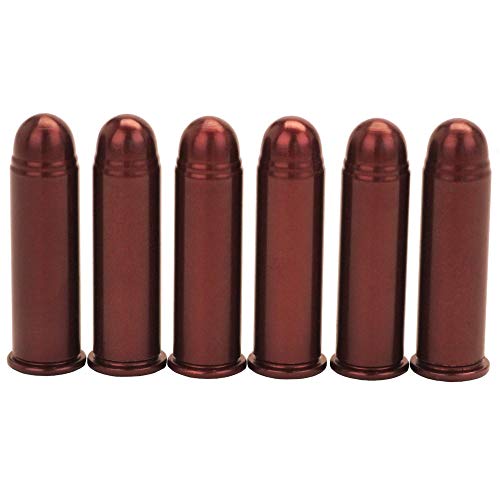
For 38 Spec., 357 Mag., 38 Auto Colt, 32 H&R Mag., 30 Mauser, 327 Fed. Mag., 38 Super Colt, 5.7x28 FN, 7.62x25 Tokarev, 9x23mm Win.

Orange color makes them easy to spot and prevents mixing with real ammo.
Maximum Flight Distance vs. Maximum Effective Range
It is vital to distinguish between a bullet’s maximum theoretical travel distance (where it can still inflict fatal injuries) and its practical effective range (where a shooter can reliably place hits on a target with sufficient stopping power).

Under optimal atmospheric conditions and an elevated trajectory, a .38 Special bullet can travel up to 2,500 yards (1.42 miles). While energy drops substantially past 300 yards, a falling handgun bullet retains enough terminal energy (often exceeding 30 to 40 ft-lbs) to cause severe injury or death upon impact.
Conversely, the practical effective range is substantially shorter:
- Defensive Shooting (Snub-Nose 1.875″–2″ Barrel): 3 to 15 yards. Short sight radiuses and velocity loss make precise shot placement challenging beyond 15 yards in high-stress situations.
- Duty / Home Defense (4″ Barrel): 15 to 25 yards. Full-sized handguns provide stable sight alignment and higher velocities for consistent hollow-point expansion.
- Target / Silhouette Shooting (6″ Barrel): 25 to 50 yards. Experienced shooters using tuned single-action triggers can engage targets out to 50–100 yards, compensating for significant projectile drop.
“A firearm projectile remains lethal along its entire flight path until it comes to a complete rest. Never confuse effective sight range with maximum dangerous distance.”
Products Worth Considering

For 38 Spec., 357 Mag., 38 Auto Colt, 32 H&R Mag., 30 Mauser, 327 Fed. Mag., 38 Super Colt, 5.7x28 FN, 7.62x25 Tokarev, 9x23mm Win.

For .38 Spec., .357 MAG, .38 Auto Colt

VERSATILE: Holds 50 rounds of 25-20 WCF, 32-20 WCF, 32 S&W, 32 S&W Long, 32 H&R Magnum, 38 S&W, 38 Special, 38 Super, 357 Magnum, or 357 Maximum ammunition
Impact of Barrel Length on Velocity and Distance
The barrel length of a revolver dictates how long expanding propellant gases act on the base of the bullet before it uncorks into the atmosphere. Longer barrels provide complete powder combustion and elevated muzzle velocity, flattening downrange trajectory and extending travel distance.
| Barrel Length | Revolver Platform Type | Avg. Velocity (158gr LRN) | Muzzle Energy | Max Effective Range |
|---|---|---|---|---|
| 1.875″ – 2″ | Snub-Nose (e.g., S&W J-Frame) | 720 – 760 fps | 180 – 205 ft-lbs | 15 yards |
| 3″ | Compact Carry (e.g., Ruger SP101) | 780 – 820 fps | 215 – 235 ft-lbs | 25 yards |
| 4″ | Service / Duty (e.g., S&W Model 10) | 840 – 890 fps | 250 – 280 ft-lbs | 50 yards |
| 6″ | Target / Competition (e.g., S&W 586) | 910 – 970 fps | 290 – 330 ft-lbs | 75+ yards |
A short snub-nose barrel sacrifices between 100 and 180 fps compared to a standard 4-inch service barrel. In addition to velocity loss, short barrels shorten the sight radius (the distance between the front and rear sights), which magnifies human sighting errors at extended ranges.
Products Worth Considering
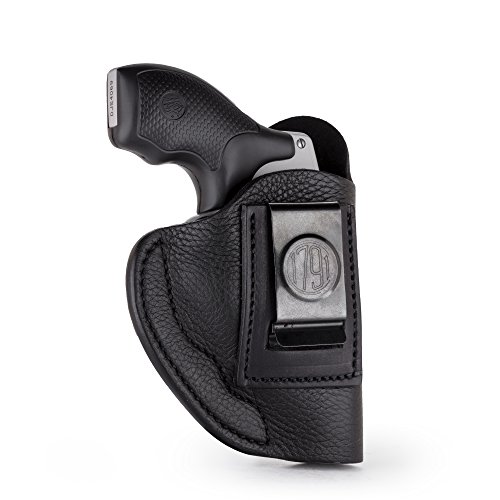
FITS - All J Frame Revolvers including Smith & Wesson 637, 638, 642 airweight holster, S&W Bodyguard, Ruger LCR, Ruger SP101, Taurus 85, 856 and similar 38 specials with up to 2.5 inch barrel length.

Feel confident and secure with our adjustable positive retention click, which ensures a snug and secure fit for your Taurus 856 2'', and provides an audible click when holstering for added peace of mind.

Please Note First! - This is J Frame Revolvers Leather Holster for OWB(Outside Waistband) Carry, Right Hand Draw, Stealth Black Color. If you are looking for left hand draw holster please select the Hand Orientation: Left.
Trajectory and Bullet Drop Across Distance
Because the .38 Special is a subsonic to transonic cartridge, bullet drop becomes pronounced beyond 50 yards. The following ballistic trajectory model illustrates typical bullet drop for a 158-grain standard pressure lead bullet zeroed at 25 yards:
| Distance (Yards) | Velocity (fps) | Energy (ft-lbs) | Trajectory / Drop (Inches) |
|---|---|---|---|
| Muzzle (0 yds) | 850 fps | 253 ft-lbs | -0.6 in (Sight Offset) |
| 25 yds (Zero) | 818 fps | 235 ft-lbs | 0.0 in (Point of Aim) |
| 50 yds | 788 fps | 218 ft-lbs | -3.8 in |
| 75 yds | 759 fps | 202 ft-lbs | -12.4 in |
| 100 yds | 731 fps | 188 ft-lbs | -26.2 in |
Environmental Factors Influencing Bullet Travel Distance
External atmospheric conditions influence the flight path and maximum range of a .38 Special projectile. Ballistic flight is governed by air resistance and atmospheric drag coefficients.
- Ambient Temperature and Air Density: Contrary to common misconceptions, warmer air is less dense than cold air. High temperatures reduce drag, allowing bullets to travel slightly further with less velocity loss. In freezing weather, dense air increases drag and accelerates projectile drop.
- Altitude: High-altitude shooting environments feature significantly lower atmospheric pressure and thinner air. Firing a .38 Special at an elevation of 6,000 feet above sea level results in extended travel distance compared to shooting at sea level.
- Crosswinds and Headwinds: A 10 mph crosswind can push a 158-grain .38 Special bullet off target by over 3 to 4 inches at 50 yards and up to 14 inches at 100 yards. Headwinds increase relative air resistance, causing faster trajectory decay.
- Relative Humidity: While often believed to slow bullets down, humid air is slightly less dense than dry air (water molecules weigh less than diatomic nitrogen and oxygen), providing a negligible reduction in drag.
Safety Considerations When Shooting a .38 Special Bullet

Because a .38 Special bullet can travel over 7,000 feet downrange, shooters must strictly observe fundamental firearm safety rules established by certified organizations such as the National Rifle Association (NRA) and the National Shooting Sports Foundation (NSSF).
Warning: Always know your target and what lies beyond it. A stray or elevated .38 Special round fired into the air can maintain lethal terminal velocity up to 1.5 miles away, penetrating residential walls, vehicles, and roofs.
- Verify Safe Backstops: Always shoot against a dedicated earthen berm or industrial bullet trap capable of capturing handgun projectiles without producing ricochets.
- Wear Protective Equipment: Utilize ANSI-rated safety glasses and hearing protection (NRR 25+) to prevent hearing loss and protect against lead splatter or unburned powder grains exiting the cylinder gap.
- Understand Cylinder Gap Blast: Revolvers expel high-pressure burning gas laterally between the cylinder face and the barrel forcing cone. Never place support-hand fingers near the front of the cylinder.
- Safe Storage and Transportation: Store firearms unloaded in a certified locked safe or lockbox, separate from ammunition, to prevent unauthorized access.
Legal Restrictions on Shooting a .38 Special Bullet
The legality of discharging and carrying .38 Special firearms depends upon federal, state, and municipal statutes:
- Municipal Discharge Laws: Discharging a firearm within municipal city limits or within 500 feet of occupied dwellings without an approved range permit is strictly prohibited across most jurisdictions and constitutes a felony or misdemeanor offense.
- Concealed and Open Carry: Concealed carry regulations vary widely by state. Certain states operate under constitutional permitless carry, while others require state-issued concealed pistol licenses (CPL/CCW) and mandated safety courses.
- Safe Direction Ordinances: Negligent discharges that endanger neighboring residences or property violate local reckless endangerment statutes, regardless of whether intent was present.
Conclusion and Summary of Key Points
The .38 Special cartridge remains a proven, versatile handgun caliber with over a century of service in personal defense, law enforcement, and recreational target shooting. While its maximum dangerous travel distance reaches up to 1.5 miles (2,500 yards) when fired at an elevated angle, its practical effective range remains within 7 to 50 yards depending on barrel length and shooter capability. Understanding how barrel length, bullet weight, and atmospheric conditions dictate velocity and projectile drop enables shooters to maximize their accuracy while ensuring responsible range safety.
Frequently Asked Questions
What is the maximum range of a .38 Special bullet?
When fired at an optimal elevation angle of roughly 30 to 35 degrees, a standard .38 Special bullet can travel between 1.25 and 1.5 miles (approx. 2,200 to 2,640 yards). While accuracy is zero at this distance, falling projectiles retain enough energy to cause serious injury or death.
What factors affect the distance a .38 Special bullet can travel?
The travel distance is determined by muzzle velocity (influenced by powder load and barrel length), bullet weight, ballistic coefficient (aerodynamic profile), firing angle, and environmental conditions such as altitude, temperature, and wind speed.
Is it safe to fire a .38 Special bullet in a residential area?
No. Firing a .38 Special in a residential area is extremely dangerous and illegal under municipal and state laws. Bullets easily penetrate drywall, glass, and wood siding, retaining dangerous velocity across substantial distances.
What safety precautions should be taken when handling a .38 Special firearm?
Always treat every firearm as if it is loaded, keep the muzzle pointed in a safe direction at all times, keep your finger off the trigger until your sights are on the target, and be certain of your target and what lies behind it. Always wear ANSI-approved eye and ear protection when shooting.
Can a .38 Special shoot .357 Magnum ammunition?
No. You cannot shoot .357 Magnum cartridges in a .38 Special revolver. The .357 Magnum case is approximately 1/10th of an inch longer to physically prevent chambering in .38 Special firearms, which are not designed to handle the significantly higher operating pressures (35,000 PSI vs. 17,000 PSI).
Sources
- Sporting Arms and Ammunition Manufacturers’ Institute (SAAMI) — Voluntary Industry Performance Standards for Pressure and Velocity.
- Smith & Wesson — Historical specifications and firearm barrel standards for .38 Special revolvers.
- NRA Gun Safety Rules — Standard rules for firearm handling, range safety, and backstop verification.
- Federal Premium Ammunition — Ballistic trajectory charts and ballistic coefficient performance tables.
