
Last Updated on September 10, 2026 by Daniel Globe
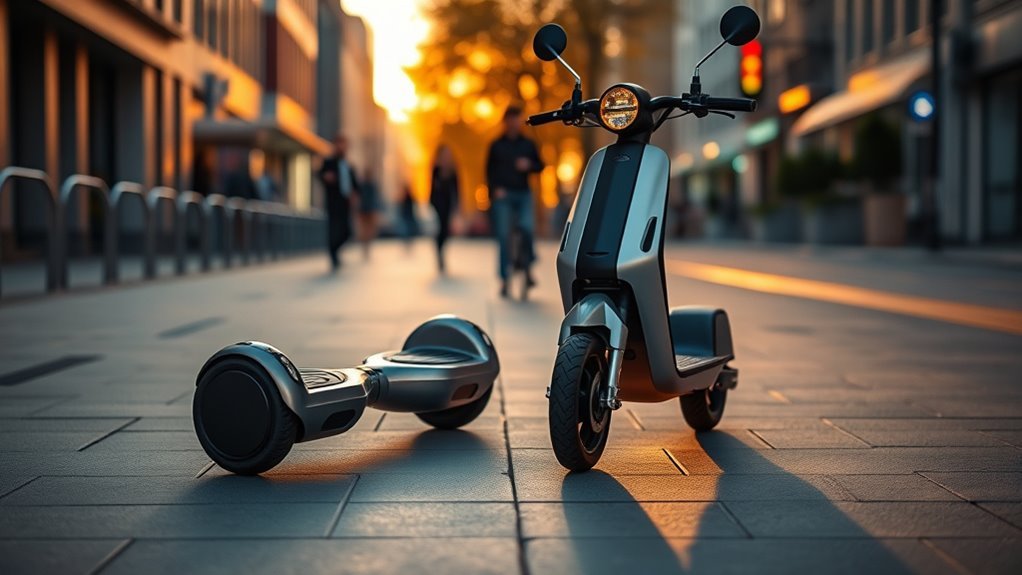
If you want a practical ride for daily travel, an electric scooter is usually better than a hoverboard. You’ll get more speed, longer range, easier learning, better stability, and stronger safety features like handlebars and hand brakes. Hoverboards are cheaper and more compact, but they’re best for short, flat, recreational trips and take more balance to use well. For commuting or rougher paths, scooters make more sense, and there’s more to compare below.
Disclosure: As an Amazon Associate I earn from qualifying purchases. Some links on this page are affiliate links, at no extra cost to you.
Which Is Better for Your Needs?
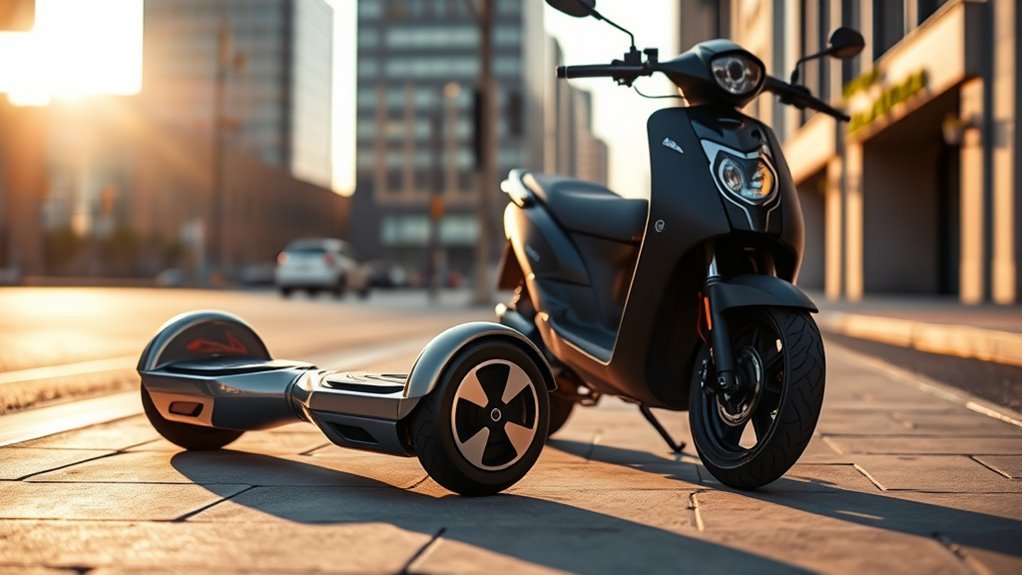
If you’re choosing between a hoverboard and an electric scooter, the better option depends on how you plan to use it. For longer commutes and city travel, you’ll likely get more value from an electric scooter. It covers about 10-40 miles per charge, moves at 15-20 mph, and usually folds for easier storage. That makes it fit more usage scenarios, especially when you want speed and independence.
A hoverboard works better for short, recreational rides. It usually goes 7-15 miles and tops out around 6-12 mph, so it suits relaxed trips rather than daily transport. You’ll also find scooters easier to learn, since their stable design supports quick control, while hoverboards demand more balance.
Your choice should reflect your lifestyle preferences. If you want practical mobility and fewer limits, choose the scooter. If you want a compact ride for casual fun, a hoverboard can still fit.
Hoverboards vs Electric Scooters
Hoverboards and electric scooters each serve different needs, and the best choice depends on how you plan to use them. You’ll notice hoverboard features favor compact, casual riding, while scooter accessories expand utility and comfort.
| Aspect | Hoverboard | Electric Scooter |
|---|---|---|
| Ease | Needs balance | Easier for beginners |
| Weight | 20-30 lbs | 25-50 lbs |
| Cost | $200-$500 | $300-$1,000+ |
If you want a lighter ride you can carry more easily, a hoverboard works well. If you want stability, handlebars, and a more liberated commute, a scooter fits better. Hoverboards usually suit short, relaxed trips. Electric scooters support more practical daily travel and often fold for transport.
Choose the option that matches your pace, your route, and your freedom to move.
Speed and Range Compared
When you compare speed capabilities, electric scooters usually go faster, often reaching 15–20 mph, while hoverboards top out closer to 6–12 mph. You’ll also get more battery range from a scooter, with many covering 10–40 miles per charge versus about 7–15 miles for a hoverboard. For commute distance, that extra speed and range make scooters better suited to longer trips, while hoverboards fit shorter rides.
Speed Capabilities
Electric scooters are the clear winner for speed and distance, typically reaching 15–20 mph compared with hoverboards’ 6–12 mph. You’ll feel the difference in acceleration comparison too: scooters launch harder and keep pace better in city traffic, while hoverboards respond more gently. If you want freedom of movement, scooters give you more margin on varied routes, especially where speed regulations still allow moderate travel. Hoverboards suit short, relaxed trips on flat ground, but their lower top speed limits your options. Terrain matters as well: scooters handle bumps and rougher pavement more confidently, while hoverboards lose stability and efficiency. Overall, you get stronger performance, faster commutes, and more practical mobility with a scooter, especially when your route demands control, pace, and independence.
Battery Range
Range is where the difference becomes more practical for daily use. You’ll usually get 15-30 miles per charge from an electric scooter, while a hoverboard often gives you 7-15 miles. That gap means a scooter gives you more freedom before you need to plug in. Battery efficiency matters here, and scooters often use larger batteries to extend that advantage. Hoverboards can still work well if you want short, agile rides, but they can feel limiting sooner. Charging convenience is similar for both, since full charging usually takes 4-5 hours. If you want a device that lets you move farther with fewer interruptions, the scooter wins on range. Hoverboards stay lighter and simpler, yet their shorter battery life narrows your options fast.
Commute Distance
For commuting, an electric scooter usually covers more ground faster than a hoverboard. If you need urban commuting that frees up your time, scooters deliver stronger distance efficiency with 15-30 miles per charge and top speeds around 15-20 mph. Hoverboards typically give you 7-15 miles and 6-12 mph, which works better for short trips or flat paths. You’ll also get more versatility from scooter designs with larger wheels, since they handle uneven streets more confidently than hoverboards. Charging time is similar for both, usually 4-5 hours, so the advantage isn’t in waiting less. It’s in moving farther, faster, and with less friction. For daily commuters who want mobility without limits, the scooter’s range and speed make it the more practical choice.
Which Is Easier to Learn?
If you’re new to personal electric vehicles, an electric scooter is usually easier to learn because its handlebars, larger wheels, and stable stance give you more control. Hoverboards ask more of your balance and coordination, so they tend to have a steeper learning curve, especially for beginners. Scooters also use simpler controls, which makes the first few rides feel more straightforward.
Balance And Stability
When it comes to balance and stability, electric scooters are usually easier to learn because their two-wheeled design and handlebars give you more control and confidence right away. You stand in a natural position, use simple balance techniques, and rely on built-in stability features that support steady movement. For many beginners, especially children, that setup feels freer and less demanding. Hoverboards ask more from you: you control them with your feet and body weight, so even small shifts can feel less secure. That can increase the chance of falls if you’re new. Electric scooters also offer controlled braking and simple activation, which helps you stay composed. If you want a practical, stable ride, scooters usually make the process smoother and more accessible.
Learning Curve
Electric scooters are generally easier to learn than hoverboards, especially for beginners. You can usually get moving in minutes because the ride feels stable and the controls stay simple. That means you spend less time wrestling with the machine and more time building confidence. Hoverboards demand more balance and coordination, so you’ll likely need a longer practice period before you feel steady. If you’re comparing learning techniques, scooters let you focus on steering and pacing instead of constant body adjustments. Their adjustable handlebars give you extra support, and hand brakes help reduce fall risk while you learn. For many riders, that smoother start makes scooters the more accessible choice, while hoverboards ask for more deliberate practice methods and patience.
Beginner Friendly Controls
With their simple two-button activation and handlebar stability, electric scooters are usually easier for beginners to learn than hoverboards. You get a cleaner user experience because you can start, steer, and stop with less effort. Hoverboards ask more of you: balance, weight shifts, and steady body control. That difference shapes your control preferences, especially if you want freedom without a steep learning curve.
| Feature | Electric Scooter | Hoverboard |
|---|---|---|
| Start-up | Two-button activation | Balance-based |
| Stability | Handlebars help | Body control only |
| Beginner fit | Easier | Harder |
If you want quick confidence and fewer mistakes, a scooter gives you that. Hoverboards can feel more demanding at first, though practice can improve control. For children and young riders, scooters usually offer the more accessible path.
Safety Differences to Know
Safety is one of the clearest differences between hoverboards and electric scooters. If you want more freedom with fewer risks, scooters usually give you stronger safety features. Their larger wheels, handlebar design, and often their hand brakes help you stay balanced and stop more confidently. Hoverboards demand more balance and skill, so you’re more likely to fall if you’re inexperienced or if a child uses one. That matters when you look at injury statistics, which tend to reflect more falls and control issues with hoverboards. Scooters also usually manage sudden stops better, while hoverboards offer no braking system. Battery safety can differ too: hoverboards have faced more concern about overheating and fire hazards, while scooters often use more robust battery management systems. Overall, if you want a ride that feels more controlled and less demanding, an electric scooter is the safer choice for most users today.
Comfort and Terrain Performance
When comfort matters, electric scooters usually have the edge, especially on longer rides or rougher paths. You’ll feel better ride quality because many models use larger wheels, pneumatic tires, or suspension to soften bumps. That boosts terrain adaptability and helps you stay steady when the ground isn’t perfect. Hoverboards, by contrast, ask you to balance constantly, and their solid rubber tires absorb less shock. On bumpy surfaces, that can feel less secure and more tiring.
| Feature | Electric Scooter | Hoverboard |
|---|---|---|
| Ride comfort | Smoother | Firmer |
| Terrain handling | Better | Limited |
| Stability on bumps | Higher | Lower |
| Shock absorption | Stronger | Weaker |
| Best use | Longer commutes | Short, flat rides |
If you want freedom over distance, choose the scooter. If your route stays flat and short, a hoverboard can still work.
Portability and Storage
If you’re comparing how easy they are to carry and store, electric scooters usually offer more flexibility for daily use. You’ll find that many models fold, which gives you practical carrying options and simpler storage solutions in apartments, offices, or transit. They often include handles too, so you can move them without much hassle. Hoverboards are usually lighter, around 20 to 30 pounds, and you can lift them easily, but their fixed shape makes them bulkier to stash. Their compact footprint helps in tight spaces, yet they don’t adapt as well to shelves, closets, or car trunks. Electric scooters typically weigh more, often 25 to 50 pounds, but their foldable design offsets that weight for urban commuting. If freedom matters to you, that flexibility can matter more than raw size. In practice, scooters usually win for transport and storage.
Price and Long-Term Value
On price alone, hoverboards are the cheaper buy, usually landing between $200 and $500, while electric scooters often cost $300 to $1,000 or more because of their larger batteries and more advanced components. For a quick cost comparison, that lower entry point can free up your budget fast.
- Hoverboards: lower upfront cost
- Scooters: stronger long-term value
- Range matters: 7-15 miles vs 15-30 miles
- Daily use: better investment potential with scooters
If you only want occasional rides, a hoverboard can meet your needs without tying up cash. But if you need reliable transportation, an electric scooter usually delivers more mileage, better durability, and fewer compromises over time. You’re paying more at first, yet you’re also buying greater utility and a stronger investment potential. In this comparison, the cheaper option isn’t always the better value.
Best for Kids vs Commuting
For kids and short neighborhood rides, hoverboards can feel fun and affordable, but they’re harder to master because they demand more balance and practice. If you’re choosing for younger riders, electric scooters usually win on age suitability because they’re steadier, easier to control, and more forgiving for beginners. You’ll also find stronger safety features on scooters, like hand brakes and larger wheels, which can reduce safety concerns during everyday use.
If you want freedom for commuting, a scooter gives you more range, higher speeds, and better stability on real streets. Most models can cover 10-40 miles per charge, so you can move farther without planning around every battery level. Hoverboards stay limited to short, leisurely trips, usually 7-15 miles, and their smaller wheels make them less practical outside smooth paths. In short, choose a hoverboard for casual play; choose an electric scooter when independence, distance, and utility matter most.
Frequently Asked Questions
Which Is Better, a Hoverboard or an Electric Scooter?
You’ll usually find an electric scooter better: it delivers stronger performance comparison, easier learning, and better user safety. A hoverboard costs less, but it’s slower, less stable, and harder to master on uneven streets.
Why Did People Stop Using Hoverboards?
You stopped seeing hoverboards because safety concerns and battery issues made them feel risky, while balancing them took effort and their short range limited freedom. Electric scooters offered easier, steadier, more practical rides, so people switched.
Are Scooters Good for Autistic Kids?
Yes—scooters can be a game-changer for autistic kids, offering scooter benefits like stability, control, and easier learning. You may also support sensory integration, while comparing them favorably to hoverboards for confidence and safety.
What Age Should a Kid Get a Hoverboard?
You should generally get a kid a hoverboard at age 6 or older, if they meet weight limits and can balance well. Follow safety guidelines and age recommendations, use protective gear, and check local rules.
Conclusion
So, which is better for you? If you want a simple ride for short trips, a hoverboard may fit your needs. If you need more speed, range, and comfort, an electric scooter usually wins. You should weigh safety, portability, and terrain before you decide. As the saying goes, “different strokes for different folks.” In the end, the best choice is the one that matches your daily routine, budget, and riding style.
