
Last Updated on July 31, 2026 by Daniel Globe
Hotels and motels both give travelers a private place to sleep, but they are usually designed for different types of stays. The most visible difference is often how guests reach their rooms. Hotels commonly use interior corridors, while motel rooms often open toward an outdoor walkway or parking area. Amenities, location, service, and price can also differ, although there are many exceptions.
Quick Answer
Hotels and motels both provide short-term lodging, but their usual layouts and service levels differ. Hotels typically use interior hallways and offer more shared amenities. Motels usually provide exterior room access near parking and focus on convenient, limited-service stays. These are common patterns, not strict rules.
Key Takeaways
- Hotel rooms usually open onto an interior hallway; motel rooms commonly open toward an outdoor walkway or parking area.
- Hotels often have more services, such as restaurants, gyms, meeting rooms, elevators, and staffed lobbies.
- Motels are commonly designed for motorists who want convenient parking and a simple overnight stop.
- A motel is not automatically cheaper, and a hotel is not automatically safer or more comfortable.
- Compare the specific property’s total price, condition, location, room access, reviews, and policies before booking.
Hotel vs. Motel at a Glance
| Feature | Typical Difference |
| Room access | Hotel: Rooms commonly open onto an interior corridor. Motel: Rooms commonly open toward an exterior walkway, courtyard, or parking area. |
| Location | Hotel: Common in city centers, business districts, airports, and resort areas. Motel: Common along highways, major roads, and on the edges of towns. |
| Parking | Hotel: Parking may be in a garage, remote lot, or valet area and may cost extra. Motel: Parking is often close to the room and may be included. |
| Amenities | Hotel: More likely to have restaurants, gyms, pools, meeting rooms, lounges, and room service. Motel: More likely to focus on essential lodging, parking, Wi-Fi, and basic breakfast. |
| Typical stay | Hotel: Business trips, vacations, events, airport stays, and multi-night visits. Motel: Road trips, one-night stops, work travel, and stays where vehicle access matters. |
| Price | Hotel: Often costs more when it includes a central location or extensive services. Motel: Often offers simpler rates, but may not be cheaper during busy periods or in expensive markets. |
Note: Hotel and motel are descriptive labels rather than perfect quality grades. The U.S. Census Bureau groups hotels, motor hotels, resort hotels, and motels in the same short-term lodging industry because their services and designs can overlap.
What Is a Hotel?
A hotel is a short-term lodging property that commonly places guest rooms along interior corridors. Guests usually enter through a lobby before using hallways, stairs, or elevators to reach their rooms.
Hotels range from small limited-service properties to large resorts and convention hotels. Depending on the property, guests may find:
- A staffed front desk or concierge
- Daily housekeeping
- Restaurants, bars, or room service
- A gym, pool, spa, or business center
- Meeting and event rooms
- Luggage storage
- Valet parking or a parking garage
- Airport or local transportation
These features are not guaranteed. Some budget hotels offer little more than a room and front desk, while certain upscale motor lodges provide pools, restaurants, and stylish common areas.
What Is a Motel?
A motel is lodging designed with motorists in mind. The word combines “motor” and “hotel,” and a motel’s rooms commonly open toward an outdoor walkway, courtyard, or parking area. This arrangement can make it easy to move luggage between a vehicle and the room.
Motels are often smaller and provide fewer shared facilities than full-service hotels. Common features may include:
- Parking near the guest room
- Exterior room entrances
- A small reception office or limited front-desk hours
- Free or low-cost parking
- Wi-Fi
- A basic breakfast area
- Vending machines or guest laundry
Modern properties do not always follow the traditional design. A business may use “motel,” “motor inn,” “motor lodge,” or “hotel” for branding even when its building has features associated with another category.
The Main Difference: Room Access and Building Layout
The clearest traditional difference is how guests enter their rooms. Merriam-Webster’s hotel-versus-motel explanation describes motel rooms as usually accessible from outside the building or from a parking area, while hotel rooms are usually reached from an interior hallway.
That difference can affect convenience, privacy, noise, and security:
- Interior corridors: Guests normally pass through a lobby or common entrance before reaching the room. This can provide protection from rain, cold, and parking-lot noise.
- Exterior entrances: Guests can often park close to the room and avoid carrying luggage through a lobby or elevator.
- Multi-story buildings: Hotels are more likely to rely on elevators and interior stairs, although multi-story motels also exist.
- Separate buildings: Resorts and roadside properties may use cottages, wings, or detached buildings that do not match the usual definitions.
The name on the sign is only a starting point. Room access, total price, location, condition, and actual amenities matter more than whether the property calls itself a hotel or motel.
Amenities and Services
Hotels are more likely to provide extensive shared amenities because many are built for business travelers, tourists, meetings, and longer stays. Large properties may have several restaurants, conference facilities, a pool, a fitness center, lounges, shops, and around-the-clock staffing.
Motels commonly use a limited-service model. They may provide a clean room, parking, Wi-Fi, television, and a simple breakfast without operating a restaurant or full lobby. Fewer amenities can make a motel easier to navigate and may reduce its operating costs.
Service level varies more than the name suggests. Before booking, check the property listing for:
- Front-desk hours
- Housekeeping frequency
- Breakfast availability
- Elevators
- Pool or gym hours
- Luggage storage
- Late-arrival procedures
- In-room refrigerator, microwave, or kitchen facilities
Price and Affordability

Motels often charge less than nearby full-service hotels because they may have smaller buildings, fewer employees, and fewer shared amenities. However, the property label does not guarantee the lowest rate.
A downtown motel during a festival can cost more than an airport hotel on a quiet weekend. A low advertised room rate may also become less attractive after adding parking, pet fees, deposits, local taxes, or other charges.
Compare these costs before booking:
- The displayed total for the entire stay
- Government taxes
- Parking or valet charges
- Pet fees
- Security or incidental deposits
- Early check-in or late checkout fees
- Breakfast and Wi-Fi charges
- Cancellation or change penalties
Pro Tip: Compare the final price for the same dates and cancellation terms, not just the first nightly rate shown. A hotel with breakfast and parking included may cost less overall than a motel that charges separately for services you need.
In the United States, the FTC Rule on Unfair or Deceptive Fees has applied to short-term lodging since May 12, 2025. Covered businesses must display a clear total price that includes mandatory fees. Government charges and genuinely optional extras may still be disclosed separately.
Products Worth Considering

PROTECTIVE HINGED COVER: Features a hinged, hard cover that protects the keys and display when stored, making this handheld calculator durable and easy to carry safely.

Powered by 4 AA batteries, power adapter not included, includes starter size paper roll
Location, Transportation, and Parking
Traditional motels developed around automobile travel, so they are frequently found beside highways, major roads, and town entrances. Parking is often close to the room, which can be useful for road trips, moving equipment, traveling with children, or making an early departure.
Hotels are common in downtown areas, business districts, airport zones, tourist centers, and resorts. A central hotel may provide easier access to restaurants, attractions, rail stations, and public transportation, but parking can be limited or expensive.
Consider how you will travel after check-in:
- Drivers may value free parking and direct room access.
- Travelers without a car may save time and money by staying near public transportation.
- Airport guests should confirm whether a shuttle is free, how often it operates, and whether advance reservations are required.
- Guests arriving late should confirm that the office or front desk will be open.
Atmosphere, Privacy, and Noise
A hotel with interior corridors may feel more separated from the parking area and weather. It may also provide common spaces where guests can work, eat, meet others, or wait before check-in.
A motel can feel more private because guests may go directly between their vehicle and room. However, exterior entrances may expose the room to conversations, headlights, vehicle doors, and other parking-lot noise.
Hotels have their own noise risks, including elevators, ice machines, event rooms, bars, connecting doors, and busy corridors. When quiet matters, request a room away from elevators, vending areas, highways, pools, and event spaces.
Safety and Security
Neither a hotel nor a motel is automatically safer. Security depends on the individual property, neighborhood, staffing, maintenance, lighting, locks, emergency systems, and management practices.
A hotel with a staffed lobby and controlled interior access may limit direct entry to guest floors. A motel with exterior doors can offer convenient parking access but may expose the entrance to anyone in the lot. These are design considerations, not reliable safety ratings.
Warning: Do not assume that a well-known brand or a hotel label guarantees safety. Check recent reviews, the surrounding area, door and window locks, exterior lighting, smoke alarms, sprinklers, and emergency exits at the specific property.
The U.S. Fire Administration advises travelers to choose lodging with hard-wired smoke alarms and automatic fire sprinklers, read the evacuation plan, and locate the two closest exits. The U.S. Department of State lodging-safety guide also recommends checking locks, emergency equipment, transportation access, neighborhood conditions, and available security measures.
Accessibility, Pets, and Service Animals
Hotels and motels in the United States are generally treated as places of lodging under the Americans with Disabilities Act. The name of the property does not determine whether it must provide accessible services.
Under 28 CFR 36.302(e), covered lodging businesses must allow travelers to reserve accessible rooms in the same manner as other rooms. Reservation systems must describe accessible features in enough detail for a guest to judge whether the room meets their needs.
Contact the property directly when you require a specific feature, such as:
- A roll-in shower or accessible bathtub
- Grab bars and bathroom clearances
- A lowered bed or accessible route around the bed
- Visual fire alarms or door-alert devices
- An elevator
- An accessible parking space
- A step-free route from parking to the room
Note: These accessibility and service-animal references describe United States requirements. Rules and enforcement differ in other countries, so international travelers should confirm local standards and the property’s exact facilities.
Pet policies vary by property. Some hotels and motels allow pets in selected rooms and charge a cleaning or nightly fee. Under U.S. ADA rules, a service animal is not treated as a pet, and covered lodging businesses may not impose a pet surcharge for the service animal. A guest can still be charged for actual damage under the same policy applied to other guests.
Who Should Choose a Hotel or Motel?

Products Worth Considering

A Hotel May Be Better When You Need
- A central city or resort location
- Interior room access
- A restaurant, bar, gym, pool, or spa
- Meeting rooms or business services
- Twenty-four-hour front-desk support
- Luggage storage before check-in or after checkout
- Public transportation within walking distance
- A multi-night stay with more on-site services
A Motel May Be Better When You Need
- Convenient access from a highway
- Parking close to your room
- A straightforward one-night stop
- Fast loading and unloading
- Fewer shared spaces to navigate
- A limited-service room without resort-style facilities
- Easy access to a work vehicle or travel equipment
Neither option is universally better. A clean, well-managed motel can be a stronger choice than a poorly maintained hotel, while a limited-service hotel can cost less than a popular roadside motel. Base the decision on the specific property rather than the category alone.
Brand, Ownership, and Management
Hotels and motels may be independently owned, operated by a chain, or run as franchises under a national brand. Two properties carrying the same brand can still differ in maintenance, staffing, renovations, noise, and customer service.
Recent property-specific reviews are usually more useful than broad assumptions about the brand. Look for repeated comments about:
- Room and bathroom cleanliness
- Pests or odors
- Door locks and exterior lighting
- Hot water and climate control
- Noise
- Parking availability
- Staff responsiveness
- Unexpected deposits or fees
- Whether listing photos match current conditions
Give more weight to recent, detailed reviews than to isolated complaints or vague five-star ratings. Photos posted by recent guests can also reveal whether rooms and common areas have been maintained.
Booking Checklist
Before reserving either a hotel or motel, confirm the details that matter to your trip:
- Check the exact location. Review nearby roads, transit, restaurants, and the distance to your destination.
- Confirm room access. Determine whether the room opens to an interior corridor or outdoors.
- Compare the full price. Include mandatory fees, taxes, parking, deposits, and pet charges.
- Review cancellation terms. A cheaper nonrefundable rate can become expensive when plans change.
- Verify front-desk hours. This is especially important for late arrivals at smaller motels.
- Check required amenities. Do not assume breakfast, an elevator, Wi-Fi, a refrigerator, or a pool is available.
- Read recent reviews. Focus on cleanliness, noise, security, and management responses.
- Confirm accessibility details. Ask about the exact room and route features you require.
- Review safety information. Locate exits and test locks after entering the room.
- Save the reservation record. Keep the confirmation, room type, price, and policy details available during check-in.
Products Worth Considering

𝗛𝗢𝗧𝗘𝗟 𝗞𝗘𝗬 𝗖𝗔𝗥𝗗 with the "Welcome" design
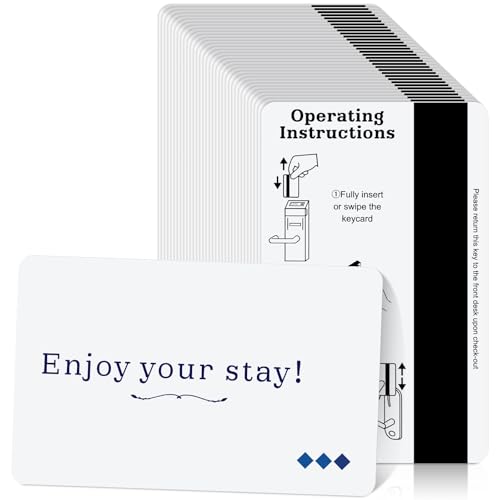
High Compatibility: it is especially compatible with early access control devices that use magnetic stripe technology; The data is stable, and the reading is reliable, making it an ideal consumable for bulk card replacement in older hotels

Gialer 250 pack Hotel & Motel key cards welcome enjoy your stay card
Frequently Asked Questions
What is the main difference between a hotel and a motel?
The traditional difference is room access. Hotel rooms commonly open onto interior corridors, while motel rooms commonly open toward an exterior walkway, courtyard, or parking area. Hotels are also more likely to provide extensive shared amenities, although exceptions are common.
Is a motel always cheaper than a hotel?
No. Motels often use a simpler service model, but prices depend on location, travel dates, demand, property condition, parking, and fees. Compare the total price for the same dates and cancellation terms.
Do motels always have exterior room entrances?
No. Exterior access is a common motel feature, not a universal rule. Some renovated motor lodges use interior corridors, while certain hotels and resorts place rooms in exterior-access buildings or cottages.
Which has more amenities, a hotel or a motel?
Hotels are generally more likely to offer restaurants, gyms, pools, meeting rooms, lounges, and around-the-clock staffing. Motels more often focus on rooms, parking, Wi-Fi, and other basic services. The individual property listing is more reliable than the label.
Are hotels safer than motels?
Not automatically. Interior corridors and a staffed lobby may limit access, but safety depends on the property’s locks, lighting, alarms, sprinklers, staffing, maintenance, neighborhood, and management. Review the specific property rather than relying on its category.
Are hotels better for long stays?
Hotels may be more comfortable for longer visits when they provide housekeeping, restaurants, lounges, work areas, and fitness facilities. An extended-stay hotel or motel with a refrigerator, microwave, kitchen, and laundry may be a better value than either traditional format.
Can a hotel or motel charge for a service animal?
In the United States, a covered lodging business may not impose a pet surcharge for an ADA service animal. It may charge for actual damage if it normally charges other guests for comparable damage. Ordinary pet fees may still apply to animals that are pets rather than service animals.
What should I check before booking a motel?
Check recent cleanliness and safety reviews, front-desk hours, room access, parking, locks, exterior lighting, smoke alarms, cancellation terms, deposits, and the final price. Also confirm any accessibility, pet, breakfast, or late-arrival requirements directly with the property.
Sources
- Merriam-Webster: What Is the Difference Between a Motel and a Hotel? — supports the usual room-access, size, and amenity distinctions.
- U.S. Census Bureau: NAICS Sector 72 — defines hotels and motels as overlapping forms of short-term lodging.
- Federal Trade Commission: Rule on Unfair or Deceptive Fees FAQ — explains current U.S. total-price disclosure requirements for short-term lodging.
- Electronic Code of Federal Regulations: 28 CFR 36.302 — covers accessible-room reservations and service-animal requirements for U.S. public accommodations.
- U.S. Fire Administration: Hotel and Vacation Rental Fire Safety — provides hotel and motel fire-safety guidance.
- U.S. Department of State: Lodging Safety — supports the property-selection and room-safety checklist.
