
Last Updated on July 27, 2026 by Daniel Globe
Hot-weather hiking clothing has to do more than feel light. It should help sweat evaporate, limit sun exposure, reduce rubbing, protect you from trail hazards, and work with the conditions you expect along the route. The best outfit usually combines a loose, breathable shirt, quick-drying bottoms, well-fitting socks, supportive footwear, a sun hat, UV-protective sunglasses, and a light backup layer.
Quick Answer
For hot-weather hiking, wear loose, breathable, quick-drying clothing that manages sweat while protecting exposed skin. Synthetic fabrics and lightweight merino are reliable choices, while cotton can work in some very hot, dry conditions. Add moisture-managing socks, supportive trail footwear, a wide-brim hat, UV-protective sunglasses, sunscreen, and a packable weather layer.
Key Takeaways
- Choose lightweight, loose-fitting clothing that dries quickly and does not trap sweat against your skin.
- Polyester, nylon, and lightweight merino are dependable hiking fabrics; cotton is more situational than an automatic “never.”
- Use UPF-rated clothing, a wide-brim hat, UV400 or 100% UV-protective sunglasses, and sunscreen for exposed skin.
- Wear well-fitting synthetic or wool socks and trail footwear suited to the terrain to reduce rubbing, hot spots, and blisters.
- Plan around heat, sun exposure, water availability, and the UV Index—not just the air temperature.
- Know the warning signs of heat illness. Confusion or altered mental status in a hot hiker can signal heat stroke and requires emergency help and rapid cooling.
Disclosure: As an Amazon Associate I earn from qualifying purchases. Some links on this page are affiliate links, at no extra cost to you.
What to Wear Hiking in Hot Weather
A practical hot-weather hiking outfit usually includes:
- Top: A lightweight, loose-fitting synthetic or merino shirt. A breathable long-sleeve sun shirt or sun hoodie can provide more UV coverage on exposed routes.
- Bottoms: Quick-drying hiking shorts, pants, leggings, or convertible pants that allow a full range of motion without rubbing.
- Underwear: Moisture-managing underwear or a liner that fits smoothly and does not bunch under a hip belt.
- Socks: Synthetic or merino hiking socks that fit without wrinkles and rise above the top of your footwear.
- Footwear: Broken-in trail runners, hiking shoes, or boots with suitable grip and support for the trail.
- Sun protection: A wide-brim hat, UV-protective sunglasses, UPF clothing where useful, and sunscreen on exposed skin.
- Backup layer: A light wind or rain shell when the forecast, elevation, or route makes changing weather possible.
The goal is not to wear the least clothing possible. On exposed trails, lightweight coverage can protect you from ultraviolet radiation, brush, insects, and backpack-strap rubbing while still allowing heat and moisture to escape.
Choosing the Right Fabrics for Hot Weather Hiking
Polyester and nylon are common hot-weather hiking choices because they can be made into lightweight, quick-drying fabrics that move moisture away from the skin. Lightweight merino wool is another option, especially for hikers who value odor control and a softer feel.
Fabric choice is only part of the equation. A loose shirt that hangs slightly away from the skin can feel cooler than a tight shirt made from the same fiber because air can move more freely around the body. Vents, mesh panels, thin fabric, and an open collar can also improve comfort.
Is Cotton Always Bad for Hot-Weather Hiking?
No. The familiar advice to avoid cotton comes from a real concern: cotton absorbs water and dries slowly, which can become uncomfortable and potentially dangerous if temperatures fall, wind increases, or you become soaked.
However, cotton can be useful in very hot, dry environments where retained moisture provides evaporative cooling. Current REI hot-weather hiking guidance recognizes this exception, and Grand Canyon National Park specifically discusses wet clothing as a cooling strategy in extreme desert heat.
Note: Cotton is a situational hot-desert option, not the safest all-purpose hiking fabric. Choose quick-drying synthetic or merino clothing when humidity is high, rain is possible, temperatures may fall, or you will be out after sunset.
Hot and Dry vs. Hot and Humid Conditions
In dry heat, evaporation works efficiently, so wetting a shirt, hat, or bandana can provide noticeable cooling. In humid weather, sweat evaporates more slowly. Lightweight, loose-fitting clothing that does not cling to the skin becomes especially useful because it allows as much airflow as conditions permit.
Light colors can reduce solar heat absorption, while darker and tightly woven fabrics can sometimes provide stronger inherent UV protection. Rather than trying to judge sun protection by color or weave alone, look for a tested UPF rating when UV protection is a priority.
Features to Look for in Hot Weather Hiking Clothing
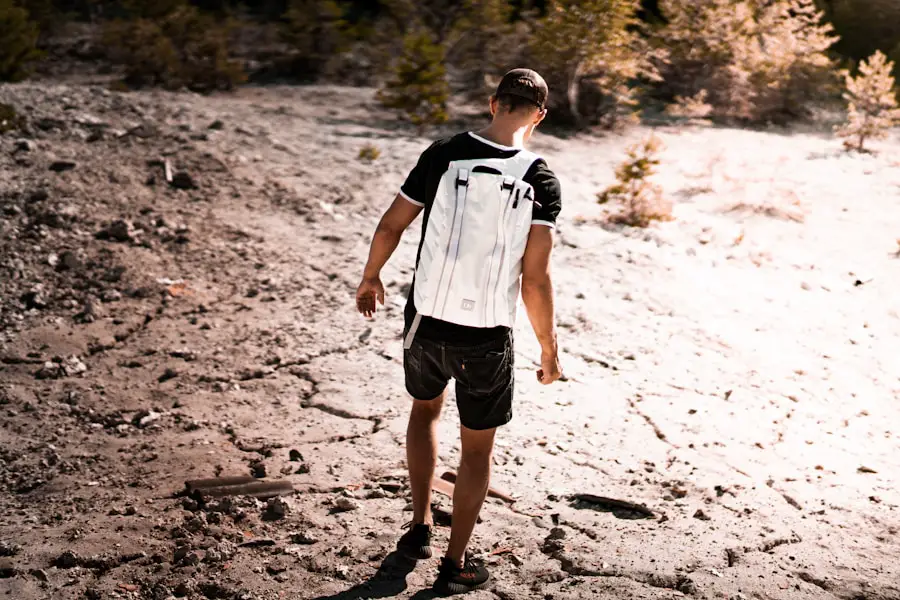
Good hot-weather hiking clothing should balance airflow, moisture management, coverage, and freedom of movement. Useful features include:
- Loose or relaxed fit: Allows air to move between your clothing and skin.
- Quick-drying fabric: Helps prevent sweat-soaked clothing from remaining heavy against the body.
- Vents or mesh panels: Useful on shirts, pants, and hats when they are positioned where airflow matters.
- UPF rating: Gives you a tested measure of the garment’s ultraviolet protection rather than relying on color or fabric appearance alone.
- Adjustable cuffs, collars, and vents: Let you trade airflow for additional sun or insect coverage as conditions change.
- Low-profile seams: Reduce rubbing beneath backpack straps and hip belts.
- Secure pockets: Keep small essentials accessible without requiring repeated pack stops.
Antimicrobial or odor-control treatments can be convenient on multi-day trips, but they are secondary to fit, drying speed, breathability, and sun protection.
Long Sleeves or Short Sleeves?
A short-sleeve shirt exposes more skin and may feel breezier in shade or humid conditions. A lightweight long-sleeve shirt or sun hoodie gives more protection on open trails and reduces the amount of sunscreen you need to keep reapplying.
The same tradeoff applies to shorts and pants. Shorts maximize airflow, but lightweight pants protect more skin from UV radiation, brush, insects, and scrapes. Pick the option that fits the terrain rather than assuming less coverage is always cooler or safer.
Layering for Hot Weather Hiking
Layering still matters in summer because trail conditions can change quickly with elevation, clouds, wind, rain, and time of day. Instead of dressing according to rigid temperature cutoffs, choose light layers that can be added or removed as conditions change.
| Condition | Recommended Clothing |
| Hot and exposed | Loose quick-drying shirt or sun hoodie, lightweight shorts or pants, sun hat, UV-protective sunglasses |
| Cool morning or high elevation | Breathable hiking shirt plus a thin, easily removable layer |
| Wind or changing weather | Packable wind shell or lightweight weather-resistant jacket appropriate for the forecast |
| Rain possible | Lightweight waterproof shell; avoid relying on a windbreaker as rain protection |
Start slightly cool rather than overdressed when you know you will warm up quickly on a climb. Remove an unnecessary layer before it becomes saturated with sweat, and keep any layer you may need later somewhere accessible in your pack.
Pro Tip: On desert hikes or routes with large temperature swings, carry at least one dry or quick-drying layer even if you deliberately wet another garment for cooling. Evaporative cooling is useful only while the conditions remain hot enough for it to be safe.
Footwear for Hot Weather Hiking
Warm feet swell and sweat, so hot-weather footwear needs enough room, secure heel hold, ventilation, and traction. Trail runners and lightweight hiking shoes often work well on maintained trails. More supportive hiking shoes or boots may be preferable when you are carrying a heavier pack or hiking on rough, steep, loose, or rocky terrain.
Look for:
- A secure fit that prevents your heel from sliding.
- Enough toe room for natural swelling during a long hike.
- A grippy outsole suited to the terrain.
- Breathable materials where appropriate.
- A shoe that has already been tested on shorter walks or hikes.
Hiking sandals can be comfortable on hot days, easy trails, or water-heavy routes, but exposed toes and feet receive less protection from loose rock, sharp vegetation, insects, and sun. Avoid treating sandals as a universal replacement for trail shoes.
Do Not Forget Your Socks
Socks are one of the most important blister-prevention items in a hot-weather setup. Choose synthetic or merino socks that fit smoothly without wrinkles. They should be tall enough that the top of your shoe or boot does not rub directly against your skin.
Stop when you first notice a hot spot rather than waiting for a blister to develop. Adjust the sock or shoe, dry your feet when practical, and address rubbing early. Carrying a spare dry pair of socks can be worthwhile on long hikes.
Accessories for Hot Weather Hiking
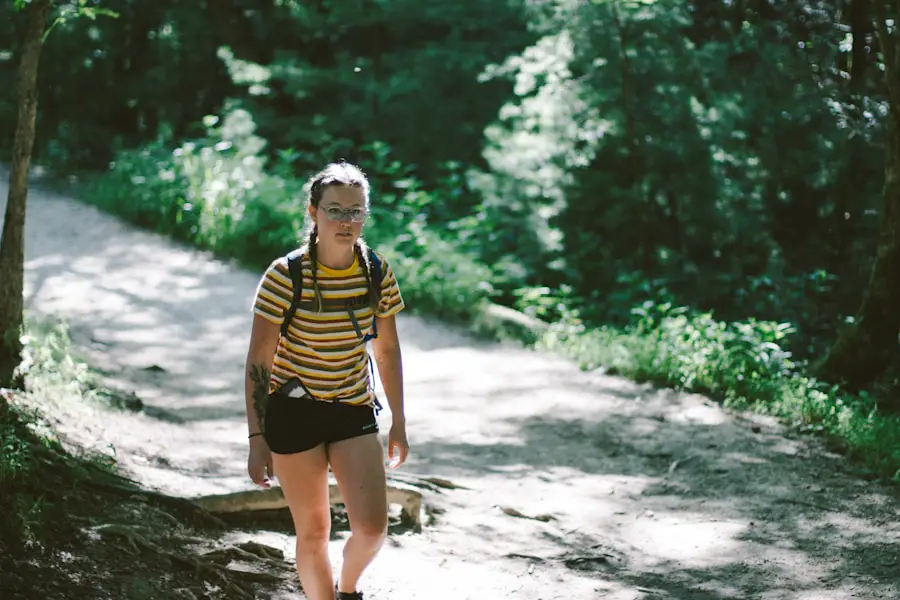
A wide-brim hat can shade the face, ears, and back of the neck more effectively than a standard baseball cap. Choose a lightweight model with enough structure to maintain coverage and enough ventilation to remain comfortable.
For sunglasses, look for a label stating UV400 or 100% UV protection. The U.S. Food and Drug Administration notes that these lenses block more than 99% of UVA and UVB radiation. Polarized lenses are useful for reducing glare from water, light-colored rock, and other reflective surfaces, but polarization is a separate feature and should not be mistaken for UV protection.
A lightweight neck gaiter or bandana can provide additional neck coverage and manage sweat. In hot, dry conditions, wetting it may provide evaporative cooling. Remove or change it if it becomes uncomfortable, begins causing chafing, or stops helping in very humid conditions.
Sun Protection for Hot Weather Hiking
Clothing should be the first part of a layered sun-protection strategy. The CDC recommends shade, protective clothing, a wide-brim hat, UV-protective sunglasses, and sunscreen to reduce excessive UV exposure.
For exposed skin, the American Academy of Dermatology recommends a broad-spectrum, water-resistant sunscreen with SPF 30 or higher. Apply it before going outdoors and reapply about every two hours, as well as after swimming or heavy sweating according to the product’s water-resistance directions.
Do not forget commonly missed areas such as the ears, back of the neck, exposed scalp, hands, and tops of the feet. Remember that sunscreen supplements protective clothing and shade; it does not make prolonged exposure risk-free.
If you prefer mineral sunscreen, zinc oxide and titanium dioxide products are available. They are simply another sunscreen option; there is no need to describe other sunscreen filters as “harsh chemicals.” Choose a product you will apply correctly and consistently.
Sun protection depends on UV exposure, not how hot the air feels. UV rays can still reach your skin on cool or cloudy days.
Checking the EPA UV Index before your hike can help you judge how aggressive your sun-protection plan should be.
Protecting Against Insects, Ticks, and Brush
Hot weather often overlaps with mosquito and tick activity. Lightweight long sleeves and pants give you more physical coverage while also protecting against brush and minor abrasions.
In tick-prone areas, the CDC recommends EPA-registered insect repellents and clothing or gear treated with products containing 0.5% permethrin. Permethrin-treated items can include boots, shirts, pants, socks, and other gear.
Caution: Permethrin products intended for treating clothing and gear should not be applied directly to your skin. Follow the product label. When using both sunscreen and skin-applied insect repellent, CDC advises applying sunscreen first and repellent second.
Tips for Staying Cool and Comfortable on Hot Weather Hikes
Your clothing can help, but it cannot compensate for a route that is too hot for the conditions. Check the forecast, UV Index, trail exposure, elevation, water availability, and expected duration before leaving.
Choose the Right Time of Day
When extreme heat is forecast, hike during cooler parts of the day when practical and avoid committing yourself to long exposed climbs during the hottest period. Route-specific guidance matters: for example, Grand Canyon National Park strongly discourages inner-canyon hiking between 10 a.m. and 4 p.m. during extreme summer conditions.
That timing should not be treated as a universal rule for every trail. Local weather, terrain, latitude, shade, and elevation all affect when heat exposure peaks.
Plan Water and Food Before You Start
Carry enough water for the actual route rather than assuming a stream, fountain, or seasonal source will be available. Drink according to your needs and thirst instead of forcing large amounts of plain water on a rigid schedule.
During prolonged heavy sweating, food and electrolyte replacement may also matter. Salty snacks can be practical on long, hot hikes. Drinking excessive amounts of plain water without replacing sodium can contribute to exercise-associated hyponatremia, so more water is not always better.
A hydration reservoir can make sipping convenient, but watch the amount remaining because it is harder to see than a bottle. Leave enough for the return trip and for unexpected delays.
Use Shade and Active Cooling
Take breaks before you become exhausted. Rest in shade when available, loosen or remove unnecessary layers, and use water for cooling when the environment and water supply make that practical. Wet bandanas, hats, and clothing work best when evaporation is efficient.
Warning: Heat exhaustion can cause headache, nausea, dizziness, weakness, thirst, and heavy sweating. Stop the activity, move to a cooler or shaded area, cool the person, and get medical help if symptoms are serious or do not improve. Confusion, altered mental status, slurred speech, loss of consciousness, seizures, or other signs of heat stroke are a medical emergency. Call 911 or the appropriate local emergency service and begin rapid cooling while help is on the way.
The CDC/NIOSH heat-illness guidance recommends rapid cooling for suspected heat stroke, including moving the person to a shaded or cool area, removing outer clothing, wetting the skin or clothing, circulating air, and using cold-water immersion when possible and safe.
Good hot-weather hiking preparation therefore combines clothing with judgment: dress for airflow and sun exposure, choose footwear and socks that protect your feet, carry appropriate layers, plan water and food, and be willing to shorten or postpone a hike when the heat makes the route unsafe.
Hot-weather hiking is only one part of travel preparation. If you’re looking for the perfect gift for a female traveler, check out this article on the best travel gifts for women. It offers thoughtful and practical ideas for women who love to explore. After choosing your hiking clothes and other trail essentials, you can also review our list of hardside carry-on luggage with spinner wheels when preparing for a larger trip.
Love travel? Join Our Facebook Community For More Tips.
Frequently Asked Questions
What should I wear for hiking in hot weather?
Wear lightweight, loose-fitting clothing that manages moisture and gives you enough protection for the trail. A quick-drying synthetic or lightweight merino shirt, hiking shorts or pants, moisture-managing socks, supportive trail footwear, a sun hat, UV-protective sunglasses, and a light backup layer cover most situations.
What type of footwear is best for hiking in hot weather?
Trail runners and lightweight hiking shoes work well for many maintained trails because they combine traction with relatively low weight. Rougher terrain, heavier loads, or personal support needs may favor hiking shoes or boots. Whatever you choose should fit securely, allow some room for foot swelling, and already be broken in.
Should I wear a hat while hiking in hot weather?
Yes. A lightweight wide-brim hat provides shade for the face, ears, and neck. A baseball cap can shade the face but leaves the ears and much of the neck exposed, so those areas need protection from clothing or sunscreen.
What accessories should I consider for hiking in hot weather?
Useful accessories include UV400 or 100% UV-protective sunglasses, a wide-brim hat, sunscreen, a lightweight neck gaiter or bandana, and an accessible water bottle or hydration reservoir. Polarized sunglasses can reduce glare, but polarization should not be confused with UV protection.
Should I avoid cotton when hiking in hot weather?
Usually, quick-drying synthetic or merino clothing is the more versatile choice because cotton absorbs water and dries slowly. Cotton can still be useful in very hot, dry desert conditions where retained water provides evaporative cooling, provided you will not face cooler, wet, or windy conditions later.
Are long sleeves too hot for summer hiking?
Not necessarily. A loose, lightweight long-sleeve sun shirt can remain comfortable while protecting more skin from UV rays, brush, and insects. In humid or shaded conditions, some hikers prefer short sleeves for extra airflow. Choose based on exposure and fabric rather than sleeve length alone.
How can I prevent blisters when hiking in hot weather?
Wear well-fitting synthetic or merino socks, use footwear that has already been broken in, and stop as soon as you notice rubbing or a hot spot. Keep socks as dry and smooth as practical, and consider carrying a spare pair on long hikes.
What are the warning signs that a hot-weather hike should stop?
Stop and cool down if a hiker develops significant headache, nausea, dizziness, weakness, heavy sweating, or unusual fatigue. Confusion, altered mental status, slurred speech, loss of consciousness, or seizures can indicate heat stroke and require emergency medical help and immediate cooling.
Sources
- CDC/NIOSH — Heat-related Illnesses — heat exhaustion and heat stroke symptoms and first aid.
- CDC — Sun Safety Facts — protective clothing, hats, sunglasses, shade, and sunscreen.
- U.S. Food and Drug Administration — Sun Safety and Sunglasses — sunscreen labeling, reapplication, and UV400/100% UV-protective sunglasses.
- National Park Service — Grand Canyon Summer Hiking — extreme-heat hiking, cooling, hydration, food, footwear, and route timing.
- CDC — Preventing Tick Bites — protective clothing, EPA-registered repellents, and permethrin-treated gear.
- REI Expert Advice — Hot-Weather Hiking Tips — practical clothing, fabric, ventilation, socks, and hot-dry cotton guidance.

