
Last Updated on July 25, 2026 by Daniel Globe
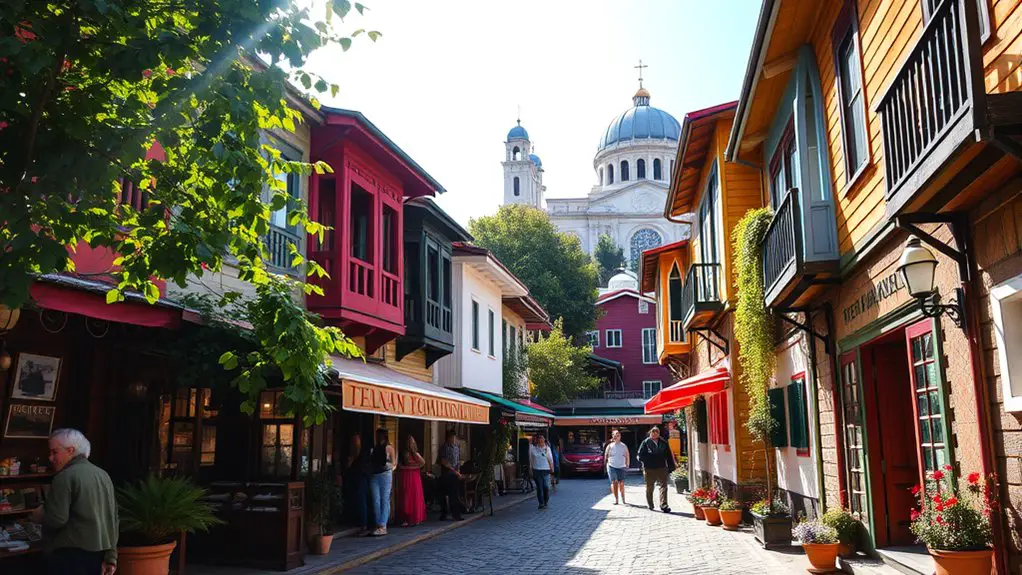
Fener is one of the most historically layered quarters on Istanbul’s Golden Horn. Its name reaches back to Byzantine Constantinople, but the neighborhood became especially important after the Ottoman conquest of 1453, when Greek Orthodox institutions and families increasingly gathered here. The Ecumenical Patriarchate moved to Fener around 1600, influential Greek families became known as Phanariots, and schools, churches, and houses turned the district into a major center of Orthodox life.
Quick Answer
Fener’s name has Byzantine roots, but its greatest historical importance developed under Ottoman rule. After 1453, it became a major Greek Orthodox center. The Ecumenical Patriarchate settled at the Church of St. George around 1600, while the influential Phanariots helped shape Ottoman diplomacy, education, and Orthodox cultural life.
Key Takeaways
- The name Fener, or Phanar, comes from a Greek word associated with a lantern or navigation light and dates to the Byzantine era.
- Fener became especially important after the Ottoman conquest of Constantinople in 1453, not because the modern Patriarchate complex was Byzantine.
- The Ecumenical Patriarchate established its seat at the Church of St. George in Fener around 1600.
- The wealthy and educated Phanariots became influential translators, administrators, diplomats, and cultural patrons in the Ottoman world.
- Fener still preserves Byzantine, Ottoman, Greek Orthodox, and later architectural layers, although its population and urban character changed greatly during the 20th and 21st centuries.
Disclosure: As an Amazon Associate I earn from qualifying purchases. Some links on this page are affiliate links, at no extra cost to you.
Fener History Timeline
- Byzantine period: The name Phanar is associated with a lantern or navigation light on the Golden Horn. The area formed part of Constantinople’s urban waterfront.
- 1453: Constantinople was conquered by Sultan Mehmed II, beginning a new Ottoman chapter in Fener’s history.
- 1454: The institution later known as the Great School of the Nation was established for Istanbul’s Greek Orthodox community.
- Around 1600: The Ecumenical Patriarchate moved to the Church of St. George in Fener.
- 17th–18th centuries: Greek Orthodox families associated with Fener, known as Phanariots, gained important positions in Ottoman administration and diplomacy.
- 1821: Ecumenical Patriarch Gregory V was executed at the Patriarchate during the crisis surrounding the Greek uprising.
- 1881: The present monumental red-brick building of the Fener Greek school was constructed by architect Konstantinos Dimadis.
- 20th century: Political upheaval, the events of September 1955, and the 1964 expulsions contributed to a sharp decline in Istanbul’s historic Greek population.
- Late 1990s–2000s: Fener and neighboring Balat became the focus of major heritage-rehabilitation programs involving local authorities, the European Union, and UNESCO.
The Origins of Fener in Byzantine Times
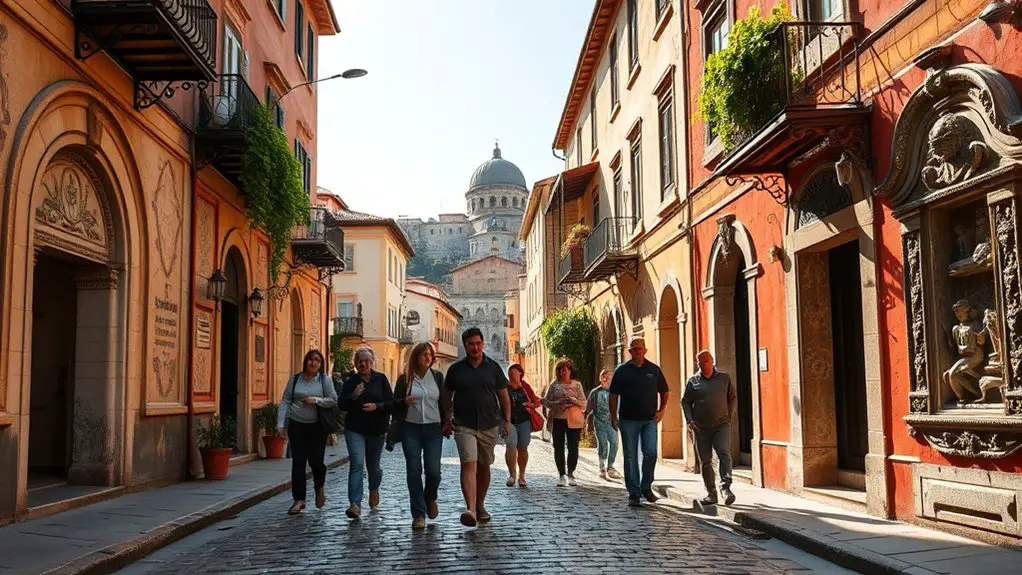
Fener’s connection with the Byzantine era is clearest in its name. The Greek form, Phanar, is linked to a word meaning a lantern or light used for navigation. The Ecumenical Patriarchate describes the name as dating to Byzantine times and associates it with a lantern used to help navigation along the Golden Horn.
That setting mattered. The Golden Horn was Constantinople’s natural harbor and an important part of the capital’s commercial and defensive geography. Fener stood along this busy waterfront inside the wider Byzantine city.
It is safer, however, to think of Byzantine Fener as part of Constantinople’s Golden Horn urban landscape rather than as a separately founded “strategic outpost.” The historical evidence for Fener is much stronger once the story moves into the Ottoman period.
A Surviving Byzantine Landmark
Fener does retain an exceptional Byzantine religious monument: the Church of St. Mary of the Mongols, also known as Panagia Mouchliotissa. The Istanbul Governorship’s Dijital İstanbul cultural guide describes it as the surviving Byzantine church in Istanbul that continued in Christian religious use through the Ottoman period rather than being converted into a mosque.
The church was repaired and altered after several fires, so its present appearance includes later changes. Even so, it provides a much firmer link to Byzantine Fener than the modern Patriarchate complex does.
Note: The Ecumenical Patriarchate itself has Byzantine origins, but its present home in Fener does not. The institution and the age of its current location are two different historical questions.
Fener During the Ottoman Empire
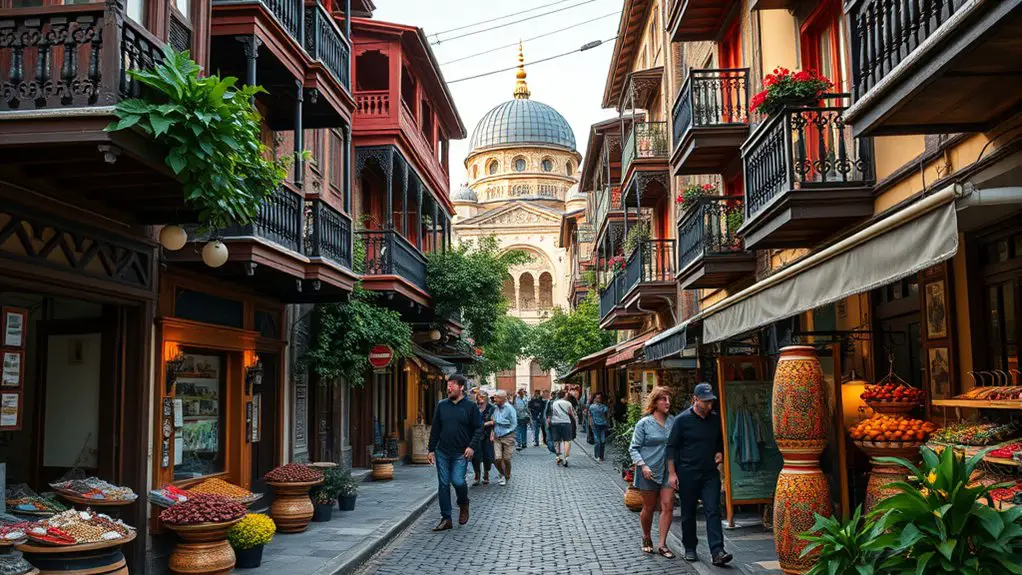
The Ottoman conquest of Constantinople in 1453 transformed Fener’s place in the city. Greek Orthodox institutions continued under the new political order, and Fener gradually became one of the main centers of the city’s Greek Orthodox community.
The Patriarchate did not move directly to its present Fener site after the conquest. Its seat changed locations before reaching the Church of St. George around 1600. The official history of the Patriarchal Church of St. George says the former convent was converted for patriarchal use under Patriarch Matthew II, whose tenure lasted from 1598 to 1601.
Fener is best understood not as a preserved Byzantine quarter, but as an Ottoman-era center of Greek Orthodox institutional life built on a much older Constantinopolitan waterfront.
The Rise of the Phanariots
Fener also gave its name to the Phanariots, prominent Greek Orthodox families who became influential in the Ottoman Empire, particularly during the 17th and 18th centuries.
Many were highly educated and multilingual. Members of Phanariot families served as interpreters and officials and were appointed to important posts connected with Ottoman diplomacy and the Danubian principalities of Wallachia and Moldavia.
The history of the Fener Greek school published by the Fatih District Governorate notes that people educated in this tradition went on to serve as chief dragomans, high-ranking clergy, and rulers of Wallachia and Moldavia.
This role makes Fener important far beyond neighborhood history. For a period, it was one of the places where Ottoman government, Orthodox church leadership, education, commerce, and diplomacy met.
The 1821 Turning Point
The Phanariot relationship with Ottoman government changed dramatically during the Greek uprising of 1821. Ecumenical Patriarch Gregory V was executed by Ottoman order at the Patriarchate that year.
A Cambridge University Press study places his execution within Ottoman fears about rebellion, Russian intervention, Phanariot political networks, and the collapsing relationship between the state and the Patriarchate.
The event became one of the most powerful symbols in the modern history of the Phanar and marked the end of an era in which Phanariot elites had occupied especially influential positions in Ottoman administration.
Architectural Landmarks and Their Significance
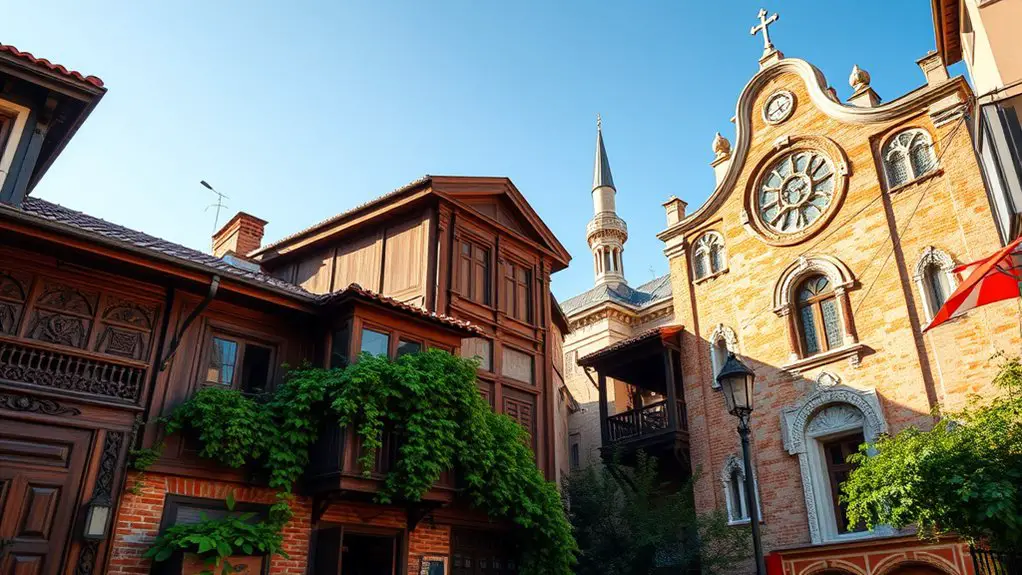
Fener’s landmarks make its layered history visible, but they come from very different periods. Distinguishing the age of an institution from the age of its present building is essential.
Patriarchal Church of St. George
The Patriarchal Church of St. George is the best-known religious site in Fener and the seat of the Ecumenical Patriarchate. It is not a surviving late-Byzantine patriarchal building.
According to the Ecumenical Patriarchate’s official history, the site was converted for patriarchal use around 1600. Patriarch Timothy II refurbished the church in 1614, it was rebuilt after a fire in 1720, and further repairs took place in 1836.
The church follows a three-aisled basilica plan. Its interior contains objects older than the present structure as well as later works. The official history describes its iconostasis as combining Byzantine, Renaissance, Baroque, and Ottoman styles. That mixture illustrates the long life of the institution without incorrectly dating the whole building to the Byzantine period.
Fener Greek Orthodox School
The imposing red building above Fener is often mistaken for the Patriarchate. It is the Fener Greek Orthodox School, commonly associated with the Great School of the Nation.
Its educational tradition reaches back to 1454, but the landmark building visitors see today is far younger. The Fatih District Governorate dates the present structure to 1881 and identifies its architect as Konstantinos Dimadis.
This distinction is important: a centuries-old institution does not necessarily occupy a building of the same age.
Church of St. Mary of the Mongols
For visitors looking for genuine Byzantine architectural continuity in Fener, the Church of St. Mary of the Mongols is especially significant.
The church has been altered by repairs and fires over the centuries, but it preserves a rare continuity between Byzantine and later Greek Orthodox Fener. Its survival also shows why the neighborhood cannot be reduced to either a purely Byzantine or purely Ottoman identity.
Religious Diversity and Heritage
Fener’s strongest historic association is with the Greek Orthodox community, yet it belongs to a wider Golden Horn landscape in which Muslims, Greek Orthodox Christians, Armenian Christians, Bulgarian Orthodox Christians, and Jews lived in neighboring districts.
That history is often described under the combined label Fener-Balat. The shorthand is useful, but it can also cause historical mistakes because Fener and Balat are adjoining neighborhoods rather than interchangeable names.
Note: Many travel guides group Fener and Balat together. Fener is most closely associated with the Ecumenical Patriarchate and Phanariot Greek heritage, while neighboring Balat has its own strong Jewish, Armenian, Muslim, and Christian history. Some landmarks sit close enough to the boundary that descriptions vary.
Religious Sites Significance
The religious importance of Fener rests less on the idea that different faiths blended into one another and more on the long presence of communities living within the same dense Ottoman city.
The Ecumenical Patriarchate made Fener one of the world’s most important centers of Eastern Orthodox administration and worship. Nearby churches and religious institutions also reflect the changing position of Christian communities within the Ottoman Empire.
Mosques, churches, and synagogues across the wider Fener-Balat area reveal a history of proximity, negotiation, migration, rebuilding, and at times conflict. That is a more accurate description than treating all of these traditions as a single shared religious practice.
Cultural Syncretism Display
Fener still shows cultural exchange in architecture, art, language, education, and urban life. Some buildings contain artistic elements created at different moments under Byzantine, Ottoman, and European influence.
The Church of St. George provides a concrete example. Its interior includes older Orthodox objects alongside an iconostasis that the Patriarchate describes as bringing together Byzantine, Renaissance, Baroque, and Ottoman styles.
That is better understood as layered cultural influence than as evidence that Christian and Muslim religious rituals merged. Fener’s history is remarkable because traditions occupied the same city and influenced its visual culture while retaining distinct religious identities.
Fener’s Role in Istanbul’s Cultural Evolution
Fener became especially influential because religion, education, language, commerce, and Ottoman government intersected here.
The Patriarchate anchored Orthodox institutional life. The Greek school educated generations of clergy and intellectuals. Phanariot families used their language skills and education in diplomacy and administration. Together, these institutions connected Istanbul with Orthodox communities across southeastern Europe and the eastern Mediterranean.
The result was not simply a blend of “East and West.” Fener was part of a multilingual imperial capital in which people could participate in Ottoman political and commercial life while maintaining Greek Orthodox religious and educational institutions.
The 20th-Century Demographic Shift
The neighborhood’s social landscape changed sharply during the 20th century. Istanbul’s Greek Orthodox population had been exempted from the compulsory Greek-Turkish population exchange associated with the 1923 settlement, but later political crises greatly reduced the community.
Oxford Academic research on Greek migration identifies the anti-Greek violence in Istanbul in September 1955 and the expulsions beginning in 1964 as major causes of the community’s decline.
These events matter directly to Fener’s history because many of the churches, schools, houses, and institutions seen today were built for a much larger Greek-speaking community than the neighborhood later contained.
Fener therefore tells two stories at once: the endurance of institutions such as the Patriarchate and the demographic loss experienced by the community around them.
Modern-Day Fener: Preserving History Amid Change
Modern Fener is not a frozen historical district. It is a living neighborhood where religious institutions, residents, historic houses, tourism, cafes, restoration projects, and new investment share the same streets.
Preserving that character has required more than repairing famous monuments. Housing, streets, neighborhood services, historic facades, and the needs of residents have all been part of the conservation debate.
Restoring Historical Landmarks
Large-scale rehabilitation planning for Fener and Balat developed in the late 1990s, followed by implementation in the 2000s.
The UNESCO World Heritage Centre records that a European Union project focusing on Balat and Fener was implemented from February 2003. Work associated with the wider program included historic housing, listed buildings, urban studies, and technical assistance.
UNESCO later described the Fener-Balat rehabilitation initiative as a useful model for regeneration involving community participation. At the same time, academic studies of the district have warned that heritage-led regeneration can also increase property values and contribute to gentrification.
That tension remains central to understanding preservation. Restoring buildings can protect historic fabric, but preserving a neighborhood also means considering the people who live and work in it.
Embracing Cultural Diversity
Fener’s heritage remains active rather than purely architectural. The Patriarchate still hosts worship, religious meetings, and major Orthodox observances, while the neighborhood receives visitors interested in its Greek, Ottoman, Byzantine, and broader Istanbul history.
One of the best-documented public traditions connected with the area is Theophany, or Epiphany, on January 6. Orthodox celebrations include a Blessing of the Waters, and the ceremony continues to take place by the Golden Horn.
Rather than describing a vague annual “Fener Orthodox Festival,” it is more accurate to point to these established religious observances and to the continuing life of Fener’s churches and Patriarchate.
Pro Tip: When reading about Fener landmarks, check both the date the institution was founded and the date of the present building. In Fener, those dates can differ by several centuries.
Frequently Asked Questions
How Has Fener’s Demographic Composition Changed Over Centuries?
Fener became strongly associated with Istanbul’s Greek Orthodox population during the Ottoman period, especially after the Patriarchate settled there. Its social makeup changed greatly in the 20th century. The September 1955 anti-Greek violence and the 1964 expulsions accelerated the decline of Istanbul’s Greek community. Modern Fener has a different and more mixed population while retaining major Greek Orthodox institutions and monuments.
What Are Some Lesser-Known Historical Events That Took Place in Fener?
One major event was the execution of Ecumenical Patriarch Gregory V at the Patriarchate in 1821 during the crisis surrounding the Greek uprising. A much later turning point came with the Fener-Balat rehabilitation programs developed from the late 1990s and implemented in the 2000s, which reshaped debates over conservation, tourism, housing, and neighborhood renewal.
How Do Local Residents Today Perceive Fener’s Historical Significance?
There is no single documented view shared by all residents. Fener is simultaneously a residential neighborhood, an active Orthodox religious center, a heritage district, and a growing tourism destination. Research on Fener-Balat shows that preservation and economic revival can be welcomed while also raising concerns about property prices, commercialization, and gentrification.
What Conservation Efforts Are Currently Underway to Preserve Fener’s Sites?
Fener does not depend on one single restoration campaign. Conservation takes place through heritage protections, municipal review, work by religious and property institutions, and individual restoration projects. The best-documented large rehabilitation initiative was the EU-supported Fener-Balat program implemented from 2003, which included historic housing and community-focused urban rehabilitation.
Are There Any Unique Local Festivals or Traditions Specific to Fener?
A better-documented tradition than a supposed “Fener Orthodox Festival” is the Orthodox celebration of Theophany, or Epiphany, on January 6. The Patriarchate celebrates the feast and the Blessing of the Waters, with ceremonies associated with the Golden Horn. Holy Week, Easter, and other Orthodox services at the Patriarchal Church of St. George also keep Fener’s religious heritage active.
Sources
- Ecumenical Patriarchate — History of the Patriarchal Church of St. George — supports the chronology, architecture, renovations, and interior heritage of St. George.
- Ecumenical Patriarchate — History and meaning of the Phanar name — supports the Byzantine origin of the name and the Patriarchate’s move to Fener.
- Fatih District Governorate — Fener Greek Orthodox School — supports the school’s 1454 institutional history, Phanariot connections, and the 1881 building.
- Istanbul Governorship, Dijital İstanbul — Church of St. Mary of the Mongols — supports the church’s Byzantine heritage and continued Christian use.
- UNESCO World Heritage Centre — Historic Areas of Istanbul technical support — supports the history of the Fener-Balat rehabilitation program.
- Cambridge University Press — Gregory V and the Patriarchate in 1821 — supports the historical context of the Patriarch’s execution and the Phanariot political crisis.
Conclusion
Fener’s history is richer than a simple Byzantine-to-Ottoman transition. Its name reaches back to Byzantine Constantinople, but the neighborhood’s defining role emerged after 1453 as Greek Orthodox institutions, schools, and Phanariot families made it one of the Ottoman capital’s most influential Christian quarters.
The Church of St. George, the Fener Greek school, St. Mary of the Mongols, and the neighborhood’s surviving streets each represent a different historical layer. The losses and demographic changes of the 20th century are just as important as the monuments that remain. Today, preservation, worship, tourism, and everyday neighborhood life continue to shape Fener, making it a living part of Istanbul rather than a museum of a vanished past.
