
Last Updated on July 25, 2026 by Daniel Globe
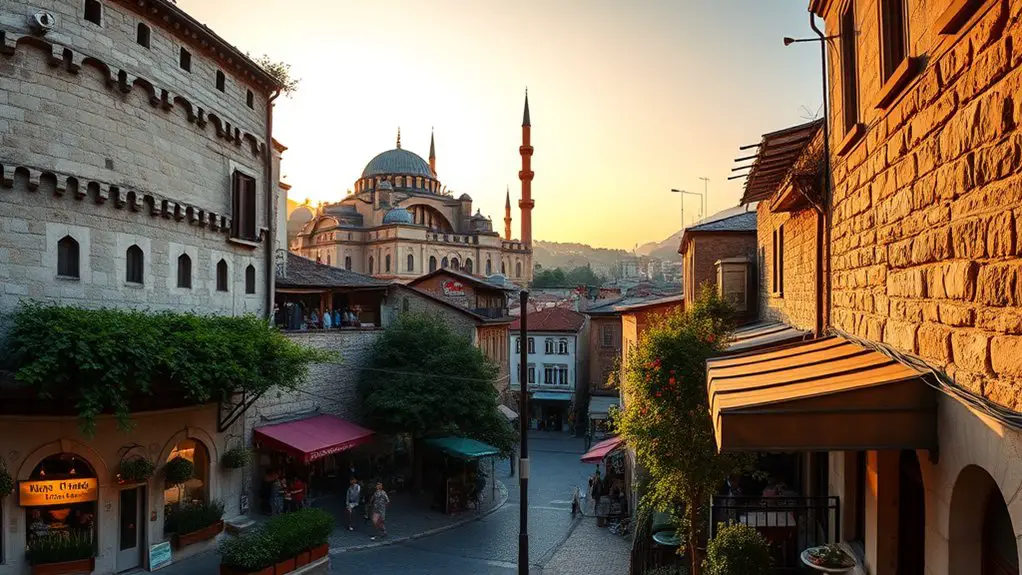
Eyüpsultan is one of Istanbul’s most historically layered districts, where Byzantine religious history, Ottoman imperial tradition, and modern neighborhood life meet on the Golden Horn. Its best-known landmark is Eyüp Sultan Mosque and the tomb of Abu Ayyub al-Ansari, but the area also includes Ottoman cemeteries, imperial ceremonial routes, Mimar Sinan architecture, historic craft traditions, Feshane’s industrial heritage, and Pierre Loti Hill. Understanding that wider story makes a visit far more rewarding than simply stopping for the famous view.
Quick Answer
Eyüpsultan grew from a Byzantine religious area near Constantinople into one of Ottoman Istanbul’s most important spiritual centers after 1453. Its highlights include Eyüp Sultan Mosque and tomb, the historic cemetery, Pierre Loti Hill, Cülûs Road, Zal Mahmud Paşa Complex, traditional Eyüp toy culture, and the Golden Horn waterfront.
Key Takeaways
- The historic center of Eyüpsultan has roots in the Byzantine religious district associated with Kosmidion.
- The first Eyüp Sultan Mosque was built in 1458, but the mosque seen today largely dates from a reconstruction completed in 1800.
- Eyüpsultan became closely tied to Ottoman royal ceremonies, especially the sword-girding tradition connected with a new sultan’s accession.
- The easiest modern sightseeing route combines the T5 tram, Eyüp Sultan Mosque, the cemetery, and the TF2 cable car to Pierre Loti.
- Ramadan remains an especially important time in Eyüpsultan, while Istanbul’s official tulip celebrations should not be confused with a separate “Eyüpsultan Tulip Festival.”
Disclosure: As an Amazon Associate I earn from qualifying purchases. Some links on this page are affiliate links, at no extra cost to you.
The Origins of Eyüpsultan: A Historical Overview
Eyüpsultan’s story began long before the Ottoman conquest of Constantinople. The historic area developed outside the city walls along the upper Golden Horn, where waterways, religious sites, cemeteries, gardens, and routes into the city shaped settlement for centuries.
Byzantine Kosmidion
During the Byzantine period, part of the area around present-day Eyüp was associated with Kosmidion, a religious center connected with churches and monasteries dedicated to Saints Cosmas and Damian. Official district histories trace settlement in this area to around the fifth century and describe it as a place associated with pilgrimage and healing.
The district was therefore not simply an empty suburb waiting for Ottoman development. It formed part of Constantinople’s wider religious and suburban landscape beyond the fortified city.
You can read the district government’s overview of this earlier period in the official history of Eyüpsultan.
Ottoman Eyüp After 1453
The character of the district changed dramatically after Sultan Mehmed II conquered Constantinople in 1453. According to long-standing Ottoman and Islamic tradition, the burial place of Abu Ayyub al-Ansari—known in Turkish as Ebu Eyyub el-Ensari or Eyüp Sultan—was identified in this area after the conquest.
Abu Ayyub was a companion of the Prophet Muhammad who was traditionally believed to have died during an early Arab campaign against Constantinople. A tomb and mosque complex developed around the site, giving the new Ottoman settlement a powerful religious identity.
The first Eyüp Sultan Mosque was completed in 1458. Religious buildings, charitable foundations, markets, residences, cemeteries, fountains, schools, lodges, and workshops gradually developed around it, establishing Eyüp as one of the most distinctive districts outside old Istanbul’s land walls.
Eyüp Sultan Mosque was founded in 1458, but the mosque visitors enter today largely reflects the reconstruction begun in 1798 and completed in 1800 after the earlier structure was severely damaged by the 1766 earthquake.
The district itself was officially known as Eyüp for generations. Turkish parliamentary records document the legal change of the district name to Eyüpsultan in 2017. That is why older maps, books, signs, and travel guides may still use “Eyüp,” while the modern administrative district is Eyüpsultan.
Eyüp Sultan Mosque: A Pilgrimage Site
Eyüp Sultan Mosque is the spiritual center of historic Eyüpsultan. It remains an active mosque as well as one of Istanbul’s best-known Islamic pilgrimage destinations, so a visit combines architecture, Ottoman history, worship, and living religious practice.
Historical Significance
The complex is closely associated with the tomb of Abu Ayyub al-Ansari. Its importance grew rapidly after the Ottoman conquest, and Eyüp became a place visited by ordinary worshippers, religious figures, members of the Ottoman court, and sultans.
One of Eyüpsultan’s most important imperial traditions was the kılıç kuşanma, or sword-girding ceremony, connected with a new Ottoman sultan’s accession. The ceremonial route became known as the Cülûs Yolu. Eyüpsultan Municipality records the tradition as an important symbol of Ottoman sovereignty.
This history is more precise than describing the mosque simply as a setting for generic “military parades.” Its strongest documented connection is to pilgrimage, royal accession ritual, worship, charitable foundations, and Ottoman civic life.
Architectural Features
The mosque’s history needs one important distinction: the institution dates to the fifteenth century, but the current main structure is considerably later.
The original mosque commissioned after the conquest was badly damaged in the major Istanbul earthquake of 1766. According to Eyüpsultan Municipality’s history of the mosque, construction of the replacement began in July 1798. Sultan Selim III formally opened the rebuilt mosque in October 1800.
Visitors today can look for the large central dome, surrounding smaller dome elements, marble work, calligraphy, decorative tilework, galleries, courtyard, fountain, and the nearby tomb. The setting is also shaped by mature trees, historic graves, smaller religious buildings, and the dense urban fabric surrounding the mosque.
The Ministry of Culture and Tourism’s Eyüp Sultan Mosque entry provides additional architectural details about the courtyard, dome supports, tomb, and later repairs.
Spiritual Importance
Eyüp Sultan is not merely a historic monument. Muslims continue to visit the mosque and tomb for prayer, reflection, and religious observance. The atmosphere becomes particularly busy during Ramadan, religious holidays, Friday prayers, and other significant dates on the Islamic calendar.
Visitors who are not Muslim are generally able to appreciate the architecture and historic setting while respecting worshippers and any access restrictions in effect at the time.
Note: Eyüp Sultan Mosque is an active place of worship. Dress modestly, remove shoes where required, keep voices low, avoid walking directly in front of people who are praying, and be prepared for visitor access to change during congregational prayers or major religious occasions.
Cultural Significance of Eyüpsultan
Eyüpsultan’s importance reaches beyond a single mosque. For centuries, the district brought together religious institutions, cemeteries, charitable foundations, artisans, markets, imperial ceremonies, residences, workshops, and waterfront activity.
The result is a cultural landscape in which Ottoman architecture and living traditions remain visible within a modern Istanbul district.
One particularly distinctive tradition is Eyüp toy making. Wooden toys produced in Eyüp became an established part of Istanbul craft culture. The municipality continues to support this tradition through the Eyüp Toys and Wood Workshop; in July 2026 it described Eyüp toys as one of Istanbul’s oldest established toy-making traditions.
Traditional arts also remain visible through workshops and cultural programs devoted to forms such as calligraphy, marbling, ceramics, miniature painting, music, and other Ottoman-Turkish arts.
This does not mean every craft stall in the tourist center represents an unchanged centuries-old tradition. The strongest visitor experience comes from distinguishing documented local heritage—such as Eyüp toys, religious goods, historic architecture, and traditional arts—from generic Istanbul souvenirs.
Historical Landmarks and Attractions
Eyüp Sultan Mosque and Pierre Loti Hill receive most of the attention, but the historic core contains enough additional sites to justify several hours of exploration.
Eyüp Sultan Mosque
Begin at Eyüp Sultan Mosque and the adjoining tomb. Seeing the complex first gives context to the rest of the neighborhood because much of Ottoman Eyüp developed around this religious center.
Take time to notice the courtyard, fountains, tomb architecture, surrounding lanes, historic graves, and relationship between the mosque and the commercial streets outside.
Pierre Loti Hill
Pierre Loti Hill rises above the Golden Horn and remains one of Eyüpsultan’s best-known viewpoints. It takes its modern name from French naval officer and writer Pierre Loti, who spent time in Istanbul and had a strong personal connection with Eyüp.
Eyüpsultan Municipality notes that Loti enjoyed looking across the Golden Horn from the hills of Eyüpsultan and that a café he frequented eventually became associated with his name. You can read more on the municipality’s Pierre Loti history page.
The hill is particularly attractive when late-afternoon light falls across the Golden Horn. Instead of rushing straight to the viewpoint, consider making the historic cemetery part of the journey.
Eyüp Cemetery and the Walk to Pierre Loti
The extensive cemetery climbing the slopes above the mosque is part of Eyüpsultan’s historic identity. Ottoman officials, religious figures, military officers, artists, writers, and other prominent residents were buried in the area over many generations.
Walking uphill through the cemetery can be one of the district’s most atmospheric experiences, but the route is steep and contains uneven surfaces. Travelers with limited mobility may find the TF2 cable car much easier.
Cülûs Road
Cülûs Yolu preserves the memory of the ceremonial route associated with Ottoman rulers and accession rituals. Eyüpsultan Municipality describes it as a road tied to the sword-girding ceremonies through which Ottoman sultans publicly marked their sovereignty.
Even when no ceremony is taking place, understanding this route helps explain why Eyüpsultan carried importance far beyond that of an ordinary residential suburb.
Zal Mahmud Paşa Mosque and Complex
The Zal Mahmud Paşa Complex is another major historic site and deserves more attention than it receives in many quick Eyüpsultan itineraries.
The mosque and complex were designed by Mimar Sinan for Zal Mahmud Paşa and Şah Sultan. Municipal records date the mosque and tomb complex to the late sixteenth century and note its unusual architectural treatment, including the relationship between its upper and lower levels.
The complex has also been used as a cultural and arts center, keeping it connected with the district’s living cultural life rather than functioning only as a frozen monument.
Mihrişah Valide Sultan Complex
The Mihrişah Valide Sultan ensemble adds another layer to Eyüpsultan’s Ottoman heritage. Its imaret, tomb, fountain, and associated structures reflect the charitable foundation system that helped shape daily life in Ottoman cities.
These institutions were not ornamental extras. Imarets and other endowed buildings provided food, water, education, worship spaces, and social support, helping explain how districts such as Eyüp grew around religious foundations.
Feshane and the Golden Horn Waterfront
Eyüpsultan also played a role in Istanbul’s industrial history. Feshane-i Amire began as a fez-producing operation in 1827 and was moved to the Eyüp waterfront in 1833. It later developed into a larger textile factory using increasingly modern manufacturing equipment.
The surviving Feshane complex is therefore valuable not only as a waterfront attraction but also as evidence of nineteenth-century Ottoman industrialization. The municipality provides a concise history on its Feshane heritage page.
Historic Toymakers’ Bazaar
Eyüp was once famous for locally made toys sold near the religious center. The municipality identifies the Tarihi Oyuncakçılar Çarşısı, or Historic Toymakers’ Bazaar, with shops connected to the Sokullu Mehmed Paşa complex.
Modern retail has changed the character of the area, but Eyüp toy culture remains a useful window into the neighborhood’s craft history and is a more genuinely local subject than a generic souvenir-shopping description.
Local Traditions and Festivals
Eyüpsultan’s most visible traditions are closely tied to religion, charitable hospitality, crafts, music, and community gatherings.
- Ramadan in Eyüpsultan: Ramadan remains one of the most important periods for visiting the district. In 2026, Eyüpsultan Municipality organized a Ramadan program that included a book fair, iftar gatherings, children’s activities, traditional performances, workshops, music, and cultural events.
- Traditional performance: Municipal Ramadan programs in 2026 included Karagöz and Hacivat shadow theater, meddah storytelling, and other forms associated with traditional Turkish entertainment.
- Eyüp toys and crafts: Wooden toy making remains part of the district’s documented cultural heritage, alongside continuing workshops in traditional arts.
- Religious gatherings: Fridays, Ramadan, religious holidays, and other important Islamic dates can bring particularly large numbers of worshippers to the mosque and tomb.
One correction is important for trip planning: Istanbul does celebrate tulip season, but it should not be presented as a specific annual “Eyüpsultan Tulip Festival.” Istanbul Metropolitan Municipality’s official 2026 Tulip Festival program centered on Emirgan Grove, Göztepe 60th Year Park, Gülhane Grove, and Hıdiv Grove. Festival locations can change, so check the current city program before planning a visit around tulips.
Tips for Exploring Eyüpsultan
Eyüpsultan is easiest to understand on foot once you reach the historical center. The mosque, tomb, market streets, cemetery, Golden Horn waterfront, and lower TF2 cable-car station are relatively close together, although the climb toward Pierre Loti is steep.
Getting There by Tram and Cable Car
For many visitors, the most convenient public-transport option is the T5 Eminönü–Alibeyköy tram. Metro Istanbul lists stops including Fener, Balat, Feshane, and Eyüpsultan Teleferik, making the line especially useful for combining several Golden Horn neighborhoods.
As of July 2026, Metro Istanbul lists T5 operating hours as approximately 06:00–00:00. Check the official T5 page before traveling because maintenance, events, or timetable changes can affect service.
From the waterfront, the TF2 Eyüp–Piyer Loti cable car connects Eyüp with Pierre Loti Hill. Metro Istanbul currently lists a journey of roughly three minutes and operating hours of approximately 08:00–23:00. Current details are available on the official TF2 page.
Pro Tip: For a simple half-day visit, take the T5 to Eyüpsultan Teleferik, explore Eyüp Sultan Mosque and the surrounding streets, walk through part of the historic cemetery, continue to Pierre Loti by foot or TF2, then return toward Feshane and the Golden Horn waterfront.
A Suggested Half-Day Route
- Start at Eyüp Sultan Mosque and tomb. Allow time to understand the religious complex instead of treating it as a photo stop.
- Explore the surrounding historic streets. Look for fountains, tombs, religious buildings, traditional shops, and traces of old Eyüp craft culture.
- Visit Cülûs Road or Zal Mahmud Paşa Complex. Either adds important Ottoman context.
- Go uphill toward Pierre Loti. Walk through the cemetery if your mobility and footwear allow, or take TF2.
- Pause at the viewpoint. Late afternoon usually provides attractive light over the Golden Horn.
- Finish along the waterfront. Feshane and the Golden Horn promenade provide a contrasting look at the district’s industrial and modern history.
Accessibility
Metro Istanbul states that T5 stations are designed for low-floor vehicles and have ramped access suitable for passengers with disabilities. TF2 cabins also have folding seating that can accommodate wheelchair users.
The historic district itself is less consistent. Steep slopes, cemetery paths, cobbles, narrow pavements, crowds, and older building entrances can make some areas difficult. Travelers who need step-free access should rely more heavily on the tram and cable car and allow extra time.
Food and Shopping
Eyüpsultan is a good place to sample familiar Istanbul and Turkish foods, but avoid treating every common Turkish dish as a unique Eyüpsultan specialty. Depending on the restaurant or café, you may find pide, köfte, kebabs, gözleme, soups, pastries, baklava, Turkish coffee, and tea.
The Golden Horn also has a broader seafood tradition, although neighborhoods such as Hasköy lie outside Eyüpsultan itself.
For shopping, the streets around Eyüp Sultan Mosque offer religious items, prayer beads, textiles, books, sweets, gifts, and souvenirs. Look for references to historic Eyüp toys if you are interested in something with a stronger local connection.
Do not assume that bargaining is expected everywhere. Some traditional stalls may negotiate, while many shops use fixed prices. Ask politely rather than treating haggling as mandatory.
Frequently Asked Questions
What is the best time to visit Eyüpsultan?
Spring and autumn are comfortable for walking because temperatures are generally milder than in midsummer. Early morning is useful if you want quieter streets, while late afternoon is attractive for Golden Horn views from Pierre Loti. Ramadan offers a particularly lively religious and cultural atmosphere but also brings larger crowds.
Are there guided tours available in Eyüpsultan?
Yes. Many Istanbul sightseeing companies include Eyüp Sultan Mosque, Pierre Loti, or the Golden Horn in private and group itineraries. Tour schedules and access arrangements change, so check exactly which monuments, transport tickets, and interior visits are included before booking.
Is public transportation accessible in Eyüpsultan?
The T5 tram is one of the easiest ways to reach the historic area, and Metro Istanbul states that its stations use low-floor vehicles and accessible ramped entrances. TF2 cable-car cabins can also accommodate wheelchairs. Accessibility becomes more difficult on steep historic streets and cemetery paths.
What local dishes should I try in Eyüpsultan?
Rather than one signature Eyüpsultan dish, expect a range of familiar Istanbul and Turkish foods such as pide, köfte, kebabs, soups, gözleme, baklava, Turkish coffee, and tea. Choose busy established eateries and check recent menus rather than relying on old lists of specific restaurants.
Are there shopping areas in Eyüpsultan?
Yes. Streets around Eyüp Sultan Mosque contain shops selling religious goods, prayer beads, books, textiles, sweets, gifts, and souvenirs. Eyüp’s historic toy-making tradition is also worth looking for if you want something more closely connected with the district’s cultural history.
What should I wear when visiting Eyüp Sultan Mosque?
Wear modest clothing that covers shoulders and knees. Visitors should remove shoes where indicated, and women may be asked to cover their hair in prayer areas. Because it is an active mosque, follow posted instructions and avoid disrupting worshippers.
How much time should I spend in Eyüpsultan?
Allow at least three to four hours for Eyüp Sultan Mosque, the surrounding streets, the cemetery, and Pierre Loti. A half day is better if you also want to see Zal Mahmud Paşa Complex, Cülûs Road, Feshane, or spend time along the Golden Horn waterfront.
Are Eyüp and Eyüpsultan the same place?
They are closely related names. The district was historically called Eyüp, and Turkey legally changed the district name to Eyüpsultan in 2017. Older travel guides and local references may still use Eyüp, especially when referring specifically to the historic neighborhood around the mosque.
Conclusion
Eyüpsultan rewards visitors who look beyond its famous viewpoint. The district’s story stretches from Byzantine Kosmidion through the Ottoman conquest, the rise of the Eyüp Sultan pilgrimage complex, imperial sword-girding ceremonies, charitable foundations, cemeteries, traditional crafts, industrial development, and today’s living religious culture.
Start with Eyüp Sultan Mosque, but leave time for the surrounding cemetery, Cülûs Road, Zal Mahmud Paşa Complex, the Golden Horn waterfront, and Pierre Loti Hill. Together, these places reveal why Eyüpsultan became one of Istanbul’s most historically and spiritually significant districts.
Sources
- T.C. Eyüpsultan District Governor — History of the District — Byzantine Kosmidion and the district’s early historical development.
- Eyüpsultan Municipality — Eyüp Sultan Mosque — mosque foundation, earthquake damage, reconstruction, and architectural history.
- Grand National Assembly of Türkiye — Eyüp/Eyüpsultan Name Change — official documentation of the district-name change.
- Metro Istanbul — T5 Eminönü–Alibeyköy Tram — stations, integration, accessibility, and current operating information.
- Metro Istanbul — TF2 Eyüp–Piyer Loti Cable Car — route, journey time, accessibility, and operating information.
- Eyüpsultan Municipality — 2026 Ramadan Events — current evidence for Ramadan cultural programs and community traditions in Eyüpsultan.
