
Last Updated on September 10, 2026 by Daniel Globe
Hiking and trekking both involve traveling on foot through natural landscapes, and the terms often overlap. The practical difference is usually one of scale rather than a strict rule. Hiking can range from an easy hour-long nature walk to a demanding multi-day route. Trekking usually suggests a longer journey with more logistical planning, sustained effort, remote terrain, or several days on the move. Knowing those differences helps you choose the right route, fitness preparation, clothing, equipment, and safety plan.
Quick Answer
Hiking and trekking overlap, but trekking usually describes a longer, more involved journey on foot. A hike may last an hour, a full day, or longer, while a trek often involves multiple days, more remote terrain, greater logistical planning, and sometimes overnight accommodation or camping. Neither term has a universal time or distance limit.
Key Takeaways
- Hiking and trekking both involve walking outdoors, and their definitions overlap rather than following a universal distance or time rule.
- Trekking usually implies a longer journey, more remote terrain, greater commitment, or more complicated logistics.
- A demanding mountain hike can be harder than an easy lodge-to-lodge trek, so the activity name alone does not tell you how difficult a route will be.
- Both activities require route planning, suitable footwear, weather protection, food, water, navigation, first aid, and emergency preparation appropriate to the trip.
- High-altitude trips require special care because physical fitness does not prevent altitude illness.
Disclosure: As an Amazon Associate I earn from qualifying purchases. Some links on this page are affiliate links, at no extra cost to you.
Hiking vs. Trekking: What Is the Main Difference?
There is no single worldwide rule separating a hike from a trek. Dictionaries commonly describe trekking as walking long distances for recreation, while hiking is a broader term that can cover everything from short nature trails to difficult long-distance routes.
In everyday outdoor use, hiking usually describes recreational walking on trails or routes in natural areas. It may take a couple of hours, a full day, or several days. Trails can be easy and well maintained or steep, rocky, poorly marked, and physically demanding.
Trekking usually carries a stronger sense of making a journey. A trek often involves longer distances, several consecutive days of walking, remote destinations, challenging terrain, or more complex arrangements for food, accommodation, navigation, and transportation.
Note: Do not judge a route only by whether an operator calls it a hike or a trek. Check its actual mileage, elevation gain, altitude, terrain, weather exposure, navigation demands, pack weight, and overnight arrangements.
A trek also does not automatically mean camping. Some famous long-distance routes use mountain huts, guesthouses, lodges, or homestays each night, while other treks require complete self-sufficiency.
The Physical Demands of Hiking and Trekking
Preparing for a Hike
Hiking difficulty varies enormously. A level nature trail may require little preparation, while a long mountain hike can demand strong cardiovascular fitness, leg strength, balance, and endurance.
Before attempting a challenging hike, gradually increase the length and elevation of your walks. Practice on terrain similar to the planned route and wear the footwear and pack you intend to use. This helps reveal problems such as hot spots, uncomfortable straps, poor layering choices, or inadequate fitness before they become serious on the trail.
Hikers should also be prepared for changes in pace and intensity. Steep climbs, loose rock, mud, heat, cold, and long descents can make a relatively short distance much harder than expected.
The Challenges of Trekking
Trekking often adds the challenge of repeating long walking days without full recovery between them. Muscle soreness, fatigue, blisters, joint discomfort, poor sleep, dehydration, and carrying additional equipment can gradually reduce performance.
Remote treks may also involve river crossings, high passes, rough trails, limited resupply points, and changing weather. Because assistance can be far away, route knowledge and self-sufficiency become increasingly important.
Altitude deserves separate attention. At high elevations, lower air pressure reduces the amount of oxygen available to the body. According to the CDC Yellow Book, the risk of altitude illness depends strongly on elevation and rate of ascent, and good physical fitness does not eliminate that risk.
Warning: Headache, unusual fatigue, nausea, dizziness, or loss of appetite after ascending can indicate acute mountain sickness. Do not keep ascending to a higher sleeping elevation when altitude symptoms are present. Worsening symptoms, confusion, loss of coordination, breathlessness at rest, or severe respiratory symptoms require urgent descent and medical attention.
Training for Trekking
Training should match the trip rather than the label. For a multi-day trek, gradually build aerobic endurance with progressively longer walks or hikes. Include hills or stairs when the route involves substantial climbing.
Strength exercises for the legs, hips, trunk, and upper body can make it easier to handle climbs, descents, and a loaded pack. Balance and mobility work can also help on uneven ground.
As the trip approaches, complete several practice hikes with the footwear and approximate pack weight you expect to use. Back-to-back hiking days are particularly useful preparation for a trek because they expose you to walking while somewhat fatigued.
The Equipment Needed for Hiking and Trekking
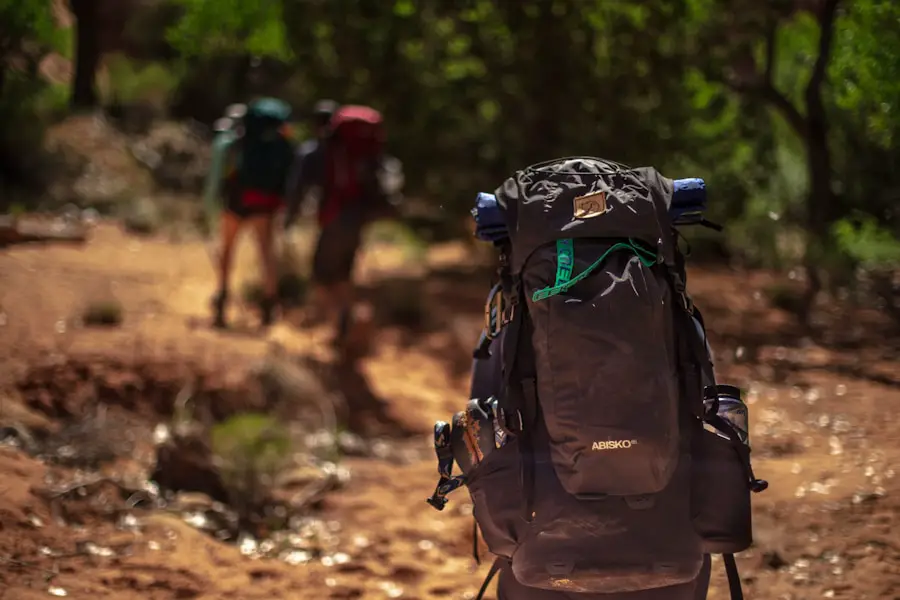
The equipment required for hiking is often lighter than the equipment required for an unsupported multi-day trek, but the correct gear always depends on the route, weather, season, remoteness, and individual needs.
For day trips, the National Park Service Ten Essentials provide a useful starting framework:
- Navigation: map, compass, GPS, or appropriate combination, plus the knowledge to use them.
- Sun protection: sunglasses, sunscreen, hat, and protective clothing as conditions require.
- Insulation: extra clothing appropriate for expected and unexpected weather.
- Illumination: a headlamp or flashlight with adequate power.
- First aid: a trip-appropriate first-aid kit and necessary personal medications.
- Fire: emergency fire-starting supplies where their use is legal and appropriate.
- Repair tools: simple equipment for field repairs.
- Food: enough for the outing plus an emergency margin appropriate to the route.
- Hydration: drinking water and, where necessary, a reliable water-treatment method.
- Emergency shelter: protection appropriate to the environment if an unexpected delay occurs.
Sturdy, well-fitting hiking shoes or boots are important, although the best choice depends on terrain, weather, pack weight, and personal preference. Moisture-managing clothing and a waterproof or weather-resistant outer layer can help the body cope with changing conditions.
For a trek, additional equipment may include:
- A backpack sized and fitted for the intended load.
- A tent, tarp, bivy, sleeping bag or quilt, and sleeping pad when camping.
- Cooking equipment and fuel when meals cannot be obtained along the route.
- A water filter, purifier, chemical treatment, or other route-appropriate treatment method.
- Additional food and storage appropriate to local wildlife regulations.
- Trekking poles for stability where useful.
- Extra clothing layers for changing temperatures and prolonged exposure.
- Backup navigation and emergency communication equipment for remote routes.
- Required permits, campsite reservations, identification, or travel documents.
Pro Tip: Test your complete system before a major trek. Walk with your loaded pack, use your water-treatment system, set up your shelter, and spend a night in your sleep system before relying on them in a remote area.
The Terrain and Duration of Hiking and Trekking
| Activity Profile | Typical Duration and Characteristics |
| Short or Local Hike | Often an hour to a few hours on a defined route, although difficulty can range from easy to strenuous. |
| Day Hike | Several hours to a full day. Terrain can be flat, forested, desert, rocky, alpine, or mountainous. |
| Multi-Day Hike or Backpacking Trip | Two or more days. May involve camping, shelters, huts, lodges, or resupply stops. It can still accurately be called hiking. |
| Trek | Usually a longer journey and often several days or weeks, with greater logistical commitment or remoteness. There is no universal minimum distance or duration. |
Hiking trails exist in environments ranging from urban parks and coastal paths to deserts and high mountain ranges. Routes may be smooth and accessible or steep, rocky, muddy, snow-covered, exposed, or difficult to navigate.
The amount of time a route takes cannot be predicted from terrain alone. Distance, elevation gain and loss, altitude, trail surface, navigation difficulty, pack weight, weather, fitness, rest stops, and group pace all matter.
Loop trails allow hikers to return to the starting point without retracing the entire route, while out-and-back and point-to-point hikes require different transportation and turnaround planning.
Treks often cross a larger variety of landscapes during one journey. A route might move through forests, river valleys, villages, alpine meadows, passes, deserts, or exposed ridges over several days. Some are clearly marked from beginning to end; others demand more independent navigation.
Safety and Trip Planning
Whether you call the trip a hike or a trek, preparation should reflect the actual hazards. The National Park Service recommends checking conditions, weather, closures, route difficulty, and equipment needs before setting out.
Before leaving:
- Confirm your route, distance, elevation gain, and expected difficulty.
- Check official trail alerts, closures, fire restrictions, and weather forecasts.
- Know whether permits, reservations, guides, or specific equipment are required.
- Tell a reliable person where you are going and when you expect to return.
- Carry navigation equipment and know how to use it.
- Plan how much food and water you need and where safe water can be obtained.
- Set a realistic turnaround time for day hikes.
- Do not assume your phone will have service.
- Carry emergency equipment appropriate to the route and season.
- Have an alternate plan when weather or trail conditions make the intended route unsafe.
When hiking at altitude, allow time for acclimatization instead of trying to compensate with fitness. CDC guidance recommends gradual ascent and advises travelers not to ascend to a higher sleeping elevation while experiencing altitude-illness symptoms.
The Environmental Impact of Hiking and Trekking
Both hiking and trekking can affect the places people travel through. Heavy traffic on natural-surface trails can contribute to vegetation loss, soil compaction, runoff, and erosion. U.S. Geological Survey research on recreational trails shows that soil loss is influenced by factors including trail grade, trail alignment, drainage, environment, and the type and amount of use.
Staying on established trails or other durable surfaces where required helps concentrate use instead of creating multiple informal paths. Cutting switchbacks can damage vegetation and encourage erosion.
Remote trekking areas can face additional pressures where camps, cooking, waste disposal, firewood collection, or wildlife interactions occur repeatedly. A small group can still cause substantial localized damage when campsites or fragile surfaces are used carelessly.
The Leave No Trace principles provide a practical framework for reducing those impacts. In practice:
- Plan ahead and follow local regulations.
- Travel and camp on appropriate durable surfaces.
- Pack out waste and food scraps.
- Leave rocks, plants, artifacts, and other natural or cultural features where they are.
- Use fires only where permitted and minimize their impact.
- Observe wildlife from an appropriate distance and never feed animals.
- Keep noise and behavior considerate of other visitors and local communities.
Local regulations always take priority because waste disposal, food storage, campfires, camping locations, pets, and wildlife precautions vary by destination.
The Health Benefits of Hiking and Trekking
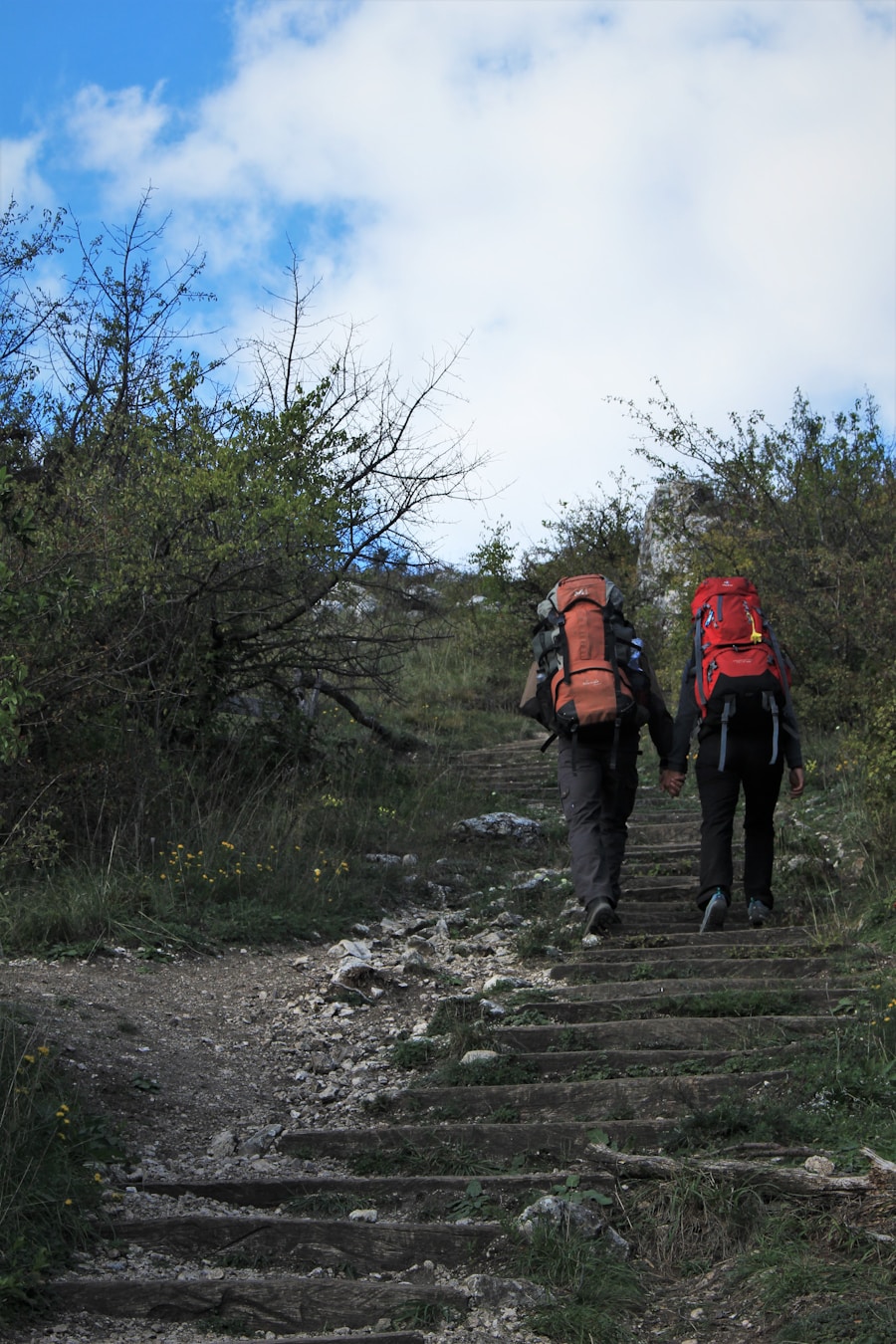
Hiking is a form of physical activity, so regular hiking can contribute to many of the same benefits associated with walking and other aerobic exercise. According to the CDC, regular physical activity can support heart health, bone health, healthy weight management, sleep, balance, and mental well-being.
For adults, current U.S. physical-activity guidance recommends at least 150 minutes of moderate-intensity aerobic activity each week, plus muscle-strengthening activity on two days. A hike can contribute toward that total when its intensity is moderate or vigorous.
Walking outdoors may also provide psychological benefits beyond simply being active. A systematic review and meta-analysis of nature-based outdoor activities found evidence of improvements in several mental-health outcomes, although effects vary by activity, population, and study design.
Trekking can involve prolonged aerobic exercise and repeated climbing and descending, which can challenge leg strength, endurance, balance, and coordination. However, more demanding is not always better. Long trips also increase exposure to fatigue, overuse injuries, dehydration, blisters, poor recovery, and environmental hazards.
The goal should therefore be to choose a level of hiking or trekking that matches your current fitness and gradually build capacity rather than assuming a harder trip automatically provides greater benefits.
The Cultural and Social Aspects of Hiking and Trekking
Hiking can be a highly social activity. Hiking clubs, volunteer trail groups, family outings, and guided walks provide ways for beginners and experienced hikers to enjoy trails together while exchanging knowledge about routes and outdoor skills.
Trekking can add another cultural dimension because many long-distance routes pass through communities rather than remaining entirely in wilderness. Historic trade routes, pilgrimage paths, mountain villages, and indigenous landscapes can be central parts of the experience.
Guides, homestays, locally owned lodges, food services, transportation providers, and porters may all play a role on established trekking routes. Responsible travelers should learn local customs, follow regulations, obtain permission where required, respect culturally significant locations, and use reputable services with responsible labor and environmental practices.
The destination also changes what preparation is needed. For example, travelers considering northern European hiking can use this existing seasonal guide to Norway to understand how timing and conditions affect an outdoor trip.
Hiking, Trekking, Backpacking, and Mountaineering
Outdoor terms overlap, but these distinctions can make trip descriptions easier to understand:
- Hiking: a broad term for recreational walking through natural terrain. It can be short, long, easy, difficult, single-day, or multi-day.
- Trekking: usually implies a longer journey on foot with more sustained effort, logistics, remoteness, or multiple days of travel.
- Backpacking: commonly means hiking while carrying the equipment needed for one or more overnight stays, especially camping equipment.
- Thru-hiking: completing an established long-distance trail from one end to the other, usually over an extended period.
- Mountaineering: mountain travel that can involve technical hazards and skills beyond ordinary hiking, such as climbing, rope systems, glacier travel, crampons, or ice axes depending on the route.
A single adventure can fit more than one label. Someone completing a long trail while carrying camping gear might reasonably describe the trip as hiking, backpacking, trekking, and, if completing the entire trail, thru-hiking.
Choosing Between Hiking and Trekking: Which Is Right for You?
Choose based on the actual trip rather than the terminology.
Hiking is usually the better starting point when you:
- Want an outing lasting a few hours or a day.
- Are developing outdoor fitness and navigation skills.
- Prefer to return to a vehicle, home, or accommodation after the walk.
- Want to carry a relatively light pack.
- Are learning how your footwear and clothing perform outdoors.
A trek may appeal to you when you:
- Enjoy consecutive days of walking.
- Want to travel through a region rather than simply complete one trail.
- Are comfortable planning food, water, overnight accommodation, navigation, and emergency options.
- Have trained for the expected distance and elevation.
- Are prepared for more variable conditions and limited access to services.
Neither activity is automatically easy or difficult. A short hike up a steep exposed peak can be far more technically and physically demanding than a multi-day trek between comfortable mountain lodges. Always assess the specific route.
Pro Tip: Before your first major trek, complete a demanding full-day hike and then a simple overnight or two-day trip. That progression tests your fitness, footwear, packing system, navigation, and recovery without immediately committing to a remote week-long journey.
Frequently Asked Questions
What is the difference between hiking and trekking?
Hiking is a broad term for recreational walking in natural areas and can range from short outings to demanding multi-day trips. Trekking usually implies a longer journey, greater logistical commitment, more sustained effort, or travel through remote or varied terrain. The terms overlap, and there is no universal distance or duration that separates them.
What are the typical terrains for hiking and trekking?
Both can take place on forests, mountains, deserts, coastlines, valleys, and other natural terrain. Hiking frequently uses established trails, while trekking may involve longer or more remote routes. However, a trek can be fully marked and a hike can involve difficult route finding, so terrain should be evaluated route by route.
How long do hiking and trekking trips typically last?
A hike may last an hour, a full day, or multiple days. Trekking usually refers to a longer journey and commonly lasts several days or more, but there is no official minimum duration. Always use the route’s actual distance, elevation, itinerary, and expected conditions for planning.
What kind of gear is needed for hiking and trekking?
Both require suitable footwear, weather-appropriate clothing, food, water, navigation, first aid, illumination, and other emergency essentials appropriate to the route. Multi-day treks may also require a larger backpack, sleeping equipment, extra clothing, water treatment, cooking equipment, more food, and specialized gear for local conditions.
What is the level of difficulty for hiking and trekking?
Difficulty varies widely. Hiking can range from accessible nature walks to strenuous high-mountain routes, while trekking often requires more endurance because of its duration and repeated walking days. Distance, elevation, altitude, terrain, weather, navigation, and pack weight are better measures of difficulty than the activity’s name.
Is trekking always harder than hiking?
No. Trekking is commonly longer and may require greater endurance and planning, but individual routes matter more than the label. A steep, technical, high-altitude day hike can be considerably harder than a gentle multi-day trek with lodge accommodation and luggage support.
What is the difference between trekking and backpacking?
Backpacking usually describes an overnight hiking trip in which you carry your own camping and travel equipment. Trekking describes the journey itself and does not necessarily require camping. Trekkers may sleep in tents, mountain huts, lodges, guesthouses, or homestays and may carry their own equipment or use supported services.
Sources
- National Park Service — Hike Smart — route planning, weather, alerts, equipment, pacing, and general hiking safety.
- National Park Service — Ten Essentials — core emergency and preparedness equipment for outdoor trips.
- CDC Yellow Book — High-Altitude Travel and Altitude Illness — altitude risk, acclimatization, symptoms, prevention, and descent guidance.
- CDC — Health Benefits of Physical Activity for Adults — physical and mental-health benefits of regular activity.
- Leave No Trace — 7 Principles — minimum-impact outdoor recreation practices.
- U.S. Geological Survey — Recreational Trail Soil-Loss Research — evidence on trail erosion and factors influencing recreational trail degradation.

