
Last Updated on September 10, 2026 by Daniel Globe
Hiking and walking both put one foot in front of the other, but the experience can be very different. A neighborhood walk may require little more than comfortable shoes, while a trail hike can involve hills, rocks, changing weather, navigation, and extra gear. The important distinction is not a fixed mileage number. Terrain, setting, effort, and preparation matter more.
Quick Answer
Hiking is generally recreational walking on trails or through natural areas, often with more uneven terrain, elevation change, and trip preparation. Walking is a broader activity that can happen almost anywhere. There is no official distance that turns a walk into a hike, and an easy hike can be less strenuous than a fast or steep walk.
Key Takeaways
- Hiking is usually associated with trails and natural settings, but hikes can be short, long, flat, steep, paved, or rugged.
- Either activity can provide moderate or vigorous exercise depending on your speed, terrain, elevation, fitness level, and carried load.
- Walking usually needs little specialized equipment; hiking may require navigation, water, food, weather layers, first aid, and other emergency supplies.
- Trail hiking brings additional hazards such as sudden weather, rough footing, remoteness, altitude, and wildlife, while roadside walking requires extra attention to vehicles and intersections.
- Both activities can support physical and mental health, so the better choice is usually the one that matches your abilities and that you can do consistently.
Disclosure: As an Amazon Associate I earn from qualifying purchases. Some links on this page are affiliate links, at no extra cost to you.
Hiking vs. Walking: What Is the Difference?
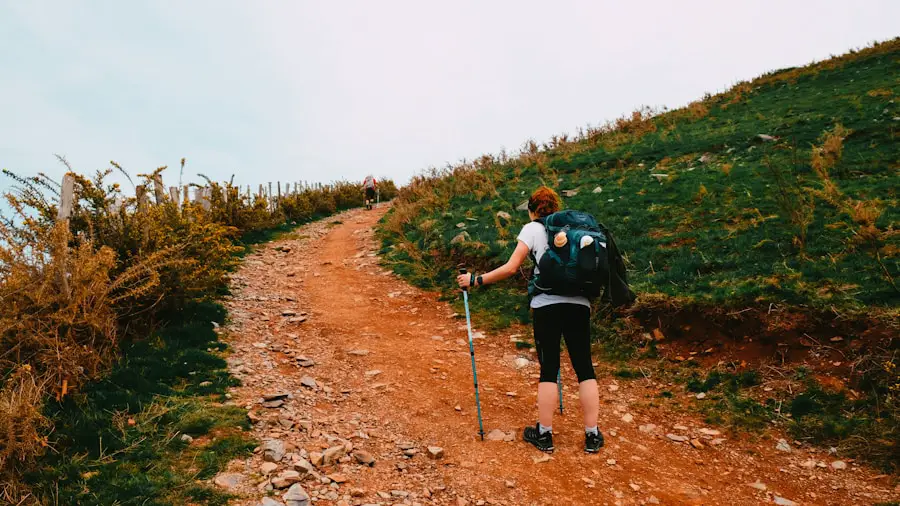
Walking is the broad term. It includes everything from strolling through a neighborhood to power walking on a steep path. Hiking is also walking, but the word is normally used for recreational travel on a trail or through a natural environment. The American Hiking Society notes that hikes can be long or short, steep or flat, and can take place on paved or unpaved trails.
That means there is no universal mileage, elevation gain, surface type, or time limit that officially separates hiking from walking. A two-mile mountain trail can be a hike, while a ten-mile walk through a city is still commonly described as walking.
| Factor | Walking | Hiking |
| Typical setting | Sidewalks, roads, tracks, parks, paths, trails | Trails and natural areas |
| Terrain | Can be flat, hilly, smooth, or uneven | Often includes dirt, rocks, roots, hills, or uneven footing |
| Exercise intensity | Light to vigorous | Light to vigorous; often rises with grade, rough terrain, or pack weight |
| Preparation | Often minimal for familiar local routes | May require route, weather, water, navigation, and emergency planning |
| Gear | Comfortable footwear and weather-appropriate clothing | Trail-appropriate footwear plus supplies matched to the route and conditions |
| Distance | No fixed range | No fixed range |
Physical Demands and Fitness Benefits
Both hiking and walking can improve fitness. According to the Centers for Disease Control and Prevention, adults should aim for at least 150 minutes of moderate-intensity aerobic activity each week, along with muscle-strengthening activity on at least two days. Brisk walking is one example of moderate-intensity exercise.
Ordinary walking mainly works the lower body, including the calves, quadriceps, hamstrings, hips, and supporting muscles. As pace and incline increase, the cardiovascular demand rises as well.
Hiking can add more physical challenges. Rocks, roots, slopes, loose surfaces, and frequent changes in foot placement can require more balance and muscular control. Climbing also raises the workload, while carrying a backpack adds resistance.
The 2024 Compendium of Physical Activities lists level walking at 2.8–3.4 mph at about 3.8 METs, brisk level walking at 3.5–3.9 mph at about 4.8 METs, normal hiking or walking through fields and hillsides at about 5.3 METs, and cross-country hiking at about 6.0 METs.
These figures from the 2024 Compendium of Physical Activities show why the label alone does not determine exercise intensity. A fast uphill walk may demand more energy than a slow, flat hike.
Does Hiking Burn More Calories Than Walking?
Often, but not automatically. Calorie use depends on body size, speed, grade, surface, duration, pack weight, and fitness level. Steeper trails and heavier packs generally increase energy demand, but there is no single calorie number that applies to every hike or walk.
Regular walking or hiking can support cardiovascular health, endurance, weight management, muscle function, balance, and bone health. Neither activity guarantees weight loss because body weight is influenced by both physical activity and food intake.
Note: Choose an intensity appropriate for your current fitness and health. People with chronic health conditions, disabilities, or concerns about vigorous exercise should discuss suitable activities with a qualified healthcare professional.
The Mental Benefits of Hiking and Walking
Reducing Stress and Anxiety
Walking gives you a simple way to step away from screens, work, and other demands. Physical activity itself can reduce short-term feelings of anxiety, and spending time around natural environments may provide an additional stress-relieving effect.
A systematic review indexed by the U.S. National Library of Medicine found that greater nature exposure was associated with lower perceived stress in most included studies and favorable changes in several physiological measures of stress. That does not make a nature walk a substitute for mental-health treatment, but it supports using outdoor activity as one part of a healthy routine.
Boosting Mood and Cognitive Function
Regular physical activity is associated with better brain health, sleep, mood, and reduced risk of depression. A walk does not need to be an intense workout to be worthwhile. The biggest practical advantage is often accessibility: many people can fit a short walk into a normal day more easily than a trail trip.
Hiking can add the restorative experience of forests, mountains, coastlines, lakes, or other natural settings. For some people, the combination of movement, scenery, and time away from urban noise makes a hike especially refreshing.
Enhancing Creativity and Productivity
Walking may also help with idea generation. In research reported by Stanford University, participants produced more creative responses while walking than while sitting. The effect appeared during both indoor treadmill walking and outdoor walking, suggesting that movement itself played an important role.
That does not mean every hike will make someone more productive, but walking can be a useful break when you feel mentally stuck.
Equipment and Gear for Hiking vs. Walking
Walking generally has a low equipment barrier. For a routine neighborhood or park walk, comfortable supportive shoes and clothing suited to the weather may be enough. Sun protection, water, reflective clothing, or a light source may also be appropriate depending on the route and time of day.
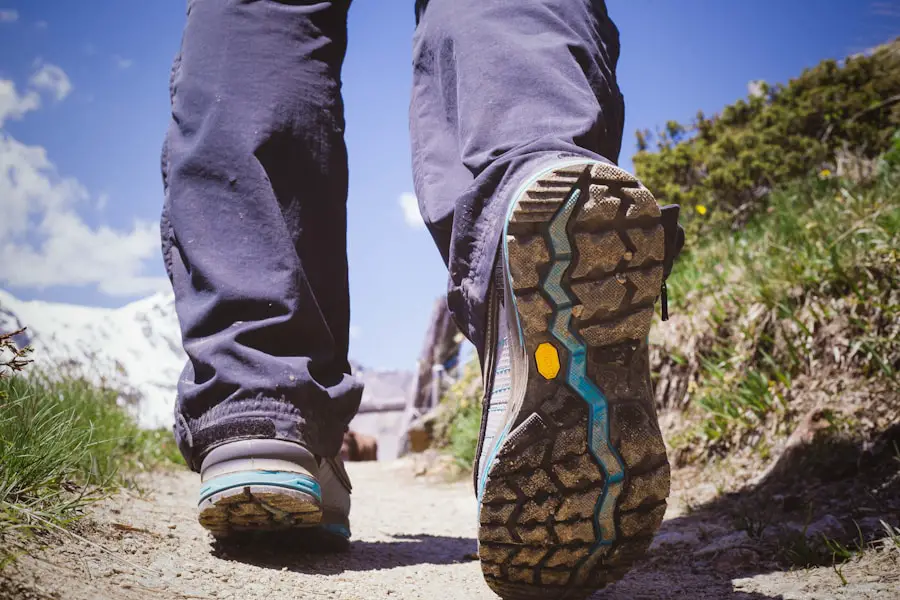
Hiking equipment depends much more on the trail. A maintained, short nature path may not require hiking boots at all. Comfortable trail shoes can be enough when they provide suitable grip and support for the terrain.
Longer, rougher, wetter, or more remote hikes may justify additional equipment such as:
- Trail shoes or hiking boots with suitable traction
- Water and, where necessary, water-treatment equipment
- Food and extra snacks
- Navigation tools
- Rain gear and insulating layers
- Sun protection
- First-aid supplies
- Headlamp or flashlight
- Emergency shelter
- Repair tools appropriate to the trip
- Trekking poles when extra stability would be useful
Pro Tip: Buy footwear for the terrain you actually use rather than assuming every hike requires a heavy boot. A well-fitting trail shoe may be more comfortable for an easy day hike, while boots can make sense when you need more protection, durability, or support.
Safety Considerations for Hiking and Walking
Both activities require attention to safety, but the hazards change with the environment.
Walking Safety
For roadside and urban walking, vehicle traffic is often the main concern. The National Highway Traffic Safety Administration recommends using sidewalks when available, crossing at intersections or crosswalks, obeying signals, staying alert around vehicles, and walking facing traffic when no sidewalk is available.
Visibility matters at night or in poor weather. Reflective or light-colored clothing and a light can help drivers notice you sooner.
Hiking Safety
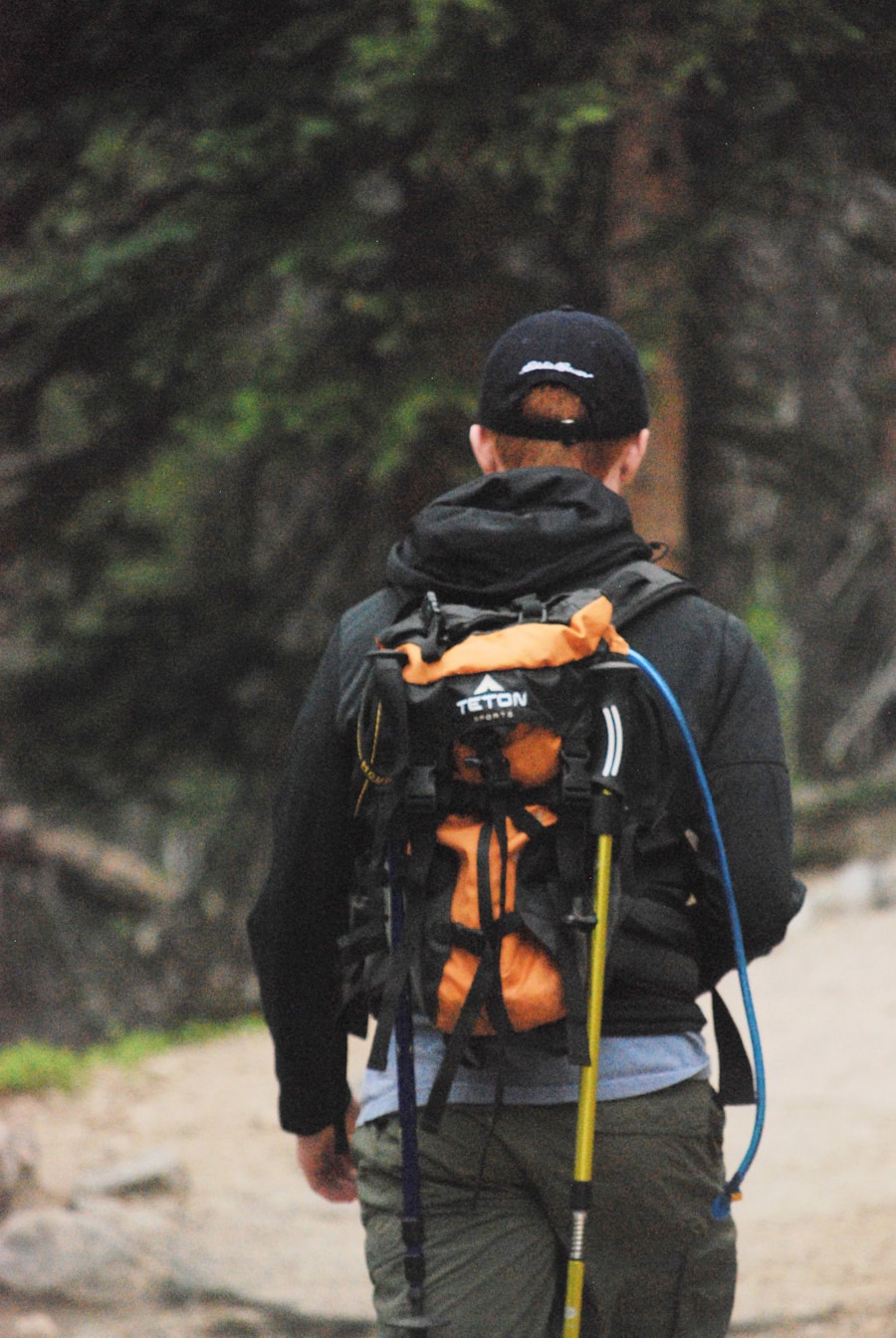
Trail hiking can add rough terrain, remote locations, rapid weather changes, altitude, heat, cold, wildlife, and limited communication. The National Park Service Hike Smart guidance recommends choosing a trail that matches the abilities of your group, checking weather and park alerts, leaving a trip plan, carrying appropriate supplies, and having a backup plan.
The NPS Ten Essentials system includes navigation, sun protection, insulation, illumination, first aid, fire, repair tools, food, hydration, and emergency shelter. The exact gear should be adjusted for the route, climate, season, and trip length.
Warning: Do not treat a phone as your only navigation or emergency tool in remote terrain. Cell service may be unavailable and batteries can fail. Check current trail conditions before leaving, tell someone where you are going, and establish a turnaround time.
Wildlife rules also vary by location and species. Do not approach or feed wild animals. Follow the minimum viewing distances and food-storage requirements for the specific park or land-management area you are visiting rather than relying on one universal distance.
Environmental Impact of Hiking and Walking
| Environmental Factor | What Actually Matters |
| Carbon Emissions | Walking itself does not have one universal CO₂-per-kilometer figure. For recreational hiking, transportation to and from the trailhead may contribute more direct fossil-fuel emissions than the activity itself. |
| Water Usage | Manufacturing footprints vary by bottle type and life-cycle method. A reusable container can reduce dependence on disposable bottles when it is reused regularly. |
| Waste Generation | Food scraps, wrappers, tissues, bottles, and other waste should be packed out. Do not assume biodegradable food is harmless to leave behind. |
| Wildlife Disturbance | Approaching, feeding, or displacing wildlife can alter natural behavior. Stay on designated routes where required and give animals plenty of space. |
Walking can be a low-impact way to travel, especially when it replaces a short vehicle trip. However, every form of outdoor recreation has some environmental effect.
Hiking can affect natural areas when repeated foot traffic widens trails, damages vegetation, disturbs soils, spreads into unofficial social trails, or alters wildlife behavior. These effects become more important in fragile or heavily visited environments.
The National Park Service Leave No Trace guidance recommends planning ahead, using durable surfaces, disposing of waste properly, leaving natural and cultural objects in place, respecting wildlife, and considering other visitors.
Staying on the designated trail is especially important where stepping off the route would damage sensitive vegetation or soil. Muddy conditions may also justify turning around rather than walking around puddles and widening the trail.
Planning a Walk vs. Planning a Hike
For a familiar neighborhood walk, preparation may be as simple as checking the weather, choosing a route, and bringing water when needed. Because roads, businesses, transportation, and other people may be nearby, changing plans is often relatively easy.
Hiking deserves more preparation because trail conditions can leave you farther from shelter, transportation, or help. Before a hike, consider:
- Distance and expected total time
- Elevation gain and steepness
- Trail surface and technical difficulty
- Weather and temperature changes
- Sun exposure and available shade
- Water availability
- Current trail closures, fire restrictions, or park alerts
- Navigation and cell-service limitations
- The fitness and experience of everyone in the group
- A turnaround time and backup plan
For longer or more remote hikes, carry additional food, water, clothing, emergency supplies, and navigation appropriate to the route. Water-treatment equipment is useful when a trip depends on natural water sources, but it is not automatically necessary for every hike.
Share your route and expected return time with someone who is not on the trip. That simple step can become important if you are delayed or unable to contact anyone.
Note: Trail difficulty labels are relative. An “easy” trail in one park may still involve heat, altitude, loose footing, or elevation that feels difficult to someone who normally walks only on level pavement.
Exploring New Terrain
Walking and hiking can both turn an ordinary outing into exploration. A walk through a city or neighborhood may reveal a park, café, historic building, art installation, or quiet street that you would miss from a car.
Hiking expands that experience into forests, mountains, deserts, wetlands, lakeshores, and other natural areas. Trails can pass through very different ecosystems over a relatively short distance, especially where elevation changes quickly.
The sense of discovery is one reason many people prefer hiking. A viewpoint, waterfall, forest opening, or unusual rock formation can give the trip a clear destination. At the same time, you do not need a dramatic summit for a walk outdoors to be worthwhile.
People who enjoy documenting those outings may also want to consider how they carry photography equipment. This guide to the best travel camera backpacks covers options designed to protect camera gear while traveling.
Which Is Better for Fitness: Hiking or Walking?
Neither activity is automatically better. Hiking often becomes more demanding when it adds elevation, unstable footing, or pack weight, but a brisk uphill walk can be harder than an easy nature trail.
For beginners, walking has several advantages. It is easy to start, requires little equipment, and makes pace and distance simple to control. Someone building endurance can begin with regular brisk walks and then progress to easy trails before taking on longer or steeper hikes.
Hiking may be especially appealing if you enjoy varied terrain, outdoor scenery, and longer recreational outings. Walking may be the better option when convenience, accessibility, or consistency is the priority.
For general health, consistency matters more than the label. An activity you enjoy and repeat regularly is usually more useful than a supposedly superior workout that you rarely do.
Community and Social Aspects of Hiking and Walking
Walking can be an easy social activity. Friends can meet for a neighborhood walk, families can visit a park, and organized walking groups can combine exercise with regular conversation and community connection.
Hiking can create the same social benefits with a stronger outdoor-adventure component. Hiking clubs and group outings allow people to share route knowledge, gear tips, navigation experience, and encouragement through difficult sections of trail.
Both activities can also lead to volunteer opportunities. Walking groups may participate in neighborhood cleanups, while hikers can join trail-maintenance or stewardship projects that repair routes and protect natural areas.
Whether you prefer a sidewalk, greenway, local nature trail, or mountain route, both activities offer a practical way to move more, spend time with other people, and explore your surroundings.
Frequently Asked Questions
What is the difference between hiking and walking?
Walking is the general activity of traveling on foot. Hiking usually refers to recreational walking on trails or through natural areas and may involve more route planning, uneven surfaces, elevation, or specialized supplies. There is no strict mileage or elevation rule separating the two.
How does the terrain differ between hiking and walking?
Walking can take place on almost any surface, including sidewalks, roads, tracks, beaches, and trails. Hiking is more commonly associated with trails and natural terrain, which may include rocks, roots, mud, slopes, and uneven ground.
What are the typical distances for hiking and walking?
There is no standard distance for either activity. A hike can last less than a mile or continue for many miles, while a walk can be a short trip around the block or a long-distance event. Setting and route characteristics are more useful distinctions than mileage.
What gear is typically used for hiking and walking?
Routine walking may require only comfortable footwear and weather-appropriate clothing. Hiking equipment depends on the route and can include trail footwear, water, food, navigation, layers, first aid, sun protection, illumination, emergency shelter, and trekking poles.
What are the health benefits of hiking and walking?
Both can contribute to aerobic physical activity and support cardiovascular health, brain health, muscle function, bone health, endurance, and weight management. The amount of benefit depends partly on frequency, duration, and intensity.
Does hiking burn more calories than walking?
Hiking often uses more energy when it includes hills, rough terrain, faster effort, or a backpack. However, calorie use depends on pace, grade, body size, duration, surface, and carried weight, so an intense walk can use more energy than an easy hike.
Do you need hiking boots to go hiking?
Not always. Comfortable trail shoes may be suitable for short, maintained trails. Hiking boots can provide additional protection, support, traction, and durability for rough, wet, rocky, or demanding routes. Fit and suitability for the terrain matter more than the label on the footwear.
Sources
- Centers for Disease Control and Prevention — Physical Activity Recommendations — current adult aerobic and muscle-strengthening recommendations.
- 2024 Compendium of Physical Activities — Walking — MET estimates for level walking, hill walking, hiking, and backpacking.
- PubMed — Effect of Nature Exposure on Perceived and Physiologic Stress — systematic-review evidence on nature exposure and stress.
- Stanford University — Walking and Creative Thinking — research on walking and creative idea generation.
- National Park Service — Hike Smart — trail planning, equipment, weather, ability, and emergency-preparedness guidance.
- National Park Service — Leave No Trace — guidance on minimizing impacts to soils, vegetation, wildlife, water, and other visitors.

