
Last Updated on July 25, 2026 by Daniel Globe
Üsküdar rewards travelers who leave the busiest sightseeing routes behind. Along this stretch of Istanbul’s Asian shore, Ottoman mosques sit beside everyday market streets, wooded hills rise above the Bosphorus, and Kuzguncuk preserves a neighborhood character that feels very different from the historic peninsula. The best visit mixes famous architecture with smaller places where you can slow down, walk, drink tea, and watch local life.
Quick Answer
Üsküdar’s best hidden gems mix Ottoman landmarks, neighborhood streets, Bosphorus viewpoints, and local food. Start around Mihrimah Sultan and Şemsi Pasha mosques, wander Kuzguncuk, climb into Fethi Paşa Grove, and continue to Beylerbeyi. Kanlıca yoghurt is worth a detour, but Kanlıca is in neighboring Beykoz, not Üsküdar.
Key Takeaways
- Kuzguncuk combines restored wooden houses, cafés, a community garden, and Muslim, Jewish, Armenian, and Greek Orthodox heritage.
- Fethi Paşa Grove is one of the best places in Üsküdar to trade busy streets for trees, walking paths, and elevated Bosphorus views.
- Mihrimah Sultan and Şemsi Pasha mosques show two very different ways Mimar Sinan worked with Üsküdar’s waterfront setting.
- Beylerbeyi Palace adds a 19th-century imperial stop to a district better known for Ottoman mosques and neighborhoods.
- Kanlıca yoghurt is a worthwhile nearby food experience, but Kanlıca belongs to Beykoz and should be treated as an optional extension rather than an Üsküdar stop.
Disclosure: As an Amazon Associate I earn from qualifying purchases. Some links on this page are affiliate links, at no extra cost to you.
Before You Explore Üsküdar
Üsküdar is easy to reach from Istanbul’s European side by ferry, and the central waterfront is a useful starting point because several historic buildings stand close to the ferry area. Şehir Hatları operates routes linking Üsküdar with destinations including Karaköy and Eminönü; schedules can change, so check the current Şehir Hatları timetable before traveling.
From central Üsküdar, you can build your visit in two directions. Head north for Fethi Paşa Grove, Kuzguncuk, and Beylerbeyi, or walk south along the waterfront toward Şemsi Pasha Mosque and Salacak. Atik Valide Mosque requires an inland detour and involves more climbing.
Note: Kanlıca is farther north in the neighboring Beykoz district. It is included below as a worthwhile Bosphorus food detour, not as one of Üsküdar’s neighborhoods.
Mihrimah Sultan Mosque: Sinan at the Üsküdar Waterfront
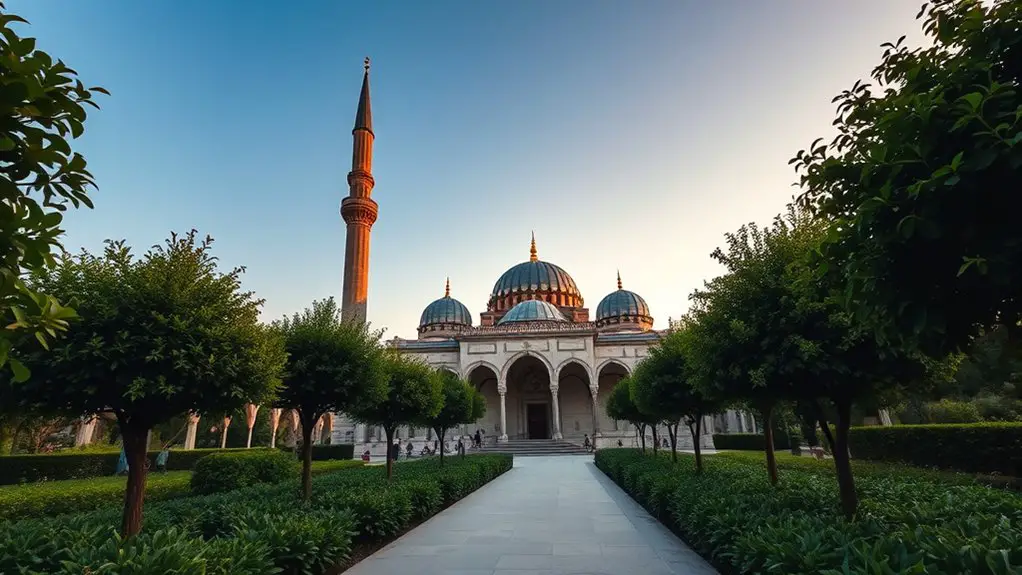
Mihrimah Sultan Mosque is one of the easiest historic landmarks to visit after arriving in Üsküdar. Also known as the İskele or Quay Mosque, it stands on a raised platform close to the ferry landing rather than on a remote hilltop.
Mihrimah Sultan, daughter of Sultan Süleyman the Magnificent, commissioned the complex, and Mimar Sinan designed it in the 16th century. Üsküdar Municipality dates its construction to 1546–1548.
This is Üsküdar’s waterfront Mihrimah Sultan Mosque, not the separate Mihrimah Sultan Mosque at Edirnekapı on Istanbul’s European side.
The mosque is especially interesting for its proportions, stone and marble details, broad portico, two minarets, and bright interior. Contrary to a common generic description of Ottoman mosques, the Üsküdar building is not known for extensive tiled decoration. Its architectural character comes from its structure, carved and inlaid details, calligraphy, and use of light.
Because it remains an active mosque, sightseeing should fit around worship. Enter quietly, remove shoes where directed, dress modestly, and follow any instructions posted at the entrance.
Kuzguncuk: Historic Streets and Neighborhood Life
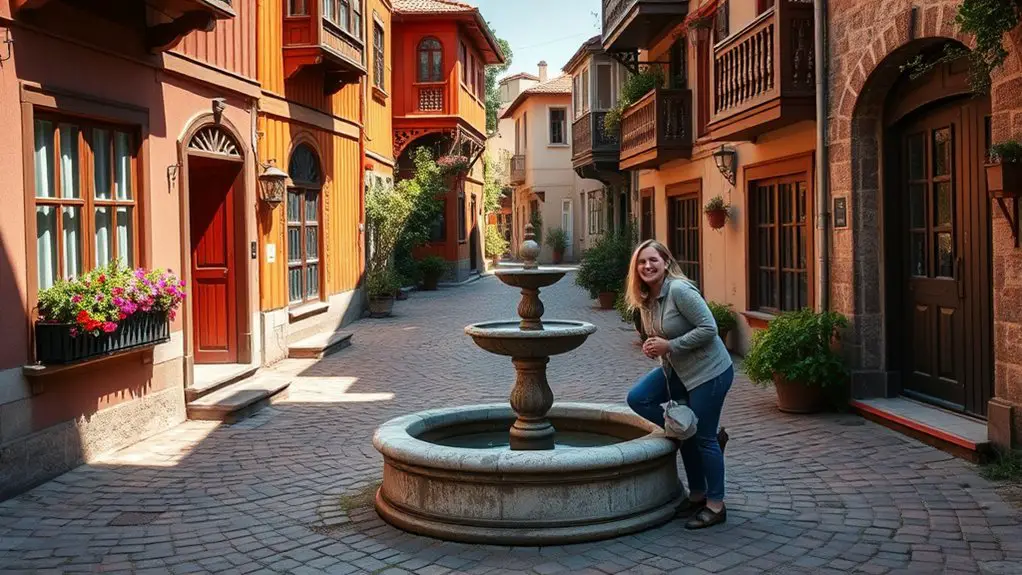
Kuzguncuk is one of Üsküdar’s most rewarding neighborhoods for an unhurried walk. Restored wooden houses, tree-lined streets, small restaurants, cafés, bookstores, and religious buildings create a compact area that is easy to explore on foot.
Historic Charm and Architecture
The neighborhood’s old wooden houses are more than colorful photo backdrops. Their façades, bay windows, doors, and proportions preserve examples of Istanbul’s traditional residential architecture, mixed with later influences from the 19th and early 20th centuries.
Kuzguncuk is also notable for the physical closeness of different religious traditions. The neighborhood includes mosques, Armenian and Greek Orthodox churches, and a synagogue. The official Üsküdar Municipality guide to Kuzguncuk highlights sites including Surp Krikor Lusavoriç Church, Ayios Yorgios Church, Ayios Panteleimon Church, Beth Ya’akov Synagogue, Kuzguncuk Mosque, and Üryanizade Mosque.
This diversity gives Kuzguncuk more historical depth than a quick “colorful houses” visit suggests. Take time to look beyond the main commercial street, but remember that many picturesque buildings are private homes.
Local Cafés, Shops, and Kuzguncuk Garden
Kuzguncuk has a strong café and small-business culture, but it is better described as a living neighborhood than as a permanent artisan market. Browse the independent cafés, bookshops, bakeries, and small shops you encounter rather than expecting scheduled craft demonstrations.
A particularly worthwhile stop is Kuzguncuk Bostanı, the neighborhood community garden. The official district guide describes it as a municipality-supported garden where local residents grow herbs and vegetables. It adds an unusual patch of cultivated green space to this dense part of Istanbul.
Kuzguncuk has become popular with visitors, especially on weekends. Arriving earlier in the day gives you a better chance to see its streets before cafés and photo spots become busy.
Üsküdar Çarşı: Everyday Market Streets Near the Waterfront
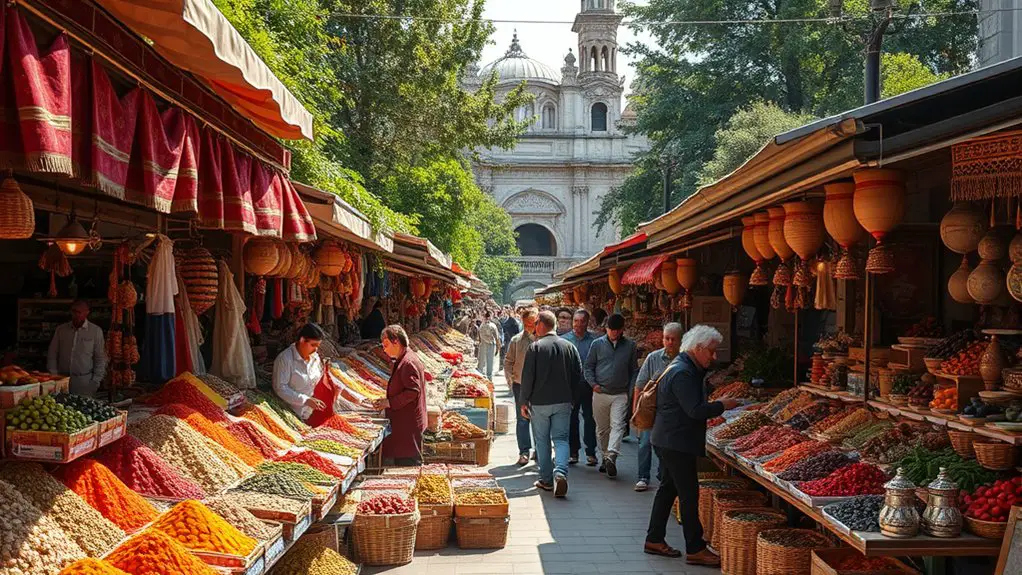
Rather than a single enclosed attraction called “Üsküdar Market,” central Üsküdar is better experienced as a network of busy commercial streets around the ferry area and Yeni Valide Mosque.
Here, the appeal is ordinary city life: food shops, bakeries, produce, fish, sweets, household goods, and small local businesses. The experience changes from street to street, and that unpredictability is part of the attraction.
Yeni Valide Mosque is a useful landmark while exploring this area. The 18th-century mosque was commissioned by Emetullah Râbi’a Gülnûş Sultan and forms part of a historic complex associated with the old commercial center.
Come here to browse and snack rather than to hunt for a fixed list of souvenirs. It offers a better feel for present-day Üsküdar than a staged tourist bazaar would.
Kanlıca Yoghurt: A Nearby Beykoz Detour
Kanlıca yoghurt is one of the Asian Bosphorus shore’s best-known local foods, but there is an important geographical distinction: Kanlıca is in Beykoz, not Üsküdar. Treat it as an optional extension if you are continuing north along the Bosphorus.
Authentic Flavor Experience
The speciality is a thick, tangy yoghurt closely associated with Kanlıca. According to Beykoz Municipality’s history of Kanlıca yoghurt, the established local tradition dates to 1893.
Powdered sugar became its most famous accompaniment, although the historical account also records experiments with jam, honey, and ice cream. Ordering it simply with powdered sugar is the classic way to understand why the dish became so closely tied to the neighborhood.
| Aspect | What to Expect | Why It Matters |
|---|---|---|
| Texture | Thick and smooth | A defining part of the local style |
| Flavor | Fresh, creamy, and gently tangy | Best appreciated before adding toppings |
| Classic Serving | Often topped with powdered sugar | The best-documented traditional pairing |
| Location | Kanlıca, Beykoz | It is a nearby detour, not an Üsküdar stop |
Traditional Production Methods
The official Beykoz account describes a process based on carefully selected cow and sheep milk and fermentation using yoghurt from a previous batch. After fermentation, the yoghurt is cooled before distribution.
That documented process is more useful than romantic claims about special copper or clay vessels, which are not necessary to explain the food’s identity. The enduring tradition comes from continuity of production, local association, and serving style.
Scenic Bosphorus Setting
Kanlıca’s location directly on the Bosphorus turns the food stop into a pleasant extension of an Asian-side itinerary. The waterfront gives you views across the strait and an opportunity to pause between longer sightseeing stops.
Do not squeeze Kanlıca into an already full walking tour of central Üsküdar. It makes more sense when you are continuing north by public transport or ferry toward the upper Bosphorus.
Fethi Paşa Grove: Green Space Above the Bosphorus
Fethi Paşa Grove is a strong choice when you need a break from traffic and commercial streets. The wooded slopes extend toward Kuzguncuk and provide paths, shaded areas, and elevated viewpoints over the Bosphorus.
The grove takes its name from Damat Fethi Ahmed Paşa, an Ottoman statesman associated with the reigns of Mahmud II and Abdülmecid. Üsküdar Municipality’s tourism material identifies the grove as part of the green belt rising above this section of the shoreline.
Its biggest advantage is contrast: within the same day, you can move from busy ferry docks and mosque courtyards into a much greener setting. Some routes through the grove involve noticeable slopes, so comfortable shoes help.
Pro Tip: Combine Fethi Paşa Grove with Kuzguncuk. They sit close enough to form a natural pair: use the grove for greenery and viewpoints, then descend toward Kuzguncuk for streets, food, and tea.
Şemsi Pasha Mosque and Waterfront
Şemsi Pasha Mosque is one of Üsküdar’s most distinctive small monuments because Mimar Sinan placed it directly beside the Bosphorus. The official Üsküdar Municipality description dates completion to 1580 and emphasizes the way the complex responds to its waterfront setting.
The mosque is far smaller than Istanbul’s great imperial complexes, which is precisely why it feels different. Its single dome, compact courtyard, tomb, and adjoining madrasa create an intimate architectural composition beside the water.
The surrounding waterfront is also a good place to watch ferries and other Bosphorus traffic. Visit respectfully, since the mosque remains a functioning place of worship.
| Feature | What Makes It Worth Seeing |
|---|---|
| Architecture | Compact 16th-century Mimar Sinan complex |
| Setting | Built directly against the Bosphorus shoreline |
| Best For | Architecture, waterfront photography, and a quiet pause |
Beylerbeyi Palace: A 19th-Century Imperial Retreat
Beylerbeyi Palace adds a different layer of Ottoman history to an Üsküdar itinerary. Sultan Abdülaziz commissioned the present palace and associated buildings between 1863 and 1865.
Beylerbeyi Palace was built as a summer palace and was also used to receive prominent foreign guests visiting the Ottoman court.
The waterfront position, formal interiors, reception spaces, and gardens contrast sharply with the residential streets of nearby Kuzguncuk. That makes the two places especially good to combine.
The National Palaces administration maintains current visitor information for Beylerbeyi Palace. Check that official page shortly before your trip because closing days, ticket-office hours, admission charges, and accessible areas can change.
The Atmosphere of Çınaraltı Café
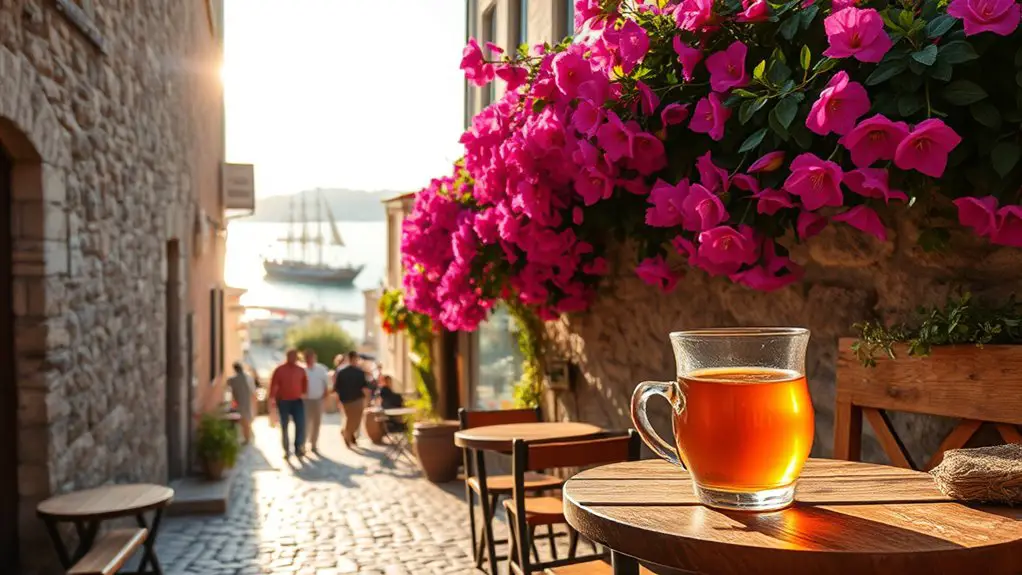
Kuzguncuk’s Çınaraltı Café is a simple place to pause rather than an elaborate sightseeing attraction. The district’s official guide lists Çınaraltı among neighborhood stops, and its appeal comes mainly from its Bosphorus-side setting and old-fashioned tea-and-breakfast atmosphere.
A glass of Turkish tea, coffee, simit, toast, or breakfast gives you an excuse to stop walking and watch the water. Outdoor tables are especially appealing in good weather.
Do not count on solitude at peak weekend times. Kuzguncuk is now one of the Asian side’s popular leisure neighborhoods, so an early visit usually feels calmer than arriving at midday.
Üsküdar and Salacak Waterfront: Open Bosphorus Views
For easy scenery without inventing a separate “Mihrimah Sultan Park,” use the public waterfront itself. The stretch through Üsküdar toward Salacak gives you broad views across the Bosphorus and toward Istanbul’s historic peninsula.
A Breathing Space by the Water
The waterfront is one of the simplest places to slow the pace of your day. Benches and open sections of promenade provide space to watch ferries, fishing boats, seabirds, and the constant movement between Istanbul’s two sides.
It is an urban waterfront rather than a secluded park, so expect commuters and local families as well as visitors.
Bosphorus Views at Sunrise and Sunset
Light changes quickly over the strait. Morning can be calmer, while late afternoon and sunset bring stronger colors and busier promenades. Salacak is especially useful for skyline views across the water.
Bring a light outer layer outside summer: wind along the Bosphorus can make the shoreline feel cooler than streets a few blocks inland.
A Historic Setting
Üsküdar’s waterfront has been a point of arrival and departure for centuries. Mosques, fountains, ferry landings, commercial streets, and old residential quarters developed around this relationship with the water.
That history is easier to appreciate when you connect individual monuments rather than treating them as isolated photo stops.
Atik Valide Mosque and Its Cultural Heritage
Atik Valide Mosque sits inland at Toptaşı, away from the busiest waterfront route. It formed part of a much larger charitable and religious complex commissioned by Nurbanu Sultan, mother of Murad III, and designed by Mimar Sinan.
The complex historically included institutions serving education, worship, hospitality, and social welfare. Üsküdar’s official tourism material identifies the mosque, madrasa, school, imaret, tabhane, and other components as parts of the wider foundation.
Inside the mosque, the mihrab area is especially notable for İznik tiles. This is a useful contrast with the Üsküdar Mihrimah Sultan Mosque, where tiled ornament is not a defining feature.
Because Atik Valide lies uphill from the shoreline, it works best for visitors who have enough time to leave the compact waterfront circuit. The reward is a major Sinan complex that receives less casual tourist traffic than Istanbul’s headline imperial mosques.
How to String Üsküdar’s Hidden Gems Together
A good route depends on whether you want architecture, neighborhood life, or waterfront scenery.
For a northbound half-day: begin at Mihrimah Sultan Mosque near the ferry terminal, explore the surrounding çarşı streets, continue toward Fethi Paşa Grove, descend into Kuzguncuk, stop at Çınaraltı Café, and finish around Beylerbeyi Palace.
For a shorter waterfront walk: start in central Üsküdar, visit Mihrimah Sultan Mosque, then walk south toward Şemsi Pasha Mosque and continue toward Salacak for open views across the Bosphorus.
For deeper Ottoman architecture: add Atik Valide Mosque as a separate inland detour. Expect hills and allow enough time so the visit does not become a rushed checklist.
Kanlıca works best as an additional Bosphorus excursion after these routes rather than as another stop in the same walking loop.
Practical Tips for Visiting Üsküdar
Most of these places are easiest to enjoy on foot, but Üsküdar is not flat. Fethi Paşa Grove, Atik Valide, and several residential streets involve inclines. Comfortable footwear is more useful than trying to cover every stop quickly.
At active mosques, visitors should keep voices low, silence phones, remove shoes before entering the prayer area, and wear modest clothing. Turkey’s Diyanet guidance also asks visitors to avoid disturbing worshippers and to follow local photography instructions. See the official mosque-visit guidance.
Warning: Mosques in this guide are active places of worship, not ordinary museums. Tourist access can pause during prayers or religious services. Never step in front of someone who is praying, and follow staff or posted instructions on arrival.
Finally, verify museum hours, ferry schedules, exhibitions, and special events shortly before your visit. Those details change much faster than the historical information in a travel guide.
Frequently Asked Questions
What are some lesser-known historical sites in Üsküdar?
Şemsi Pasha Mosque, Atik Valide Mosque, Üryanizade Mosque in Kuzguncuk, and the smaller historic fountains and religious buildings around central Üsküdar are good choices beyond the district’s most famous sights. Atik Valide is especially rewarding for travelers interested in Mimar Sinan and Ottoman social complexes.
Which local festivals are celebrated in Üsküdar?
Üsküdar hosts changing programs of concerts, exhibitions, workshops, holiday celebrations, and themed festivals rather than one permanent visitor festival calendar. Check Üsküdar Municipality’s current events listings for the dates of programs taking place during your stay.
Are there hidden cafés with panoramic Bosphorus views?
Kuzguncuk and the shoreline north of central Üsküdar have several cafés where the setting is as important as the menu. Çınaraltı Café is a classic neighborhood stop, while Fethi Paşa Grove is better for elevated views. Waterfront businesses change over time, so explore rather than relying on a single permanent list.
What traditional crafts can visitors discover in Üsküdar?
You may encounter independent makers, design shops, workshops, and handmade goods, particularly around creative neighborhoods such as Kuzguncuk. However, permanent live demonstrations of ceramics, weaving, or jewelry making should not be assumed. Check current local workshops and cultural programs if a hands-on craft experience is a priority.
Are there secluded beaches or natural spots away from tourist crowds?
Üsküdar is better for waterfront promenades, wooded groves, and parks than for secluded swimming beaches. For a nature break within the district, Fethi Paşa Grove is a stronger choice. The Salacak waterfront is scenic but urban and can become busy, especially around sunset.
Is Kanlıca in Üsküdar?
No. Kanlıca is a neighborhood of Beykoz, farther north on Istanbul’s Asian Bosphorus shore. Its famous yoghurt makes it a worthwhile extension to an Üsküdar day, but it should not be described as an Üsküdar neighborhood or attraction.
How much time do you need to explore Üsküdar?
A half-day is enough for central Üsküdar plus either Kuzguncuk or the Salacak waterfront. Allow most of a day if you also want Fethi Paşa Grove, Beylerbeyi Palace, and an inland site such as Atik Valide. Kanlıca is better saved for an extended Bosphorus itinerary.
Conclusion
Üsküdar’s appeal comes from variety rather than a single blockbuster sight. In one day you can move between Sinan mosques, busy market streets, Kuzguncuk’s wooden houses, wooded Bosphorus slopes, neighborhood tea stops, and the formal setting of Beylerbeyi Palace.
The district also rewards a slower approach. Leave room to sit by the water, wander a side street, or stop for tea instead of trying to collect every landmark. And if Kanlıca yoghurt is on your list, continue north into Beykoz knowing that you are extending the journey beyond Üsküdar itself.
Sources
- Üsküdar Municipality Tourism Guide — historical background on Üsküdar landmarks including Mihrimah Sultan Mosque, Fethi Paşa Grove, and Atik Valide.
- Üsküdar Municipality Kuzguncuk Guide — neighborhood architecture, religious heritage, community garden, cafés, and local sights.
- National Palaces — Beylerbeyi Palace — palace history and current visitor information.
- Beykoz Municipality — Historic Kanlıca Yoghurt — documented history, production, and traditional serving information.
- Presidency of Religious Affairs — Mosque Visit Rules — visitor clothing, footwear, photography, and respectful-conduct guidance.
- Şehir Hatları — Üsküdar Ferry Timetables — current ferry service information for planning arrival and departure.
