
Last Updated on August 26, 2026 by Daniel Globe
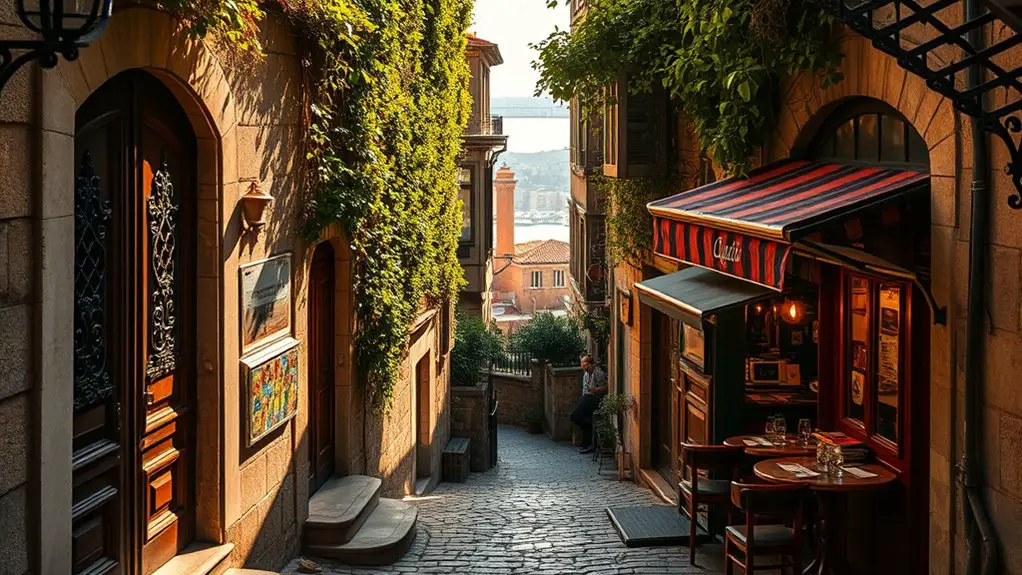
While millions of travelers gather beneath the shadow of the Galata Tower every year, the true soul of this historic Istanbul quarter lives in its labyrinthine backstreets, Genoese stone passageways, and secluded courtyards. Moving just one or two blocks away from the main tourist thoroughfares reveals century-old artisan workshops, peaceful Sufi lodge gardens, Art Nouveau architectural relics, and third-wave espresso nooks tucked into centuries-old Ottoman hans.
Quick Answer
Galata’s best hidden gems include the Art Nouveau Kamondo Stairs, the tranquil garden of the Galata Mevlevi Lodge, historic Genoese trade arcades like Saint Pierre Han, and vibrant street murals along Lüleci Hendek Caddesi. Most courtyards and backstreets are free to explore on foot.
Key Takeaways
- Architectural Heritage: Galata’s character stems from its multi-layered history as a Genoese maritime colony, Ottoman merchant trade center, and 19th-century cosmopolitan financial hub.
- Tranquil Escapes: Green sanctuaries like the Galata Mevlevihanesi garden and the Crimean Memorial Church courtyard offer serene respites from urban street noise.
- Vibrant Street Culture: Lüleci Hendek and Camekan streets feature evolving, community-supported murals created by local and international artists.
- Authentic Café Scene: Independent neighborhood roasters and historic bakeries near Serdar-ı Ekrem Street provide traditional Turkish sweets and artisanal coffee.
- Practical Navigation: The steep cobblestone streets are best navigated from top to bottom by riding the historic 1875 Tünel funicular from Karaköy to Tünel Square.
Disclosure: As an Amazon Associate I earn from qualifying purchases. Some links on this page are affiliate links, at no extra cost to you.
The Enchanting Passages and Historic Hans of Galata
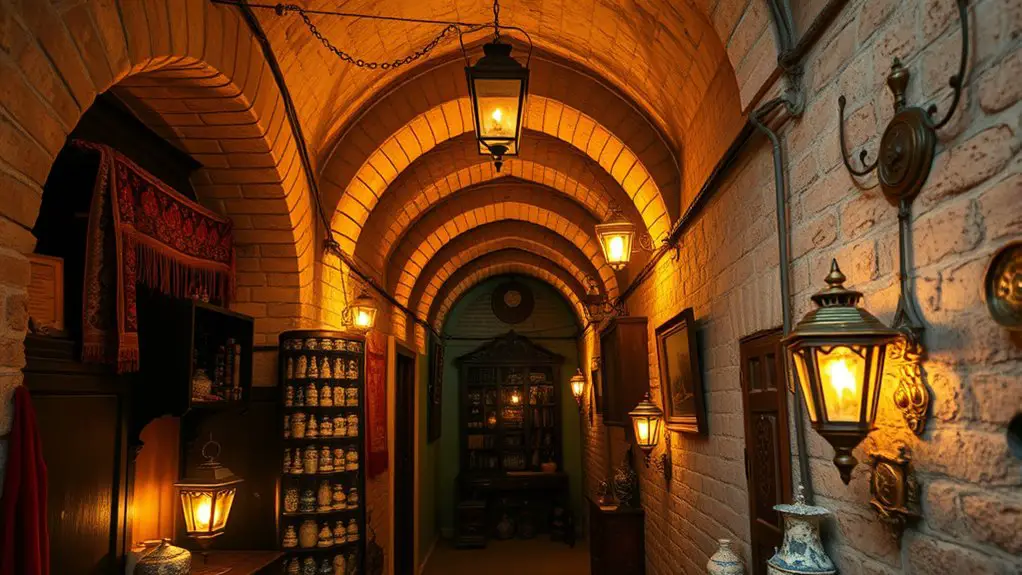
Galata has served as an international trade hub since the Byzantine era, when Genoese merchants established autonomous commercial quarters along the Golden Horn. The architectural remnants of this trading powerhouse survive in the neighborhood’s historic hans (commercial trade inns) and covered passages, distinguished by thick stone walls, barrel-vaulted ceilings, and arched arcades.
Unlike the bustling covered textile markets across the water in the Historic Peninsula, Galata’s passages functioned as fortified centers for maritime logistics, banking, and specialized artisan guilds. Walking through these vaulted stone corridors offers immediate relief from city bustle, carrying the scent of roasted coffee beans, vintage woodwork, and old stone masonry.
Among the most notable historic structures in this network is Saint Pierre Han, originally built in the 18th century on the site of a 14th-century Genoese building, which once housed the French Embassy and the Ottoman Bank. Nearby, Kurşunlu Han—attributed to the imperial architect Mimar Sinan—showcases the classic multi-story Ottoman courtyard design where ironmongers and metal craftsmen continue century-old traditions.
Galata’s stone hans and vaulted passages reflect centuries of international commerce, bridging medieval Genoese trade posts with classic Ottoman craftsmanship.
These atmospheric passages serve as living cultural corridors rather than standard shopping arcades, allowing curious visitors to see working studios and historic masonry up close.
The Serene Gardens and Hidden Courtyards of Galata
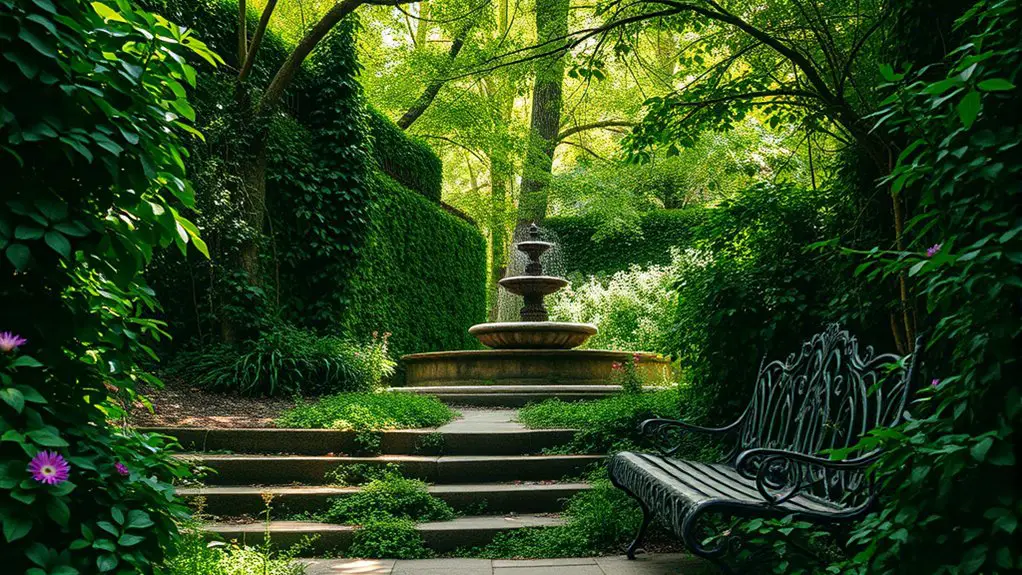
While Galata is densely built with stone apartment blocks and narrow streets, it hides several quiet green sanctuaries behind courtyard walls and historic church gates.
These secluded gardens provide peaceful spots for reading, resting tired feet, and experiencing the quieter rhythms of Istanbul life.
Here are four serene retreats located within the neighborhood:
- Galata Mevlevi House Garden (Galata Mevlevihanesi Bahçesi): Established in 1491, Istanbul’s oldest Mevlevi lodge features a shady, rose-filled courtyard and a historic cemetery (Hazire) with carved Ottoman turbans, providing a peaceful atmosphere shaded by mature plane trees.
- Crimean Memorial Church Courtyard (Kırım Kilisesi): Nestled behind tall stone walls on a quiet lane leading toward Karaköy, this 19th-century neo-Gothic Anglican church is surrounded by a peaceful, overgrown garden filled with ivy, fig trees, and friendly local street cats.
- Sanatkarlar Parkı (Artisans Park): Perched on the eastern slope where Galata meets Cihangir, this terraced public garden offers shaded benches beneath pine trees with panoramic vistas overlooking the Bosphorus and Topkapı Palace.
- Saint Peter and Paul Church Courtyard: Tucked beneath the medieval Genoese fortification remnants, this quiet gated courtyard provides a silent, sun-dappled space away from street crowds.
Pro Tip: Visit the courtyard of the Galata Mevlevi House in the early morning immediately after opening. You will find almost no crowds, making it one of the most tranquil spots in central Istanbul for contemplative morning walks.
The Artistry of Galata’s Hidden Street Murals
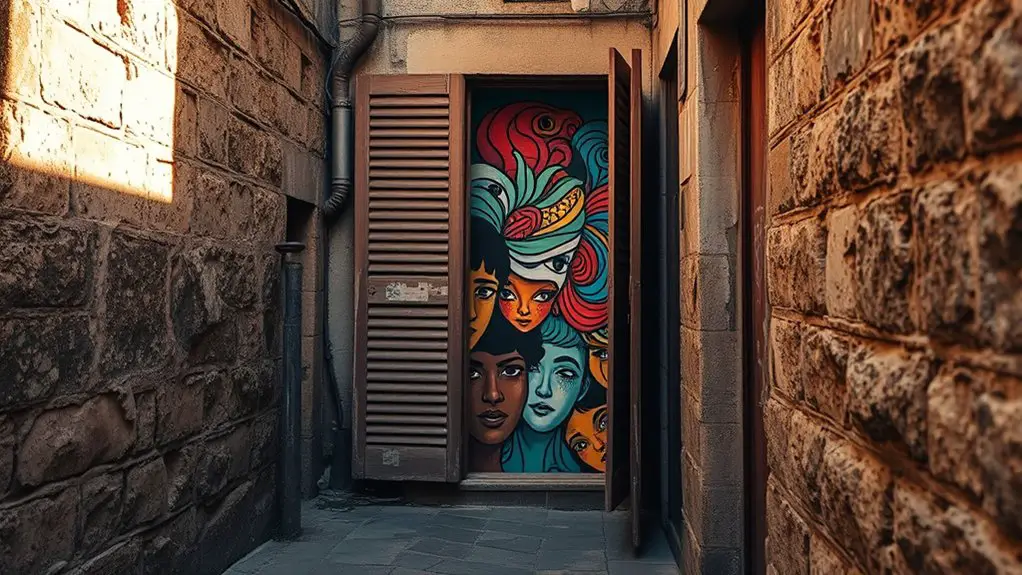
As you descend the slopes connecting Galata to the Karaköy shoreline, the neighborhood’s centuries-old stone facades become canvases for contemporary street art. Galata’s urban art scene integrates modern political and cultural expression into historic architecture, spanning large multi-story commissioned murals, stencil pieces, and ceramic tile installations.
Rather than clustering in a single gallery, Galata’s best street art is distributed across its back alleys. Specific streets serve as major creative corridors for local and international muralists:
| Art Corridor / Street | Prominent Art Style | Notable Visual Highlight |
|---|---|---|
| Lüleci Hendek Caddesi | Multi-Story Spray Murals & Stencil Art | Large-scale figurative murals by Turkish and international urban artists. |
| Camekan Sokak | Paste-Up Posters & Miniature Ceramics | Intricate handmade tiles and poetic calligraphy placed at eye level. |
| Hoca Ali Sokak | Mixed Media & Graphic Installations | Vibrant color blocks contrasting with distressed 19th-century brickwork. |
| Bankalar Caddesi Steps | Painted Staircase Art & Typography | Geometric stair-riser murals integrating urban wayfinding with local quotes. |
Because street art in Galata evolves continuously, taking side alleys off the main pedestrian axes regularly yields freshly painted works and installations that capture Istanbul’s contemporary creative energy.
The Cozy Charm of Local Cafés and Bakeries
Galata’s café culture is an essential part of its daily routine. Alongside traditional Turkish teahouses (çay ocakları) where neighborhood elders gather on low wooden stools, Galata is home to independent micro-roasters and historic patisseries tucked into 19th-century apartment basements.
These local spots highlight the area’s rich culinary traditions, pairing classic Ottoman dessert recipes with contemporary specialty coffee:
- Velvet Cafe Galata: Famous for its collection of antique porcelain coffee cups, offering rich Turkish coffee prepared in copper cezves accompanied by homemade flour halva (un helvası).
- Mavra Cafe: A beloved community hub on Serdar-ı Ekrem Street where local designers, writers, and artists meet for fresh mint teas, homemade savory tarts, and casual conversation.
- Galata Coffee Roasters: A focused specialty coffee shop dedicated to single-origin beans, light roasts, and precise pour-overs right on the cobblestone walk.
- Şirin Fırın: A warm, neighborhood bakery operating near the tower base, celebrated for its fresh morning simit, crunchy açma, and traditional sour cherry tarts.
Note: Most independent cafés in Galata’s inner backstreets open slightly later than typical commercial chains, usually welcoming guests around 9:00 AM or 9:30 AM.
The Historic Corners and Architectural Relics of Galata’s Backstreets
Wandering Galata’s steep, cobblestone hills reveals architectural layers from over seven centuries of continuous urban habitation. Beyond the prominent medieval Galata Tower, the quarter preserves several architectural gems that standard walking tours often bypass.
The most famous of these architectural curiosities is the Kamondo Stairs (Kamondo Merdivenleri) on Bankalar Caddesi. Built in the 1850s by the influential Ottoman-Jewish banking family, the House of Camondo, this Art Nouveau double-curved stairway was designed to allow family members to reach their offices on Bankalar Caddesi from their residences above. Its interlocking, ribbon-like curves were engineered so that if someone slipped, the curved stone balustrades would catch them before they tumbled to the bottom.
The curving stone ribbons of the Kamondo Stairs stand as a monument to 19th-century cosmopolitan Galata, merging functional pedestrian design with graceful Art Nouveau geometry.
Further along the slope toward the Golden Horn sits Arap Camii (Arab Mosque). Originally constructed in the early 14th century by the Dominicans as the Church of Saint Paul, this building remains one of the few standing examples of medieval Gothic religious architecture in Istanbul. Converted to a mosque after the arrival of Moorish refugees expelled from Spain in 1492, its square Italian belfry was converted directly into a minaret.
Warning: Galata’s cobblestones can become extremely slick when wet or polished by foot traffic. Wear sturdy walking shoes with rubberized grip, especially when descending steep pathways like Yüksek Kaldırım or the steps toward Karaköy.
Frequently Asked Questions
What is the best time to visit Galata’s hidden gems?
The best time to explore Galata’s backstreets and open courtyards is during spring (April to May) and autumn (September to November), when daytime temperatures hover comfortably between 16°C and 22°C. For photography and quiet street strolls, explore between 8:00 AM and 10:30 AM on weekdays before day-trippers arrive at the main Galata Tower plaza.
Are there any entry fees for these hidden locations in Galata?
Most of Galata’s secret architectural treasures—including the Kamondo Stairs, street murals along Lüleci Hendek, historic passages, and the courtyard of the Crimean Memorial Church—are completely free to visit. Dedicated museum sites, such as the Galata Mevlevi House Museum, charge standard municipal admission fees (typically between 150 TL and 400+ TL for foreign visitors), while active mosques like Arap Camii welcome respectful visitors free of charge outside prayer times.
How do I get to Galata’s lesser-known spots?
Take the M2 Metro line to Şişhane Station and exit toward Galata/Tünel. Alternatively, ride the T1 Tram to Karaköy and take the historic Tünel (F2 funicular)—the world’s second-oldest underground urban railway—up to Tünel Square. From there, walk downhill along Serdar-ı Ekrem and its cross streets to explore the neighborhood comfortably on foot.
Is it safe to explore Galata’s backstreets at night?
Yes, Galata is generally safe at night, with active café terraces, music venues, and pedestrian traffic around Serdar-ı Ekrem and Camekan Sokak until late evening. As in any major metropolitan district, stay aware of your surroundings, stick to reasonably lit paths, and avoid deserted alleys descending toward the unlit industrial edges of the docks late at night.
Are there guided tours available for these hidden gems?
Yes, several certified local walking guides specialize in Galata’s Genoese heritage, Jewish cultural history, and street art routes. You can find licensed guides through the Istanbul Guides Chamber (İRO) or cultural organizations that provide small-group historical and culinary walks focusing on Beyoğlu and Karaköy backstreets.
Conclusion
Stepping off Galata’s well-trodden tourist circuit uncovers one of Istanbul’s most culturally layered neighborhoods. From the flowing curves of the 19th-century Kamondo Stairs and the Gothic arches of Arap Camii to the quiet greenery of the Galata Mevlevi House courtyard, this district rewards travelers who take time to wander its hills. Pair your exploration with an authentic Turkish coffee in an independent backstreet café, take the historic Tünel funicular back toward the water, and experience the timeless charm of historic Galata.
Sources
- GoTürkiye Official Tourism Portal — Cultural heritage sites, museum information, and regional history across Istanbul.
- Turkish Ministry of Culture and Tourism (Müze) — Official operational details, ticketing policies, and historical data for the Galata Mevlevi House Museum.
- Istanbul Metropolitan Municipality (İBB) — Municipal transit logistics (Tünel F2 funicular, M2 Metro) and historical preservation initiatives.
- Istanbul Cultural Inventory Directorate — Architectural documentation of historic Genoese hans, Arap Camii, and the Kamondo architectural legacy.
