
Last Updated on September 11, 2026 by Daniel Globe
Hand washing can protect delicate clothes from the friction, stretching, and heat of a normal machine cycle, but the fabric name alone does not determine the right method. Always read the garment’s permanent care label first. Dyes, linings, finishes, seams, and decorations may make an otherwise washable fiber unsafe to immerse in water.
Quick Answer
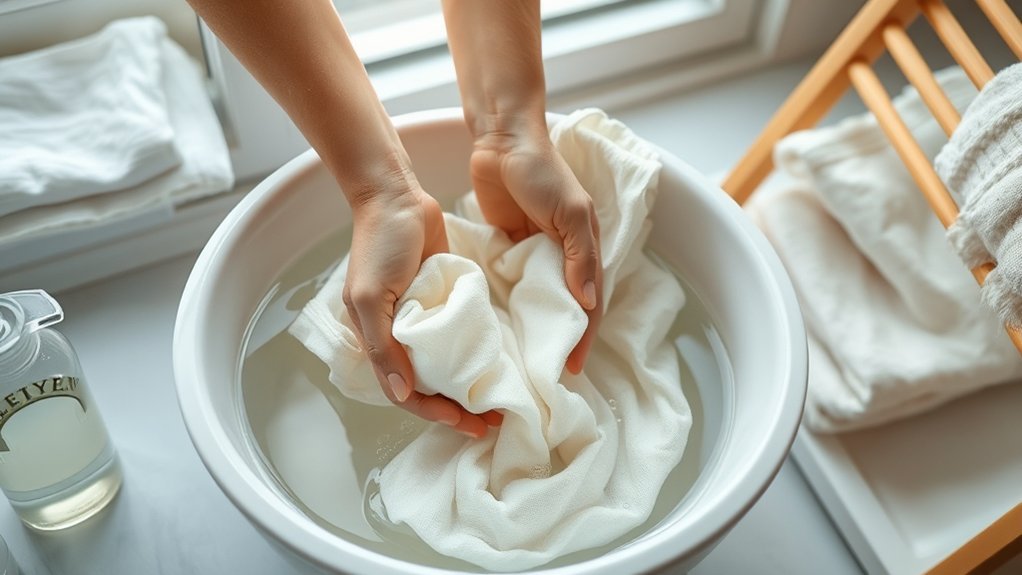
To hand wash delicate fabrics, check the care label, test for color bleeding, and use a clean basin with cool or lukewarm water and a small amount of suitable detergent. Swish gently without rubbing or wringing. Rinse well, press out water in a towel, reshape, and dry as directed on the label.
Key Takeaways
- Follow the complete care label instead of assuming that every silk, wool, lace, nylon, or cotton item needs the same treatment.
- Test an inconspicuous area before the first wash, especially on dark, bright, printed, or multicolored garments.
- Use detergent made for the garment or fiber and follow the product’s hand-wash dose; more detergent does not mean cleaner clothes.
- Avoid rubbing, twisting, scrubbing, or wringing wet delicates.
- Support wet garments, reshape them promptly, and dry them according to the care label.
At a Glance
| Time Required | About 15–45 minutes, plus air-drying time |
| Difficulty | Easy, provided the garment is labeled as washable |
| Tools Needed | Clean basin, suitable detergent, measuring cap or spoon, white cloth or cotton swab, clean towels, and a drying surface or rack |
| Cost | Usually minimal when you already have detergent and clean towels |
Which Fabrics Should You Hand Wash?
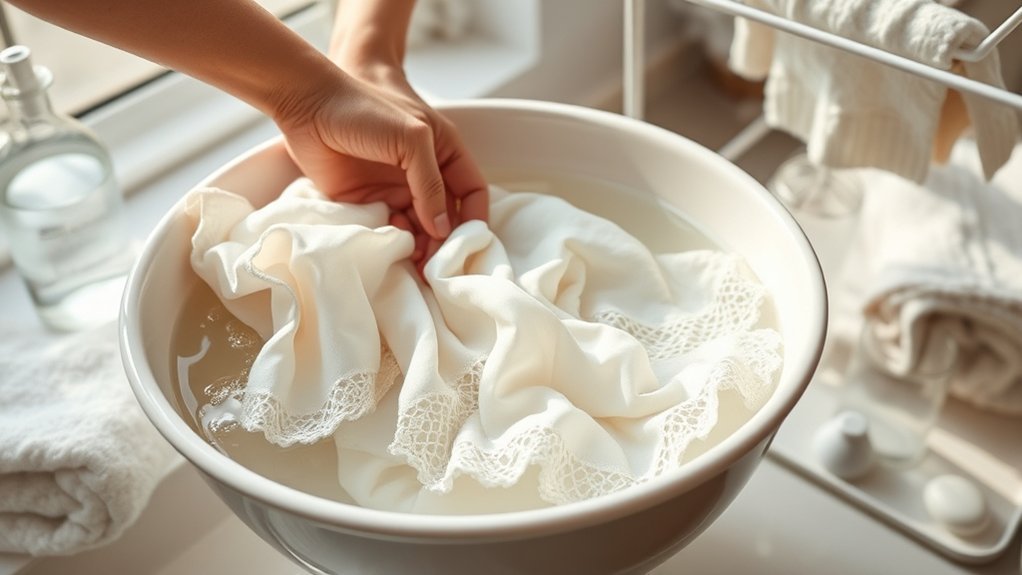
Silk, lace, wool, viscose, lingerie, fine knits, embellished clothing, and stretch garments are often treated as delicates. However, that does not mean every item made from these materials should be hand washed. Some are machine washable, some require professional cleaning, and others should not be wet at all.
The safest approach is to consider both the fiber and the finished garment:
- Silk: Hand wash only when the label permits it. Unstable dyes, structured silk garments, and many lined pieces may require professional care.
- Wool and cashmere: Hand wash when labeled for hand washing, using a wool-safe method. Some modern wool is machine washable, while tailored wool clothing may be dry clean only.
- Lace: Washable lace usually benefits from low agitation, but delicate antique lace, glued trims, or lace attached to a structured garment may need specialist care.
- Viscose or rayon: Some garments can be hand washed, but conventional viscose can become weaker when wet and may stretch or shrink.
- Nylon and spandex: These fibers are often machine washable. Hand washing may reduce abrasion, but the label and the garment’s main fiber should guide the method.
- Cotton: Most everyday cotton tolerates machine washing. Hand washing is more useful for fine cotton knits, lace-trimmed pieces, embroidery, unstable dyes, or fragile construction.
- Beaded or sequined garments: Water, detergent, and movement can affect threads, adhesives, metal finishes, and decorations even when the base fabric is washable.
Note: LYCRA is a brand name for stretch fiber. A garment containing LYCRA or another spandex fiber should normally be cared for according to its complete label and its main fabric component.
The safest rule is simple: wash according to the garment label, not the fiber name alone.
How to Read Care Labels for Delicates
The permanent label gives the manufacturer’s tested care method. In the United States, the Federal Trade Commission’s Care Labeling Rule requires covered garments to include a safe washing or dry-cleaning method and any warnings needed to prevent damage.
Find Label Symbols
Look inside the side seam, waistband, neck, pocket, or lining. Read every line of text and every symbol. Do not rely on one symbol while ignoring temperature, drying, bleaching, ironing, or professional-care instructions elsewhere on the label.
Under the current GINETEX care-symbol system based on ISO 3758:2023, a wash basin refers to domestic washing, a triangle refers to bleaching, a square refers to drying, an iron refers to ironing, and a circle refers to professional textile care.
Decode Fabric Instructions
Numbers inside a wash basin show the maximum permitted washing temperature in degrees Celsius. A hand in the basin indicates hand washing. One or two bars below a symbol call for reduced mechanical action. An X over a symbol means that treatment is not allowed.
Professional-care circles may contain letters that tell a cleaner which process or solvents are permitted. Bars below the circle indicate a milder professional process. A professional wet-cleaning symbol is not the same as permission to wash the garment in a household sink.
Follow Special Warnings
| Symbol or wording | Meaning | What may happen if ignored |
|---|---|---|
| Hand in wash basin | Hand wash using the stated temperature and other label directions | Machine agitation may cause stretching, felting, snagging, or distortion |
| X over wash basin | Do not wash by hand or machine | Water may damage dyes, finishes, structure, adhesives, or trims |
| Circle with a letter | Professional cleaning using the specified process | Home washing may cause shrinkage, dye movement, delamination, or loss of shape |
| X over circle | Do not professionally dry clean | Solvents may damage coatings, decorations, or components |
| X over triangle | Do not use chlorine or oxygen bleach | Bleach may weaken fibers, alter color, or damage finishes |
| Dry flat | Lay the garment flat in its correct shape | Hanging may stretch shoulders, hems, knits, or bias-cut fabric |
Warning: Do not immerse an item labeled “Do not wash” or “Dry clean only.” Professional care may be necessary because of the dye, lining, interfacing, finish, decoration, or construction—not just the visible fabric.
Gather Supplies for Hand Washing Delicates
Set up everything before the garment becomes wet. Wet delicate fabrics can be heavier, weaker, and harder to move without stretching.
Wash Basin Essentials
Use a clean sink, tub, bucket, or wash basin large enough for the garment to move without being crushed. Remove soap scum, cleaning chemicals, bleach residue, rust, cosmetics, and grease before filling it.
Keep these supplies nearby:
- A clean basin or sink
- Detergent suitable for the garment
- The detergent’s measuring cap or a clean measuring spoon
- A white cloth or cotton swab for color testing
- Two or more clean, colorfast towels
- A mesh drying rack or clean flat drying surface
- A padded hanger only when the label and garment construction permit hanging
Gentle Detergent Choices
Choose a detergent labeled for delicate fabrics or for the garment’s main fiber. For washable wool, use a neutral, mild wool detergent and avoid heavy-duty detergents, bleach, and enzyme-containing biological detergents. The Woolmark detergent guide explains these wool-specific limits.
Do not assume that one teaspoon is correct for every product. Concentrated liquids, powders, sheets, and specialty washes have different dosing instructions. Follow the detergent label’s hand-wash directions and use enough water to disperse the product fully.
Helpful Care Tools
A soft white cloth can help with hidden-area testing and gentle blotting. A fine-mesh laundry bag may support small lace pieces, removable trims, or hosiery, but it does not make a prohibited garment washable.
A fabric conditioner is optional, not essential. Use it only when the garment and product labels allow it. Keep the amount minimal on wool because excess conditioner can encourage fibers to move toward the surface and contribute to pilling.
Test Colorfastness Before Washing
Test dark, bright, printed, multicolored, or unfamiliar garments before their first wash. Mix a small amount of the chosen detergent with water. Apply it to an inconspicuous area, such as an inside seam allowance, with a white cotton swab or cloth.
- Blot the hidden area gently.
- Wait for it to dry.
- Check the white cloth for dye transfer.
- Compare the tested area with the surrounding fabric.
Do not proceed if dye transfers heavily, the test area changes color, the finish becomes rough, or an adhesive or decoration loosens. The American Cleaning Institute recommends professional cleaning when a colorfastness test changes the garment’s color.
Note: A hidden-area test lowers risk, but it cannot guarantee that every dye, lining, trim, or finish will react the same way during full immersion.
Hand Wash Delicate Fabrics Step by Step
1. Prepare the Garment
Empty the pockets. Remove detachable belts, brooches, pads, or accessories. Close hooks and zippers that could snag fabric, but loosen tight drawstrings. Turn washable wool, dark clothing, and printed garments inside out when appropriate. Wash light and dark colors separately.
2. Treat Stains Carefully
Blot fresh spills instead of rubbing them. Test any stain remover in a hidden area and confirm that it is permitted for the fiber and color. Avoid chlorine bleach unless the care label specifically allows it. Do not use an enzyme stain remover on wool or silk unless the product is explicitly approved for that fiber.
3. Fill the Basin
Use the water temperature stated on the garment label. For many delicates this will be cool or lukewarm water. If no temperature is printed but hand washing is permitted, avoid hot water and sudden temperature changes.
4. Dissolve the Detergent
Add the detergent according to its hand-wash instructions. Swirl the water before adding the garment so concentrated detergent does not sit directly on one area of fabric.
5. Wash With Minimal Movement
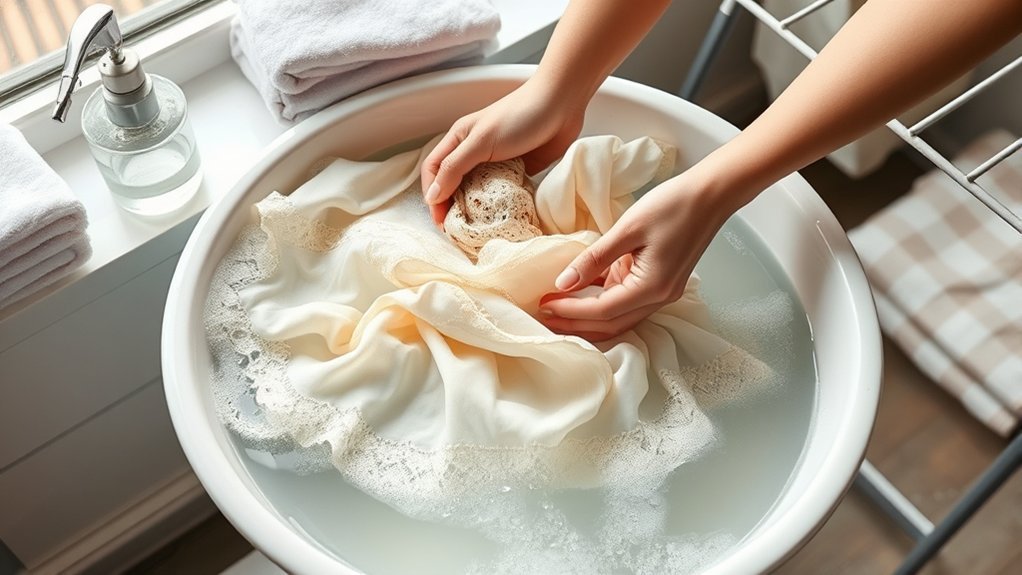
Lower the garment into the water while supporting its weight. Press it gently beneath the surface and move it slowly through the solution. Do not scrub fabric against itself, use a stiff brush, or pull on straps, lace, seams, or decorations.
A brief soak of about 5–10 minutes is enough for many lightly soiled washable delicates. Follow a shorter or longer time when the garment or detergent label gives different instructions. Remove an item promptly if the water becomes strongly colored or the garment begins to change shape.
6. Rinse Thoroughly
Drain the dirty water while supporting the garment. Refill the basin with clean water at a suitable temperature and press the item gently to release detergent. Repeat until the rinse water is clear and no obvious suds remain.
7. Remove Water and Reshape
Lift the item with both hands or gather it into a supported bundle. Do not lift a heavy wet garment by one shoulder, strap, sleeve, or corner. Press water out gently, place the garment on a clean towel, and roll the towel to absorb moisture. Unroll it, reshape the item, and dry it according to the label.
Pro Tip: Use a second dry towel if the first becomes saturated. Removing more water with towels shortens drying time without the fiber stress caused by wringing.
Rinse Delicates and Press Out Water
Incomplete rinsing can leave fabric stiff, dull, or irritating against the skin. Refill the basin rather than holding a fragile item under a forceful stream. Keep supporting the garment as you move it.
- Use clean rinse water and follow any temperature directions on the label.
- Press the garment gently instead of twisting it.
- Change the water until visible detergent and suds are gone.
- If conditioner is allowed, use only the product-label dose and disperse it completely before adding the garment.
- Never pour concentrated detergent or conditioner directly onto a wet delicate.
- Remove the item promptly instead of leaving it crumpled in the basin.
Avoid twisting, wringing, or pulling wet fabric. Those actions can stretch seams, distort knits, break weakened viscose fibers, and damage lace or embroidery.
Dry Delicates Without Stretching or Shrinking
Check the drying symbols before choosing a rack, hanger, clothesline, or dryer. “Hand wash” does not automatically mean “dry flat,” although flat drying is often the safest choice for sweaters, knits, viscose, and heavy garments.
- Flat drying: Place the item on a clean towel or mesh rack. Smooth seams and reshape it to its original measurements without stretching.
- Hanging: Reserve padded hangers for lightweight woven garments whose labels permit hanging. Do not hang heavy knits or wet stretch garments by the shoulders.
- Line drying: Support the item across more than one line or use a drying screen if clothespins could leave marks.
- Tumble drying: Use a dryer only when the label permits it, and follow the stated heat setting.
Keep sensitive colors, silk, and wool away from strong direct sunlight and radiators. Heat and ultraviolet exposure can fade dyes, weaken some fibers, and cause uneven drying. Allow the garment to dry completely before folding or storing it.
How to Wash Silk, Wool, and Lace
Silk
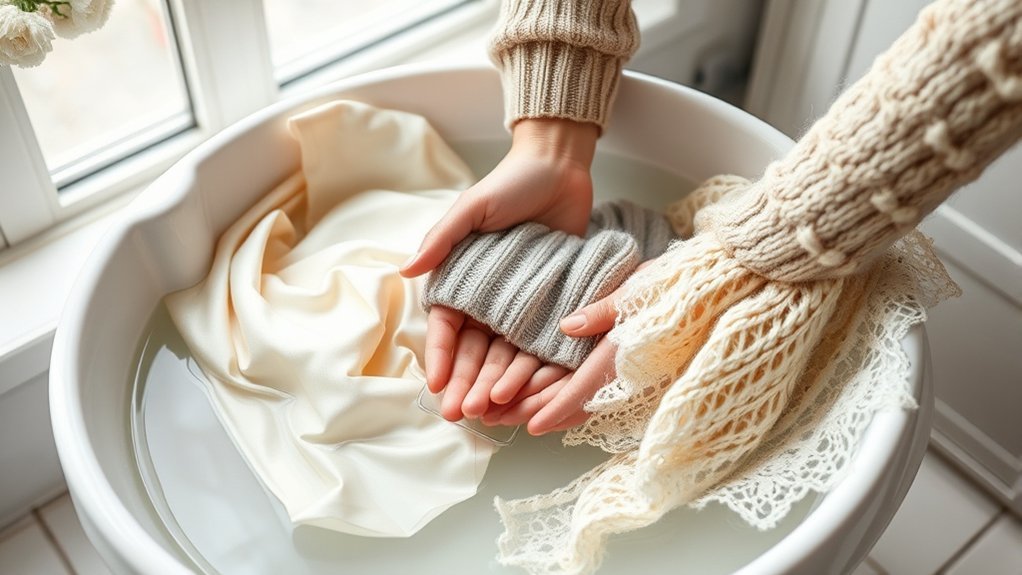
Hand wash silk only when the care label permits it and the colorfastness test is successful. Use cool or label-approved water with a mild detergent suitable for washable silk. Move it gently and do not rub one section against another because friction can cause color loss or surface damage.
Rinse promptly, support the fabric when lifting it, and roll it in a clean towel. Reshape it without pulling. Dry it flat or hang it only when its cut and label permit hanging. Keep it away from direct sunlight and high heat.
Wool and Cashmere
If the label says hand wash, turn the garment inside out and use a mild wool detergent. Woolmark’s wool hand-washing method uses clean lukewarm water at about 30°C, a gentle 10-minute soak, a lukewarm rinse, and a final cold rinse.
Do not scrub or create heavy agitation, which can encourage felting. Press out water, roll the item in a towel, reshape it, and dry it flat unless the care label permits another method.
Lace
Inspect lace for weak threads, tears, loose edging, yellowed elastic, beads, hooks, and glued decorations. Place small washable pieces in a fine mesh bag if they need extra support. Use cool or lukewarm water as directed and a mild detergent.
Press lace gently through the water instead of scrubbing it. Avoid a fixed 30-minute soak; older, colored, or fragile lace should spend as little time wet as practical. Support the full piece during rinsing and lay it flat in the correct pattern to dry.
Viscose or Rayon
Follow the label closely because viscose garments vary in construction and finish. Conventional rayon can lose strength while wet, so do not lift it by one edge, rub it, wring it, or hang a heavy wet garment by its shoulders. The University of Georgia Extension fiber guide recommends careful handling during laundering.
If hand washing is permitted, use cool water, minimal movement, and a suitable detergent. Roll the garment in a towel and dry it flat or according to the label. Reshape it before it dries.
Nylon, Spandex, and Stretch Fabrics
Nylon and spandex are not automatically hand-wash-only fibers. Many garments containing them can use a gentle machine cycle. Hand washing may be useful for hosiery, lingerie, swimwear, and delicate stretch garments when the label permits it.
Avoid hot water, high dryer heat, chlorine bleach unless specifically allowed, and rough wringing. Wash promptly after exposure to perspiration, salt water, chlorine, lotion, or body oils when the garment instructions recommend it.
Fine Cotton
Ordinary cotton shirts, towels, and bedding usually do not require hand washing. Use hand washing for fine cotton knits, embroidery, lace trim, delicate stitching, unstable colors, or heirloom-style pieces only when they are washable.
Support fine knits while wet and dry them flat if hanging could stretch them. Vintage or historically important cotton should be assessed by a textile conservator rather than treated as ordinary laundry.
Treat Stains on Delicate Fabrics Safely
Identify the stain before applying a cleaner. A product that removes oil may not be suitable for protein stains, dyes, silk, wool, or decorative finishes.
- Blot liquids with a clean white cloth.
- Work from the outside edge of the stain toward the center.
- Do not rub silk, lace, viscose, or loosely knitted fabric.
- Do not use hot water on an unknown stain.
- Test detergent and stain remover in a hidden area.
- Avoid household remedies that combine acids, alkalis, bleach, ammonia, or solvents.
- Do not dry or iron the item until the stain is gone because heat may make some stains harder to remove.
Warning: Never mix chlorine bleach with ammonia, vinegar, acids, or other household cleaners. Do not use solvent-based spot cleaners unless the garment and product instructions specifically allow them.
What Should You Not Hand Wash?
Avoid home immersion when an item has any of these features:
- A “Do not wash” or “Dry clean only” instruction
- Leather, suede, fur, or non-washable feather trim
- Structured tailoring, shoulder pads, canvas interlining, or molded cups that may distort
- Glued sequins, rhinestones, patches, coatings, or laminated layers
- Unstable dyes that transfer during testing
- Metallic trim that may tarnish or stain the fabric
- Large tears, weak seams, shattered silk, or brittle fibers
- Antique, collectible, sentimental, or irreplaceable textiles
- A heavy item that cannot be safely supported when saturated
When the label is missing, identify the fiber, lining, trim, and construction before washing. A professional cleaner or textile conservator is safer than experimenting on a valuable garment.
Troubleshoot Common Hand-Washing Problems
The Rinse Water Is Strongly Colored
Some light dye release can occur, but heavy or continuing color loss is a warning. Remove the item promptly, rinse it separately in cool water, and do not place it against lighter fabric. Avoid home remedies intended to “set” unknown dyes.
The Garment Feels Stiff
Detergent residue is a common cause. Rinse again in clean water without adding more product. Do not assume conditioner is required.
The Item Stretched
Support it on a flat towel, gently return it toward its original measurements, and let it dry flat. Do not use high heat to force shrinkage. Severe stretching may not be reversible.
The Wool Began to Felt
Stop rubbing and changing the water temperature. Rinse gently, press out moisture, and reshape the item. Once wool is severely felted, full restoration is unlikely.
A Water Ring Appeared
A ring can form when only one section is wet or when a stain product leaves residue. If the label permits washing and the dye is stable, washing the complete garment may even out the area. Otherwise, consult a professional cleaner.
The Garment Smells Musty After Drying
It probably dried too slowly or was stored while damp. Rewash it only if the label permits, remove more water with towels, increase airflow, and allow it to dry fully before storage.
Frequently Asked Questions
What are the seven steps of hand-washing clothes?
Prepare the garment, test and treat stains, fill the basin at the label-approved temperature, dissolve the detergent, wash with minimal movement, rinse thoroughly, and press out water before reshaping and drying.
How often do Japanese households do laundry?
There is no single schedule followed by every Japanese household. Laundry frequency varies with household size, season, clothing habits, available space, weather, and appliance access. The garment’s soil level and care label are more useful than a national habit when deciding whether to wash a delicate item.
Can handwashing prevent the flu?
Washing your hands with soap can help reduce the spread of germs, including germs that cause respiratory illnesses. Hand-washing clothing is a different activity and is not a substitute for clean hands, vaccination, respiratory hygiene, cleaner air, or other flu precautions recommended by the Centers for Disease Control and Prevention.
Can you hand wash viscose?
Yes, but only when the care label permits hand washing. Use cool water, minimal agitation, and a suitable detergent. Support the garment while it is wet, never wring it, reshape it promptly, and dry it according to the label.
Can you hand wash a dry-clean-only garment?
You should not hand wash an item labeled “Dry clean only.” The restriction may relate to its dyes, lining, interfacing, structure, adhesives, finish, or decoration. Washing it successfully once does not prove that the method is safe or repeatable.
Can hand-washed delicates go in a dryer?
Only when the drying instructions permit tumble drying. A hand-wash symbol does not automatically prohibit a dryer, but many knits, wool garments, stretch fabrics, lace pieces, and viscose garments need flat or low-heat drying. Follow the complete label.
Conclusion
Safe hand washing starts with the complete care label. Confirm that the garment is washable, test its color, choose detergent suited to the fiber, and use only gentle movement. Support the item while it is wet, rinse out all detergent, press out water with towels, and reshape it before drying.
Do not experiment with dry-clean-only clothing, unstable dyes, structured tailoring, glued decorations, or irreplaceable textiles. When the construction or label leaves you uncertain, professional care is safer than risking permanent shrinkage, bleeding, felting, or distortion.
Sources
- Federal Trade Commission — Clothes Captioning — U.S. care-label requirements and washing or professional-cleaning instructions.
- GINETEX — Care Symbols Under ISO 3758:2023 — Meanings of washing, bleaching, drying, ironing, and professional-care symbols.
- American Cleaning Institute — Tips for Delicates and Hand Washing — Colorfastness testing, silk handling, towel pressing, and drying guidance.
- Woolmark — How to Wash Wool — Water temperature, soaking, rinsing, and drying instructions for washable wool.
- Woolmark — Choosing Wool Detergent — Mild detergent, enzyme, bleach, and conditioner guidance.
- University of Georgia Extension — Understand Your Fibers — Care characteristics of silk, wool, rayon, nylon, spandex, and other fibers.
