
Last Updated on July 27, 2026 by Daniel Globe
Winter hiking can be quiet, beautiful, and far less forgiving than hiking in mild weather. The right clothing needs to do three jobs at once: manage sweat, hold enough warmth for the conditions, and block wind, snow, and rain. Your pack also needs a few winter-specific items in case the temperature drops, the trail ices over, or your trip takes longer than planned.
Quick Answer
For winter hiking, wear a moisture-managing base layer, an insulating mid layer, and a windproof or waterproof outer shell. Add warm socks, waterproof boots, gloves, a hat, and weather-appropriate pants. Carry traction, navigation, a headlamp, extra dry clothing, food, water, first aid supplies, and emergency shelter.
Key Takeaways
- Dress in adjustable layers so you can vent heat before sweat soaks your clothing.
- Choose wool or suitable synthetic base layers instead of cotton for cold, wet conditions.
- Wear waterproof hiking boots with enough room for warm socks without restricting circulation.
- Carry traction devices when snow or ice may be present, even if the trailhead looks clear.
- Pack extra dry clothing, food, water, navigation, a headlamp, first aid supplies, and emergency shelter.
- Check weather, trail, and avalanche conditions before leaving, and be willing to turn around early.
Insulated Waterproof Boots
When venturing into cold and wet environments, insulated waterproof boots help keep your feet warm, dry, and protected. A winter hiking boot should match the temperature, snow depth, trail surface, and length of your trip rather than simply having the most insulation available.
Waterproof footwear commonly uses a membrane or other barrier to prevent outside moisture from reaching your socks while still allowing some moisture vapor to escape. Technologies such as GORE-TEX are designed for waterproof, windproof, and breathable protection. No membrane can compensate for sweat-soaked socks, however, so moisture management still matters.
Look for a secure heel, enough toe room to wiggle your toes, a supportive midsole, a protective toe cap, and an outsole designed for winter surfaces. Thick socks should not make the boot so tight that they reduce circulation.
An older example is the Salomon X Ultra Winter CS WP 2, which combined waterproof protection, insulation, a protective upper, and a Contagrip outsole. It remains a useful example of the features found in a winter hiking boot, but it should be treated as a legacy model rather than a current shopping recommendation.
Pro Tip: Try winter boots with the socks you actually plan to hike in. Your toes should have room to move, but your heel should not slide excessively when you walk uphill.
Products Worth Considering
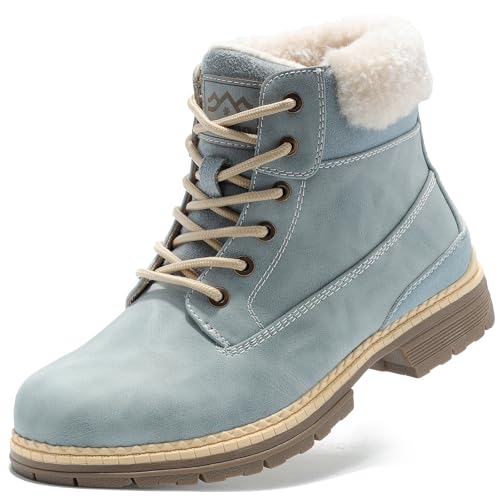
CLASSIC DESIGN: Premium synthetic leather with fashion plaid pattern fabric, classic double color lace with antique brass metal eyelet, padded collar lets this boots never out of time.

WATERPROOF: The boots are made from waterproof mesh upper and XPETI-DRY Membrane waterproof.Moisture-wicking mesh lining. Keeps your feet dry and warm during walks through mud and snow.
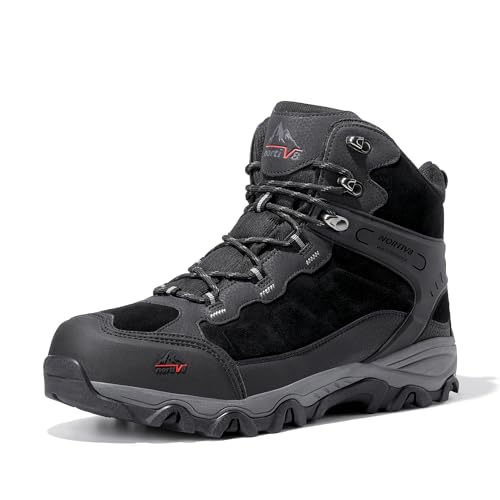
Waterproof Build: These men’s hiking boots feature a waterproof membrane construction that keeps your feet dry when trudging through any mud or water.
Thermal Base Layers
Thermal base layers form the first part of an effective cold-weather clothing system. Their main job is to move moisture away from your skin while providing light insulation. Merino wool and suitable synthetic fabrics such as polyester or polypropylene are common choices.
The Occupational Safety and Health Administration’s cold-stress guidance recommends an inner layer made from wool, silk, or synthetic material, an insulating middle layer, and an outer layer that protects against wind and rain. OSHA also cautions that cotton loses much of its insulating value when wet.
Choose base-layer weight according to your activity and conditions. A lightweight or midweight layer may work well during a steep, active hike because it releases heat more easily. Heavier thermal underwear can make sense for slow travel, long stops, or very cold conditions.
Fit also matters. A base layer should sit close enough to the body to manage moisture without being so tight that it restricts movement or circulation.
Insulating Mid Layer
The original clothing list jumps directly from a base layer to a weatherproof jacket, but most winter hikers also need an insulating mid layer. Fleece, synthetic insulated jackets, wool garments, and down jackets all have different strengths.
- Fleece: Breathes well during active hiking and continues to insulate when damp.
- Synthetic insulation: Works well in variable or damp conditions and generally handles moisture better than untreated down.
- Down: Provides excellent warmth for its weight and is especially useful during breaks, but it needs protection from significant moisture.
Instead of wearing every layer from the trailhead, adjust insulation as you move. Add warmth during stops and remove or vent a layer before you begin sweating heavily.
Pro Tip: Starting a hike feeling slightly cool is often more comfortable than starting fully bundled and soaking your base layer with sweat during the first climb.
Windproof and Waterproof Jacket

A windproof and waterproof jacket protects your insulating layers from wind, rain, and wet snow. A good shell should keep outside moisture out while allowing enough ventilation to prevent excessive condensation and overheating.
Many shells use a waterproof-breathable membrane plus a durable water-repellent treatment on the face fabric. GORE-TEX and eVent are examples of waterproof-breathable technologies, but they are not the only systems available.
The Patagonia Torrentshell 3L, for example, uses Patagonia’s H2No Performance Standard rather than GORE-TEX. Its current construction includes a three-layer waterproof shell and a DWR finish made without intentionally added PFAS.
Useful winter-hiking features include an adjustable hood, pit zips or other ventilation, cuffs that seal around gloves, pockets that remain usable with a backpack, and enough room underneath for your insulating layer. A slightly longer hem can also improve coverage when bending or wearing a pack.
Products Worth Considering

【WATERPROOF & BREATHABLE】33,000ft men's softshell jacket with hood features 3-layered material with outer soft shell, TPU membrane mid-layer and inner fleece lining to provide strong protection against the elements. Outer shell with DWR finish resists water, dirt and oil to keep you dry and clean. (8000MM fabric waterproofness rating, 1000G/M2/24hr fabric breathability rating)

WATERPROOF & BREATHABLE - The midweight Windbreaker outshell with Durable Water Repellent Finish to resist water, dirt and oil, always keep you dry and clean. (Waterproof Index: 10000mm, Permeability Index: 3000g/m^2/24Hr) 3D three-dimensional rim hood prevent the wind and rain into the garment, easy to hide and expand, it can be stored as a stand-up collar. AXILLARY VENTILATION SYSTEM with zipper to keep dry and comfortable and windproof through evaporation of moisture under your arm

【WATERPROOF & BREATHABLE】33,000ft men's softshell jacket with hood features 3-layered material with outer soft shell, TPU membrane mid-layer and inner fleece lining to provide strong protection against the elements. Outer shell with DWR finish resists water, dirt and oil to keep you dry and clean. (8000MM fabric waterproofness rating, 1000G/M2/24hr fabric breathability rating)
Winter Hiking Pants and Lower-Body Layers
Your legs need the same basic moisture, insulation, and weather protection as your torso, although many hikers can use fewer layers on their legs because walking generates considerable heat.
In moderate winter conditions, a synthetic or merino base layer under weather-resistant hiking pants may be enough. In colder, windier, or wetter weather, add insulated pants or waterproof shell pants. Full-length side zips or ventilation openings can make temperature control easier during climbs.
Avoid relying on ordinary cotton jeans in cold, wet conditions. Once saturated, cotton dries slowly and loses much of its insulating ability.
Wool Socks
| Sock Weight | Best Use | Fit Consideration |
|---|---|---|
| Lightweight | Active hiking in milder winter weather | Works well in closer-fitting boots when heavy insulation is unnecessary |
| Midweight | General winter hiking and snowshoeing | Balances cushioning, warmth, and moisture control |
| Heavyweight | Very cold conditions or low-activity use | Boot must have enough volume to prevent compression and restricted circulation |
Wool socks are popular in cold-weather gear because wool retains useful insulating ability when damp and can move moisture away from the skin. Merino wool is softer than many traditional wools and is commonly blended with synthetic fibers to improve durability and stretch.
Many hiking socks also include cushioning and reinforced heels and toes. Brands such as Darn Tough and Smartwool sell different weights for hiking, skiing, and cold-weather use, but the correct thickness depends more on your boot fit and conditions than on a specific brand.
Do not automatically choose the thickest sock available. A sock that compresses your foot inside a tight boot can reduce comfort and circulation. Carrying a spare dry pair is often more useful than wearing two excessively thick pairs at once.
Insulated Gloves
Your hands can cool quickly in wind, snow, and freezing temperatures, so winter hiking gloves need to balance warmth, weather protection, and dexterity. Some hikers use a thin liner glove for fine tasks and a warmer waterproof glove or mitten over it.
Insulated gloves commonly use fleece or synthetic insulation beneath a water-resistant or waterproof shell. Long cuffs are useful in deep snow because they help keep snow from entering around the wrist.
The current Black Diamond Guide Gloves are an example of a heavy winter glove with a waterproof GORE-TEX insert, removable insulated liner, leather palm, and long gauntlet-style cuff. A glove this warm can be more than necessary for mild, high-output hiking, so choose warmth according to the conditions and your own circulation.
Gloves should be secure without squeezing your fingers. If you regularly lose dexterity or your fingers become numb despite appropriate gloves, stop and warm your hands rather than simply continuing.
Fleece or Insulated Hat
A fleece or insulated hat protects exposed skin and reduces heat loss from the head and ears. The goal is not to trap a mythical fixed percentage of body heat in your head; it is simply to keep exposed areas covered as part of the whole-body layering system.
Fleece hats are lightweight, breathable, and easy to pack. Wool beanies are another good option. In strong wind, a hat with a wind-resistant outer fabric or an insulated hood can provide more protection.
Also consider a neck gaiter, buff, or balaclava when wind chill is severe. Covering the cheeks, nose, and neck reduces exposed skin and can make a large difference in comfort.
Gaiters
Gaiters are protective coverings worn over the lower legs and the tops of boots. Their main job is to keep snow, mud, water, and trail debris from entering your footwear. They are especially useful in deep snow, slush, muddy shoulder seasons, and when snowshoeing.
Gaiters should fit securely around the boot without interfering with walking. Taller designs give more coverage in deep snow, while shorter gaiters can be lighter and less restrictive in milder conditions.
The current Outdoor Research Crocodile Gaiter uses waterproof GORE-TEX 3L fabric with an abrasion-resistant lower section. It is designed as a waterproof and protective barrier rather than as a substitute for an insulating sock or boot.
Traction Devices for Snow and Ice
Waterproof boots alone do not provide dependable traction on every icy surface. The National Park Service recommends over-the-shoe traction devices when walking on ice and snow.
- Traction cleats or microspike-style devices: Useful on packed snow and many icy hiking trails.
- Snowshoes: Better when soft or deep snow makes you sink with each step.
- Crampons: Intended for steeper or more technical snow and ice. They require appropriate footwear, conditions, and skills and should not be treated as ordinary trail cleats.
Note: Pack traction based on the worst surface you reasonably expect, not just what you see at the trailhead. Shaded sections and higher elevations can remain icy when lower trails look bare.
Products Worth Considering
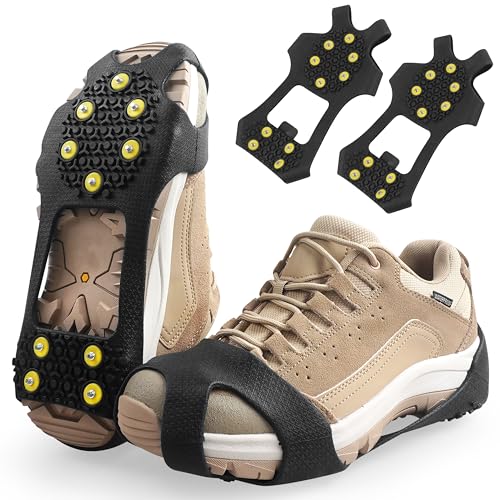
SIZE: S【Women(4-5.5)/Men(2.5-4)】,M【Women(6-8)/Men(4.5-6.5)】, L【Women(8.5-11)/Men(7-9.5)】, XL【Women(11.5-14)/Men(10-12.5)】, XXL【Women(14.5-17)/Men(13-15.5)】
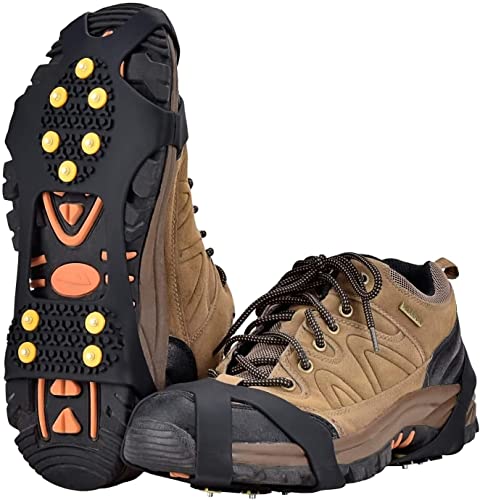
SIZE: M [5.7*8.5 inch (US WOMEN:7-10/ US MEN:5-8, UK Size 4-7, EUR Size 35-39)] **Fit for Men/Women ,prevent slipping on snow and ice conditions,Anti Slip Crampons Slip-on Stretch Footwear

GRIPS ON SLIPPERY SURFACES: Walk confidently with these slip-on traction cleats designed to evenly distribute underfoot traction across ice- and snow-covered surfaces, as to provide stability on rocky terrain.
Trekking Poles
Trekking poles can improve balance on uneven snow and ice and provide extra support on steep climbs and descents. Winter baskets also help keep pole tips from sinking deeply into soft snow.
When choosing poles, consider adjustability, grip comfort, locking mechanism, basket compatibility, and durability. Aluminum poles are often heavier but tolerate hard impacts well, while carbon-fiber models can reduce weight.
The Black Diamond Trail Pro Shock poles mentioned in the original article illustrate an adjustable, shock-absorbing pole design, but they are now an older model associated with Black Diamond’s 2019 product generation. Treat them as a design example rather than a current buying recommendation.
Poles help with stability, but they do not replace proper traction or careful foot placement on ice.
Emergency Shelter
An emergency shelter belongs in a winter day-hiking kit because an injury, navigation error, sudden storm, or delayed return can leave you outside much longer than planned.
Options include a compact bivy sack, emergency tarp, lightweight tent, or reflective emergency blanket. The National Park Service includes emergency shelter among its Ten Essentials, but these products are not equal: a simple reflective blanket offers far less wind and storm protection than a closed bivy or properly pitched tarp.
The SOL Emergency Bivvy mentioned in the original article is an example of a compact reflective bivy intended to reduce heat loss and provide an emergency barrier. Whatever model you carry, learn how to use it before an emergency.
Headlamp or Flashlight
A headlamp is useful even when you expect to finish before sunset. Winter daylight is short, hiking through snow can take longer than expected, and delays caused by route finding or changing conditions can push a day hike into darkness.
Look at brightness, beam pattern, runtime, cold-weather battery performance, weight, and water resistance. Carry spare batteries or a backup power option appropriate for your light.
The current Petzl ACTIK CORE is a rechargeable example rated at up to 625 lumens with its CORE battery and IPX4 weather resistance. It also accepts three AAA batteries, which gives users a second power option.
A headlamp is generally more convenient than a handheld flashlight because it leaves both hands free for poles, navigation, or emergency tasks.
Navigation Tools
Winter can make familiar trails difficult to recognize. Snow may cover trail markers, footprints may lead in the wrong direction, and phone service can disappear in remote areas.
Carry a map and compass or another dependable navigation system and know how to use it. A GPS device or smartphone with offline maps can be valuable, but electronics should not be your only plan. Cold temperatures also reduce battery performance, so protect devices from extreme cold and consider carrying a power bank.
The National Park Service specifically warns winter hikers not to rely solely on cell phones and recommends carrying a map, compass, or GPS and knowing how to use them.
Food, Water, and the Rest of the Ten Essentials
Clothing receives most of the attention in a winter hiking gear list, but staying warm also depends on having enough food, water, and emergency equipment.
The National Park Service Ten Essentials guidance includes:
- navigation
- sun protection, including sunglasses and sunscreen
- insulation and weather protection
- headlamp or flashlight
- first aid supplies
- fire-starting equipment
- repair tools
- extra food
- water and water-treatment supplies
- emergency shelter
Winter hikers should also carry extra dry socks, gloves, and clothing. If something becomes soaked by sweat, rain, or snow, changing into a dry layer can significantly reduce further cooling.
Keep food easy to reach so you do not have to unpack your entire bag every time you need energy. Water bottles may need insulation in freezing temperatures. Hydration reservoirs can also freeze at the hose or bite valve, so plan accordingly.
For longer trips where cooking is appropriate and permitted, choosing a reliable stove can also matter. The existing guide to 5 Must-Have Portable Camping Stoves for Your Spring 2025 Adventures covers portable cooking options, although a stove is not required for a typical short winter day hike.
Weather, Turnaround Rules, and Avalanche Safety
Check the weather forecast, trail conditions, park alerts, daylight window, and expected wind before leaving. Conditions at higher elevations can be very different from conditions in town or at the trailhead.
Turn around when the trip is taking much longer than planned, visibility deteriorates, traction becomes inadequate, clothing becomes wet and cannot be dried, or anyone in the group is becoming unusually cold or fatigued. A summit or destination is optional; getting back safely is not.
Warning: Hypothermia can occur even in temperatures above 40°F when a person becomes chilled by rain, sweat, or cold water. Shivering, exhaustion, confusion, fumbling hands, memory loss, slurred speech, and drowsiness are warning signs. Get the person into shelter, remove wet clothing, begin warming them, and seek medical attention.
For routes that enter avalanche terrain, check the local avalanche forecast before leaving. Rescue equipment is not a substitute for education and conservative route selection.
Avalanche.org identifies the avalanche transceiver, probe, and shovel as core backcountry rescue equipment. Each person entering avalanche terrain should carry the appropriate rescue equipment and know how to use it. Formal avalanche education and practice are strongly recommended before traveling in avalanche-prone terrain.
Equipping yourself with appropriate clothing and winter hiking gear improves comfort, but the most important skill is adjusting your plan to the actual conditions. Layer before you become cold, vent before you become soaked in sweat, use traction before footing becomes unsafe, and turn around before a manageable problem becomes an emergency.
Frequently Asked Questions
What should I wear for winter hiking?
Wear a moisture-managing base layer, an insulating mid layer, and a windproof or waterproof outer shell. Add weather-appropriate pants, wool or synthetic hiking socks, waterproof boots, gloves or mittens, a hat, and face or neck protection when conditions require it.
What type of fabric is best for winter hiking clothing?
Merino wool and suitable synthetic materials are strong choices because they manage moisture and retain useful insulation when damp. Avoid relying on cotton in cold, wet conditions because it dries slowly and loses much of its insulating value when saturated.
What kind of footwear is suitable for winter hiking?
Choose waterproof hiking boots with enough insulation for the expected temperature, a supportive fit, and room for winter socks without squeezing your feet. Add gaiters in deep snow and use appropriate over-the-shoe traction when trails are icy.
Do I need to wear a hat and gloves for winter hiking?
Yes, in cold conditions you should protect your head, ears, and hands. Choose gloves or mittens that provide enough warmth without restricting circulation, and carry a spare pair when wet weather or prolonged exposure is possible.
Should I bring extra clothing for winter hiking?
Yes. Carry at least enough spare clothing to replace critical wet items, especially socks, gloves, and an insulating layer. Extra dry clothing is valuable if weather changes, someone is injured, or the group must remain outside longer than expected.
Do I need traction devices for winter hiking?
Carry over-the-shoe traction whenever packed snow or ice may be present. Traction cleats suit many ordinary icy trails, snowshoes help in deep unconsolidated snow, and crampons are intended for steeper or more technical terrain where the user has suitable equipment and skills.
Is cotton okay for winter hiking?
Cotton is a poor choice for core cold-weather layers when getting wet is possible. It absorbs moisture, dries slowly, and loses much of its insulating effectiveness when saturated. Wool and appropriate synthetic fabrics are safer choices for moisture-prone winter conditions.
Sources
- National Park Service — Winter Hiking Tips — winter clothing, traction, footwear, navigation, water, food, and spare clothing.
- National Park Service — Ten Essentials — navigation, illumination, shelter, first aid, fire, repair equipment, food, water, and insulation.
- Centers for Disease Control and Prevention — Preventing Hypothermia — hypothermia risk, warning signs, wet-clothing hazards, and emergency response.
- Occupational Safety and Health Administration — Cold Stress Guide — three-layer clothing systems, fabric choice, waterproof boots, gloves, and spare clothing.
- Avalanche.org — Backcountry Gear — avalanche transceivers, probes, shovels, emergency equipment, and winter travel preparation.
- GORE-TEX — Technology — waterproof, windproof, and breathable membrane technology.
