
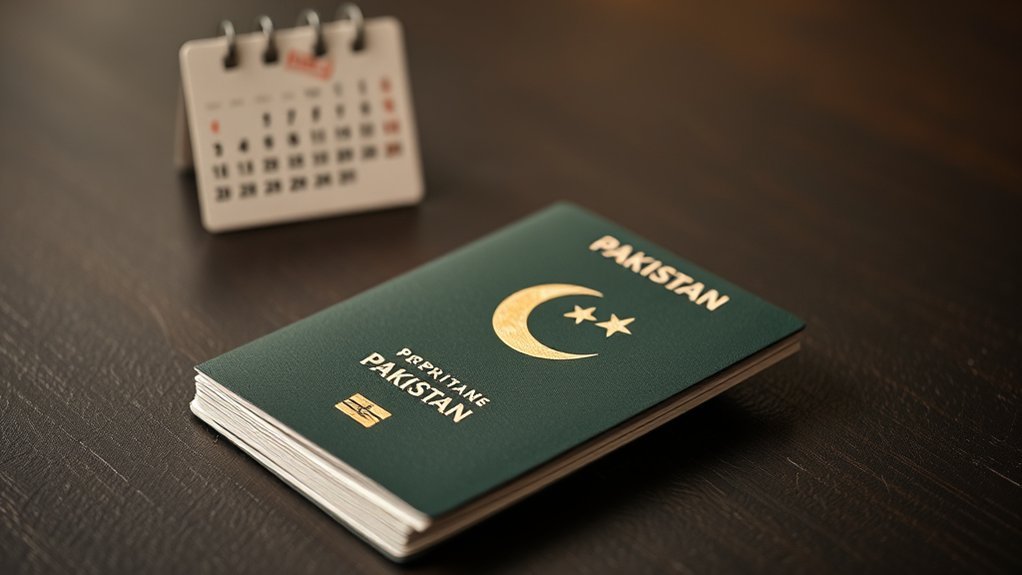
Last Updated on September 11, 2026 by Daniel Globe
Pakistan applies a six-month passport-validity standard to many international travelers, but the exact calculation is not described the same way by every official source. Your nationality, visa category, passport type, transit route, and immigration status can all affect the answer. Check the rule that applies to your documents before paying for nonrefundable travel.
Quick Answer
Most foreign visitors should have at least six months of passport validity when applying for a Pakistani visa and traveling to Pakistan. For U.S. travelers, current State Department guidance says six months beyond arrival. Pakistani citizens and dual nationals may have other document options, but they should not assume an airline will accept a nearly expired passport.
Key Takeaways
- Six months is the safest minimum, but the date from which it is calculated can vary by nationality and visa route.
- Airlines check destination and transit requirements and may refuse boarding when documents do not appear compliant.
- A valid NICOP is different from a CNIC and can allow an eligible dual national to enter Pakistan without a visa when traveling on a valid foreign passport.
- An Emergency Travel Document is generally for a qualifying one-way return to Pakistan, not ordinary round-trip travel.
- The United States does not impose one six-month reentry rule on U.S. citizens and Green Card holders.
Warning: Do not rely only on a travel blog, booking agent, renewal receipt, passport application, CNIC photocopy, or informal embassy email. Confirm your exact passport, visa, and transit requirements with official authorities and your operating airline before departure.
Disclosure: As an Amazon Associate I earn from qualifying purchases. Some links on this page are affiliate links, at no extra cost to you.
Does Pakistan Require 6-Month Passport Validity?
Pakistan generally requires foreign visa applicants to have a passport with at least six months of validity. However, official sources do not always describe the reference date in exactly the same way.
- The U.S. Department of State’s Pakistan guidance currently tells U.S. travelers to have six months of validity beyond their arrival date.
- The UK government’s Pakistan entry guidance says a full British citizen passport should expire at least six months after the date of the visa application.
- Pakistan Ministry of Foreign Affairs e-Visa guidance states that a minimum six-month-valid passport is required for visa processing.
These differences do not mean that one traveler can freely choose the most favorable rule. Each source addresses a particular passport holder, visa process, or travel situation. Use the rule that applies to your nationality and visa category, and satisfy the longest validity period when your itinerary produces more than one requirement.
Six months is a practical minimum, but the correct reference date may be your visa-application date, arrival date, or another date specified for your nationality and itinerary.
How to Calculate the Six-Month Validity Period
First identify the exact date named by the official rule. Do not automatically count from your departure date.
- Identify your passport nationality. Residency in Saudi Arabia, the United States, Canada, or another country does not replace your passport nationality for this check.
- Check your Pakistan visa category. Tourist, family, business, work, student, and other categories may request different supporting records.
- Find the reference date. It may be the visa-application date, intended arrival date, or another date stated by the relevant authority.
- Add six calendar months. Your passport should expire on or after the resulting date.
- Check every transit point. A stricter transit requirement can control the entire itinerary.
- Confirm the result with the operating airline. The operating carrier, not merely the company that sold the ticket, normally performs the document check.
Pro Tip: Take a screenshot or printout of the official rule that matches your nationality and itinerary. It will not override immigration requirements, but it can help you explain your documents if a check-in agent needs to review the case.
Passport Requirements by Traveler Type
| Traveler | Typical document position | Best action |
|---|---|---|
| Foreign visitor | Usually needs a valid passport and an approved visa or other valid travel authorization. | Plan for at least six months and verify the exact reference date. |
| Pakistani citizen using a Pakistani passport | Should travel with a valid Pakistani passport. | Renew before travel when validity is short rather than assuming an exception. |
| Dual national with a valid NICOP | Can generally use a valid foreign passport with a valid NICOP for visa-free entry. | Make sure both the foreign passport and NICOP are valid and match your identity details. |
| Eligible POC holder | May qualify for visa-free travel on a valid foreign passport and valid POC. | Confirm the card’s validity and the airline’s document entry. |
| Pakistani national with no usable passport | May qualify for an Emergency Travel Document in a genuine emergency. | Contact the nearest Pakistan mission before booking and follow its ETD instructions. |
Pakistan Entry Rules for Citizens
Pakistani citizenship does not mean that every expired or short-validity document will be accepted automatically at airline check-in. The safest option is a valid Pakistani passport.
Overseas Pakistanis who are eligible dual nationals may instead travel on a valid foreign passport and a valid National Identity Card for Overseas Pakistanis. NADRA describes NICOP as proof of identity and nationality that allows visa-free entry into Pakistan.
Note: A CNIC and a NICOP are not interchangeable for international boarding. A CNIC photocopy may support a nationality check, but it is not a passport and should not be treated as a substitute for a valid Pakistani passport, valid foreign passport with NICOP, or approved ETD.
If a Pakistani national is abroad without a usable passport, a Pakistan mission may issue an Emergency Travel Document after verifying nationality and the emergency. According to the Directorate General of Immigration and Passports, an ETD is intended for a one-time return to Pakistan. Approval is case-specific and may require an expired passport, NADRA identity record, photographs, police report for a lost passport, proof of emergency, and confirmed travel details.
Transit Countries and Layover Rules
A connection can create an additional passport or visa requirement even when Pakistan is your final destination. The answer depends on your nationality, airport, terminal change, baggage arrangements, and whether you remain airside.
| Transit situation | Why it matters |
|---|---|
| Single ticket with checked-through baggage | You may remain airside, but nationality-specific transit rules can still apply. |
| Separate tickets or self-transfer | You may need to enter the transit country to collect baggage and check in again. |
| Airport or terminal change | The transfer may require immigration clearance or a transit visa. |
| Overnight connection | The secure transit area may close or the itinerary may require entry. |
| Airport transit visa requirement | Some nationalities need a transit visa even without entering the country normally. |
Use the IATA Travel Centre, the transit country’s immigration authority, and the operating airline to check the complete route. Do not rely on a general statement that all airside connections either require or do not require six months of validity.
What Airlines Check Before Boarding

At check-in, airline staff may inspect your passport, visa or Visa Grant Notice, residence permit, NICOP or POC, transit documents, onward ticket, and other records required for the itinerary. Airlines commonly use IATA Timatic or a similar database that matches requirements to the passenger’s nationality and route.
The airline is deciding whether it can carry you. It is not making the final immigration decision. Pakistan immigration officers make the final decision on admission when you arrive.
A carrier may refuse boarding when:
- Your passport does not meet the recorded validity requirement.
- Your visa, NICOP, POC, residence permit, or transit authorization is missing or invalid.
- Your passport details do not match the booking or visa.
- Your itinerary requires a transit visa you do not hold.
- Your documents appear damaged, altered, reported lost, or otherwise unacceptable.
- The carrier cannot verify an unusual exception before departure.
Airlines do not necessarily create a separate six-month rule for every passenger. They enforce the government and route requirements available to them and may decline carriage when they believe the documents are not in order.
Traveling to Pakistan With Short Passport Validity
If your passport has less than six months remaining, do not assume that Pakistani citizenship, residency in another country, a valid ticket, or a previous successful trip will guarantee boarding.
Pakistan’s Passport Validity Rule
Foreign visitors should generally treat six months as the minimum. Check whether the applicable authority calculates it from the visa-application date, arrival date, or another stated date. Travelers from Saudi Arabia or another country should check the rule for the passport they hold, not merely the country in which they live.
Also check blank-page requirements. The U.S. Department of State currently advises U.S. travelers to Pakistan to have two blank passport pages for entry and exit stamps. Travelers holding other passports should check the guidance issued for their nationality.
Airline Boarding Risks
A check-in agent may be unable to accept a short-validity passport when the airline’s document system shows six months as mandatory. A telephone assurance from a call-center agent may not be enough if the airport system gives a different result.
When your case involves a valid NICOP, POC, emergency document, or another unusual record, contact the operating carrier before departure. Ask it to check the complete itinerary and enter any required document information in the reservation.
Renewing Before Departure
Renewal is usually the lowest-risk solution when your passport does not clearly meet the applicable rule. Pakistani citizens can renew before the passport expires; DGI&P states that there is no restriction on early renewal. Online renewal is also available for eligible inland and overseas Pakistanis.
- Check your passport’s expiration date before booking.
- Use the official passport authority for the country that issued your passport.
- Choose urgent or expedited processing only through an authorized channel.
- Update your visa or airline booking if the new passport number must be recorded.
- Carry the old passport when it contains a still-valid visa and the relevant authorities permit that arrangement.
Warning: A renewal application, payment receipt, collection slip, or proof that a new passport is being printed does not normally replace the passport required for international travel.
When to Renew Your Passport Before Travel
Renew before travel whenever your passport will not meet the longest requirement in your itinerary. This includes Pakistan’s rule, transit-country requirements, visa-processing rules, and any document validity needed for your return destination.
Begin the check before buying nonrefundable tickets. Processing times can change because of demand, security reviews, holidays, delivery location, or problems with the application. Use the issuing authority’s current estimate rather than a processing time quoted in an old article.
For a Pakistani passport, review the DGI&P passport and renewal guidance. Overseas Pakistanis may also contact the nearest Pakistan embassy or consulate if they cannot complete the normal online process.
Returning to the US After Your Trip

There is no single six-month passport rule for everyone returning to the United States. The correct documents depend on whether you are a U.S. citizen, lawful permanent resident, visa holder, or another type of traveler.
US Reentry Requirements
U.S. citizens: A U.S. citizen returning by international air travel must present a valid, unexpired U.S. passport. The United States does not require the passport to have six months remaining merely for the citizen’s reentry. If the passport expires abroad, contact the nearest U.S. embassy or consulate for a replacement or emergency passport.
Lawful permanent residents: A Green Card holder normally presents a valid Permanent Resident Card or an appropriate reentry document. U.S. Customs and Border Protection states that LPR travel documents do not need a particular amount of remaining validity and that the Green Card generally needs to be valid on the entry date. An airline or another country may still require a passport for the journey.
Nonimmigrant visa holders: A traveler using a U.S. visa generally needs a valid passport, valid visa, and any status-specific documents. U.S. visa guidance commonly requires the passport to remain valid for six months beyond the intended stay unless a country-specific agreement provides an exemption.
Airline Boarding Checks
The airline checks whether you have the documents needed to travel from Pakistan, pass through any transit country, and seek admission to the United States. The U.S. document may be valid even when a separate transit requirement causes a problem.
For example, a Green Card may satisfy the central U.S. reentry requirement, while the operating airline may still ask for a passport because of the departure or transit route. Check the full itinerary rather than focusing only on the final U.S. arrival.
Renew Before Return
Renew before leaving for Pakistan when your passport will expire during the trip or will fail a Pakistan, transit, visa, or airline requirement. Do not renew solely because the article’s old version claimed that every traveler needs six months to reenter the United States.
- U.S. citizens should keep their U.S. passport valid through the return flight.
- Permanent residents should check their Green Card or reentry document and the duration of the trip abroad.
- Visa holders should check their passport, visa, I-94-related status, and any category-specific records.
- Travelers with a pending U.S. immigration application should confirm whether advance parole or another document is required before departure.
Documents to Carry for Boarding
Your required documents depend on your nationality and reason for travel. Keep the originals in your hand luggage and store secure backup copies separately.
| Document | Who may need it | Purpose |
|---|---|---|
| Valid passport | All international travelers | Confirms identity, nationality, and document validity. |
| Pakistan Visa Grant Notice | Foreign travelers who require a visa | Shows that Pakistan approved the relevant visa application. |
| Valid NICOP or POC | Eligible overseas Pakistanis or Pakistan-origin travelers | Supports the applicable visa-free entry route when used with a valid passport. |
| Transit visa or residence document | Travelers whose connection requires it | Permits transit or entry during the connection. |
| Return or onward itinerary | Visitors when requested | Shows intended departure and complete routing. |
| Invitation, hotel, work, study, or sponsor records | Travelers whose visa category requires them | Supports the stated purpose and conditions of the visit. |
| U.S. passport, Green Card, visa, or reentry document | Travelers returning to the United States | Supports boarding and the request for U.S. admission. |
A printed backup is useful when a phone loses power or airport staff need to inspect a full document. However, a printout does not turn an invalid, expired, or unofficial document into an acceptable travel record.
Embassy Help for Urgent Travel
If your Pakistani passport is expiring soon, expired, damaged, or lost, contact the nearest Pakistan embassy or consulate. Depending on your situation, it may provide normal passport renewal, urgent processing information, document verification, or an Emergency Travel Document.
An ETD is generally reserved for Pakistani nationals who need to return to Pakistan in a genuine emergency and do not have an available passport. Requirements vary by mission and may include:
- Proof of Pakistani nationality
- An expired passport, CNIC, NICOP, Form B, or family registration record
- A police report for a lost passport
- Recent photographs
- Proof of the emergency
- A confirmed one-way itinerary
- Additional verification requested by the mission
Do not assume that an informal permission letter will override airline, transit, or immigration rules. Obtain the actual passport, NICOP-based travel arrangement, visa, or ETD required for your case before going to the airport.
Sources
- U.S. Department of State: Pakistan travel requirements — passport validity, blank pages, visas, NICOP, and POC guidance for U.S. travelers.
- UK Foreign, Commonwealth & Development Office: Pakistan entry requirements — current guidance for full British citizen passports.
- Pakistan Ministry of Foreign Affairs: e-Visa guidance — minimum passport validity for visa processing and official online visa instructions.
- International Air Transport Association Travel Centre — personalized passport, visa, health, and transit requirements used by the airline industry.
- Pakistan Directorate General of Immigration & Passports — early passport renewal, overseas renewal, lost-passport, and emergency-document guidance.
- U.S. Customs and Border Protection guidance for U.S. citizens and CBP guidance for lawful permanent residents — documents needed for return to the United States.
Frequently Asked Questions
Does Pakistan require six months of passport validity?
Pakistan generally applies a six-month minimum to foreign visa applicants and many visitors. The date used for the calculation can depend on your nationality and visa route. U.S. guidance currently says six months beyond arrival, while UK guidance refers to six months after the visa-application date.
Is six-month passport validity mandatory for every traveler?
No single statement covers every passport holder. Foreign visitors should normally plan for six months, while Pakistani citizens, dual nationals with NICOPs, POC holders, and emergency travelers may use different document routes. Each document must still satisfy the airline and authorities involved.
How strict is Pakistan’s six-month passport rule?
Treat it as strict unless an official source confirms that a different rule applies to your passport and travel documents. Airlines may refuse boarding when their document system shows that your passport does not meet the applicable requirement.
Is there a new passport rule in Pakistan?
No authoritative source reviewed for this article identified a new universal rule replacing the established six-month standard. What often causes confusion is that official sources describe the six-month reference date differently for different passport holders and visa processes.
Can a Pakistani citizen travel with an expiring passport?
Do not assume the airline will accept it. Use a valid Pakistani passport where possible. An eligible dual national may be able to use a valid foreign passport with a valid NICOP, while a Pakistani national facing a genuine emergency may apply for a one-time ETD.
Can I use a CNIC instead of a Pakistani passport?
A CNIC is not a normal international travel document. A valid NICOP has a separate legal function and may allow visa-free entry when an eligible traveler uses it with a valid foreign passport. Do not rely on a CNIC or photocopy alone for boarding.
Do I need six months on my passport to return to the United States?
Not in every case. A U.S. citizen returning by air needs a valid U.S. passport, but there is no six-month U.S. reentry rule for that citizen. Green Card holders follow permanent-resident document rules. U.S. visa holders may be subject to a six-month-beyond-stay rule unless an exemption applies.
Conclusion
Six months is the safest passport-validity baseline for most foreign travelers going to Pakistan, but it should not be repeated as one universal formula. Check the rule for your nationality, visa category, transit route, and return status. Renew when your passport does not clearly qualify, and use only a valid passport, NICOP-based route, approved visa, or authorized ETD that applies to your case.
Complete this check before purchasing nonrefundable travel. Official requirements and airline systems can change, so verify the itinerary again shortly before departure and keep all required original documents accessible at check-in.
