

Last Updated on July 25, 2026 by Daniel Globe
“Hotel California” became one of the Eagles’ defining recordings because it pairs an inviting, cinematic story with a warning about ambition, pleasure, and success. The title track first appeared on the band’s 1976 album and was later released as a single. Its mysterious hotel is best understood as a flexible metaphor rather than a confirmed real destination.
Quick Answer
“Hotel California” is the Eagles’ allegory about entering a glamorous world of fame, wealth, pleasure, and possibility, then discovering its hidden costs. Don Henley described it as a journey from innocence to experience and an examination of the darker side of the American Dream, especially excess, narcissism, and the music business.
Key Takeaways
- The song explores the attraction and hidden cost of fame, luxury, pleasure, and material success.
- Don Felder created the instrumental foundation; Don Henley and Glenn Frey developed the lyrics and central concept.
- The hotel can represent the music business, Los Angeles celebrity culture, the American Dream, or any seductive situation that becomes difficult to escape.
- No single real hotel has been confirmed as the literal setting, although the Beverly Hills Hotel appears on the album cover.
- The recording won the 1978 Grammy Award for Record of the Year, not two Grammy Awards.
What Inspired “Hotel California”?
The song grew from the Eagles’ experiences with the promise and pressure surrounding success in Southern California. Band members had arrived in Los Angeles from different parts of the United States and encountered a world that could appear glamorous, free, and full of opportunity while also encouraging excess and isolation.
Guitarist Don Felder originated the musical foundation. In a Roland interview, Felder explained that he recorded a group of instrumental ideas on a home four-track machine and gave the demos to the band. Don Henley was drawn to the track that had an unusual Latin and reggae-influenced feel.
The early demo was informally described as “Mexican Reggae.” Henley and Glenn Frey then worked on the vocal melody, lyrics, characters, and broader concept. This division of labor explains the song’s official writing credit to Don Felder, Don Henley, and Glenn Frey.
Album and Single Release Timeline
“Hotel California” was the opening track on the Eagles’ 1976 album of the same name. The song was later issued as a single and became a major hit. Keeping the two releases separate avoids the common mistake of treating the album release and single release as the same event.
The Dark Side of the American Dream
At its center, the song contrasts the promise of success with the loss of freedom that can follow it. The traveler is initially drawn toward light, comfort, beauty, and hospitality. As the story develops, those attractive details begin to feel controlled, artificial, and threatening.
Don Henley gave the clearest explanation of the band’s intent in a CBS News interview. He described the song as a journey from innocence to experience and said it concerned America, the darker side of the American Dream, excess, narcissism, and the music business.
The song’s central tension is simple: the same world that promises freedom, pleasure, and success can gradually take away a person’s control.
This explanation does not reduce the song to one rigid meaning. The hotel can represent the recording industry, celebrity culture, addiction, consumerism, a destructive relationship, or any attractive environment that becomes difficult to leave.
Deciphering the Allegorical Meaning of “Hotel California”
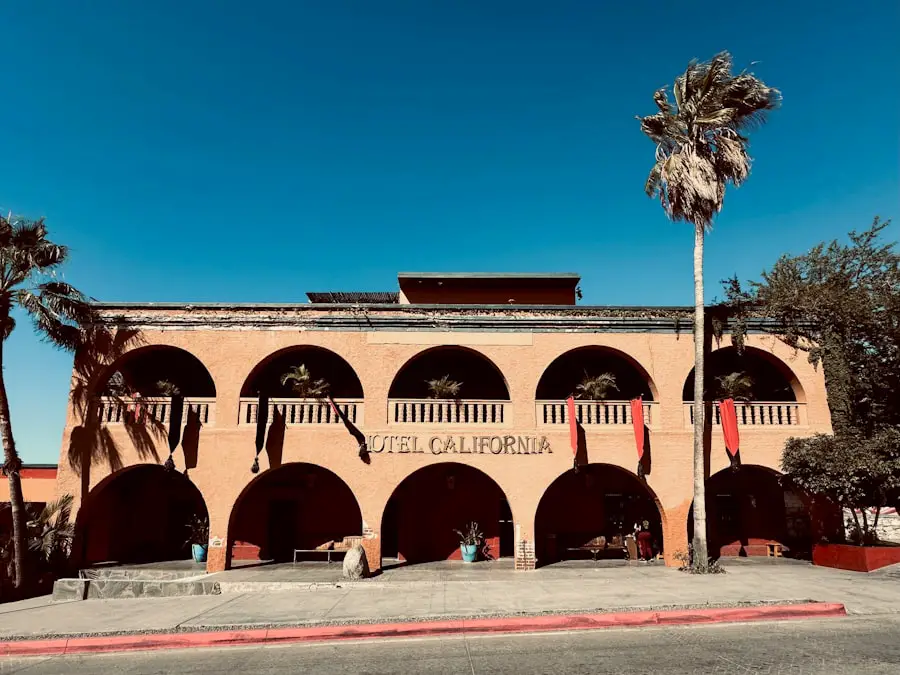
The narrative works as an allegory because ordinary travel details gradually take on symbolic meaning. A road, a distant light, a luxurious building, elegant guests, and a feast create the surface story. Beneath that story is a movement from curiosity to temptation, confusion, and entrapment.
| Image or Idea | Possible Meaning |
|---|---|
| The nighttime journey | Entering an unfamiliar stage of life without fully understanding where it will lead. |
| The inviting hotel | Fame, wealth, pleasure, or another opportunity that appears welcoming and safe. |
| Luxury and celebration | The rewards of success and the social pressure to keep consuming, performing, and participating. |
| Mirrors and artificial beauty | Self-image, narcissism, appearance, and a world in which presentation matters more than reality. |
| The inability to escape | The lasting consequences of choices, habits, contracts, ambition, or dependence. |
The meaning remains powerful because readers can apply the progression to different experiences. The story does not need to identify one building or one vice. Its strength comes from showing how temptation can become confinement.
Is Hotel California a Real Place?
No single hotel has been confirmed by the credited writers as the literal location in the song. The narrative hotel is fictional or symbolic, and the lyrics do not give readers a verifiable address.
The album artwork creates understandable confusion because its front cover shows a real property. The distant building is the Beverly Hills Hotel, photographed from Sunset Boulevard. A Los Angeles Times account identifies the hotel exterior as the basis of the famous cover image.
Note: The real building shown on the album cover should not be treated as proof that the song’s events take place there. The cover establishes a California mood; the lyrics create a separate symbolic setting.
The Allure of Excess and Hedonism
“Hotel California” presents luxury as attractive before revealing its emotional and moral cost. The characters appear surrounded by comfort, beauty, celebration, and abundance, yet they do not seem fulfilled or free.
| Theme | How the Song Develops It |
| Materialism | Beautiful surroundings and expensive pleasures suggest that possessions and status can create happiness. |
| Hedonism | The constant pursuit of pleasure becomes repetitive and disconnected from genuine satisfaction. |
| Fame | Recognition opens doors but also creates expectations, pressure, and dependence on the surrounding system. |
| Loss of Innocence | The traveler begins as an observer but gradually realizes that entering the hotel has changed his position and choices. |
| Entrapment | The final realization suggests that leaving a place physically does not necessarily undo its psychological or practical consequences. |
The song does not argue that all success or pleasure is harmful. Its warning is about losing judgment, identity, or freedom while pursuing them.
The Musical and Lyrical Composition of “Hotel California”
The music supports the story by sounding warm and inviting before growing more intense. The 12-string guitar opening creates a spacious, almost dreamlike entrance. The arrangement then adds rhythm, vocal harmonies, electric-guitar lines, and a long instrumental ending.
Producer Bill Szymczyk and the band developed the recording through sessions in Miami and Los Angeles. A detailed Sound on Sound account explains how Felder’s home demo supplied the foundation and how the band refined the arrangement in the studio.
The closing guitar passage is a major part of the song’s identity. Don Felder and Joe Walsh exchange phrases before their parts join in harmony. Instead of offering a short ending after the final vocal section, the recording allows the guitars to extend and complete the emotional arc.
Pro Tip: Listen once for the story and a second time for the arrangement. Notice how the open, welcoming guitar texture gradually becomes denser and more dramatic as the traveler understands the hotel’s true nature.
The Impact of “Hotel California” Across Generations

The song continues to reach listeners who were not alive when it was recorded because its central conflict is not limited to the 1970s. People still encounter attractive systems that promise status, belonging, entertainment, or financial success while demanding more time, attention, and personal freedom than expected.
Older listeners may connect the song to the Los Angeles music scene and celebrity culture of its original period. Newer listeners can apply the same story to consumer culture, online status, unhealthy work environments, compulsive behavior, or relationships that become hard to leave.
These modern readings are interpretations rather than additional claims about the writers’ original intent. They demonstrate why the song’s deliberately open symbolism has remained useful.
“Hotel California” in Music History
The recording’s reputation rests on both its writing and measurable achievements. The official Grammy record confirms that “Hotel California” won Record of the Year at the 1978 Grammy Awards.
The original article’s statement that the song won two Grammys was incorrect. Other Eagles recordings received recognition during the period, but the title track’s verified award at that ceremony was Record of the Year.
The album has also continued to reach major commercial milestones. In January 2026, the Eagles announced that Hotel California had been re-certified 28-times platinum in the United States, maintaining its position among the country’s highest-certified albums.
The Eagles’ Interpretation of the American Dream
The song is often described as a criticism of Los Angeles, but Henley’s explanation is broader. He said it was not simply about California; it was about America and the underside of the American Dream.
That distinction matters. California supplies the imagery: desert roads, lights, elegant buildings, glamour, and the entertainment industry. America supplies the larger idea: people are encouraged to pursue freedom, wealth, recognition, and reinvention, but the pursuit can create new forms of dependence.
The band members were writing from experience inside a rapidly expanding music career. Their perspective gave the story specificity without turning it into a literal autobiography.
The Cultural Context of the 1970s
The song emerged after the Eagles had moved from early career uncertainty into major commercial success. Its setting reflects an entertainment culture in which artists, executives, wealthy guests, parties, and professional pressures could exist together.
Rather than presenting the decade as nothing more than a period of hedonism, the song captures a conflict within it. New freedoms and opportunities could be exciting, but the search for endless stimulation or status could also produce isolation and exhaustion.
The hotel therefore operates as a small symbolic world. It contains the promise of reinvention and the fear that a person may lose control of the identity they hoped to create.
Common Myths and Misinterpretations
The Song Identifies a Specific Hotel
The lyrics do not provide enough factual information to identify one property as the setting. Hotels and tourism businesses have been associated with the title, but those associations do not establish the location of the story.
The Album Cover Proves the Setting
The Beverly Hills Hotel appears on the front cover, but cover artwork and narrative setting are not the same thing. The photograph creates the desired mood of beauty, distance, and slight unease.
The Song Has One Secret Occult Meaning
Occult and satanic theories have circulated for years, but they are not the explanation Henley has given. His documented comments emphasize the American Dream, excess, narcissism, the music business, and the movement from innocence to experience.
The Song Is Only About Drug Addiction
Addiction is a possible way to read the themes of temptation and entrapment, but the song is not limited to drugs. Its imagery also fits fame, wealth, consumerism, harmful relationships, or other forms of dependence.
Why “Hotel California” Still Feels Relevant
The song remains relevant because it asks a question that does not expire: What happens when the thing a person wanted begins to control them?
Modern audiences live with constant invitations to consume, perform, compare, and remain connected. These pressures differ from the 1970s music business, but they can create a similar mixture of attraction and unease.
The recording does not offer a simple solution. Instead, it leaves listeners inside the tension between desire and freedom. That unresolved feeling encourages repeated listening and discussion.
The Continuing Legacy of “Hotel California”
The song’s legacy comes from the way its words, arrangement, and performances reinforce one another. The narrative is memorable without explaining every symbol. The music is technically detailed without losing its atmosphere. The guitar ending is impressive but also serves the story.
Musicians continue to study the 12-string opening, chord movement, harmonized guitars, vocal phrasing, and long coda. Listeners continue to debate the hotel’s identity and meaning. Those two forms of attention—musical and interpretive—help the recording remain active rather than merely nostalgic.
Its most enduring message is not that ambition or pleasure should be avoided. It is that people should recognize the hidden cost of what attracts them and protect their ability to choose when to walk away.
Related travel reading: Readers planning a music-themed trip or carrying photography equipment can also review this existing guide to choosing a travel camera backpack.
Frequently Asked Questions
What is “Hotel California” by the Eagles about?
It is broadly about the attraction and darker consequences of fame, wealth, excess, narcissism, and the American Dream. The hotel functions as a metaphor for an appealing world that becomes difficult to escape.
Is Hotel California a real place?
No specific property has been confirmed as the literal hotel in the song. The setting is fictional or symbolic. However, the real Beverly Hills Hotel appears in the photograph used for the album’s front cover.
What is the meaning behind the lyrics?
The lyrics trace a movement from curiosity and attraction to awareness and entrapment. Don Henley linked the song to a journey from innocence to experience and to the darker side of success in America and the music business.
Who wrote “Hotel California”?
The credited writers are Don Felder, Don Henley, and Glenn Frey. Felder developed the instrumental foundation, while Henley and Frey developed the lyrics, vocal ideas, and central concept.
When was “Hotel California” released?
The track first appeared on the Eagles’ Hotel California album in 1976. It was subsequently released as a single and became one of the band’s best-known recordings.
Who played the famous guitar ending?
Don Felder and Joe Walsh performed the interlocking electric-guitar parts in the extended ending. Their exchanged phrases eventually join in a harmonized passage that completes the recording.
How many Grammys did the song win?
“Hotel California” won one Grammy Award at the 1978 ceremony: Record of the Year. Claims that the song itself won two Grammys are inaccurate.
What is the legacy of “Hotel California”?
Its legacy combines open-ended storytelling, distinctive production, vocal harmonies, and influential guitar work. The song won Record of the Year, while the album reached 28-times-platinum U.S. certification in 2026.
Sources
- Eagles official certification announcement — supports the album’s updated 28-times-platinum certification.
- CBS News interview with Don Henley — supports the band’s explanation of the song’s themes and meaning.
- Roland interview with Don Felder — supports the home-demo origin and early “Mexican Reggae” description.
- Sound on Sound: Classic Tracks — supports the recording process, arrangement, studio locations, and musical development.
- Grammy Awards: Record of the Year 1978 — confirms the title track’s Grammy win.
- Los Angeles Times — supports the identification of the Beverly Hills Hotel on the album cover.
