

Last Updated on August 26, 2026 by Daniel Globe
“Hotel California” by the Eagles tells a dreamlike story about a traveler drawn toward comfort, beauty, and luxury before realizing that the place is far less freeing than it first appears. That contrast between attraction and entrapment has made the song one of rock music’s most enduring subjects of interpretation. The strongest explanation, however, comes from the songwriters themselves: the hotel works as a metaphor for excess, ambition, disillusionment, and the darker side of success in America.
Quick Answer
“Hotel California” is best understood as an allegory about the seductive side of the American Dream. Don Henley has linked it to excess, narcissism, the music business, and a journey from innocence to experience. The mysterious hotel represents an attractive lifestyle that gradually reveals its costs and becomes difficult to escape.
Key Takeaways
- Don Henley has described the song as a journey from innocence to experience and a look at the darker side of the American Dream.
- The hotel is best read as a symbolic place representing luxury, success, excess, temptation, and eventual disillusionment rather than one confirmed real hotel.
- The music industry and the high life of 1970s Los Angeles are important parts of the song’s background, but its themes are broad enough to apply beyond California.
- Addiction is a common interpretation of the song’s entrapment imagery, but it is only one possible reading rather than the sole confirmed meaning.
- The recording was written by Don Felder, Glenn Frey, and Don Henley, won the 1978 Grammy for Record of the Year, and remains one of the Eagles’ signature works.
What Does “Hotel California” Really Mean?
The most reliable starting point is Don Henley’s own explanation. In a CBS News interview, Henley described the song as a “journey from innocence to experience.” He also connected it to the dark side of the American Dream, excess, narcissism, and the music business.
That explanation helps make sense of the song’s structure. The traveler begins with curiosity and a sense of welcome. What looks pleasurable and luxurious gradually becomes disturbing. By the end, the setting feels less like a refuge and more like a trap.
The song therefore does not need to represent one single vice or institution. The hotel can stand for fame, wealth, status, self-indulgence, the entertainment industry, or any desirable lifestyle whose hidden costs become apparent only after someone is deeply involved in it.
Note: Many listener theories go further and connect the song specifically to drugs, addiction, religion, or particular buildings. Those interpretations may be interesting, but they should be separated from the broader themes that Henley has actually discussed publicly.
Unraveling the Symbolism in the Lyrics
The hotel itself is the song’s central symbol. It first appears attractive: a place associated with comfort, abundance, beauty, and escape from the road. As the narrative develops, however, that polished surface gives way to unease and loss of control.
This progression makes the hotel an effective metaphor for excess and hedonism. Something that initially looks like freedom can become limiting once a person is dependent on the status, pleasure, or identity it provides.
The narrator’s increasing awareness also reinforces the song’s innocence-to-experience theme. He does not begin the story knowing that the environment is dangerous. He learns through experience, moving from fascination to suspicion and finally to the realization that leaving is not as simple as entering.
The famous ending, built around the idea that the guest may depart formally but cannot truly escape, strengthens the sense of psychological and cultural entrapment. Listeners often connect that image to addiction or destructive habits, but it also works more broadly as a warning about becoming trapped by ambition, wealth, fame, or a lifestyle that once seemed desirable.
The Influence of 1970s California Culture
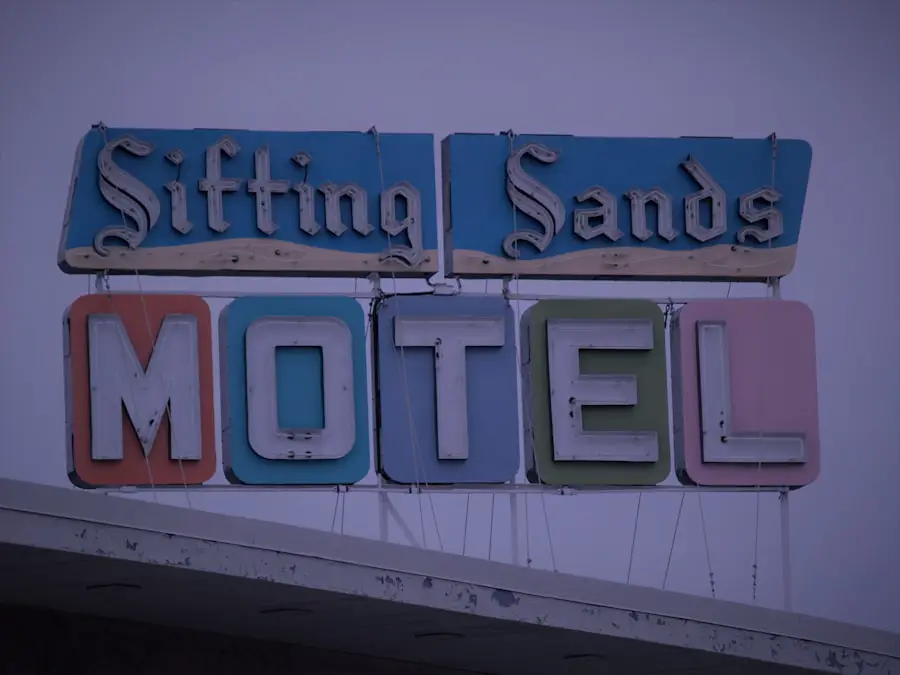
Understanding the cultural setting helps explain why California became such a powerful backdrop for the song. The Eagles developed within the Southern California music scene at a time when the region was associated with creative freedom, celebrity, money, nightlife, and the promise of reinvention.
The broader American counterculture era had challenged conventional social expectations, while the Los Angeles music business offered its own version of freedom and possibility. For young musicians arriving from elsewhere, California could represent both opportunity and temptation.
Henley’s explanation makes clear, though, that the song was not simply an attack on California. He said its subject extended to America itself. California provides the imagery and cultural atmosphere, while the deeper target is the promise that success, wealth, pleasure, and reinvention will automatically produce fulfillment.
The Eagles were therefore writing from inside the world they were examining. They had achieved enormous success and were familiar with the pressures and temptations surrounding the music industry. That perspective gives the song more weight than a simple warning from an outside observer.
Exploring the Allegorical Themes in the Song
| Theme | How It Appears in the Song |
| Innocence to experience | The traveler begins curious and receptive, then gradually recognizes the unsettling reality behind the attractive setting. |
| Excess and self-indulgence | Luxury and pleasure are appealing on the surface but gradually become signs of a lifestyle that has gone too far. |
| Entrapment | The hotel changes from a refuge into a place whose psychological hold is difficult to escape. |
| The American Dream | Success and abundance promise freedom, yet the pursuit of them can create new forms of dependence and dissatisfaction. |
| The music business | Henley has explicitly included the music industry among the subjects reflected in the song’s imagery of success, excess, and entrapment. |
The loss-of-innocence theme is especially important because it gives the narrative its movement. The traveler is not simply imprisoned from the beginning. He is first attracted to what he sees. Only later does he understand the cost of staying.
Materialism also plays an important role. The hotel’s sense of abundance represents a world in which possessions, status, and pleasure appear capable of satisfying every desire. The darker turn challenges that assumption and turns the setting into a cautionary image of what can happen when acquisition replaces genuine fulfillment.
Is “Hotel California” About a Real Hotel?
There is no band-confirmed physical hotel that serves as the literal setting of the song. Henley’s explanations consistently point toward metaphor rather than a travel story about one building. The “hotel” is a storytelling device that gives abstract ideas such as ambition, temptation, excess, and entrapment a vivid physical form.
That distinction matters because listeners have proposed many real-world locations over the decades. Those theories can be entertaining, but identifying a particular building does not explain the themes nearly as well as the broader interpretation given by Henley.
Pro Tip: When evaluating a theory about “Hotel California,” separate details that come directly from the songwriters from later fan speculation. The most reliable interpretation starts with what Henley said about America, excess, narcissism, innocence, and the music business.
Who Wrote “Hotel California”?
The credited songwriters are Don Felder, Glenn Frey, and Don Henley. The Recording Academy’s 1978 Song of the Year record lists all three as the writers of “Hotel California.”
Felder developed the musical foundation, while Henley and Frey helped shape the lyrics and narrative. That combination is important to understanding the finished song: its unusual chord movement and extended guitar work provide an elegant musical surface while the words gradually introduce uncertainty and danger.
The track appeared as the opening song on the Eagles’ 1976 Hotel California album, which the band’s official catalog lists among its 1976 releases.
The Debate Over the True Meaning of the Lyrics
The ambiguity of “Hotel California” has encouraged decades of theories. Some listeners hear a direct critique of the record industry. Others focus on addiction, consumer culture, celebrity, spiritual emptiness, or the difficulty of escaping destructive habits.
Those readings are not necessarily incompatible. A strong allegory can operate on several levels at once. What should be avoided is treating every theory as equally confirmed.
Henley has provided a useful boundary for interpretation. His comments connect the song to the American Dream, excess, narcissism, the music industry, and the transition from innocence to experience. That framework supports interpretations involving fame, materialism, and unhealthy indulgence without requiring the hotel to represent one specific institution or vice.
The song works best not as a puzzle with one hidden answer, but as a warning about how something glamorous can become confining once its costs are understood.
The Impact of “Hotel California” on Popular Culture

“Hotel California” became far more than a successful album track. Its title, mysterious setting, and sense of beautiful entrapment became recognizable cultural shorthand for situations that look attractive but are difficult to escape.
Artists across different musical styles have performed and reinterpreted the song, while its central imagery has been referenced throughout popular culture. That staying power comes partly from the fact that the story is specific enough to be memorable but open enough to support different personal readings.
The song also received major institutional recognition. At the 20th Annual Grammy Awards, “Hotel California” won Record of the Year, with producer Bill Szymczyk credited alongside the recording.
Analyzing the Music and Production of the Song
The music reinforces the tension in the story. The opening guitar figure feels polished and inviting, while the repeating harmonic movement creates a circular quality that suits a narrative about attraction followed by entrapment.
The arrangement gradually expands rather than relying on abrupt shifts. Vocal harmonies, acoustic and electric guitar textures, and the long closing guitar passage give the recording a sense of scale without distracting from the narrative.
Don Felder and Joe Walsh are especially associated with the extended twin-guitar ending. Their alternating and harmonized guitar lines became one of the recording’s most recognizable musical features. Guitar Player has repeatedly highlighted the Felder-Walsh outro when discussing the song’s place in rock-guitar history.
Bill Szymczyk produced the recording, a credit confirmed by the Recording Academy. The production allows the song to remain controlled and polished even as the story becomes increasingly unsettling, mirroring the contrast between the hotel’s attractive appearance and its darker implications.
The Continuing Legacy of “Hotel California”
Nearly five decades after the album’s original release, its themes remain easy to recognize. Fame, status, consumption, addiction, ambition, and the pressure to maintain an enviable lifestyle are not limited to 1970s Los Angeles. That gives the song a continuing relevance beyond its original cultural moment.
Its commercial legacy also remains substantial. In a January 22, 2026 announcement, the Eagles reported that the Hotel California album had been re-certified 28× Platinum by the RIAA.
The song’s longevity is therefore not based only on nostalgia. Its combination of cinematic storytelling, open-ended symbolism, disciplined production, vocal harmonies, and distinctive guitar work continues to give new listeners multiple ways to understand the same central warning: the things people desire most can carry costs that are not visible at the beginning.
A Travel Note for Readers Who Arrived Because of the Title
Despite its hotel setting, “Hotel California” is a symbolic song rather than a practical travel guide. If you are planning an actual trip, TakeTravelInfo also has guides to choosing a travel CPAP machine, finding a travel camera backpack, and selecting odor-resistant Merino wool travel socks for time on the road.
Sources
- CBS News — Don Henley interview — supports Henley’s explanation of the American Dream, excess, narcissism, the music business, and innocence-to-experience theme.
- Eagles — Official Releases — confirms the Hotel California album in the band’s 1976 catalog.
- Recording Academy — 1978 Song of the Year — confirms Don Felder, Glenn Frey, and Don Henley as credited songwriters.
- Recording Academy — 1978 Record of the Year — confirms the song’s Grammy win and Bill Szymczyk’s producer credit.
- Eagles — January 2026 certification announcement — supports the album’s reported 28× Platinum certification.
Frequently Asked Questions
What is the song “Hotel California” about?
The strongest documented interpretation is that the song explores the darker side of the American Dream, including excess, narcissism, fame, and the music business. Don Henley has also described it as a journey from innocence to experience.
Is “Hotel California” based on a real hotel?
No specific real hotel has been confirmed by the band as the literal setting of the song. The hotel works primarily as a metaphor for an attractive world of luxury and success that gradually reveals a darker and more confining side.
What are the main themes in “Hotel California”?
Major themes include excess, materialism, the loss of innocence, disillusionment, entrapment, the American Dream, and the pressures surrounding fame and the music business.
What does the ending of “Hotel California” mean?
The ending reinforces the idea that an appealing lifestyle can become psychologically difficult to escape. It can be read as a warning about fame, excess, destructive habits, addiction, materialism, or other choices that begin as freedom but later become limiting.
Who wrote “Hotel California”?
The credited songwriters are Don Felder, Glenn Frey, and Don Henley. Felder developed the musical foundation, while Henley and Frey helped develop the lyrics and narrative concept.
Did “Hotel California” win a Grammy?
Yes. “Hotel California” won Record of the Year at the 20th Annual Grammy Awards in 1978. The song was also nominated for Song of the Year.
