
Last Updated on September 10, 2026 by Daniel Globe
Choosing the right hiking shoes can make a major difference in comfort, traction, foot protection, and confidence on the trail. Poorly fitting footwear can create pressure points and blisters, while the wrong outsole or level of protection can make rough terrain harder to handle. The best choice depends on where you hike, how long you will be out, the load you carry, the weather, and—most importantly—how the footwear fits your feet.
Quick Answer
Choose hiking shoes by matching the footwear to your terrain, trip length, pack load, weather, and foot shape. Low-cut hiking shoes or trail runners work well for many day hikes, while stiffer boots add protection and structure for rough terrain and heavier loads. Whatever style you choose, proper fit and terrain-appropriate traction matter most.
Key Takeaways
- Match your footwear to the terrain, trip length, pack weight, weather, and pace rather than choosing by appearance alone.
- Hiking shoes and trail runners favor lower weight and flexibility; sturdier boots add underfoot structure, protection, and durability.
- Good fit means snug without painful pressure, enough toe space, a secure heel, and no rubbing when walking uphill or downhill.
- Outsole rubber, lug shape, lug spacing, and tread pattern should match the surfaces you expect to hike on.
- Waterproof footwear is useful in many cool, wet conditions, but non-waterproof shoes usually ventilate and drain faster in hot weather or frequent water crossings.
Disclosure: As an Amazon Associate I earn from qualifying purchases. Some links on this page are affiliate links, at no extra cost to you.
How to Choose Hiking Shoes for Your Hike
The easiest way to narrow your options is to start with the hike rather than the shoe. Current hiking-footwear guidance from REI emphasizes terrain, distance or duration, and the load you plan to carry. Weather and pace also affect how much protection, stiffness, waterproofing, and breathability you may want.
| Hiking situation | Good starting point |
| Smooth or groomed day trail, light pack | Trail-running shoe or low-cut hiking shoe for light weight and flexibility. |
| Rocky or root-filled day hike | Hiking shoe or supportive mid-cut boot with a protective outsole and secure fit. |
| Multiday backpacking with a heavier load | A stiffer backpacking boot is a common choice when extra structure, durability, and underfoot protection are priorities. |
| Fast hiking or fastpacking | Trail runner or lightweight hiking shoe if the terrain, load, and your experience allow it. |
| Rock scrambling or hiking to climbing routes | Approach shoe with a climbing-oriented rubber outsole and secure fit. |
| Cold, wet trail | Waterproof hiking shoe or boot, provided it offers the traction and insulation needed for the conditions. |
| Hot weather or repeated water crossings | Breathable, non-waterproof footwear can be attractive because it drains and dries more readily after getting wet. |
These are starting points, not rigid rules. Experienced hikers sometimes use lightweight trail runners on demanding long-distance routes, while others prefer substantial boots even on moderate trails. Your own comfort, foot shape, previous injuries, and hiking experience should also influence the choice.
Understanding the Different Types of Hiking Shoes
Hiking footwear comes in several styles, each balancing weight, flexibility, protection, support, durability, and traction differently.
Hiking Shoes
Low-cut hiking shoes sit around or below the ankle and typically combine a durable upper with a more protective outsole than an everyday sneaker. They are versatile choices for day hikes, maintained trails, moderate terrain, and hikers who want more structure than a running shoe without the weight of a traditional boot.
Trail-Running Shoes
Trail runners are built for faster movement and usually emphasize low weight, flexibility, breathability, and quick transitions over obstacles. They can work very well for day hiking and are also popular among some thru-hikers and fastpackers.
The trade-off is that many trail runners provide less protection and less torsional stiffness than heavier hiking footwear. That does not automatically make them unsuitable for rocky trails, but terrain, load, experience, and personal preference matter.
Day-Hiking and Backpacking Boots
Hiking boots generally use a higher collar and more substantial construction than low-cut hiking shoes. Flexible day-hiking boots can suit shorter trips with light or moderate packs, while backpacking boots tend to use stiffer midsoles and more durable uppers for multiday trips and heavier loads.
A sturdy boot can also provide useful protection from rocks, roots, brush, and trail debris. However, a higher collar should not be treated as a guarantee against ankle sprains. Research on high-top footwear has not established a consistent preventive effect against ankle injuries.
Approach Shoes
Approach shoes sit between hiking and climbing footwear. They typically use sticky rubber and a secure fit designed for rock scrambling and the hike to a climbing route. They are useful when your trip combines trail walking with substantial time on rock, but their softer climbing-oriented rubber can wear faster than harder hiking outsoles.
Mountaineering Boots
Mountaineering boots are specialized footwear for snow, ice, alpine climbing, and other severe mountain conditions. They are generally much stiffer than standard hiking boots and may be insulated or designed for specific crampon systems. For ordinary trail hiking, that extra weight and stiffness is usually unnecessary.
Salomon’s current low-, mid-, and high-cut footwear guide also emphasizes matching collar height and construction to terrain and the demands of the hike rather than assuming that one height is universally best.
Key Features to Consider for Comfort and Support
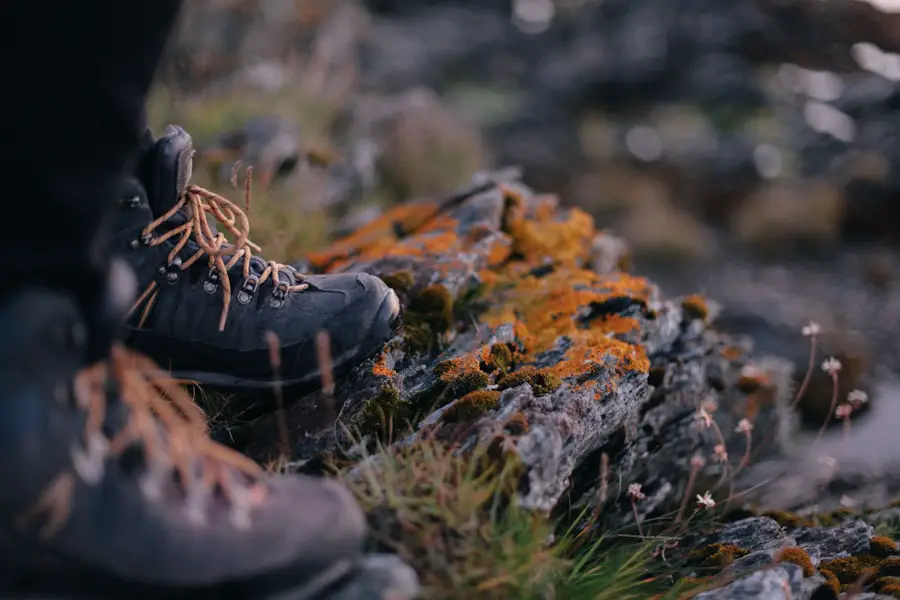
Comfort is not simply a matter of choosing the softest shoe. Hiking footwear must balance cushioning, stability, protection, and enough flexibility for the way you move.
Midsole Cushioning and Stiffness
The midsole sits between your foot and the outsole and strongly affects how the shoe feels. EVA-based foams are common because they can provide lightweight cushioning, while firmer materials such as TPU may be used where durability and structure are priorities.
More cushioning can make hard trails feel comfortable, but very soft shoes are not automatically better. On uneven, rocky ground or under a heavier pack, some hikers prefer a firmer platform because it helps isolate the foot from sharp rocks and excessive twisting.
Shanks and Rock Protection
Some hiking boots include a shank between the midsole and outsole to add load-bearing stiffness. Hiking shoes and trail runners may instead use a rock plate or another protective layer to reduce the pressure of sharp stones underfoot.
If you mostly walk smooth trails, you may not need much stiffness. If you spend hours on broken rock, a more protective platform can reduce how much of the terrain you feel through the shoe.
Heel Hold and Toe Protection
A well-shaped heel counter and secure lacing system should hold your heel without painful pressure. Excessive heel movement can create rubbing, while a reinforced toe bumper can protect against accidental contact with rocks and roots.
Arch Support
Feet vary in shape, volume, arch height, and mobility, so there is no reliable one-size-fits-all rule that says a particular arch type automatically requires a particular hiking shoe. Prioritize a secure, comfortable fit without concentrated pressure.
If you already use custom orthotics or medically recommended insoles, bring them when fitting new footwear because they can change both shoe volume and heel position.
Warning: Do not assume that a high-cut boot automatically prevents ankle sprains. A taller, stiffer collar can provide more structure, but clinical reviews have found that the protective effect of high-top footwear itself remains uncertain. Persistent ankle instability, recurrent sprains, pain, or numbness deserves professional evaluation rather than relying on a boot alone.
Material and Durability: What to Look for in Hiking Shoes
| Feature | What to look for |
| Upper material | Leather favors abrasion resistance and durability; synthetic uppers generally reduce weight, dry faster, and require less break-in. |
| Outsole | Rubber compound and tread designed for the surfaces you actually hike on. |
| Toe protection | A reinforced toe bumper is useful on rocky or root-filled terrain. |
| Midsole | Enough cushioning and stiffness for your terrain and pack load without creating painful pressure. |
| Waterproofing | A waterproof membrane can help in wet conditions, but it generally reduces ventilation compared with similar non-waterproof mesh footwear. |
Full-grain leather is highly durable and abrasion resistant, which is one reason it remains common in substantial backpacking footwear. Its disadvantages are higher weight, lower breathability, and a longer break-in period. Nubuck is full-grain leather with a buffed surface; it can remain durable while feeling somewhat more flexible.
Synthetic uppers made with materials such as nylon and polyester are generally lighter, quicker to break in, and faster drying. However, synthetic construction does not automatically mean waterproof. Some shoes are intentionally built without a waterproof membrane to maximize ventilation and drainage.
Construction quality matters as much as the basic material. Inspect the toe bumper, outsole bond, stitching, lace hardware, flex points, and areas where mesh meets reinforced panels. Those are common places where wear becomes visible over time.
Traction and Grip: Essential Features for Hiking Shoes
Traction depends on more than having an aggressive-looking outsole. The rubber compound, shape of the lugs, lug depth, spacing, and amount of rubber contacting the ground all affect performance.
Deep, widely spaced lugs are useful on many soft or muddy trails because they can bite into loose ground and shed debris. On smooth wet rock, however, extremely deep lugs are not automatically better; more rubber contact with the surface can sometimes be useful. A heel brake or more pronounced heel tread can also improve control on steep descents.
Some footwear uses specialized rubber compounds for particular conditions. For example, Vibram describes its Megagrip compound as designed for traction on both wet and dry terrain. Still, tread design and the shoe around the outsole matter, so the Vibram name alone should not be treated as a guarantee that every model will perform identically.
Pro Tip: Think about the worst surface you regularly encounter. Mud, wet slabs, loose gravel, steep dirt, and hard-packed trails place different demands on an outsole. Choose tread for that terrain rather than simply buying the shoe with the deepest-looking lugs.
Waterproofing and Breathability: Considerations for Different Environments
Waterproofing and breathability involve a real trade-off. Waterproof hiking footwear can be valuable when you regularly hike through wet vegetation, shallow mud, rain, or cool conditions where keeping outside moisture away from your socks is important.
Technologies such as GORE-TEX footwear membranes are designed to block liquid water while allowing water vapor to move outward. However, a waterproof membrane still creates more of a barrier than highly ventilated non-waterproof mesh, so waterproof footwear may feel warmer during hot-weather hiking.
Non-waterproof shoes can be a better match for hot, dry conditions or hikes with repeated stream crossings where water may enter over the collar anyway. Once fully submerged, a waterproof shoe can also hold water until it is drained and dried.
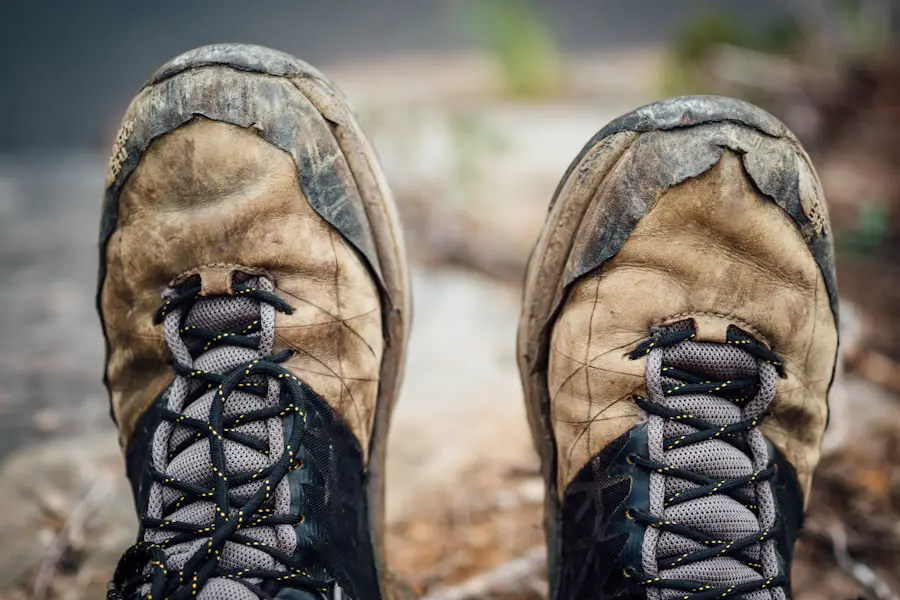
Waterproof construction cannot compensate for badly worn footwear. Cracked uppers, separated seams, damaged membranes, and peeling toe areas can eventually compromise protection. Regular inspection is therefore important.
Note: No hiking shoe is the best choice for every climate. Some hikers keep a waterproof pair for cold or persistently wet trips and a more breathable pair for warm-weather hiking.
Finding the Right Fit: Sizing and Support for Hiking Shoes
Fit is one of the most important parts of choosing hiking footwear. A technically impressive shoe is still the wrong shoe if it pinches, rubs, lets your heel slide excessively, or allows your toes to strike the front on descents.
Current hiking-footwear fit guidance recommends a fit that is snug throughout without feeling tight, while still leaving enough room to wiggle the toes.
Use This Fit Checklist
- Wear your normal hiking socks. Sock thickness changes the internal volume of the shoe.
- Try footwear later in the day when practical. Feet commonly become slightly larger after hours of standing and activity.
- Check the length. With the removable insole out of the shoe, standing on it should leave roughly a thumb’s width between your longest toe and the end as a useful starting check.
- Check width and volume. Your forefoot should not feel squeezed, and the top of the shoe should not have excessive empty space even after secure lacing.
- Test the heel. Your heel should feel held in place without painful pressure or major slipping.
- Walk on an incline if possible. On a simulated descent, your toes should not repeatedly hit the front of the shoe.
- Notice pressure points immediately. Do not assume a painful hotspot will simply disappear after several hikes.
Pro Tip: Try more than one brand and model. Two shoes carrying the same labeled size can differ significantly in toe-box shape, heel width, instep volume, and overall fit.
If you have flat feet, high arches, bunions, unusual foot shape, or another specific concern, comfort and fit still matter more than a generic label. People who already use custom orthotics should fit the footwear with those orthotics installed. Persistent foot pain or recurrent injuries are good reasons to discuss footwear with an appropriate healthcare professional.
Socks, Break-In, and Blister Prevention
Shoes and socks work as a system. Poorly fitting footwear, moisture, repeated shear, and long periods on your feet can all contribute to blister formation.
A 2022 study involving 203 hikers found that finishing the day with wet socks was associated with about 1.94 times the risk of developing foot blisters. The study did not find that simply choosing natural versus synthetic sock fibers determined whether blisters occurred.
In a study of long-distance hikers, wet socks were associated with nearly twice the risk of foot blisters.
For longer hikes, use socks that fit smoothly without bunching and manage moisture effectively. Carrying a dry spare pair can be useful when your feet become soaked.
Break-in needs also vary by footwear. Flexible hiking shoes and trail runners may require little adjustment, while stiffer leather, backpacking, or mountaineering boots usually deserve progressively longer walks before a major trip. Break-in can soften and adapt some materials, but it will not fix a fundamentally wrong size or foot shape.
Warning: Stop and address a developing hotspot instead of waiting until it becomes a painful blister. Check for wrinkled socks, debris inside the shoe, loose lacing, or an area that is repeatedly rubbing.
Care and When to Replace Hiking Shoes
Even durable hiking footwear eventually loses traction, cushioning, structure, or weather protection. There is no single replacement mileage that applies to every shoe because body weight, terrain, gait, pack load, materials, and frequency of use can change wear dramatically.
Inspect your footwear before important hikes and consider replacement when you notice problems such as:
- Outsole lugs worn smooth or unevenly.
- A midsole that feels permanently compressed or no longer supportive.
- Cracks, tears, or severe abrasion through the upper.
- Outsole separation or failed adhesive around the edges.
- Damaged lace hooks or eyelets that prevent secure lacing.
- Water entering a previously waterproof shoe through damaged construction.
- A persistent change in fit, heel hold, or comfort that cannot be corrected with normal lacing.
After muddy hikes, remove loose dirt and allow shoes to dry naturally. Follow the footwear manufacturer’s care instructions for leather treatments, waterproofing products, washing, and drying because materials differ between models.
Budget and Value: Balancing Cost and Quality for Hiking Shoes
Price matters, but the most expensive hiking shoe is not automatically the best one for your feet or trails. Fit should come first. A less expensive shoe that holds your heel securely and gives your toes adequate space is a better purchase than a premium model that creates pressure points.
After fit, compare the features you genuinely need: outsole performance, upper durability, toe protection, underfoot stiffness, waterproofing, weight, and the type of terrain the shoe is designed for.
A robust backpacking boot can make sense for demanding trips and repeated rough use, while a lighter mid-range hiking shoe may deliver better value for someone who primarily takes moderate day hikes. Last-season models can also offer worthwhile savings when the fit and construction meet your needs.
Ultimately, a good hiking shoe should disappear into the background while you walk. You should not spend the day thinking about crushed toes, slipping heels, overheating feet, or painful pressure points. The right balance of comfort, support, protection, and traction is the real measure of value.
When searching for the right hiking shoes, also consider the conditions surrounding the rest of your outdoor trip. For cold-weather outings, keeping your hands warm can make the day much more comfortable. This related TakeTravelInfo guide explains the benefits and practical uses of a rechargeable hand warmer for travel.
Love travel? Join Our Facebook Community For More Tips.
Frequently Asked Questions
What are the important factors to consider when choosing hiking shoes?
Start with terrain, trip duration, pack load, weather, and hiking pace. Then compare fit, outsole traction, underfoot protection, cushioning, stiffness, upper durability, breathability, and whether you actually need waterproof construction.
What type of hiking shoes are best for rocky or uneven terrain?
Look for secure-fitting footwear with a durable rubber outsole, terrain-appropriate tread, good underfoot protection, and enough stiffness for the load you carry. A hiking shoe or supportive boot is a common choice, although experienced hikers may also use protective trail runners.
How important is ankle support in hiking shoes?
Higher and stiffer collars can add structure and protection, which some hikers prefer on rough terrain or under heavier loads. However, high-top footwear should not be assumed to prevent ankle sprains by itself; clinical evidence for that specific protective effect remains uncertain.
What is the ideal weight for hiking shoes?
There is no universal ideal weight. Lighter footwear usually feels more agile and flexible, while heavier footwear may add durability, stiffness, weather protection, and underfoot structure. Choose the lightest option that still provides the fit and protection you need for your normal terrain and load.
How important is waterproofing in hiking shoes?
Waterproofing is valuable for many cool, wet, muddy, or rain-soaked hikes. In hot weather or on routes with frequent deep water crossings, breathable non-waterproof footwear can be more comfortable and may drain and dry faster after becoming soaked.
How should hiking shoes fit?
They should feel snug but not tight. Your heel should stay secure, the forefoot should not be squeezed, and your toes should have enough room that they do not strike the front on descents. Try them with your normal hiking socks and any orthotics you use.
Can you hike in trail-running shoes instead of hiking boots?
Yes. Trail runners are common for day hiking, fastpacking, and even long-distance hiking because they are lightweight and flexible. Boots may be preferable when you want more structure, durability, weather protection, or protection from rough terrain and heavier loads.
Sources
- REI Co-op — How to Choose Hiking Boots and Shoes — updated May 18, 2026; footwear types, components, terrain selection, materials, and fit.
- Salomon — High, Mid, or Low-Cut Hiking Shoes: How to Choose — published June 29, 2026; hiking footwear height and use cases.
- U.S. National Park Service — Hike Smart — hiking footwear and trail-safety guidance.
- GORE-TEX — Waterproof Footwear — waterproof and breathable footwear technology.
- PubMed — The Role of Shoes in the Prevention of Ankle Sprains — evidence and limitations surrounding high-top footwear and ankle-sprain prevention.
- PubMed — The Influence of Sock Composition on the Appearance of Foot Blisters in Hikers — 2022 hiking study linking wet socks with increased blister risk.
