
Last Updated on July 30, 2026 by Caleb Warren
You can wash some backpacks in a washing machine, but only when the sewn-in care label or the manufacturer’s instructions explicitly allow it. Many hiking, school, leather-trimmed, framed, coated, and wheeled packs should be hand cleaned instead. Checking the label first prevents damage to padding, coatings, straps, zippers, and the bag’s shape.
Quick Answer
Machine wash a backpack only if its care label says it is machine washable. Otherwise, spot clean or hand wash it with cool or lukewarm water, mild soap, and a soft cloth or brush. Remove detachable parts first, avoid bleach and fabric softener, and let the backpack dry completely before using or storing it.
Key Takeaways
- The care label is the final authority; washing instructions can differ even between backpacks from the same brand.
- Spot cleaning is the safest first step for most bags, especially those with leather, suede, rigid frames, wiring, or water-resistant coatings.
- If machine washing is permitted, secure loose straps, use the label’s cycle and water temperature, and choose a small amount of mild detergent.
- Air-dry the backpack with every pocket open unless the care label specifically allows a dryer.
At a Glance
| Time Required | 15–45 minutes to clean, plus several hours to air-dry |
| Difficulty | Easy |
| Tools Needed | Care label, mild soap, soft cloth or sponge, soft brush or old toothbrush, towels, and a sink or tub; mesh laundry bag only if machine washing is permitted |
| Cost | Usually $0–$10 with household supplies |
Warning: Do not assume every fabric backpack is machine washable. Osprey, JanSport, and Fjällräven advise against machine washing many of their packs, while other models may carry different instructions. Never machine wash a bag with leather or suede trim, a nonremovable rigid frame, built-in electronics, or a care label that says hand wash, spot clean, or dry clean only.
Disclosure: As an Amazon Associate I earn from qualifying purchases. Some links on this page are affiliate links, at no extra cost to you.
Preparing Your Backpack for Cleaning
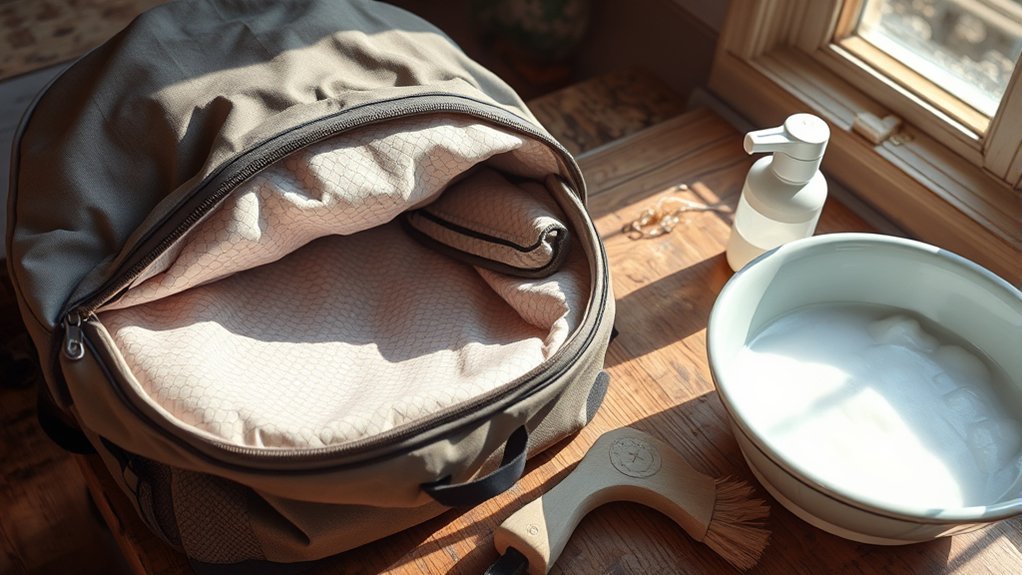
Start by emptying every pocket and compartment. Check small organizer sleeves, hidden security pockets, hydration sleeves, and the bottom of the main compartment. Turn the bag upside down and shake out crumbs, sand, and loose dirt. A vacuum hose on low suction can help clean seams and corners without soaking the fabric.
Next, read the sewn-in care label and, when possible, check the exact model’s online care page. Instructions can vary by model. For example, Patagonia lists its Black Hole Pack 25L as machine washable, but its Refugio Daypack 26L is labeled for hand washing and drip drying.
Remove any detachable frame sheet, metal stay, hipbelt, shoulder strap, rain cover, battery pack, charging cable, or other accessory when the manufacturer allows removal. Do not force out a frame or component that is designed to stay in place. Secure loose webbing and buckles so they cannot snag during cleaning.
Inspect the bag for loose stitching, peeling coatings, cracked foam, damaged zipper tape, or color that rubs off on a damp white cloth. Repair weak areas before a deep wash. If the backpack has leather or suede accents, keep those areas as dry as possible and follow the maker’s leather-care instructions.
Note: “Water-resistant” does not mean “safe to wash any way you choose.” Heat, strong detergent, bleach, aggressive scrubbing, and repeated washing can affect coatings or laminated fabrics.
Spot Cleaning Techniques
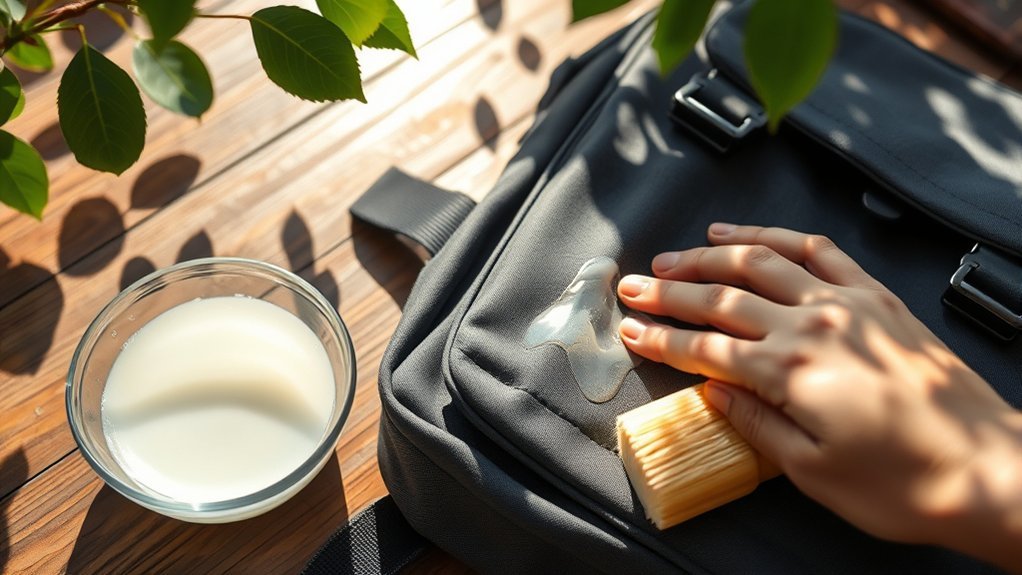
Spot cleaning is the safest starting point for most backpacks. Mix a small amount of mild, fragrance-free soap with cool or lukewarm water. Test the solution on a hidden area, then dab or gently brush the stain. Avoid soaking foam padding, coated zipper tape, leather, suede, printed graphics, and glued details unless the care instructions allow it.
Use a soft cloth, sponge, or soft-bristled toothbrush. Work from the outside of a stain toward the center so you do not spread it. Blot rather than grind dirt deeper into the fabric, and rinse the cleaned area with a separate damp cloth.
| Stain or Dirt | Safer Cleaning Method |
|---|---|
| Dry mud or sand | Let it dry, brush or vacuum off loose material, then wipe with a damp sponge. |
| Food or light grease | Blot with diluted mild soap; repeat gently and rinse with a clean damp cloth. |
| Sweat and salt on straps | Wipe with lukewarm water and mild soap, then rinse well so residue does not remain against your skin. |
| Zipper grit | Use a soft dry brush first, then a lightly damp cloth. Do not aggressively scrub coated zipper tape. |
| Ink, dye, or unknown stain | Test a hidden area and consult the manufacturer before using alcohol, solvents, or a strong stain remover. |
Pro Tip: Clean a fresh stain before it dries, but do not reach automatically for a powerful household degreaser. A mild cleaner and repeated blotting are usually safer for coatings, dyes, and seam treatments.
Washing Machine Method
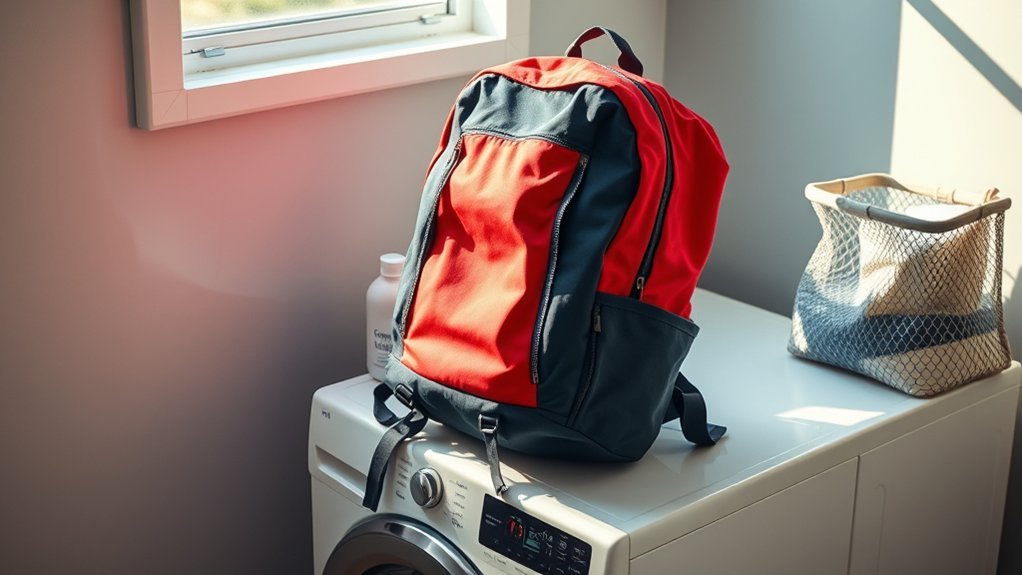
Use a washing machine only when the care label clearly permits machine washing. A general internet tip cannot override model-specific instructions. REI’s general backpack-care guidance recommends avoiding machine washing, and manufacturers such as Osprey and JanSport warn that a washer can harm a pack’s structure, shape, fabric, or finish.
If your backpack is explicitly machine washable, follow these steps:
- Empty and inspect it: Remove all contents and detachable parts allowed by the manufacturer. Check every seam and pocket.
- Pre-treat gently: Spot clean visible marks with a diluted mild cleaner and test for colorfastness.
- Protect straps and hardware: Fasten buckles, shorten dangling straps, and place the bag in a large mesh laundry bag or pillowcase if doing so does not conflict with the care label.
- Follow the label exactly: Use the listed water temperature and cycle. Do not substitute a normal or heavy cycle when the label calls for gentle care.
- Use minimal mild detergent: Avoid bleach, fabric softener, scent boosters, and harsh stain products unless the manufacturer specifically approves them.
- Rinse thoroughly: If the fabric feels slick, sticky, or soapy, run an extra rinse that still follows the label’s instructions.
When the label is missing or unreadable, treat the backpack as hand-wash or spot-clean only. That conservative choice is especially important for hiking packs, structured laptop bags, wheeled travel packs, and backpacks with coated or laminated fabric.
Hand Washing Method
Hand washing gives you more control and is the preferred deep-cleaning method for many backpacks. First confirm whether the bag may be submerged. Some manufacturers allow a tub wash, while others recommend only wiping the surface.
If full immersion is allowed, fill a clean tub or large sink with cool or lukewarm water and add a small amount of mild soap. Submerge the backpack and gently swish it. Use a sponge on the interior and a soft brush on dirty exterior areas. Pay special attention to shoulder straps, the back panel, and the hipbelt, where sweat and skin oils collect.
Drain the dirty water and rinse with clean water until no soap remains. A second rinse may be needed. Do not twist or wring padded sections because that can distort foam and stress seams. If the backpack cannot be submerged, wipe it section by section with a damp cloth, then remove soap with a second clean cloth.
Wheeled travel packs need special care. Osprey, for example, says not to immerse travel packs with its High Road wheeled chassis; the chassis should be wiped while fabric stains are scrubbed separately with mild detergent and water.
Drying Your Backpack Properly
Remove excess water with clean towels, especially from pocket corners, shoulder straps, and thick padding. Do not wring the backpack. Open every pocket and zipper, then hang the bag upside down or position it so water can drain instead of collecting at the bottom.
Air-dry it indoors or in a shaded, well-ventilated place. REI advises drying backpacks away from direct sunlight because ultraviolet exposure can degrade fabric. Fjällräven gives similar shaded-drying advice for Kånken packs.
Avoid a clothes dryer unless the exact care label permits it. Heat and tumbling can damage foam, coatings, adhesives, plastic hardware, and bag structure. Some machine-washable models do allow low-heat tumble drying, which is another reason the label must take priority over a universal rule.
Warning: Do not store or repack a backpack that is still damp. Moisture trapped in padding, seams, and closed pockets can cause musty odors and encourage mildew.
Assessing Cleanliness After Washing
Inspect the backpack before it finishes drying because some problems are easier to correct while the fabric is still damp. Check the exterior, seams, pockets, straps, and zipper tracks under good light.
| What to Check | Action Needed |
|---|---|
| Remaining stains | Spot clean again with the approved mild cleaner; avoid aggressive scrubbing. |
| Soap residue | Rinse with clean water until the fabric no longer feels slick or sticky. |
| Zippers and buckles | Remove trapped grit, confirm smooth movement, and never force stuck hardware. |
| Padding and shape | Gently reshape foam and panels by hand while damp; do not crease or wring them. |
| Odor | Rinse again if detergent remains, then dry longer with every compartment open. |
| Hidden dampness | Press a dry towel into thick straps, seams, and the base. Keep drying if the towel picks up moisture. |
Maintenance Tips for Longevity
A full wash should not be your only form of backpack care. Small maintenance habits reduce grime and help you catch damage before it spreads.
The safest cleaning method is the least aggressive method that removes the dirt while still following the backpack’s care label.
- Empty and brush it out regularly: Food crumbs, sand, and grit can abrade fabric and clog zipper tracks.
- Clean skin-contact areas: Wipe shoulder straps, the back panel, and the hipbelt after sweaty use.
- Store it dry: Keep the backpack in a cool, dry place with pockets slightly open for airflow.
- Avoid overloading: Excess weight strains stitching, zipper tape, buckles, and shoulder-strap anchors.
- Repair damage early: Address frayed webbing, loose seams, torn mesh, and failing hardware before the next trip.
If water no longer beads on a water-resistant pack, do not apply a random waterproofing product. First clean the bag according to its instructions, then use only a treatment approved for that fabric or recommended by the manufacturer. Osprey, for example, recommends selected Nikwax products for additional care and proofing but instructs owners to follow product directions carefully.
Final Thoughts on Backpack Care
Backpack care is easier when you clean small messes early instead of waiting for a major buildup. A quick wipe after daily use or a trip may be enough, while a full hand wash should be saved for a dirty or odorous bag whose label permits deeper cleaning.
Regular Maintenance Practices
Empty and shake out the backpack often, especially when it carries food, gym clothes, or outdoor gear. Brush dirt from the bottom panel and zipper tracks, then wipe fresh marks before they set. JanSport suggests an ongoing routine of quick wiping or brushing for its fabric packs, while REI notes that some technical packs may go a long time between deep cleanings.
There is no universal “every few months” schedule. Clean based on use, odor, visible dirt, salt buildup, spills, and the manufacturer’s directions. Always let the backpack dry fully before loading it again.
Stain Treatment Tips
For stubborn stains, repeat a gentle treatment rather than jumping straight to bleach, strong degreaser, or solvent. Test any cleaner on a hidden area and stop if the color lifts, the coating becomes tacky, or the fabric changes texture. Permanent marker, dye transfer, and old grease may not disappear completely without risking damage.
Leather and suede accents should be cleaned separately with products intended for those materials. If the bag is labeled “dry clean only,” follow that instruction or ask the manufacturer for a model-specific recommendation.
Troubleshooting After Cleaning
- The backpack still smells: Check for damp foam or soap residue. Rinse approved washable areas again and extend drying time with all compartments open.
- The padding looks misshapen: Gently reshape it by hand while damp and let it dry without heavy items pressing on it.
- A zipper feels rough: Brush away grit and clean the track carefully. Use only a zipper lubricant suitable for the zipper type.
- The fabric no longer beads water: Confirm that the bag is fully clean, then ask the manufacturer whether the finish can be renewed and which product is compatible.
- A stain remains: Stop before stronger chemicals cause more harm than the stain. A cosmetic mark is often safer than damaged fabric or coating.
Frequently Asked Questions
Can I wash a backpack with leather accents?
Do not machine wash it unless the manufacturer explicitly says you can. Water and detergent may discolor, stiffen, or dry out leather and suede. Clean the fabric and leather separately, keep the trim from soaking, and condition the leather only with a product approved for that material.
What if my backpack is labeled “dry clean only”?
Follow the label. Do not machine wash or submerge the bag. For a small fresh mark, ask the manufacturer whether careful spot cleaning is acceptable; otherwise use a cleaner experienced with bags and mixed materials.
Will washing damage a backpack’s waterproof coating?
It can if you use hot water, harsh detergent, bleach, fabric softener, aggressive scrubbing, or a method the manufacturer does not approve. Follow the care label, use a compatible cleaner, and reapply a water-repellent treatment only when the maker recommends one for that fabric.
How often should I clean my backpack?
Wipe or brush it whenever you see dirt, spills, sweat salt, or zipper grit. Deep clean only when needed and when the care instructions permit it. A school or gym bag may need attention more often than a lightly used travel bag.
Can I use fabric softener when washing my backpack?
Usually not. Fabric softener can leave residue and may interfere with technical finishes. Use only the cleaner and amount allowed by the backpack’s care label or manufacturer.
Can I wash a backpack with a USB port or built-in wiring?
Remove any battery or power bank first. If wiring or a port is permanently built into the bag, do not submerge or machine wash it unless the manufacturer expressly approves that method. Spot clean around electronic components with a barely damp cloth.
Can I put a backpack in the dryer?
Air-drying is the safest default. Use a dryer only if the exact care label permits it, and follow the listed heat setting. Otherwise, open all pockets and hang the backpack in a shaded, ventilated place until the padding and seams are completely dry.
Sources
- REI Co-op: How to Clean a Backpack — general guidance on hand cleaning, mild soap, rinsing, zippers, and shaded air-drying.
- Osprey: How to Clean Your Osprey Backpack — manufacturer warning against machine washing and guidance for drying and wheeled packs.
- JanSport: How to Clean a Backpack — hand-cleaning instructions for common JanSport fabrics and warnings about bleach, harsh detergent, leather, and suede.
- Patagonia Black Hole Pack 25L Care Instructions — example of a backpack model whose label permits machine washing.
- Patagonia Refugio Daypack 26L Care Instructions — example of a backpack model labeled for hand washing and drip drying.
- Fjällräven: How to Take Care of Your Kånken — manufacturer guidance on hand cleaning, machine-wash avoidance, reshaping, and shaded drying.
Conclusion
Your backpack can handle plenty of adventures, but it may not handle the wrong wash cycle. Check the care label first, use the gentlest approved cleaning method, rinse away all soap, and dry the bag completely. With prompt stain care, regular brushing, and careful storage, your backpack can stay fresh and functional without unnecessary wear.

