
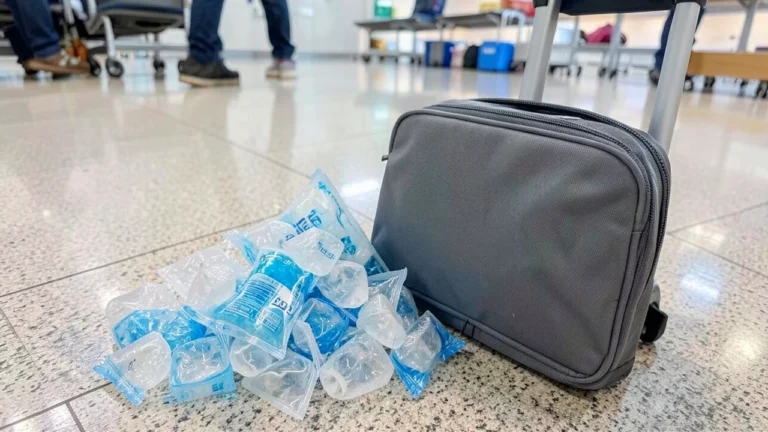
Ice is simple, but it breaks the rules in a surprising way: it is allowed as a solid and not allowed as a liquid. If you are asking can you bring ice through tsa, the answer is yes, as long as it is frozen solid when you go through screening. Once ice melts into slush or water, it becomes a liquid and must follow the 3.4 oz rule.
This guide covers ice packs, coolers for food and medicine, and dry ice, which has separate limits set by the FAA.
Quick Answer
Yes. Ice and gel ice packs are allowed through TSA if they are frozen solid when they reach the checkpoint. If they are partly melted or slushy, they are treated as liquids and must meet the 3.4 oz limit. Medical and baby-related ice packs are allowed with a declaration, and dry ice is limited to 5.5 lb (2.5 kg).
Key Takeaways
- Frozen solid ice and ice packs are allowed in carry-on and checked bags.
- Melted or slushy ice counts as a liquid and can be thrown away.
- Medically necessary ice packs and cooling for breast milk are permitted in reasonable quantities.
- Dry ice is limited to 5.5 lb (2.5 kg) per passenger and must be vented.
- Freeze ice packs as hard as possible and use an insulated bag.
The Solid vs Liquid Rule
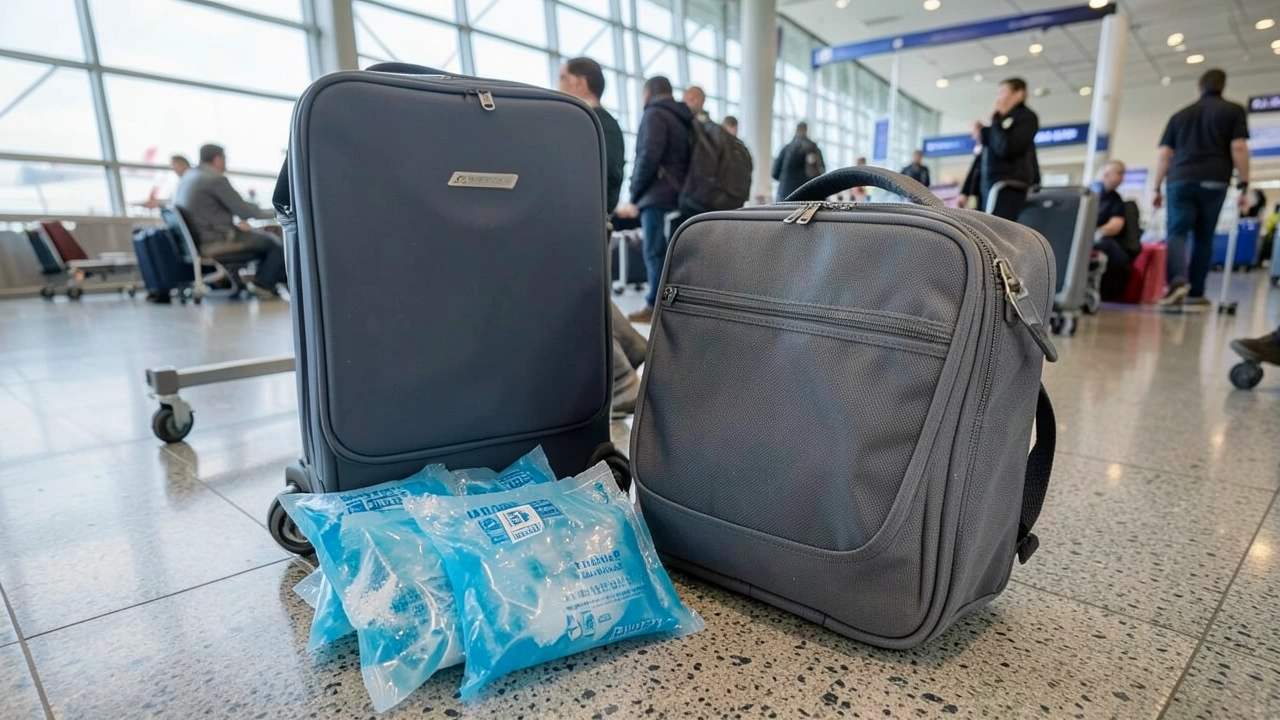
TSA decides at the moment of screening. A fully frozen block is a solid, and slush is a liquid. In a hot terminal or a long line, a pack that was solid at home can soften. To stay safe, freeze packs overnight, keep them in an insulated bag and put them in your bag as late as possible before the checkpoint. Officers may remove soft packs and refuse them, and the rule is the same whether the pack contains water or gel.
Ice Types at a Glance
| Item | Carry-on | Checked bag |
|---|---|---|
| Frozen ice pack | Allowed if solid | Allowed |
| Partly melted ice or slush | Liquid rules, 3.4 oz max | Allowed, leak risk |
| Medical or breast milk ice pack | Allowed, declare | Allowed |
| Dry ice | 5.5 lb max with airline approval | 5.5 lb max, vented package |
| Cooler with food | Allowed, frozen solid | Allowed |
If you are bringing liquids in the cooler, they are subject to the same liquids rule unless they are medically necessary.
Dry Ice Limits
Dry ice is solid carbon dioxide and is allowed in limited quantities. The FAA limit is 5.5 pounds (2.5 kg) per passenger in carry-on or checked bags, for use in keeping perishables cold, and the package must be vented so gas can escape. Airlines require advance notice, so call your carrier before you fly. For more on packing liquids, see how many ounces you can bring.
Tips for Coolers and Ice Packs
- Use a flat gel pack, which freezes more solid than a pouch of loose ice.
- Freeze overnight and keep in a cooler until you reach the checkpoint.
- Pack ice packs in a plastic bag to catch condensation.
- Carry a doctor’s note for medical cooling needs.
- See our guide on packing liquids for flights for other cold items.
Frequently Asked Questions
Can you bring an ice pack through TSA?
Yes, if it is frozen solid when you reach the checkpoint.
Can you bring ice in a cooler on a plane?
Yes, if it is frozen solid. Melted ice is a liquid and may be thrown away.
Can you bring dry ice on a plane?
Yes, up to 5.5 lb (2.5 kg) with airline approval and venting.
Can you bring ice packs for breast milk?
Yes. TSA allows ice packs and cooling accessories for breast milk and formula.
What happens if my ice pack is melted?
It is treated as a liquid, and if it is over 3.4 oz it may be removed.
Conclusion
So, can you bring ice through tsa? Yes, as long as it is frozen solid. Freeze packs overnight, keep them in an insulated bag, and check with your airline before you pack dry ice.
Keep Reading
- How Many Oz Can You Bring on a Plane? Liquid Limits: Liquid limits
- How to Pack Liquids for Flights 2026: TSA Rule Guide: Liquids rule
- TSA Rules for Backpacks: Quick Guide & Helpful Tips: Carry-on basics
- Speeding Through Airport Security: Tips for Faster Screening: Security tips
Sources
- TSA: Accepted identification at airport checkpoints
