

Last Updated on July 26, 2026 by Daniel Globe
Flying with hiking poles requires two separate checks: whether airport security permits the poles through the checkpoint and whether your airline accepts their collapsed size in the cabin. In the United States, the shape of the pole tip is now the most important TSA distinction, so inspect your equipment before deciding where to pack it.
Quick Answer
In the United States, TSA currently allows blunt-tipped hiking poles in carry-on and checked bags. Sharp-tipped hiking poles are not allowed in carry-on baggage. Your airline must also accept the collapsed length and stowage method, and the TSA officer at the checkpoint has final authority.
Key Takeaways
- TSA permits blunt-tipped hiking poles in U.S. carry-on bags, but sharp-tipped poles must go in checked baggage.
- A folding or telescoping design may help a pole fit inside your bag, but it does not override the sharp-tip restriction.
- Airlines set their own carry-on dimensions, checked-bag limits, fees, and special-equipment policies.
- For an international trip, check the security rules at every airport where you may be screened again.
- When the pole-tip classification is uncertain, checking the poles, renting them, or buying them at the destination is the lower-risk option.
At a Glance
| Time Required | About 10–15 minutes to inspect, measure, clean, and pack the poles |
| Difficulty | Easy |
| Tools Needed | Tape measure, protective tip covers, padded sleeve or case, and soft clothing for cushioning |
| Cost | Often $0 when the poles fit an existing bag; checked-bag, rental, case, or shipping costs vary |
Are Hiking Poles Allowed in Carry-On Luggage?
Yes, some hiking poles may be carried through a U.S. airport security checkpoint, but the permission is not universal. The TSA hiking-pole guidance distinguishes between blunt-tipped and sharp-tipped models:
- Blunt-tipped hiking poles: Allowed in carry-on and checked bags, subject to screening.
- Sharp-tipped hiking poles: Not allowed in carry-on bags but generally permitted in checked baggage.
- Final checkpoint decision: A TSA officer may reject an otherwise permitted item if it presents a security concern.
- Airline approval: The pole must still fit within the airline’s cabin-baggage limits and be stowed safely.
Warning: Do not assume that a folding pole or a removable rubber cap automatically makes a sharp-tipped pole acceptable in carry-on baggage. TSA does not state that a temporary cover changes the classification of the underlying tip. When the tip is sharp or its status is uncertain, pack the pole in checked luggage.
Blunt Tips Versus Sharp Tips
A blunt tip has no exposed point capable of piercing or puncturing. Some walking poles are made with permanently rounded rubber ends for pavement or mobility use. By contrast, many trekking poles have carbide or metal trail tips designed to grip dirt, ice, or rock. Those exposed points should be treated as sharp tips.
Inspect the pole with all removable accessories taken into account. If a rubber cap can be removed to reveal a pointed carbide tip, do not rely on the cap alone unless TSA has confirmed that the specific configuration is acceptable. Travelers can contact AskTSA before departure and provide a photograph of the pole and tip, but the officer at the checkpoint still makes the final decision.
Does a Collapsible Design Make a Difference?
Collapsible, telescoping, and folding poles are easier to fit inside a suitcase or cabin bag. That makes them more convenient for air travel, but the design does not cancel the tip rule. A compact pole with an exposed sharp tip remains unsuitable for U.S. carry-on baggage.
For a blunt-tipped pole, measure its fully collapsed length and compare it with the carry-on dimensions published by the operating airline. The entire item must be capable of safe storage under the seat, in an overhead bin, or in another location approved by the airline.
Potential Issues with Bringing Hiking Poles in Carry-On

Even a blunt-tipped pole may receive additional screening. Hiking poles contain long metal or carbon-fiber sections, locking mechanisms, handles, straps, and internal cables that can be difficult to identify clearly on an X-ray image. An officer may remove the pole from the bag, inspect it, or test it separately.
The most common problems are:
- An exposed sharp tip: Sharp-tipped poles cannot remain in a U.S. carry-on bag.
- The pole is too long for the airline: TSA permission does not guarantee that the airline will accept the item in the cabin.
- The pole cannot be stowed securely: Cabin crew may reject an item that could block an aisle, shift during flight, or protrude from a bag.
- A connection uses different rules: Travelers who leave the secure area or undergo another security screening may face the rules of a different country or airport.
- The officer identifies another concern: TSA officers retain final authority at the checkpoint.
Pro Tip: Keep a lightweight packable duffel or other airline-compliant backup bag available. If the poles are refused at security, you may be able to return to the ticket counter and check them instead of surrendering them, provided check-in is still open and your airline accepts the bag.
How to Check Your Hiking Poles Before Flying
Complete this inspection before leaving for the airport:
- Identify the tip type. Look for an exposed carbide, steel, or pointed metal end.
- Collapse the poles completely. Confirm that each locking mechanism holds securely.
- Measure the collapsed length. Measure from the end of the grip to the longest part of the tip or basket.
- Remove loose accessories. Detachable baskets, tip covers, clips, and small hardware should go in a labeled pouch.
- Check the shafts. Look for cracks, bends, splinters, or damaged joints, especially on carbon-fiber poles.
- Clean and dry the equipment. Remove mud, seeds, plant matter, and moisture.
- Review the complete route. Check the security authority and operating airline for every segment where rescreening may occur.
- Prepare a backup plan. Decide in advance whether you will check, ship, rent, or replace the poles if carry-on transport is refused.
Products Worth Considering
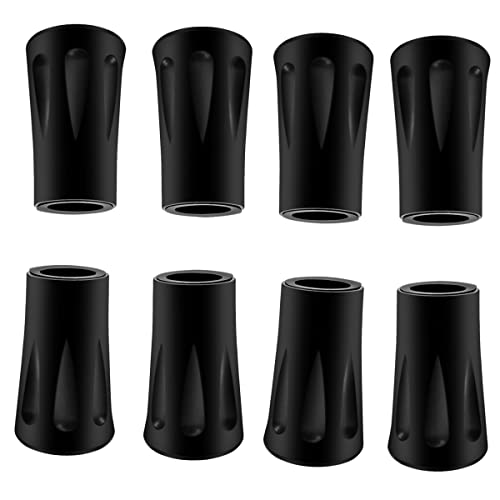
Durability: The head protector is made of durable high-quality rubber with high durability, anti-skid, lightness and wear resistance. A metal washer is embedded at the bottom of the hole to prevent the tip of the insertion rod from piercing the rubber.
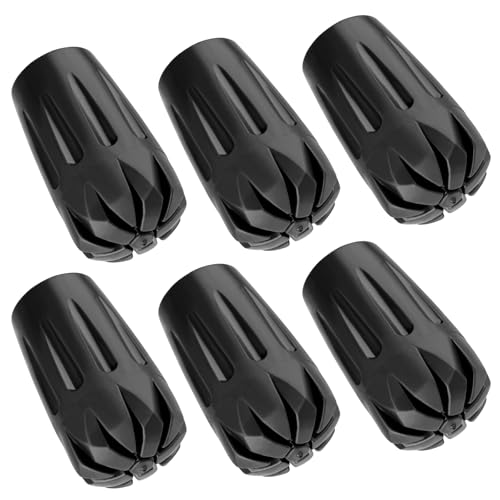
▲【Durable & Long-Lasting Material】 Crafted from premium quality rubber, these trekking pole tips are designed to endure rugged terrains. Whether you're hiking rocky trails or urban streets, these tips offer exceptional durability and longevity.

NON-MARKING PROTECTION: TPU material protects surfaces while maintaining excellent grip on pavement or rock.
Alternatives to Bringing Hiking Poles in Carry-On
| Alternative | Advantages | Disadvantages |
|---|---|---|
| Pack them in checked luggage | The most dependable option for sharp-tipped poles | May involve a bag fee and a risk of delay, loss, or damage |
| Rent poles at the destination | Avoids airport transport and baggage complications | Preferred size or model may not be available |
| Buy poles after arrival | Useful when a basic set costs less than round-trip baggage fees | Creates extra expense and requires a plan for the return trip |
| Ship the poles ahead | Provides tracking and keeps the poles out of airport security | Shipping can be costly, delayed, or subject to customs procedures |
A trekking staff or walking stick is not a guaranteed security workaround. Similar rules may apply when the item has a sharp point or resembles equipment that could cause injury. A branch found at the destination is also an unreliable substitute because its strength, length, legality, and cleanliness are unknown.
Before renting or purchasing, contact the outfitter to confirm the available pole length, locking system, weight capacity, tip type, opening hours, deposit, and return location.
Products Worth Considering

Quality Rubber Trekking Pole Tips- A quality proper interchangeable walking stick part for different terrains and weather conditions is vital important for a trekking poles. Enhance your tungsten carbide tips slip resistance and improve stability with our rubber tips.

Universal Fit: These walking sticks rubber tips have a standard 11mm (0.43 inch) inner diameter, fitting most trekking poles, hiking sticks, walking canes, and ski poles; easy to install and stay firmly in place
Tips for Packing Hiking Poles in Checked Luggage
Checked baggage is the safer choice for sharp-tipped poles and for itineraries with restrictive hand-luggage rules. Pack the poles so that they cannot puncture the bag, injure a baggage handler, or crack under pressure.
- Collapse or disassemble the poles. Follow the manufacturer’s instructions and avoid forcing sections beyond their marked limit.
- Clean and dry each section. Remove soil, seeds, moisture, and trail debris.
- Cover the tips securely. Use durable tip protectors and place the pointed ends inside a padded sleeve or rigid tube.
- Secure the collapsed sections. Use hook-and-loop straps or soft ties so the pieces cannot slide apart.
- Protect carbon-fiber shafts. Avoid placing them where the suitcase frame, wheels, or heavy objects can create a concentrated crushing force.
- Place the poles along a protected edge. The long side of a structured suitcase often provides better support than the center of a soft bag.
- Add cushioning. Surround the poles with clothing or other soft items without making the bag difficult to inspect.
- Store small parts together. Put baskets, clips, and removable caps in a labeled zippered pouch.
- Label the case. Add your name, phone number, and email address.
- Photograph the equipment and packed bag. Images can help document the condition and contents if the bag is damaged or delayed.
Note: Do not pack fuel, bear spray, prohibited blades, or other restricted hiking equipment merely because the poles are going in checked luggage. Every item must be checked separately against TSA, FAA, airline, and destination rules.
How to Properly Prepare Hiking Poles for Air Travel

Preparing the poles before travel reduces both packing damage and trail problems after arrival. Extend each pole, apply light downward pressure, and confirm that every lever lock, twist lock, button, or folding joint holds securely. Check the wrist straps, handles, baskets, tips, and internal connecting cable where applicable.
Clean all trail debris from the shafts and tips. This is good equipment care and may also matter at destinations with strict biosecurity controls. New Zealand, for example, requires travelers to declare used outdoor equipment and recommends that hiking gear be clean and accessible for inspection.
After landing, inspect the poles before beginning a hike:
- Check each shaft for cracks, dents, or splintering.
- Reinstall baskets and tips according to the manufacturer’s directions.
- Extend both poles to the correct length.
- Test the locks on level ground.
- Replace any component that slipped, cracked, bent, or loosened in transit.
Ensuring Hiking Poles Meet Size and Weight Restrictions
TSA does not publish a special maximum carry-on length for hiking poles. The airline decides whether a permitted pole fits its cabin-baggage dimensions and can be stored safely. Measure the outside of the packed bag rather than measuring only the pole.
Checked-bag limits also vary. As one current example, American Airlines publishes a standard checked-bag limit of 62 linear inches or 158 centimeters and 50 pounds or 23 kilograms for many itineraries, with exceptions based on route and cabin. Other carriers may use different allowances.
To calculate linear dimensions, add the bag’s outside length, width, and height:
Linear size = outside length + outside width + outside height.
A separate pole case may count as an additional piece of checked baggage even when it is light. Confirm whether the airline treats it as a standard bag, sports item, oversized item, or extra piece before paying for your ticket or arriving at check-in.
Checking Airline-Specific Policies on Hiking Poles
Security permission and airline acceptance are separate decisions. Before traveling, check the policy of the airline operating the flight, not only the company that sold the ticket.
Confirm all of the following:
- The maximum carry-on dimensions and weight
- Whether the pole must be fully enclosed inside a bag
- Whether long sporting equipment is permitted in the cabin
- The checked-bag piece, size, and weight allowance
- Sports-equipment or oversize fees
- Seasonal and destination-specific baggage restrictions
- Whether a partner airline operates any segment
- The latest time at which a rejected carry-on item can be checked
Save a screenshot or offline copy of the relevant policy. This does not guarantee acceptance, but it can help you explain how the item is packed and whether it meets the airline’s published limits.
Considerations for International Travel with Hiking Poles
International rules depend primarily on the airport where screening takes place. The destination country’s policy is not necessarily the rule used at your departure checkpoint. A connection may also require you to collect baggage, clear customs, or pass through security again.
| Departure authority | Published guidance | Practical choice |
|---|---|---|
| United States TSA | Blunt-tipped poles may be carried on; sharp-tipped poles may not | Carry on only when the tip is clearly blunt and the airline accepts the size |
| United Kingdom airports | Walking and hiking poles are not allowed in hand luggage but are allowed in hold luggage | Pack the poles in checked or hold baggage |
| New Zealand Aviation Security | Lightweight aluminum or carbon-fiber poles may be carried on if they fit the overhead locker; heavier poles must be checked | Verify the material, weight, size, and operating airline’s policy |
Before an international trip:
- Check the aviation-security authority for the first departure airport.
- Check every connection where passengers may be screened again.
- Review the operating airline’s cabin and checked-baggage rules.
- Check destination customs and biosecurity requirements.
- Clean soil, seeds, and plant matter from all used hiking equipment.
- Declare outdoor equipment when the destination requires it.
New Zealand’s Ministry for Primary Industries, for example, identifies used hiking and outdoor equipment as a potential biosecurity risk that travelers may need to declare.
Benefits of Bringing Hiking Poles on a Trip
Hiking poles can provide extra contact points on loose, steep, or uneven terrain. They may help with balance while carrying a pack and can transfer some forces from the legs to the upper body during particular movements, especially downhill travel.
However, the benefits should not be exaggerated. A review published in Wilderness & Environmental Medicine found that trekking poles can decrease lower-extremity loading and may improve balance and stability when carrying a large load, but they can also increase cardiovascular demand. Results vary with terrain, technique, speed, load, and the individual hiker.
Practical uses include:
- Adding stability on loose rock, mud, snow, stream crossings, and steep slopes
- Testing the depth or firmness of uncertain ground
- Supporting a controlled rhythm on long climbs or descents
- Sharing some work with the arms and upper body
- Supporting certain lightweight shelters designed to use trekking poles
Hiking poles are not a substitute for suitable footwear, route planning, weather awareness, conditioning, or professional medical advice when pain, injury, or a mobility condition is involved.
Conclusion: Making an Informed Carry-On Decision
For a flight departing from a U.S. airport, a clearly blunt-tipped hiking pole may pass through TSA screening when the airline also accepts its collapsed size. A sharp-tipped pole should be placed in checked baggage. Folding the pole helps with packing, but it does not change the tip restriction.
Checked luggage is usually the lower-risk choice when the pole has a carbide point, when the tip classification is uncertain, or when the itinerary includes airports with stricter hand-luggage rules. Renting, purchasing locally, or shipping ahead can also make sense when a checked bag would be required only for the poles.
Review the rules shortly before departure because security guidance and airline baggage policies can change. Pack with enough time to return to check-in if an officer does not allow the poles through the checkpoint.
If you are also transporting other long or fragile sports equipment, this guide to the best golf travel bags explains additional ways to protect equipment while flying.
Frequently Asked Questions
Are hiking poles allowed in U.S. carry-on luggage?
TSA currently allows blunt-tipped hiking poles in carry-on bags. Sharp-tipped hiking poles are not allowed in carry-on baggage and should be checked. The airline must also accept the pole’s collapsed size, and the TSA officer makes the final checkpoint decision.
Does a collapsible or folding pole automatically qualify for carry-on?
No. A collapsible design may help the pole fit inside your permitted cabin bag, but it does not override the restriction on sharp tips. Check both the tip design and the airline’s baggage dimensions.
Will a rubber tip cover make a sharp trekking pole acceptable?
Do not assume that a removable rubber cover changes the classification of an underlying sharp carbide or metal tip. TSA does not provide a guarantee for that configuration. Checking the pole is the safer option when the underlying tip is sharp.
Can sharp-tipped hiking poles go in checked luggage?
TSA generally permits hiking poles in checked baggage. Cover and pad sharp tips so they cannot puncture the bag or injure baggage handlers and inspectors. The checked bag must still meet the airline’s size, weight, and equipment rules.
What happens if TSA refuses my hiking poles?
You may need to leave the security line and return to the airline’s check-in counter, place the poles in an accepted checked bag, give them to someone outside security, or surrender them. Your options depend on available time and whether checked-bag acceptance is still open.
Is a hiking pole treated the same as a medical cane?
Not necessarily. TSA publishes separate procedures for canes and mobility aids. Travelers who genuinely require assistance should review those procedures or contact TSA Cares. A recreational trekking pole should not be presented as a medical aid merely to bypass a baggage restriction.
Do international hiking-pole rules differ from TSA rules?
Yes. UK airport guidance places walking and hiking poles in hold luggage rather than hand luggage, while New Zealand publishes different conditions based on pole material, weight, and stowage. Check every airport where you will pass through security.
Sources
- Transportation Security Administration: Hiking Poles — U.S. carry-on and checked-baggage treatment of blunt-tipped and sharp-tipped poles
- American Airlines Checked Bag Policy — example checked-bag dimensions, weight limits, and route exceptions
- UK Government Hand-Luggage Restrictions for Sports Equipment — UK treatment of walking and hiking poles
- New Zealand Aviation Security: Hiking Poles — New Zealand carry-on restrictions based on pole construction and stowage
- New Zealand Ministry for Primary Industries: Declaring Items — cleaning and declaring used outdoor equipment
- Are Trekking Poles Helping or Hindering Your Hiking Experience? A Review — balanced evidence about loading, stability, and cardiovascular demand
