

Last Updated on July 27, 2026 by Daniel Globe
The Form I-130 petition (Petition for Alien Relative) is the foundational step in the family-based U.S. immigration process. Once U.S. Citizenship and Immigration Services (USCIS) approves your I-130, you might naturally wonder if it is safe to travel—whether internationally to visit loved ones or domestically within the United States. While an approved I-130 establishes a recognized qualifying family relationship, it does not grant lawful status, work authorization, or entry rights on its own. Your ability to travel safely depends entirely on your current physical location, your immigration status, and the specific paperwork you hold.
Quick Answer
Yes, you can travel after your Form I-130 is approved, but the rules depend heavily on where you are. Beneficiaries located outside the U.S. must remain abroad to complete consular processing before entering on an immigrant visa. Beneficiaries inside the U.S. with a pending Adjustment of Status (Form I-485) must obtain Advance Parole (Form I-131) before leaving internationally, or their application will be deemed abandoned.
Key Takeaways
- An approved Form I-130 confirms a qualifying legal relationship but does not grant green card status or travel authorization on its own.
- Beneficiaries outside the U.S. must complete National Visa Center (NVC) processing and pass an embassy interview before entering the country.
- Beneficiaries inside the U.S. with a pending Form I-485 must receive Advance Parole (Form I-131) before traveling internationally to avoid abandoning their green card case.
- Domestic U.S. travel is generally safe, but travelers should carry government-issued photo ID and immigration notices, especially when visiting U.S. territories or traveling near border zones.
- Advance Parole permits you to apply for re-entry, but final admission authority always rests with U.S. Customs and Border Protection (CBP) officers at the port of entry.
At a Glance: Travel Rules Post I-130 Approval
| Beneficiaries Abroad | Must wait for NVC consular processing and embassy visa issuance (CR-1/IR-1) prior to U.S. entry. |
| Beneficiaries in U.S. (AOS Pending) | Must obtain Form I-131 Advance Parole before international departure to protect pending I-485. |
| Domestic Travel | Allowed within the 50 states; require REAL ID or passport. Exercise caution in border zones and U.S. territories. |
| Emergency Departure | Emergency Advance Parole (EAP) can be requested via an InfoPass appointment at a local USCIS office. |
Disclosure: As an Amazon Associate I earn from qualifying purchases. Some links on this page are affiliate links, at no extra cost to you.
Traveling After I-130 Approval
Understanding the Implications of Travel
Beneficiaries often find themselves eager to travel after receiving notice that their I-130 petition has been approved. An approved Form I-130 confirms a valid relative relationship and places the foreign national in line for an immigrant visa. However, it is vital to understand that approval of this petition does not grant legal status, work authorization, or permission to enter or re-enter the United States. Confusing I-130 approval with green card status is one of the most common mistakes applicants make.
Traveling While in the U.S. on a Temporary Visa
For beneficiaries already in the U.S. on a valid nonimmigrant visa (such as a B-1/B-2 tourist visa, F-1 student visa, or H-1B work visa), travel requires careful coordination. If you have filed Form I-485 (Application to Register Permanent Residence or Adjust Status) alongside or after your I-130 approval, leaving the country without prior authorization will result in severe immigration consequences.
Warning: Leaving the U.S. while your Form I-485 is pending without an approved Advance Parole document (Form I-131) in hand causes USCIS to automatically deem your green card application abandoned. The primary exception applies to those maintaining valid dual-intent visa status, such as H-1B or L-1 holders, and their dependents.
Seeking Professional Guidance
Because immigration regulations and processing guidelines can shift, consulting a qualified immigration attorney before finalizing travel plans is strongly recommended. A quick professional review can ensure you do not jeopardize months or years of progress on your immigration case.
Traveling Domestically Within the United States
While most travel warnings focus on international trips, beneficiaries frequently ask about traveling within the United States after Form I-130 approval.
Flights Within the 50 U.S. States
Domestic air travel within the 50 U.S. states does not require passing through U.S. Customs and Border Protection (CBP) immigration checkpoints. However, Transportation Security Administration (TSA) officers require all passengers aged 18 and older to present compliant government-issued photo identification (such as a REAL ID-compliant state driver’s license or an unexpired foreign passport). Carrying your USCIS Form I-797 Notice of Action (I-130 Approval Notice) and your I-485 receipt notice (if applicable) is recommended as proof that you are actively pursuing lawful status.
Travel to U.S. Territories and Non-Contiguous Destinations
Travel to U.S. territories such as Puerto Rico, the U.S. Virgin Islands, Guam, or the Northern Mariana Islands requires extra precaution:
- Direct Flights: Direct flights between the U.S. mainland and Puerto Rico or the U.S. Virgin Islands generally do not require entering foreign territory. However, flights can occasionally be diverted due to weather or emergencies into a foreign country.
- CBP Inspections in Territories: Departing U.S. territories like Guam or the U.S. Virgin Islands back to the U.S. mainland often involves a mandatory CBP pre-clearance or inspection. Travelers must show clear proof of lawful presence in the U.S.
Interior Border Patrol Checkpoints
The U.S. Border Patrol operates interior highway checkpoints within 100 miles of U.S. land borders (particularly along the southern border in Texas, New Mexico, Arizona, and California). Agents at these checkpoints are legally authorized to inquire about citizenship and immigration status. Beneficiaries traveling domestically through these regions should always carry valid identity documents and proof of pending or approved USCIS applications.
Potential Risks of Traveling After I-130 Approval
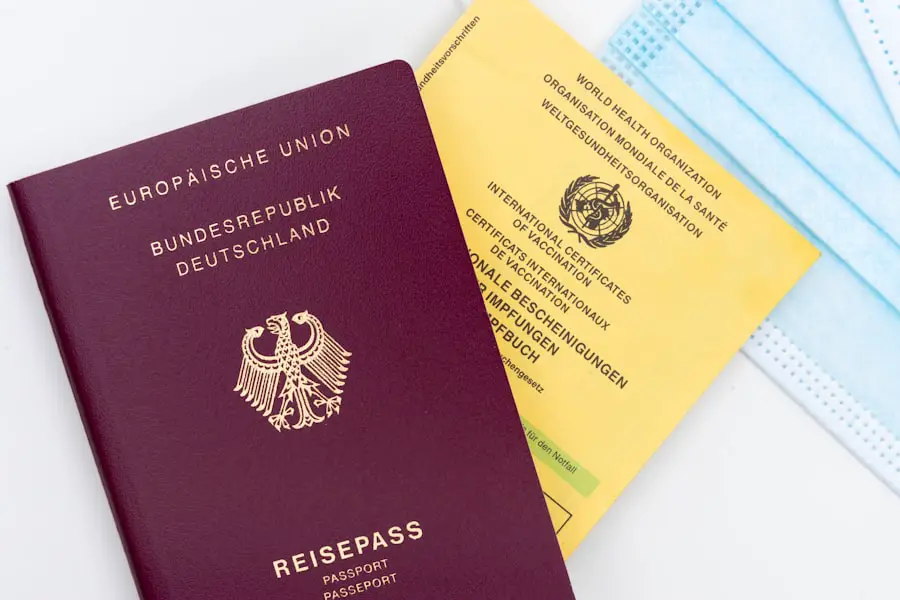
Traveling abroad after Form I-130 approval carries distinct legal risks that beneficiaries must weigh carefully before booking non-refundable tickets.
The primary danger is being denied re-entry at the port of entry. A foreign national who departs without an advance parole document or a valid dual-intent visa will be unable to return to the U.S. to complete their adjustment of status, forcing them into consular processing abroad, which can take a year or longer.
Furthermore, admission into the U.S. is never guaranteed. Even when traveling with an approved Advance Parole document, CBP officers maintain final discretion over admissibility. An officer at the port of entry can refer travelers to secondary inspection if questions arise regarding past unlawful presence, criminal history, or potential public charge issues. Missing critical USCIS appointment notices (such as biometrics or interview notices) while abroad can also lead to delays or case denials. (Source: USCIS Spousal Immigration Guidance)
Steps to Take Before Traveling After I-130 Approval
Depending on whether you are processing your case from inside the U.S. (Adjustment of Status) or outside the U.S. (Consular Processing), your required steps differ significantly:
| Step | Consular Processing (Outside U.S.) | Adjustment of Status (Inside U.S.) |
|---|---|---|
| 1. Verify Priority Date | Check Department of State Visa Bulletin to confirm priority date is current. | Confirm eligibility to file Form I-485 alongside or after Form I-130 approval. |
| 2. Submit Travel Application | Complete Form DS-260 (Immigrant Visa Application) online via NVC portal. | File Form I-131 (Application for Travel Document) to request Advance Parole. |
| 3. Pay Required Fees | Pay NVC Immigrant Visa Application Fee and Affidavit of Support Fee. | Pay USCIS Form I-131 filing fee (or confirm fee exemption if covered by prior I-485 terms). |
| 4. Document Clearance | Upload civil documents (birth certificates, police certificates) to NVC. | Wait for physical Advance Parole Document (Form I-512L) approval notice. |
| 5. Final Authorization | Attend immigrant visa interview at U.S. embassy/consulate; receive CR-1/IR-1 visa stamp. | Depart U.S. only after holding Advance Parole card/combo card in hand. |
Note: Under current USCIS fee regulations, Form I-131 (Application for Travel Document) carries a standalone filing fee of $630. Processing times for Advance Parole routinely range between 6 to 12 months. It is essential to apply well ahead of any planned travel and keep all itineraries flexible.
Pro Tip: If you face an urgent, unforeseen emergency (such as severe family illness, death of a relative, or critical business necessity abroad), you can request an Emergency Advance Parole (EAP) document by scheduling an InfoPass appointment at your local USCIS field office.
Documents Required for Traveling After I-130 Approval
Gathering comprehensive paperwork before departing helps ensure a seamless experience when returning to the U.S. Essential documents include:
- Valid Passport: Ensure your foreign passport is valid for at least six months beyond your intended return date.
- Advance Parole Document (Form I-512 / Combo Card): Original physical document issued by USCIS (for applicants with pending Form I-485).
- Form I-797 Approval Notice: A physical copy of your I-130 Petition for Alien Relative approval notice.
- Form I-485 Filing Receipt (Form I-797C): Proof that your adjustment of status application remains actively pending with USCIS.
- Proof of Ties and Lawful Status: Documents demonstrating your current U.S. residence, employment authorization card (EAD), or valid nonimmigrant status documents.
Traveling on a K-3 Visa After I-130 Approval
The K-3 visa was originally created to allow foreign spouses of U.S. citizens to enter the U.S. as nonimmigrants while awaiting approval of their Form I-130 petition. However, the sequence of filings is strict: a K-3 petition (Form I-129F) requires a still-pending I-130.
If USCIS approves the Form I-130 before or simultaneously with the Form I-129F, the K-3 visa application is automatically administratively closed by the National Visa Center. The foreign spouse must then proceed through the CR-1 or IR-1 immigrant visa route instead.
Note: Today, USCIS routinely processes I-130 petitions in timeframes comparable to I-129F petitions. Consequently, the K-3 visa pathway has become largely obsolete, and the vast majority of spousal cases move directly into CR-1/IR-1 immigrant visa processing.
Products Worth Considering

Easily travel with loose sheets of paper as the document wallet features a die-cut closure that can easily flip open and securely close Keep your documents safe and with you...
Traveling on a CR-1 or IR-1 Visa After I-130 Approval
For beneficiaries located abroad, completing consular processing after Form I-130 approval results in the issuance of an immigrant visa:
- CR-1 (Conditional Resident) Visa: Issued to foreign spouses who have been married to a U.S. citizen for less than two years at the time of visa issuance.
- IR-1 (Immediate Relative) Visa: Issued to foreign spouses who have been married for two years or longer.
Both visas grant the holder immediate Lawful Permanent Resident status upon arrival at a U.S. port of entry. Unlike nonimmigrant visa holders, CR-1 and IR-1 visa holders receive unrestricted work authorization and travel freedom immediately upon entry, though CR-1 green card holders must file Form I-751 to remove conditions on residence during the 90-day window before their two-year green card expires.
Final Considerations for Traveling After I-130 Approval
Navigating travel rules after Form I-130 approval requires careful foresight and strict adherence to immigration guidelines. Always verify whether your intended travel involves international borders or U.S. territories, keep copies of all USCIS receipts and approval notices in your possession, and confirm that your Advance Parole or immigrant visa is fully processed before leaving. Consulting an experienced immigration attorney prior to making non-refundable travel arrangements remains the best way to safeguard your immigration journey.
Disclaimer: This article is provided for general informational purposes only and does not constitute formal legal advice. Federal immigration policies, agency filing fees, and processing times change frequently. Always confirm current requirements with USCIS or a licensed immigration attorney prior to traveling.
Frequently Asked Questions
What is Form I-130?
Form I-130 (Petition for Alien Relative) is an official petition filed with USCIS by a U.S. citizen or Lawful Permanent Resident to prove a qualifying family relationship with a foreign relative who wishes to immigrate to the United States.
Can I travel after my Form I-130 is approved?
Yes, but the exact rules depend on where you are. Beneficiaries outside the U.S. must complete consular processing for an immigrant visa before entering. Beneficiaries inside the U.S. with a pending Form I-485 must obtain Advance Parole (Form I-131) before traveling internationally to avoid abandoning their green card application.
Can I travel while my I-130 petition is still pending?
If you are outside the U.S., traveling to the U.S. on a temporary tourist visa while an I-130 is pending can be difficult because border officers may suspect immigrant intent. If you are inside the U.S., you may remain in the country, but international travel requires advance authorization if an adjustment of status application is pending.
What happens if I leave the U.S. without Advance Parole?
If you depart the United States while your Form I-485 (Adjustment of Status) is pending without holding an approved Advance Parole document (or a dual-intent visa like H-1B or L-1), USCIS will consider your Form I-485 abandoned, forcing you to pursue visa processing abroad.
What is the next step after my I-130 is approved?
If the foreign relative is abroad, USCIS transfers the approved case to the National Visa Center (NVC) to start consular processing. If the foreign relative is already inside the U.S. legally and eligible for adjustment, they file Form I-485 to adjust status to lawful permanent resident.
How long does Form I-130 processing take?
Form I-130 processing times vary depending on the service center and preference category. For immediate relatives (spouses, children, parents of U.S. citizens), processing generally averages between 10 to 14 months.
Sources
- USCIS — Bringing Spouses to Live in the United States as Permanent Residents — Official guidance on spousal green cards and travel policies.
- USCIS — Form I-131 Application for Travel Document — Official eligibility criteria, fees, and instructions for Advance Parole.
- U.S. Department of State — Family Immigrant Visas — Official consulate processing procedures and NVC requirements.
