
Last Updated on July 26, 2026 by Daniel Globe
Hiking poles can sometimes work for skiing, but they are not a universal replacement for ski poles. The right choice depends on whether you are skiing groomed resort runs, touring uphill, or using classic or skate cross-country technique. Pole length, snow baskets, tips, locking strength, grips, and straps all affect safety and performance.
Quick Answer
Yes, some hiking poles can be used for casual resort skiing or ski touring if they are strong, correctly sized, securely locked, and fitted with snow baskets. However, dedicated alpine or cross-country ski poles are usually the better choice because their length, baskets, grips, and straps are designed for the specific skiing style.
Key Takeaways
- Adjustable, snow-ready hiking poles can be practical for ski touring and occasional recreational use.
- For regular downhill skiing, fixed-length alpine ski poles are usually simpler, stronger, and better matched to pole planting.
- Classic and skate cross-country skiing require longer poles and more specialized straps than most hiking poles provide.
- Use snow baskets, expose the proper snow tip, verify both locks, and set the length before you start moving.
- Research on trekking poles during walking does not prove that hiking poles reduce skiing energy use or prevent ski injuries.
At a Glance
| Time Required | About 5 minutes to inspect, size, and test the poles |
| Difficulty | Easy setup; proper skiing technique still requires instruction and practice |
| Tools Needed | Compatible poles, snow baskets, gloves, and the manufacturer’s adjustment instructions |
| Cost | No extra cost if your poles are compatible; otherwise snow baskets or dedicated ski poles may be needed |
Disclosure: As an Amazon Associate I earn from qualifying purchases. Some links on this page are affiliate links, at no extra cost to you.
Can You Use Hiking Poles for Skiing?
You can use certain hiking or trekking poles for some forms of skiing, especially when they are adjustable and designed for winter or backcountry use. The best candidates have secure external locks, interchangeable snow baskets, durable snow tips, and enough adjustment range for both uphill travel and downhill skiing.
That does not mean every hiking pole is suitable. Ultralight folding poles, poles with small summer baskets, worn locks, or models that the manufacturer limits to hiking may not tolerate ski-related side loads, falls, or contact with ski edges. A purpose-built ski pole remains the safest default when you ski regularly.
| Skiing type | Are hiking poles suitable? | Best choice |
| Resort downhill skiing | Sometimes, for light recreational use, if properly equipped and locked | Fixed-length alpine ski poles |
| Ski touring or splitboarding | Often, when the poles are rated for winter or touring use | Adjustable backcountry ski poles or winter-rated trekking poles |
| Classic cross-country skiing | Usually too short and less efficient | Classic cross-country poles reaching about the armpit |
| Skate skiing | Generally not recommended | Long skate-ski poles reaching roughly between the chin and lips |
Benefits of Using Hiking Poles for Skiing
The strongest advantage of hiking poles is adjustability. Backcountry skiers often prefer telescoping poles because they can use a longer setting for uphill striding and a shorter setting for the descent. They can also collapse the poles for transport or attach them to a backpack.
Hiking poles may also be more versatile for travelers who hike, snowshoe, and ski tour with the same gear. Ergonomic grips and extended foam sections can make it easier to change hand position while side-hilling. These benefits are most useful during uphill travel, transitions, and low-speed touring rather than aggressive resort skiing.
Poles can support rhythm, torso stability, and movement timing, but they should not be treated like crutches. During downhill skiing, your skis, stance, edging, and turn shape do most of the work. A light, well-timed pole touch can support technique; leaning heavily on a pole can disrupt balance.
How Hiking Poles Affect Stability and Balance on the Slopes
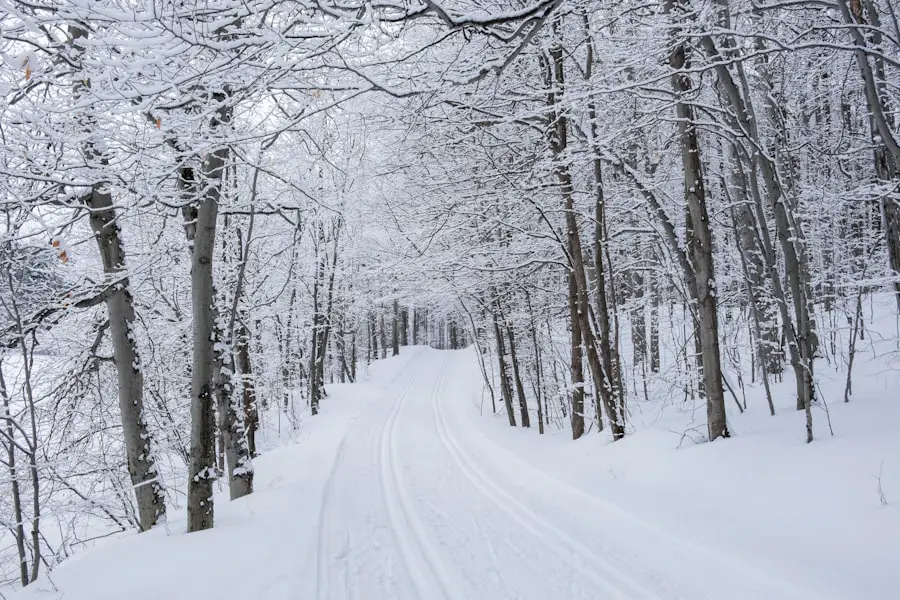
A pole plant can help organize a turn, stabilize the upper body, and establish rhythm. Ski instruction standards commonly treat pole use as a supporting movement rather than the main source of balance. On moguls, steeper terrain, and short-radius turns, a timely pole touch can help the skier keep the torso directed downhill.
However, hiking poles do not create edge grip on ice, and a small basket may sink deeply in soft snow. Stability improves only when the pole is the right length, the basket matches the snow, the tip engages securely, and the skier plants it in a controlled way.
Note: Beginners should learn stance, braking, turning, and safe falling from a qualified instructor. Poles can support technique, but they cannot correct poor balance or replace ski control.
The Role of Hiking Poles in Uphill Climbs and Cross-Country Skiing
| Use | What poles can do | Important limitation |
| Uphill ski touring | Add propulsion, improve rhythm, and share some muscular work with the upper body | Energy savings are small or inconsistent in walking studies and should not be stated as 20% |
| Side-hilling | Adjustable length or an extended grip can improve hand position | Never adjust a pole while sliding or descending |
| Classic cross-country skiing | Poles provide propulsion and help maintain cadence | Most trekking poles are shorter and have less supportive straps than dedicated Nordic poles |
| Skate skiing | Long poles transfer substantial force during skating technique | Standard hiking poles are normally too short and inefficient |
During a ski-tour ascent, poles can help with forward propulsion and rhythm while the skins under the skis provide climbing traction. Adjustable poles are useful because uphill travel often benefits from a longer setting than downhill skiing. On a traverse, some skiers hold an extended grip lower on the uphill pole instead of repeatedly changing the shaft length.
Cross-country skiing is different. Dedicated Nordic poles are designed around repeated, forceful push-offs. Classic touring poles usually reach about the armpit, while skate poles are longer and commonly reach between the chin and lips. Most hiking poles do not extend far enough for efficient skate skiing.
Studies of trekking poles during walking show mixed energy results. Poles may lower perceived effort or reduce some lower-limb loading, but those findings should not be converted into a guaranteed skiing-performance percentage.
Tips for Choosing the Right Hiking Poles for Skiing
Confirm the Intended Use
Start with the manufacturer’s instructions. Look for language such as winter hiking, snowshoeing, ski touring, or backcountry skiing. Do not assume that every folding or ultralight trekking pole is built for skiing. Check the maximum length, basket compatibility, replacement-part availability, and any limits on impact or lateral loading.
Choose the Correct Pole Length
For downhill skiing, put on your ski boots, turn the pole upside down, and hold the shaft directly below the basket. Your elbow should form roughly a 90-degree angle. Holding below the basket accounts for the portion of the tip that enters the snow. If you fall between sizes, a slightly shorter alpine pole is often easier to manage.
For backcountry use, the adjustment range should cover a comfortable downhill length and a longer uphill setting. For cross-country skiing, use the sizing guidance for your exact discipline rather than the alpine 90-degree rule.
Install Snow Baskets and Use the Correct Tips
A basket prevents the pole from sinking too far into snow. Standard baskets work on groomed or firm snow, while larger powder baskets are better in soft, deep snow. Small summer trekking baskets are often inadequate. Remove rubber pavement caps so the pole’s snow-compatible tip can engage firm snow, unless the manufacturer directs otherwise.
Check Shaft Material and Locking Mechanisms
Aluminum poles are generally economical and may bend rather than splinter after a hard impact. Carbon poles are lighter and stiffer but can be more expensive and may fail differently when damaged. Material alone does not determine suitability; shaft diameter, construction, intended use, and lock design also matter.
Before every session, extend each section only within its marked limit, close the locks fully, and push down firmly on both grips to test for slippage. Replace worn or cracked parts before skiing.
Evaluate Grips and Straps While Wearing Gloves
Make sure the grip fits your gloved hand without forcing your thumb into an awkward position. The strap should be adjustable and easy to enter and release. Do not wrap it repeatedly around your wrist. Follow the pole maker’s instructions and a ski instructor’s guidance for your terrain and skiing style.
Pro Tip: Test both poles indoors while wearing your actual ski gloves. Confirm that the locks hold, the baskets are secure, the straps release easily, and the collapsed sections cannot slide unexpectedly.
Techniques for Using Hiking Poles Effectively While Skiing
Mastering Pole Planting
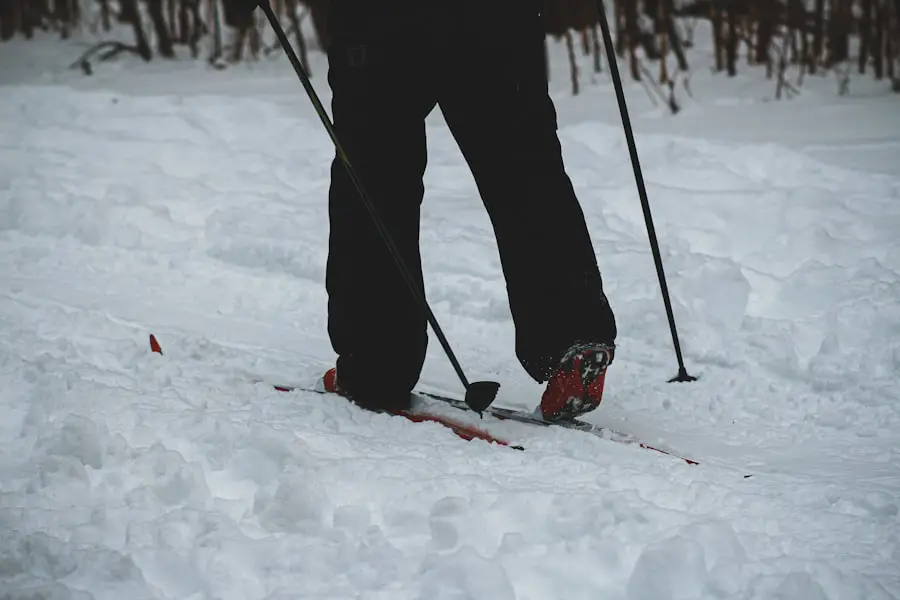
Keep your hands forward and relaxed. For a basic downhill pole touch, move the pole from the wrist rather than swinging the whole arm. Touch or plant the pole near the start of the turn, then continue moving with the skis. The goal is timing and torso stability, not supporting your full body weight.
Adjusting Pole Length for Terrain Changes
Stop in a secure place before changing pole length. Ski tourers may lengthen poles for an ascent and shorten them for the descent. On a side slope, an extended foam grip can let you hold the uphill pole lower without opening the lock. Do not shorten poles merely to force a lower center of gravity; body position should come from skiing technique.
Using Poles on Uphill Sections
Plant the poles behind or beside your feet and push backward to assist forward movement. Keep your shoulders relaxed and avoid reaching so far ahead that your torso collapses. On steep kick turns, place the poles securely before moving the skis, but do not depend on a single pole to hold all your weight.
Using Poles for Cross-Country Skiing
Cross-country poling depends on coordinated plant, push, and recovery phases. Dedicated straps allow force to pass through the hand while the fingers relax during recovery. Hiking-pole wrist loops can work for very casual classic touring, but they are less efficient for sustained classic or skate technique.
What to Do During a Fall
Do not try to stop a downhill fall by planting a pole or landing on an outstretched hand. Ski-pole falls can injure the thumb, especially when the handle forces the thumb away from the hand. Learn safe falling technique and practice letting go of the pole instead of gripping it through impact.
Warning: Never ski with a pole section extended beyond its marked limit, a loose basket, a slipping lock, a cracked shaft, or a rubber walking cap covering the snow tip. A collapsing or poorly planted pole can cause a sudden loss of balance.
Potential Drawbacks of Using Hiking Poles for Skiing
Hiking poles can be less durable under the impacts and side loads that occur during downhill skiing. Telescoping locks can also slip if they are worn, icy, contaminated, or incorrectly tightened. Folding joints add more potential movement than a simple one-piece alpine shaft.
Small baskets sink in powder, while an unsuitable tip may skate across hard snow. Hiking grips and straps may not work as well with bulky ski gloves or repeated Nordic push-offs. In cross-country skiing, insufficient length can shorten the poling stroke and reduce efficiency.
There is also a technique risk. Skiers who lean heavily on poles may move their hands behind the body, depend on the upper body for balance, or delay learning proper ski control. Poles should support good movement, not compensate for poor stance.
Comparing Hiking Poles to Traditional Ski Poles
| Feature | Hiking or trekking poles | Traditional ski poles |
| Length | Usually adjustable or foldable | Often fixed for alpine skiing; discipline-specific for Nordic skiing |
| Baskets | May include small trekking baskets; snow baskets can be optional | Designed for groomed snow, powder, or Nordic tracks |
| Locks and joints | Convenient but require inspection and can slip or loosen | One-piece alpine poles have fewer moving parts |
| Grips and straps | Optimized for hiking comfort and varied hand positions | Optimized for alpine pole plants or Nordic power transfer |
| Best use | Hiking, snowshoeing, touring, and multi-season travel when rated for those uses | Regular downhill, classic cross-country, or skate skiing |
Can Hiking Poles Reduce Impact on Joints and Muscles?
Trekking-pole research has found reductions in some knee forces during downhill walking. Other studies report lower perceived exertion or changes in muscle use during uphill walking. These results support the idea that poles can redistribute some work to the upper body during walking and hiking.
They do not prove that hiking poles reduce knee or hip injuries during alpine or cross-country skiing. Skiing has different forces, equipment, movement patterns, speeds, and fall mechanisms. It is safer to describe joint relief as a possible comfort benefit during uphill travel, not a guaranteed injury-prevention effect.
Incorporating Hiking Poles into Skiing Workouts and Training
Off-snow exercises can prepare the shoulders, arms, core, and legs for coordinated pole use. Useful options include controlled walking with poles, step-ups, split squats, rows, triceps presses, and balance drills. Start with light resistance and good form rather than trying to copy high-speed ski movements in a gym.
On snow, practice on easy terrain. Work on keeping the hands forward, touching the pole lightly, and linking the touch to the start of each turn. Cross-country skiers can practice double-pole timing on flat terrain before adding hills or higher speed.
Stop if pole use causes wrist, elbow, shoulder, thumb, or back pain. A ski instructor can correct technique, while a qualified medical professional can advise you about pain, previous injuries, or mobility limitations.
Backcountry Safety: Poles Are Not Rescue Gear
Adjustable poles are useful for backcountry travel, but they do not replace avalanche equipment or training. Everyone entering avalanche terrain should carry a functioning avalanche transceiver, shovel, and probe, know how to use them, check the forecast, and make terrain decisions appropriate to current conditions.
A trekking pole that can be assembled as an emergency probe is not a substitute for a dedicated avalanche probe. Rescue equipment must be immediately available, reliable, and practiced with before an emergency occurs.
The Verdict on Using Hiking Poles for Skiing
Hiking poles can work for skiing when their design matches the task. They are most convincing for ski touring, splitboarding approaches, and occasional recreational use because adjustability and packability add real value. Use snow baskets, correct sizing, reliable locks, and a manufacturer-approved winter setup.
For frequent resort skiing, a simple fixed-length aluminum ski pole is usually the better tool. For classic or skate cross-country skiing, dedicated Nordic poles provide the required length, baskets, and straps. Whatever you choose, poles should support good technique rather than carry your body weight or compensate for poor ski control.
If your trips combine skiing with other outdoor activities, compact gear may matter. Our guide to the best travel fishing pole covers a different kind of packable pole for fishing trips. Fishing rods are not substitutes for hiking or ski poles.
Frequently Asked Questions
What are hiking poles?
Hiking poles, also called trekking poles, are handheld poles designed to improve stability and rhythm while walking on trails. They are commonly adjustable or foldable and may accept different tips and baskets for dirt, rock, mud, or snow.
Can hiking poles be used for downhill skiing?
Yes, some can be used for casual downhill skiing if they are strong, correctly sized, securely locked, and fitted with suitable snow baskets. Dedicated alpine ski poles are still the better choice for regular resort use because they have fewer moving parts and are designed for ski-specific pole planting.
Can hiking poles be used for cross-country skiing?
They may work for slow, casual classic touring if they extend to the proper length, but most hiking poles are too short for efficient classic skiing and especially skate skiing. Dedicated Nordic poles also provide straps designed for repeated push-offs.
What features should hiking poles have for skiing?
Look for secure locks, a suitable adjustment range, compatible snow baskets, durable snow tips, comfortable grips, glove-friendly straps, and explicit approval for winter or touring use from the manufacturer.
How long should poles be for downhill skiing?
Wear your ski boots, turn the pole upside down, and grip the shaft directly below the basket. Your elbow should form about a 90-degree angle. This method accounts for the part of the tip that sinks into the snow.
Do I need snow baskets on hiking poles?
Yes. Snow baskets keep the poles from sinking too deeply. Standard baskets suit packed snow, while larger powder baskets are better in soft snow. Small summer trekking baskets may provide too little support.
Should I lengthen or shorten poles for ski touring?
Many tourers use a longer setting for uphill striding and a shorter setting for the descent. Make adjustments only while stopped in a secure place, stay within the marked limits, and test both locks before moving.
What are the main limitations of hiking poles for skiing?
Possible limitations include short maximum length, small baskets, less ski-specific grips and straps, locks that can slip, folding joints, and lower resistance to side impacts. They may also encourage poor technique if a skier leans on them heavily.
Sources
- REI: How to Choose Ski Poles — alpine, backcountry, and cross-country pole uses, sizing, baskets, straps, and materials
- REI: Cross-Country Skiing Equipment Guide — classic and skate pole length, baskets, materials, and strap differences
- European Journal of Applied Physiology: Do Poles Save Energy During Steep Uphill Walking? — small energy savings at selected steep grades and lower perceived exertion
- Journal of Sports Sciences: Knee Joint Forces During Downhill Walking With Hiking Poles — lower knee forces during a small downhill-walking study, not skiing
- Avalanche.org: Backcountry Gear — avalanche transceiver, probe, shovel, and rescue-preparedness guidance
- American Academy of Orthopaedic Surgeons: Sprained Thumb — skier’s-thumb mechanism and medical context

