

Last Updated on August 26, 2026 by Daniel Globe
Boeing aircraft are used by many of the world’s largest airlines, from U.S. carriers such as American Airlines, United Airlines, Southwest Airlines, and Delta Air Lines to international operators such as British Airways, Lufthansa, Air Canada, Qantas, Emirates, and Qatar Airways. Boeing traces its aircraft-manufacturing roots to 1916, and its commercial families have included narrowbody 737s as well as long-haul aircraft such as the 747, 767, 777, and 787 Dreamliner.
Today, the exact Boeing models an airline operates depend on its route network, fleet strategy, aircraft deliveries, retirements, and cabin requirements. That means a carrier may use Boeing aircraft alongside Airbus, Embraer, or other manufacturers rather than maintaining an all-Boeing fleet.
Quick Answer
Major airlines that use Boeing planes include American, United, Southwest, Delta, Alaska, British Airways, Lufthansa, Air Canada, Qantas, Emirates, Qatar Airways, Ryanair, and Norwegian. The 737 is common on short- and medium-haul routes, while the 777 and 787 are widely used for long-haul flying.
Key Takeaways
- American Airlines operates Boeing 737, 777, and 787 aircraft alongside its Airbus fleet.
- United Airlines has one of the broadest Boeing fleets among major U.S. airlines, including 737, 757, 767, 777, and 787 families.
- Southwest Airlines operates an all-737 fleet; its June 2026 fleet totaled 803 aircraft.
- Delta, Alaska/Hawaiian, British Airways, Lufthansa, Air Canada, Qantas, Emirates, Qatar Airways, Ryanair, and Norwegian are other current Boeing operators.
- Aircraft type does not determine the entire passenger experience. Seat layout, legroom, entertainment, Wi-Fi, and onboard service vary by airline and configuration.
Disclosure: As an Amazon Associate I earn from qualifying purchases. Some links on this page are affiliate links, at no extra cost to you.
Which Airlines Use Boeing Planes?
The following examples show how widely Boeing aircraft are used. This is a representative list rather than a complete directory because airline fleets change as aircraft are delivered, transferred, or retired.
| Airline | Region | Examples of Boeing Aircraft |
|---|---|---|
| American Airlines | United States | 737-800, 737 MAX 8, 777-200ER, 777-300ER, 787-8, 787-9 |
| United Airlines | United States | 737 family, 757, 767, 777, 787 |
| Southwest Airlines | United States | 737-700, 737-800, 737-8 |
| Delta Air Lines | United States | 717, 737, 757, 767 families |
| Alaska/Hawaiian fleet | United States | 737, 717, 787, plus non-Boeing types |
| British Airways | United Kingdom | 777, 787 |
| Lufthansa | Germany | 747-8, 787 |
| Air Canada | Canada | 737 MAX 8, 777, 787 |
| Qantas | Australia | 737-800, 787-9 |
| Emirates | United Arab Emirates | 777 family |
| Qatar Airways | Qatar | 777, 787 |
| Ryanair | Europe | 737-800, 737-8200 |
| Norwegian | Europe | 737-800, 737 MAX 8 |
Note: Airline fleets and scheduled aircraft can change. An airline may retire a type, add deliveries, or swap the aircraft assigned to a particular flight even after you book.
American Airlines’ Fleet of Boeing Planes
American Airlines operates a mixed Boeing and Airbus fleet. Its Boeing aircraft cover both high-frequency domestic service and long-haul international routes. American’s official aircraft information currently lists the 737-800, 737 MAX 8, 777-200, 777-300ER, 787-8, and 787-9 among its passenger aircraft.
Domestic Operations
The Boeing 737 is a cornerstone of American Airlines’ short- and medium-haul network. The 737-800 and 737 MAX 8 give American a common narrowbody platform for routes where a widebody aircraft would provide more capacity than needed.
American’s 2025 annual reporting listed 303 737-800s and 89 737-8 MAX aircraft at year-end. Actual counts can change as deliveries, retirements, and fleet transactions continue.
Long-Haul International Services
The Boeing 777 and 787 Dreamliner are integral to American Airlines’ long-haul international services. American uses 777-200ER and 777-300ER aircraft as well as 787-8 and 787-9 Dreamliners, giving the airline several combinations of range, capacity, premium seating, and cargo capability.
For passengers, the aircraft model is only part of the experience. American operates different cabin layouts within some aircraft families, so the seat map for the specific flight is more useful than the model name alone.
The 787 Dreamliner also provides features associated with the aircraft design itself, including large electronically dimmable windows, a composite-intensive airframe, and cabin systems designed for long-haul operations. The exact seats, entertainment, Wi-Fi, and premium-cabin product are determined by the airline’s configuration.
United Airlines’ Dependence on Boeing Aircraft
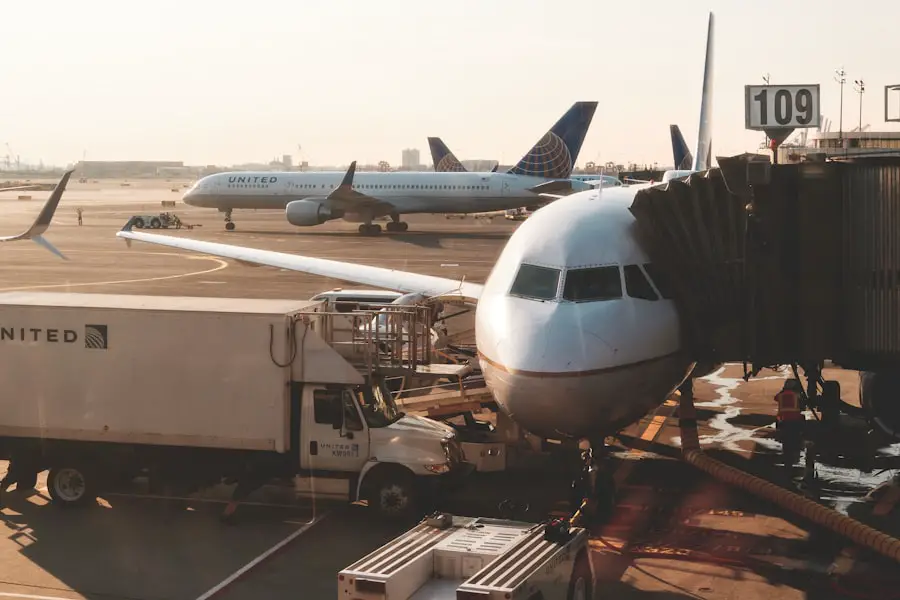
United Airlines has one of the broadest Boeing fleets among major U.S. carriers. Its 2025 Form 10-K listed 572 Boeing 737-family aircraft, 61 757s, 53 767s, 96 777s, and 81 787 Dreamliners in the mainline fleet as of December 31, 2025. United also operates Airbus aircraft, so it is not an all-Boeing airline.
The 737 family supports a large share of United’s domestic and shorter international flying, while older 757 and 767 aircraft continue to serve selected missions. The Boeing 777 and 787 are central to long-haul service because they combine widebody capacity with intercontinental range.
United’s 787 fleet is particularly important to the airline’s international network. United has operated the 787-8, 787-9, and 787-10, allowing it to match different Dreamliner sizes with different route needs.
Southwest Airlines’ Commitment to Boeing
| Commitment | Current Details |
|---|---|
| Operating fleet | Southwest reported 803 Boeing 737s as of June 30, 2026: 288 737-700s, 192 737-800s, and 323 737-8 aircraft. |
| MAX order book | Southwest’s July 23, 2026 filing described firm orders for 479 MAX aircraft across 2026–2031, consisting of 264 -7s and 215 -8s, less 25 -8 aircraft received in 2026 to that date. The airline cautioned that the contractual schedule could change. |
| 737 MAX 7 | The FAA issued the 737 MAX 7 amended type certificate on August 3, 2026. Southwest is the launch customer, but certification does not mean every ordered aircraft is already delivered or operating. |
Southwest stands apart from most large U.S. airlines because its fleet is built entirely around the Boeing 737 family. A more standardized fleet can simplify areas such as pilot qualification, maintenance planning, spare-parts inventories, and aircraft scheduling compared with operating many unrelated aircraft families.
The 737 also fits Southwest’s network of frequent narrowbody flights. Newer 737-8 aircraft add a more recent generation of engines and aerodynamic improvements to the fleet, while older 737-700 and 737-800 aircraft remain a substantial part of current operations.
Southwest’s long relationship with Boeing therefore remains central to its fleet strategy, but its future fleet size and delivery mix depend on production rates, certification, delivery schedules, and the airline’s own network plans.
Boeing’s Influence on the Aviation Industry
Boeing has played a major role in commercial aviation for more than a century. Aircraft families such as the 707, 737, 747, 757, 767, 777, and 787 have influenced airline network planning, long-haul travel, cargo operations, aircraft manufacturing, and passenger expectations.
The 787 Dreamliner is one example of a major change in aircraft construction. Boeing says about 50% of the 787 airframe by weight is made from composites. Combined with newer engines, aerodynamics, and electrical systems, the lighter structure is intended to reduce fuel use and maintenance requirements.
Boeing currently says the 787 family can reduce fuel use by about 25% compared with the airplanes it typically replaces. That is a manufacturer comparison, not a guarantee that every route or airline will achieve the same percentage.
Boeing and airlines are also working on lower-emission aviation through more fuel-efficient aircraft, operational improvements, and greater use of sustainable aviation fuel. The environmental impact of a flight still depends on many factors, including aircraft configuration, distance, passenger load, fuel type, and airline operations.
Note: Aircraft safety should not be judged by manufacturer name alone. A specific aircraft type must meet regulatory certification requirements, while continued safety also depends on manufacturing quality, maintenance, airline procedures, crew training, and regulatory oversight.
The Advantages of Boeing Planes for Major Airlines

Fuel Efficiency
Fuel efficiency is a major consideration when an airline chooses aircraft because fuel remains one of its largest operating costs. Newer Boeing types combine modern engines, aerodynamic improvements, lighter materials, and updated systems to reduce fuel burn compared with many older aircraft they replace.
For example, Boeing says the 787 can use about 25% less fuel than the aircraft it typically replaces. The exact saving on a real flight depends on the comparison aircraft, route, payload, weather, operating procedures, and configuration.
Enhanced Passenger Comfort
Some Boeing designs include passenger-focused features. The 787 has large electronically dimmable windows, large overhead bins, LED lighting, and cabin systems designed for long flights.
However, two airlines can make the same Boeing model feel very different. Seat width, seat pitch, premium cabins, entertainment, Wi-Fi, power outlets, and service are chosen by the airline and can even differ between configurations within one airline.
Pro Tip: If comfort matters, check the airline’s seat map for your exact flight instead of booking solely because the itinerary lists a 737, 777, or 787. Airlines can use several layouts for the same aircraft type.
Extensive Support Network
Boeing supports airline customers with technical documentation, training, parts, engineering, maintenance information, and other services. For airlines with large Boeing fleets, common aircraft families can also simplify parts inventories and some maintenance and training processes.
That advantage is not automatic. Airlines still compare purchase or lease cost, reliability, maintenance requirements, available engines, airport constraints, range, capacity, financing, delivery timing, and competing aircraft before deciding what fits their network.
Boeing’s Contribution to American Airlines’ Expansion
Boeing widebody aircraft have supported American Airlines’ ability to serve long-distance markets. The 777 provides high-capacity long-haul capability, while the 787-8 and 787-9 allow American to operate intercontinental routes with different demand levels and range requirements.
The 787 is especially useful when an airline wants long range without the capacity of its largest widebody. That can make more city pairs commercially practical, although the success of a route still depends on demand, fares, competition, airport costs, and connecting traffic.
American has also continued receiving newer Boeing aircraft as part of broader fleet-modernization efforts. New aircraft can lower fuel and maintenance costs relative to the older types they replace, but the financial benefit depends on acquisition cost, utilization, fuel prices, and the route on which the aircraft is used.
United Airlines’ Longstanding Relationship with Boeing
United Airlines has operated Boeing aircraft across several generations and market segments. Its current fleet demonstrates that relationship particularly clearly: 737-family narrowbodies support large parts of the domestic network, while 777 and 787 widebodies support many long-haul international routes.
United was also an early Dreamliner operator and went on to operate the 787-8, 787-9, and 787-10. Having all three sizes gives the airline flexibility to match range and capacity with different international markets.
United’s Boeing relationship is continuing through future commitments as well. Its 2025 annual filing listed substantial firm commitments for additional 787 and 737 MAX aircraft. Delivery schedules are not guaranteed, however, and United itself notes that expected timing may change because of manufacturer production, contractual changes, or other factors.
Southwest Airlines’ Success with Boeing Aircraft
Southwest’s Boeing strategy is different from the mixed fleets at American, United, and Delta. By concentrating on the 737 family, Southwest reduces the number of unrelated aircraft platforms that its operation must support.
This commonality can help with crew scheduling, training, spare parts, and maintenance planning. It also fits an airline historically built around frequent narrowbody service rather than long-haul widebody flying.
The strategy does create concentration risk as well: production delays, certification issues, or technical problems affecting the 737 family can have a larger impact on an airline whose fleet depends on that one family. Southwest therefore benefits from commonality while also being more exposed to developments affecting Boeing’s narrowbody program.
The Future of Boeing Planes in Major Airlines
Boeing aircraft will remain important to many major airline fleets because carriers already have large installed fleets and substantial future orders. The 737 MAX family is intended for narrowbody markets, while the 787 continues to support long-haul fleet renewal.
A notable 2026 development was the FAA’s certification of the Boeing 737 MAX 7 on August 3. The FAA said the approval followed extensive review and required updates involving areas such as flight-control software, flightcrew alerting, and the engine anti-ice system. The agency also said its inspectors would continue monitoring Boeing production facilities.
For airlines and passengers, it is important to distinguish among an aircraft being ordered, certified, delivered, inducted into an airline fleet, and actually scheduled on a specific route. Those events can occur months or years apart.
Warning: Do not assume an airline will operate a future Boeing model on a particular date simply because it has placed an order. Certification, production, delivery, crew preparation, and airline scheduling can all change entry-into-service timing.
Boeing’s Continued Dominance in the Aviation Industry
Boeing remains one of the world’s two largest commercial-aircraft manufacturers, and Boeing aircraft continue to form a major part of many airline fleets. American, United, Southwest, Delta, Alaska/Hawaiian, British Airways, Lufthansa, Air Canada, Qantas, Emirates, Qatar Airways, Ryanair, Norwegian, and many other carriers currently use at least one Boeing family.
That continued role does not mean every airline prefers Boeing or that every Boeing model fits every route. Airlines often operate mixed fleets and compare Boeing aircraft with competing Airbus and other models based on economics, availability, range, capacity, maintenance, reliability, passenger requirements, and delivery timing.
For travelers, the most useful takeaway is simple: knowing the aircraft family can tell you something about the size and likely mission of the plane, but the airline’s exact configuration determines much of the onboard experience.
How to Check Which Boeing Plane Is on Your Flight
Before booking, look at the aircraft type shown in the flight details on the airline’s website or app. After booking, the same information is usually available under your trip details or seat-selection page. A seat map can help distinguish different configurations of the same model.
Check again close to departure because airlines can make operational aircraft swaps. A ticket that originally showed a Boeing 787, for example, may later be assigned another widebody if scheduling, maintenance, or operational needs change.
Travel-planning note: If you are preparing for a trip, useful gear can matter too. You can review these 5 Must-Have Portable Water Bottles, consider a suitable solar charger for backpacking, and compare Best Waterproof Sneakers for Travel before your next journey.
Frequently Asked Questions
Which airlines use Boeing planes?
Major examples include American Airlines, United Airlines, Southwest Airlines, Delta Air Lines, Alaska Airlines, British Airways, Lufthansa, Air Canada, Qantas, Emirates, Qatar Airways, Ryanair, and Norwegian. This is not a complete list; Boeing aircraft are used by many passenger and cargo airlines worldwide.
What types of Boeing planes are commonly used by airlines?
The 737 is one of the most common Boeing narrowbody families. The 777 and 787 are widely used for long-haul service. Some airlines still operate 757s and 767s, while passenger 747 service is now much less common than it once was.
Are there any budget airlines that use Boeing planes?
Yes. Southwest Airlines operates Boeing 737s, Ryanair uses 737 aircraft including the 737-8200, and Norwegian operates Boeing 737-800 and 737 MAX 8 aircraft.
Do international airlines use Boeing planes?
Yes. British Airways, Lufthansa, Air Canada, Qantas, Emirates, Qatar Airways, and many other international airlines operate Boeing aircraft. The exact models vary by carrier and change as fleets are renewed.
Are there any regional airlines that use Boeing planes?
Some smaller airlines around the world may operate Boeing aircraft, but Alaska Airlines and Hawaiian Airlines should not be classified as U.S. regional airlines. They are mainline airline brands. Regional U.S. partners such as Horizon Air and SkyWest commonly operate smaller Embraer or Bombardier aircraft instead.
Is the Boeing 737 MAX 7 certified?
Yes. The U.S. Federal Aviation Administration issued an amended type certificate for the Boeing 737 MAX 7 on August 3, 2026. Certification allows production and delivery steps to proceed, but airline entry into service still depends on delivery and each carrier’s operational preparations.
How can I find out which aircraft will operate my flight?
Check the aircraft information shown during booking or in the airline’s app or trip-management page. The seat map can also help identify the configuration. Check again near departure because airlines sometimes substitute another aircraft for operational reasons.
Do airlines still use the Boeing 747?
Yes, but passenger 747 operations are far less common than in previous decades. Lufthansa is a notable passenger operator of the 747-8, while 747 freighters continue to be used in cargo service. Boeing has ended 747 production.
Sources
- American Airlines — Our Planes — current Boeing aircraft and cabin configurations.
- United Airlines 2025 Annual Report — fleet counts and future aircraft commitments.
- Southwest Airlines Q2 2026 Form 10-Q — June 2026 fleet totals and July 2026 MAX order-book disclosure.
- Boeing — 787 Dreamliner By Design — composite construction, efficiency comparison, and cabin-design information.
- Federal Aviation Administration — 737 MAX 7 Certification Statement — August 3, 2026 certification and oversight information.
- Alaska Air Group — Current Fleet — July 2026 Boeing, Airbus, and regional aircraft information.
