
Last Updated on July 27, 2026 by Daniel Globe
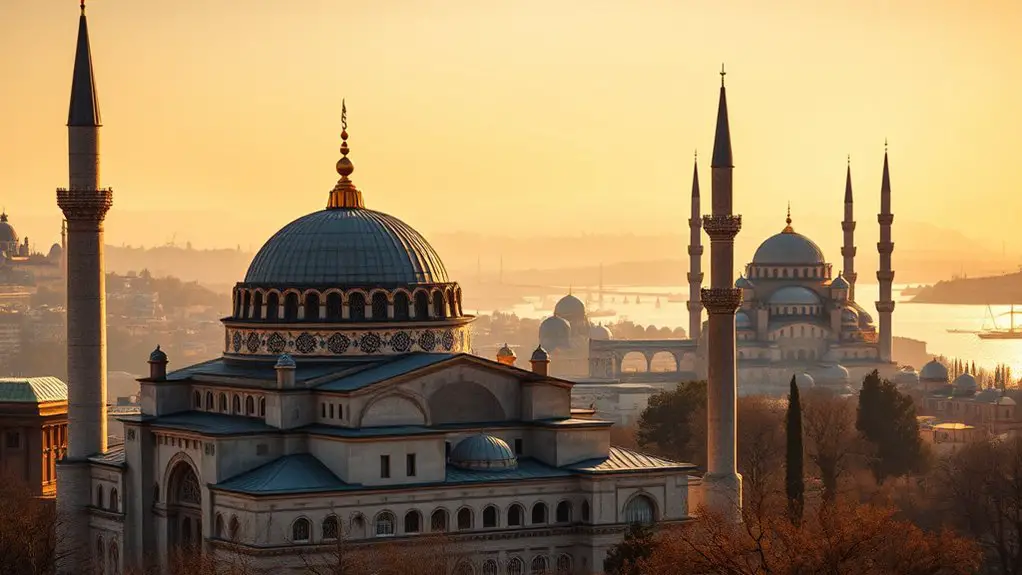
Sultanahmet gives you some of Istanbul’s most recognizable views, but the best spots are not all the same kind of viewpoint. Sultanahmet Square is the strongest free choice for photographing Hagia Sophia and the Blue Mosque together, Hagia Sophia’s upper gallery gives you an elevated look inside the monument, and nearby Galata Bridge is the better choice for Golden Horn and sunset scenery.
Quick Answer
The best Sultanahmet viewpoint for classic landmark photos is Sultanahmet Square, while Hagia Sophia’s upper gallery provides an elevated architectural view inside the monument. For sunset, continue to nearby Galata Bridge at the Golden Horn. The square and bridge are free; Hagia Sophia’s tourist gallery uses a separate paid visitor route.
Key Takeaways
- Best classic Sultanahmet view: Sultanahmet Square puts Hagia Sophia and the Blue Mosque within a few minutes’ walk of each other and costs nothing to enter.
- Best historic interior perspective: Hagia Sophia’s tourist route uses the upper gallery. It should not be confused with a public rooftop or panoramic terrace.
- Best sunset view nearby: Galata Bridge overlooks the Golden Horn and city skyline, but it is between Eminönü and Karaköy rather than inside Sultanahmet.
- Best photography light: Early morning usually means fewer people in Sultanahmet, while late afternoon and sunset work especially well around the Golden Horn.
- Check conditions before visiting Hagia Sophia: Major restoration work is continuing, so scaffolding and temporary structures may affect views.
Disclosure: As an Amazon Associate I earn from qualifying purchases. Some links on this page are affiliate links, at no extra cost to you.
Hagia Sophia Upper Gallery
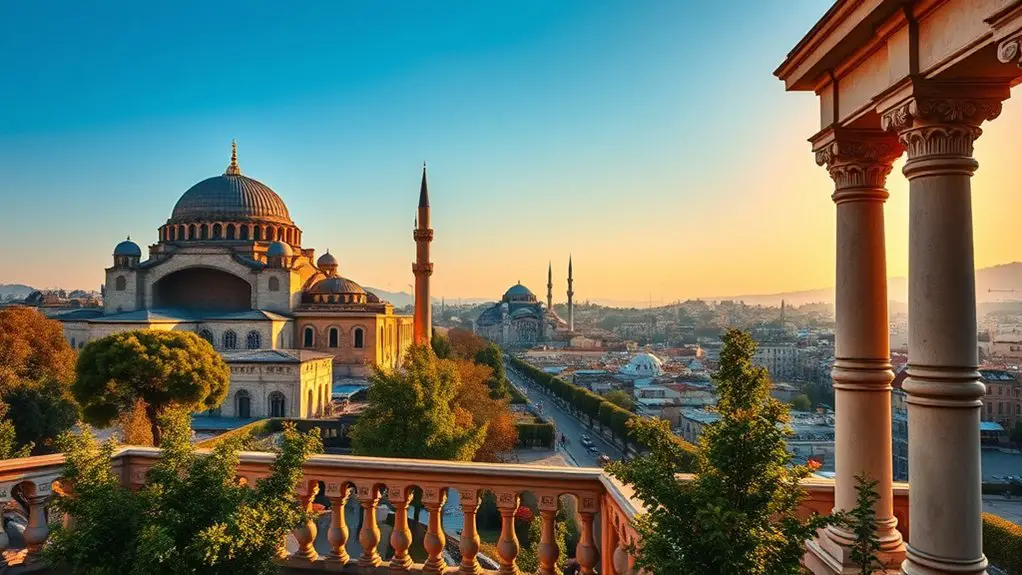
Hagia Sophia is one of Sultanahmet’s defining landmarks, but there is an important correction to make before you plan your visit: the normal sightseeing experience is an upper gallery visitor route, not a public rooftop called the “Hagia Sophia Terrace.”
The gallery gives you an elevated perspective on the building’s enormous interior, including its dome, arches and surviving mosaics. UNESCO identifies Hagia Sophia, constructed in its present monumental form from 532 to 537, as one of the architectural masterpieces within the Historic Areas of Istanbul World Heritage Site.
Since January 15, 2024, sightseeing visitors and worshippers have used separate routes. An official visitor-management notice published through TÜRSAB stated that foreign tourists visiting the gallery section would use the visitor entrance and set the admission price at €25 per person. Because admission arrangements and prices can change, check the posted conditions when you arrive rather than relying on an old travel guide.
Note: Hagia Sophia is undergoing major conservation work. Türkiye’s Directorate General of Foundations reported continuing work on the main dome and other structural elements in 2025 and 2026. Scaffolding, protective structures or temporary changes to the visitor route may affect what you can see and photograph.
For photographers, the upper gallery is best treated as an architectural viewpoint rather than a skyline overlook. Look for the relationship between the central dome, hanging lighting, marble surfaces, calligraphy and mosaics. The experience is very different from standing outside at sunset.
Hagia Sophia also remains an active mosque. Follow posted visitor instructions, dress appropriately, keep noise low and respect any areas reserved for worship. The official Hagia Sophia Grand Mosque website provides background on the building and its current religious status.
Pro Tip: If your main goal is an exterior photo of Hagia Sophia rather than its interior architecture, spend more of your photography time in Sultanahmet Square. You can frame the dome and minarets without paying for the gallery.
Sultanahmet Square: Best Free Landmark View
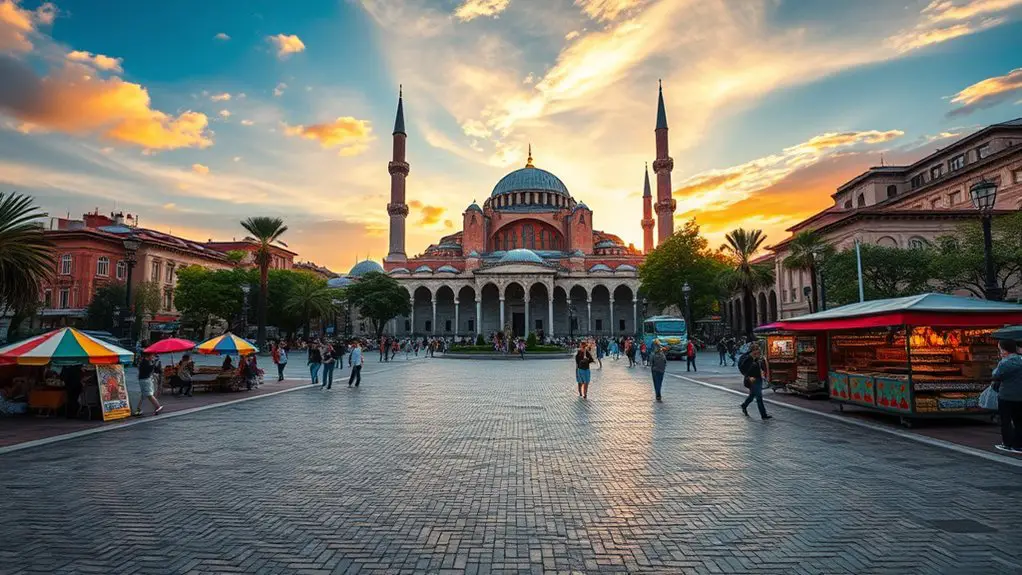
Sultanahmet Square is the most useful all-around viewpoint in the historic district. You can move between views of Hagia Sophia and the Blue Mosque, photograph fountains and gardens in the foreground, and explore the surviving monuments of the former Hippodrome without buying a ticket simply to enter the square.
The setting is historically important in its own right. According to GoTürkiye’s guide to the Hippodrome, today’s Sultanahmet Square covers the track of Constantinople’s ancient racecourse. The Obelisk of Theodosius, Serpent Column and Walled Obelisk preserve part of that much older landscape.
Instead of standing in one place, walk the length of the square. The best composition changes quickly as the domes, minarets, trees, fountains and ancient monuments overlap from different angles.
| What to Do | Why It Works Here |
|---|---|
| Landmark photography | Photograph Hagia Sophia, the Blue Mosque and historic monuments from several open angles. |
| Early-morning visit | Generally gives you more room to compose photographs before the busiest sightseeing period. |
| Historic sightseeing | The square preserves monuments associated with the ancient Hippodrome as well as views of later Ottoman architecture. |
| Rest break | Open pedestrian areas and benches make it easier to pause between nearby attractions. |
| Evening atmosphere | Exterior lighting and the changing sky create a very different scene from the daytime square. |
Seasonal displays and public events may also change the atmosphere of the square, but schedules vary. Treat any performance, festival or special installation as a bonus rather than assuming one will be taking place during your visit.
For the classic Sultanahmet photograph, the square is more useful than a single observation deck: a short walk lets you continually change the relationship between Hagia Sophia, the Blue Mosque and the monuments of the old Hippodrome.
Galata Bridge: Best Sunset View Near Sultanahmet
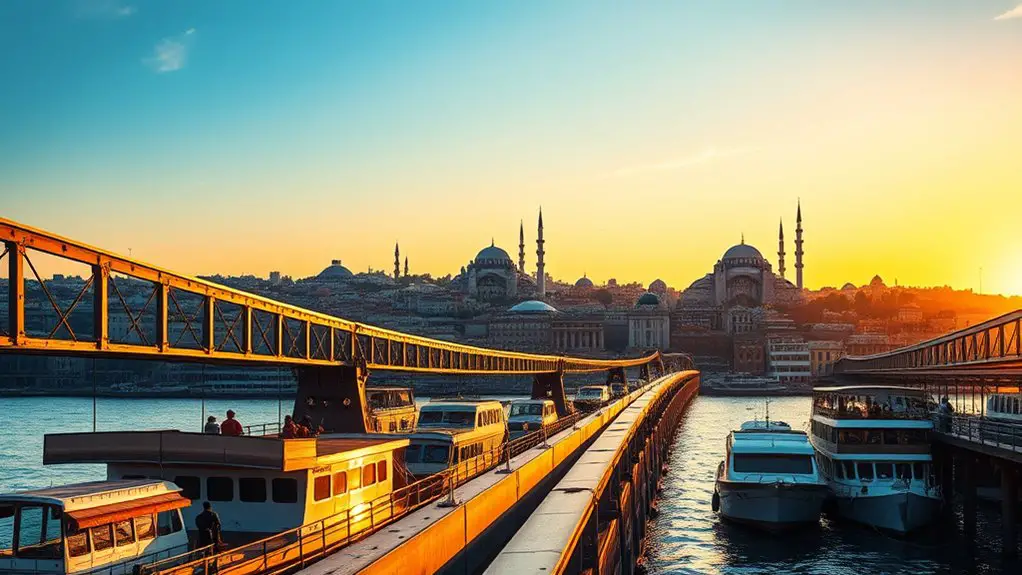
Galata Bridge is one of Istanbul’s best places to watch the city meet the water. From its pedestrian walkways, you can look across the Golden Horn toward mosques, ferries, waterfront buildings and the hills on either side of the inlet. Local anglers lining the railings add another unmistakably Istanbul element to the scene.
Note: Galata Bridge is not in Sultanahmet. It spans the Golden Horn between Eminönü and Karaköy. It belongs in this guide because it is an easy continuation of a Sultanahmet sightseeing route and offers a very different view from the historic square.
The bridge’s documented history also needs a little precision. Earlier bridges existed or were proposed at different points on the Golden Horn, but Istanbul Metropolitan Municipality dates the first Galata Bridge at this crossing to 1845. It was replaced several times as Istanbul changed and traffic increased. The municipality’s history of the New Galata Bridge traces those later versions.
Four things make the bridge worth the detour:
- Golden Horn views: Look inland along the water and across the layered city skyline.
- Local fishing culture: Anglers remain a familiar part of daily life on the bridge.
- Waterfront activity: Ferries and other boats give photographers moving subjects rather than a static skyline.
- Sunset light: Late-day light reflects from the Golden Horn and silhouettes the surrounding domes, minarets and waterfront buildings.
The lower level also contains restaurants, while the upper level carries pedestrians, road traffic and the T1 tram. You do not need to eat at a restaurant to enjoy the views from the pedestrian areas.
How to Reach Galata Bridge From Sultanahmet
The easiest public-transport option is the T1 Kabataş–Bağcılar tram. From Sultanahmet, travel toward Kabataş and get off at Eminönü. The bridge begins beside the waterfront. Metro Istanbul’s official T1 route information lists Sultanahmet, Sirkeci, Eminönü and Karaköy in sequence, with the tram itself continuing across Galata Bridge.
You can also walk from Sultanahmet through the historic peninsula toward Eminönü if you prefer to sightsee along the way. The downhill direction toward the waterfront is straightforward, although the return walk involves more climbing.
Pro Tip: Arrive before sunset rather than at the exact sunset time. That gives you daylight photographs, golden-hour frames and blue-hour city lights from the same walk across the bridge.
Which Sultanahmet Viewpoint Should You Choose?
| Viewpoint | Best For | Cost | Best Time |
|---|---|---|---|
| Hagia Sophia Upper Gallery | Elevated interior architecture, mosaics and dome details | Paid tourist route; verify current admission | Earlier in the day for easier sightseeing |
| Sultanahmet Square | Hagia Sophia, Blue Mosque and classic Old City photographs | Free | Early morning or late afternoon |
| Galata Bridge | Golden Horn, ferries, fishermen and sunset | Free | Late afternoon through blue hour |
Frequently Asked Questions
What are the best times to visit these viewpoints for photography?
For Sultanahmet Square, early morning is especially useful because the light is soft and the pedestrian areas are generally less busy than later in the day. Late afternoon also works well on the mosque exteriors. Galata Bridge is strongest from golden hour through sunset and blue hour. Hagia Sophia’s upper gallery is primarily an interior architectural viewpoint, so outdoor golden-hour timing matters less there.
Are there entrance fees for these Sultanahmet viewpoints?
Sultanahmet Square and the pedestrian areas of Galata Bridge are free. Hagia Sophia uses a separate visitor system for sightseeing in the upper gallery. The official visitor-management notice that took effect on January 15, 2024 set foreign-tourist gallery admission at €25. Check the current posted price and access rules before entering because visitor arrangements can change.
Can I bring food and drinks to these locations?
Sultanahmet Square and the Galata Bridge area have plenty of places nearby to buy food and drinks, but Hagia Sophia is an active place of worship rather than a picnic stop. Follow posted rules and staff instructions inside religious and ticketed areas. Wherever you eat outdoors, use bins and keep food away from monument surfaces.
Is public transportation available to these viewpoints?
Yes. The T1 Kabataş–Bağcılar tram stops at Sultanahmet for Hagia Sophia and Sultanahmet Square. To reach Galata Bridge, take the same line toward Kabataş and get off at Eminönü; the tram then continues across the bridge to Karaköy. This makes all three stops easy to combine without a taxi.
Are these viewpoints accessible for people with disabilities?
Accessibility varies by location. Metro Istanbul states that T1 stations are designed for low-floor trams and use accessible entrance ramps. Sultanahmet Square itself contains broad pedestrian areas, but historic paving, crowds and gradients can still create difficulties. Do not assume that every section of Hagia Sophia’s historic upper-gallery route is step-free; check current assistance and access arrangements with venue staff before purchasing admission.
Is Galata Bridge within walking distance of Sultanahmet?
It is possible to walk from Sultanahmet to Eminönü and Galata Bridge while sightseeing through the historic peninsula. For an easier trip, take the T1 tram from Sultanahmet to Eminönü. Galata Bridge is outside the Sultanahmet neighborhood, even though it is close enough to combine with an Old City itinerary.
Conclusion
You do not have to choose one viewpoint to understand Sultanahmet. Start in Sultanahmet Square for the classic exterior views of Hagia Sophia and the Blue Mosque. Visit the Hagia Sophia upper gallery when you want a closer, elevated look at the monument’s architecture. Then head to Galata Bridge for the Golden Horn and sunset. Together, the three stops show very different sides of Istanbul without pretending they are all the same type of viewpoint—or even in the same neighborhood.
Sources
- UNESCO World Heritage Centre — Historic Areas of Istanbul — Hagia Sophia, the Hippodrome and Sultanahmet’s World Heritage significance.
- Hagia Sophia Grand Mosque Official Website — official background and current status as an active mosque.
- Türkiye Directorate General of Foundations — Hagia Sophia Restoration — ongoing dome and structural conservation work.
- GoTürkiye — Hippodrome of Constantinople — history of the ancient racecourse beneath modern Sultanahmet Square.
- Istanbul Metropolitan Municipality — New Galata Bridge — documented history of the Galata Bridge crossing beginning in 1845.
- Metro Istanbul — T1 Kabataş–Bağcılar Tram Line — stations, route and accessibility information connecting Sultanahmet, Eminönü and Karaköy.
