
Last Updated on July 25, 2026 by Daniel Globe
Şişli is one of Istanbul’s best districts for mixing green spaces, elegant streets, modern architecture, and cultural landmarks in a single photo walk. The strongest shots usually come from Maçka Park, Nişantaşı, Bomonti, Şişli Mosque, and the Maçka-Taşkışla cable car, while places such as Cevahir and Fulya work better for indoor or neighborhood-scale photography than sweeping viewpoints.
Quick Answer
For the best photos in Şişli, start with Maçka Park for greenery and skyline contrast, Nişantaşı for elegant streets and façades, Bomonti for industrial character, and Şişli Mosque for architectural detail. Add the Maçka-Taşkışla cable car for elevated views, then use Cevahir and Fulya for modern and local scenes.
Key Takeaways
- Best all-around photo stop: Maçka Park gives you trees, paths, changing elevation, and urban backdrops in one place.
- Best street photography area: Nişantaşı works well for façades, storefronts, café scenes, and people-watching.
- Best industrial setting: Bomonti, especially Yapı Kredi bomontiada, offers historic brickwork and a creative cultural setting.
- Best architectural detail: Şişli Mosque rewards close framing of its domes, stonework, calligraphy, and balanced classical design.
- Check rules before shooting indoors: malls, museums, and places of worship can have their own photography, tripod, or flash policies.
Disclosure: As an Amazon Associate I earn from qualifying purchases. Some links on this page are affiliate links, at no extra cost to you.
Maçka Park
Nestled in Şişli, Maçka Park is one of the easiest places to photograph a mix of lush greenery and dense city scenery. Its sloping paths, mature trees, open lawns, and surrounding buildings give you several layers to work with in a single frame.
As you stroll through the park, look for curved pathways, benches beneath the trees, people walking dogs, and the contrast between foliage and the urban skyline. Instead of searching for one fixed lookout, use the changing elevation to test wide-angle compositions from several points.
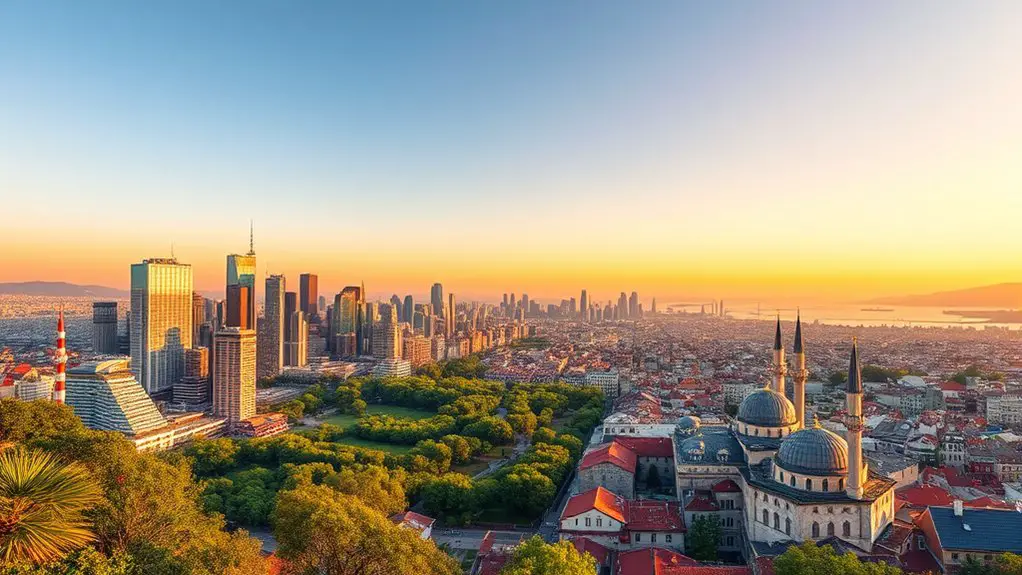
Maçka Park works best as a layered cityscape: greenery in the foreground, paths and people in the middle, and Şişli’s buildings rising behind them.
The park is also a strong place for candid lifestyle photos. Early morning usually gives you quieter paths, while late afternoon brings warmer light and more activity.
Pro Tip: Walk toward the Maçka cable-car station and photograph both across and down the park. The change in elevation can create more depth than shooting from the flattest lawn areas.
Maçka-Taşkışla Cable Car
For an elevated perspective, add the Maçka-Taşkışla cable car to your route. Metro Istanbul’s official page lists the TF1 line between Maçka and Taşkışla, making it a short but distinctive way to look over the park and surrounding city fabric. Metro Istanbul provides current TF1 line information.
The cabins move, so treat this as a quick observational viewpoint rather than a place for carefully staged tripod shots. A phone or camera with a fast shutter speed is useful for reducing motion blur through the window.
Bomonti
In the Bomonti area, the most dependable photo subject is the neighborhood’s industrial-meets-creative character rather than a promise of permanent street murals. The strongest focal point is Yapı Kredi bomontiada, a cultural campus in the historic Bomonti setting that hosts visual arts, performances, screenings, workshops, and the Ara Güler Museum.
Photograph brick surfaces, factory-scale proportions, courtyard geometry, signage, and the contrast between restored industrial architecture and contemporary cultural use. Temporary installations and street art can appear, but they change, so do not plan your visit around a specific mural unless you have confirmed it beforehand.
Bomonti becomes more atmospheric toward evening, when cafés and cultural venues add people, warm lighting, and movement. For cleaner architecture shots, arrive earlier in the day before the busiest periods.
Istanbul Cevahir Shopping Mall
Istanbul Cevahir is useful for modern indoor photography, especially when weather makes outdoor shooting less appealing. The mall’s current official information says it has over 200 brands across six floors, not more than 300 stores. Istanbul Cevahir’s official site also confirms its shopping-and-entertainment focus.
Instead of treating the mall as a classic scenic viewpoint, look for strong interior lines, escalators, repeating balconies, signage, reflections, and the scale of the central spaces. These details can produce clean architectural and urban-lifestyle images.
As you explore, the most dependable current highlights are:
- Interior architecture: Use upper levels to frame repeating floors, railings, and open atrium space.
- Food and café areas: Look for color, movement, and everyday city-life moments rather than staged shopping shots.
- Cinema and events: The mall currently promotes cinema and changing activities, so check the official site if you want to photograph a specific event.
Remember that Cevahir is private property. Personal photography may be fine in common areas, but staff can restrict tripods, commercial shoots, or photography in specific spaces.
Harbiye Military Museum
The Harbiye Military Museum and Cultural Site is a stronger choice for history and detail photography than for skyline views. Its official history explains that the former Harbiye building was restored for museum use and reopened in its modern arrangement in 1993. The museum’s official website also publishes current announcements, exhibitions, Mehter information, and admission updates.
Inside, focus on uniforms, weapons, documents, architectural details, and exhibition design where photography is permitted. Because rules can vary by hall, object, or event, check posted signs and ask staff before photographing exhibits closely, using flash, or setting up a tripod.
The exterior and entrance areas can also work well for symmetrical compositions that emphasize the scale and institutional character of the building.
Şişli Mosque
In the center of Şişli, Şişli Mosque is one of the district’s most distinctive architectural subjects. Construction began in 1945 and the mosque opened in 1949. It was designed by architect Vasfi Egeli, whose work reflected a strong interest in classical Ottoman-Turkish religious architecture. The TDV İslâm Ansiklopedisi profile of Vasfi Egeli identifies Şişli Mosque among his notable works.
When you visit, focus on three kinds of images:
- Exterior symmetry: Step back far enough to frame the main dome, minaret, and entrance without cutting off the upper details.
- Interior craftsmanship: If photography is permitted, look for calligraphy, decorative surfaces, arches, and repeating forms.
- Street context: A wider frame can show how the mosque sits within busy modern Şişli, creating a strong old-and-new contrast.
Photograph respectfully. Avoid blocking entrances, photographing worshippers closely without permission, or using flash during prayer.
Çağlayan Square
Çağlayan is better approached as a place for documentary urban photography than as a guaranteed street-art or festival destination. The area is busy, dense, and contemporary, so the strongest images tend to come from traffic patterns, pedestrians, modern façades, signs, and everyday city movement.
For a more recognizable historical subject in the wider area, consider the Abide-i Hürriyet monument and its surroundings rather than relying on temporary murals or unverified weekend events. Keep compositions simple and avoid photographing security-sensitive entrances or personnel around government buildings.
Bring a normal or slightly wide lens and look for repeating lines, layered street scenes, and moments where older urban elements meet newer construction.
Nişantaşı
In Nişantaşı, you’ll find one of Şişli’s best combinations of street life, fashion, cafés, and historic façades. The neighborhood is especially useful when you want polished urban photos without leaving the district.
Visit Istanbul’s Nişantaşı guide highlights Abdi İpekçi Street, café-lined side streets such as Teşvikiye and Mim Kemal Öke, and the area’s Art Nouveau and late Ottoman architectural character.
Trendy Cafés and Boutiques
For stylish street photography, use storefronts and café terraces as part of the scene rather than making the visit about one supposedly “Instagram-famous” café.
Three reliable areas to focus on are:
- Abdi İpekçi Street: Luxury storefronts, broad sidewalks, polished façades, and well-dressed foot traffic create strong fashion-and-city compositions.
- Teşvikiye side streets: Café seating and tree-lined corners work well for candid lifestyle frames and detail shots.
- Mim Kemal Öke Street: Use shop windows, reflections, pedestrians, and façades for tighter street scenes.
Architectural Highlights and Details
Nişantaşı blends late Ottoman, early Republican, Art Nouveau, and contemporary architecture. Look up as you walk: balconies, bay windows, carved details, metalwork, and curved façades often make better photographs than shooting only at eye level.
Try alternating between wide street views and close detail frames. A longer focal length can isolate balconies and ornament, while a wider lens is useful for showing how historic façades sit beside modern retail.
The neighborhood is particularly effective in soft morning light or late-afternoon light, when façades gain depth and hard midday shadows are reduced.
Scenic Parks and Streets
As you explore Nişantaşı, three easy photo stops stand out:
- Maçka Park: Use paths and trees as foreground elements, then frame nearby buildings beyond them.
- Teşvikiye streets: Photograph café terraces, residential façades, shop windows, and everyday neighborhood movement.
- Abdi İpekçi Street: This is the stronger Nişantaşı choice for fashion, storefront, and polished city photography; Abide-i Hürriyet Street belongs farther north in Şişli and should not be presented as a Nişantaşı photo street.
Fulya Park
Fulya Park offers a quieter neighborhood-scale change of pace from Şişli’s busier commercial streets. It is better for local-life images, greenery, benches, paths, and small details than for dramatic panoramas.
Use the park as a short stop when you want softer backgrounds, portraits with greenery, or a visual break between urban scenes. The light is usually easiest to work with in the morning or late afternoon, when trees and surrounding buildings create more texture and less harsh contrast.
Because landscaping and park features can change, do not plan around a specific pond, sculpture, or flower display unless you have checked current conditions.
Best Time for Photos in Şişli
The best time depends on the subject. Early morning is ideal for quieter streets in Nişantaşı and cleaner architecture shots. Late afternoon and golden hour suit Maçka Park, where warm side light adds depth to trees, paths, and buildings. Midday is more useful for indoor locations such as Cevahir or for close architectural details where sky color matters less.
After sunset, Bomonti and Nişantaşı can work well for storefront lights, café scenes, and reflections. Raise your ISO only as much as needed and stabilize your camera against a wall or railing when tripods are impractical.
Getting Around Şişli for a Photo Walk
A practical route is to begin around Osmanbey and Nişantaşı, continue downhill toward Maçka Park, and use the TF1 Maçka-Taşkışla cable car for a short elevated view. From the Harbiye side, you can continue toward the Military Museum. Cevahir, Fulya, and Çağlayan are easier to treat as separate stops rather than forcing every location into one long walk.
Nişantaşı is served by the Osmanbey area of the M2 metro corridor, while central Şişli also has extensive bus and rail connections. Check current service before traveling because temporary station closures or route changes can occur.
Note: These are photo spots, not all formal “viewpoints.” Parks and the cable car provide the clearest elevated perspectives, while Nişantaşı, Bomonti, Cevahir, Çağlayan, and Fulya are better for street, architectural, or lifestyle photography.
Photography Etiquette and Rules
Outdoor public-space photography is usually the simplest, but indoor and religious locations can have separate rules. Ask before using a tripod or flash in a museum, mall, or mosque, and follow any posted signs or staff instructions.
For street photography, avoid putting a camera close to someone’s face without permission. This matters especially with children, people at prayer, security personnel, and anyone who clearly does not want to be photographed. A little patience and courtesy usually lead to better images anyway.
Frequently Asked Questions
What is the best time for photography in Şişli?
Early morning is best for quieter streets and cleaner architecture shots. Late afternoon and golden hour are especially good for Maçka Park and Nişantaşı because the lower sun adds warmer color and stronger depth. Midday works better for indoor locations and close-up details.
Are there entrance fees for these photo spots?
Public streets and neighborhood parks generally do not require an admission ticket. Istanbul Cevahir does not charge an entrance fee simply to enter the mall. The Harbiye Military Museum has paid admission, and the Maçka-Taşkışla cable car uses Istanbul’s public-transport fare system. Check current prices before visiting.
Can I reach these locations by public transportation?
Yes. Osmanbey is the main metro access point for Nişantaşı, and central Şişli has additional metro and bus connections. The TF1 cable car links Maçka and Taşkışla. Because Istanbul transit can change temporarily, check current service on the day of your visit.
Are guided photography tours available for these viewpoints?
General Istanbul photography walks and private photo tours may include parts of Şişli, but you should not assume that a single tour covers every place in this guide. Check the exact itinerary before booking, especially if Maçka, Nişantaşı, or Bomonti is your priority.
Is photography allowed in all these areas?
No single rule covers every location. Public outdoor areas are the least restrictive, while museums, malls, events, and mosque interiors can set their own policies. Follow posted rules and ask staff before using flash, tripods, lighting equipment, or conducting a commercial shoot.
Which Şişli photo spot is best for sunset?
Maçka Park is the strongest all-around sunset choice because the low light can catch trees, slopes, paths, and surrounding buildings in the same scene. Nişantaşı is also good near sunset if you prefer façades, shop windows, and street-life images instead of a park setting.
Conclusion
Şişli rewards photographers because its best images do not all come from the same kind of place. Maçka Park gives you greenery and elevated city context, Nişantaşı delivers stylish streets and architecture, Bomonti adds industrial character, and Şişli Mosque provides strong historical detail. Add the cable car, Cevahir, Çağlayan, or Fulya depending on whether you want views, interiors, documentary street scenes, or quieter local frames. Keep your camera ready, but let the light, the setting, and the rules of each location guide the shot.
Sources
- Metro Istanbul — TF1 Maçka-Taşkışla Cable Car Line — route and operating details for the elevated Maçka connection.
- Yapı Kredi bomontiada — About — cultural-campus use, events, and institutions in the Bomonti complex.
- Istanbul Cevahir — About Us — current brand count, floor count, and shopping-and-entertainment information.
- Harbiye Military Museum and Cultural Site Command — current museum announcements, visitor information, and institutional details.
- TDV İslâm Ansiklopedisi — Vasfi Egeli — architect and architectural context for Şişli Mosque.
- Visit Istanbul — Nişantaşı — neighborhood architecture, streets, café culture, and access information.
