
Last Updated on July 27, 2026 by Daniel Globe
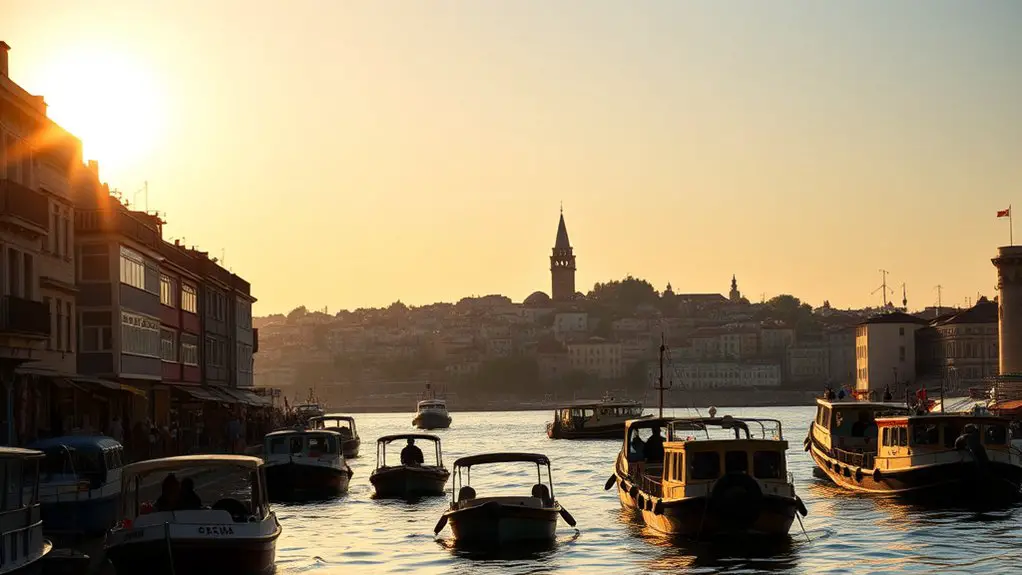
Karaköy is one of Istanbul’s most photogenic waterfront districts, where Ottoman-era architecture, Genoese heritage, and modern café culture converge along the Bosphorus. From Golden Horn sunsets on the Galata Bridge to hidden rooftop terraces and neoclassic arcades, capturing this neighborhood requires knowing exactly where to look and when the light hits best.
Quick Answer
The best photo spots in Karaköy are Galata Bridge (sunset over the Golden Horn), Galataport Promenade (unobstructed historical peninsula views), Camondo Stairs (Art Nouveau curves), Karaköy Pier, Umbrella Street (street art), Fransız Geçidi, and rooftop terraces near Galata Tower. Golden hour provides the richest light across all locations.
Key Takeaways
- Galata Bridge & Pier: Unrivaled for sunset silhouettes, ferry motion, and street photography over the Golden Horn.
- Galataport & Istanbul Modern: Modern waterfront promenade featuring clean architectural lines and wide Bosphorus panoramas.
- Camondo Stairs: Historic 1870s Art Nouveau staircase offering dramatic leading lines on Banker Street.
- Ottoman & Religious Landmarks: Kılıç Ali Paşa Mosque, Yeraltı Camii, and the historic Ashkenazi Synagogue showcase centuries of multicultural design.
- Street Art & Arcades: Umbrella Street (Hoca Tahsin Sokak) and Fransız Geçidi provide rich texture for environmental portraits.
At a Glance
| Time Required | 2 to 4 hours (Morning for empty alleys; Golden Hour for waterfront) |
| Difficulty | Easy to Moderate (paved street walking with mild cobblestone inclines) |
| Recommended Gear | 24–70mm zoom lens, 16–35mm wide-angle, CPL filter, smartphone portrait mode |
| Cost | Free (small cost for ferries, public transit, or rooftop café drinks) |
Disclosure: As an Amazon Associate I earn from qualifying purchases. Some links on this page are affiliate links, at no extra cost to you.
Galata Bridge: A Waterfront Perspective
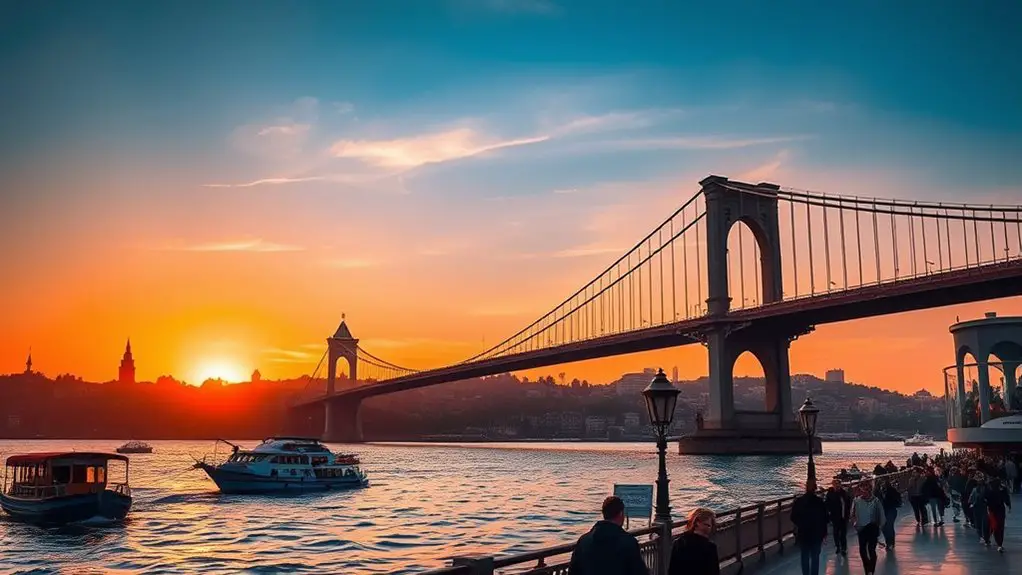
As you stroll along Karaköy’s edge, the historic Galata Bridge serves as a vital pedestrian artery connecting Karaköy to the Sultanahmet peninsula across the Golden Horn. The bridge provides an expansive vantage point where light reflects off the water, framing iconic mosque silhouettes during late afternoon.
The Galata Bridge is where fishermen, commuters, and photographers share the same railing—and the same view.
Position yourself along the upper deck railings to capture local anglers, passing ferries, and the distant dome of Süleymaniye Mosque. Looking south toward dusk reveals deep orange and purple skies contrasting with urban streetlights.
Pro Tip: Arrive 30 to 40 minutes before sunset. This gives you time to set up low-angle shots along the railings before golden hour light peaks.
Galataport & Istanbul Modern: Contemporary Waterfront Architecture
Stretching 1.2 kilometers along the Bosphorus, Galataport İstanbul represents Karaköy’s modern waterfront evolution. The pedestrian-only boardwalk pairs minimalist glass structures with uninterrupted views across the water to Topkapi Palace, Hagia Sophia, and the Maiden’s Tower.
Adjacent to the port stands the Istanbul Modern Art Museum building (designed by architect Renzo Piano). Its reflective aluminum facade and elevated terrace offer clean geometry and dynamic reflection shots against the Bosphorus skyline. Nearby, the restored 19th-century Tophane Clock Tower provides an elegant contrast between Ottoman masonry and modern glass architecture.
Camondo Stairs (Kamondo Merdivenleri): Art Nouveau Curves
Located on Banker Sokak just off Karaköy’s main avenue, the Camondo Stairs are one of Istanbul’s most celebrated architectural details. Built in the 1870s by the prominent Ottoman-Jewish Camondo family, this ribbon-like Art Nouveau staircase was designed to help children navigate the steep incline safely.
The intertwined steps form natural leading lines and geometric shadows. For the best composition, shoot from the base looking up with a wide-angle lens (16–24mm) to emphasize the fluid double-S curve.
Karaköy Pier: Everyday Istanbul in Motion
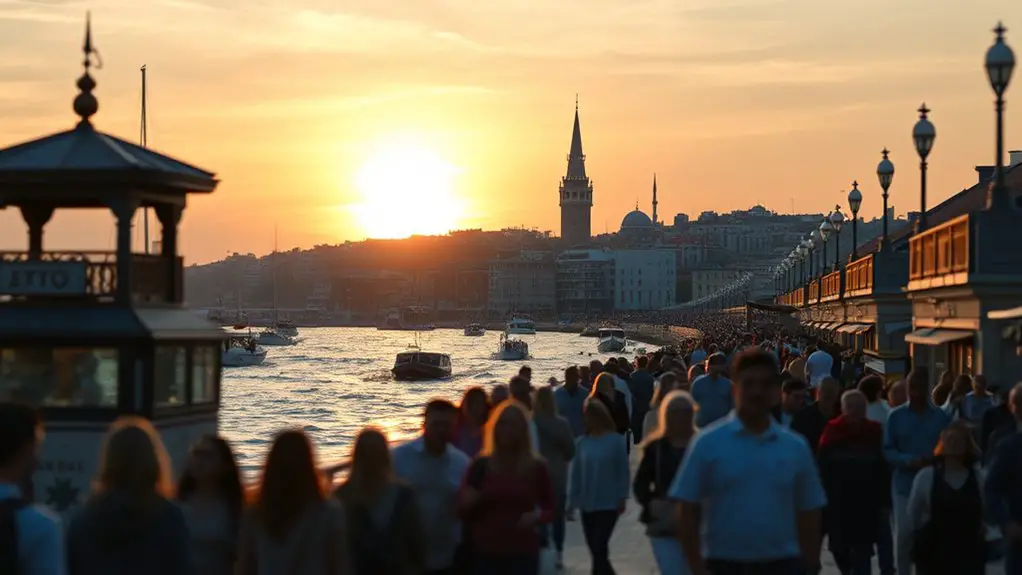
Just steps from Galata Bridge, Karaköy Pier is a bustling maritime hub where public ferries dock continuously. It is an ideal spot for street photography, capturing commuters, tea sellers, and flocks of gulls circling overhead against the water backdrop.
The pier area blends retro ferry terminals, street food carts selling fresh simit, and nearby outdoor tea gardens—yielding rich human interest framing throughout the day.
Umbrella Street & Street Art: A Vibrant Urban Canvas
Karaköy’s side alleys function as an open-air art venue. Head to Hoca Tahsin Sokak (widely known as Umbrella Street), where a colorful canopy of open umbrellas hangs above the cobblestones between historic brick facades.
Exploring adjacent streets like Mumhane Sokak and Ali Paşa Değirmeni reveals large-scale murals, independent gallery storefronts, and vintage café outdoor seating. Early morning visits yield clutter-free shots before dining tables fill the narrow walkways.
Kılıç Ali Paşa Mosque: Classic Ottoman Symmetry
Situated near the Tophane tram stop, the 16th-century Kılıç Ali Pasha Mosque Complex was designed by master Ottoman architect Mimar Sinan. Commissioned by Grand Admiral Kılıç Ali Pasha in 1580, its dome and courtyard layout mirror elements of Hagia Sophia.
The central marble ablution fountain, surrounding arched porticos, and Iznik tile interior work provide refined architectural photography opportunities. Morning sunlight filtering through the courtyard arches creates soft, balanced exposure.
Fransız Geçidi (French Pass): European Elegance
Connecting Kemankeş Street with Mumhane Street, Fransız Geçidi (French Pass) is a historic covered arcade dating back to 1860. Designed with neoclassical arches, wrought-iron grillwork, and stone paving, it reflects Karaköy’s 19th-century history as a European commercial center.
The natural light filtering through the arcade ends makes it an excellent choice for environmental portraits and urban framing, particularly when illuminated by café lanterns in late afternoon.
Yeraltı Camii (Underground Mosque): Atmospheric Subterranean Vaults
Tucked away near Kemankeş Street, Yeraltı Camii (the Underground Mosque) offers a completely unique architectural atmosphere. Constructed inside a low-ceilinged subterranean cellar that formed part of a Byzantine naval fortress, this site once anchored the massive iron chain used to block enemy ships from entering the Golden Horn.
Inside, rows of short stone pillars and soft green floor lighting create an atmospheric, quiet space for low-light interior detail photography (always respecting worshippers).
Rooftop Views Above the City
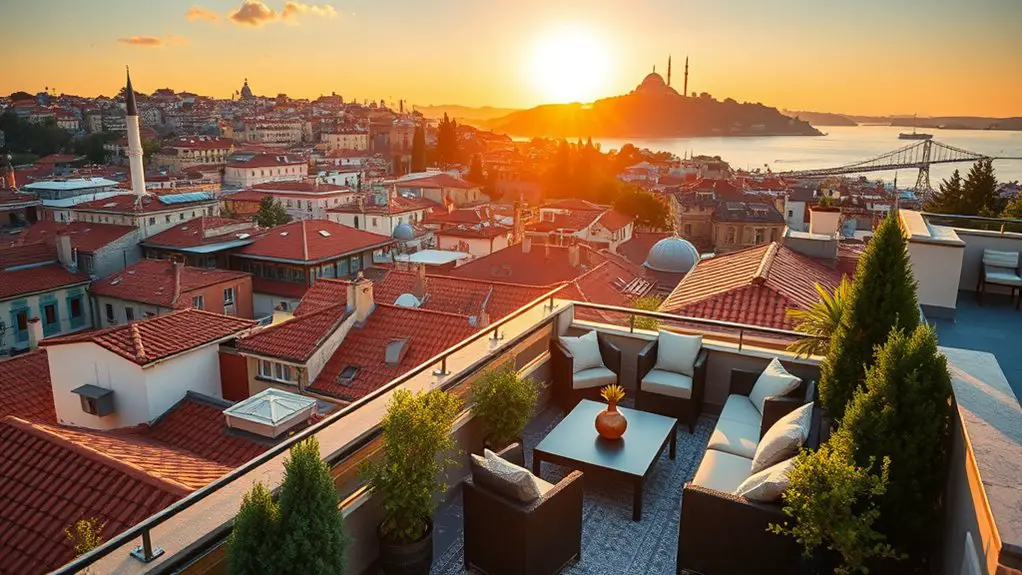
Multiple rooftop terraces tucked along Karaköy’s steep side streets offer elevated views of the Bosphorus, Galata Tower, and the surrounding historic rooflines. Gaining elevation changes the perspective completely, letting you align historic minarets with modern sea traffic.
Note: Most rooftop venues operate as commercial cafés or restaurants. Purchasing a tea or coffee is customary, and weekend sunset hours may require advance table reservations.
The Ashkenazi Synagogue: A Historic Landmark
Located on Yüksek Kaldırım Street near Galata Tower, the Ashkenazi Synagogue was established in 1900 by Austrian-Jewish immigrants. It stands as Istanbul’s only active Ashkenazi place of worship.
Its striking triple-arched facade and European architectural details make it a standout subject along the street. Exterior photography is easily done from street level, particularly in soft late-afternoon daylight.
Warning: The Ashkenazi Synagogue is an active place of worship. Interior visits require prior permission from the Chief Rabbinate, and photography during prayer services is strictly prohibited.
Salacak (Üsküdar): A Sunset Side Trip
A quick 10-minute ferry ride from Karaköy Pier brings you to Salacak on the Asian side of the Bosphorus. Situated along Üsküdar’s waterfront promenade directly facing Maiden’s Tower (Kız Kulesi), this location offers sweeping views back toward Karaköy and Sultanahmet.
Positioning yourself along the Salacak shore at dusk allows you to capture sunset reflections behind the Maiden’s Tower silhouette with the European skyline in the distance.
Recommended Karaköy Photography Walking Route
To capture these spots efficiently in optimal light without unnecessary backtracking, follow this self-guided walking route:
- Start (Morning 08:30 AM): Karaköy Tram Stop $\rightarrow$ Walk to Umbrella Street (Hoca Tahsin Sokak) and Fransız Geçidi for empty street shots.
- Mid-Morning (10:00 AM): Explore Kılıç Ali Paşa Mosque Courtyard and Galataport Waterfront Promenade.
- Midday (12:00 PM): Head inland to Camondo Stairs on Banker Street and the Ashkenazi Synagogue facade.
- Late Afternoon (16:00 PM): Visit a Rooftop Café near Galata Tower for coffee and high-angle panoramas.
- Golden Hour & Sunset: Walk down to Karaköy Pier and finish on Galata Bridge as the sun sets over the Golden Horn.
Essential Photography & Planning Tips
Keep these practical camera and exposure guidelines in mind when shooting in Karaköy:
- Lens Selection: A standard 24–70mm f/2.8 lens handles most waterfront and portrait scenarios, while a 16–35mm wide-angle lens is essential for narrow alleyways like Banker Street.
- Exposure Management: Deep shadow zones between tall historic buildings contrast sharply with bright water reflections on the Bosphorus. Bracket your shots ($\pm 1.5$ EV) or use dynamic range optimization.
- Tripod Use: Tripods are easy to set up along Galataport and Galata Bridge railings, but avoid using them in narrow alleys or busy café arcades during peak lunch hours.
Frequently Asked Questions
What time is best for photos at Galata Bridge?
Golden hour, roughly 30–40 minutes before sunset, provides soft light and warm color over the Golden Horn and surrounding mosque domes.
Are there entry fees for rooftops in Karaköy?
Most rooftop cafés and bars do not charge formal entry fees, though purchasing a drink or food item is customary. Policies vary during peak sunset hours.
Where are the Camondo Stairs located in Karaköy?
The Camondo Stairs are located on Banker Sokak, connecting Bankalar Caddesi with Felek Sokak, a 3-minute walk from Karaköy tram station.
Can you recommend nearby cafés for photo breaks?
Cafés along Mumhane Street, Kemankeş Street, and Hoca Tahsin Sokak offer outdoor seating ideal for photo breaks between locations.
Is public transportation accessible to these viewpoints?
Yes. The T1 tram line stops directly at Karaköy and Tophane, while public ferries connect Karaköy Pier with Kadıköy and Üsküdar.
Is Galataport open to the public for photography?
Yes, Galataport’s 1.2 km outdoor waterfront promenade is free and fully open to the public for handheld photography.
Conclusion
Karaköy rewards photographers who take time to explore beyond the obvious waterfront angles. Whether you are framing sunset reflections on Galata Bridge, admiring the curving Art Nouveau lines of the Camondo Stairs, documenting Sinan’s Ottoman craftsmanship at Kılıç Ali Paşa Mosque, or capturing modern waterfront angles at Galataport, each corner adds depth to Karaköy’s story. Bring your camera, follow golden hour light, and enjoy one of Istanbul’s most dynamic districts.
Sources
- GoTürkiye Official Travel Portal — Official guide on Karaköy historic streets, art galleries, and dining.
- Galataport İstanbul Official Site — Details on the waterfront promenade, architecture, and Bosphorus views.
- Camondo Stairs — Wikipedia — History and architectural details of the Art Nouveau staircase.
- Ashkenazi Synagogue of Istanbul — Wikipedia — Founding dates and active status of the synagogue.
- Kılıç Ali Pasha Complex — Wikipedia — Architectural details of Mimar Sinan’s 1580 mosque complex.
