
Last Updated on July 27, 2026 by Daniel Globe
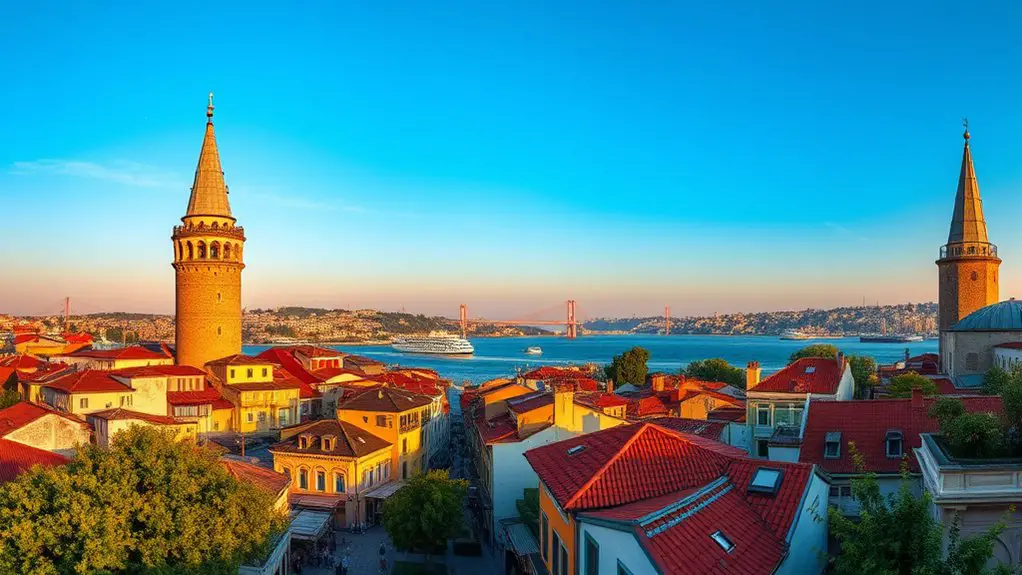
Beyoğlu gives you several very different ways to see Istanbul, from a 360-degree panorama at Galata Tower to waterfront views beside the Bosphorus. The key is knowing which places are true Beyoğlu viewpoints and which require a trip to another district. Galata Tower, Istanbul Modern, and the Karaköy-Galataport waterfront are the strongest choices within Beyoğlu itself, while Pierre Loti Hill and Çamlıca Hill make worthwhile add-on excursions elsewhere in the city.
Quick Answer
For the best viewpoints in Beyoğlu, start with Galata Tower for a high 360-degree panorama, then visit Istanbul Modern’s rooftop viewing terrace and the Galataport waterfront for Bosphorus and Historical Peninsula views. Taksim, Pera Museum, and Çukurcuma are worthwhile nearby stops, while Pierre Loti and Çamlıca are outside Beyoğlu.
Key Takeaways
- Galata Tower is the classic elevated viewpoint in Beyoğlu, with broad views over the Golden Horn, Bosphorus, Historical Peninsula, and surrounding neighborhoods.
- Istanbul Modern has a genuine rooftop viewing terrace in its Renzo Piano-designed waterfront building.
- Galataport gives you a free, ground-level waterfront perspective and is easy to combine with Istanbul Modern and Karaköy.
- Pera Museum, Taksim Square, and Çukurcuma are excellent cultural or photography stops, but they should not be treated as elevated panoramic viewpoints.
- Pierre Loti Hill is in Eyüp/Eyüpsultan, while Çamlıca Hill is in Üsküdar on the Asian side, so both require a separate trip from Beyoğlu.
Disclosure: As an Amazon Associate I earn from qualifying purchases. Some links on this page are affiliate links, at no extra cost to you.
Best Beyoğlu Viewpoints by Experience
- Best 360-degree panorama: Galata Tower.
- Best museum-and-view combination: Istanbul Modern.
- Best free waterfront view: Galataport and the Karaköy waterfront.
- Best cultural stop near the viewpoints: Pera Museum.
- Best street-photography stop: Çukurcuma.
- Best nearby green escape: Maçka Democracy Park.
- Best Golden Horn excursion outside Beyoğlu: Pierre Loti Hill.
- Best broad city panorama outside Beyoğlu: Çamlıca Hill.
Note: “Beyoğlu viewpoints” and “Istanbul viewpoints near Beyoğlu” are not the same thing. Pierre Loti Hill and Çamlıca Hill are excellent scenic spots, but they are in other districts and should be planned as separate excursions.
Galata Tower
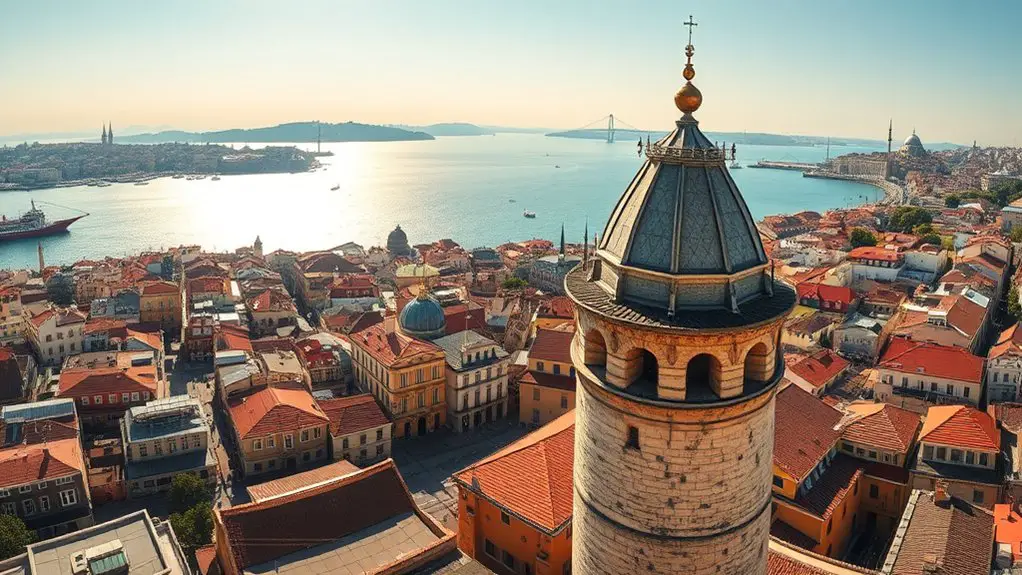
Rising above the narrow streets of Galata, Galata Tower is the most recognizable elevated viewpoint in Beyoğlu. According to the Turkish Museums listing, the tower reaches 62.59 meters to the tip of its roof and now operates as the Galata Tower Museum.
The structure has roots in medieval Galata and remains one of the best places to understand Istanbul’s geography from above. From the upper level, the city opens in several directions: the Golden Horn curves toward the Historical Peninsula, the Bosphorus stretches toward the Asian shore, and the dense roofs of Galata and Karaköy fill the foreground.
The museum route combines an elevator with stairs. The official museum information notes that the elevator reaches the upper floors but does not eliminate all stair use, so visitors with limited mobility should check the latest accessibility arrangements before buying a ticket.
For a single view that explains how the Golden Horn, Bosphorus, Historical Peninsula, Galata, and modern Istanbul fit together, Galata Tower is the strongest choice in Beyoğlu.
Late afternoon gives you warm light over the city, but it is also a popular period. An earlier visit can mean softer light and an easier experience around the compact viewing area.
Pro Tip: Use Galata Tower as the high point of a walking route. After the tower, continue downhill through Galata toward Karaköy, Istanbul Modern, and Galataport so the rest of the route is mostly downhill.
Taksim Square
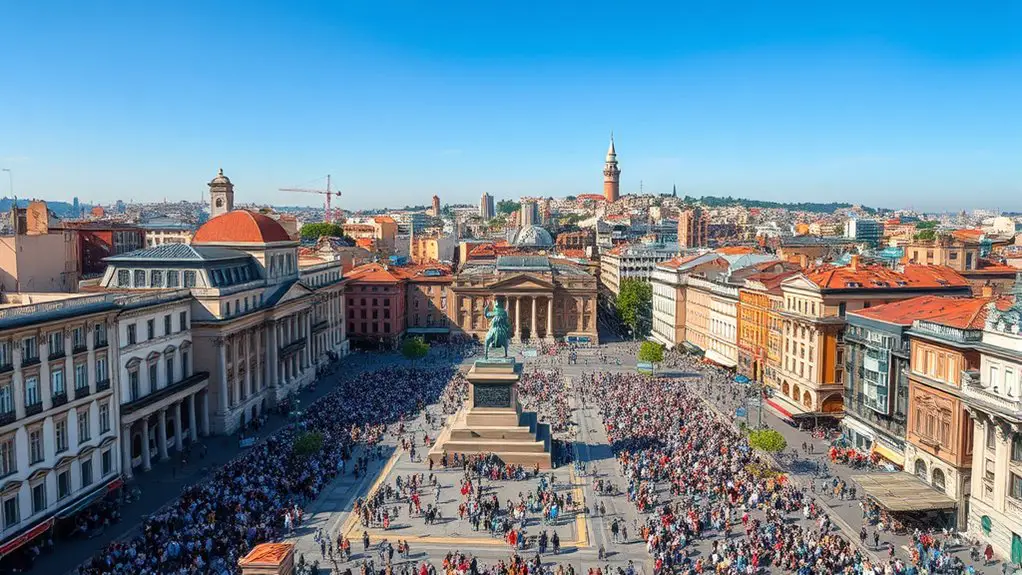
Taksim Square is one of Beyoğlu’s most important public spaces. It is better understood as a cultural and transportation hub than as a panoramic viewpoint, but it makes a natural starting point for a Beyoğlu sightseeing route.
From here, you can move along İstiklal Avenue toward Pera, Şişhane, and Galata before descending to Karaköy and the waterfront.
Historical Significance of Taksim
Taksim’s history is closely tied to Istanbul’s water system and later urban development. Research presented by the Istanbul Research Institute describes the area as including a water-distribution center, promenades, coffeehouses, and cemeteries in the 17th and 18th centuries. The district changed considerably during the 19th century and became one of the Republic’s most important civic spaces in the 20th century.
The Republic Monument remains the square’s visual centerpiece and reflects Taksim’s role in the public memory of modern Turkey.
Taksim has also repeatedly served as a gathering place for public celebrations, demonstrations, and other major events. That history gives the square significance beyond sightseeing.
Vibrant Atmosphere and Culture
Taksim’s appeal comes from movement rather than scenery. Locals, commuters, visitors, street musicians, restaurants, shops, and cultural venues all converge in and around the square.
Three experiences stand out:
- Cultural Events: The square and nearby Atatürk Cultural Center frequently form part of Istanbul’s cultural life.
- Local Food: The streets leading away from Taksim offer everything from simit and döner to cafés, dessert shops, and late-night snacks.
- Street Life: İstiklal Avenue begins beside the square and leads through one of the city’s busiest pedestrian corridors toward Tünel and Galata.
Warning: Metro stations and roads around Taksim can occasionally be temporarily closed during major public events. Check current Metro Istanbul and local transport notices on the day of your visit rather than relying only on a saved itinerary.
Pierre Loti Hill
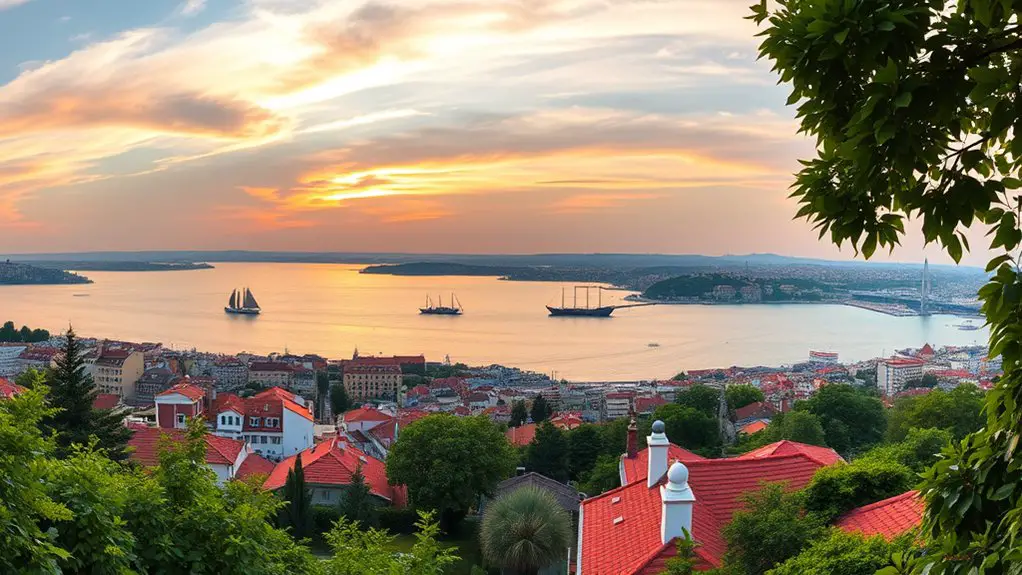
Pierre Loti Hill is a rewarding viewpoint, but it is important to place it correctly: it is in Eyüp/Eyüpsultan, not Beyoğlu. The official Visit Istanbul guide describes the hill as a scenic destination overlooking the Golden Horn.
The viewpoint is especially attractive if you want to see the Golden Horn from farther inland. The urban landscape stretches along both shores, giving you a different sense of scale from the tighter view around Galata Tower.
The hill is associated with French novelist Pierre Loti and has long been known for its café terrace. Tea or coffee with the Golden Horn below remains part of the experience.
You can reach the upper area on foot or by the Eyüp–Pierre Loti cable car. This makes it possible to pair the viewpoint with Eyüp Sultan and the surrounding historic neighborhood rather than trying to squeeze it into a short Beyoğlu walk.
Note: Treat Pierre Loti Hill as a separate Golden Horn excursion. It does not fit naturally between Taksim, Galata, and Karaköy on foot.
Çamlıca Hill
Çamlıca Hill offers one of Istanbul’s broadest city panoramas, but it is also outside Beyoğlu. It is in Üsküdar on Istanbul’s Asian side. The city’s official visitor guide places the hill at roughly 268 meters above sea level and notes views over the Bosphorus, Sea of Marmara, and Historical Peninsula.
Scenic Overlook Experience
From Çamlıca Hill, Istanbul spreads across a much wider field of view than it does from central Beyoğlu. The higher elevation gives you a broad look over the Bosphorus and both the European and Asian sides.
- Wide City Panorama: This is a good choice when you want to appreciate Istanbul’s overall scale rather than focus on one neighborhood.
- Green Setting: The landscaped hilltop gives you room to pause between photos and take in the view.
- Historical Peninsula Views: In clear weather, the older city appears across the water as part of the distant skyline.
Best Time to Visit
Early morning can provide clearer air, gentler light, and a quieter atmosphere. Late afternoon and sunset offer warmer colors, although the viewpoint may be busier.
Spring and autumn are especially comfortable for spending time outdoors. Summer afternoons can feel hot, while winter can bring cold wind and reduced visibility.
Because the view depends heavily on haze, cloud, and visibility, it is worth checking the weather before crossing the city specifically for this viewpoint.
Nearby Attractions to Explore
After visiting Çamlıca Hill, you can turn the outing into a broader Asian-side trip:
- Çamlıca Mosque: The large hilltop mosque and its surrounding complex are close to the scenic area.
- Kuzguncuk: This colorful Üsküdar neighborhood offers historic houses, cafés, and streets suited to a slower walk.
- Üsküdar Waterfront: Returning toward the Bosphorus gives you another angle on the European skyline and an easy ferry connection across the water.
Rahmi M. Koç Museum
The Rahmi M. Koç Museum sits beside the Golden Horn in Hasköy and focuses on Turkey’s industrial, engineering, transport, and maritime heritage.
Its collections include classic vehicles, machinery, boats, aircraft-related exhibits, and a submarine. The museum’s official visitor information also highlights its Golden Horn setting and public-transport connections.
This is not an elevated panorama like Galata Tower. Instead, the attraction combines a waterside setting with substantial museum content, making it most useful for travelers who want a view of the Golden Horn alongside several hours of indoor and outdoor exhibits.
The museum’s official visitor page lists access by bus, Metrobus, and Hasköy Pier.
Photography enthusiasts can also use the waterfront and large industrial artifacts to create very different images from the classic skyline shots found around Galata.
Pera Museum
The Pera Museum is an important art and cultural stop in Tepebaşı, Beyoğlu. Its home is a converted historic hotel building whose preserved façade fronts a modern museum interior.
The museum is known for the Suna and İnan Kıraç Foundation collections, including Orientalist paintings, Anatolian weights and measures, and Kütahya tiles and ceramics, alongside temporary exhibitions and film programs.
However, travelers should not visit expecting the public rooftop panorama claimed in some older travel descriptions. The museum’s current visitor information describes its galleries, Pera Café, auditorium, elevators, and visitor facilities but does not list a public rooftop viewing terrace.
Pera Museum therefore works best as a cultural stop on the route between Taksim and Galata rather than as one of Beyoğlu’s principal skyline viewpoints.
It is also useful for visitors with mobility concerns: the museum states that elevators serve the building and that wheelchair-accessible facilities are available.
Pro Tip: Visit Pera Museum before Galata Tower if you are walking from Taksim. That keeps your route moving naturally downhill toward Şişhane, Galata, Karaköy, and the Bosphorus.
Istanbul Modern
Istanbul Modern is both a major contemporary-art museum and one of the most useful modern viewpoints in Beyoğlu. Its waterfront building at Karaköy was designed by Renzo Piano Building Workshop.
The museum presents modern and contemporary art from Turkey and abroad through permanent and temporary exhibitions, photography, film, education programs, and events.
For this article’s purpose, the standout feature is the rooftop viewing terrace. The museum’s official description of the building confirms that the upper staircase leads through a glass lantern to a rooftop terrace above a shallow reflective pool.
From this position, the water, Historic Peninsula, Bosphorus, and surrounding city become part of the architecture itself. The museum also has an outdoor restaurant terrace with views toward the sea.
That makes Istanbul Modern one of the strongest alternatives to Galata Tower. Galata gives you the classic historic aerial panorama; Istanbul Modern gives you a lower but more open waterfront perspective framed by contemporary architecture.
Galata Tower is Beyoğlu’s classic historic panorama, while Istanbul Modern provides its strongest contemporary rooftop-and-waterfront counterpart.
Galataport Waterfront
Immediately around Istanbul Modern, the Galataport waterfront gives you one of the easiest free views in Beyoğlu. Rather than looking down from a tower, you stand close to the Bosphorus and watch ferries, passenger boats, and the opposite shoreline from water level.
The official Beyoğlu Culture Route information notes that the redevelopment returned a historic harbor promenade to public use after a long period of restricted access.
This is a particularly useful option for travelers who do not want to pay for another observation deck or museum. It is also easy to combine with Karaköy cafés, Istanbul Modern, Tophane, and the walk back toward Galata.
Sunset can be attractive here because the changing light reflects off the water and the Historical Peninsula sits across the Golden Horn-Bosphorus meeting point. Unlike an observation tower, you also have room to walk until you find a composition you like.
Maçka Park
Maçka Democracy Park offers a greener alternative to Beyoğlu’s dense streets. It sits around the Dolmabahçe Valley between the Maçka and Nişantaşı areas and is better treated as a nearby extension to a Beyoğlu itinerary than as a central Beyoğlu viewpoint.
The park includes walking paths, lawns, children’s areas, sports facilities, benches, and mature greenery. It is a useful place to slow down after the crowds around İstiklal Avenue and Taksim.
One of the most scenic features is the Maçka-Taşkışla cable car. Istanbul’s official visitor information highlights the elevated views available from the cable-car journey.
- Walking Paths: Shaded paths make the park practical for an easy walk or jog.
- Elevated Cable-Car View: The short aerial crossing creates a more distinctive city view than most points inside the park itself.
- Greenery: Trees, lawns, flowers, and landscaped sections offer a welcome visual change from Beyoğlu’s stone streets.
Admission to the park itself is free, making it a good low-cost addition when you want greenery and a short break from museums.
Çukurcuma Street
Çukurcuma is one of Beyoğlu’s most photogenic neighborhoods, but its strength is street-level atmosphere rather than a sweeping skyline.
The area is known for antique shops, art spaces, sloping streets, historic apartment buildings, and restored houses. The changes in elevation create layered views down narrow streets, which can be more interesting for street photography than another conventional panorama.
Çukurcuma’s appeal comes from the details of old Istanbul: façades, antiques, steep streets, doorways, balconies, and the contrast between restored buildings and everyday neighborhood life.
As you explore, you will find Ottoman-era architectural traces beside contemporary boutiques, cafés, and galleries. Cobblestones and steep gradients add character but can also make the area more tiring than it looks on a map.
Çukurcuma works particularly well between Taksim/Cihangir and Karaköy if you prefer wandering to following the most direct route.
How to Plan a Beyoğlu Viewpoint Route
A practical walking route begins at Taksim Square and moves generally downhill toward the waterfront:
- Start at Taksim Square for the civic center of modern Beyoğlu.
- Walk along or parallel to İstiklal Avenue toward Tepebaşı and Pera Museum.
- Continue toward Şişhane and Galata Tower for the main elevated panorama.
- Walk downhill to Karaköy through Galata’s historic streets.
- Finish at Istanbul Modern and Galataport for rooftop and waterfront views.
This order limits unnecessary uphill walking and connects the article’s strongest in-district viewpoints in one continuous route.
Using Public Transport
The M2 metro line serves both Taksim and Şişhane. Metro Istanbul lists connections from Şişhane to the historic Karaköy-Beyoğlu Tünel and from Taksim to the F1 Taksim-Kabataş funicular.
At waterfront level, the T1 tram serves Karaköy and Kabataş. These connections make it easy to shorten the walking route if steep streets become tiring.
The historic F2 Tünel is particularly useful for overcoming the steep grade between Karaköy and upper Beyoğlu. Instead of climbing the hill on foot, you can ride up and continue toward Şişhane and İstiklal Avenue.
Best Time for Views and Photography
Early morning is often the easiest time for quiet streets and softer light. It is especially useful around Galata, where the lanes become much busier later in the day.
Late afternoon works well when you want warm light on rooftops and water, but popular viewpoints can become crowded.
After dark, Beyoğlu changes again: city lights become the focus, while Taksim and İstiklal remain active long after most museum visits have ended.
Weather matters as much as time of day. Haze can reduce long-distance visibility from Galata or Çamlıca even when skies look bright from street level.
Which Viewpoints Are Free?
Outdoor locations such as Galataport’s public promenade, Taksim Square, Çukurcuma streets, and Maçka Democracy Park can be enjoyed without a museum admission ticket.
Galata Tower, Istanbul Modern, Pera Museum, and Rahmi M. Koç Museum are ticketed attractions under their normal admission policies, although individual institutions sometimes offer free hours, concessions, or special programs.
Ticket prices and free-entry programs can change. Check each attraction’s official website shortly before your visit rather than relying on an old price quoted in a travel article.
Frequently Asked Questions
What is the best viewpoint in Beyoğlu?
Galata Tower is the best choice for a classic 360-degree panorama. For a modern alternative, Istanbul Modern’s rooftop terrace combines Bosphorus views with contemporary architecture and art. Galataport is the easiest free waterfront option.
What is the best time to visit these viewpoints?
Early morning usually brings lighter crowds and softer light, while late afternoon and sunset provide warmer colors. For distant panoramas, clear weather matters more than the exact time because haze can obscure the skyline.
Are there entrance fees for these locations?
Galata Tower and the museums normally require admission, while Taksim Square, Çukurcuma, Galataport’s public promenade, and Maçka Democracy Park are outdoor public spaces. Prices and free-entry programs can change, so verify ticket details on official attraction websites before visiting.
How accessible are the Beyoğlu viewpoints by public transport?
Taksim and Şişhane are served by the M2 metro. From Şişhane you can connect with the historic Tünel toward Karaköy, while the F1 funicular connects Taksim with Kabataş. The T1 tram serves the Karaköy and Kabataş waterfront. Steep streets remain common around Galata and Çukurcuma.
Are there guided tours available for these viewpoints?
Yes. Private and small-group walking tours commonly cover Taksim, İstiklal Avenue, Galata, and Karaköy. Museum-specific guided visits may also be available. Compare the exact itinerary before booking because tours labeled “Beyoğlu” do not always include admission to Galata Tower or museum rooftops.
Is Pierre Loti Hill in Beyoğlu?
No. Pierre Loti Hill is in Eyüp/Eyüpsultan overlooking the Golden Horn. It is a worthwhile Istanbul viewpoint, but it should be planned as a separate excursion rather than part of a walking route through Beyoğlu.
Is Çamlıca Hill in Beyoğlu?
No. Çamlıca Hill is in Üsküdar on Istanbul’s Asian side. It offers a much wider city panorama than most Beyoğlu viewpoints, but reaching it requires a separate cross-city trip.
Does Pera Museum have a public rooftop viewpoint?
The museum’s current official visitor information does not list a public rooftop viewing terrace. Visit Pera Museum for its art collections, exhibitions, architecture, film program, and cultural setting rather than expecting a skyline observation deck.
Sources
- Turkish Museums — Galata Tower Museum — tower height, museum status, building and access details.
- Istanbul Modern — New Museum Building — rooftop viewing terrace, waterfront location, architecture, and sea views.
- Pera Museum — Plan Your Visit — museum facilities, accessibility, location, hours, and admission information.
- Visit Istanbul — Nature and Scenic Destinations — official visitor information for Pierre Loti Hill, Çamlıca Hill, Maçka Democracy Park, and other Istanbul viewpoints.
- Beyoğlu Culture Route — Galataport — public waterfront promenade and Galataport context.
- Metro Istanbul — M2 Metro Line — Taksim, Şişhane, F1, F2, and connecting rail information.
Conclusion
Beyoğlu rewards you with several kinds of views rather than one single panorama. Galata Tower is the obvious choice when you want to see Istanbul from above, while Istanbul Modern adds a contemporary rooftop perspective and Galataport lets you enjoy the waterfront without another admission ticket.
Taksim Square, Pera Museum, Rahmi M. Koç Museum, Maçka Park, and Çukurcuma add history, culture, greenery, and street photography to the route. Pierre Loti and Çamlıca remain excellent viewpoints too, but knowing that they sit outside Beyoğlu makes it much easier to build a realistic itinerary.
For a compact day, start high around Taksim and Galata and finish beside the Bosphorus in Karaköy. That route gives you historic rooftops, the Golden Horn, contemporary architecture, and waterfront scenery without spending half the day crossing Istanbul.
