
Last Updated on July 29, 2026 by Daniel Globe
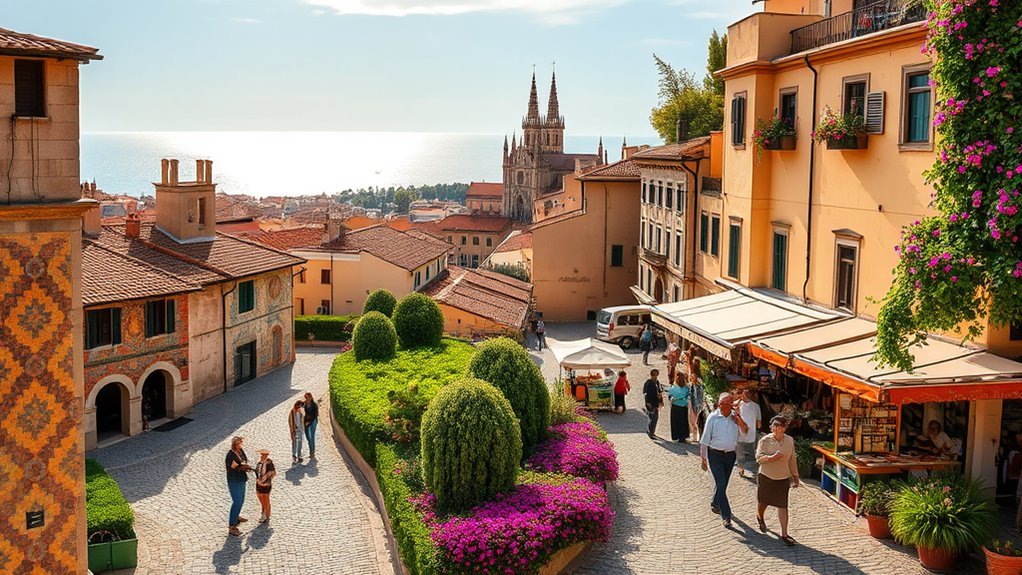
Ravenna rewards travelers who slow down and look closely. Its churches, baptisteries, tombs, and archaeological sites preserve some of the finest surviving mosaics of late antiquity. Most central sights are easy to reach on foot, while the Basilica of Sant’Apollinare in Classe and the Mausoleum of Theodoric require a little extra planning.
Quick Answer
The best things to do in Ravenna are visiting San Vitale, the Mausoleum of Galla Placidia, Sant’Apollinare Nuovo, the two historic baptisteries, Dante’s Tomb, and the Domus of the Stone Carpets. Allow a full day for the center and extra time for Sant’Apollinare in Classe.
Key Takeaways
- Ravenna’s UNESCO listing is one serial World Heritage property made up of eight early Christian monuments.
- The city-center highlights can be linked into a practical walking route, but Sant’Apollinare in Classe lies about 6 kilometers south of the center.
- The Neonian Baptistery represents the Orthodox tradition; the Arian Baptistery was built for the Gothic court under Theodoric.
- Combined tickets cover the main diocesan mosaic monuments and remain valid for seven days.
- Opening hours, timed access, and church closures can change, so check official pages before your visit.
At a Glance
| Recommended Time | One full day for the historic center; 1.5 to 2 days for a less rushed visit including Classe |
| Getting Around | Walk through the center; use bus 4, a bicycle, taxi, or car for Sant’Apollinare in Classe |
| Main Combined Ticket | As of July 2026, the five-monument itinerary is €14.50 and valid for seven days |
| Best Planning Move | Reserve online when possible, especially for the small Mausoleum of Galla Placidia |
Disclosure: As an Amazon Associate I earn from qualifying purchases. Some links on this page are affiliate links, at no extra cost to you.
Why the Basilica of San Vitale Is a Must-See for Mosaic Lovers
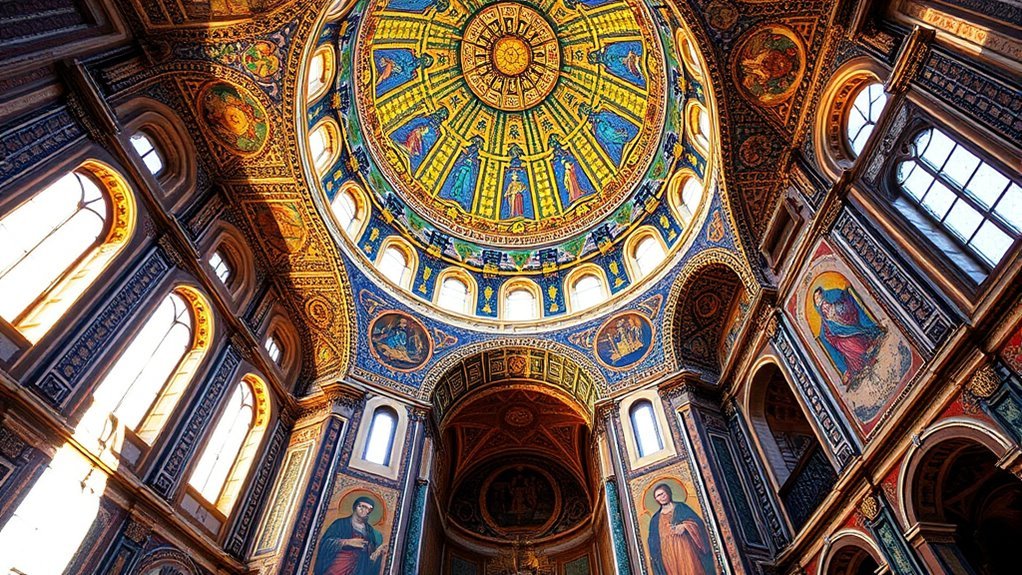
The Basilica of San Vitale is Ravenna’s essential first stop. Bishop Ecclesius commissioned it in 525–526, and Archbishop Maximian consecrated it in 547. Its unusual octagonal plan creates a layered interior of arches, galleries, marble, and changing light.
The most famous mosaics are in the sanctuary. Emperor Justinian appears with clergy and officials on one wall, while Empress Theodora stands with her court on the other. Their placement joins imperial authority with sacred ceremony. Look higher for biblical scenes, angels, prophets, and the apse image of Christ seated on a blue globe.
Ravenna’s eight UNESCO monuments form one serial World Heritage property, preserving an exceptional record of artistic and religious change in the 5th and 6th centuries.
Allow about 45 to 60 minutes. The Mausoleum of Galla Placidia is beside the basilica, so visit the two together. Seasonal hours apply, and services or special events may temporarily limit access.
Products Worth Considering

Marvel at the Mosaics of Sant’Apollinare Nuovo
The Basilica of Sant’Apollinare Nuovo was built by King Theodoric between the late 5th and early 6th centuries as an Arian palace church. After Ravenna returned to Byzantine control, the building was rededicated for Orthodox worship and parts of its decoration were altered.
The long nave preserves three levels of mosaics. The upper register contains 26 scenes from Christ’s life and Passion. Lower down, processions of martyrs and virgins move across gold backgrounds toward Christ and the Virgin. Near the former palace scene, look for isolated hands left on columns after court figures associated with Theodoric were removed.
This basilica helps you see how Ravenna’s art changed from the Gothic court to the age of Justinian. Plan about 30 to 45 minutes, then continue toward the Arian Baptistery or Dante’s Zone of Silence.
Discover the Arian Baptistery’s Unique Ceiling
The Arian Baptistery was built during Theodoric’s reign, between 493 and 526. Its plain brick walls make the dome mosaic feel even more vivid. At the center, Christ is baptized in the Jordan River while the apostles move in procession around the dome toward a jeweled throne and cross.
- Historical significance: It preserves evidence of the Arian Christian community that served Theodoric’s Gothic court.
- Architectural simplicity: The compact octagonal plan keeps attention on the surviving cupola mosaic.
- UNESCO status: It is one of the eight monuments in Ravenna’s Early Christian Monuments World Heritage property.
Note: The official museum page listed limited morning opening from Monday through Saturday, mandatory reservations, and a €2 full ticket when checked in July 2026. Confirm the current schedule before going.
Products Worth Considering

Uncover the Hidden Gem: Mausoleum of Galla Placidia
The Mausoleum of Galla Placidia looks modest from outside, but its interior is one of Ravenna’s most memorable spaces. Deep blue surfaces, golden stars, floral borders, apostles, deer, doves, and the Good Shepherd create a complete visual world inside a very small building.
Stunning Mosaic Artistry
The dome’s concentric golden stars surround a cross, while the lunettes develop themes of eternal life, baptism, and victory over death. The tiny alabaster windows soften the light and make the glass tesserae shimmer as you move.
- Look above the entrance for Christ as the Good Shepherd.
- Notice the contrast between the plain brick exterior and the richly covered interior.
- Give your eyes a moment to adjust before studying the darker blue surfaces.
Historical Significance Explained
Galla Placidia commissioned the building after 426, probably as part of the nearby Church of Santa Croce complex. It was intended as a funerary structure, but it did not become her burial place. She died in Rome in 450 and was buried there, so the traditional name “mausoleum” can be misleading.
Pro Tip: Reserve an entry time early in your planning. The room is small, visits are brief, and advance ticket holders receive priority when capacity is limited.
Explore the Historic Neonian Baptistery
The Neonian Baptistery, also called the Orthodox Baptistery, dates to the early 5th century. Bishop Ursus began the structure, and Bishop Neon renovated it between about 450 and 475, adding the cupola and much of the surviving decoration.
The dome centers on Christ’s baptism, surrounded by the twelve apostles. Below them, painted and mosaic architecture creates an illusion of depth around symbolic thrones, altars, and books of the Gospels. The building is especially valuable because both its architecture and decoration survive in unusually complete form.
- Do not confuse it with the Arian Baptistery: The Neonian building served the Orthodox community.
- Pair it with nearby sights: Ravenna Cathedral and the Archiepiscopal Museum are in the same complex.
- Suggested visit: Allow 20 to 30 minutes.
Check Out the Unique Architecture of the Mausoleum of Theodoric
The Mausoleum of Theodoric offers a sharp contrast to Ravenna’s mosaic-covered churches. The Ostrogothic king built it around 520 as his tomb. Massive blocks of pale Aurisina limestone form a two-level monument with a strong, spare design.
Architectural Design Elements
The roof is the main engineering marvel: a single carved stone more than 10 meters across. Modern estimates commonly place its weight near 230 metric tons. Twelve projecting stone handles form a crown-like ring around the monolith, while a pincer-shaped frieze below reflects Gothic metalwork patterns.
- The monument uses fitted stone blocks rather than Ravenna’s more familiar brick construction.
- Its upper room contains a porphyry basin traditionally associated with Theodoric’s burial.
- The site stands in a green park roughly 1 kilometer northeast of the historic center.
Historical Significance Explained
The mausoleum combines Roman and eastern funerary traditions with features linked to Gothic identity. It is the only one of Ravenna’s eight UNESCO monuments without a surviving mosaic program, making its structure and materials the main attraction. Allow 30 to 45 minutes, plus travel time from the center.
Step Inside the Archiepiscopal Chapel’s Mosaic Masterpieces
The Archiepiscopal Chapel, also called St. Andrew’s Chapel, sits on the first floor of the Archiepiscopal Museum. Bishop Peter II built it at the beginning of the 6th century as a private oratory for Ravenna’s Catholic bishops during Theodoric’s Arian rule.
Its decoration presents an openly anti-Arian statement of Orthodox belief. The best-known image shows Christ as a warrior stepping on a lion and serpent. The vestibule’s gold vault is filled with birds, lilies, and rosettes, while the chapel contains apostles, evangelists, and martyrs.
- Christ the Warrior: The chapel’s defining image presents Christ victorious over evil.
- Throne of Maximian: This carved ivory episcopal chair is displayed in the adjoining Archiepiscopal Museum, not inside the chapel itself.
- UNESCO significance: It is the only surviving intact early Christian archiepiscopal chapel.
Quick Visit to Ravenna Cathedral: What to Know
Ravenna Cathedral, or the Basilica Ursiana, stands on a site used for the city’s cathedral since the early 5th century. The present church is largely the result of a major mid-18th-century reconstruction, while the 10th-century cylindrical bell tower and the old crypt survived.
Do not expect the complete early Christian apse mosaics described in some older guides. The medieval mosaic decoration was removed or destroyed during rebuilding, and surviving fragments are kept in the Archiepiscopal Museum. Inside the cathedral, focus on the broad Baroque interior, historic sarcophagi, chapels, and the relationship between the cathedral complex and the nearby Neonian Baptistery.
A quick visit takes about 15 to 25 minutes. Because it remains an active church, avoid sightseeing during services and dress respectfully.
Visit Dante’s Tomb and the Basilica of San Francesco
Dante’s Tomb is a small neoclassical monument built in 1780–1781 beside the Basilica of San Francesco. It is not inside the basilica. The tomb preserves the poet’s remains and forms the heart of Ravenna’s quiet pedestrian “Zone of Silence.”
- Visit the tomb, the Quadrarco of Braccioforte, and the nearby Dante Museum as one stop.
- Enter the Basilica of San Francesco to see its atmospheric flooded crypt, where fish swim above the submerged mosaic floor.
- Check the tomb and basilica separately because their opening hours are not the same.
As you stand before Dante’s final resting place, the setting connects the poet’s last years in Ravenna with the city’s living cultural memory. Entry to both the tomb and basilica is free.
Dive Into Roman History at the Domus of the Stone Carpets
The Domus of the Stone Carpets lies below the Church of Sant’Eufemia. Archaeologists uncovered the complex in 1993–1994, revealing layers of residences and other structures used from the Roman period into the Byzantine age.
The main display covers more than 400 square meters of polychrome mosaic and marble flooring. Highlights include the Dance of the Geniuses of the Seasons and a Good Shepherd mosaic. The largest late-antique residence, often called the Byzantine palace, had 14 rooms and two courtyards and dates to the 6th century.
Allow 30 to 45 minutes. The elevated walkway gives a clear view of the floors, and guided visits can help explain how the different building phases overlap beneath modern Ravenna.
See the Apse Mosaic at Sant’Apollinare in Classe
The Basilica of Sant’Apollinare in Classe completes Ravenna’s group of eight UNESCO monuments. It stands about 6 kilometers south of the center near the former Roman port of Classe and was consecrated in 549.
Its great apse mosaic places Saint Apollinaris in a green landscape filled with plants, rocks, birds, and sheep. Above him, a jeweled cross appears in a star-filled blue medallion beneath the hand of God. The spacious nave, marble columns, and surviving sarcophagi make the basilica feel very different from the smaller city-center monuments.
Bus 4 connects the historic center and railway station with Classe. A bicycle path is another good option. Allow at least 60 minutes for the basilica, plus travel time; combine it with the Classis Ravenna museum or the Ancient Port of Classe if you have a second day.
Tickets, Hours, and Practical Planning
The diocesan monuments use cumulative tickets. As of July 2026, the official five-monument itinerary cost €14.50 and covered San Vitale, Sant’Apollinare Nuovo, the Mausoleum of Galla Placidia, the Neonian Baptistery, and the Archiepiscopal Museum with St. Andrew’s Chapel. The ticket was valid for seven days with one entry per monument. A four-monument option cost €12.50, and a two-basilica option cost €10.50.
Warning: Do not rely on one set of hours for every monument. Diocesan sites, state museums, active churches, Dante’s Tomb, and RavennAntica attractions follow different schedules and may close for worship, maintenance, holidays, or special events.
Most of the historic center is a limited-traffic zone, so walking is usually easier than driving between monuments. Wear comfortable shoes, keep your ticket available, and allow time for security checks or entry queues. Photography rules may vary, and flash should be avoided around mosaics.
A Practical One-Day Ravenna Itinerary
- Morning: Begin at San Vitale and the Mausoleum of Galla Placidia, then walk to the Domus of the Stone Carpets.
- Late morning: Continue to Ravenna Cathedral, the Neonian Baptistery, and the Archiepiscopal Museum and Chapel.
- Lunch: Stop near Piazza del Popolo or the Zone of Silence.
- Afternoon: Visit Dante’s Tomb and San Francesco, then walk to Sant’Apollinare Nuovo and the Arian Baptistery.
- Extra time: Add the Mausoleum of Theodoric. Save Sant’Apollinare in Classe for late afternoon only if transport and opening hours work; otherwise visit it on a second day.
Visiting Ravenna From a Cruise Ship
Ravenna’s cruise terminal is at Porto Corsini, about 15 kilometers from the historic center. Official seasonal transfers generally take about 30 minutes, but schedules depend on ship dates. Book the return trip with a generous buffer and confirm the final boarding deadline before starting a city tour.
Frequently Asked Questions
Is Ravenna, Italy worth visiting?
Yes. Ravenna is especially rewarding for travelers interested in mosaics, late Roman history, early Christianity, architecture, and Dante. Its central monuments are close enough for a walking day, and the quality of the surviving 5th- and 6th-century decoration is exceptional.
What should I do in Ravenna from a cruise ship?
Prebook transport from Porto Corsini, then prioritize San Vitale, the Mausoleum of Galla Placidia, the Neonian Baptistery, Dante’s Tomb, and Sant’Apollinare Nuovo. Keep the route compact and leave enough time for the roughly 30-minute transfer back to the terminal.
What can I see in Ravenna in one day?
In one day, you can see the main city-center mosaics: San Vitale, Galla Placidia, the Neonian Baptistery, the Archiepiscopal Chapel, Sant’Apollinare Nuovo, and the Arian Baptistery. Add Dante’s Tomb and San Francesco, then choose either the Domus or Theodoric’s Mausoleum if time remains.
What is Ravenna, Italy famous for?
Ravenna is famous for its early Christian and Byzantine mosaics, its eight UNESCO-listed monuments within one serial World Heritage property, and Dante Alighieri’s tomb. The city was also an imperial, Ostrogothic, and Byzantine capital.
Do I need to book Ravenna’s mosaics in advance?
Advance booking is a smart choice, especially for the Mausoleum of Galla Placidia and during weekends, holidays, and cruise-call days. Same-day tickets may be available, but official sites give priority to reservations and presales when capacity is limited.
How many UNESCO sites are in Ravenna?
Ravenna has one UNESCO World Heritage property called the Early Christian Monuments of Ravenna. It is a serial property composed of eight separate monuments, including San Vitale, both baptisteries, Galla Placidia, Theodoric’s Mausoleum, and the two Sant’Apollinare basilicas.
Conclusion
Ravenna’s greatest strength is not one isolated masterpiece but the way its monuments work together. San Vitale, Galla Placidia, the baptisteries, the Sant’Apollinare basilicas, the Archiepiscopal Chapel, and Theodoric’s Mausoleum trace the city’s passage through Roman, Gothic, and Byzantine rule. Add Dante’s Tomb and the Domus of the Stone Carpets, and you have one of Italy’s richest compact history trips.
Sources
- UNESCO World Heritage Centre — Early Christian Monuments of Ravenna — confirms the serial property and its eight monuments.
- Ravenna Mosaici — Entrance Times and Prices — current combined-ticket options, validity, prices, and seasonal hours.
- Ravenna Tourism — UNESCO World Heritage — official city information on the monuments and visitor planning.
- Italian Ministry of Culture — Emilia-Romagna State Museums — official details for the Arian Baptistery and Mausoleum of Theodoric.
- Fondazione RavennAntica — House of the Stone Carpets — archaeological history and mosaic-floor coverage.
- Ravenna Tourism — Cruise Terminal Transfer — current seasonal transfer guidance between Porto Corsini and Ravenna.
