
Last Updated on July 28, 2026 by Daniel Globe
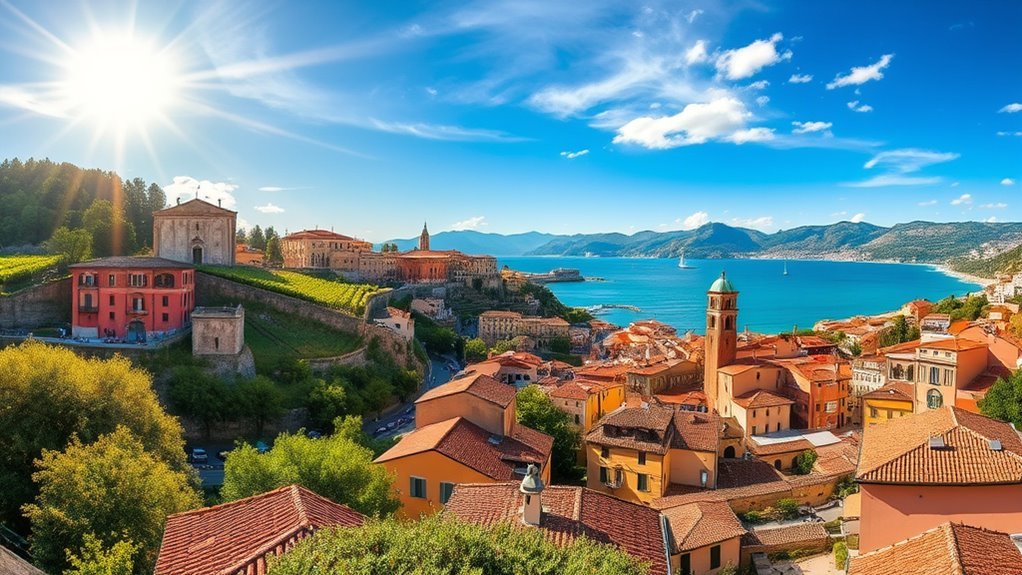
Italy’s vibrant cities offer very different combinations of employment, culture, climate, housing costs, transport, and quality of life. Milan suits internationally focused careers, Rome offers unmatched history, and Florence combines Renaissance culture with a compact center. Palermo, Genoa, and Lucca stretch many housing budgets further, while Bolzano, Lake Como, and Verona appeal to people who value scenery and a slower pace. This guide compares 15 Italian destinations using updated rent benchmarks and practical relocation context.
Quick Answer
Milan and Rome offer the broadest career and international networks, while Palermo, Genoa, Lucca, Verona, and Trieste generally have lower advertised rents. Bologna suits students and young professionals, Bolzano works well for outdoor-oriented families, and Cagliari, Bari, Naples, and Lake Como appeal to people prioritizing coastlines or scenery.
Key Takeaways
- Milan, Florence, Rome, and Bologna have some of the highest advertised rents in this comparison, although employment and international networks are also stronger in several of them.
- Palermo, Genoa, Lucca, Verona, Trieste, and Turin generally offer lower citywide rent benchmarks than Italy’s largest international centers.
- Neighborhood, property size, furnishing, lease length, condominium charges, and transport needs can matter more than a citywide average.
- EU citizens and non-EU citizens follow different residence procedures, and immigration status does not by itself settle tax-residence questions.
- The best city is the one that fits your legal route, income source, language ability, climate preferences, and daily transport needs—not simply the place with the lowest rent.
Note: The rent figures below are June 2026 advertised asking-price benchmarks from Immobiliare.it, expressed per square meter per month. They are comparison tools, not guaranteed lease prices. Furnished short-term rentals may cost more, while individual neighborhoods and properties can sit well above or below the citywide average.
At a Glance
| Milan | Best for international careers, fashion, finance, and air connections; June 2026 advertised rent benchmark: €22.31/m² per month. |
| Rome | Best for history, government, international organizations, and a large expat network; €18.66/m². |
| Florence | Best for art, education, tourism, and a walkable historic setting; €21.38/m². |
| Palermo | Best for lower rents, warm weather, street food, and Sicilian culture; €9.69/m². |
| Verona | Best for a manageable northern city, regional travel, wine country, and historic character; €12.34/m². |
| Lake Como | Best for scenery, hiking, lake activities, and access to Milan or Switzerland; Como city benchmark: €15.23/m². |
| Bologna | Best for students, research, rail travel, food, and young professionals; €16.50/m². |
| Lucca | Best for small-city Tuscany, cycling, families, and a slower routine; €11.65/m². |
| Cagliari | Best for beaches, a mild coastal climate, and Sardinian city life; €14.15/m². |
| Turin | Best for engineering, automotive work, technology, museums, and Alpine access; €12.85/m². |
| Genoa | Best for a lower-cost northern port city, seafood, rail travel, and Ligurian coast access; €10.71/m². |
| Trieste | Best for Central European character, research, coffee culture, and cross-border travel; €12.29/m². |
| Bari | Best for Puglia access, a working southern city, ferries, and coastal living; €13.07/m². |
| Naples | Best for energetic street life, food, major-city amenities, and access to Campania; €14.98/m². |
| Bolzano | Best for families, organized services, bilingual surroundings, and outdoor recreation; €14.82/m². |
Disclosure: As an Amazon Associate I earn from qualifying purchases. Some links on this page are affiliate links, at no extra cost to you.
How to Choose the Best Place to Live in Italy
Start with the parts of daily life that cannot easily be changed after you move. A beautiful city can become frustrating when the local employment market, school language, climate, or transport system does not match your needs.
- Income source: Milan, Rome, Bologna, Turin, and Bolzano generally offer broader professional or institutional opportunities than small towns, although the right city depends on your field.
- Housing budget: Compare rent per square meter, then check actual listings in two or three neighborhoods. Include deposits, condominium charges, utilities, agency fees, and furnishing costs.
- Language: English is more common in tourism, international education, research, and multinational companies. Italian remains important for leases, healthcare, public offices, tradespeople, and community life.
- Transport: Central neighborhoods can reduce the need for a car, but lakeside, Alpine, suburban, and island living may make local transport schedules more important.
- Climate: Northern cities have colder, foggier winters, while southern and island destinations tend to be warmer but may have hotter summers.
- Family needs: Verify school language, admissions deadlines, fees, childcare, healthcare access, and commuting before signing a lease.
Pro Tip: Spend several weeks in your two leading neighborhoods before committing to a long lease. Test the grocery run, evening noise, public transport, mobile coverage, school commute, and route to the nearest administrative and healthcare services.
Milan: Best for International Careers
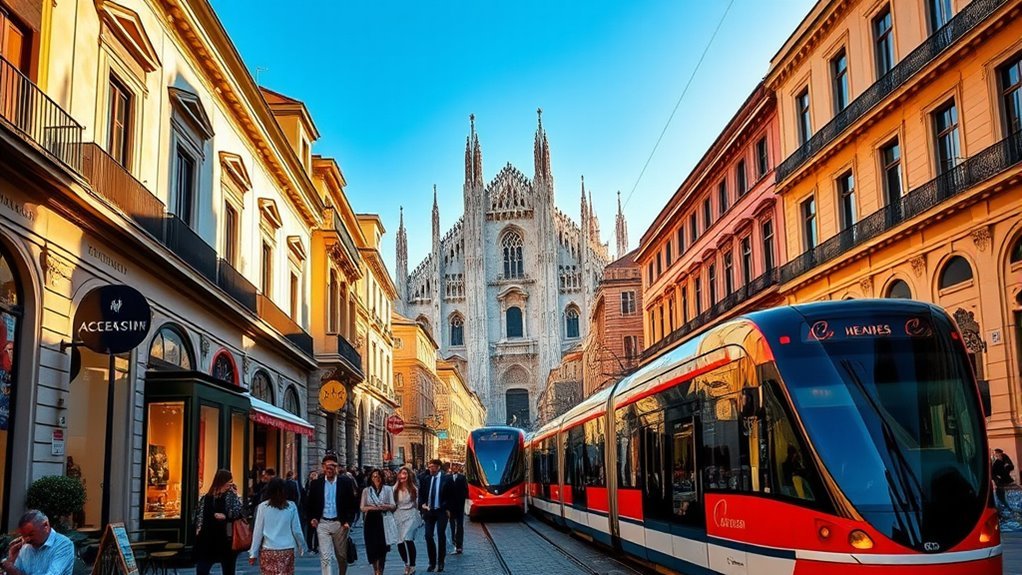
Milan is Italy’s fashion and business capital, home to Milan Fashion Week, major financial institutions, design companies, universities, and the Quadrilatero della Moda shopping district. It offers one of Italy’s broadest markets for internationally oriented work, particularly in finance, consulting, technology, fashion, design, media, and corporate services.
English is more common in multinational workplaces than in many smaller Italian cities, but it should not be treated as a substitute for Italian. Landlords, municipal offices, healthcare providers, neighborhood businesses, and local employers may operate mainly in Italian.
Malpensa, Linate, and Bergamo airports make Milan a practical base for European travel. The metro, trams, suburban rail, and high-speed trains also make car-free living realistic in many neighborhoods.
The trade-off is housing. According to June 2026 advertised-rent data for Milan, the citywide benchmark was about €22.31 per square meter per month, with major differences between central districts and outer neighborhoods. Compare places such as Porta Romana, Città Studi, Isola, Lambrate, Bicocca, and areas near useful metro lines rather than focusing only on the center.
Rome: History, International Networks, and Big-City Variety
Rome, the Eternal City, combines landmarks such as the Colosseum and Vatican City with residential neighborhoods, universities, government institutions, international organizations, and a large service economy. It offers a broader expat network than most Italian cities, but daily life varies dramatically from one district to another.
Testaccio, Monteverde, Garbatella, San Giovanni, Prati, and San Lorenzo each have different combinations of nightlife, parks, transport, housing, and community life. Central areas may provide walkability at a premium, while outer districts can reduce rent but increase commuting time.
Fiumicino and Ciampino airports provide extensive connections. Nearby beaches such as Ostia and Fregene, along with Lake Bracciano, provide practical day-trip options.
Rome’s June 2026 advertised-rent benchmark was approximately €18.66 per square meter per month. The range between districts was wide, so a citywide figure should be used only as a starting point.
Rome is a strong choice for people who want cultural depth and a large professional network. It is less suitable for anyone expecting uniformly efficient transport, simple bureaucracy, or a quiet urban routine.
Florence: Renaissance Culture in a Compact Setting
Florence, the birthplace of the Renaissance, places residents close to the Uffizi Gallery, the Cathedral of Santa Maria del Fiore, artisan workshops, universities, language schools, and a large tourism economy. Its central districts are compact and easy to explore on foot.
English is commonly heard in tourism, education, and hospitality, especially in the historic center. Italian becomes increasingly useful when renting outside the tourist core, dealing with public services, joining local organizations, or seeking work beyond international-facing roles.
Florence’s art scene extends beyond museums. Residents can take part in drawing, leatherwork, ceramics, photography, cooking, and restoration workshops. Daily life also includes Tuscan dishes such as ribollita and bistecca alla fiorentina, along with extensive café and gelato culture. People building a regular routine can also compare local gyms in Florence.
Housing is the main drawback. The June 2026 advertised-rent benchmark for Florence was approximately €21.38 per square meter per month, placing it close to Milan in this comparison. Campo di Marte, Rifredi, Novoli, Gavinana, and other districts outside the historic core may offer different balances of rent, transport, and atmosphere.
Florence also provides convenient rail connections to Bologna, Rome, Milan, Pisa, and other Tuscan destinations, although the central tourist load can feel intense during peak seasons.
Palermo: Lower Rents and Deep Sicilian Culture
Palermo is one of the strongest options for expats prioritizing lower housing costs, warm weather, historic neighborhoods, and a distinctive food culture. Its Arab-Norman heritage, markets, churches, theaters, and street life give it an identity that feels very different from northern Italy.
The June 2026 advertised-rent benchmark for Palermo was approximately €9.69 per square meter per month, the lowest citywide figure in this 15-place comparison. Central or renovated properties may still cost considerably more.
Il Capo, Kalsa, Politeama, Libertà, Mondello, and areas around Ruggero Settimo offer different levels of walkability, nightlife, beach access, and residential calm. Local cuisine includes arancine, panelle, pasta con le sarde, seafood, and a substantial street-food tradition.
Winters are mild compared with northern Italy, although summers can be hot. Palermo has rail and air connections, while ferries to mainland destinations such as Naples are generally long-distance or overnight journeys rather than quick crossings.
The city’s trade-offs include uneven infrastructure, traffic, slower administrative processes, and a smaller market for internationally oriented professional work. It works especially well for retirees, remote workers with an appropriate legal status, and people whose income is not tied to the local labor market.
Verona: A Manageable Northern City With Strong Connections
Verona combines Roman history, medieval streets, regional employment, rail links, and access to the Veneto countryside. Its Roman amphitheater still hosts major performances, including the city’s well-known opera festival, while Juliet’s balcony remains a Shakespeare-inspired visitor landmark.
The city is smaller and easier to navigate than Milan or Rome, yet it sits on useful rail routes toward Milan, Venice, Bologna, and the Brenner corridor. Lake Garda and the Valpolicella wine region are also nearby.
The June 2026 advertised-rent benchmark for Verona was about €12.34 per square meter per month. This makes it considerably less expensive than Milan, Florence, Rome, or Bologna at the citywide level, although the historic center commands a premium.
| Feature | Details | Practical Value |
|---|---|---|
| Historic Sites | Roman amphitheater and walkable center | Culture is part of everyday life |
| Regional Access | Rail links, Lake Garda, and Valpolicella | Convenient weekend travel |
| Food and Wine | Risotto all’Amarone and regional wines | Strong local dining culture |
Verona is a good middle-ground option for expats who want northern infrastructure without Milan’s size or rent level. The local job market is narrower, so employment should be researched before moving.
Lake Como: Scenic Living With Important Cost Trade-Offs
Lake Como is a region of cities, towns, and villages rather than one uniform housing market. Como city provides urban services and rail connections, while places such as Varenna, Bellagio, Menaggio, Lecco, and smaller lakeside communities offer different levels of tourism, transport, and year-round activity.
Breathtaking Natural Beauty
The lake’s mountain setting supports photography, boating, walking, and quieter routines. Varenna and Bellagio combine attractive architecture with restaurants and ferry connections, although they also experience strong seasonal tourism and limited housing supply.
Como city and towns on reliable rail or ferry routes can provide access to Milan, Lecco, Lugano, and other regional centers. However, a route that works well in summer may be less frequent in winter, so year-round timetables should be checked before choosing a village.
Outdoor Activities Galore
- Hike marked routes through the surrounding hills and mountains.
- Kayak or paddle during calm conditions while following local boating and safety rules.
- Explore lakeside towns, gardens, markets, cafés, and historic villas.
The June 2026 advertised-rent benchmark for Como city was approximately €15.23 per square meter per month. Famous resort towns and properties with lake views may cost more and offer fewer long-term rentals.
Warning: Do not choose a Lake Como village based only on a summer visit. Confirm winter ferry or bus schedules, grocery access, parking, heating costs, flood or slope risks, internet service, and the time required to reach healthcare and administrative offices.
Bologna: Best for Students, Research, and Rail Travel
Bologna is a strong fit for students, researchers, academics, food lovers, and younger professionals. The University of Bologna, founded in 1088, reported more than 97,000 students for the 2024/25 academic year, including a substantial international population.
Vibrant Student Culture
The university supports an active calendar of lectures, exhibitions, concerts, festivals, and cultural exchange. Cafés, bars, libraries, associations, and student services create a strong community for newcomers.
Bologna Centrale is one of Italy’s most useful rail hubs. Florence, Milan, Venice, and Rome can all be reached by high-speed train, making the city particularly convenient for people who expect to travel regularly.
Housing and Daily Costs
Bologna is less expensive than Milan or Florence by the citywide rent benchmark, but it should not be described as a low-cost destination. Strong student demand places pressure on rooms and smaller apartments.
The June 2026 advertised-rent benchmark for Bologna was approximately €16.50 per square meter per month. Begin searching well before the academic year, verify that the lease can be registered, and be cautious of anyone asking for payment before a property or owner has been verified.
Budget-friendly trattorias still make it possible to enjoy dishes such as tagliatelle al ragù, tortellini, and mortadella without relying only on expensive central restaurants. The main drawbacks are humid summers, housing competition, and a smaller private-sector job market than Milan.
Lucca: Small-City Tuscany and a Slower Routine
Lucca combines Renaissance walls, medieval streets, cycling, local festivals, and access to the wider Tuscan region. It suits people who want a manageable city rather than the constant visitor traffic and higher rent of central Florence.
Lucca offers a quieter version of Tuscan life, with historic streets, a walkable scale, and easy access to Pisa, the coast, and Florence.
- Renaissance Walls: The preserved walls form a popular walking and cycling route around the historic center.
- Cultural Festivals: Music, comics, art, and local traditions support an active annual events calendar.
- Medieval Architecture: The Cathedral of San Martino, towers, churches, and piazzas reflect the city’s long history.
With roughly 89,000 residents, Lucca is large enough for essential services but small enough to learn quickly. The June 2026 advertised-rent benchmark was about €11.65 per square meter per month, although properties inside the walls and in high-demand surrounding areas can be more expensive.
Lucca can work well for families and retirees, but the local employment market is smaller than in Florence, Pisa, or Bologna. Families should verify school language, admissions, fees, and commuting rather than assuming an English-language program will be available nearby.
Cagliari: Sardinian City Life Near the Beach
Cagliari combines city services, historic districts, an airport, coastal scenery, and access to Sardinia. It is less expensive by the citywide advertised-rent benchmark than Milan, Florence, Rome, or Bologna, but it is not cheaper than every smaller mainland city.
Coastal Landscapes and Outdoor Life
- Poetto Beach: A long urban beach used by residents for swimming, walking, running, and socializing.
- Water sports: Kayaking, sailing, and windsurfing are available along the coast, subject to weather and local safety rules.
- Seasonal events: Music, food, religious celebrations, and community festivals fill the warmer months.
History and Culture
Cagliari’s Castello district, Roman amphitheater, archaeological collections, markets, and churches reflect centuries of settlement. The city also supports universities, healthcare, government services, restaurants, and a growing range of international food options.
Housing and Island Trade-Offs
The June 2026 advertised-rent benchmark for Cagliari was approximately €14.15 per square meter per month. Housing near Poetto or in especially desirable central areas may exceed that level.
Cagliari’s winters are mild compared with northern Italy, while summers can be hot and dry. The island setting is an advantage for beach access but a disadvantage when frequent mainland travel is required. Flights and ferries add time and expense that do not appear in the rent figure.
Turin: Engineering, Technology, and Alpine Access
Turin, the birthplace of Italy’s automotive industry, has a substantial engineering, manufacturing, aerospace, research, design, and technology base. It also offers major museums, elegant arcades, historic cafés, universities, and quick access to the Alps.
| Key Feature | Details |
|---|---|
| Cost of Living | Advertised rents are generally lower than in Milan, Florence, Rome, and Bologna. |
| Public Transport | Metro, tram, bus, and rail services cover much of the city and surrounding region. |
| Cultural Scene | The Egyptian Museum, cinema heritage, royal residences, cafés, and a strong regional food culture. |
The June 2026 advertised-rent benchmark for Turin was approximately €12.85 per square meter per month. That makes Turin attractive to people seeking a northern Italian city without Milan’s housing costs.
Winters can be cold and gray, and Italian remains important outside international workplaces. For engineers, researchers, students, and outdoor enthusiasts, however, Turin offers one of the article’s strongest balances of employment, culture, transport, and housing.
Genoa: A Lower-Cost Northern Port City
Genoa offers a working port, maritime industries, universities, historic lanes, seafood, and access to the Ligurian coast. It is a practical alternative for people who want northern Italian infrastructure but cannot justify Milan or Florence rent levels.
The city’s historic center is extensive, while neighborhoods such as Castelletto, Albaro, Foce, Nervi, and Sampierdarena offer different combinations of views, transport, cost, and atmosphere. Rail services connect Genoa with Milan, Turin, the Riviera, and other northern destinations.
The June 2026 advertised-rent benchmark for Genoa was approximately €10.71 per square meter per month, making it one of the lower-priced northern cities in this comparison.
Genoa’s steep terrain is the main everyday challenge. Stairs, hills, elevators, funiculars, and irregular street layouts can affect accessibility and commuting. Some housing is older, so inspect natural light, ventilation, damp, heating, and lift access before signing.
Trieste: A Border City With Central European Character
Trieste sits near Slovenia on the Adriatic and blends Italian, Austro-Hungarian, Slovenian, maritime, and Central European influences. It appeals to researchers, students, writers, coffee lovers, and people who value cross-border travel.
The city has a major port, universities, research institutions, broad seafront spaces, historic cafés, and rail connections toward Venice and Central Europe. Its scale is more manageable than Milan or Rome.
The June 2026 advertised-rent benchmark for Trieste was approximately €12.29 per square meter per month.
The Bora, a powerful regional wind, can shape winter life and should not be underestimated. The local private-sector job market is also narrower than in Milan, Turin, or Bologna, making Trieste a better fit for people with research, port-related, institutional, or location-independent income.
Bari: Coastal Living and Access to Puglia
Bari is a working regional capital rather than a resort town. It offers universities, hospitals, government services, a major railway station, an airport, port connections, shopping, and a lively old town.
Bari Vecchia provides historic atmosphere, while Murat, Madonnella, Carrassi, Poggiofranco, and other neighborhoods offer different combinations of central access, residential space, and cost. The city is also a useful base for visiting Polignano a Mare, Monopoli, the Valle d’Itria, and other parts of Puglia.
The June 2026 advertised-rent benchmark for Bari was approximately €13.07 per square meter per month.
Bari suits people who want southern weather and coastal access without giving up major-city services. Salaries and international job options can be more limited than in northern business centers, so the city is especially attractive to remote workers with the correct visa, retirees, university staff, healthcare workers, and people with regional connections.
Naples: Energy, Cuisine, and Access to Campania
Naples combines busy street life, major-city services, a dense historic center, universities, theaters, museums, and the smell of authentic Neapolitan pizza. Its food culture centers on simple ingredients, neighborhood bakeries, markets, seafood, pasta, and some of Italy’s best-known pizzerias.
- Markets provide fresh produce, household goods, and local specialties.
- Piazzas such as Piazza del Plebiscito form part of an active public life.
- Rail and ferry connections provide access to Pompeii, Mount Vesuvius, the islands, Sorrento, and the wider Campania region.
The June 2026 advertised-rent benchmark for Naples was approximately €14.98 per square meter per month. Naples remains less expensive than Milan, Florence, Rome, or Bologna by this measure, but it is no longer among the lowest-priced cities in the comparison.
Neighborhood selection is essential. Chiaia, Vomero, Centro Storico, Materdei, Mergellina, and areas farther from the center differ significantly in rent, noise, terrain, transport, and atmosphere. The city’s intensity, traffic, uneven infrastructure, and crowded transport can be difficult for newcomers who prefer a predictable routine.
Bolzano: Alpine Scenery, Services, and Multilingual Life
Bolzano sits in South Tyrol and combines Italian and Central European influences with direct access to Alpine landscapes. The wider province uses Italian, German, and Ladin, while the balance of languages varies by municipality, school, workplace, and neighborhood.
Alpine Landscape
- Mountain routes provide extensive hiking, cycling, climbing, and skiing opportunities.
- Nearby valleys, lakes, and meadows support year-round outdoor recreation.
- Bolzano serves as a practical gateway to the Dolomites and other parts of South Tyrol.
Cultural Heritage
The city’s architecture, markets, food, and public life reflect both Italian and German-speaking traditions. The South Tyrol Museum of Archaeology houses Ötzi, the approximately 5,300-year-old ice mummy. Speck, dumplings, apple strudel, regional wines, and the annual Christmas market are prominent parts of local culture.
Quality of Life and Costs
Bolzano offers organized services, clean surroundings, good access to outdoor recreation, and a family-oriented environment. Healthcare and education are strong attractions, but families must plan carefully for the language of instruction and local school system.
The June 2026 advertised-rent benchmark for Bolzano was approximately €14.82 per square meter per month. Supply can be tight, and everyday costs may be higher than in many southern cities.
Bolzano works best for families, outdoor enthusiasts, multilingual professionals, and people employed in tourism, public services, education, manufacturing, or regional industries. Learning at least some Italian—and often German—can substantially improve employment and integration.
Practical Requirements Before Moving to Italy
The city decision should come after confirming that you have a lawful route to live, work, study, retire, or operate remotely in Italy. The correct process depends on nationality, income, employment, family status, and length of stay.
EU, EEA, and Swiss Citizens
EU citizens do not normally need an entry visa to move to Italy. For stays longer than three months, residence registration and evidence of work, study, sufficient resources, or health coverage may be required. Review the current EU residence-registration guidance before moving.
Non-EU Citizens
Many non-EU citizens planning to remain for more than 90 days need an appropriate national visa before arrival. Possible routes include work, self-employment, study, family, elective residence, and qualifying digital-nomad or remote-worker visas. Each route has different income, employment, insurance, accommodation, and documentation requirements.
Use the Italian Ministry of Foreign Affairs’ Visto per l’Italia portal to identify the visa that corresponds to your nationality and purpose. People entering with a qualifying national visa generally must begin the residence-permit process shortly after arrival, commonly within eight working days.
Codice Fiscale, Leases, Healthcare, and Tax
- Codice fiscale: This tax identification code is commonly needed for leases, utilities, employment, banking, healthcare, and other services. Review the Agenzia delle Entrate services for foreign citizens.
- Lease registration: Confirm that your rental contract will be formally registered. Do not rely on an informal cash arrangement that prevents residence registration or leaves you without normal tenant documentation.
- Healthcare: Eligibility for Italy’s public health system depends on residence, work, nationality, and other circumstances. Some visa applicants need private coverage before arrival.
- Tax: Tax residence can depend on the amount of time spent in Italy and the location of your personal and economic ties. Foreign income, investments, pensions, companies, and remote employment may create reporting obligations.
Warning: A visa or residence permit does not automatically determine your tax position. Before relocating, obtain current advice based on your citizenship, income sources, household, assets, and expected number of days in Italy.
Affordable Living in Southern Italy
Southern Italy can offer lower housing costs, but “the south is cheap” is too broad to guide a move. Palermo remains the lowest-rent city in this comparison, while Naples, Bari, and Cagliari have higher citywide benchmarks than Genoa, Lucca, Verona, Trieste, or Turin.
Smaller towns in Calabria, Sicily, Puglia, Sardinia, Abruzzo, Basilicata, and inland Campania may offer lower property prices and rents than regional capitals. The trade-offs can include fewer jobs, limited public transport, fewer English-language services, longer healthcare journeys, and a stronger need for Italian.
Palermo suits people seeking a lower-cost major city. Naples provides a much larger and more intense urban environment. Bari balances regional services with access to Puglia, while Cagliari combines city life with island beaches but adds the cost and time of mainland travel.
Always compare the full monthly budget rather than rent alone. Heating or cooling, car ownership, flights, ferry trips, condominium charges, and private services can reduce the apparent savings of a cheaper home.
Top Family-Friendly Cities in Italy for Expats
Bologna, Lucca, and Bolzano remain strong family candidates, but they suit different priorities.
- Bologna: Universities, hospitals, rail connections, parks, and a large student and professional population provide strong services. Housing competition and rent are the main disadvantages.
- Lucca: A manageable scale, walkable walls, nearby countryside, and a quieter routine appeal to families. The smaller employment market and school-language options require advance planning.
- Bolzano: Organized services, outdoor recreation, clean surroundings, and strong regional institutions support a high-quality family routine. Housing supply and multilingual schooling must be understood before moving.
Rome, Milan, Turin, Florence, and Trieste can also work well for families when the right neighborhood and school are secured. No city should be chosen on reputation alone. Confirm admissions, language of instruction, after-school care, special educational support, fees, commute times, and pediatric healthcare first.
Best Cities for Short-Term Living in Italy
Bologna is convenient for a short stay because its rail connections simplify travel throughout northern and central Italy. Lucca offers a relaxed Tuscan base, while Naples provides access to Pompeii, the islands, Mount Vesuvius, and the Amalfi Coast. Genoa works well for exploring Liguria, and Palermo offers rich history and food at a lower citywide rent benchmark than most mainland destinations.
Short-term furnished housing usually costs more per month than a standard long lease. Confirm whether utilities, internet, condominium charges, cleaning, local taxes, and deposits are included.
Visitors who do not hold EU free-movement rights must also check their permitted stay. Depending on nationality and immigration status, the Schengen limit may be 90 days in any rolling 180-day period. A tourist or visa-free stay does not automatically allow local employment or long-term residence.
Note: Non-EU citizens should identify the correct long-stay visa before moving, then follow the residence-permit instructions that apply after arrival. EU citizens use a different residence-registration process. Requirements vary, so verify current rules with the official Italian visa portal, the responsible consulate, and the municipality where you plan to live.
Frequently Asked Questions
Where do most US expats live in Italy?
There is no single official ranking covering every US resident in Italy. Rome, Milan, Florence, Tuscany, and other major cultural or employment centers have established international communities. The best choice depends on whether the move is based on work, study, retirement, family, or remote income.
Which city in this guide has the lowest rent?
Palermo had the lowest June 2026 citywide advertised-rent benchmark in this comparison at approximately €9.69 per square meter per month. Genoa and Lucca followed at approximately €10.71 and €11.65. Individual properties can differ significantly by neighborhood, condition, furnishing, size, and lease term.
Is Italy paying people to move there?
Italy does not have a blanket national program that pays every newcomer to relocate. Regions and municipalities sometimes offer anti-depopulation grants tied to buying or renovating a home, establishing residence, starting a business, or moving to a participating small town. Sardinia and Calabria have operated official initiatives, but eligibility, payment amounts, deadlines, and participating municipalities change by funding round.
Can you buy a house in Italy for $100,000?
Yes, properties below $100,000 can be found in parts of Sicily, Calabria, Abruzzo, Sardinia, Puglia, and other lower-cost areas. The purchase price is only part of the budget. Allow for notary work, taxes, professional inspections, agency costs, utilities, maintenance, and potentially substantial renovation expenses.
Is $2,500 a good monthly salary in Italy?
Assuming $2,500 is net monthly income for one person, it can support a comfortable but budget-conscious lifestyle in many Italian cities. It stretches farther in Palermo, Genoa, Lucca, Verona, Trieste, or Turin than in central Milan, Florence, Rome, or Bologna. A gross salary of $2,500 produces a different take-home budget, and families need substantially more.
Do you need to speak Italian to live in Italy?
You can manage some short stays or international workplaces with limited Italian, especially in Milan, Rome, Florence, Bologna, and major tourism centers. Conversational Italian makes renting, healthcare, administration, shopping, employment, and community relationships much easier. In South Tyrol, German may also be valuable.
Which Italian city is best for families?
Bolzano is a strong option for organized services and outdoor living, Bologna provides major educational and healthcare resources, and Lucca offers a smaller and quieter setting. The best choice depends on school language, admissions, housing, employment, childcare, and the family’s preferred pace of life.
Conclusion
Choosing where to live in Italy means balancing cost, employment, climate, transport, language, housing supply, and community. Milan provides the broadest international career environment but has the highest rent benchmark in this comparison. Palermo offers the lowest benchmark, while Genoa, Lucca, Verona, Trieste, and Turin provide lower-cost alternatives with very different lifestyles.
Rome and Florence suit people who place history and culture near the top of their list. Bologna works well for students and researchers, Naples and Bari provide energetic southern city life, Cagliari adds beaches and an island setting, and Bolzano or Lake Como reward people who prioritize outdoor access.
Build a shortlist of two or three places, compare actual listings in suitable neighborhoods, confirm your legal and tax position, and test daily life before signing a long lease. The best Italian destination is not simply the most famous or cheapest one—it is the place that supports the way you expect to work, travel, learn, and live.
Sources
- Visto per l’Italia — Italian Ministry of Foreign Affairs — official visa requirements by nationality, destination, and purpose of travel
- Your Europe — Registering residence abroad — residence requirements for EU citizens staying in another EU country
- Agenzia delle Entrate — Services for foreign citizens — official information on tax identification and revenue-agency services
- Immobiliare.it — Italian property-market data — June 2026 city-level advertised rent benchmarks used for comparison
- Regione Autonoma della Sardegna — Anti-depopulation measures — official information on Sardinian housing and small-municipality initiatives
- Regione Calabria — Abita Borghi Montani — official details on Calabria’s participating mountain-municipality initiative
