
Last Updated on August 26, 2026 by Daniel Globe
Italian desserts range from creamy tiramisu and crisp Sicilian cannoli to rustic apple cakes, jam-filled crostate, chocolate-rich Torta Tenerina, and festive pastries such as zeppole di San Giuseppe. The best way to explore them is by region: each part of Italy has its own ingredients, textures, seasonal traditions, and local specialties worth trying.
Quick Answer
Some of the best-known Italian desserts are tiramisu, cannoli, gelato, panna cotta, crostata, zabaglione, and regional cakes such as Ferrara’s Torta Tenerina. Italy’s dessert tradition is highly regional, so you will also find local favorites made with ricotta, hazelnuts, apples, chocolate, jam, coffee, citrus, and seasonal fruit.
Key Takeaways
- Tiramisu is strongly associated with Treviso and traditionally combines coffee-soaked savoiardi with mascarpone cream and cocoa.
- Sicily is famous for ricotta-centered sweets such as cannoli and cassata, as well as granita and gelato traditions.
- Torta Tenerina is a Ferrara chocolate cake with a soft center and traditionally contains a small amount of flour.
- Regional specialties include South Tyrolean buckwheat cake, Baci di Alassio from Liguria, and zeppole di San Giuseppe from the Neapolitan tradition.
- Dietary labels require care: a naturally gluten-free ingredient does not automatically make the finished dessert gluten-free.
Disclosure: As an Amazon Associate I earn from qualifying purchases. Some links on this page are affiliate links, at no extra cost to you.
What Makes Italian Desserts So Loved
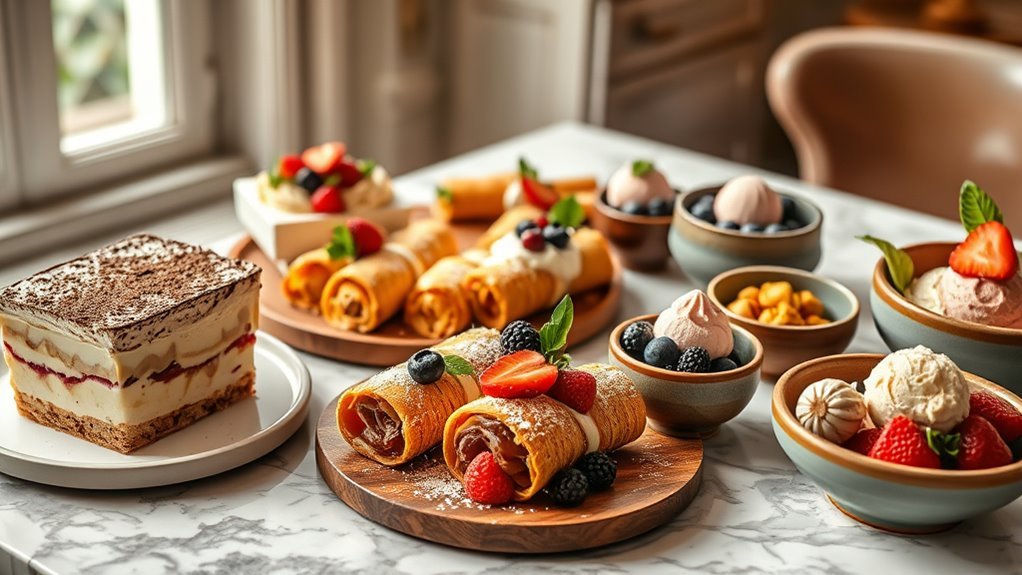
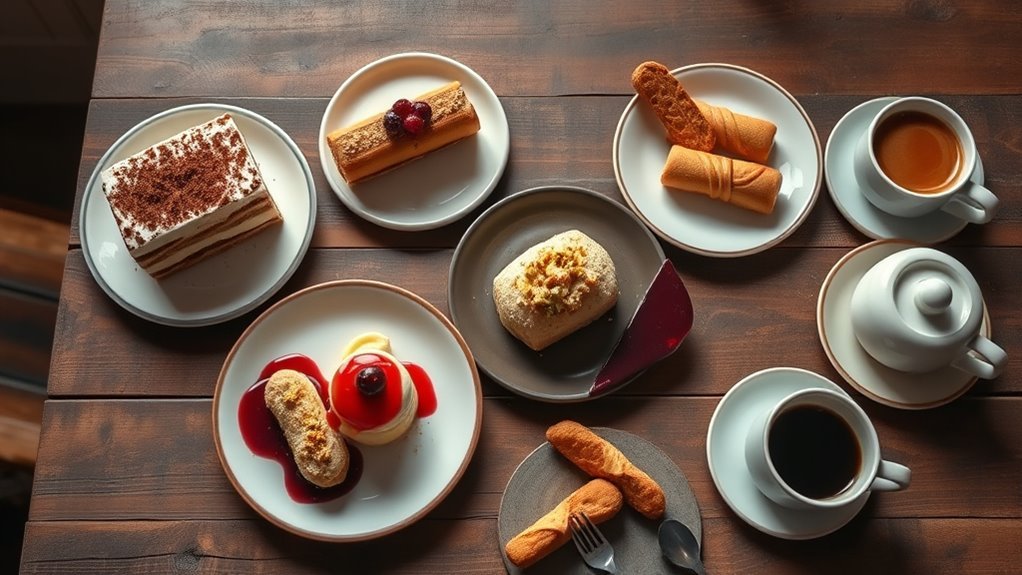
Italian desserts are loved because many of them use a short list of recognizable ingredients and let those ingredients do most of the work. Mascarpone gives tiramisu its richness, ricotta is central to many Sicilian sweets, hazelnuts appear in northern specialties, and fresh fruit, jam, coffee, cocoa, citrus, almonds, and seasonal spices change from region to region.
There is no single national style of Italian dessert. Sicily’s pastry tradition differs sharply from the mountain desserts of Trentino-Alto Adige, the chocolate cakes of Emilia-Romagna, or the custard-filled pastries associated with Naples. That regional variety is part of what makes Italian sweets so interesting.
Italian desserts are best understood as regional traditions rather than one uniform national style.
Italian Desserts by Region
If you are choosing what to eat while traveling in Italy, this quick regional guide gives useful context:
| Region or Area | Desserts to Look For | Typical Character |
|---|---|---|
| Veneto | Tiramisu | Coffee, mascarpone, cocoa |
| Sicily | Cannoli, cassata, granita | Ricotta, citrus, pistachios, almonds |
| Emilia-Romagna | Torta Tenerina | Dark chocolate and a soft center |
| Liguria | Baci di Alassio | Hazelnut, cocoa, chocolate ganache |
| Campania | Zeppole, sfogliatelle, pastiera | Custard, ricotta, citrus, fried or baked pastry |
| Trentino-Alto Adige | Apple strudel, buckwheat and berry cakes | Apples, berries, nuts, mountain grains |
Apple and Amaretti Cake
Apple and amaretti cake combines soft baked apples with the almond aroma of crumbled amaretti biscuits. It is more of a rustic home-style cake than one universally standardized Italian dessert, so recipes vary widely by household and region.
Rustic Apple Flavor
The apples provide moisture, sweetness, and a slight tartness. Firmer varieties keep more texture during baking, while softer apples melt further into the crumb. Lemon zest, cinnamon, or vanilla may be added depending on the recipe.
The result works well at breakfast, with afternoon coffee, or as a simple dessert served warm or at room temperature.
Amaretti Cookie Crumble
Crushed amaretti bring almond flavor and a lightly crisp texture that contrasts with the baked apples. Some versions fold the cookies into the batter, while others scatter them through or over the cake.
| Element | What It Adds |
|---|---|
| Apples | Moisture and fruity sweetness |
| Amaretti | Almond aroma and texture |
| Lemon or spice | Freshness and warmth |
| Serving style | Breakfast, snack, or dessert |
| Optional accompaniment | Whipped cream or vanilla gelato |
Torta Di Mele, the Italian Apple Cake
Torta di mele is the broad Italian name for apple cake, and there is no single recipe used throughout the country. Home versions may be made with butter, olive oil, another mild oil, or combinations of dairy and fat. What they usually share is a tender cake filled or topped generously with sliced apples.
Lemon zest and cinnamon are common partners for the fruit. Some recipes add vanilla, nuts, yogurt, or a small amount of liqueur.
- Fresh apples keep the cake moist.
- Lemon can brighten the fruit flavor.
- Cinnamon adds warmth without overwhelming the apples.
- Oil-based versions can produce a particularly soft crumb.
Pro Tip: If you see “torta di mele” on two menus, do not expect identical cakes. It is a broad home-baking tradition with many regional and family variations.
Ricotta Chocolate Cake
Ricotta works especially well in chocolate cake because it contributes moisture and a mild dairy richness without overpowering cocoa. Depending on the recipe, the finished cake may be soft and light or dense and almost cheesecake-like.
Ricotta’s Silky Texture
Well-drained ricotta helps produce a tender crumb and keeps the cake moist after baking. Its mild flavor also leaves room for chocolate, citrus zest, vanilla, or spices.
- Soft, moist crumb
- Mild creamy flavor
- Works with cocoa or melted chocolate
- Pairs well with fruit and coffee
Cocoa and Cinnamon Flavor
Cocoa supplies the main chocolate character, while a small amount of cinnamon can give the cake a warmer aroma. Cinnamon is optional rather than essential, so recipes without it are equally valid.
| Serving Style | Taste |
|---|---|
| Plain | Chocolate-forward and creamy |
| Powdered sugar | Light sweet finish |
| Fresh berries or fruit sauce | Bright contrast to the cocoa |
Torta Tenerina, Ferrara’s Chocolate Cake
Torta Tenerina is a specialty associated with Ferrara in Emilia-Romagna. Its signature contrast is a thin, delicate exterior over a soft, moist chocolate center. Ferrara’s tourism authority describes the traditional cake as being made with dark chocolate, butter, sugar, eggs, and a small amount of flour.
- Dark chocolate flavor
- Thin, delicate top
- Soft and moist center
- Usually finished with powdered sugar
A traditional recipe published by Ferrara’s destination authority uses two tablespoons of flour, so ordinary Torta Tenerina should not automatically be described as gluten-free. Flourless adaptations exist, but anyone avoiding gluten for medical reasons should verify the exact recipe and cross-contact practices.
Ferrara Terra e Acqua’s traditional Tenerina recipe provides a useful reference for the classic formulation.
Italian Buckwheat and Jam Cake
Buckwheat-and-berry cakes are especially associated with the Alpine north, including Trentino-Alto Adige/South Tyrol. Buckwheat gives the cake a deep, earthy, nutty flavor, while tart berry preserves provide the bright contrast that keeps each slice balanced.
Buckwheat Flour Benefits
Buckwheat is a pseudocereal rather than wheat. It contributes fiber, minerals, and a distinctive nutty flavor. It is also naturally gluten-free as an ingredient.
However, that does not mean every buckwheat cake is gluten-free. Recipes may combine buckwheat with wheat flour, and bakery products can be exposed to gluten through shared equipment.
Jam Filling Choices
Tart berry preserves are an especially natural match for buckwheat. Cranberry or lingonberry-style preserves are common partners in Alpine baking, while raspberry, blackcurrant, apricot, or plum can also work well.
A light layer of powdered sugar is often enough for finishing because the jam already supplies plenty of sweetness.
Gluten-Free Rustic Texture
Buckwheat itself is naturally gluten-free, but the finished cake is gluten-free only when every ingredient and the preparation process are suitable. Traditional and modern recipes may contain eggs, butter, nuts, wheat flour, or other allergens.
- Buckwheat contributes an earthy, nutty flavor.
- Berry preserves add acidity and sweetness.
- Ground nuts may make the crumb richer in some versions.
- Always verify the full ingredient list if you have celiac disease or a food allergy.
Note: “Made with buckwheat” and “gluten-free” are not interchangeable claims. The finished recipe and preparation environment determine whether a dessert is suitable for a gluten-free diet.
Pan Di Spagna, the Classic Italian Sponge
Pan di Spagna is a light Italian sponge used as a foundation for many layered cakes and celebration desserts. Traditional versions rely on well-whipped eggs for much of their lift rather than depending on a heavy chemical leavener.
| Element | Purpose |
|---|---|
| Eggs | Structure and aeration |
| Sugar | Sweetness and stability |
| Flour | Forms the crumb |
| Whipping | Traps air |
| Gentle folding | Helps preserve volume |
Pan di Spagna can be served simply, but it is especially useful as a base for pastry cream, fruit, whipped cream, chocolate fillings, syrups, or liqueur-flavored celebration cakes.
Tiramisu With Mascarpone
Tiramisu is one of Italy’s most internationally recognized desserts and is strongly associated with Treviso in Veneto. Classic versions layer savoiardi soaked in cooled coffee with a mascarpone mixture and finish the dessert with bitter cocoa.
Treccani’s description of the traditional dessert includes savoiardi, coffee, mascarpone, sugar, eggs, and cocoa. Marsala, rum, coffee liqueur, or other alcohol may appear in modern or family recipes, but alcohol is optional rather than essential.
- Coffee-soaked savoiardi
- Rich mascarpone cream
- Bitter cocoa on top
- Chilling time to set the layers and develop the texture
The Italian national tourism portal also identifies tiramisu with Treviso and describes its traditional core ingredients. You can read more at Italia.it’s guide to Veneto food.
Warning: Some homemade tiramisu recipes use raw or lightly cooked eggs. The U.S. Food and Drug Administration advises using pasteurized eggs or egg products for foods in which eggs will not be thoroughly cooked, particularly when serving pregnant people, young children, older adults, or people with weakened immune systems.
Easy Chocolate Crostata
Chocolate crostata takes the basic idea of an Italian tart and fills it with chocolate, chocolate-hazelnut spread, pastry cream flavored with chocolate, or another cocoa-rich filling.
Traditional crostata dough is often a buttery pasta frolla, while simplified home recipes may use oil-based pastry. Oil versions can be quicker because some require less chilling and handling, but they should be understood as variations rather than the only traditional method.
Serve chocolate crostata at room temperature so the filling is easy to slice. Berries, coffee, hazelnuts, or orange zest all pair naturally with chocolate.
Crostata, the Italian Jam Tart
Crostata is one of Italy’s classic home-baked tarts. A sweet shortcrust base holds jam, preserves, fruit, ricotta, chocolate, or other fillings, and many versions are finished with strips of pastry arranged over the top.
Classic Jam Filling
Jam is one of the simplest and most familiar crostata fillings. Popular choices include apricot, strawberry, cherry, raspberry, plum, and fig.
- strawberry for familiar berry sweetness
- apricot for a brighter tang
- raspberry for stronger acidity
- fig for deeper sweetness
- seasonal preserves for a local touch
Crostata is equally comfortable at breakfast, with afternoon coffee, or after dinner.
Buttery Lattice Crust
Classic pasta frolla is usually made with flour, butter, sugar, and eggs. It bakes into a tender, crumbly pastry rather than a flaky pie crust.
The lattice is not only decorative: it leaves parts of the jam visible and makes the tart immediately recognizable. Regional and household recipes may alter the pastry with citrus zest, vanilla, cocoa, or different fats.
Ricotta and Pear Crostata
Ricotta and pear crostata combines creamy cheese with fruit inside a crisp pastry shell. Some versions use classic butter-based pasta frolla, while others use an oil-based dough; cocoa may also be added to the crust for a chocolate contrast.
- Crumbly shortcrust pastry
- Mild, creamy ricotta filling
- Fresh pear for sweetness and moisture
- Optional cocoa, lemon zest, vanilla, or powdered sugar
Pears and ricotta are naturally gentle flavors, so the tart works best when the pastry and added flavorings do not overwhelm them. Apples can replace pears in some home variations, while lemon zest can sharpen the ricotta filling.
Occhi Di Bue, the Jam-Filled Cookies
Occhi di bue are Italian sandwich cookies made from tender shortcrust pastry. The top cookie has a round cutout that exposes the filling beneath it, creating an appearance that inspired the name, which literally means “ox eyes.”
Apricot and berry jams are common fillings, although chocolate-hazelnut spread and other creams are also used. A light dusting of powdered sugar is a popular finishing touch.
- Buttery shortcrust texture
- Jam or cream visible through the center
- Easy to serve with coffee or tea
- Popular in pastry shops and home baking
Because recipes vary, you may find different sizes, shapes, and fillings while traveling around Italy.
Baci Di Alassio, Hazelnut Kisses
Baci di Alassio are a Ligurian specialty from the seaside town of Alassio. According to the town’s official tourism organization, the biscuit mixture is made with hazelnuts, sugar, eggs, honey, and cocoa. The baked shells are then paired by hand with soft chocolate ganache between them.
- Hazelnut-and-cocoa biscuit shells
- Soft chocolate ganache center
- Rich nut-and-chocolate flavor
- A signature sweet of Alassio
Alassio recognizes the sweet as part of its local De.Co. food tradition. The town’s tourism site also identifies historic pastry shop Balzola with the creation of Baci di Alassio and dates their patent to 1919.
See the local description at Visit Alassio’s traditional products guide.
Note: Baci di Alassio contain hazelnuts, eggs, and chocolate ingredients. If you have food allergies, confirm the bakery’s full ingredient and cross-contact information before eating them.
Saffron Panna Cotta
Panna cotta is a chilled cream dessert whose name means “cooked cream.” The basic preparation sets sweetened cream into a delicate, spoonable texture, usually with gelatin. Vanilla is common, but the neutral dairy base is easy to flavor.
Saffron panna cotta is a variation rather than the one definitive traditional form. Saffron gives the cream a golden color and an earthy, floral aroma that works well with berries, citrus, pear, or a restrained caramel sauce.
Because panna cotta is served cold, it is an especially appealing choice when you want something creamy without the heavier crumb of a cake or tart.
Zeppole Di San Giuseppe
Zeppole di San Giuseppe are closely tied to the Neapolitan pastry tradition and to March 19, the Feast of St. Joseph and Father’s Day in Italy. They are made from choux-style pastry and are commonly filled or topped with pastry cream and a sour cherry.
- Prepared in fried or baked versions
- Filled or topped with pastry cream
- Traditionally decorated with an Amarena-style sour cherry
- Especially associated with March 19
Their history is strongly linked with Naples. A written Neapolitan recipe appeared in Ippolito Cavalcanti’s 1837 culinary work, although traditions surrounding the pastry are older and origin stories vary.
For regional background, see Visit Naples’ guide to zeppole di San Giuseppe.
Sicilian Cannoli
Cannoli are among Sicily’s best-known desserts. Each cannolo combines a crisp fried pastry shell with a sweet ricotta-based filling. Depending on the pastry shop or part of Sicily, the ends may be finished with pistachios, candied fruit, chocolate, or other decorations.
The contrast is the key to a good cannolo: the shell should remain crisp while the filling stays smooth and creamy. For that reason, the best examples are often filled close to serving time rather than left assembled for hours.
- Crisp fried pastry shell
- Sweet ricotta filling
- Optional pistachio, chocolate, or candied-fruit garnish
- Strong association with Sicily
Italy’s national tourism portal groups cannoli and cassata among Sicily’s defining ricotta desserts. See Italia.it’s Sicilian food guide.
Italian Gelato
Gelato is one of the easiest Italian desserts to find while traveling because gelaterie are common across the country. Rather than belonging to one single region today, artisan gelato has become part of Italy’s broader food culture, with flavors frequently reflecting local ingredients.
You might find Bronte pistachio in Sicily, Piedmontese hazelnut or gianduia in the north, seasonal fruit sorbets, dark chocolate, coffee, stracciatella, or simple milk-based flavors such as fior di latte.
Pro Tip: When choosing gelato, look beyond unusually bright colors and towering displays. A shop emphasizing seasonal ingredients, clearly labeled flavors, and fresh production is usually more informative than appearance alone.
For more background on the tradition, see Italia.it’s guide to artisanal gelato.
Zabaglione
Zabaglione is a warm or chilled Italian custard-like dessert traditionally made by whisking egg yolks and sugar with wine, commonly Marsala, over gentle heat until the mixture becomes light and foamy.
It may be served on its own, spooned over fruit, paired with biscuits, or incorporated into other desserts. Compared with panna cotta or tiramisu, its texture is lighter and more aerated, and the wine gives it a distinctive aroma.
Because traditional zabaglione contains egg and alcohol, it may not be suitable for everyone. Alcohol-free adaptations exist, but they are variations on the classic preparation.
How to Choose an Italian Dessert
If the menu is long, choose by the texture and flavor you enjoy most:
- For coffee lovers: tiramisu.
- For crisp and creamy contrast: Sicilian cannoli.
- For intense chocolate: Torta Tenerina.
- For fruit and pastry: crostata or torta di mele.
- For something cold: gelato or panna cotta.
- For nutty flavors: Baci di Alassio or buckwheat cake.
- For a festive pastry: zeppole di San Giuseppe when in season.
Food Allergies and Dietary Needs
Italian desserts commonly contain milk, eggs, wheat, tree nuts, alcohol, or combinations of these ingredients. Even a dessert whose main ingredient is naturally gluten-free may be prepared with wheat flour or on shared equipment.
If you have celiac disease or a serious food allergy, ask about the finished dessert rather than assuming suitability from its name. Recipes can vary from one bakery or restaurant to another.
Sources
- Italia.it — Typical food and dishes in Veneto — supports Treviso tiramisu background and its traditional ingredients.
- Ferrara Terra e Acqua — Traditional Tenerina recipe — supports the traditional use of dark chocolate, butter, eggs, sugar, and a small amount of flour.
- Visit Alassio — Traditional local produce — supports the ingredients and ganache-filled construction of Baci di Alassio.
- Italia.it — Typical Sicilian products and dishes — supports cannoli, cassata, ricotta, granita, and Sicilian dessert traditions.
- U.S. Food and Drug Administration — Dairy and egg food safety — supports precautions for desserts such as tiramisu that can contain raw or lightly cooked eggs.
- MedlinePlus — Triglycerides — supports guidance to limit excess sugar and refined foods when managing high triglycerides.
Frequently Asked Questions
What Are the Top 5 Italian Desserts?
There is no official top-five ranking, but tiramisu, cannoli, gelato, panna cotta, and zabaglione are five widely recognized Italian desserts. Regional favorites such as cassata, crostata, Torta Tenerina, sfogliatelle, and zeppole are equally important in their home regions.
What Is Italy’s Famous Dessert?
Tiramisu is one of Italy’s most internationally famous desserts. It is strongly associated with Treviso and traditionally combines coffee-soaked savoiardi, mascarpone cream, sugar, eggs, and cocoa.
What Is the Most Popular Dessert in Italy?
There is no authoritative national ranking that establishes one dessert as Italy’s single most popular choice. Tiramisu and gelato are among the country’s best-known sweets, while local preferences vary greatly by region.
What Dessert Is Good for High Triglycerides?
No dessert treats high triglycerides. Current health guidance generally recommends limiting added sugars, excess calories, refined foods, and alcohol. If you want something sweet, a modest portion of whole fruit or another lower-added-sugar option may fit better than a large sugary dessert. People with high or very high triglycerides should follow individualized advice from their healthcare professional.
Which Italian Dessert Should I Try First?
Start with tiramisu if you enjoy coffee and creamy desserts, cannoli if you like crisp pastry with ricotta, or gelato if you want something simple and easy to find. For chocolate lovers, Ferrara’s Torta Tenerina is an excellent regional choice.
Are Italian Desserts Usually Gluten-Free?
No. Many Italian desserts contain wheat flour, including crostata, cannoli shells, Pan di Spagna, and traditional Torta Tenerina. Some desserts or adaptations can be gluten-free, but anyone with celiac disease should verify ingredients and cross-contact with the bakery or restaurant.
Conclusion
Italian desserts are at their best when you look beyond a single national list and explore the regions behind them. Tiramisu represents Treviso, cannoli showcase Sicily’s ricotta tradition, Torta Tenerina brings Ferrara’s love of chocolate, Baci di Alassio highlight Ligurian hazelnuts, and zeppole connect pastry with the traditions of March 19. Whether you prefer crisp pastry, creamy fillings, fruit, coffee, nuts, or dark chocolate, Italy has a dessert worth seeking out.

