
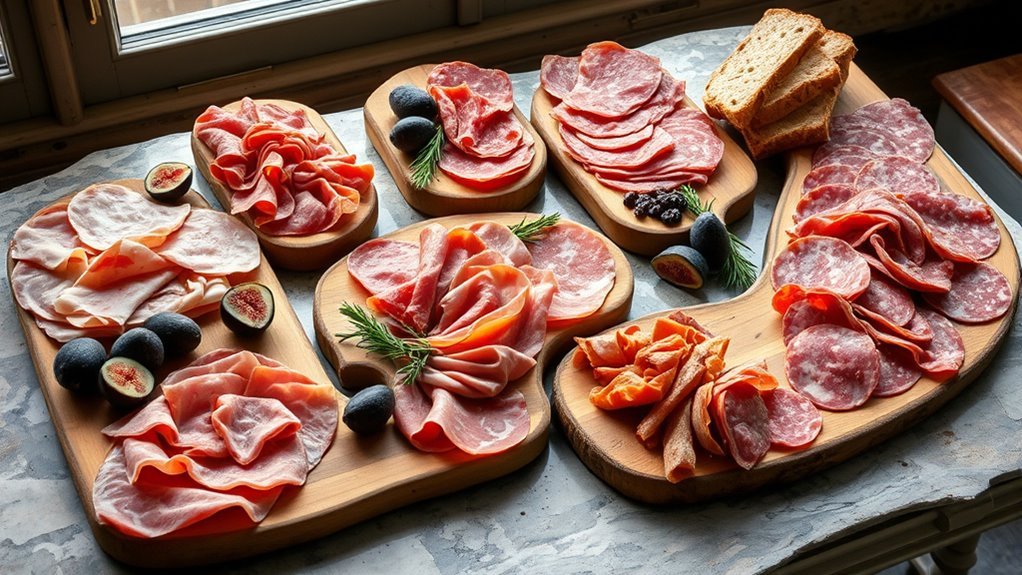
Last Updated on July 24, 2026 by Daniel Globe
Italian cold cuts range from delicate whole-muscle hams to peppery fermented salami and silky cooked meats. Prosciutto, mortadella, bresaola, speck, guanciale, finocchiona, and other regional specialties differ in their cut, seasoning, curing method, texture, and best use. Learning those differences makes it easier to shop, build an antipasto board, or choose the right meat for an Italian recipe.
Quick Answer
The best-known Italian cold cuts include prosciutto, mortadella, coppa, pancetta, bresaola, speck, soppressata, culatello, guanciale, finocchiona, and regional salami styles. Some are whole cuts of meat, some are fermented sausages, and others are cooked. Serve most ready-to-eat varieties thinly sliced with bread, cheese, olives, or fruit.
Key Takeaways
- Salumi is the broad Italian term for prepared meat products, while salame usually refers to a fermented sausage.
- PDO and PGI labels identify protected products made under defined regional specifications.
- Prosciutto, bresaola, coppa, speck, culatello, and lonzino are whole-muscle products; salami and soppressata are minced and cased.
- Pancetta and guanciale are important cooking ingredients, although some packaged versions may also be ready to eat.
- Check storage, cooking, sodium, and allergen information on the package because requirements vary by producer.
Disclosure: As an Amazon Associate I earn from qualifying purchases. Some links on this page are affiliate links, at no extra cost to you.
What Are Italian Cold Cuts?
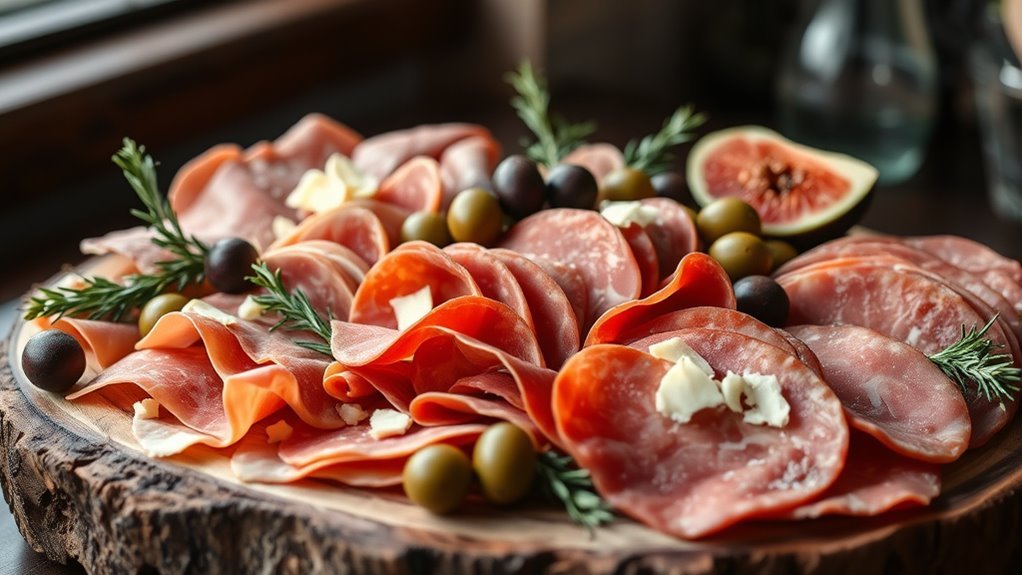
Italian cold cuts are commonly grouped under the term salumi. This broad category includes salted, cured, fermented, smoked, or cooked meat products. Most are made from pork, but bresaola is usually made from beef, and regional producers may use other meats.
Salame is more specific. It usually describes meat and fat that have been minced, seasoned, placed in a casing, fermented, and matured. Affettati simply means sliced foods and is often used for the sliced meats arranged on an antipasto plate.
Italian salumi can be divided into three practical groups:
- Whole-muscle meats: Prosciutto, coppa, bresaola, speck, culatello, guanciale, pancetta, and lonzino.
- Fermented sausages: Genoa-style salami, Milano salami, Calabrese salami, soppressata, and finocchiona.
- Cooked meats: Mortadella and prosciutto cotto.
| Cold cut | Main meat or cut | Typical character | Good use |
|---|---|---|---|
| Prosciutto crudo | Pork hind leg | Delicate, salty-sweet, silky | Antipasti, melon, sandwiches |
| Genoa-style salami | Minced pork, sometimes beef | Garlicky and mildly tangy | Boards and sandwiches |
| Milano salami | Finely minced pork and fat | Mild and fine-textured | Antipasti and panini |
| Calabrese salami | Minced pork | Spicy, peppery, garlicky | Pizza, boards, sandwiches |
| Mortadella | Finely ground pork with fat cubes | Silky, mild, aromatic | Sandwiches and antipasti |
| Coppa or capocollo | Pork neck or upper shoulder | Rich, marbled, warmly spiced | Boards and sandwiches |
| Pancetta | Pork belly | Rich, savory, usually unsmoked | Pasta, soups, risotto |
| Bresaola | Lean beef | Tender, mild, concentrated | Salads and antipasti |
| Speck | Boned pork leg | Smoky, firm, aromatic | Bread, cheese, cooked dishes |
| Soppressata | Coarsely minced pork | Rustic, meaty, mild or hot | Boards and sandwiches |
| Culatello | Selected muscles from pork thigh | Delicate, fragrant, tender | Simple antipasti |
| Guanciale | Pork cheek or jowl | Rich, porky, fat-forward | Carbonara, amatriciana, gricia |
| Finocchiona | Minced pork and fat | Fennel-scented and tender | Tuscan-style antipasti |
| Lonzino | Pork loin | Lean, firm, gently seasoned | Boards and sandwiches |
Understanding PDO and PGI Labels
Some Italian meat names are protected by the European Union. A Protected Designation of Origin, or PDO, has the strongest geographical connection. Its recognized production stages must take place in the defined region. A Protected Geographical Indication, or PGI, links a product’s reputation or a key production stage to a specific area.
The European Commission’s guide to PDO and PGI labels explains how the two schemes work.
Protected Italian meats in this guide include Prosciutto di Parma PDO, Prosciutto di San Daniele PDO, Culatello di Zibello PDO, Soppressata di Calabria PDO, Coppa Piacentina PDO, Mortadella Bologna PGI, Bresaola della Valtellina PGI, Speck Alto Adige PGI, and Finocchiona PGI.
Note: A regional word on a package does not always indicate a protected product. Look for the full registered name and the official PDO or PGI logo when protected origin matters to you.
Prosciutto: Italy’s Classic Cured Ham
Prosciutto means ham in Italian. The two types most shoppers encounter are prosciutto crudo, which is dry-cured and uncooked, and prosciutto cotto, which is cooked. Prosciutto crudo is normally sliced paper-thin so its fat softens quickly and its aroma is easy to notice.
Two celebrated protected versions are Prosciutto di Parma PDO and Prosciutto di San Daniele PDO. Prosciutto di Parma is made from pork hind legs and sea salt and must cure for at least 14 months under its current specification. The official Prosciutto di Parma production guide describes the salting, resting, greasing, curing, inspection, and branding stages.
Prosciutto di San Daniele is produced in San Daniele del Friuli. Its process includes pressing, which contributes to the ham’s recognizable guitar-like shape. The official San Daniele production guide explains its minimum maturation and certification process.
Serve prosciutto with melon, figs, pears, mild cheese, bread, or grissini. Avoid crowding it with several strong condiments. Its delicate aroma is easiest to appreciate when the slices are allowed to sit briefly at room temperature before serving.
Genoa Salami: Garlicky and Savory
Genoa-style salami is a dry sausage usually made with pork, although some products contain a small amount of beef. Garlic is a defining flavor, and some recipes use wine or grape juice. The name is widely used as a product style in North America, so the flavor and texture can differ among producers.
Flavor Profile
Expect a savory, garlicky salami with mild fermentation tang and visible pieces of fat. Black pepper is common, while the grind can range from moderately fine to coarse. A properly matured product should taste balanced rather than sharply acidic.
Serving Suggestions
| Pairing | Why it works | Best use |
|---|---|---|
| Provolone | Creamy, slightly sharp contrast | Boards and panini |
| Figs or grapes | Balances garlic and salt | Snacks and antipasti |
| Mustard | Adds acidity and sharpness | Sandwiches |
| Olives | Matches its savory intensity | Antipasto boards |
Use thin slices in sandwiches or fold them loosely on a board. Genoa-style salami can also add flavor to pizza, but check whether the casing should be removed before serving or cooking.
Milano Salami: Smooth and Mild
Milano salami is associated with Milan and Lombardy and is known for a fine, even grind. The small pieces of meat and fat create a smoother appearance and more delicate bite than coarsely ground salami.
Seasoning varies, but black pepper, garlic, and mild aromatic spices are common. Because no single curing period applies to every product sold under this style, check the producer’s label rather than relying on a fixed number of weeks.
Milano salami works well with crusty bread, mild-to-sharp cheeses, olives, grapes, or melon. Its restrained seasoning also makes it useful in panini where stronger salami could overpower the other ingredients.
Calabrese Salami: For Spice Lovers
Calabrese salami is a spicy southern Italian-style sausage commonly seasoned with red chili and garlic. Retail products differ in grind, heat, fat content, and curing time. A product labeled Calabrese salami is not automatically the same as a protected Calabrian salume such as Soppressata di Calabria PDO.
Bold Calabrian Heat
Red chili gives Calabrese-style salami its warm to hot finish and reddish color. Some versions use crushed pepper flakes, while others use a smoother chili paste. Garlic and black pepper may add another layer of spice.
Peppery Pork Profile
The meat is usually ground more coarsely than Milano salami, creating a rustic texture. Fermentation, drying, fat, and seasoning combine to produce a savory flavor with noticeable heat. The exact intensity depends on the recipe, so compare labels when shopping for mild or hot versions.
Best Ways to Serve
Pair spicy Calabrese salami with fresh mozzarella, ricotta, mild provolone, bread, olives, or pickled vegetables. The dairy softens the heat, while acidic pickles prevent the meat from tasting too heavy.
It also works on pizza and in toasted sandwiches. Start with a small amount because the rendered fat and chili can become more noticeable when heated.
Mortadella: Bologna’s Classic Cold Cut
Mortadella is a cooked pork product known for its pale pink color, smooth texture, and visible white cubes of fat. Authentic Mortadella Bologna PGI is produced in designated areas of Italy under a protected specification.
According to the Mortadella Bologna Consortium, selected pork is finely ground, mixed with cubes of throat fat, salt, pepper, and permitted natural flavorings, placed in a casing, and cooked in dry-air ovens. Some versions contain pistachios, but they are not required in every mortadella.
| Pairing | Why it works |
|---|---|
| Crusty bread or focaccia | Provides texture without hiding the meat’s mild flavor |
| Parmigiano-Reggiano | Adds a firmer texture and nutty sharpness |
| Pears or figs | Adds fresh sweetness |
| Pickled vegetables | Cuts through the rich texture |
Mortadella can be shaved into very thin folds for sandwiches or cut into cubes for an antipasto plate. Let chilled slices warm for a few minutes before eating so the texture becomes softer and more aromatic.
Coppa: Rich Cured Pork Neck
Coppa, capocollo, and capicola are related names for cured meat made from the pig’s neck or upper shoulder area. The cut has natural marbling, which produces a tender texture and rich flavor when sliced thinly.
Seasoning can include black pepper, paprika, chili, garlic, wine, or other regional spices. The terms are sometimes used loosely outside Italy, while protected products such as Coppa Piacentina PDO and Capocollo di Calabria PDO follow their own regional specifications.
Coppa’s Flavor Profile
| Cut | Pork neck or upper shoulder |
| Texture | Tender, dense, and visibly marbled |
| Common seasoning | Pepper, paprika, chili, garlic, or wine |
| Flavor range | Mild and sweet to peppery and hot |
Coppa usually tastes richer than lean prosciutto because fat runs through the meat rather than sitting mainly around its edge. The seasoning should support that pork flavor rather than cover it.
Serving Coppa Best Ways
Slice coppa thinly and let it soften briefly at room temperature. Serve it with Parmigiano-Reggiano, pecorino, figs, pears, olives, or crusty bread. Its marbling also works well in sandwiches with bitter greens or pickled vegetables.
Pro Tip: Fold thin slices instead of laying them flat. The folds trap air, make the meat easier to pick up, and prevent fatty slices from sticking together.
Pancetta: Italy’s Cured Pork Belly
Pancetta is made from pork belly cured with salt and seasonings. Unlike most American bacon, it is usually unsmoked. Common forms include pancetta arrotolata, which is rolled, and pancetta tesa, which is left flat.
Black pepper, garlic, juniper, nutmeg, herbs, or other spices may be used, depending on the regional style and producer. Diced pancetta can be cooked slowly to release its fat and add savory depth to pasta, soups, risotto, beans, vegetables, and sauces.
Warning: Do not assume every cured pancetta is safe to eat directly from the package. Eat it without cooking only when the label identifies it as ready to eat. If the package says “cook thoroughly,” provides safe-handling instructions, or does not clearly state that it is ready to eat, cook it according to the manufacturer’s directions.
- Dice it and render it slowly for pasta or risotto.
- Add it to soups, beans, or braised vegetables.
- Use thin slices in baked savory pastries.
- Serve it on a cold board only when the package confirms that it is ready to eat.
Bresaola: Lean Air-Dried Beef
Bresaola is a salted and air-dried whole-muscle meat usually made from lean beef. It has a dark red color, firm but tender texture, and a mild flavor that is less fatty than most pork salumi.
The protected name Bresaola della Valtellina PGI applies to products processed in the province of Sondrio under an approved specification. The beef itself does not have to come from cattle raised in Valtellina. The Bresaola della Valtellina Consortium explains the geographical processing requirement and certification system.
Origins and Curing
Production generally includes trimming lean beef cuts, salting and seasoning them, allowing the cure to penetrate, and then drying and maturing the meat under controlled conditions. The specific spice mixture and maturation period vary.
- Salt removes moisture and supports preservation.
- Spices and herbs add aroma.
- Drying concentrates the beef flavor.
- The lean cut gives bresaola its firm, clean texture.
Serving and Pairings
Arrange bresaola in thin slices and dress it lightly with olive oil and lemon. Arugula and shaved Parmigiano-Reggiano make a classic combination. Pears, figs, soft cheese, or a few capers also work well.
Bresaola is often leaner than pork-based salumi, but sodium varies considerably among brands. Check the Nutrition Facts panel when sodium intake is a concern.
Speck: Smoky Ham From South Tyrol
Speck combines salting, seasoning, smoking, and dry curing. It is generally firmer and smokier than prosciutto crudo, making it useful both as a sliced cold cut and as an ingredient in cooked dishes.
Speck Alto Adige PGI, also called Südtiroler Speck, is the protected South Tyrolean product. Its current specification describes boned pork legs that are moderately salted, seasoned, cold-smoked at controlled temperatures, and dry-cured.
- Slice it thinly across the grain for a tender bite.
- Pair it with alpine cheese, apples, pears, or rye bread.
- Dice it for dumplings, pasta, eggs, or warm potato dishes.
- Use acidic pickles or mustard to balance its smoke and fat.
Not every product labeled “speck” follows the Speck Alto Adige PGI specification. Check for the full protected name and PGI logo when you want the certified regional product.
Soppressata: Rustic Southern Salami
Soppressata is a family of Italian salami rather than one universal recipe. It is commonly made with coarsely chopped pork and can be mild, peppery, or hot. Texture, shape, seasoning, and aging differ among regions and producers.
Southern versions often use black pepper, garlic, or red chili. Soppressata di Calabria PDO is a protected Calabrian product and should not be confused with every salami sold under the general soppressata name.
Serve soppressata with pecorino, provolone, olives, pickled peppers, or crusty bread. Its coarse texture also makes it a satisfying sandwich meat, especially with bitter greens or a sharp condiment.
Culatello: Italy’s Luxury Cured Ham
Culatello is made from selected muscles taken from a deboned pork thigh. Unlike prosciutto, the meat is separated from the bone, trimmed, salted, enclosed in a natural casing, tied, and matured.
Authentic Culatello di Zibello PDO comes from a defined area in the province of Parma. Its PDO production method requires curing for more than 10 months from salting in conditions that allow suitable airflow and maturation. The finished product is pear-shaped and known for a delicate fragrance, tender texture, and mild sweet-savory flavor.
- Slice it very thinly.
- Serve it with plain bread and unsalted butter.
- Pair it with figs, melon, or a restrained cheese.
- Avoid strong sauces that hide its aroma.
Because the protected product is costly and relatively uncommon, check for the complete “Culatello di Zibello PDO” name rather than relying on the word culatello alone.
Guanciale: The Key to Carbonara
Guanciale is made from pork cheek or jowl. It contains a high proportion of firm fat with ribbons of meat and is normally cured with salt, pepper, and sometimes herbs or spices. Unlike smoked bacon, traditional guanciale is generally unsmoked.
When diced and heated slowly, the fat renders into the pan while the meat becomes crisp around the edges. That rendered fat is central to Roman dishes such as carbonara, pasta all’amatriciana, and pasta alla gricia.
Choose guanciale with clean-smelling fat, a firm texture, and clear storage or cooking instructions. Pancetta is the closest widely available substitute. Bacon can work in a practical sense, but its smoke changes the finished dish.
Note: Properly certified Italian pork products can enter the United States through approved commercial channels. However, USDA guidance says travelers may not bring Italian cured ham and salami into the country in personal baggage. Declare all agricultural products when entering the United States.
Finocchiona: Tuscany’s Fennel Salami
Finocchiona is a Tuscan salami flavored with fennel seeds, fennel flowers, or both. The fennel gives it a sweet herbal aroma that distinguishes it from pepper-dominant salami.
The current Finocchiona PGI specification describes a tender salami with a pronounced fennel aroma, a slight garlic aroma, and slices that may be soft enough to crumble slightly. Wine may also be used during production.
- Serve it at cool room temperature.
- Pair it with Tuscan bread, pecorino, or fresh ricotta.
- Add olives or artichokes for an antipasto plate.
- Use fresh pears or grapes to complement the fennel aroma.
Look for the Finocchiona PGI name and logo when you want a product made under the protected Tuscan specification.
Lonzino: A Lean Pork Loin Cure
Lonzino is cured pork loin. Because the loin is much leaner than pork belly, jowl, or neck, lonzino has a firm texture and less visible fat than pancetta, guanciale, or coppa.
Seasoning often includes salt, black pepper, garlic, herbs, or wine. The exact recipe and maturation period depend on the producer. Its flavor is usually mild, pork-forward, and gently aromatic rather than heavily fermented or smoky.
Slice lonzino paper-thin and pair it with olive oil, lemon, bread, cheese, or pickled vegetables. It is also useful in sandwiches when you want a leaner cured pork option, although its sodium content should still be checked on the label.
How to Build an Italian Antipasto Board
A good antipasto board does not need every meat in this guide. Three or four contrasting salumi are usually enough. Choose different textures and flavor levels rather than several similar salami.
- Choose one delicate meat: Prosciutto, bresaola, or lonzino.
- Add one rich meat: Mortadella, coppa, or culatello.
- Add one bold meat: Calabrese salami, soppressata, speck, or finocchiona.
- Include cheese: Try Parmigiano-Reggiano, pecorino, provolone, mozzarella, or ricotta.
- Add acidity: Olives, artichokes, pickled peppers, or giardiniera keep the board balanced.
- Add something fresh or sweet: Pears, figs, melon, grapes, or a small amount of fruit preserve.
- Finish with bread: Use focaccia, grissini, sliced ciabatta, or another mild bread.
The most balanced antipasto boards combine a delicate meat, a rich meat, and a spicy or smoky meat instead of using several products with the same flavor and texture.
Pro Tip: Take only the amount you plan to serve from the refrigerator. Thin slices become more tender and aromatic after a few minutes at room temperature, but unused meat should remain properly chilled.
Storage, Food Safety, and Health Considerations
Storage rules differ between an unopened shelf-stable salami, a refrigerated sliced product, and a meat that requires cooking. Always follow the package label. After opening, wrap the meat tightly or place it in a sealed container and refrigerate it for the period stated by the producer.
Discard meat that develops an unexpected sour or rotten odor, a slimy surface, damaged packaging, or signs of spoilage that do not match the product’s normal appearance. A white surface culture can be normal on some dry sausages, but unfamiliar colored or fuzzy growth should not be assumed safe.
Pregnant people, older adults, young children, and people with weakened immune systems face a higher risk from foodborne illness. They should follow current medical and public-health advice concerning refrigerated ready-to-eat meats.
Italian cold cuts are concentrated foods and can contain substantial sodium and saturated fat. The American Heart Association recommends minimizing processed meats as part of a heart-healthy eating pattern. Compare Nutrition Facts labels, keep portions modest, and follow any sodium or fat limit given by your healthcare professional.
Frequently Asked Questions
What is the most popular Italian cold cut?
There is no official ranking that identifies one product as Italy’s most popular cold cut. Prosciutto is one of the most internationally recognized choices, while salami, mortadella, coppa, pancetta, and regional specialties are also widely eaten.
Is guanciale still banned in the United States?
Guanciale is not subject to a simple nationwide retail ban. U.S.-made guanciale is sold legally, and some Italian pork products can enter through approved commercial import channels. However, USDA guidance says travelers cannot bring Italian cured ham and salami into the United States in personal baggage. Import rules can change, so check current USDA guidance before traveling.
Can people with heart disease eat Italian deli meat?
Some people may be able to eat small, occasional portions, but cured meats can be high in sodium and saturated fat. Compare labels and follow the limits given by your doctor or dietitian, especially if you have high blood pressure, heart failure, kidney disease, or another condition affected by sodium.
What are the most common Italian deli meats?
Common choices include prosciutto, mortadella, coppa or capocollo, pancetta, bresaola, speck, soppressata, finocchiona, and several salami styles. Guanciale is more often used for cooking than served as a standard sandwich meat.
What is the difference between salumi and salami?
Salumi is the broad category of Italian prepared meat products. Salami is the English plural commonly used for salame, a type of minced, seasoned, fermented, and matured sausage. Every salame is a salume, but prosciutto, bresaola, and mortadella are salumi without being salame.
Can pancetta be eaten without cooking?
Only eat pancetta without cooking when its package clearly identifies it as ready to eat. Other pancetta products are sold as raw cured pork and must be cooked. Follow the label’s cooking and safe-handling directions.
Conclusion
Italian cold cuts offer far more variety than a single plate of ham and salami suggests. Prosciutto and culatello provide delicate whole-muscle flavors, mortadella brings a soft cooked texture, bresaola and lonzino offer leaner slices, while Calabrese salami, soppressata, speck, and finocchiona add heat, smoke, or aromatic spice.
Start with a few contrasting products, serve them in modest portions, and pair them with bread, cheese, vegetables, and fruit. When origin matters, look for the complete PDO or PGI name. When safety or nutrition matters, follow the package instructions and compare sodium, fat, storage, and cooking information before serving.
Sources
- European Commission: Geographical indications and quality schemes — explains PDO and PGI protections.
- Consorzio del Prosciutto di Parma: Making Parma Ham — supports the production method and current minimum curing period.
- Consorzio del Prosciutto di San Daniele: Processing — supports the production and maturation description.
- Mortadella Bologna Consortium: The Product — supports ingredients and cooking methods.
- USDA APHIS: International Traveler Guidance for Meat Products — supports current traveler declaration and import restrictions.
- American Heart Association: Cooking to Lower Cholesterol — supports limiting processed meat in a heart-healthy diet.
