
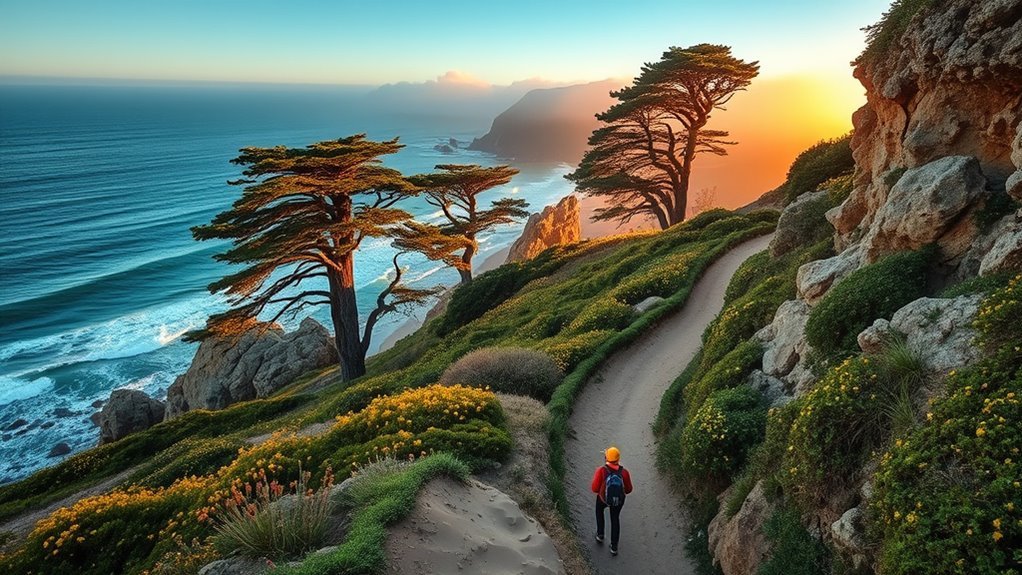
Like a map that keeps whispering, you’ll find trails that open to ocean, marsh, and oak-covered ridges—and one will call to you more than the rest. You’ll want clear direction, reasonable effort, and views that reward the climb, so I’ll point out easy beach walks, moderate ridge routes, and a few tougher treks with big panoramas. Stay with me and you’ll know which trail fits your pace and mood.
Andrew Molera State Park — Beach Trail

If you’re looking for an easy-to-moderate outing, the 3-mile round-trip Beach Trail at Andrew Molera State Park delivers sweeping ocean vistas, sandy stretches, and a few shallow river crossings that keep the walk varied and scenic. You’ll step from Highway 1 onto a path that feels immediate and unshackled, the coastline opening like a promise. The sand shifts beneath your boots, tide-scented wind filling your lungs; occasional creek fords ask you to choose footwear wisely, so wear water-resistant shoes and move confidently through shallow streams. Hike early to catch cooler air, softer light, and fewer people, letting solitude expand your day. The route’s simplicity is its strength—no artifice, just sea, sky, and the steady rhythm of your steps. You’ll leave with salt on your skin and a clearer head, reminded that freedom can be as direct as following a shoreline and as deliberate as arriving at dawn.
Garland Ranch Regional Park — Mesa Trail to Inspiration Point
Because the Mesa Trail climbs through oak woodlands and chaparral, you’ll feel a steady shift from shaded groves to open ridgelines as you make the 4.5-mile round trip to Inspiration Point at Garland Ranch Regional Park. You’ll move deliberately, noticing the texture of bark, the scent of sage, and how the valley opens with each switchback. The trail is moderate, accessible from the Garland Ranch trailhead in Carmel Valley, and rewards effort with sweeping views of rolling hills and distant valleys.
A steady climb from oak shade to open ridgelines — 4.5 miles to Inspiration Point, with sweeping valley views.
- Distance: 4.5 miles round trip — manageable, freeing, and rhythmic.
- Difficulty: Moderate — you’ll work, but you won’t be conquered.
- Best time: Spring — wildflowers paint the slopes and lift your spirits.
- Scenery: Oak groves, chaparral, ridgelines and expansive lookout spots that ask you to breathe deeper.
Take the Mesa Trail when you want landscape that clarifies perspective and invites a lighter step forward.
Elkhorn Slough Reserve — Five-Mile Loop Trail
You’ll start at the Elkhorn Slough Visitor Center and follow an easy five-mile loop that winds through marshes, mudflats, and tidal channels. Bring binoculars and check the tide schedule so you can spot otters, herons, and even leopard sharks when the water’s low, and expect flat, well-marked paths with occasional muddy stretches. Early morning or late afternoon light gives the best viewing and photography conditions while keeping trails cooler and wildlife active.
Wildlife Viewing Tips
Want the best wildlife views on the Five-Mile Loop? Go at low tide, when herons, egrets, sea otters and harbor seals reveal themselves along exposed mudflats and channels. Bring binoculars and a camera; observation points along the trail turn into quiet theaters of movement and sound.
- Time visits from late fall through spring for peak migratory and resident activity.
- Position yourself at established overlooks and stay patient — birds feed and move rhythmically.
- Use optics to observe without disturbing nests or shorelines; let wildlife keep its space.
- Listen as much as you look: flight calls and rippling water often announce hidden life.
You’ll leave feeling freer, connected to place and to the wild pulse of the slough.
Trail Conditions & Terrain
When you step onto the Five-Mile Loop at Elkhorn Slough, the mostly flat route quickly puts you at ease — a mix of dirt paths and raised boardwalks carries you cleanly through marshes and coastal scrub while protecting fragile habitat. You’ll find the trail easy to navigate: clear signs and well-worn routes guide you past tidal channels and salt grasses. Expect occasional muddy stretches after rain, so bring sturdy shoes and a readiness to wade through small soft spots. The variety underfoot—firm earth, wooden boards—keeps your senses engaged as you move freely. Because the route invites birding and wildlife watching, you’ll likely spot otters, herons, and even leopard sharks near channels, reminding you how connected and free the coastline can feel.
Best Times to Visit
If you time your visit for low tide, you’ll get the best wildlife viewing—shorebirds concentrate on exposed mudflats, otters surface near channels, and leopard sharks gather in shallows you can often spot from the boardwalks. You’ll feel liberated moving with the tide’s rhythm; spring amplifies that freedom as migrants return and wildflowers frame the trail. Aim for early mornings for cool air and active birds, or late afternoons for golden light that sharpens silhouettes.
- Check the tide schedule before you go to time sightings.
- Visit in spring for peak bird migration and vibrant flora.
- Come at dawn for the most wildlife activity and solitude.
- Stay late for striking sunset photography and softer crowds.
Carmel River State Beach — Lagoon Trail
You’ll follow an easy 1.5-mile out-and-back along the Lagoon Trail, where the river widens into a shimmering lagoon with glimpses of the Pacific beyond. Keep your binoculars handy — wading birds and shorebirds frequent the shallows, making it a quiet hotspot for wildlife watching. Go late afternoon when the light softens and the crowds thin for the most peaceful views and beach access afterward.
Lagoon & Ocean Views
Want a short hike that still delivers big coastal views? You’ll find freedom on the 1.5-mile Lagoon Trail at Carmel River State Beach — an easy, restorative loop that opens onto lagoon and ocean panoramas. Walk with intent, breathe salt air, and let the horizon broaden what’s possible.
- Trail length: 1.5-mile round trip — short but satisfying.
- Views: Continuous vistas of the Carmel River Lagoon and Pacific Ocean.
- Access: Trailhead sits right at Carmel River State Beach for effortless arrival.
- Timing: Late afternoon light softens the scene and thins the crowds.
You’ll leave feeling unburdened, the landscape reminding you that small efforts can yield expansive rewards.
Wildlife & Birdwatching
The lagoon trail doesn’t just offer sweeping ocean views — it’s a frontline seat for wildlife and birdwatching, especially during spring and fall migrations. You’ll cover about 1.5 miles round trip along easy terrain, watching migratory waterfowl, shorebirds, and the lagoon’s restless surface. Sea otters and harbor seals surface nearby; the river and marsh feel alive and unconstrained. You can frame liberating photos or simply breathe as birds wheel and call. The trail’s accessibility makes it a practice in patience and presence, welcoming all skill levels to observe, learn, and defend this habitat.
| Species | Where to look |
|---|---|
| Migratory waterfowl | Lagoon surface |
| Shorebirds | Sandbars and mudflats |
| Marine mammals | Near river mouth and surf |
Best Times to Visit
If you visit the Lagoon Trail in late afternoon, you’ll find softer light, fewer people, and a calm that makes the river and ocean glow—perfect for photos or quiet wildlife watching. You’ll feel freed by the open horizon as you walk the 1.5-mile round trip, an easy route for families and casual hikers. Spring lifts the trail with wildflowers and mild days, while early mornings give cool air and solitude if you crave clarity before the world wakes.
- Late afternoon: golden light, sparse crowds, evocative views.
- Spring: blooms, pleasant temps, heightened color.
- Early morning: cool, quiet, intimate wildlife moments.
- Any calm day: open sky, restorative walks for the liberated spirit.
Locke-Paddon Park — Marina Loop
A short, two-mile loop winds you through eucalyptus groves and around a peaceful lake at Locke-Paddon Park, offering an easy, family-friendly hike that’s perfect for a quick nature escape. You’ll find the trailhead right in Marina, so you can step from town into the quiet immediately. The path’s gentle grade invites walkers of all ages; kids and elders move at their own pace while you breathe the sweet, resinous air and watch waterfowl glide.
| Feature | Benefit |
|---|---|
| Distance | 2 miles — easy for all levels |
| Scenery | Eucalyptus groves & lake views |
| Amenities | Shaded picnic benches & wildlife spotting |
You can picnic under trees, follow the loop for mindful movement, or simply stand by the shore and feel free. This park frees you from hurry, offering small, restorative moments and a clear, accessible trail that welcomes liberation in quiet steps.
Laguna Seca Recreation Area — Reese Hill Trail
Moving from the shady lake loop at Locke-Paddon Park, you’ll find Reese Hill Trail in Laguna Seca Recreation Area offers a different kind of quiet—four miles of moderate climbing through oak woodlands that open onto sweeping views of the surrounding hills. You’ll feel the trail reshape your pace: steady, intentional, free.
- Trail overview: four miles, moderate difficulty, suitable for many skill levels.
- Scenery: oak woodlands, layered hills, and varied ecosystems that invite slow observation.
- Access: trailhead inside Laguna Seca Recreation Area, an easy drive from Salinas; avoid event days—weekdays are best to keep things calm.
- Experience: a peaceful hike for nature lovers seeking release, reflection, and wide-open sightlines.
You’ll move through dappled light and open ridgelines, noticing small ecosystems and expansive views. The trail gives you room to breathe, to choose your tempo, and to step toward a clearer head and lighter spirit without straying far from town.
Toro Park — Joaquin Murrieta Trail
You’ll tackle the Joaquin Murrieta Trail’s 7-mile, strenuous route up to Mount Toro, so expect steep sections that demand steady footing. At the summit you’ll be rewarded with sweeping views of the Santa Lucia Mountains and the surrounding landscape. Start early to beat the heat and bring trekking poles to handle the challenging terrain.
Trail Overview
Though the climb gets steep in places, the Joaquin Murrieta Trail in Toro Park rewards your effort with a strenuous 7-mile route to Mount Toro’s summit and sweeping views of the Santa Lucia Mountains. You’ll find a trail that pushes you physically and clears your head, beginning at Toro County Park near Salinas with easy access to the trailhead. Plan to start early to beat summer heat and move deliberately through varied terrain.
- Expect steep sections where trekking poles help steady your rhythm.
- The path alternates rocky stretches and packed dirt, testing balance and resolve.
- Wildlife sightings—birds, deer, coyotes—remind you the land is alive.
- Early starts preserve your energy and let you claim the day.
Summit Views
When you crest Mount Toro on the Joaquin Murrieta Trail, sweeping panoramas of the Santa Lucia Mountains and the Salinas Valley open up, rewarding the climb with crisp, wide-ranging views that change with the light. You stand above oak woodlands and chaparral, watching ridgelines roll toward the coast while valleys carve pathways below. The vista feels like a hard-won passport to space — you can breathe deeper, shed routines, and claim the horizon. Scan for hawks riding thermals and deer pausing beneath oaks; the diversity of ecosystems gives your freedom a living soundtrack. Because the route is strenuous, those views come earned: they welcome you as both reward and reminder of how far your legs — and will — can carry you.
Gear & Timing
Start early and outfit yourself deliberately: the Joaquin Murrieta Trail climbs seven strenuous miles to Mount Toro, so bring sturdy, broken-in hiking shoes, plenty of water (at least 1.5–2 liters for a day hike), and trekking poles to steady you on steep, uneven sections. You’ll want to move before midday heat and savor wildflower bursts in spring or cool fall air. Pack light, but don’t skimp on essentials—this route rewards preparedness and boldness.
- Footwear: grippy boots that protect ankles on rocky gullies.
- Hydration: electrolyte mix plus 1.5–2L, more in summer.
- Poles: reduce strain on knees during ascent and descent.
- Timing: dawn starts or late afternoon in milder seasons for clarity and freedom.
Point Lobos State Natural Reserve — Bird Island Trail
Just under a mile round-trip, the Bird Island Trail at Point Lobos delivers dramatic coastal views and close-up wildlife encounters without a strenuous hike. You’ll move along a short, 0.8-mile route that feels immediate and freeing: rocky headlands, wind-swept scrub, and ocean vistas that open your chest and your mind. Scan the surf and bluffs for sea lions hauling out and seabirds circling atop the reef; their presence makes the coastline feel alive and defiantly untamed. The trailhead sits inside Point Lobos State Natural Reserve, a place renowned for its biodiversity and sculpted shorelines, so you’re immersed in a living exhibit of land and sea. Arrive early to secure parking—crowds peak later, and early light rewards you with solitude and sharp views. Ideal for families and casual hikers, the Bird Island Trail lets you witness wildness up close, reclaim time outdoors, and return to your day recharged and quietly bold.
Palo Corona Regional Park — Inspiration Point
A quick, rewarding climb leads you to Inspiration Point in Palo Corona Regional Park, a 1.3-mile round-trip hike that packs sweeping coastal panoramas into a moderate outing. You’ll start at the Carmel Valley trailhead, move through coastal oak woodlands, and feel the trail tighten as you gain elevation. The path is steep in sections, so you stay present, breathing with each step.
- Permit required — the park limits access, giving you a quieter, more deliberate experience.
- Timing — sunrise or sunset heightens color and mood; these windows make the view feel like a private revelation.
- Terrain — oak shade and rocky pitches test your legs while framing the coast below.
- Reward — at the top you find vast ocean views that invite reflection and a sense of release.
You’ll leave the summit lighter, attuned to the landscape and to the simple freedom of having climbed for the view.
Fort Ord Dunes State Park — Sand Dune Boardwalk
Wind and wide sky shape the Sand Dune Boardwalk at Fort Ord Dunes State Park, a 1.5-mile easy trail that threads over fragile dunes and delivers broad views of Monterey Bay. You’ll walk elevated planks that protect the shifting sands while opening a route through coastal dunes, grasslands, and wetlands — a reminder that access and stewardship can coexist. The boardwalk’s design keeps feet off delicate plants and lets you watch shorebirds feed, kite surfers trace the horizon, and seals slip through bay light. The path’s gentle grade makes it ideal for walking, biking, and mindful wandering year-round, but you’ll want layers; the wind, especially late afternoon, can flip temperatures fast. In Marina, California, this trail gives you a portable stretch of freedom: wide vistas, fresh salt air, and an easy rhythm that invites breathing deep, moving deliberately, and leaving the place intact for those who come after.
Frequently Asked Questions
Are Dogs Allowed on These Trails and Are There Leash Rules?
Yes — most trails allow dogs, but you’ll need to keep them leashed on popular and sensitive paths; some beaches or preserves ban pets or require seasonal restrictions, so check specific park rules before you head out.
What Are Nearby Public Parking and Permit Requirements?
Birds of a feather flock together — you’ll find free roadside parking, small paid lots, and some trailheads requiring day-use permits or timed parking. Bring cashless pay apps, check signage, and plan for weekends and peak-season restrictions.
Which Trails Are Stroller or Wheelchair Accessible?
You can access wheelchair- and stroller-friendly trails like the Monterey Bay Coastal Recreation Trail and parts of Lovers Point and Cannery Row promenade; they’re paved, scenic, and liberating, so you’ll move freely and soak in coastal freedom.
Are There Seasonal Closures or Wildfire-Related Restrictions?
Yes — trails close seasonally and wildfire restrictions happen; you’ll check park alerts, rangers’ posts, and Cal Fire notices before heading out. Stay informed, adapt plans, and reclaim safe access when conditions let you roam freely.
Where Are the Nearest Restrooms and Water Refill Stations?
Nearest restrooms and refill stations sit at trailheads, park lots, and visitor centers; you’ll find them at Garrapata, Point Lobos lot, and Pacific Grove—carry a bottle, but you’ll reclaim freedom with each sip and restroom stop restored.
Conclusion
You’ve seen Monterey’s trails—from sandy boardwalks to rugged ridgelines—each offering its own quiet rewards. Take your pick, but remember that “a change is as good as a rest”: new views can refresh the mind as much as a nap. Walk the easy beach paths for wildlife, climb the steeper routes for panoramas, and pause often to listen and look. You’ll leave with salt on your skin and stories in your steps.