
Last Updated on July 23, 2026 by Daniel Globe
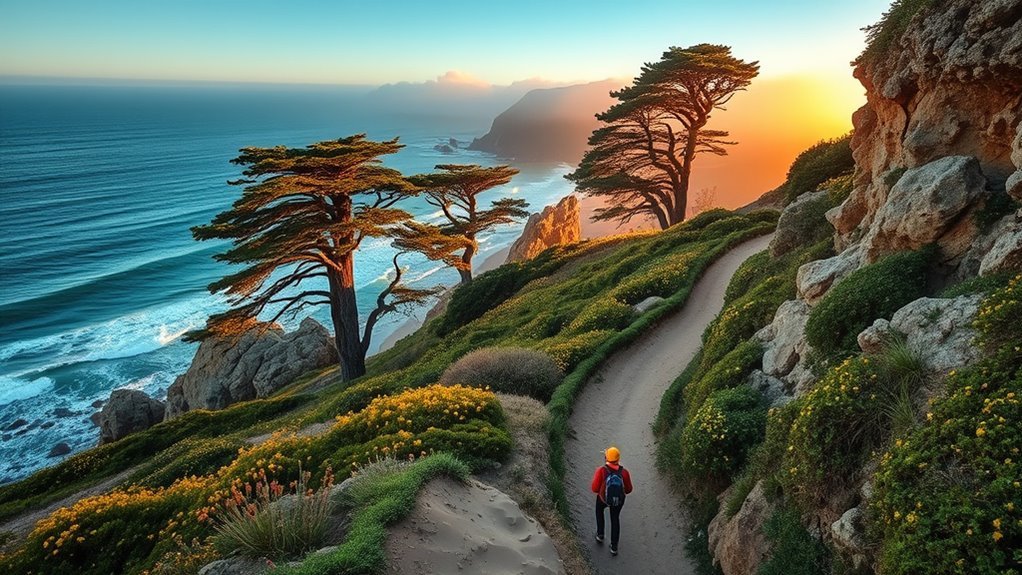
Monterey’s trails wind from tide-washed beaches to oak-topped ridges, and choosing the right route can reshape your whole day. The Central Coast offers remarkable diversity: easy shoreline strolls, moderate valley climbs, and demanding summit ascents with sweeping Pacific panoramas. This guide highlights the best hiking trails in Monterey, complete with trail lengths, permit details, seasonal tips, and wildlife advice so you can hit the trail with confidence.
Quick Answer
Monterey offers hiking trails for every fitness level, ranging from the short 0.8-mile Bird Island Trail at Point Lobos to the strenuous 7-mile summit push up Mount Toro. Top options for families include the Fort Ord Dunes Boardwalk and Carmel River Lagoon Trail. For big ridge views with moderate effort, head to Garland Ranch or Palo Corona Regional Park. Always check parking and permit rules before heading out.
Key Takeaways
- Easy Coastal Options: Bird Island Trail (0.8 mi) and Fort Ord Dunes Boardwalk (1.5 mi) feature flat terrain and scenery suitable for all ages.
- Moderate Valley & Ridge Hikes: Mesa Trail at Garland Ranch (4.5 mi) and Inspiration Point at Palo Corona (2.6 mi) offer rewarding panoramas without extreme mileage.
- Strenuous Mountain Challenge: The Joaquin Murrieta Trail (7 mi) rewards experienced hikers with panoramic views from Mount Toro’s summit.
- Wildlife Prime Spots: Elkhorn Slough Reserve and Carmel River Lagoon offer world-class sea otter, harbor seal, and migratory bird viewing.
- Permits & Logistics: Palo Corona’s Highway 1 entrance requires advance parking permits, while Elkhorn Slough is closed Mondays and Tuesdays.
At a Glance
| Best Time to Hike | Year-round; spring for wildflowers and green hills, fall for warm, fog-free coastal days. |
| Difficulty Range | Easy (0.8 mi flat boardwalks) to Strenuous (7.0 mi mountain climbs). |
| Key Trail Hazards | Poison oak along oak woodlands, coastal fog, exposed summer heat inland, seasonal river crossings. |
| Fees & Permits | State parks charge $10 vehicle day-use fees; Elkhorn Slough charges $4.50 per adult; Palo Corona Highway 1 entry requires advance permit. |
Disclosure: As an Amazon Associate I earn from qualifying purchases. Some links on this page are affiliate links, at no extra cost to you.
Quick Trail Comparison
| Trail | Distance | Difficulty | Best For |
|---|---|---|---|
| Bird Island Trail (Point Lobos) | 0.8 mi | Easy | Coastal views, sea otters, marine birds |
| Lagoon Trail (Carmel River) | 1.5 mi | Easy | Birdwatching, families, relaxed walks |
| Sand Dune Boardwalk (Fort Ord) | 1.5 mi | Easy | Monterey Bay vistas, accessible routes |
| Marina Loop (Locke-Paddon) | 2.0 mi | Easy | Families, freshwater lake views |
| Beach Trail (Andrew Molera) | 2.5 mi | Easy–Moderate | Ocean access, Big Sur coastal feel |
| Inspiration Point (Palo Corona) | 2.6 mi | Moderate | Coastal panoramas, Carmel Valley overlooks |
| Reese Hill Trail (Laguna Seca) | 4.0 mi | Moderate | Oak woodlands, rolling inland hills |
| Mesa Trail (Garland Ranch) | 4.5 mi | Moderate | Valley views, spring wildflowers |
| Five-Mile Loop (Elkhorn Slough) | 5.0 mi | Easy | Wetland wildlife, sea otters, birding |
| Joaquin Murrieta Trail (Toro) | 7.0 mi | Strenuous | Mount Toro summit views, physical challenge |
Andrew Molera State Park — Beach Trail
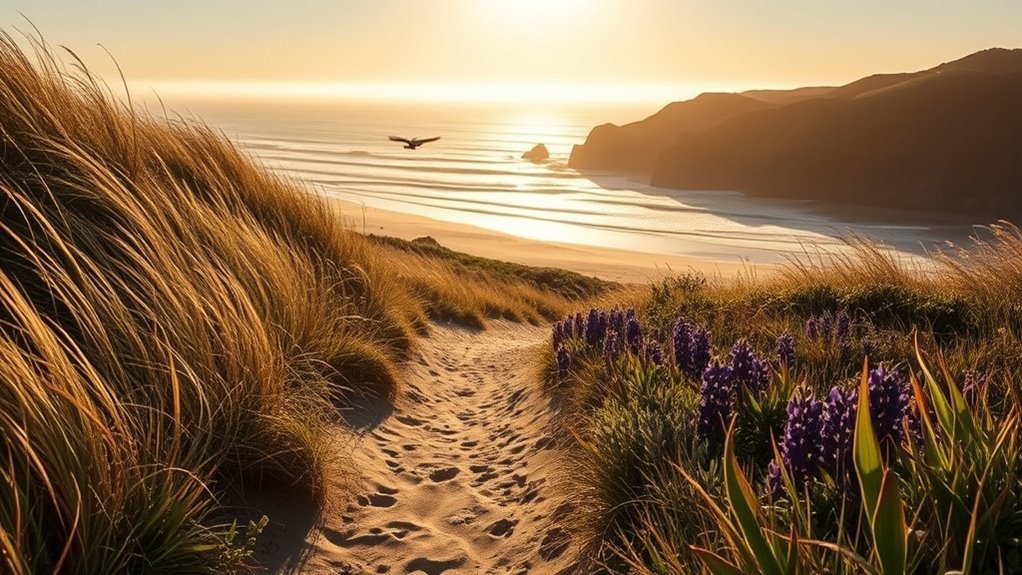
The 2.5-mile round-trip Beach Trail at Andrew Molera State Park delivers sweeping ocean vistas, sandy stretches, and a coastal river experience that keeps the walk engaging and scenic. Situated just 20 miles south of Carmel at the northern edge of Big Sur, this trail leads from Highway 1 through Creamery Meadow to the mouth of the Big Sur River where it empties into the Pacific.
From mid-June to late October, state park staff erect a seasonal wooden footbridge across the Big Sur River. Outside of these months, hikers must wade across knee-deep, chilly waters—so pack water shoes or a small towel if visiting during winter or spring. Wear water-resistant shoes and check local tide tables before exploring the rocky bluffs near the shoreline.
Pro Tip: Arrive at dawn on a weekday for peaceful birdwatching and to catch soft morning light reflecting off the river mouth and ocean surf.
Garland Ranch Regional Park — Mesa Trail to Inspiration Point
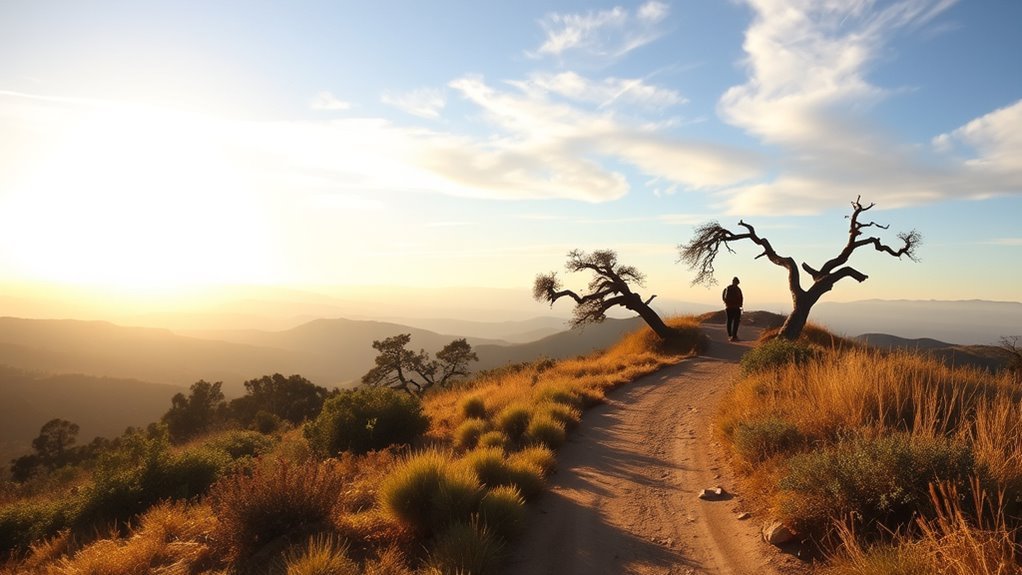
The Mesa Trail climbs through lush oak woodlands and chaparral, taking hikers from shaded groves to open ridgelines on a 4.5-mile round-trip hike to Inspiration Point inside Garland Ranch Regional Park. Gain roughly 800 feet of elevation as you follow well-graded switchbacks up from the Carmel River valley floor.
Located in Carmel Valley, Garland Ranch is known for its steep elevation changes and varied plant communities. Along the trail, you’ll encounter coast live oaks, sycamores, and seasonal waterfalls after heavy winter rains.
A steady climb from oak shade to open ridgelines — 4.5 miles to Inspiration Point, offering wide views of the Carmel Valley landscape.
- Distance: 4.5 miles round trip with approximately 800 feet of elevation gain.
- Difficulty: Moderate. Solid switchbacks provide a rewarding workout without technical terrain.
- Best Time: Spring, when blooming lupine, poppies, and shoot-stars cover the hillsides.
- Scenery: Dense oak groves, open chaparral, and high lookout points overlooking the Santa Lucia Mountains.
Warning: Poison oak grows abundantly along the shaded lower sections of Garland Ranch trails. Stay on the marked trail and learn to recognize its characteristic three-leaf pattern.
Elkhorn Slough Reserve — Five-Mile Loop Trail
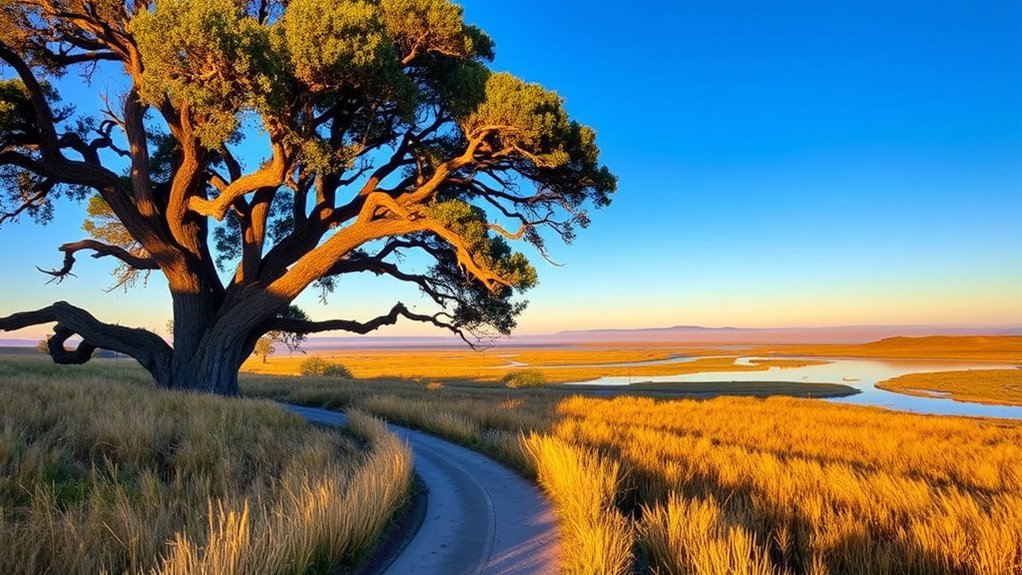
Start at the Elkhorn Slough Visitor Center in Moss Landing and follow an easy 5-mile loop that winds past salt marshes, mudflats, and oak woodlands. This estuary is one of California’s most critical coastal wetlands, serving as a vital feeding ground for hundreds of bird species, southern sea otters, and harbor seals.
Note: Elkhorn Slough Reserve is open Wednesday through Sunday from 9:00 AM to 5:00 PM (closed Mondays and Tuesdays). A $4.50 day-use fee applies for adults over 16 without a valid CDFW hunting/fishing license.
Wildlife Viewing Tips
Timing your hike with low tide yields the best wildlife activity on the Five-Mile Loop. Great blue herons, snowy egrets, double-crested cormorants, and sea otters concentrate along exposed mudflats and shallow channels to feed when tides recede.
- Plan visits between late fall and early spring for peak migratory waterfowl populations.
- Use designated observation platforms to watch sea otters forage without disturbing them.
- Bring high-power binoculars or a zoom lens; marine mammals stay in protected tidal channels.
- Listen closely: marsh birds like the endangered Ridgway’s rail call out from deep within the cordgrass.
Trail Conditions and Terrain
The Five-Mile Loop features broad dirt paths, packed granite walkways, and wooden boardwalks designed to protect fragile marsh vegetation. Elevation changes are minimal, making this route accessible to casual walkers and wildlife photographers. Expect soft or slick patches after winter storms.
Best Times to Visit Elkhorn Slough
Early mornings offer calm winds, minimal fog, and active feeding behavior among marine life. Spring visits add vibrant marsh blooms and nesting behavior among resident shorebird species.
Carmel River State Beach — Lagoon Trail
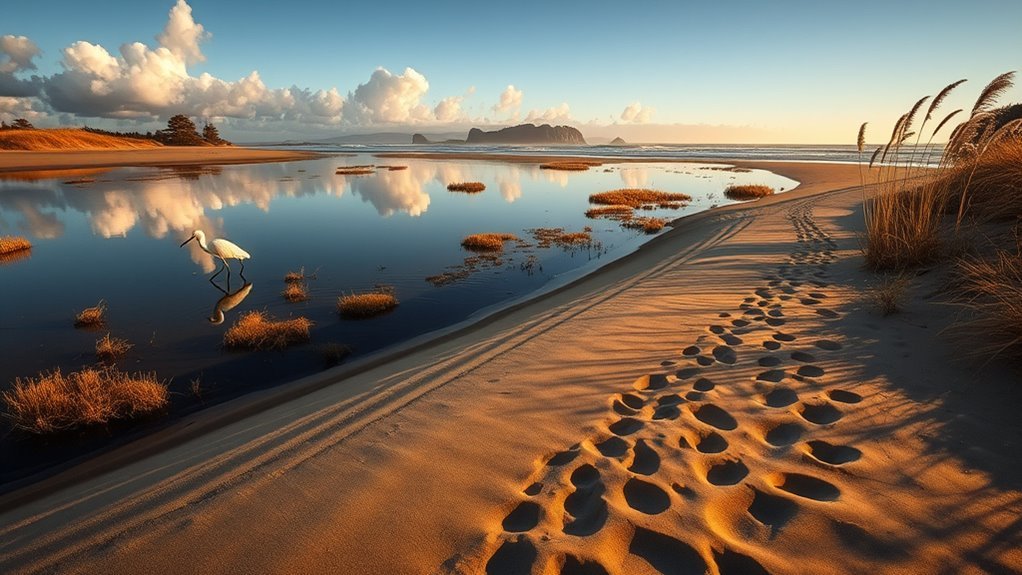
Follow the easy 1.5-mile out-and-back Lagoon Trail where the Carmel River forms a protected freshwater lagoon right before meeting the crashing waves of the Pacific Ocean. This sanctuary attracts brown pelicans, terns, kingfishers, and migratory ducks throughout the year.
Lagoon and Ocean Views
The Lagoon Trail offers front-row ocean and wetland vistas with almost no elevation gain. Hikers can easily combine this trail with a walk along Carmel River State Beach’s broad sandbar.
- Trail Length: 1.5 miles round trip on flat, sandy soil.
- Key Views: Panoramic sights of Point Lobos to the south and the open Pacific horizon to the west.
- Access: Park at the Carmel River State Beach parking lot off Carmelo Street.
Wildlife and Birdwatching
Because the lagoon serves as an estuary resting spot, birdwatchers can observe species across distinct zones:
| Species Category | Optimal Viewing Spot |
|---|---|
| Migratory Waterfowl | Calm freshwater lagoon surface |
| Shorebirds & Waders | Sandbars and mud flats near the river mouth |
| Marine Mammals | Offshore kelp beds and surf zone |
Best Times to Visit Carmel River Lagoon Trail
Late afternoon brings golden light across the water and lowers coastal breezes. Late fall through winter sees high bird density as northern species migrate down the Pacific Flyway.
Locke-Paddon Park — Marina Loop
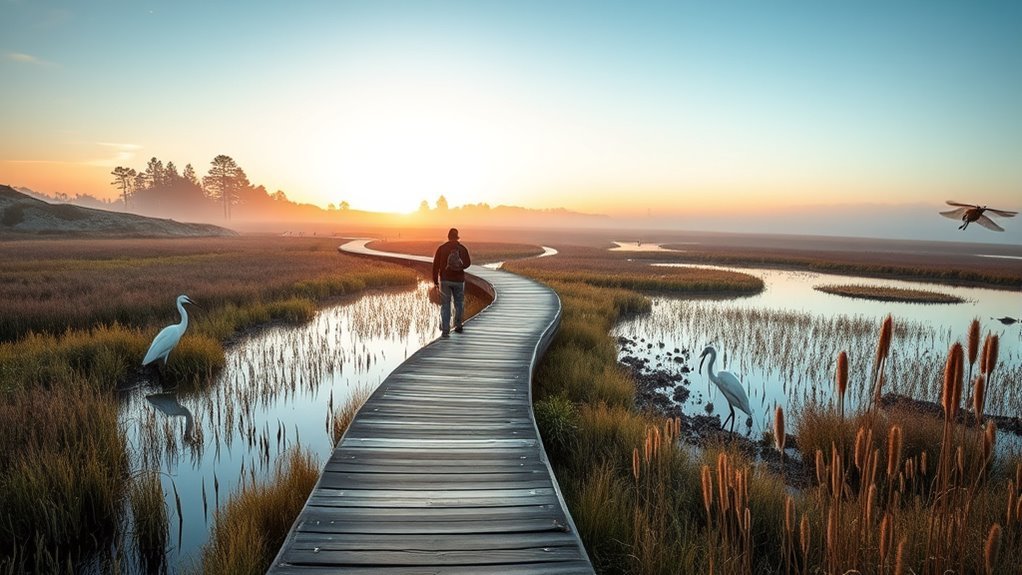
A gentle 2.0-mile loop encircles a peaceful freshwater lake and winds through mature eucalyptus groves at Locke-Paddon Park in Marina. Located just minutes from Highway 1, this urban wetland park offers a quick green escape ideal for families, dog walkers, and casual strolls.
Pro Tip: Look up into the eucalyptus canopy during winter months to spot overwintering monarch butterflies taking shelter in shaded clusters.
Laguna Seca Recreation Area — Reese Hill Trail
Located in the rolling hills between Monterey and Salinas, the Reese Hill Trail inside Laguna Seca Recreation Area delivers 4.0 miles of moderate climbing through native oak woodlands. As you gain elevation, the trail opens onto expansive viewpoints across the Salinas Valley and surrounding coastal ranges.
- Trail Overview: 4.0-mile loop on wide dirt paths with steady moderate elevation gains.
- Ecosystem: Coast live oak canopy, chaparral, and open grassland grazed by local wildlife.
- Logistics: Access via the main WeatherTech Raceway Laguna Seca entrance off Highway 68. Check event schedules before visiting, as race weekends bring increased traffic.
Toro Park — Joaquin Murrieta Trail
Tackle the Joaquin Murrieta Trail’s 7.0-mile, strenuous route up to the summit of Mount Toro. Featuring over 1,700 feet of climbing, this trail rewards dedicated hikers with unmatched 360-degree views stretching from Monterey Bay to the Gabilan Mountains.
Trail Overview
Starting inside Toro County Park off Highway 68, the route moves quickly from grassy picnic grounds into steep canyon switchbacks.
- Steep ascents test cardiovascular endurance and require sure footing on loose gravel.
- Trekking poles significantly reduce knee strain during the long, steep descent.
- Scan the ridges for red-tailed hawks, golden eagles, and black-tailed deer.
Warning: Summer temperatures on exposed inland inland slopes frequently exceed 90°F (32°C). Carry at least 2 to 3 liters of water per person, wear a sun hat, and begin by 8:00 AM to avoid peak heat.
Summit Views
From Mount Toro’s high ridgelines, you can trace the entire Salinas Valley agricultural corridor, Monterey Bay’s crescent curve, and the rugged peaks of the Santa Lucia Range.
Gear and Timing
Prepare thoroughly for this challenge. Sturdy hiking boots with deep lugged soles, sun protection, hydration packs, and snacks are essential for a safe outing.
Point Lobos State Natural Reserve — Bird Island Trail
Just under a mile round-trip, the Bird Island Trail at Point Lobos State Natural Reserve packs extraordinary coastal scenery into an easy 0.8-mile loop. The wide, crushed-granite trail leads past emerald-green cove waters at China Cove and Gibson Beach to an overlook facing Bird Island.
Scan the rocky offshore stacks for nesting Brandt’s cormorants, black oystercatchers, and sea otters floating in kelp beds below.
Note: Point Lobos parking lots frequently fill to capacity by 9:30 AM on weekends and holidays. Arrive early or prepare to park legally along Highway 1 and walk into the reserve.
Palo Corona Regional Park — Inspiration Point
A rewarding 2.6-mile round-trip hike leads to Inspiration Point in Palo Corona Regional Park, climbing ~600 feet above the mouth of Carmel Valley. The trail climbs through rolling pastureland and native oak groves, culminating at an elevated overlook with sweeping views of Carmel Bay and Point Lobos.
Note: Public entry via the Highway 1 west gate is strictly limited to 13 permitted vehicles daily and requires a free advance permit from the Monterey Peninsula Regional Park District (MPRPD). However, entry via the main Rancho Cañada unit does not require an advance permit.
- Distance & Elevation: 2.6 miles round trip with ~600 feet of steady climbing.
- Trail Surface: Wide dirt ranch roads with steady, consistent grades.
- Views: Expansive vistas of Carmel Bay, Carmel River, and the Pacific coastline.
Fort Ord Dunes State Park — Sand Dune Boardwalk
Enjoy crisp ocean breeze and wide sky on the Sand Dune Boardwalk at Fort Ord Dunes State Park, an easy 1.5-mile trail in Marina. The elevated boardwalk winds over delicate coastal dunes, allowing visitors to experience protected flora while taking in broad views of Monterey Bay.
The boardwalk surface is flat and step-free, making it accessible for strollers and wheelchair users. Bring a windbreaker layer, as coastal breezes regularly sweep across the exposed dunes.
Frequently Asked Questions
Are dogs allowed on Monterey hiking trails, and what are the leash rules?
Pet rules vary by managing agency. Dogs are strictly prohibited on all trails in Point Lobos State Natural Reserve and Elkhorn Slough Reserve to protect wildlife. However, leash-bound dogs are welcomed at Garland Ranch Regional Park, Toro County Park, and designated paved paths at Fort Ord Dunes State Park.
What parking fees and permit requirements apply to these trailheads?
California State Parks (Point Lobos, Andrew Molera, Fort Ord Dunes) charge a $10 vehicle day-use fee. Elkhorn Slough Reserve charges $4.50 per adult. Accessing Palo Corona Regional Park via its Highway 1 entrance requires a free advance permit from MPRPD, whereas entering through Rancho Cañada is open without permits. Garland Ranch and Locke-Paddon Park offer free parking.
Which Monterey trails are wheelchair- and stroller-accessible?
The Sand Dune Boardwalk at Fort Ord Dunes State Park features flat, step-free elevated planks suitable for wheelchairs and strollers. Additionally, sections of the Bird Island Trail at Point Lobos are packed crushed granite accessible for sturdy strollers, and the Monterey Bay Coastal Recreation Trail offers miles of smooth, paved coastline walking.
Do any Monterey trails close seasonally or for wildfire restrictions?
Yes. Inland park trails at Toro Park and Garland Ranch may close during extreme high-fire danger days or after heavy winter rains when mudslides occur. Coastal trails can experience high-tide washouts. Always check official California State Park or Monterey County Parks alert pages prior to departing.
Where are the nearest restrooms and water refill stations located?
Restrooms and potable water fountains are available at main visitor lots for Point Lobos, Garland Ranch, Toro Park, and Elkhorn Slough. Remote trailheads like Laguna Seca or smaller beach access points may only feature vault toilets without potable water, so always carry at least 1 to 2 liters of drinking water.
Conclusion
Monterey’s coastal and ridge trails accommodate every hiker, whether you are taking a relaxed 0.8-mile walk at Point Lobos or pushing up Mount Toro on a full-day adventure. Review the comparison table above to select your path, check parking and permit details in advance, and head out early to experience the Central Coast at its finest.
Sources
- California State Parks — Andrew Molera State Park Trail Guide
- Monterey Peninsula Regional Park District — Palo Corona Trail Regulations & Permits
- California State Parks — Point Lobos State Natural Reserve Regulations
- Elkhorn Slough Foundation — Visitor Information & Wildlife Reserve Maps
- Monterey County Parks — Toro Park Trail Maps

