
Last Updated on September 10, 2026 by Daniel Globe
Timberland makes several boots that work well for hiking, but the answer depends on the model. A dedicated Timberland hiking boot can be a solid choice for day hikes, wet trails, and moderate terrain, while the iconic Premium 6-Inch Waterproof Boot is heavier and more work/lifestyle-oriented. Choosing by trail conditions and fit matters more than choosing by brand name alone.
Quick Answer
Yes, some Timberlands are good for hiking, especially trail-specific models such as the Mt. Maddsen. Classic Timberland boots can handle easy trails, but their extra weight, insulation, and less trail-focused construction may be tiring on long or technical hikes. Check the exact model, fit, outsole, and waterproofing before heading out.
Key Takeaways
- Timberland sells dedicated hiking boots as well as work and lifestyle boots, so not every pair performs the same way on a trail.
- Trail-focused models can include rubber lug outsoles, EVA midsoles, waterproof membranes, gusseted tongues, and removable cushioned footbeds.
- The classic Premium 6-Inch Waterproof Boot can handle casual hikes but may feel heavier and warmer than purpose-built hiking footwear.
- Fit matters as much as features. Your toes need room, your heel should stay controlled, and there should be no painful pressure points.
- Regular hiking boots are not a substitute for specialized traction or mountaineering footwear on ice or highly technical terrain.
Disclosure: As an Amazon Associate I earn from qualifying purchases. Some links on this page are affiliate links, at no extra cost to you.
Are Timberlands Good for Hiking?
Timberland’s roots go back to Nathan Swartz’s involvement with the Abington Shoe Company beginning in 1952. Swartz later took full control of the company, and the Original Timberland waterproof boot was introduced in 1973. The familiar 6-inch version followed a few years later. Today, Timberland sells separate outdoor, lifestyle, and work footwear, including boots made specifically for hiking. You can read the manufacturer’s history on the Timberland About Us page.
That distinction is important. Asking whether “Timberlands” are good for hiking is a little like asking whether all running shoes are good for trail running. Some are designed for that job; others can do it occasionally but involve compromises.
For typical day hikes on maintained dirt, gravel, forest, and rocky trails, a dedicated Timberland hiking boot with a lug outsole and suitable fit can work well. For long-distance backpacking, hot-weather hiking, fast hiking, deep mud, ice, or technical mountain routes, another type of footwear may be lighter, grippier, stiffer, or better matched to the conditions.
The best Timberland for hiking is a model built for the trail—not simply any boot carrying the Timberland name.
Features of Timberlands for Hiking
Timberland’s hiking lineup includes different materials and technologies, so check the specifications of the exact pair you plan to wear. The features below are common examples rather than guarantees for every Timberland boot.
Durable Leather and Mixed-Material Construction
Many Timberland hikers use leather because it offers good abrasion resistance and durability. Some models combine leather with textile materials to reduce weight or improve flexibility. Leather is generally less breathable than highly ventilated mesh, so a leather boot may feel warmer during summer hikes.
The current Mt. Maddsen Waterproof Mid Hiking Boot, for example, uses waterproof Premium Timberland leather, a ReBOTL fabric lining, and a fully gusseted tongue.
Comfort and Debris Prevention
Padded collars can reduce rubbing around the ankle, while a gusseted tongue helps limit the amount of dirt, pebbles, and trail debris entering around the laces. These features are particularly useful on loose or dusty trails, but they are model-specific.
Advanced Cushioning and Anti-Fatigue Technology
Several Timberland hikers use compression-molded EVA midsoles. EVA is widely used in hiking footwear because it can provide cushioning without the weight of a much denser midsole material.
Some Timberland models also use the company’s anti-fatigue removable footbed. Timberland describes its Anti-Fatigue Technology as a molded foam system designed to absorb shock and provide energy return. That can improve underfoot comfort, but the shape of the boot still needs to match your foot.
Dedicated Hiker vs. Classic Timberland Boot
| Type | Best Use | Main Trade-Off |
|---|---|---|
| Timberland hiking boot | Day hikes, maintained trails, moderate rocky terrain, wet conditions when waterproof | Waterproof leather models can still feel warm or relatively heavy |
| Premium 6-Inch Waterproof Boot | Casual walking, easy trails, cold or wet outings | More insulation and bulk than many purpose-built hikers |
| Low hiking shoe | Shorter hikes, lighter loads, warm weather, maintained trails | Less ankle coverage than a mid-height boot |
Durability and Support for Hiking
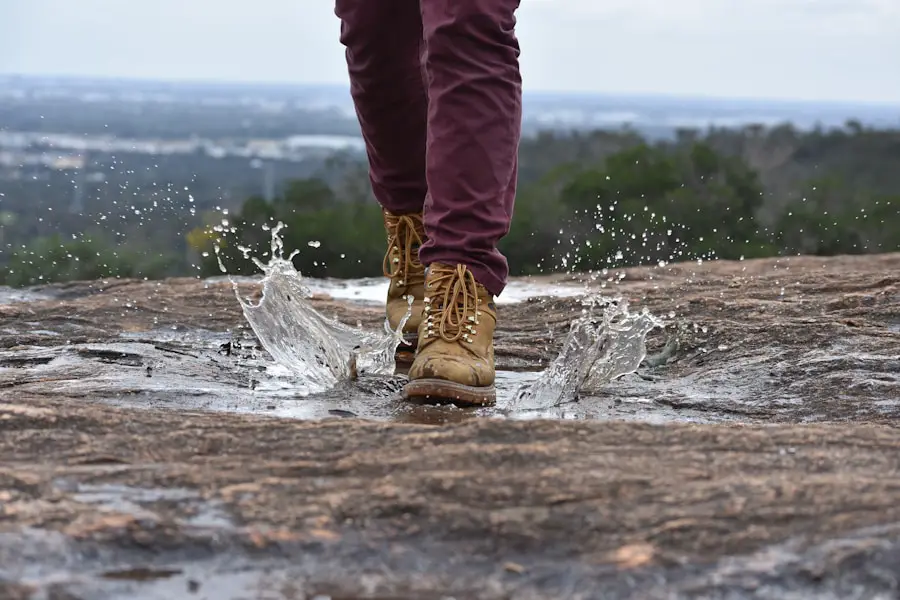
Durability is one of the stronger arguments for leather Timberland hiking boots. Leather uppers can resist abrasion from brush and rocks, while rubber toe areas, sturdy hardware, and lug outsoles on selected models add protection in rougher conditions.
Support depends on more than boot height. The midsole, shank, heel structure, outsole stiffness, lacing system, and overall fit all affect how stable a boot feels. A mid-height collar can provide additional coverage around the ankle, but it should not be treated as a guarantee against ankle sprains.
For hiking with a heavy pack or spending several days on rugged ground, compare the boot’s intended use with a true backpacking boot. REI’s hiking footwear guide notes that longer treks and heavier loads generally call for more underfoot protection and support than casual day hikes.
Note: A tall boot that fits poorly can still cause discomfort and instability. Proper heel hold, toe room, midsole support, and secure lacing are more useful criteria than collar height alone.
Traction and Grip on Different Terrains
| Terrain | What to Expect | Main Caution |
|---|---|---|
| Asphalt | Rubber outsoles generally provide dependable everyday grip. | Heavy hiking or work boots can feel less efficient than lighter footwear. |
| Gravel | Trail-oriented lug outsoles can provide useful bite and stability. | Loose gravel can slide regardless of outsole design. |
| Mud | Deep lugs can help on shallow or moderate mud. | Closely spaced lugs may pack with mud, and no ordinary hiking outsole guarantees grip. |
| Snow | Waterproof or insulated models can be useful on ordinary snowy walking trails. | Packed snow and ice can require dedicated traction devices. |
| Sand | Boots provide foot coverage and protection. | Heavy boots can feel cumbersome in deep, loose sand. |
Many dedicated Timberland hikers use rubber lug outsoles designed for trail traction. The Mt. Maddsen Waterproof Mid, for example, has a rubber lug outsole, while Timberland’s hiking guide describes its trail footwear as using outsoles intended for wilderness traction.
That does not mean the outsole will grip every surface equally. Wet roots, smooth wet rock, clay mud, algae-covered stone, packed snow, and ice can all overwhelm ordinary hiking tread.
Warning: Do not rely on a standard Timberland lug outsole as your only traction on ice or technical winter terrain. Conditions that require microspikes, crampons, or mountaineering footwear call for equipment specifically designed for that use.
Comfort and Fit for Long Hikes
A Timberland boot can have good cushioning and still be uncomfortable if its shape does not match your foot. For hiking, the boot should feel secure without pinching. Your heel should not slide excessively, and your toes should have enough room that they do not hit the front on descents.
REI recommends checking for roughly a thumb’s width between the longest toe and the end of the insole and trying footwear later in the day, when feet may be slightly larger. Wear the same thickness of hiking sock you plan to use on the trail.
Removable footbeds on models such as the Mt. Maddsen also make it possible to use a compatible aftermarket insole or prescribed orthotic when needed. Any replacement insole changes the internal volume of the boot, so fit should be checked again afterward.
Do Timberlands Need to Be Broken In?
Heavier leather boots should be tested before a long hike. Start by wearing them around the house or on short walks, then progress to a short local hike. Pay attention to heel rubbing, toe pressure, pinching, or hot spots rather than hoping painful areas will simply disappear.
The American Hiking Society’s blister guidance identifies wet socks and poorly fitting or insufficiently broken-in footwear as common blister contributors. Keeping feet dry and responding early to a hot spot is easier than treating a blister several miles into a hike.
Pro Tip: Test new Timberlands on a short route that includes both uphill and downhill walking. Your heel should stay controlled on climbs, and your toes should not strike the front of the boot on descents.
Waterproofing and Weather Resistance
Waterproofing is a strength of many Timberland models, but not every Timberland boot is waterproof. Check for an explicit waterproof specification before relying on a pair in sustained wet weather.
Timberland currently uses several waterproof approaches. Some models use seam-sealed waterproof construction, while trail models may use the company’s TimberDry membrane or a GORE-TEX bootie. Timberland’s waterproof-boot guidance confirms that waterproof construction varies by style.
The Mt. Maddsen Waterproof Mid combines waterproof leather with a TimberDry membrane. Other hikers, including selected Mt. Lincoln and World Hiker versions, use GORE-TEX construction.
A waterproof membrane is useful in rain, shallow puddles, wet grass, and slushy conditions, but it also reduces ventilation compared with highly breathable non-waterproof footwear. That trade-off matters most in hot weather or for hikers whose feet sweat heavily.
Note: “Waterproof” does not mean water can never enter the boot. Water can still come over the collar, and waterproof performance can decline as footwear becomes worn or damaged.
Weight and Flexibility for Hiking
Timberland boots vary considerably in weight, so it is inaccurate to describe the whole brand as either lightweight or heavy. Dedicated day-hiking models generally aim for a better balance of cushioning, protection, and flexibility than the company’s bulkier work and lifestyle boots.
As one current example, Timberland lists a men’s size 9 Mt. Maddsen Waterproof Mid at 1.36 pounds for the listed product weight. A current Premium 6-Inch Waterproof Boot SKU is listed at 2.10 pounds for men’s size 9. Exact figures can differ by size, material, insulation level, and SKU, so check the individual product page rather than assuming two Timberland boots weigh the same.
The Premium 6-Inch also includes substantial insulation and a steel shank on current versions. Those features can be useful in cold conditions but may be unnecessary for a warm-weather day hike.
Flexibility matters as well. A relatively flexible hiking boot can feel natural on maintained trails, while a stiffer boot may provide better underfoot protection on rocky terrain or under a heavier load. There is no single ideal level of stiffness for every hike.
Which Timberland Boots Are Better Suited to Hiking?
Current Timberland models illustrate how different the choices can be:
- Mt. Maddsen Waterproof Mid: A dedicated hiker with waterproof leather, TimberDry membrane, anti-fatigue removable footbed, compression-molded EVA midsole, gusseted tongue, and rubber lug outsole. It is a more logical starting point for regular trail use than a lifestyle-oriented boot.
- Mt. Lincoln Mid Hiker: Selected versions use a GORE-TEX bootie, EVA midsole, gusseted tongue, and rubber lug outsole, making them better aligned with wet-trail hiking.
- World Hiker: Selected versions combine a GORE-TEX construction, anti-fatigue removable footbed, padded collar, and rugged lug outsole.
- Premium 6-Inch Waterproof Boot: Durable, waterproof, insulated, and equipped with a lug outsole, but its heavier construction makes it better suited to casual trails, cold-weather walking, and mixed everyday use than to fast or long-distance hiking.
Timberland also sells non-waterproof hiking footwear. A non-waterproof hiker may be preferable in hot, dry conditions because it can offer better ventilation and may dry more quickly after becoming wet.
When Timberlands Make Sense—and When They Do Not
Timberlands Can Be a Good Choice For
- Day hikes on maintained trails
- Moderate forest and rocky terrain
- Wet or cool weather when using a waterproof hiking model
- Hikers who prefer durable leather uppers
- People who want one boot for trails and everyday wear
Consider Different Footwear For
- Long-distance hiking where minimizing footwear weight is a priority
- Very hot weather where maximum breathability matters
- Deep mud where a more aggressive outsole is needed
- Technical scrambling or mountaineering
- Ice that requires dedicated traction devices
- Heavy backpacking loads when the Timberland model is designed only as a light day hiker
The most important step is to match the boot to the hike. Timberland’s own hiking boot guide separates lightweight day-hiking footwear from more protective waterproof hikers, reinforcing that different trips call for different designs.
Are Timberlands Suitable for Hiking?
Yes, Timberlands can be suitable for hiking, but the strongest choices are Timberland models that were actually designed as hiking footwear. A well-fitting Mt. Maddsen or another trail-specific model offers a combination of cushioning, lugged traction, durable materials, and—in waterproof versions—weather protection that suits many recreational hikes.
The classic yellow Premium 6-Inch Boot is more complicated. It is durable, waterproof, supportive underfoot, and capable of handling an easy trail, but that does not make it the ideal hiking boot for every trip. Its insulation and heavier construction can become disadvantages during long or warm hikes.
For a casual day hike, moderate trail, or mixed trail-and-town trip, a suitable pair of Timberlands may serve you well. For demanding backpacking, technical mountains, extreme heat, or specialized winter travel, choose footwear built specifically for those conditions.
If you are also planning the rest of your camping setup, TakeTravelInfo has a guide to a solar-powered camping lantern for campsite lighting.
Love travel? Join Our Facebook Community
Frequently Asked Questions
Are Timberlands good for hiking?
Yes, especially when you choose a Timberland model designed specifically for hiking. Trail-focused models offer features such as lug outsoles, cushioned midsoles, and optional waterproof membranes. Classic work or lifestyle Timberlands can manage easy trails but may feel heavier during long hikes.
What features make Timberland boots good for hiking?
Depending on the model, Timberland hikers can include rubber lug outsoles, EVA midsoles, removable cushioned footbeds, gusseted tongues, waterproof leather, TimberDry or GORE-TEX membranes, padded collars, and supportive internal structures.
Are Timberland boots suitable for long hikes?
Some Timberland hiking models can be comfortable for long day hikes when they fit properly. For multi-day backpacking, compare the model’s weight, support, stiffness, breathability, and intended use with a dedicated backpacking boot or lighter hiking footwear.
Do Timberland boots require a break-in period for hiking?
Heavier leather Timberlands may need a break-in period. Wear new boots on short walks and easy hikes before committing to a long trip. They should feel basically comfortable from the start; persistent pinching, heel rubbing, or toe pressure usually points to a fit problem rather than something to endure.
Can Timberland boots handle rough terrain?
Trail-specific Timberland boots can handle many rocky, root-covered, gravel, and uneven hiking trails. They are not automatically suitable for technical climbing, severe winter terrain, deep mud, or routes that require mountaineering boots or specialized traction.
Are Timberland boots waterproof for hiking?
Many Timberland hiking boots are waterproof, but not all Timberlands are. Look for an explicit waterproof specification. Depending on the model, waterproof construction may include seam sealing, TimberDry technology, GORE-TEX, or waterproof leather.
Can you hike in classic 6-Inch Timberlands?
Yes, the Premium 6-Inch Waterproof Boot can handle casual and easy trails, particularly in cool or wet weather. However, its heavier and more insulated construction is less efficient than a purpose-built hiking boot for long-distance, hot-weather, or fast-paced hiking.
How should Timberlands fit for hiking?
They should feel snug but not painfully tight. Your toes need room to move, your heel should remain controlled, and you should not feel rubbing or pressure points. Try them with your hiking socks and test them on an incline before taking them on a long trail.
Sources
- Timberland — Our Story — brand history and development of the Original Timberland boot.
- Timberland — Hiking Boots Guide — Timberland’s guidance on hiking footwear types and intended use.
- Timberland — Mt. Maddsen Waterproof Mid Hiking Boot — current materials, waterproofing, cushioning, outsole, and listed weight.
- Timberland — Premium 6-Inch Waterproof Boot — construction, insulation, shank, outsole, and listed weight.
- REI Co-op — How to Choose Hiking Boots and Hiking Shoes — footwear type, terrain, fit, waterproofing, support, and break-in guidance.
- American Hiking Society — Blisters — blister prevention, footwear fit, moisture, and break-in guidance.

