
Last Updated on September 10, 2026 by Daniel Globe
Running shoes can work for hiking, but the type of running shoe and the trail matter. A road-running shoe may be enough for a dry, smooth nature path, while a trail-running shoe is far better suited to dirt, rocks, roots, and loose ground. Rough terrain, heavy loads, cold weather, snow, or technical routes may call for more protective hiking footwear.
Quick Answer
Yes, you can use running shoes for hiking on some trails. Road-running shoes are best limited to smooth, dry, well-maintained routes. Trail-running shoes are a better choice for most unpaved trails because they add grip, stability, and protection. Rugged, snowy, or heavily loaded hikes may favor hiking shoes or boots.
Key Takeaways
- Do not treat road-running shoes and trail-running shoes as the same thing. Trail runners have trail-specific tread and often include more protection and stability.
- Match your footwear to the terrain, weather, distance, pack weight, and your own foot and ankle needs.
- Low-cut shoes do not automatically cause ankle injuries, and higher collars do not guarantee that a sprain will be prevented.
- For rocky or loose terrain, prioritize outsole grip, secure fit, underfoot protection, and stability rather than shoe category alone.
- Insoles can change comfort, support, and fit, but they cannot improve the traction of the outsole.
Disclosure: As an Amazon Associate I earn from qualifying purchases. Some links on this page are affiliate links, at no extra cost to you.
Differences Between Running and Hiking Shoes
The biggest mistake in the running-shoes-versus-hiking-shoes debate is treating every running shoe alike. Road-running shoes and trail-running shoes are designed for different surfaces, and that distinction often determines whether a running shoe is a reasonable hiking choice.
Design Trade-Offs
Road-running shoes are primarily designed for repeated forward movement on pavement or other relatively uniform surfaces. They often favor low weight, cushioning, flexibility, and a smoother outsole. Those traits can feel comfortable on an easy path but may offer less grip, lateral stability, and protection once the trail becomes rocky or loose.
Trail-running shoes sit much closer to hiking footwear. According to REI’s current trail-running footwear guidance, trail runners commonly use lugged outsoles, more durable uppers, stiffer platforms, and protective features such as toe guards or rock plates.
Road-Running Shoes vs. Trail-Running Shoes
A road runner can be adequate for paved greenways, packed park paths, and short, dry trails with few obstacles. Once you add loose dirt, mud, roots, sharp rocks, steep descents, or side-to-side movement, a trail runner usually becomes the more appropriate running-shoe option.
Trail runners also vary. Light-trail models may use shallow lugs for packed dirt, while rugged and off-trail models can have deeper tread, stronger uppers, more underfoot protection, and greater stiffness.
Key Features of Hiking Shoes
Hiking shoes and boots generally emphasize durability, protection, and a stable platform. Depending on the model, they may use firmer midsoles, reinforced toe areas, full-coverage rubber outsoles, protective shanks, waterproof membranes, or higher collars.
That does not mean every hiking boot grips better than every trail runner. Traction depends on the outsole’s rubber compound, lug shape, depth, spacing, direction, wear, and the surface underfoot. For example, deep widely spaced lugs can work well in mud, while different tread patterns may perform better on hard or wet rock.
Design Distinctions
| Footwear | Best Use | Typical Strengths | Main Limits |
|---|---|---|---|
| Road-running shoe | Pavement, smooth paths, easy dry trails | Light, cushioned, flexible, breathable | Usually less trail grip and protection |
| Trail-running shoe | Maintained trails through rugged singletrack, depending on model | Trail grip, low weight, flexibility, quick movement | Often less durable or protective than burly hiking footwear |
| Hiking shoe | Day hiking and moderate-to-rugged trails | Protection, durability, stable platform | Heavier and usually less flexible than a trail runner |
| Hiking or backpacking boot | Rough terrain, heavier loads, cold or wet conditions | Durability, protection, firmer support, more coverage | More weight, warmth, and bulk |
Factors to Consider When Choosing Footwear for Hiking
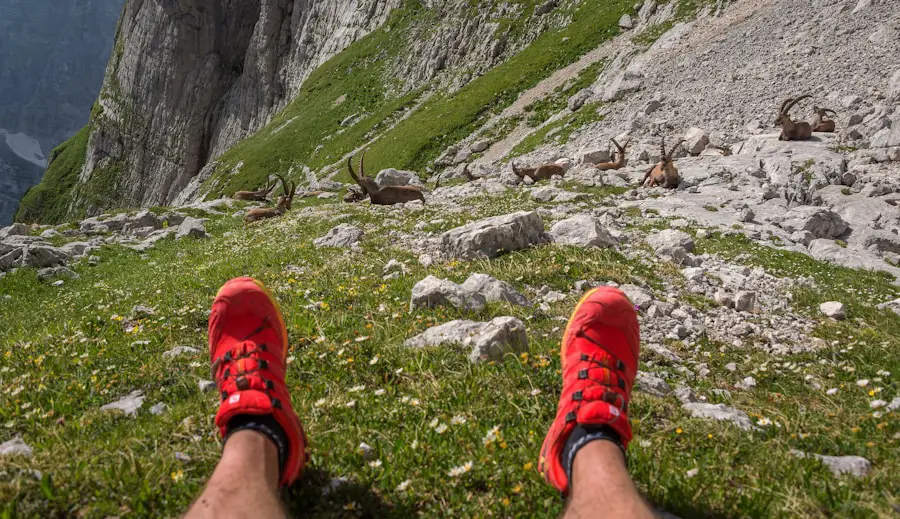
No single shoe type is best for every hike. The National Park Service advises hikers to choose sturdy footwear with appropriate tread, and Grand Canyon National Park specifically recommends broken-in hiking boots or trail shoes with good traction for rocky, steep, and uneven terrain. See the National Park Service Hike Smart guidance.
Terrain and Traction
Start with the surface beneath your feet. Smooth packed trails place very different demands on footwear than loose scree, mud, wet roots, or steep rocky descents.
- Paved or smooth dry paths: A comfortable road-running shoe may be enough.
- Typical dirt trails: A trail-running shoe or hiking shoe usually offers better grip and protection.
- Muddy or loose trails: Look for more aggressive, well-spaced tread that can bite into soft ground and shed debris.
- Rocky or technical terrain: Prioritize secure fit, lateral stability, durable rubber, toe protection, and underfoot protection.
Pack Weight and Stability
A heavier pack increases the forces you must control on descents, uneven ground, and awkward steps. Some hikers remain comfortable in trail runners while backpacking, while others prefer the firmer platform of a hiking shoe or boot. There is no universal pack-weight cutoff because foot strength, body size, experience, terrain, and shoe construction all matter.
Fit and Foot Shape
Fit matters more than the category printed on the shoebox. Current hiking-footwear fitting guidance recommends a secure fit without tight spots, room to move the toes, and testing shoes with the socks you plan to wear.
Check that your heel does not slide excessively, your toes do not strike the front of the shoe on a descent, and there are no pressure points along the sides or top of your foot. Feet can swell during a long day, so a shoe that already feels cramped at the beginning of a hike is a poor choice.
Weather and Water
Waterproof footwear can be useful in cold rain, wet vegetation, shallow snow, or other conditions where keeping outside moisture away from your feet matters. The trade-off is that waterproof membranes usually reduce ventilation and can take longer to dry once water gets inside.
In hot weather or on routes with unavoidable stream crossings, many hikers prefer breathable, quick-drying trail footwear instead. Choose based on the actual conditions rather than assuming waterproof is always better.
Warning: Ordinary running-shoe tread is not a substitute for proper snow or ice traction. On icy or snow-packed trails, follow local trail guidance and use footwear and traction equipment suited to the conditions. Rocky Mountain National Park, for example, recommends traction devices where icy or snow-packed sections remain.
Potential Risks of Using Running Shoes for Hiking
| Potential Risk | What It Actually Means |
|---|---|
| Possible stability limitation | Some low-cut or very soft running shoes may feel less stable on uneven ground, especially with a heavy pack. Higher collars can alter ankle motion, but shoe height alone does not guarantee prevention of ankle sprains. |
| Less protection from debris | Road-running shoes may expose the foot to more discomfort from sharp rocks, roots, and trail debris. Rugged trail runners may include toe guards and rock plates that reduce this problem. |
| Reduced traction | Smooth or worn road-running outsoles can slip more easily on loose or muddy ground. Trail runners can provide much stronger trail-specific grip. |
| Faster wear | Light mesh, exposed foam, and road-oriented rubber can deteriorate faster when repeatedly scraped against rock and rough trail surfaces. |
| Less weather protection | Many running shoes are highly breathable rather than weatherproof. Waterproof trail runners do exist, so water resistance depends on the model rather than the footwear category alone. |
The greatest risk comes from using a shoe that does not match the trail. A soft road-running shoe with a relatively smooth outsole can feel perfectly comfortable on a packed park path and become a poor choice on steep mud or loose rock.
The ankle-support question also deserves care. A laboratory study has found that some high-top shoes can reduce ankle inversion under certain conditions, while other research has found no simple protective effect and has raised questions about changes in muscle activation. A broader review of ankle-sprain prevention found stronger evidence for interventions such as ankle bracing and preventive exercise than for assuming shoe height alone prevents injury. See the ankle-sprain prevention review.
Note: If you have a history of ankle sprains, significant instability, foot pain, or an orthotic requirement, your personal footwear needs may be different from those of another hiker on the same trail.
Benefits of Using Running Shoes for Hiking
Running shoes remain attractive for hiking because they can be light, flexible, and comfortable. For a hiker moving quickly with a light load, those characteristics may feel less tiring than a heavy, stiff boot.
Breathability is another advantage. Many non-waterproof running and trail-running shoes use mesh uppers that release heat and moisture more readily than burly waterproof boots. That can be especially useful in warm conditions.
Trail-running shoes add another benefit: they preserve much of the light and flexible feel of a running shoe while adding features specifically intended for dirt, gravel, roots, and rocks. That is why they have become a practical hiking option for many day hikers and long-distance hikers.
However, low weight should never override function. A shoe that leaves you slipping, bruises the bottom of your feet, or feels unstable on the day’s terrain is not a good choice simply because it weighs less.
Tips for Using Running Shoes for Hiking
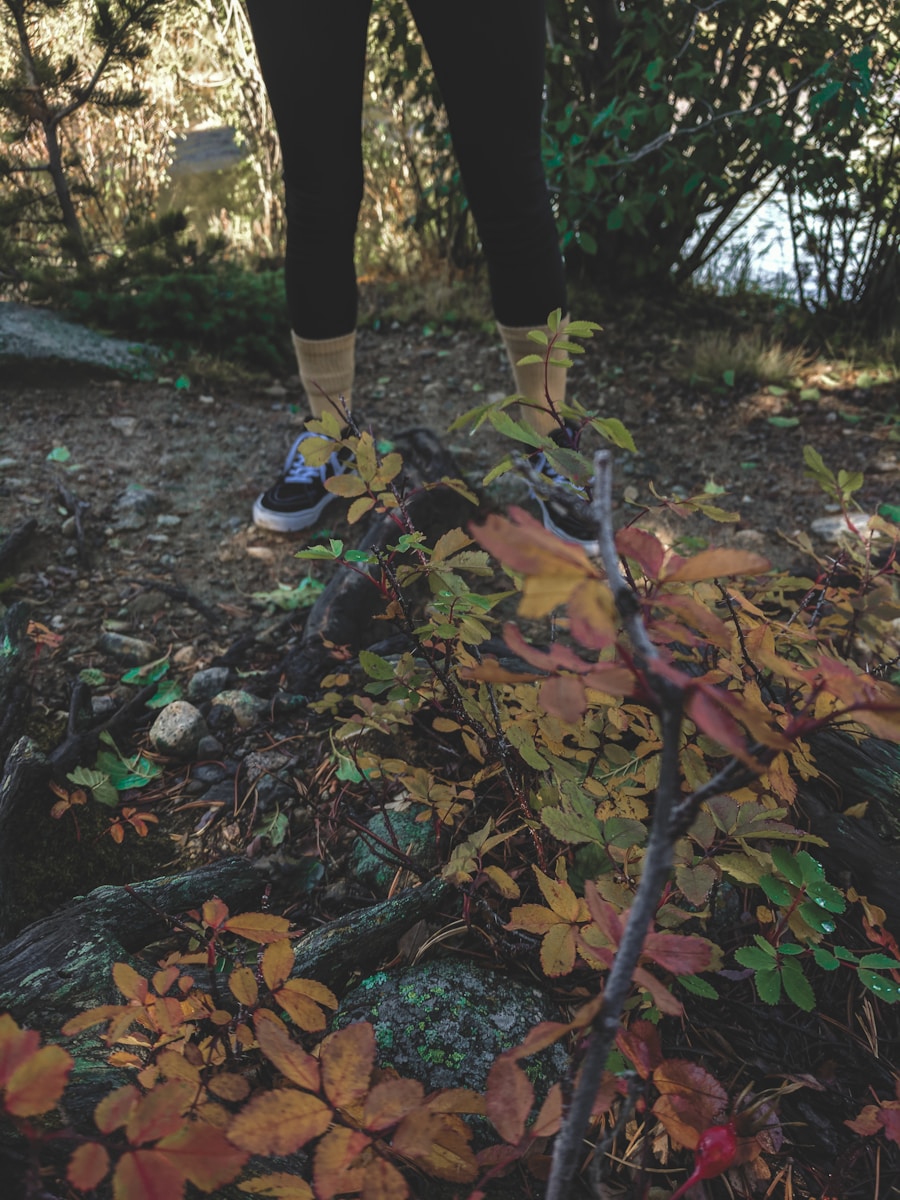
If you decide to use running shoes for hiking, start by choosing the right kind of running shoe. For an unpaved trail, a trail-running shoe is usually a stronger choice than a road-running shoe.
Check the Fit Before a Long Hike
- Wear the same sock thickness you expect to use on the hike.
- Make sure your toes have room rather than pressing against the front.
- Check that the heel stays secure without painful pressure.
- Walk uphill and downhill before committing to the shoe.
- Stop using a shoe that creates rubbing, numbness, or obvious pressure points.
Aftermarket insoles may improve comfort, arch support, or the way a shoe fits your foot. They do not increase outsole traction. If your shoe slips on the intended trail surface, you need a more appropriate outsole or, in winter conditions, the correct external traction equipment.
Pro Tip: Test new footwear on a shorter hike with hills before using it on an all-day or remote route. That gives you a chance to discover heel slip, toe pressure, poor grip, or hot spots while turning back is still easy.
Keep Your Feet as Dry as Practical
Moisture and friction can contribute to blisters. In a 2022 observational study of 203 long-distance hikers, hiking in wet socks was associated with a 1.94-times greater risk of foot blisters. See the study in PubMed.
For trail comfort, keeping socks dry can matter almost as much as deciding whether the shoe is labeled “running” or “hiking.”
Inspect the Outsole
A good trail shoe becomes a poor trail shoe when the tread is worn smooth. Before a hike, inspect the outsole for heavily rounded or missing lugs, peeling rubber, exposed foam, deep cuts, or uneven wear. Also inspect the upper and midsole for separation or damage.
If you anticipate terrain that clearly exceeds the shoe’s capabilities, choose the more appropriate footwear before leaving rather than depending on an inadequate pair. On trips that genuinely include two very different activities, carrying a second pair can make sense, but for most hikes it is simpler to start with the footwear suited to the hardest expected section.
When Are Running Shoes a Good Choice for Hiking?
Running shoes are most reasonable when the terrain and conditions stay within the shoe’s design limits.
| Conditions | Footwear That Usually Makes Sense |
|---|---|
| Paved nature path or smooth, dry, short trail | Road-running shoe, trail runner, or hiking shoe |
| Maintained dirt trail with roots and small rocks | Trail-running shoe or hiking shoe |
| Fast day hike with a light pack | Trail-running shoe is often a strong option |
| Steep, rocky, loose, or heavily eroded trail | Rugged trail runner, hiking shoe, or boot depending on protection and stability needs |
| Heavy backpack or multiday trip | Supportive trail runner, hiking shoe, or backpacking boot based on terrain and personal stability |
| Cold, persistent wet, snow, ice, or mountaineering terrain | Weather-appropriate hiking or mountaineering footwear plus required traction equipment |
Rocky Mountain National Park advises hikers to use closed-toe footwear with a treaded sole and warns against slick-soled footwear. It also recommends traction devices on icy or snow-packed trail sections. Check the NPS trail-safety guidance.
Alternatives to Running Shoes for Hiking
If ordinary road-running shoes do not meet your needs, trail-running shoes are the closest lightweight alternative. They retain a running-shoe feel while adding trail-specific traction and protection. Rugged trail runners may include full-coverage outsoles, rock plates, reinforced uppers, and stability features.
Low-cut hiking shoes offer another middle ground. They tend to be more durable and protective than running shoes without the height and bulk of a traditional boot.
Lightweight hiking boots add more upper coverage and usually a firmer, more protective platform. They can be useful for rough terrain, colder weather, or hikers who simply feel more confident in structured footwear.
Approach shoes are another specialized option, particularly where hiking transitions into scrambling or easy climbing. They commonly use durable construction, precise lacing, and sticky rubber designed to grip rock. Many are low-cut, so they should not be chosen simply because you are looking for extra ankle coverage.
Hiking sandals can work for some easy warm-weather routes and water-heavy outings, but their open design leaves the toes and sides of the feet more exposed. They are a poor substitute for closed-toe footwear where sharp rocks, unstable ground, cold temperatures, or significant trail debris are concerns.
Conclusion and Final Recommendations
Running shoes can absolutely be used for some hiking, but “running shoe” is too broad a category to answer the question by itself. Road-running shoes are most appropriate for smooth, dry, easy routes. Trail-running shoes are designed for unpaved terrain and can be an excellent choice for many day hikes and some backpacking trips.
For rougher terrain, heavier loads, cold or persistently wet conditions, snow, ice, or trips where maximum durability and protection matter, hiking shoes or boots may be the better choice.
Above all, judge footwear by its fit, outsole grip, stability, protection, weather suitability, and condition. A well-fitting trail runner with appropriate tread can be safer and more comfortable than a poorly fitting hiking boot, while a smooth road shoe can be the wrong tool for a technical trail regardless of how comfortable it feels on pavement.
If you are considering lightweight footwear for outdoor trips, you may also be interested in reading about the best waterproof sneakers for travel. These options can help you compare weather protection, comfort, and versatility for travel and less technical outdoor use.
Love travel? Join Our Facebook Community For More Tips.
Frequently Asked Questions
What are the differences between running shoes and hiking shoes?
Road-running shoes usually emphasize cushioning, low weight, and smooth forward movement. Hiking shoes generally add more durable uppers, underfoot protection, stability, and trail-oriented outsoles. Trail-running shoes fall between the two and can offer aggressive tread, rock protection, and strong trail performance at a lower weight.
Can running shoes be used for hiking?
Yes. Road-running shoes can work on smooth, dry, easy trails, while trail-running shoes are suitable for a much wider range of hiking terrain. The harder the trail, the more important traction, protection, stability, and secure fit become.
Are trail-running shoes better than road-running shoes for hiking?
Usually, yes. Trail-running shoes are designed for dirt and uneven surfaces and commonly have lugged outsoles, more durable uppers, greater lateral stability, and sometimes toe guards or rock plates. A road-running shoe may still be adequate on an easy, well-maintained path.
What are the potential drawbacks of using running shoes for hiking?
Depending on the model, running shoes may offer less traction, underfoot protection, durability, lateral stability, or weather protection than hiking footwear. These drawbacks are usually greater with road-running shoes than with rugged trail-running shoes.
Are there benefits to using running shoes for hiking?
Yes. Running shoes can be lightweight, flexible, breathable, and comfortable. Trail-running shoes in particular can combine those advantages with trail-specific traction and protection, making them appealing for faster hikes and hikers carrying lighter loads.
Do hiking boots prevent ankle sprains?
A higher or stiffer collar can change ankle movement and may provide a greater sense of support, but research does not show that simply wearing a high-cut boot guarantees protection from ankle sprains. Terrain, balance, previous injuries, fatigue, load, fit, and other factors also affect ankle-injury risk.
Should hiking footwear be waterproof?
Not always. Waterproof footwear can be valuable in cold rain, wet vegetation, or snow, but it is generally less breathable and may dry more slowly after water gets inside. Breathable, quick-drying trail shoes can be more comfortable in hot conditions or on routes with frequent water crossings.
What should I consider when deciding between running shoes and hiking shoes?
Consider the trail surface, steepness, weather, distance, pack weight, outsole condition, underfoot protection, fit, and your own experience with foot or ankle stability. For an easy dry hike, lightweight footwear may be ideal. Rugged, cold, snowy, or heavily loaded trips usually justify more protective footwear.
Sources
- National Park Service — Grand Canyon Hike Smart — supports using broken-in hiking boots or trail shoes with good traction on steep, rocky, uneven terrain.
- National Park Service — Rocky Mountain National Park Trail Conditions — supports treaded closed-toe footwear and added traction for snow or ice.
- REI — Trail-Running Shoes Buying Guide — explains trail-runner traction, protection, stiffness, rock plates, and terrain categories.
- REI — How to Choose Hiking Boots and Shoes — supports footwear selection by terrain, distance, load, outsole design, fit, and weather.
- Kaminski et al., Journal of Athletic Training — Prevention of Lateral Ankle Sprains — supports the nuanced discussion of footwear and ankle-sprain prevention.
- Chicharro-Luna et al., Journal of Tissue Viability — Foot Blisters in Hikers — supports the relationship between wet socks and blister risk during long-distance hiking.
