
Last Updated on September 11, 2026 by Daniel Globe
Commercial airline travel is generally safer than recreational boating, but the answer changes when you compare different categories. A scheduled airline is not the same as a private plane, and an inspected ferry is not the same as a small pleasure boat. The fairest comparison looks at regulation, operator training, weather, route, and the type of exposure measured.
Quick Answer
For most travelers, a scheduled commercial flight is safer than a trip on a recreational boat. Inspected ferries and large passenger vessels can also have strong safety systems. Private planes and small boats vary much more because pilot or operator experience, weather, equipment, and oversight differ from one trip to another.
Key Takeaways
- Scheduled commercial airlines operate under stricter certification, maintenance, crew-training, and dispatch rules than most recreational boats.
- Raw death totals do not create a fair plane-versus-boat comparison because aviation and boating agencies use different populations and exposure measures.
- Inspected ferries are usually a safer maritime choice than unregulated or lightly regulated recreational boating.
- Private aviation should not be treated as having the same safety record as scheduled airline service.
- On a recreational boat, life jackets, sober operation, weather checks, training, and reliable communication equipment can greatly reduce avoidable risk.
Disclosure: As an Amazon Associate I earn from qualifying purchases. Some links on this page are affiliate links, at no extra cost to you.
Are Planes Safer Than Boats?
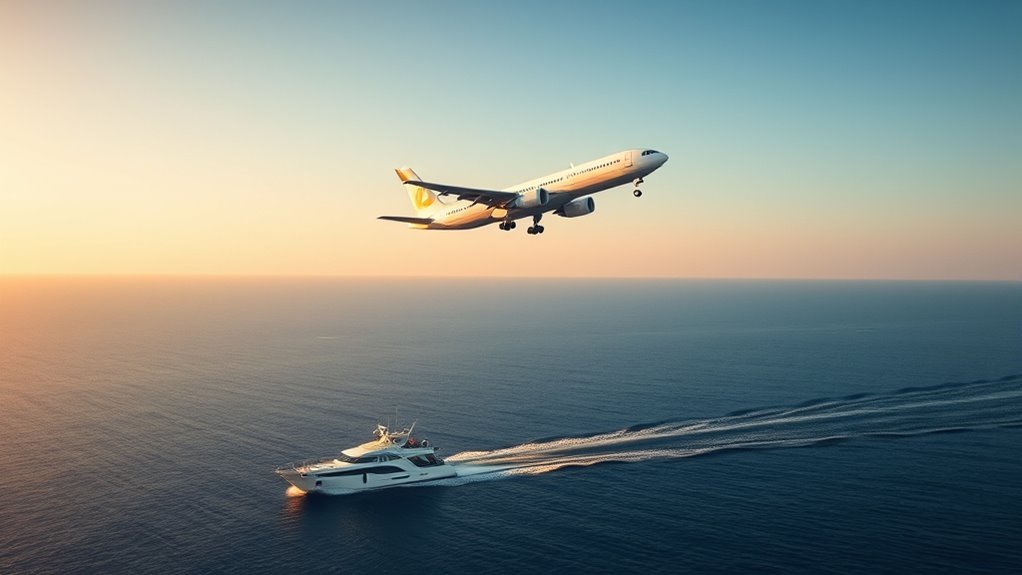
Yes, if by “plane” you mean a scheduled commercial airline and by “boat” you mean a recreational motorboat, fishing boat, personal watercraft, canoe, kayak, or similar craft. Commercial aviation has several layers of control, including aircraft certification, licensed crews, recurrent training, maintenance programs, dispatch procedures, air traffic control, and formal accident investigation.
The latest global figures still show that fatal airline accidents are rare, although they are not impossible. According to the International Civil Aviation Organization’s 2026 safety update, scheduled commercial airlines carried nearly 5 billion passengers in 2025. ICAO recorded four fatal accidents and a fatal-accident rate of 0.11 per million departures. The report also recorded 387 fatalities, showing why “very safe” should never be confused with “risk-free.”
Recreational boating uses a different reporting system. The U.S. Coast Guard’s 2024 Recreational Boating Statistics recorded 3,887 reportable incidents, 556 deaths, and 2,170 injuries. The fatality rate was 4.8 deaths per 100,000 registered recreational vessels. These figures cannot be divided directly against airline totals because the geography, denominator, trip volume, and exposure data are different.
Scheduled airline travel usually has the strongest overall safety record, while recreational boating places more responsibility on the individual operator and passengers.
How Travel Safety Is Measured
A fair safety comparison needs a common denominator. A total number of deaths tells you how many people died, but it does not tell you how many people traveled, how far they went, how many trips occurred, or how long they were exposed to risk.
| Metric | What It Measures | Main Limitation |
|---|---|---|
| Fatalities per departure or trip | Risk each time a journey begins | A short trip and a long trip count the same |
| Fatalities per passenger mile | Risk adjusted for distance and passenger count | Reliable recreational-boating passenger-mile data are limited |
| Fatalities per passenger hour | Risk adjusted for time exposed | Not every agency publishes this measure |
| Deaths per registered vessel | A broad boating-system trend | Registration does not show how often each boat is used |
| Raw fatalities | The total human impact | It does not measure individual traveler risk by itself |
Note: There is no single universal statistic that cleanly compares every airline flight, ferry crossing, cruise, private flight, and recreational-boat trip. Treat precise claims such as “one mode is hundreds or thousands of times safer” with caution unless the source uses the same location, years, traveler group, and denominator.
Why Commercial Planes Are So Safe
Commercial airline safety comes from overlapping systems rather than one feature. If one layer fails, another may catch the problem before it becomes an accident.
Large-Scale Operations and Safety Data
Airlines carry large numbers of passengers over long distances, which gives regulators and operators extensive data for finding patterns. However, high passenger volume does not “dilute” danger or make a flight safer by itself. The safety benefit comes from using data to improve aircraft design, maintenance, crew procedures, air traffic systems, and training.
Airlines also report incidents and accidents under formal rules. Investigators can identify causes and issue recommendations that apply across a fleet or the wider industry. The NTSB U.S. Civil Aviation Accident Dashboard separates Part 121 airlines, Part 135 commuter and on-demand operations, and general aviation, which is important because these categories do not have the same risk profile.
Strict Safety Regulations and Maintenance
Scheduled airlines must follow detailed operating and maintenance requirements. Aircraft are inspected on planned schedules, defects are documented, and certain problems must be corrected before the aircraft can return to service. Airlines also use approved procedures for dispatch, weather decisions, fuel planning, crew duty limits, emergency response, and continuing airworthiness.
Technology adds more layers, including terrain and traffic warning systems, weather radar, redundant flight controls, and cockpit alerts. These tools support the crew, but they do not replace sound judgment, maintenance, or training.
Highly Trained Pilots
U.S. airline pilots face higher qualification standards than private pilots. The FAA states that virtually all new airline-pilot applicants need at least 1,500 hours of flight experience, with limited reduced-hour pathways for certain military and approved aviation-degree applicants. Airline crews also complete regular training, checking, medical reviews, and aircraft-specific qualification.
- Captains and first officers train for normal, abnormal, and emergency situations.
- Recurrent simulator sessions let crews practice rare failures that cannot be safely recreated in flight.
- Two-pilot procedures provide cross-checking during high-workload phases.
- Duty-time and rest rules are designed to manage fatigue.
- Airline safety programs collect reports so hazards can be corrected before they cause an accident.
When Boats Are the Safer Choice
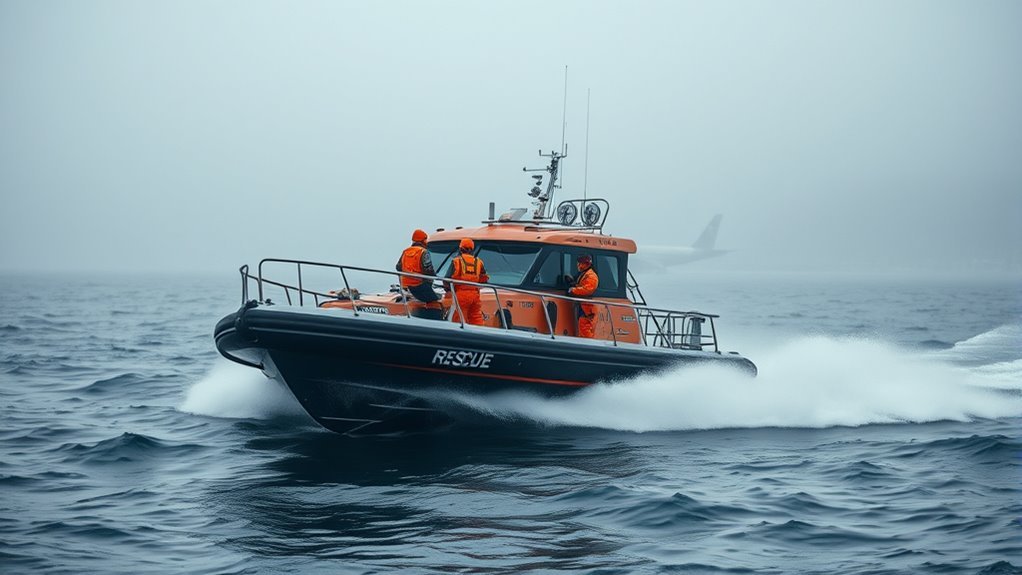
A boat may be the better choice for a short water crossing, an island route, or a destination without practical air service. The safest maritime option is usually a legal, inspected passenger vessel with a licensed crew, working lifesaving equipment, and a route that suits the weather and sea conditions.
U.S. passenger vessels are subject to design, stability, fire-protection, lifesaving, and inspection requirements. The Coast Guard Marine Safety Center reviews commercial passenger-vessel designs for compliance with U.S. and international safety standards. This oversight makes an inspected ferry very different from an informal charter or private pleasure boat.
Do not assume a ferry is automatically safer than an airline simply because it stays near shore. Safety still depends on vessel condition, loading, crew performance, local enforcement, water temperature, weather, and emergency access. On a cruise ship, onboard medical staff may provide early care, but evacuation to a hospital can take time when the ship is far offshore. An aircraft can also divert, so neither mode always has faster medical access.
Pro Tip: Before paying for a ferry, tour boat, or charter, confirm that the business is legal, the operator holds the required credential, and the vessel carries the inspection certificate or safety documentation required for that service.
How Private Planes Compare With Boats
“Private plane” covers many different operations. It may mean an owner-flown single-engine aircraft, a professionally crewed business jet, an air tour, or an on-demand charter. These operations do not all follow the same rules, and none should automatically receive the safety reputation of a scheduled airline.
“Boat” is just as broad. A Coast Guard-inspected ferry, a cruise ship, a rented fishing boat, and a kayak have very different equipment, crews, routes, and emergency plans. For that reason, a single private-plane-versus-boat ratio is usually misleading.
Private Plane Risk
General aviation has improved, but it continues to account for most U.S. civil aviation accidents. Common risks include loss of control, poor weather decisions, limited recent experience, fuel planning errors, and continued flight after conditions worsen. A professional charter may have stronger procedures than an owner-flown aircraft, but you should verify that the operator is properly certificated rather than relying on marketing language.
If a private flight is your only realistic option, ask about the operator’s certificate, pilot experience in that aircraft and route, weather limits, maintenance program, and plan for delays or cancellation. A willingness to cancel for weather is a positive safety sign, not poor service.
Recreational Boat Safety
Recreational boating gives the operator direct control, but it also places more safety responsibility on that person. In the Coast Guard’s 2024 data, drowning caused about three-quarters of reported boating deaths, and 87% of drowning victims with known life-jacket use were not wearing one. Alcohol was the leading known contributing factor in fatal boating accidents, linked to 92 deaths.
Warning: Wear a properly fitted, Coast Guard-approved life jacket while the boat is underway. Do not rely on having time to find or put one on after a collision, capsize, or fall overboard.
Before a recreational trip, check the forecast and water conditions, carry a marine VHF radio where appropriate, file a float plan, use the engine cutoff switch, and make sure a sober and trained person operates the boat. Cold water can disable a strong swimmer quickly, even when the air feels warm.
Risk Factors Compared
| Travel Mode | Main Safety Strength | Main Risk to Check |
|---|---|---|
| Scheduled airline | Strong regulation, two-pilot crews, maintenance systems, dispatch, and air traffic control | Severe weather, rare system failures, runway events, and regional oversight differences |
| Inspected ferry or passenger vessel | Licensed crew, inspection, lifesaving equipment, and established route | Weather, loading, vessel condition, water temperature, and local enforcement |
| Private or general-aviation plane | Fast access to remote locations and flexible routing | Pilot experience, weather judgment, aircraft condition, and type of operation |
| Recreational boat | Direct control and flexibility | Life-jacket use, alcohol, operator training, weather, lookout, and communication |
Which Mode Is Best for Your Trip?
Choose the safest practical version of the mode that fits your route rather than choosing only by the word “plane” or “boat.”
- For long-distance travel: A scheduled commercial airline is usually the strongest choice for safety, speed, and oversight.
- For a short water crossing: Use an inspected ferry or established passenger service with a licensed crew.
- For a recreational outing: Choose a trained, sober operator, wear life jackets, and cancel when weather or water conditions are poor.
- For a private flight: Verify the operator, aircraft, pilot qualifications, weather policy, and type of regulatory certificate.
- For remote areas: Compare the specific operators rather than assuming every floatplane, charter boat, or air taxi has the same safety standard.
Your personal condition matters too. A traveler with a serious medical issue may need to consider access to medical care, trip duration, movement restrictions, and evacuation time. Contact the carrier before travel if you need oxygen, mobility assistance, medication refrigeration, or other support.
Frequently Asked Questions
What is safer, traveling by boat or plane?
A scheduled commercial plane is generally safer than a recreational boat. An inspected ferry can also be very safe, so the answer depends on the exact aircraft or vessel, the operator, the route, and the weather.
Are ferries safer than planes?
Both scheduled airlines and inspected ferries can have strong safety records. Available data do not support a universal claim that every ferry is safer than every flight. Compare an established, inspected ferry with a scheduled airline, not with a private boat or private aircraft.
Are private planes as safe as commercial airlines?
No. Private and general-aviation operations vary widely and do not share the overall safety record of scheduled Part 121 airlines. A professionally operated business jet or legal charter may use stronger systems than an owner-flown small aircraft, but you should verify the specific operator.
Do about 95% of plane-accident occupants survive?
That figure comes from an older NTSB study of U.S. Part 121 airline accidents from 1983 through 2000, not every type of plane crash. The NTSB’s later update found that 98.2% of occupants involved in Part 121 accidents from 2001 through 2017 had minor or no injuries. Serious, high-impact accidents have lower survival rates.
What makes recreational boating dangerous?
Major risks include drowning, not wearing a life jacket, alcohol, poor lookout, operator inexperience, bad weather, cold water, excessive speed, and inadequate communication equipment. Many of these risks can be reduced before departure.
How can I make a boat trip safer?
Wear a properly fitted life jacket, use a sober and trained operator, check weather and water conditions, file a float plan, carry reliable communication equipment, follow passenger and weight limits, and cancel the trip when conditions exceed the operator’s skill or the boat’s capability.
Sources
- International Civil Aviation Organization, 2025 global aviation safety results: scheduled-airline passengers, accidents, fatal accidents, and fatality rates.
- U.S. Coast Guard, 2024 Recreational Boating Statistics: incidents, deaths, injuries, drowning, life-jacket use, alcohol, and operator education.
- National Transportation Safety Board, Part 121 accident survivability update: airline-accident survival and injury outcomes.
- Federal Aviation Administration, Safety: The People: airline-pilot qualification, experience, training, medical, and fatigue requirements.
- U.S. Coast Guard Marine Safety Center: passenger-vessel design review, stability, structural, and fire-protection oversight.
Conclusion
For most people, scheduled commercial airline travel is safer than recreational boating. The comparison becomes less clear when you switch to a private plane or an inspected ferry, because those categories have different rules and risk factors. Use current, exposure-adjusted data when available, check the specific operator, and never let a broad label such as “plane” or “boat” replace a real safety review.
