
Last Updated on September 10, 2026 by Daniel Globe
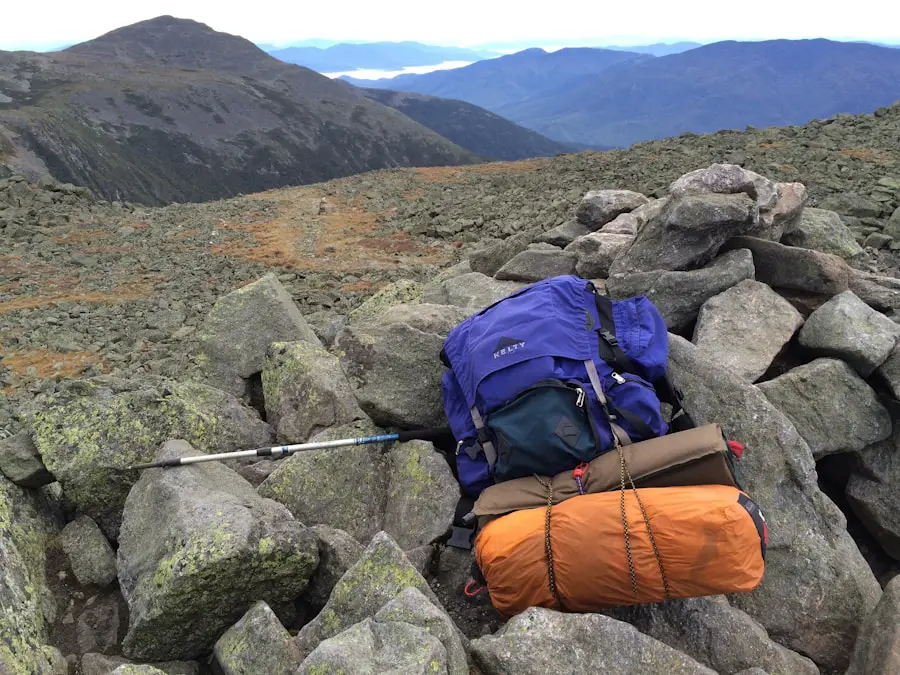
Hiking poles can make a noticeable difference on steep descents, rough trails, stream crossings, and backpacking trips, but they are not essential for every hike. Their biggest advantages are extra balance and the ability to shift some load from the legs to the arms. The trade-offs are extra weight, occupied hands, and a little technique to learn.
Quick Answer
Yes, hiking poles are worth it for many hikers, especially on steep descents, uneven ground, stream crossings, or trips with a loaded backpack. Research shows they can reduce some knee and lower-leg forces while improving stability. They are less useful on short, flat trails or terrain where you need both hands for scrambling.
Key Takeaways
- Trekking poles can improve balance by giving you additional points of contact with the ground.
- A laboratory downhill-walking study found reductions of roughly 12% to 25% in several knee-loading measures when poles were used.
- Poles redistribute work to the upper body, but they do not necessarily reduce total energy expenditure.
- They are most useful on steep, loose, slippery, or uneven terrain and when carrying a backpack.
- Correct pole length and technique matter. Poor adjustment can make poles uncomfortable rather than helpful.
- For short, flat, well-maintained trails, hiking poles may provide too little benefit to justify carrying them.
Disclosure: As an Amazon Associate I earn from qualifying purchases. Some links on this page are affiliate links, at no extra cost to you.
How Hiking Poles Improve Stability and Balance
One of the clearest benefits of hiking poles is extra stability. Instead of relying on two feet alone, a pair of poles gives you additional contact points that can help when loose gravel, wet roots, mud, rocks, snow, or a heavy backpack make your footing less predictable.
A small controlled study found that participants maintained balance better when using hiking sticks, with two poles providing the strongest benefit while carrying a load. A later review of trekking-pole research likewise concluded that poles can improve stability while reducing some lower-extremity loading, particularly when hikers are carrying external loads.
Poles can also provide useful feedback before you commit your weight to a step. A quick pole plant can help you test soft mud, an unstable patch of ground, or the depth of shallow water. That does not make risky terrain safe, but it gives you another source of information and support.
Pro Tip: On ordinary trail, let your arms swing naturally and plant each pole with the opposite foot: right foot with left pole, then left foot with right pole. You do not need to stab the pole hard into the ground.
How Hiking Poles Affect Your Knees and Joints
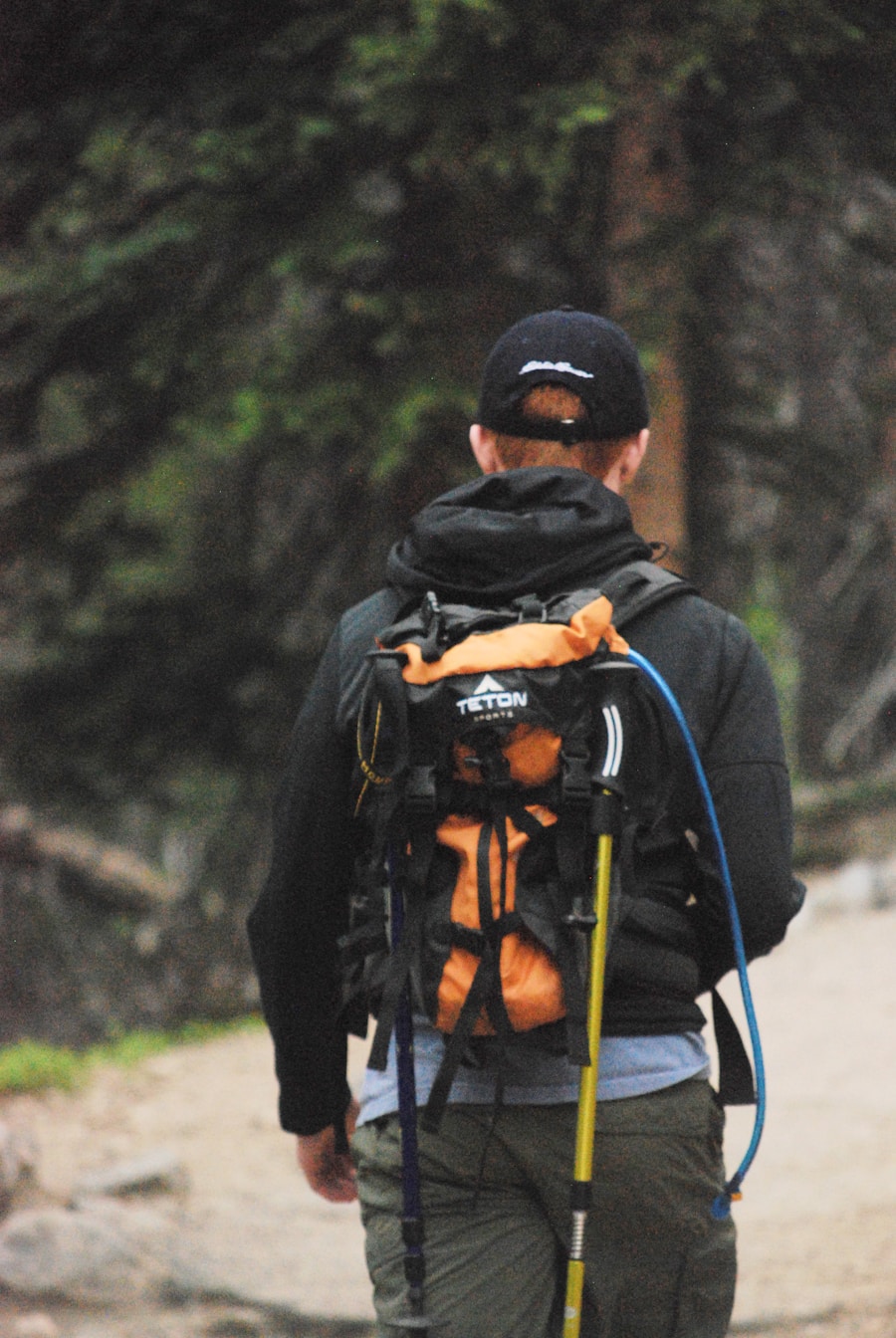
Downhill hiking is where trekking poles have some of their strongest biomechanical evidence. Each downhill step can place substantial braking demands on the legs, and poles allow part of that load to be transferred through the arms.
In a 1999 laboratory study of downhill walking, eight men walked down a 25-degree ramp with and without hiking poles. Researchers found statistically significant reductions of about 12% to 25% in several measurements including ground-reaction force, knee-joint moment, and tibiofemoral compressive and shear forces.
In controlled downhill walking, trekking poles reduced several measured knee and lower-extremity forces by roughly 12% to 25%.
That does not mean every hiker’s knees will experience exactly 25% less load. Trail grade, pole technique, body size, speed, pack weight, and surface all affect the result. Still, the evidence supports the practical idea that poles can reduce some lower-extremity loading during descents.
A separate study of experienced hikers carrying packs also found lower joint moments in the ankle, knee, and hip during downhill walking with trekking poles.
Do Hiking Poles Increase Endurance and Efficiency?
| Hiking Situation | Likely Pole Benefit | Main Trade-off |
|---|---|---|
| Long downhill | Can reduce some lower-extremity loading and improve control | Requires good placement and correct length |
| Steep uphill | Lets the upper body share some of the work | May increase upper-body and cardiovascular demand |
| Backpacking with a load | Can improve stability and redistribute muscular effort | Adds carried weight and occupies both hands |
| Flat, smooth trail | Usually modest | Poles may feel unnecessary or cumbersome |
Hiking poles do not simply make walking require less energy. A more accurate description is that they redistribute the workload. Your shoulders, arms, and upper back take on part of the work that would otherwise be handled almost entirely by your legs.
Research on loaded uphill walking has found reduced activity in some lower-extremity muscles and slightly lower perceived exertion with poles, even though heart rate increased. Other field research has found that the metabolic effect changes depending on whether a hiker is carrying a backpack and what type of terrain is being crossed.
Note: A higher heart rate while using poles does not mean the poles are making hiking less efficient. It often reflects the extra upper-body muscles being used. The practical benefit may be less local fatigue in the legs rather than lower total calorie expenditure.
For a long backpacking day, that redistribution can still be valuable. A hiker whose legs tire before the rest of the body may appreciate being able to involve the arms on climbs and control descents with more than the legs alone.
Using Hiking Poles Uphill and Downhill
The advantages of trekking poles become especially noticeable when the trail changes elevation.
Uphill
On a climb, plant the poles slightly ahead or beside you and push downward and backward as you step. This allows the arms and upper body to contribute to forward movement instead of leaving all of the work to the legs.
For sustained climbs, shortening adjustable poles by roughly 5 to 10 cm can make placement easier and help prevent your shoulders from being pushed upward.
Downhill
On a long descent, poles can be planted slightly ahead to provide additional braking support and balance before each step. Lengthening adjustable poles by about 5 to 10 cm can help you remain more upright rather than bending forward excessively.
For a long side-hill traverse, some hikers shorten the uphill pole and lengthen the downhill pole so both hands remain at comfortable heights.
These adjustments match current trekking-pole technique guidance from REI.
Hiking Poles for Injured or Less-Stable Hikers
People who feel less steady on uneven ground may find trekking poles especially useful because the poles provide additional contact with the trail. They can also help a hiker move more cautiously while recovering confidence after a minor injury.
However, ordinary trekking poles are recreational equipment, not medical mobility aids. They are not designed to support a person’s full body weight in the way a properly fitted cane, walker, brace, or forearm crutch may be.
Warning: If pain, weakness, balance problems, or an injury requires substantial weight-bearing support, use the mobility aid recommended for your condition rather than relying on trekking poles as a substitute. Stop using poles if they increase pain in your hands, wrists, shoulders, back, hips, knees, or ankles.
Other Useful Ways to Use Trekking Poles
Trekking poles can do more than help with ordinary walking, although their secondary uses should stay within what the equipment is designed to handle.
- Tent and tarp support: Some lightweight shelters are specifically designed to use trekking poles instead of dedicated tent poles. Check the shelter’s required pole length before relying on this setup.
- Testing terrain: A pole can help probe mud, soft snow, or shallow water before you step.
- Snowshoeing: Larger snow baskets can prevent the shaft from sinking deeply into soft snow.
- Backpacking: Poles can provide extra stability when a heavy pack changes your center of gravity.
- Pavement or hard surfaces: Rubber walking tips can provide quieter contact and protect carbide tips from unnecessary wear.
Carbide or steel tips generally provide good traction on dirt and rough surfaces, while baskets help prevent poles from sinking too deeply into mud or snow. Rubber tip protectors are useful when poles are stowed and can also reduce impact on sensitive surfaces.
Trekking poles should not be treated as dedicated trail-maintenance tools or relied on as protection from wildlife. Wildlife encounters require species-appropriate safety practices rather than improvised use of hiking equipment.
Drawbacks of Hiking Poles
Trekking poles are useful, but there are real reasons some hikers leave them at home.
- They occupy your hands. That can be inconvenient when taking photographs, checking a map, eating, or climbing with your hands.
- They add weight. Lightweight models reduce the penalty, but every pair still adds gear to carry or attach to your pack.
- They can snag. Pole tips can wedge between rocks, roots, or boardwalk gaps if planted carelessly.
- Your upper body does more work. Poor technique can leave the hands, forearms, shoulders, or neck sore.
- They require practice. Poles are most helpful when your stride and pole plants become natural.
- They can get in the way while scrambling. When a route requires your hands on rock, poles should normally be stowed securely.
None of these disadvantages is severe for most users, but they explain why poles are not automatically the right choice for every trail.
How to Set Hiking Pole Length Correctly
For ordinary level hiking, a good starting point is to adjust the pole so your elbow forms roughly a 90-degree bend while the pole tip rests on the ground beside your foot.
From there, fine-tune the length for comfort:
- Long uphill: shorten the pole about 5 to 10 cm.
- Long downhill: lengthen it about 5 to 10 cm.
- Side-hill traverse: shorten the uphill pole and lengthen the downhill pole as needed.
Pro Tip: Treat 90 degrees as a starting point, not a rule that overrides comfort. Your shoulders should stay relaxed. If they feel lifted or pushed backward with every plant, adjust the pole length.
How to Use Trekking Pole Straps
When you choose to use wrist straps, bring your hand up through the bottom of the strap and then lower it onto the grip. Properly adjusted, the strap supports the heel of your hand so you do not need to squeeze the grip tightly throughout the hike.
A relaxed grip reduces unnecessary hand and forearm fatigue. Strap fit should be snug enough to provide support but not so tight that it restricts movement.
There are situations where you may choose to remove your hands from the straps, such as technical terrain where a pole could become trapped or where you may need to release it immediately.
How to Choose the Right Hiking Poles
One Pole or Two?
A pair of trekking poles provides symmetrical support and is usually the better option for backpacking, sustained climbs and descents, or hikers who want the most stability. A single hiking staff can still provide useful balance on flatter terrain while leaving one hand free.
Aluminum vs. Carbon Fiber
Aluminum poles are generally durable, relatively affordable, and more likely to bend than shatter under severe side-loading. They tend to weigh more than comparable carbon models.
Carbon-fiber poles can be lighter and damp vibration well, but they usually cost more and can fail more abruptly if subjected to severe sideways force.
Telescoping vs. Folding Poles
Telescoping poles slide into themselves and usually provide a broad adjustment range, which is convenient when switching between climbs and descents.
Folding poles break down into shorter connected sections and pack very compactly. Some are fixed length while others provide limited adjustment.
Grips
Cork, foam, and rubber are common choices. Comfort matters more than choosing one universally “best” material. Try to select a grip that allows your wrist to stay neutral and your hand to remain relaxed.
Locks
Adjustable poles need a locking system that stays secure under normal trail loads. Whatever design you choose, check the locks before a hike and after major length adjustments.
Baskets and Tips
Standard baskets work for most ordinary hiking. Wider baskets are useful in snow or very soft terrain. Carbide or steel tips provide traction on many natural surfaces, while rubber tips or protectors can be better on pavement and other hard surfaces.
Using Hiking Poles for Stream Crossings
Trekking poles can provide useful stability in shallow water because they give you additional contact with the stream bottom. The National Park Service recommends a hiking staff or pole as one possible aid during appropriate wilderness crossings.
However, a trekking pole does not make dangerous water safe. Current National Park Service river-crossing guidance stresses choosing a safe place and time, assessing current and depth, maintaining stable contact, and turning around when conditions are beyond your ability.
Warning: Never enter swift, deep, flooded, or otherwise unsafe water just because you have trekking poles. Water levels and currents can change quickly, and turning around is often the safest decision.
Are Hiking Poles Worth It?
For many hikers, yes. Their strongest case is on trails where balance, downhill control, or load distribution matters more than keeping your hands free.
| Steep climbs or descents | Usually worth it. This is where load sharing and downhill support are most useful. |
| Rocky, muddy, snowy, or uneven trail | Usually worth it. Additional ground contacts can improve stability. |
| Heavy backpack | Often worth it. Poles can improve stability and redistribute some muscular work. |
| Short, flat, smooth walk | Optional. The stability benefit may be too small to justify carrying them. |
| Hands-on scrambling | Stow them. Secure handholds take priority when the route requires climbing with your hands. |
The best test is practical: use a properly adjusted pair on a trail with real elevation change and compare how you feel, especially on the descent. Some hikers quickly decide poles are indispensable; others prefer to carry them only for difficult sections.
If you enjoy combining hiking with other kinds of travel, you may also be interested in this guide to the best golf travel bags for protecting clubs while traveling.
Love travel? Join Our Facebook Community
Frequently Asked Questions
What are hiking poles?
Hiking poles, also called trekking poles, are lightweight poles used to add stability and help distribute some of the physical workload between the upper and lower body. Most pairs are made from aluminum or carbon fiber and may be adjustable or folding.
What are the benefits of using hiking poles?
Hiking poles can improve stability on uneven terrain, provide additional support during climbs and descents, and reduce some lower-extremity loading. They can be especially helpful while carrying a backpack or hiking on loose, muddy, snowy, or rocky ground.
Are hiking poles worth it?
They are worth considering for hikers who regularly tackle steep elevation changes, uneven surfaces, backpacking loads, or trails where extra balance is valuable. They are less necessary for short walks on flat, smooth trails or routes where you frequently need both hands for scrambling.
How do I choose the right hiking poles?
Consider shaft material, total weight, packed length, grip comfort, locking system, adjustability, and the terrain you normally hike. For general walking, adjust the pole so your elbow is close to a 90-degree bend with the tip beside your foot, then fine-tune it for comfort.
Can hiking poles be used for other activities?
Yes. Depending on the model, trekking poles can be useful for backpacking, snowshoeing, fitness walking, and supporting lightweight tents or tarps specifically designed to use trekking poles. Rubber tips can also make them more suitable for hard surfaces.
Do trekking poles save energy?
Not necessarily. Trekking poles shift some work from the legs to the upper body, which may reduce local leg fatigue or perceived effort in some situations. Because more muscles are active, heart rate and total energy expenditure can stay similar or even increase.
Is it better to hike with one pole or two?
Two trekking poles generally provide the most balanced support and are useful for backpacking and sustained elevation changes. A single hiking staff can still help with balance on easier terrain while leaving one hand free.
Sources
- Schwameder et al., Journal of Sports Sciences — downhill walking and knee-force measurements with hiking poles.
- Trekking-pole research review, Wilderness & Environmental Medicine — overview of biomechanical and physiological effects of trekking poles.
- Bohne and Abendroth-Smith, Medicine & Science in Sports & Exercise — downhill hiking with trekking poles while carrying external loads.
- REI Expert Advice: How to Use Trekking Poles and Hiking Staffs — sizing, straps, tips, baskets, and uphill/downhill technique.
- U.S. National Park Service: River Crossing — safe wilderness crossing practices and use of a hiking staff for stability.
