
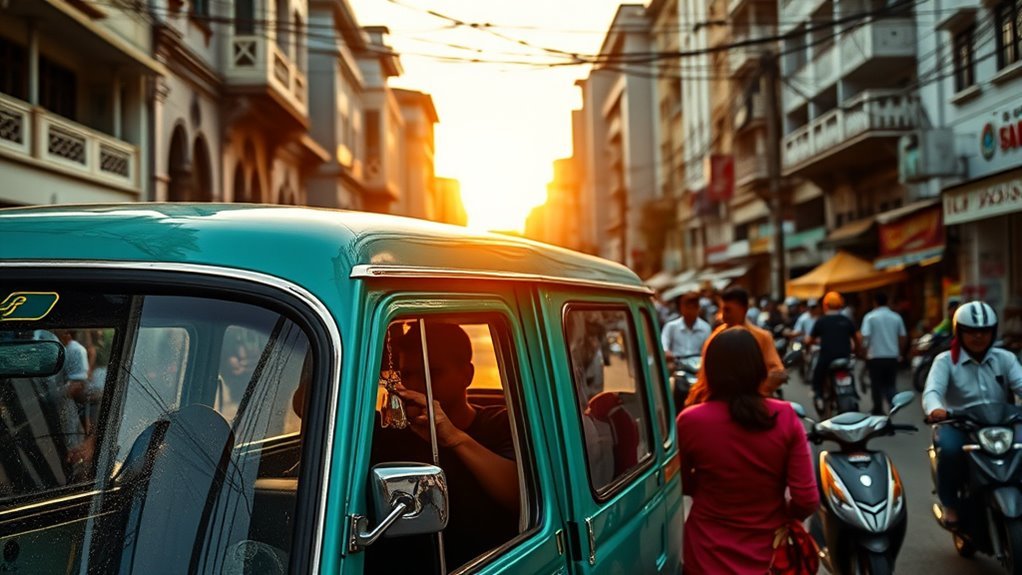
Angkot, short for angkutan kota, is Indonesia’s iconic shared minibus that you use for cheap, flexible city travel. It usually carries 10 to 15 passengers along fixed urban routes, and you can flag one down from the roadside or board at a stop. Fares are low, often paid when you exit. Angkot still matters because it links homes, markets, and jobs in areas other transport often misses, and there’s more to know about how it fits city life.
What Angkot Are and How They Work

Angkot, short for *angkutan kota*, are small public minibuses that serve as a basic part of urban transport in Indonesia. You’ll see them carrying about 10 to 15 passengers along set urban routes, and you can hail one from the roadside. Their low fares make them accessible, especially if you live in a poorer neighborhood where formal transit doesn’t reach.
Small minibuses on set routes, angkot offer cheap, flexible rides that serve neighborhoods formal transit misses.
You usually pay when you get off, which keeps the process simple and direct.
In angkot history, these minibuses grew from local need, and they still move millions through crowded cities. Angkot culture reflects practicality, shared space, and everyday survival.
Even with ride-hailing apps and modernization campaigns, you can still rely on angkot as a stubborn, living part of urban mobility. They don’t just transport bodies; they connect communities that systems often neglect.
How Angkot Routes, Fares, and Payment Work
You can flag down angkot along set city routes that connect neighborhoods with key destinations, especially in places like Bandung and Jakarta.
Fares are usually low, often no more than Rp5,000, so it’s an affordable way to travel. You typically pay when you get off, and you can ask the driver to stop by shouting “kiri.”
Routes And Stops
Routes are usually set to cover specific neighborhoods and busy corridors, so you can flag down an angkot from the roadside or board at designated stops along its path. That route flexibility lets you move through the city without waiting for fixed stations.
You’ll usually find:
- short, local loops that connect homes, markets, and transit hubs
- routes that share streets with motorcycles and city buses
- frequent pickups where demand is strongest
Because angkot serve defined areas, you can plan around familiar corridors and still stay mobile. They’re built for everyday access, not rigid schedules, giving you practical freedom in dense urban life.
Keep an eye on the route markings and local flow, and you’ll know when to step aside, hail one, or transfer to another mode with ease.
Fares And Payment
Even though angkot are flexible to use, the fare is usually straightforward: most trips cost about 3,000 to 5,000 IDR, depending on distance.
You’ll usually pay when you get off, not when you board, so keep small cash ready. Because drivers may quote higher prices to non-Indonesians, confirm the fare before you ride and use fair fare negotiation if needed.
Routes are defined, but you can flag an angkot from the roadside and reach many neighborhoods without waiting at a fixed stop.
These payment methods stay simple, yet they depend on local custom and cash. Vehicle condition can vary, so check comfort as you travel.
Why Angkot Still Matter for Local Travel
Angkot still matter for local travel because they remain a practical lifeline for low-income communities and people living in areas that formal transport often doesn’t reach. You can depend on them for affordable trips, especially when you need daily access across hard-to-reach neighborhoods and urban edges.
- They strengthen community connections by linking homes, markets, and workplaces.
- They carry cultural significance, keeping a familiar local travel rhythm alive.
- They support mobility and livelihoods, even as modern systems expand.
Survey data from more than 900 passengers shows angkot still help urban mobility in a real, measurable way. You may notice ridership has dropped as alternatives spread, yet many residents still choose angkot for routine commutes.
Drivers also keep local economies moving, and their work matters even under pressure from BRT expansion. Angkot’s ties with motorcycles and other modes show they still fit into the city’s transport network.
Angkot vs Buses, Ojek, and Ride-Hailing
When you compare angkot with buses, ojek, and ride-hailing apps, you’ll see different trade-offs in routes, speed, fare, and comfort.
Angkot runs on fixed local routes with low fares and carries about 10–15 passengers, while buses cover longer trips. Ojek handles quick rides through traffic, and apps like Gojek or Grab add door-to-door convenience.
Even with this competition, angkot still helps you reach underserved areas and stays part of everyday urban mobility and culture.
Angkot’s Role In Mobility
Though buses, ojek, and ride-hailing apps all shape urban travel, angkot still plays a key role in mobility across Indonesian cities. You can hail it from the roadside, then use it for short, flexible trips that support urban accessibility and community connections. For many low-income residents, that freedom matters.
- It serves neighborhoods formal transit may miss.
- It often gets you close to your destination.
- It helps you move through congested streets without waiting on rigid schedules.
In Jabodetabek alone, millions of commuter workers depend on public transport, and angkot remains part of that network.
Even as app-based rides grow and policy shifts favor bus systems, you still rely on angkot where other options don’t reach.
Buses, Ojek, And Apps
On Indonesia’s crowded streets, you’ll often choose between angkot, buses, ojek, and ride-hailing apps based on speed, cost, and convenience.
Angkot usually wins on price, since its fixed routes and fares rarely exceed 5,000Rp. Buses, especially BRT services, aim to expand urban development and offer a more organized network, but they still face stiff competition.
Ojek moves you fastest through traffic, which is why many commuters in Greater Jakarta prefer motorcycles. Ride-hailing apps add another layer of access, with online motorcycle taxis becoming a common first-mile solution.
As angkot ridership falls, you can see the need for better integration among modes. Stronger community engagement can help planners build a transport system that serves your mobility needs more effectively.
Fares, Comfort, And Culture
One big reason you might still choose an angkot is its fare: it usually won’t cost more than Rp5,000, making it one of the cheapest ways to get around. You keep more money in your pocket than with buses or ride-hailing, especially when demand spikes.
- Flexibility: you can flag one down, while buses stick to fixed routes and schedules.
- Space: angkot carries more people than an ojek, so it works well for group trips.
- Culture: its bright decor, music, and street-level banter give it real cultural significance.
The comfort aspects are basic, not plush, but the ride feels alive and local.
As ride-hailing grows, angkot needs better management and integration to stay useful.
How to Ride Angkot Safely
Before you board an angkot, check the route number displayed on the front to make sure it goes where you need to go. These safety tips help you move with confidence and avoid wasted time.
Ask the driver to stop by signaling clearly, and say “kiri” if you want the left side, so your riding etiquette stays clear and respectful. Keep your wallet, phone, and other valuables close, because pickpocketing can happen in crowded vehicles.
If you ride during peak hours, expect tight space and hold the handrails to stay balanced as the angkot moves. When you get off, pay your fare then; it usually shouldn’t exceed 5000Rp.
Stay alert, because some drivers may charge non-Indonesians more if they think they can. With awareness and calm, you can use angkot safely and independently.
What’s Next for Angkot in Indonesia
Angkot may feel familiar on the streets now, but Indonesia is preparing for a major change in urban transport. You should expect the government to push a Bus Rapid Transit system to replace many angkot routes, aiming for cleaner, more organized mobility.
Still, this alteration won’t work if you ignore driver concerns or the neighborhoods that depend on angkot.
- Future integration: You’ll likely see angkot drivers absorbed into new transport roles if planners keep dialogue open.
- Access: You still need angkot-style service in poorer and hard-to-reach areas, where buses may not reach quickly.
- Choice: If services disappear too fast, riders may switch to motorcycles instead of public transit.
You can support a change that respects workers and keeps communities connected.
Meaningful engagement matters, because liberation in transport means more than replacing vehicles—it means giving people reliable options and a real voice in the system’s future.
Frequently Asked Questions
What Is Angkot?
Angkot is an Indonesian public minibus you can hail roadside for cheap city travel. You ride fixed Angkot routes, call “kiri” to stop, and its Angkot history shows how you’ve gained accessible mobility.
What Is the Main Transportation in Indonesia?
Indonesia’s main transportation is a mix, like veins carrying movement. You’ll use public buses for intercity trips, trains for Java travel, angkot for local commuting, and ride-hailing or Bali transportation for flexible urban travel.
Does Jakarta Boast Southeast Asia’s Second Best Public Transport According to a Survey?
Yes—according to a Jakarta survey, you can see the city ranks as Southeast Asia’s second-best public transport system. It reflects strong public transport use, though you’ll still depend on buses, trains, and angkot.
How Does Transjakarta Work?
You board a TransJakarta bus on designated corridors, then ride dedicated lanes that avoid traffic. You pay its flat fare system of 3,500 IDR, follow TransJakarta routes, and can transfer to trains or feeder services.
Conclusion
So, when you hop on an angkot, you’re stepping into a moving thread that ties neighborhoods together. It may not be flashy, but it’s the pulse of many Indonesian streets, carrying you where bigger vehicles can’t always go. You’ll find it cheap, flexible, and full of local color, even if it’s changing fast. Think of it as a small but sturdy bridge between old routines and Indonesia’s transport future.