
Last Updated on July 27, 2026 by Ethan Caldwell
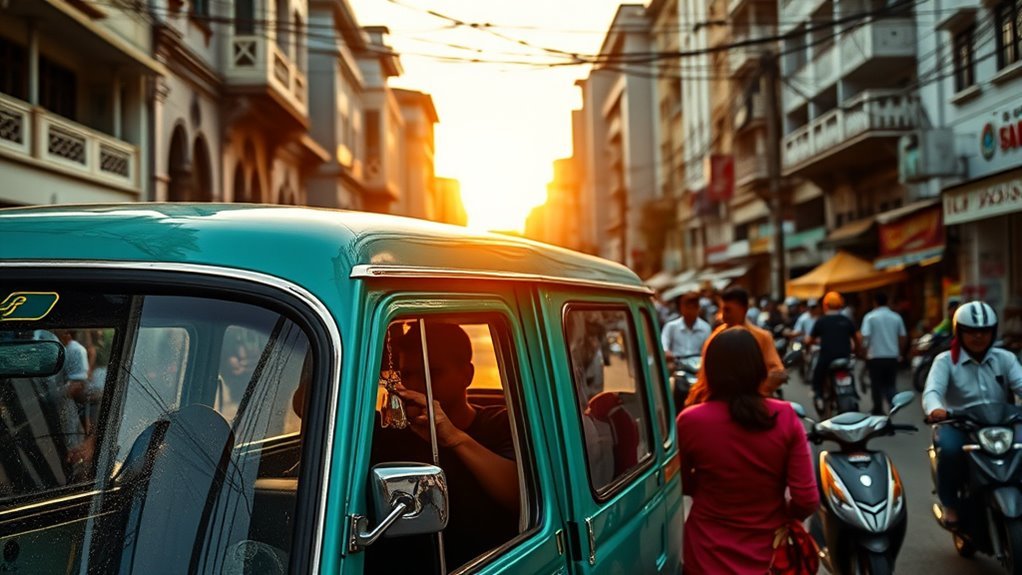
Angkot, short for angkutan kota, is a small shared public-transport vehicle used for local trips in many Indonesian cities. It normally follows a defined route while offering more street-level access than larger buses or rail. How you board, pay, and request a stop varies by city, so it helps to understand the local system before your first ride. Jakarta is a special case because many former angkot services now operate as the more formal Mikrotrans network within the city’s JakLingko transport ecosystem.
Quick Answer
Angkot is Indonesia’s small shared minibus service for neighborhood and city travel. Traditional angkot generally follow defined local routes, but fares, boarding points, and payment rules vary by city. In Jakarta, many similar trips are now served by Mikrotrans, which currently costs Rp0 but requires an accepted electronic payment card.
Disclosure: As an Amazon Associate I earn from qualifying purchases. Some links on this page are affiliate links, at no extra cost to you.
What Angkot Are and How They Work
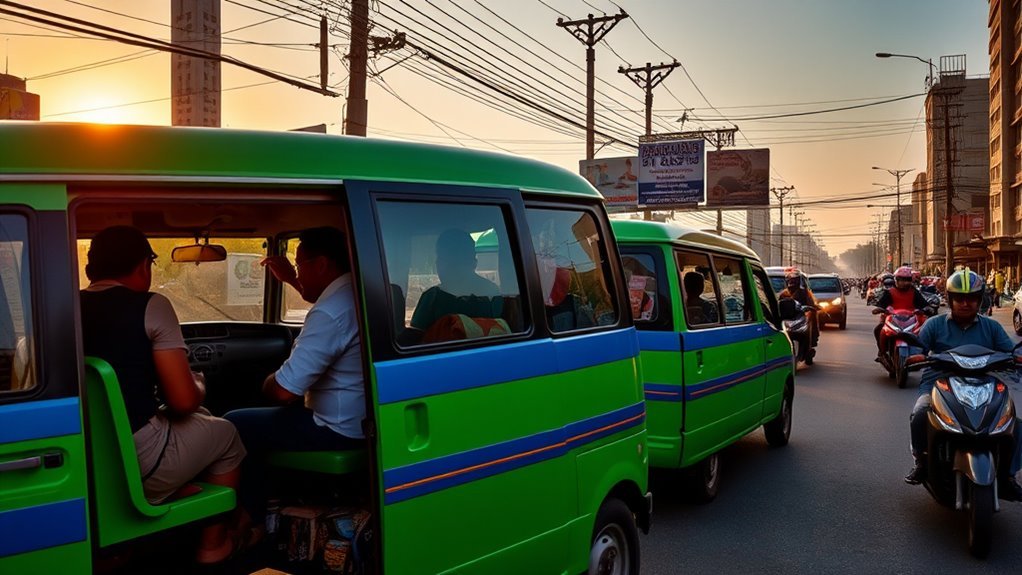
Angkot, short for angkutan kota, are small public-transport vehicles used for local urban and suburban trips in Indonesia. Instead of operating like a private taxi, an angkot normally follows a defined route and carries multiple passengers who get on and off along the way.
The exact vehicle can differ from one city to another. Some are compact vans, while others are larger minibuses. Passenger capacity therefore varies, so it is better to think of angkot as a type of shared local transport rather than a vehicle with one standard size.
Angkot fill the gap between walking and larger mass-transit services by carrying passengers along neighborhood-scale routes.
Traditional services often allow passengers to board from the roadside where local rules and traffic conditions permit, although some cities and modernized services use more clearly defined stopping points. Payment is commonly handled directly with the driver or conductor, but the exact fare and payment method depend on the route and city.
Different regions also use different names for similar small public-transport vehicles, including terms such as mikrolet, bemo, pete-pete, and oplet. The vehicles, operating rules, and route systems are not identical everywhere.
Despite competition from buses, rail, motorcycles, and ride-hailing apps, angkot remain useful because small vehicles can reach streets and neighborhoods that larger transit vehicles may not serve directly.
Key Takeaways
- Angkot are shared small public-transport vehicles that normally follow defined local routes rather than operating as private taxis.
- Traditional fares and payment methods vary by city, route, and distance, so there is no single nationwide angkot fare.
- Jakarta’s Mikrotrans service is different from traditional cash-based angkot: Mikrotrans is part of TransJakarta, currently charges Rp0, and requires an accepted electronic payment card.
- JakLingko is Jakarta’s transport-integration and payment ecosystem; Mikrotrans is one of the transport services within that system.
Traditional Angkot vs. Mikrotrans and JakLingko
The terminology is important if you are traveling in Jakarta. Angkot is the broad term for urban public transport of this small-vehicle type. Mikrotrans is Jakarta’s more formal small-vehicle service operated within the TransJakarta network. JakLingko is the wider transport-integration and payment system rather than the name of the minibus itself.
The Jakarta Provincial Government specifically explains that the small JakLingko-branded vehicles are correctly called Mikrotrans. Since 2018, Jakarta has been transforming small public-transport routes so they connect more closely with TransJakarta and other public transport.
That distinction matters because payment rules are different. Traditional angkot elsewhere may still use cash and locally determined fares, while Jakarta’s Mikrotrans currently operates at Rp0 but requires passengers to use an accepted electronic payment card.
How Angkot Routes, Fares, and Payment Work
Angkot generally operate on defined corridors that connect residential areas with markets, schools, commercial districts, terminals, stations, and other transport links. The system is usually more flexible than rail or BRT, but it is not the same as a taxi: the vehicle still follows its assigned route.
Routes and Stops
Boarding practices vary. On some traditional routes, you may be able to signal an approaching angkot from a safe roadside location. Elsewhere, especially on more formalized services, you should use designated stops.
Common angkot route patterns include:
- short neighborhood routes connecting homes with markets or transit hubs;
- cross-district services using busy urban roads;
- feeder routes that connect passengers with buses, rail stations, or terminals.
Before boarding, check the route number, route board, destination sign, or other route marking on the vehicle. Route systems are local, so a number or color used in one city may mean nothing in another.
Pro Tip: Before your first ride, show the driver your destination or ask whether the vehicle passes a well-known landmark near it. This is more reliable than assuming every angkot follows a route shown in a general mapping app.
Fares and Payment
There is no universal angkot fare for Indonesia. Traditional fares are determined locally and may depend on the city, route, distance, passenger category, or local transport policy. Research by ITDP Indonesia has documented low minimum angkot fares that differ between cities, which is why a single nationwide price range can be misleading.
On a traditional cash-based angkot, carry small rupiah notes and ask the fare before riding when the price is not posted. Depending on local custom, payment may be made when boarding or when getting off.
Jakarta’s Mikrotrans is different. Current Jakarta and TransJakarta information lists the Mikrotrans fare as Rp0. You still need an accepted electronic payment card and should tap according to the vehicle’s boarding procedure.
Note: Do not confuse the Rp0 Mikrotrans fare with Jakarta’s multimodal integrated tariff. Qualifying journeys that combine TransJakarta, MRT Jakarta, and LRT Jakarta under the JakLingko tariff system can cost up to Rp10,000 under the city’s published integration rules.
How to Ride an Angkot for the First Time
The exact routine differs by city, but these steps work as a practical starting point for traditional angkot travel.
- Confirm the route. Check the route number, destination sign, or route board and ask the driver if you are unsure.
- Confirm the fare when necessary. If no price is posted, ask before boarding rather than assuming a fare from another city or route.
- Board from a safe place. Use an official stop where one is provided. Otherwise, follow local practice and avoid stepping into moving traffic.
- Sit securely. Small vehicles can stop and accelerate frequently, so hold a rail or stable surface when necessary.
- Signal before your stop. In many places, passengers commonly say kiri, literally “left,” when they want to get off. Local wording and stopping practice can vary, so listen to other passengers if you are unsure.
- Pay or tap correctly. Traditional angkot may use cash, while Jakarta’s Mikrotrans requires electronic-card tapping even though its fare is currently Rp0.
- Exit carefully. Check for motorcycles, bicycles, and other traffic before stepping away from the vehicle.
How Angkot Is Being Modernized: JakLingko and Mikrotrans
Jakarta has gone further than most Indonesian cities in formalizing small public-transport services. Since 2018, Mikrotrans has been incorporated into the city’s integrated transport network so small vehicles can function as neighborhood feeders for larger services.
Modern Mikrotrans vehicles are intended to provide a more standardized experience than older informal angkot operations. Jakarta government material describes features such as closed or sliding doors, GPS, CCTV, and electronic fare equipment on modern Mikrotrans vehicles.
The scale is now substantial. In a June 5, 2026 Jakarta government update, the city said its JakLingko network was supported by about 2,968 Mikrotrans vehicles.
JakLingko Fares and Integration
JakLingko is broader than Mikrotrans. It links ticketing and transport services across TransJakarta, MRT Jakarta, LRT Jakarta, and other parts of the city’s public-transport ecosystem.
According to Jakarta’s official JakLingko information, the published integrated tariff for qualifying trips combining TransJakarta, MRT Jakarta, and LRT Jakarta is capped at Rp10,000. This is separate from Mikrotrans itself, which currently remains a Rp0 service.
What Is Happening With Electric Mikrotrans?
Earlier plans announced in late 2025 proposed replacing 100 older angkot with electric Mikrotrans vehicles, with the first batches originally targeted for December 2025 and February 2026. Those dates should not be treated as confirmation that the vehicles entered service as planned.
On April 15, 2026, TransJakarta said it was still studying how to electrify Mikrotrans. Officials cited battery capacity, daily operating range, charging infrastructure, and the demands placed on small vehicles as issues that still needed to be resolved.
Jakarta is already electrifying its larger TransJakarta fleet, but that should not be confused with completed electrification of Mikrotrans. The small-bus transition remains an active modernization project.
Why Angkot Still Matter for Local Travel
Angkot remain useful because they can provide neighborhood-scale coverage that is difficult to reproduce with large buses or rail alone. A train or BRT corridor may handle the longest part of a journey, while a small vehicle can cover the final streets between that corridor and a home, market, school, or workplace.
- Neighborhood access: small vehicles can operate on streets that may not suit full-size buses.
- Feeder connections: angkot and Mikrotrans can link passengers with stations, terminals, and major bus routes.
- Lower-cost local mobility: traditional angkot are generally designed as affordable shared transport, while subsidized Mikrotrans currently provides Rp0 service in Jakarta.
- Driver livelihoods: modernization also affects the cooperatives and drivers whose income depends on these services.
That last point is important. Successful reform involves more than replacing vehicles. It also requires driver training, workable operating contracts, safe routes, reliable payment systems, and enough service in neighborhoods that depend on small public transport.
Angkot vs. Buses, Ojek, and Ride-Hailing
The best mode depends on the trip. Angkot is not automatically cheaper, faster, or more convenient in every situation, but its neighborhood coverage can make it useful where larger transit does not reach your destination directly.
Angkot’s Role in Mobility
Traditional angkot work best for passengers who already know the local route or can easily confirm it. Jakarta’s Mikrotrans plays a similar neighborhood role in a more formal network and can connect riders with TransJakarta, MRT, and other transport services.
- Choose angkot or Mikrotrans when a small local route gets you closer to your destination.
- Choose BRT or rail when a major corridor offers a clear, faster through-route.
- Combine modes when a neighborhood feeder connects conveniently with a station or major bus line.
Buses, Ojek, and Apps
Large buses can be easier to understand where stops, route maps, and fares are standardized. In Jakarta, TransJakarta combines BRT corridors with non-BRT and feeder services across a large network.
Ojek and app-based motorcycle taxis such as Gojek or Grab offer direct point-to-point travel and can be useful for short first- or last-mile trips. Their cost varies with distance, traffic, demand, and platform pricing.
Ride-hailing cars provide door-to-door convenience and more room for luggage, but they usually cost more than shared public transport and remain exposed to road congestion.
Fares, Comfort, and Culture
Traditional angkot are basic shared vehicles rather than premium transport. Ventilation, seating, vehicle age, space, and ride quality can differ considerably between fleets and cities.
- Flexibility: local boarding and stopping practices can make traditional angkot convenient for short neighborhood trips.
- Cost: fares are locally determined, while Jakarta’s subsidized Mikrotrans is currently Rp0.
- Local character: older angkot may feature distinctive paint, decoration, music, or other features associated with the city and operator.
For visitors, the main trade-off is usually between local access and predictability. A traditional angkot may take you closer to a neighborhood destination, while formal bus and rail systems generally provide clearer maps, stations, and payment rules.
Accessibility, Luggage, and Comfort
Small angkot are not equally accessible to every passenger. Steps, narrow doors, inward-facing seats, crowded interiors, and limited floor space can make traditional vehicles difficult for passengers with reduced mobility or large luggage.
If you use a wheelchair, travel with a stroller, carry several bags, or need a guaranteed seat, check the local service before relying on an angkot. A larger bus, rail service, or suitable ride-hailing vehicle may be easier for that particular trip.
Mikrotrans provides a more standardized service than many traditional angkot, but vehicle designs and boarding conditions can still vary by route.
How to Ride Angkot Safely
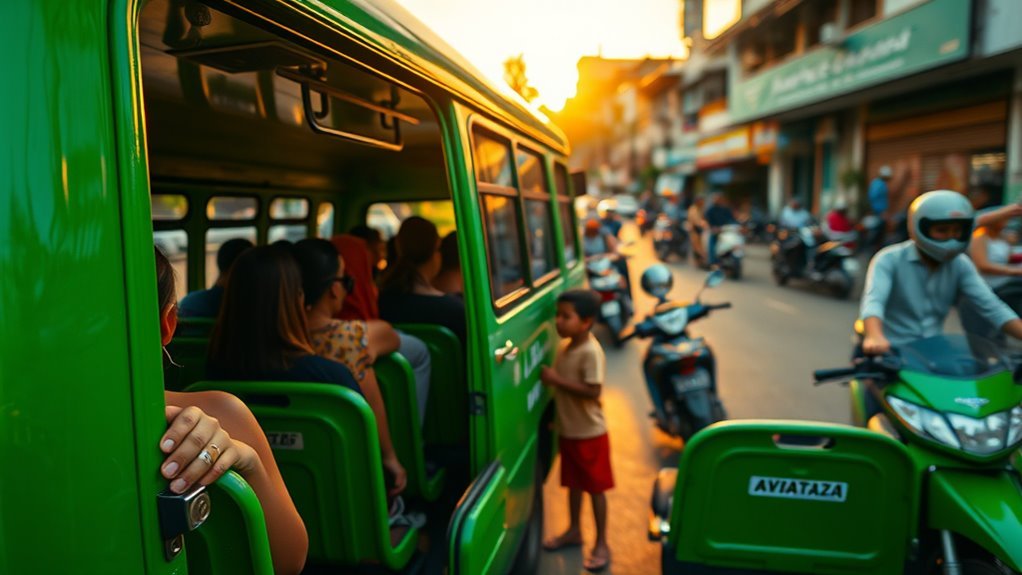
Before boarding, confirm that the vehicle serves the route or destination you need. Do not rely only on the color of the vehicle because route identification systems differ by city.
Board and exit only where you can do so safely. Indonesian city streets often carry motorcycles close to the curb, so look carefully before stepping into or out of the roadway.
Warning: As with any crowded public transport, keep your phone, wallet, passport, and bags secure. Keep bags closed and close to your body, especially when the vehicle is crowded or you are distracted while boarding and getting off.
Hold a stable surface when the vehicle is moving, especially if you are seated near the door. Avoid boarding a vehicle that appears dangerously overloaded or whose condition makes you uncomfortable.
If a traditional fare is not displayed, ask the driver before riding. This avoids confusion at the end of the trip and is more reliable than assuming a price you saw online applies to every city.
For late-night travel, unfamiliar routes, or journeys with valuable luggage, consider whether a formal bus, rail service, or app-based ride would be easier to track and navigate.
What’s Next for Angkot in Indonesia
There is no single national future for angkot because Indonesia’s cities manage public transport differently. Jakarta’s approach shows one direction: bring small operators into a larger network, standardize service, subsidize fares, improve driver training, and connect neighborhood routes with higher-capacity transport.
- Integration: more small-vehicle routes can work as feeders instead of competing independently with major bus and rail corridors.
- Service quality: contracts, driver training, vehicle standards, GPS, and electronic payments can make operations more predictable.
- Access: reform still needs to preserve routes that reach neighborhoods where larger transport cannot operate efficiently.
- Electrification: Jakarta is exploring electric Mikrotrans, but technical issues such as battery range, charging, and intensive daily operation still need to be solved.
- Affordability: subsidies and integrated fares will remain important because local public transport must stay affordable for everyday riders.
The main challenge is preserving what angkot do well — neighborhood access and low-cost shared travel — while improving safety, reliability, working conditions, route information, and integration with modern transit.
Frequently Asked Questions
What Is Angkot?
Angkot, short for angkutan kota, is a shared small public-transport vehicle used on local routes in Indonesian cities. Traditional fares, boarding rules, and payment methods vary by location.
How Much Does Angkot Cost?
There is no single national angkot fare. Traditional fares vary by city, route, distance, and local policy. In Jakarta, Mikrotrans is currently a Rp0 service, although passengers still need an accepted electronic payment card.
Is JakLingko the Same as Angkot?
No. JakLingko is Jakarta’s transport-integration and payment ecosystem. The small TransJakarta vehicles commonly associated with the JakLingko branding are called Mikrotrans.
What Is the Main Transportation in Indonesia?
Indonesia does not have one main form of transportation. Depending on the city and island, travelers may use city buses, angkot, commuter rail, intercity trains, ferries, motorcycles, ride-hailing services, or private vehicles. Angkot mainly serves local urban and neighborhood trips.
Does Jakarta Have Southeast Asia’s Second-Best Public Transport?
A 2025 Time Out survey placed Jakarta 17th among the cities covered and second among Southeast Asian cities, behind Singapore. It is best understood as a survey-based ranking rather than an official technical ranking of every transport system in the region.
How Does TransJakarta Work?
TransJakarta operates BRT, non-BRT, feeder, and small-vehicle services across Jakarta. The city’s published regular TransJakarta fare is Rp3,500, with a Rp2,000 early-morning fare from 5:00 to 7:00 AM. Mikrotrans is currently Rp0. Fares can temporarily change for special programs, so check official TransJakarta information before travel.
Do You Need Cash for Angkot?
Traditional angkot commonly use cash, so small rupiah notes are useful. Payment systems vary locally. Jakarta’s Mikrotrans is different because passengers use an accepted electronic payment card even though the current fare is Rp0.
Conclusion
Angkot remain an important part of local travel in Indonesia because small shared vehicles can reach neighborhoods that larger transport does not always serve directly. The experience is not identical across the country: routes, fares, boarding practices, vehicles, and payment methods all vary.
Jakarta shows how the idea is changing. Traditional small-vehicle services are increasingly being organized through Mikrotrans and the wider JakLingko ecosystem, giving riders more standardized routes, electronic payment, and connections with major public transport. At the same time, plans for electric Mikrotrans remain a work in progress rather than a completed fleet conversion.
For a first-time rider, the essentials are simple: confirm the route, ask the fare when necessary, board and exit carefully, follow local stopping customs, and know whether the service takes cash or an electronic card. With those basics, angkot can be one of the most direct ways to understand how neighborhood travel actually works in Indonesian cities.
Sources
- Jakarta Provincial Government — JakLingko — official explanation of JakLingko, Mikrotrans terminology, payment integration, and the Rp10,000 integrated-fare cap.
- Jakarta Provincial Government — TransJakarta — official TransJakarta fare information, including regular and early-morning rates.
- Jakarta Provincial Government — Mikrotrans and JakLingko clarification — confirms Mikrotrans has been part of the JakLingko system since 2018.
- Jakarta Provincial Government — June 2026 public transport update — current fleet information, including approximately 2,968 Mikrotrans vehicles.
- TransJakarta — April 2026 fare announcement — confirms that Mikrotrans continued to operate at its existing Rp0 fare.
- ANTARA — TransJakarta Studies Mikrotrans Electrification — April 2026 update on battery, range, infrastructure, and implementation issues affecting electric Mikrotrans.
