
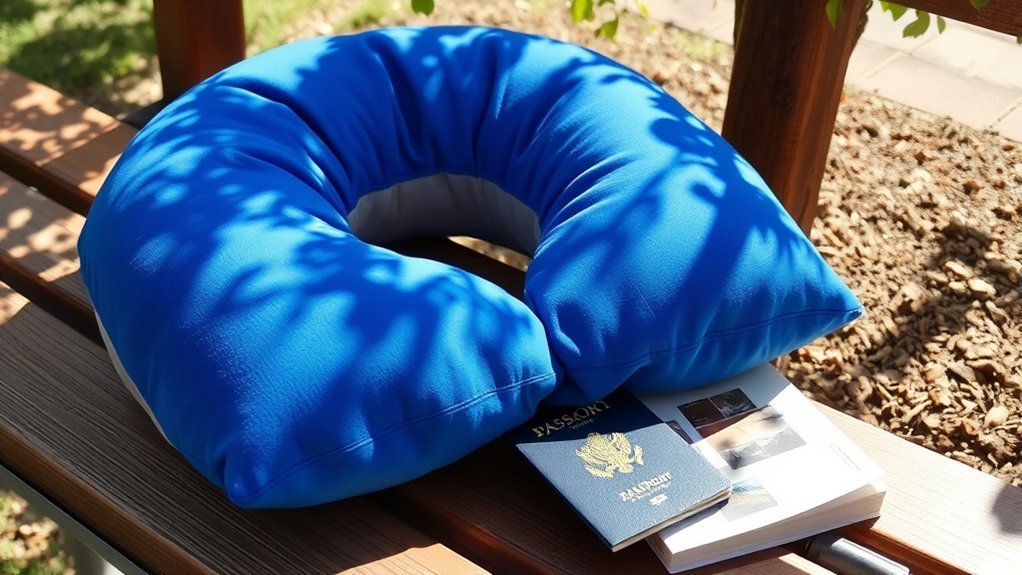
A travel pillow typically lasts between 1 to 4 years, depending on factors like material quality, how often you use it, and your maintenance habits. Memory foam and latex pillows usually last longer, while polyester pillows tend to wear out faster. Signs you need a new pillow include stains, loss of shape, or discomfort during use. Keeping these factors in mind can help guarantee you’re making the right choice for comfort on your travels, with more insights to explore ahead.
Understanding the Lifespan of Travel Pillows

When it comes to travel pillows, understanding their lifespan is essential for ensuring comfort during your journeys. Different travel pillow types serve various needs, and their longevity varies accordingly. Memory foam pillows typically last about 2 to 3 years with proper care, while inflatable options can exceed 3 years due to their durable materials. Neck pillows made from polyester, however, usually have a shorter lifespan, averaging between 6 months to 2 years, especially with frequent use. To maximize your investment, keep an eye out for signs of wear, like loss of shape or support. Regular maintenance, such as washing removable covers and avoiding over-inflation, can enhance the lifespan of your travel pillow, ensuring it meets your travel pillow uses effectively.
What Factors Determine the Lifespan of Travel Pillows?
The lifespan of travel pillows hinges on several key factors that can impact their durability and effectiveness. Your travel habits play a significant role, as frequent use can accelerate wear and tear. The materials used also matter; memory foam and high-density foam generally last 2 to 3 years, while inflatable pillows may not endure as long.
The longevity of your travel pillow depends on usage, material quality, and maintenance practices.
Here are three factors that determine how long your travel pillow lasts:
- Material Quality: Higher-quality materials resist wear better.
- Usage Frequency: More travel means more wear.
- Maintenance Practices: Regular cleaning and proper storage can extend life.
Signs You Need a New Travel Pillow
A travel pillow can greatly enhance your comfort during journeys, but it won’t last forever. Look for signs that indicate it’s time for a replacement. Excessive yellowing or staining signals wear and potential allergens, compromising travel pillow hygiene. If your pillow doesn’t spring back to shape after folding, it likely lacks the support you need. Worsening allergies during sleep may mean dust mites or mold have taken residence, necessitating a new pillow. Persistent neck or shoulder pain upon waking is another strong signal of inadequate support. Finally, if you struggle to find a comfortable sleeping position, your pillow has likely lost its effectiveness. Regular travel pillow maintenance can prolong life, but recognizing these signs is essential for ideal comfort.
Caring for Your Travel Pillow: Tips and Tricks
Caring for your travel pillow is essential to guarantee it remains comfortable and hygienic for your journeys. Here are some effective travel pillow maintenance tips and cleaning techniques to keep your pillow in top shape:
- Follow Care Instructions: Regularly clean your pillow according to the manufacturer’s guidelines—most can be washed on a cool setting.
- Remove Inserts Before Washing: Always take out any internal support or inserts to prevent damage during cleaning.
- Air Dry Only: Avoid the dryer; air drying helps maintain the pillow’s integrity and prevents shrinkage.
Comparing Materials for Travel Pillows
When choosing a travel pillow, understanding the different materials available can greatly affect your comfort and longevity of use. Memory foam offers ergonomic comfort and typically lasts 2 to 3 years, retaining its shape well. Inflatable pillows can last several years but are susceptible to punctures. Polyester durability is lower, usually lasting only 6 months to 2 years, depending on usage. Down pillows provide excellent comfort but need regular washing to maintain hygiene and last between 1 to 3 years. For an option with impressive latex longevity, consider latex pillows, which can last up to 4 years if kept clean and dry. Each material has its benefits, so choose based on your priorities for comfort and durability.
How to Choose the Right Travel Pillow Based on Your Needs
Choosing the right travel pillow can considerably enhance your comfort during long journeys, especially if you travel frequently or for extended periods. Here are three key factors to evaluate based on your travel preferences:
- Support Needs: Assess if you need extra neck support or a softer feel, depending on your sleeping position (side, back, or stomach).
- Customization Options: Look for adjustable pillows, like the TRTL Pillow Plus, which let you modify height and firmness for a personalized experience.
- Portability: If you’re limited on luggage space, opt for compact or inflatable pillows that won’t weigh you down.
Top Travel Pillow Brands You Should Consider
When selecting a travel pillow, you’ll want to contemplate brands that stand out for their ergonomic design, material quality, and durability. Options like TRTL and Cabeau Evolution offer unique features that enhance comfort and support, while Travelrest excels in catering to side sleepers. Portability is also essential, so brands like Ostrichpillow Go and the Infinity Pillow provide different solutions based on your travel needs.
Ergonomic Design Features
If you’re looking for a travel pillow that truly enhances your comfort during journeys, consider the ergonomic design features offered by several top brands. These design innovations provide significant ergonomic benefits that can transform your travel experience.
- TRTL Pillow: Offers targeted neck support to maintain spinal alignment.
- Cabeau Evolution Series: Adapts to various neck shapes with memory foam and a unique flat back design, ensuring personalized comfort.
- Travelrest Comma-Shaped Pillow: Tailored for side sleepers, it conforms to your head and neck, providing adjustable support.
With these options, you can find the perfect travel pillow that caters to your needs, making long journeys more enjoyable and liberating. Don’t compromise on your comfort—invest in ergonomic design for your next adventure!
Material Quality and Durability
Material quality plays an essential role in the durability and longevity of travel pillows. High-quality memory foam offers significant advantages, lasting 2 to 3 years while retaining its shape, making it an excellent choice for regular travelers. On the other hand, inflatable options, while appealing for their portability, typically need replacement after 1 to 2 years of frequent use. If you’re considering down or feather pillows, they can last between 1 to 3 years, depending on care. Polyester pillows, however, are the least durable, often requiring replacement every 6 months to 2 years. Brands like TRTL and Cabeau excel in using durable materials, ensuring you get a reliable travel companion that enhances your adventures without constant replacements.
Portability and Convenience
Choosing the right travel pillow goes beyond just material quality; portability and convenience are also key factors that can enhance your travel experience. When you’re on the go, you want a pillow that’s easy to pack and carry. Consider these top choices:
- Trtl Travel Pillow – Folds down to the size of a hardback book, perfect for limited luggage.
- Cabeau Evolution S3 – Compresses to half its size, making it a space-saver.
- Inflatable Travel Pillows – Lightweight and deflatable, ideal for frequent flyers.
Prioritize travel pillow types that suit your needs and guarantee proper travel pillow maintenance to extend their lifespan. With the right choice, you can travel comfortably and effortlessly.
Why You Should Regularly Replace Your Travel Pillow
Regularly replacing your travel pillow is essential for maintaining neck and spinal support, as worn pillows can lose their shape and effectiveness. Over time, these pillows may also accumulate allergens like dust mites and mold, leading to potential health issues. By staying proactive about replacements, you can enhance your travel comfort and guarantee a better sleeping experience.
Allergens Accumulation Over Time
While you may not notice it at first, your travel pillow can become a haven for allergens over time, accumulating dust mites, mold, and bacteria that pose health risks. Regular replacement is essential to minimize exposure to these allergen sources. Here are some signs it’s time for a new pillow:
- Waking up with allergy symptoms or skin irritations.
- Visible stains or yellowing on the pillow.
- Difficulty cleaning or maintaining it effectively.
Even with pillow maintenance, certain materials may still harbor allergens, leading to respiratory issues. To guarantee a healthy sleep environment, consider replacing your travel pillow every 1 to 3 years, depending on the material, and prioritize your well-being during your travels.
Deterioration of Support Structure
As time passes, the support structure of your travel pillow can deteriorate, impacting its ability to provide the neck and head support you need for restful sleep. A support breakdown often leads to uncomfortable pressure points, resulting in neck pain and poor sleep quality during your travels. If you notice excessive yellowing, lack of resilience, or persistent discomfort, it’s time to evaluate your pillow’s condition. Most travel pillows, depending on their material, should be replaced every 1 to 3 years. For memory foam options, aim for 2 to 3 years, while inflatable or polyester types may need replacement sooner. Regularly updating your travel pillow not only enhances comfort but also promotes a healthier sleeping environment, free from allergens.
Frequently Asked Questions About Travel Pillow Longevity
How often should you think about replacing your travel pillow? Generally, you should consider a replacement every 1 to 3 years, depending on its material and how often you use it. Here are some key signs that it’s time to replace your pillow:
Consider replacing your travel pillow every 1 to 3 years, especially if it shows signs of wear or decreased comfort.
- Excessive staining or odors that cleaning can’t eliminate.
- Loss of shape that results in poor neck support.
- Decreased comfort during use, indicating it’s no longer functional.
Proper travel pillow maintenance can extend its life, but when it fails to provide adequate support, it’s time to let go. When making your travel pillow selection, choose high-quality materials for longer-lasting comfort, ensuring your adventures remain liberating and restful.
Frequently Asked Questions
Can Travel Pillows Be Washed in a Washing Machine?
Yes, you can machine clean travel pillows, but check their materials first. Some fabrics may shrink or get damaged. Always follow the care instructions to guarantee your pillow stays in good shape after washing.
Do Travel Pillows Come With a Warranty?
Yes, many travel pillows come with a warranty. Typically, warranty duration ranges from one to three years, covering defects in materials and workmanship. Always check the specifics for warranty coverage before purchasing for peace of mind.
Are There Travel Pillows Suitable for Children?
Yes, there are child-friendly options for travel pillows designed to enhance travel comfort. These pillows often feature fun designs and proper support, making long journeys more enjoyable for kids while ensuring they rest comfortably.
How Do I Know if My Travel Pillow Is Hypoallergenic?
To know if your travel pillow’s hypoallergenic, check the material types; natural latex, bamboo, or certain synthetic fibers are often better. If you experience allergy symptoms, consider switching pillows for a safer sleep experience.
Can I Use a Travel Pillow for Activities Other Than Travel?
Yes, you can definitely use a travel pillow for activities beyond travel. It provides portable support and sleeping comfort during camping, lounging at home, or reading, enhancing your relaxation and overall experience in various settings.
Conclusion
In summary, understanding the lifespan of your travel pillow is essential for comfort and health during your journeys. Just as you wouldn’t wear worn-out shoes on a long hike, relying on an aging pillow can lead to discomfort and restless travel. By recognizing the signs of wear and properly caring for your pillow, you can guarantee a restful experience. Regularly evaluating and replacing it will keep you supported, allowing you to focus on the adventures ahead.